
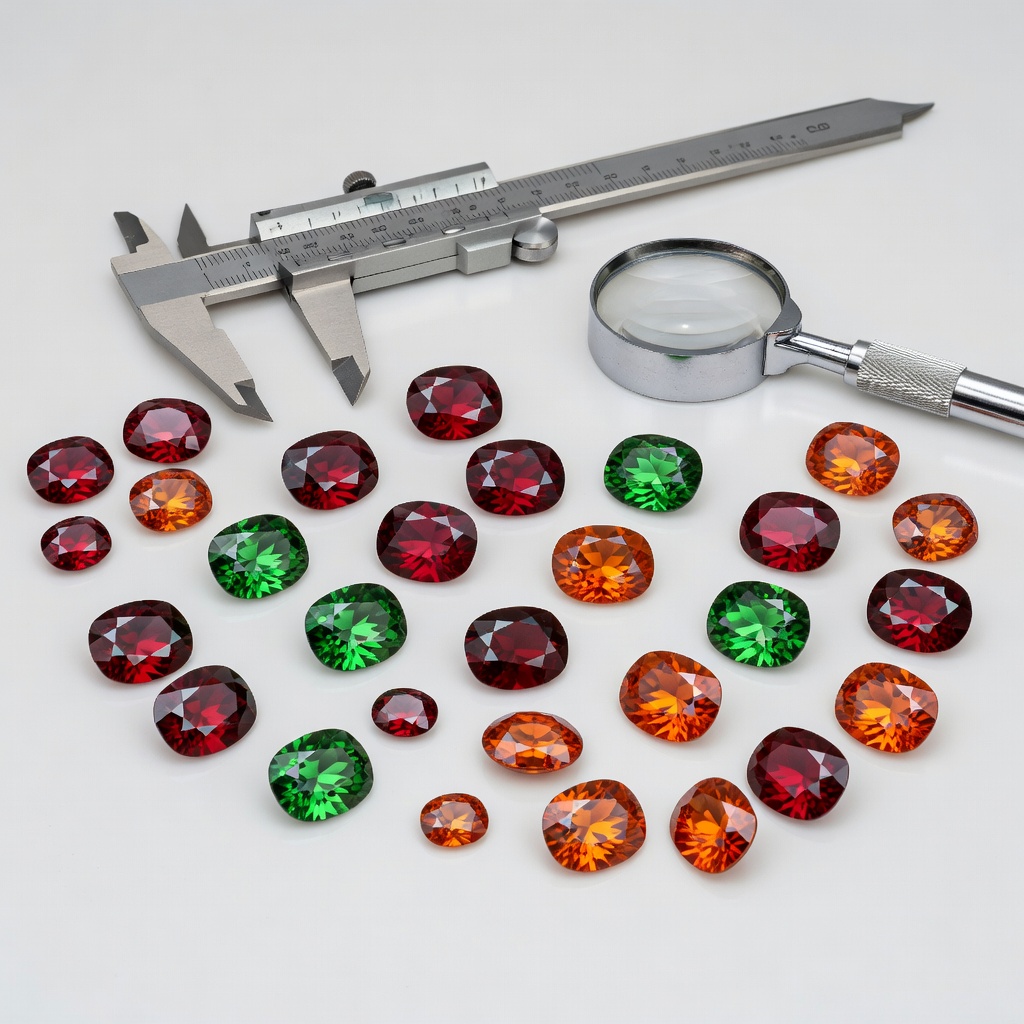
Understanding Garnet: More Than Just Red Stones
When most people envision garnets, they picture deep red gemstones reminiscent of pomegranate seeds, yet this perception barely scratches the surface of what garnets truly represent. Garnet is not a single mineral but rather a complex group encompassing more than twenty distinct species, each with unique chemical compositions and crystalline structures that produce an astonishing array of colors and optical properties. While gemologists primarily encounter five species in the jewelry trade—pyrope, almandine, spessartite, grossular, and andradite—the interactions between these species create hybrid varieties that further expand the garnet gemstone types available to collectors and jewelry enthusiasts alike.
The garnet color varieties span virtually the entire rainbow, offering options that rival more expensive gemstones in beauty and desirability. Tsavorite grossular garnets display intense emerald greens, while spessartite varieties glow with fiery mandarin oranges and reddish-orange hues. Rare color-change garnets shift between blue-green in daylight to purplish-red under incandescent lighting, and the elusive blue garnet remains one of the rarest colored stones on Earth. This diversity means that whether you prefer the classic deep reds of pyrope or the brilliant greens of demantite, understanding the specific garnet species helps you appreciate the stone's true value and rarity.
Historical significance adds another layer of allure to these ancient gems, with archaeological evidence showing garnet jewelry dating back to 3800 BCE in Egyptian tombs and widespread use throughout the Roman Empire for signet rings and inlaid decorations. Ancient travelers carried garnets as protective talismans, believing the stones illuminated the night and warded off evil spirits, while Victorian-era jewelry featured elaborate garnet clusters in Bohemian-style pieces. Today, modern gemology allows us to distinguish between these varieties with precision, ensuring that buyers can identify exactly which type of garnet they are purchasing rather than accepting a generic label.
The 4Cs of Garnet Quality Assessment
Evaluating garnet quality requires understanding how the traditional diamond grading standards adapt to this diverse gemstone family, with garnet quality factors emphasizing characteristics differently than other precious stones. Color stands as the paramount consideration, where saturation and tone often outweigh perfect clarity in determining value. Premium garnets display vivid, pure hues without the brownish or grayish masks that diminish brilliance; for instance, a rhodolite with rich raspberry coloring commands significantly higher prices than a stone of similar size with dull, muddy undertones. When examining potential purchases, always view the stone against a white background under natural daylight to assess its true color character, as artificial lighting can mask undesirable secondary hues.
Clarity standards vary considerably across different garnet gemstone quality categories, with some varieties naturally accommodating inclusions while others demand eye-clean appearance. Demantoid garnets famously contain horsetail inclusions—radiating needle-like crystals of byssolite—that actually enhance value when they indicate Russian origin, whereas these same inclusions might detract from other varieties. For most garnets intended for jewelry, seek stones that appear clean to the naked eye, though slight inclusions visible only under 10x magnification are acceptable and often prove the stone's natural origin. Be particularly cautious of stones that appear suspiciously perfect, as these may indicate synthetic manufacturing or glass imitations rather than natural specimens.
The cut of a garnet significantly impacts its beauty and value, requiring lapidaries to balance maximum weight retention with optimal light performance. Native cuts, particularly those from source countries, often feature steep pavilion angles and thick girdles designed to preserve carat weight rather than maximize brilliance, resulting in windows or extinction areas where light leaks through. Superior cutting for garnets involves proper proportions that enhance the stone's refractive index, creating lively flashes of color and brilliance that distinguish fine specimens from mediocre ones. When assessing carat weight, remember that larger stones become exponentially rarer in certain varieties like tsavorite and demantoid, where crystals rarely form in sizes exceeding two carats, making modest-sized stones of exceptional quality often wiser investments than large stones of inferior color.
Popular Garnet Varieties and Their Unique Characteristics
Navigating the diverse world of garnet gemstone types requires familiarity with the specific varieties that dominate the market and command distinct price premiums. Rhodolite garnets, a hybrid mixture of pyrope and almandine species, exhibit stunning purplish-red to raspberry hues that offer excellent brilliance and fire often exceeding that of rubies at a fraction of the cost. These stones typically form eye-clean crystals with few visible inclusions, making them ideal center stones for rings and pendants where clarity enhances their lively appearance. When shopping for rhodolite, seek stones with medium to medium-dark tones that avoid the overly dark appearance that can make the gem appear black in low light.
Tsavorite garnet value has risen dramatically since its discovery in Tanzania during the 1960s, with this green grossular variety now rivaling fine emeralds in desirability without requiring the oil treatments common to beryl. The finest tsavorites display an intense, vivid green without yellowish or brownish overtones, though stones over one carat become increasingly rare and command significant premiums per carat. Unlike emeralds, tsavorites typically form with excellent clarity and durability, making them superior choices for daily-wear jewelry when set in protective mountings. When evaluating tsavorite, examine the stone under various lighting conditions, as some specimens shift slightly in color depending on light sources, with the most valuable maintaining their green intensity under both natural and artificial illumination.
Spessartite garnets range from bright orange to deep reddish-orange, with the highly saturated "mandarin" orange specimens fetching the highest prices and increasing significantly in value as size increases. These gems possess a distinctive high refractive index that creates exceptional brilliance, though they often contain more inclusions than pyrope or almandine varieties. Demantoid garnets represent the rarest and most valuable green variety within the andradite species, famous for their diamond-like adamantine luster and dispersion that exceeds diamond itself. Authentic Russian demantoids displaying characteristic horsetail inclusions can command prices exceeding $5,000 per carat for fine specimens, though newer deposits in Namibia and Madagascar offer more accessible entry points for collectors seeking this prestigious variety.
How to Identify Real Garnet vs. Imitations
Learning to identify real garnet specimens protects buyers from the proliferation of imitations and synthetics flooding the gemstone market, particularly online where detailed inspection proves difficult. Genuine garnets possess a remarkably high refractive index ranging from 1.72 to 1.94, depending on the specific species, which creates a brilliance and "life" that glass imitations struggle to replicate. When examining a loose stone, observe how light behaves within the gem; real garnets exhibit strong double refraction in most varieties and a depth of color that appears to glow from within, whereas glass substitutes often look flat or display unnatural color concentrations. If possible, request that your jeweler demonstrate the stone's optical properties using a refractometer, which provides definitive proof of the gem's identity.
Genuine garnet authentication requires careful examination under magnification using a 10x jeweler's loupe to inspect internal characteristics. Natural garnets contain distinctive inclusion patterns such as needle-like crystals, partially healed fractures resembling fingerprints, or mineral crystals trapped during formation, whereas glass imitations typically reveal round gas bubbles or swirling flow marks from the manufacturing process. Synthetic garnets created in laboratories, while chemically identical to natural stones, often appear too perfect with unnaturally uniform color distribution and absence of natural growth zoning. When examining mounted stones, check the girdle and edges for signs of assembled construction, as doublets and triplets featuring garnet crowns bonded to glass or synthetic bases represent common deception techniques.
Physical testing provides additional verification methods, though these require caution to avoid damaging the stone. Garnets register between 6.5 and 7.5 on the Mohs hardness scale, meaning they can scratch glass but can be scratched by corundum (rubies and sapphires) or diamond, allowing for simple scratch tests on inconspicuous areas. The specific gravity of garnet ranges from 3.65 to 4.32, significantly heavier than glass or plastic imitations, which experienced gemologists can assess by hefting the stone. For high-value purchases exceeding $500, always request certification from reputable laboratories such as GIA (Gemological Institute of America) or AGL (American Gemological Laboratories), which verify not only authenticity but also detect treatments and confirm geographic origin that significantly impacts value.
Garnet Pricing Guide: What to Expect
Understanding garnet price per carat structures prevents overpayment and helps buyers recognize genuine bargains in a market where prices vary by orders of magnitude between varieties. Common red garnets including pyrope and almandine, which comprise the majority of commercial jewelry, typically range from $20 to $100 per carat for good quality stones between one and five carats, making them accessible options for those seeking genuine gemstone jewelry without significant investment. These affordable varieties offer excellent durability and rich color, though they lack the rarity and prestige factors that drive prices higher in other garnet species. When evaluating these entry-level stones, prioritize color intensity over size, as a smaller stone with vivid, pure red coloring often appears more impressive than a larger, duller specimen.
Premium rhodolite garnets command higher prices ranging from $50 to $300 per carat, with exceptional stones exhibiting vivid raspberry coloring and excellent clarity reaching the upper end of this spectrum. The garnet value guide shifts dramatically when considering rare varieties like tsavorite and demantoid, where prices start around $500 per carat for commercial quality and escalate beyond $3,000 per carat for fine specimens over two carats with exceptional color and clarity. Mandarin spessartite garnets occupy a middle ground, typically ranging from $100 to $800 per carat depending on color saturation, with the pure orange "mandarin" hues fetching premiums while reddish-orange stones remain more affordable. Color-change garnets, particularly those from Madagascar and Tanzania displaying strong blue-green to purple-red shifts, represent another high-value category where prices correlate directly with the distinctness of the color change.
Several factors beyond variety influence pricing, including origin, treatment status, and market trends. Untreated stones command premiums of 20-40% over heated or fracture-filled specimens, though garnets undergo fewer treatments than gems like emeralds or rubies. Stones from prestigious localities such as Russian demantoid or Kenyan tsavorite often sell for higher prices than equivalent material from newer deposits due to historical significance and perceived quality associations. When budgeting for a purchase, remember that custom cutting adds significant value to rough material, so commercially cut stones offer better value for casual buyers while precision custom cuts cater to collectors and connoisseurs willing to pay premiums for exceptional craftsmanship.
Best Garnet Jewelry Settings for Durability
Considering garnet durability rating factors ensures your jewelry remains beautiful through years of wear, as garnets score 6.5 to 7.5 on the Mohs hardness scale—hard enough for regular use but requiring more protection than sapphires or diamonds. This hardness range means garnets resist scratching from everyday dust and minor impacts but can be damaged by harder gemstones or sharp blows against hard surfaces. For rings intended for daily wear, protective garnet jewelry settings such as bezels, partial bezels, or halo designs cushion the stone's edges and girdle from direct impacts that could cause chipping. These settings prove particularly important for rarer varieties like tsavorite or demantoid, where replacement costs far exceed the setting investment.
Earrings and pendants represent ideal applications for garnets, as these jewelry types face minimal mechanical stress compared to rings and bracelets exposed to daily hand activities. When selecting rings for occasional wear, consider low-profile settings that keep the stone close to the finger, reducing the likelihood of catching on clothing or knocking against doorframes. Prong settings, while allowing maximum light entry for brilliance, require regular inspection every six months to ensure the metal securely holds the stone, as worn prongs increase the risk of losing valuable garnets. For active individuals or those working with their hands, consider channel settings for smaller accent stones or protective basket settings that wrap the pavilion while leaving the crown exposed for light performance.
Maintenance considerations should influence setting choices, as garnets with significant inclusions or fracture fillings require gentler handling than eye-clean specimens. Avoid ultrasonic cleaners for garnets containing visible inclusions, as the vibrations can expand existing fractures or loosen stones from their settings; instead, choose settings that allow easy cleaning with warm soapy water and soft brushes. Store garnet jewelry separately from harder gemstones like diamonds, rubies, or sapphires to prevent surface scratching, ideally in soft cloth pouches or individual compartments in a jewelry box. When traveling, carry garnet pieces in padded containers and remove them before swimming in chlorinated pools or hot tubs, as thermal shock and chemical exposure can damage both the stone and its setting.
Where to Buy Garnet: Trusted Sources and Red Flags
Successful garnet jewelry shopping begins with identifying reputable vendors who prioritize transparency and education over quick sales, whether purchasing online or through brick-and-mortar establishments. Established jewelry stores with certified gemologists on staff provide the advantage of in-person inspection under various lighting conditions, allowing you to assess color accuracy and brilliance before committing to a purchase. These retailers should provide detailed information about the specific garnet variety, origin, and any treatments, along with written documentation for stones valued over $500. When visiting gem shows or trade fairs, bring a 10x jeweler's loupe and request to examine stones under daylight-equivalent lighting, as venue lighting often enhances colors deceptively.
Online marketplaces offer unprecedented access to rare varieties and competitive pricing, but buy garnet gemstones only from vendors providing high-resolution photography, detailed videos showing the stone from multiple angles, and comprehensive return policies allowing at least 30 days for inspection. Look for sellers with verified ratings, established business histories, and membership in professional organizations like the American Gem Trade Association (AGTA) or International Colored Gemstone Association (ICA). Auction sites require additional caution; verify the seller's expertise through detailed listings that mention specific variety names rather than generic "garnet" descriptions, and avoid listings using stock photos rather than images of the actual item for sale.
Recognizing red flags protects buyers from fraudulent transactions and misrepresented merchandise. Be wary of sellers who cannot specify the garnet variety, as "garnet" alone indicates only that the stone belongs to the group without revealing whether you are purchasing common almandine or rare tsavorite. Vague origin claims such as "African garnet" without specific country identification suggest the seller lacks knowledge or transparency, while prices significantly below market value often indicate treatments, synthetics, or outright imitations. Impossible color perfection in large stones at low prices should trigger immediate skepticism, as naturally flawless, intensely colored garnets over three carats command premium prices that cannot be discounted without compromising authenticity. Always confirm return policies before purchasing, avoiding "final sale" transactions for significant investments, and insist on independent laboratory certification for purchases exceeding $1,000.
Common Garnet Buying Mistakes to Avoid
Avoiding garnet buying mistakes requires looking beyond superficial appearance to understand the subtle factors that distinguish exceptional stones from mediocre ones. One frequent error involves assuming all red garnets possess equal value, leading buyers to overpay for common almandine while overlooking superior rhodolite specimens at similar price points. Another costly mistake prioritizes carat weight over color intensity, when in fact a smaller stone with vivid, saturated hue proves more valuable and visually appealing than a larger stone with washed-out or brownish coloring. When comparing stones side-by-side, place them on white paper under natural light to eliminate setting distractions and reveal true color quality.
Overlooking treatments represents another significant pitfall, though garnet purchase tips emphasize that garnets undergo fewer enhancements than emeralds or rubies. While most garnets remain untreated, some undergo fracture-filling to improve apparent clarity or heat treatment to enhance color, treatments that should be disclosed and factored into pricing. Always ask specifically about treatments when evaluating stones, particularly demantoids and tsavorites where untreated material commands significant premiums. Additionally, failing to verify origin information can lead to overpayment; Russian demantoid warrants higher prices than Namibian material due to historical significance and horsetail inclusions, while Kenyan tsavorite typically exceeds Tanzanian material in market value.
Neglecting to inspect stones under various lighting conditions before purchase leads to disappointment when the gem appears different in home environments than under jewelry store spotlights. Incandescent lighting tends to warm up red garnets attractively but may emphasize yellow tones in green varieties, while fluorescent lighting can drain warmth from orange spessartites. For investment-grade purchases, request to view the stone in daylight and indoor lighting, or purchase from vendors offering return periods that allow home inspection. Finally, forgetting to inquire about matching pairs when buying earrings or multi-stone jewelry can result in mismatched colors that appear obvious when worn; insist on viewing pairs together to ensure color consistency.
Garnet Care and Long-Term Maintenance
Proper garnet care maintenance preserves both the beauty and value of your gemstone investments, requiring gentler handling than harder stones like diamonds but offering good longevity with appropriate attention. Clean your garnet jewelry using mild dish soap dissolved in warm water, gently scrubbing with a soft-bristled toothbrush to remove accumulated oils and debris from behind the stone where dirt reduces brilliance. Avoid steam cleaners and ultrasonic cleaning machines, as the thermal shock and vibrations can damage garnets with inclusions or fracture fillings, potentially causing existing internal fractures to expand or worsen. After cleaning, rinse thoroughly in lukewarm water and dry with a soft, lint-free cloth, inspecting settings for looseness while the piece remains damp.
Preventive care extends beyond cleaning to encompass how and when you wear your cleaning garnet gemstones jewelry. Remove garnet rings before engaging in sports, gardening, house cleaning, or any activity involving hard impacts or exposure to harsh chemicals including bleach, ammonia, and acids found in household cleaners. Store garnet pieces separately from harder gemstones to prevent scratching; while garnets resist scratching from everyday dust, contact with diamonds, rubies, or sapphires can leave permanent marks on the surface. Consider removing garnet jewelry before swimming, as chlorine in pools and salt in ocean water can damage both the stone and metal settings over time, while temperature changes in hot tubs risk thermal shock.
Professional maintenance every twelve to eighteen months ensures settings remain secure and stones maintain optimal appearance. Have a jeweler inspect prongs, bezels, and channels for wear, tightening or repairing settings before stones loosen sufficiently to fall out. For garnets showing surface scratches or dullness from years of wear, professional re-polishing removes minute surface damage and restores luster, though this process slightly reduces carat weight and should be performed only every five to ten years depending on wear patterns. Keep detailed records of any treatments, repairs, or professional cleanings, as this documentation supports resale value and helps future owners maintain the piece appropriately.
Final Checklist Before Your Garnet Purchase
Completing this comprehensive Garnet Buying Guide requires systematic verification before finalizing any transaction, ensuring your investment matches your expectations and budget. Begin by confirming the specific garnet variety rather than accepting vague labels; a certificate or written statement should specify whether you are purchasing pyrope, almandine, rhodolite, tsavorite, spessartite, or demantoid, as each carries distinct value propositions. Examine the stone under multiple lighting sources including natural daylight, incandescent, and fluorescent illumination to verify color consistency and absence of undesirable undertones that might appear only under specific conditions. This garnet purchase checklist step prevents the common disappointment of discovering your vivid store purchase appears dull or brownish in home lighting.
Demand complete treatment disclosure for any stone, remembering that untreated garnets command premium prices and should be accompanied by laboratory certification verifying their natural status. For purchases exceeding $500, insist on documentation from recognized laboratories such as GIA, AGL, or GRS that confirm variety, origin, and treatment status, providing recourse if the stone proves misrepresented. Verify the return policy thoroughly, ensuring you have adequate time—preferably 30 days—to have the stone evaluated by an independent appraiser who can confirm the seller's representations about quality and value. Understanding warranty coverage for both the stone and setting protects against manufacturing defects or setting failures that might occur shortly after purchase.
Finally, assess the setting quality and overall craftsmanship, checking that prongs are symmetrical and secure, metalwork shows no porosity or cracks, and the finish appears consistent throughout the piece. For loose stones, have a jeweler evaluate cutting quality to ensure proper proportions that maximize brilliance rather than native cuts designed solely to preserve weight. Confirm that the seller provides detailed care instructions specific to your garnet variety, as demantoid requires different handling than durable pyrope. By methodically working through these verification steps, you ensure your garnet purchase brings lasting satisfaction and represents genuine value in the colorful world of these ancient gemstones.
Frequently Asked Questions
What is the best color garnet to buy?
The "best" color depends entirely on the specific garnet variety you are considering. For rhodolite garnets, connoisseurs prize rich purplish-red to raspberry hues that offer excellent saturation without brownish overtones. Tsavorite garnets reach peak value when displaying vivid, intense emerald-green colors free from yellowish or grayish masks. When evaluating any garnet variety, prioritize stones showing saturated, even color distribution throughout the crystal rather than zoning or windowing, and avoid specimens with muddy or dull appearances regardless of the specific hue.
How much should I expect to pay for a quality garnet?
Common red garnets including pyrope and almandine typically cost between $20 and $100 per carat for good commercial quality, making them accessible for most jewelry budgets. Fine rhodolite garnets with exceptional color and clarity range from $50 to $300 per carat depending on size and origin. Rare varieties like tsavorite and demantoid start around $500 per carat for smaller stones and can exceed $3,000 per carat for top-grade specimens over two carats with vivid color and excellent clarity.
How can I tell if a garnet is real or fake?
Real garnets exhibit strong brilliance and fire due to their high refractive index, along with natural inclusions visible under 10x magnification such as needle-like crystals or fingerprint patterns. Glass imitations typically contain round gas bubbles and lack the depth of color seen in natural stones, while synthetic garnets appear unnaturally perfect without the growth zoning characteristic of natural crystals. For definitive verification, request a refractometer test showing readings between 1.72 and 1.94, or seek certification from recognized gemological laboratories.
Is garnet durable enough for everyday jewelry?
With a Mohs hardness rating of 6.5 to 7.5, garnet provides adequate durability for earrings, pendants, brooches, and occasional-wear rings, resisting scratches from normal daily activities. However, for engagement rings or jewelry worn daily during rigorous activities, garnets require protective settings such as bezels or halos that guard the girdle and edges from impacts that could cause chipping. Remove garnet rings before sports, gardening, or housework to prevent damage, and store them separately from harder gemstones like diamonds to avoid surface scratching.
Do garnets undergo treatments like other gemstones?
Garnets are among the most natural gemstones available, with the vast majority entering the market completely untreated, a factor that significantly enhances their value compared to heavily treated emeralds or rubies. However, some garnets undergo fracture-filling to improve apparent clarity or heat treatment to enhance color, particularly in lower-quality material. Always request specific treatment disclosure from sellers, and view untreated stones as premium investments that will retain value better than their enhanced counterparts.
What's the difference between garnet types?
Each garnet species possesses distinct chemical compositions producing unique optical properties and colors. Pyrope typically shows deep red colors, while almandine tends toward brownish-red hues. Spessartite displays orange to reddish-orange colors, grossular appears in green and yellow varieties including tsavorite, and andradite produces green demantoid and yellow topazolite. Hybrid varieties like rhodolite combine pyrope and almandine characteristics, creating purplish-red colors not seen in pure species.
Should I buy garnet jewelry online or in-store?
In-store purchases allow immediate inspection under various lighting conditions and physical handling to assess brilliance and craftsmanship, though selection may be limited to common varieties. Reputable online sellers offer superior selection, competitive pricing, and detailed certification, but require careful vetting of return policies and seller credentials. For purchases over $500, choose vendors providing GIA or equivalent certification, high-resolution photography and video, 30-day minimum return periods, and strong customer review histories, regardless of whether they operate online or physically.
Which garnet variety is the rarest and most valuable?
Demantoid garnet, a green variety of andradite, stands as the rarest and most valuable, particularly fine Russian specimens over two carats displaying characteristic horsetail inclusions that can command $5,000 or more per carat. Tsavorite, the green grossular variety, follows closely in rarity and value, with premium stones over three carats fetching $3,000+ per carat due to extreme scarcity in larger sizes. Mandarin spessartite displaying pure orange coloring and fine color-change garnets showing distinct blue-green to purple-red shifts also rank among the most valuable varieties due to limited supply and high collector demand.


