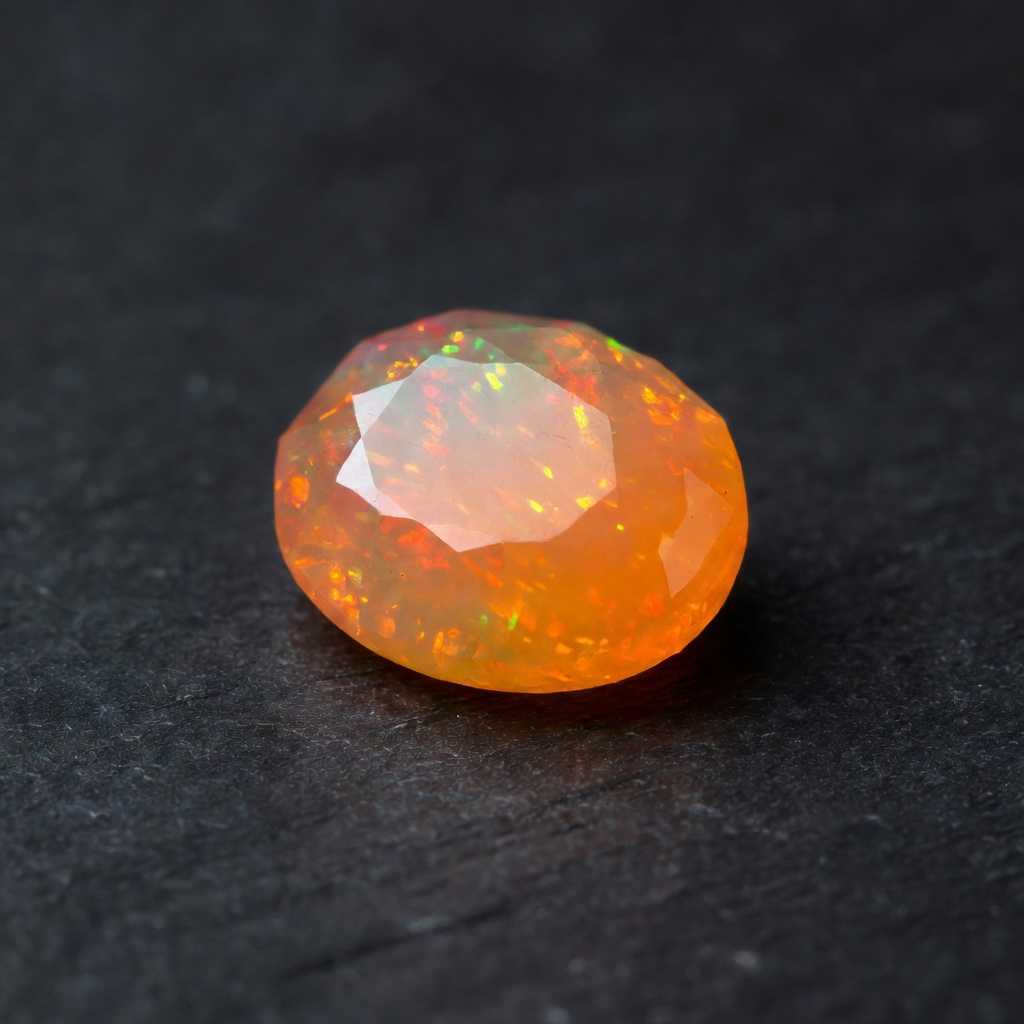
What Is Fire Opal? Understanding the Basics
Fire opal stands as one of the most captivating varieties of opal, distinguished by its warm, fiery body colors that range from pale yellow to deep reddish-orange. Unlike the milky white or gray tones associated with common opal, this gem variety derives its name from its flame-like hue that seems to glow from within the stone. When exploring Fire Opal Properties and Information, it becomes essential to understand that while all fire opals share this characteristic warm coloring, they may or may not exhibit the rainbow play-of-color seen in precious opal specimens. The gem forms through the deposition of hydrated silica in volcanic environments, where silica-rich waters percolate through lava flows and gradually solidify within gas cavities and rock fractures over millions of years.
Understanding the distinction between fire opal and other opal varieties helps collectors and jewelry enthusiasts make informed decisions. Common opal, sometimes called "potch," lacks both the fire opal's distinctive body color and the precious opal's optical phenomena, typically presenting as opaque and colorless to pale in appearance. Precious opal, conversely, is defined by its display of spectral colors through diffraction, regardless of whether the background is black, white, or crystal clear. Fire opal occupies a unique niche where its value frequently derives from the intensity and saturation of its background color rather than internal color flashes, though specimens that combine both attributes command exceptional premiums in the marketplace.
The mineral composition of fire opal consists primarily of hydrated silicon dioxide, chemically represented as SiO₂·nH₂O, where the variable water content plays a crucial role in the stone's stability and appearance. This amorphous mineral structure lacks the crystalline organization found in gems like quartz or diamond, contributing to fire opal's unique optical properties and care requirements. Formation typically occurs in volcanic regions where acidic waters dissolve silica from surrounding rocks and deposit it in vesicles—essentially gas bubbles frozen within ancient lava flows—creating the nodules and seams that miners seek today.
Physical and Chemical Properties of Fire Opal
The chemical identity of fire opal revolves around its status as a mineraloid composed of hydrous silicon dioxide, with the formula SiO₂·nH₂O indicating the presence of molecular water integrated within its structure. This water content typically ranges between three to twenty-one percent by weight, significantly influencing both the gem's appearance and its long-term durability. Higher water percentages often correlate with greater transparency in Mexican fire opal specimens, though excessive hydration can sometimes indicate instability and susceptibility to crazing—the development of surface cracks due to dehydration. Gemologists carefully assess water content through specific gravity testing and infrared spectroscopy to evaluate a stone's stability before cutting and setting.
Regarding fire opal hardness and durability, these gems rate between 5.5 and 6.5 on the Mohs hardness scale, positioning them softer than quartz (7) but harder than apatite (5). This moderate hardness necessitates protective settings when used in rings or bracelets, as the stone remains vulnerable to scratching from everyday dust particles, which often contain quartz. The specific gravity of fire opal typically falls between 1.98 and 2.20, noticeably lower than most crystalline gems due to the water content and amorphous structure. This relatively low density means that fire opals feel lighter than visually similar gems like garnet or ruby when held in the hand, providing a useful preliminary identification clue for gemologists and collectors.
Optical characteristics further distinguish fire opal from other gem materials, with refractive indices ranging from approximately 1.37 to 1.47 depending on water content and impurities. Unlike crystalline gems that exhibit consistent refractive indices, fire opal's amorphous nature results in isotropic optical behavior, meaning it does not display double refraction or pleochroism. Transparency levels vary significantly among specimens, with the most valuable Mexican varieties displaying exceptional clarity that allows light to pass completely through the stone, creating a glowing effect that enhances the warm body color. Some specimens exhibit a subtle waxy to vitreous luster that complements their fiery hues, though surface crazing can dull this appearance over time if proper care protocols are neglected.
The Spectacular Color Range of Mexican Fire Opals
Mexico stands as the world's premier source for fire opal, producing specimens renowned for their exceptional color saturation and clarity that set the standard for this gemstone variety. Mexican fire opal typically displays body colors spanning the warm spectrum from pale lemon yellow through bright mandarin orange to deep cherry red, with the most valuable stones exhibiting intense reddish-orange hues reminiscent of sunset or burning embers. The Querétaro region, particularly the mines around Querétaro City and the historic town of Magdalena, yields the majority of these gems, where volcanic activity millions of years ago created the perfect geological conditions for opal formation in rhyolite host rocks. Collectors particularly prize "cherry red" specimens that maintain transparency, as these represent the rarest and most visually striking examples of the variety.
Distinguishing between body color and play-of-color remains essential when evaluating fire opal quality and value. Body color refers to the inherent hue of the opal material itself—the yellow, orange, or red tones caused by trace amounts of iron oxide and other impurities suspended within the silica structure. Play-of-color, conversely, describes the rainbow flashes created when light diffracts through the microscopic silica spheres arranged within precious opal. While traditional fire opal derives its name and primary value from its warm body color regardless of optical phenomena, specimens that combine intense orange-red backgrounds with vibrant play-of-color (known as "precious fire opal") achieve the highest market values and collector interest.
Several factors influence the intensity and desirability of fire opal colors, with iron oxide content serving as the primary chromophore responsible for the warm tones. Higher concentrations of iron typically produce deeper orange and red colors, though excessive iron can darken the stone excessively, reducing transparency and value. Light transmission quality significantly affects visual appeal, with transparent to translucent specimens appearing more vibrant and "alive" than opaque stones. Cutters often orient fire opal rough to maximize color uniformity and minimize color zoning—uneven color distribution that can diminish a finished gem's appearance. The finest Mexican specimens display homogeneous color throughout the entire stone, appearing as if filled with liquid fire when viewed against strong illumination.
Geological Origins: Where Fire Opals Are Found
The geological story of fire opal begins in volcanic terrains where rhyolitic lava flows created the specific conditions necessary for these gems to form. Mexico's Querétaro region represents the most significant source, where opal-filled vesicles (gas bubbles) within ancient volcanic rocks have yielded spectacular specimens since pre-Columbian times. These Mexican deposits formed approximately 65 to 95 million years ago during the Cretaceous and Paleogene periods, when volcanic activity released silica-rich fluids that filled cavities in cooling lava. Secondary deposits in alluvial gravels also exist, where erosion freed opal nodules from their host rock and transported them to riverbeds and sedimentary layers, often producing smoother, more rounded specimens suitable for cabochon cutting.
Beyond Mexico, significant fire opal deposits occur in Ethiopia, particularly the Welo region, which has emerged as a major source of both crystal and fire opal since its discovery in the early 2000s. Ethiopian fire opals often display exceptional transparency and can exhibit bright play-of-color against orange or crystal backgrounds, though they sometimes require stabilization due to hydrophane properties (absorbing water and changing appearance). Australia, famous for precious black and white opal, also produces fire opal from regions like Western Australia and Queensland, typically showing yellow to orange body colors. Brazil and Guatemala contribute additional material, with Brazilian stones often displaying rich orange hues and Guatemalan specimens occasionally showing unique blue-green body colors rarely seen in Mexican material.
Understanding these geological contexts assists in natural fire opal identification, as origin often correlates with specific inclusion patterns and stability characteristics. Mexican fire opals typically form in rhyolite and may contain characteristic "pinfire" inclusions or suspension of tiny pyrite crystals, while Ethiopian material might show different internal structures related to its formation in volcanic tuffs. The volcanic genesis common to most fire opal deposits means that specimens frequently contain "matrix"—patches of host rock material included within the opal— which can serve as proof of natural origin when properly identified by gemologists. These geological fingerprints help distinguish genuine natural stones from synthetic or imitation materials that lack the complex formation history of authentic fire opal.
Historical Significance and Cultural Symbolism
Ancient Mesoamerican civilizations revered fire opal as a sacred stone long before European contact, with the Aztecs naming it "quetzalitzlipyollitli" or "the stone of the bird of paradise" due to its vivid colors resembling the plumage of the resplendent quetzal bird. Archaeological evidence from Aztec and Maya sites reveals that these cultures fashioned fire opal into ritual objects, ceremonial masks, and ornamental jewelry, believing the stones contained trapped fire or lightning captured from the gods. High-ranking priests and nobility wore fire opal during religious ceremonies to invoke the energy of the sun and ensure bountiful harvests, while warriors carried carved amulets into battle, convinced that the stone's inner fire would ignite their courage and protect them from harm.
Medieval European folklore surrounding fire opal evolved separately from American traditions, with texts from the 14th through 16th centuries attributing mystical powers to these gems. Nobles believed that wearing fire opal rendered the wearer invisible during times of danger, provided the stone remained wrapped in a fresh bay leaf. Others claimed the gem offered protection against eye diseases, enhanced physical vision, and could warn of poison by changing color or losing luster when toxic substances approached. These beliefs persisted despite the gem's relative scarcity in Europe before Spanish colonization of the Americas, after which conquistadors shipped Mexican fire opals back to Spain, introducing the stone to royal courts across the continent.
Modern crystal enthusiasts and spiritual practitioners embrace fire opal crystal meaning centered on passion, creativity, and personal transformation. Contemporary symbolism associates the stone's warm colors with the life-giving energy of the sun, representing vitality, enthusiasm, and the courage to pursue one's desires. Artists and creative professionals often keep fire opal nearby to overcome blocks and inspire innovative thinking, while those seeking emotional healing use the stone to reignite passion in relationships or personal projects that have lost their spark. Unlike the protective, grounding associations of darker gems, fire opal carries connotations of expansion, risk-taking, and the joyful expression of one's authentic self.
Metaphysical Properties and Healing Benefits
In the realm of crystal healing and energy work, fire opal maintains strong associations with the sacral chakra, known in Sanskrit as Svadhisthana, which governs creativity, sexuality, and emotional fluidity. Practitioners believe that placing fire opal on or near the lower abdomen helps activate and balance this energy center, removing blockages that manifest as creative stagnation, emotional repression, or intimacy issues. The stone's warm orange frequencies are thought to resonate with the body's water element, promoting the healthy flow of feelings and the courage to express vulnerability. Regular meditation with fire opal allegedly enhances one's ability to embrace change and navigate life's transitions with grace and confidence rather than resistance.
Beyond chakra work, Fire Opal Properties and Information within metaphysical circles emphasize the stone's capacity to boost self-confidence and personal power. Crystal healers recommend fire opal for individuals struggling with shyness, social anxiety, or feelings of unworthiness, suggesting that the stone's fiery energy helps the wearer recognize their intrinsic value and shine authentically in social situations. The gem supposedly stimulates the adrenal glands and basal metabolism, providing an energetic boost similar to caffeine but without the subsequent crash. Some practitioners use fire opal in crystal layouts to address lethargy and depression, believing that the stone's solar energy helps dispel emotional darkness and rekindle enthusiasm for life.
Physical healing applications traditionally associated with fire opal focus on the lower body and circulatory system. Historical lapidaries and modern crystal therapy texts suggest that the stone supports healthy blood circulation and may help alleviate disorders of the kidneys, lower back, and reproductive organs. Some healers use fire opal to address menstrual discomfort or support fertility treatments, though these applications should complement rather than replace conventional medical care. The stone's purported ability to energize the lower abdomen makes it popular among those practicing kundalini yoga or other disciplines focused on awakening dormant energy at the base of the spine and allowing it to rise through the body's energy centers.
Fire Opal vs Precious Opal: Key Differences Explained
Understanding the distinction between fire opal vs precious opal requires examining several key characteristics that affect both appearance and value. Precious opal, regardless of body color (black, white, crystal, or boulder), is defined by its display of play-of-color—the flashing rainbow effect created by light diffracting through microscopic silica spheres arranged in ordered patterns. This optical phenomenon remains the primary value factor for precious opal, with stones exhibiting broad, bright color flashes commanding higher prices than those showing limited or dim play-of-color. Fire opal, conversely, is defined by its warm body color (yellow, orange, or red) and may or may not display play-of-color; when fire opal does exhibit this phenomenon, it is specifically classified as "precious fire opal" and represents a hybrid category prized by collectors.
Transparency and background characteristics provide additional distinguishing features between these varieties. Fire opal frequently occurs in transparent to translucent forms that allow light to pass through the stone, creating a glowing effect that enhances the warm body color. This transparency enables faceted cutting styles rarely seen in precious opal, which is typically cut en cabochon (domed shape) to best display play-of-color and because the material is often too opaque or included for faceting. Precious opal generally derives its background color from the base material itself—black opal from carbon or iron oxide inclusions, white opal from microscopic cristobalite spheres, crystal opal from transparency—while fire opal's color comes from iron compounds suspended within the silica structure.
Market value distinctions reflect these differences in defining characteristics. Precious opal valuation prioritizes the intensity, range, and pattern of play-of-color, with black opal from Lightning Ridge, Australia, typically commanding the highest prices in the opal family. Fire opal valuation emphasizes color saturation, transparency, and size, with intense reddish-orange Mexican specimens without play-of-color sometimes exceeding the value of modest precious opals. Collector preferences vary by region and tradition; European markets historically favored the subtle play-of-color of Australian precious opal, while American and Asian markets have shown increasing appreciation for the bold, sun-like colors of transparent Mexican fire opal. When purchasing, consumers should clarify whether they seek the optical fireworks of precious opal or the warm, glowing hues characteristic of fine fire opal.
How to Identify Genuine Natural Fire Opal
Accurate natural fire opal identification requires combining visual inspection techniques with an understanding of common treatments and synthetic manufacturing methods. Natural fire opals typically display slight irregularities under magnification, including tiny inclusions of pyrite (fool's gold), iron staining, or "pinfire" patterns—minute points of light scattered throughout the stone. These imperfections actually support authenticity, as completely flawless fire opals may indicate synthetic origin or glass imitation. Genuine stones also exhibit color zoning or uneven color distribution in rough specimens, whereas dyed imitations often show unnaturally concentrated color along fractures or surface-reaching inclusions where dye has pooled.
Several treatments attempt to enhance lower-quality opal or imitate fine fire opal, requiring vigilant examination. Dyeing involves introducing colored solutions into white or pale opal to create orange or red hues; these can often be detected by examining the stone with a loupe to spot concentrated color in cracks or by testing with acetone to see if color transfers. Smoking treatments expose opal to smoke or sugar acid baths to darken the body tone and simulate black opal or enhance contrast in fire opal, creating a darkened appearance that penetrates only the surface layer. Fracture filling using oils, waxes, or polymers attempts to hide cracks and improve clarity; these treatments may be identified by observing how inclusions appear to have different luster than the surrounding opal or by watching for "flash effects" where filled cracks reflect light differently under magnification.
Professional gemological testing provides definitive identification when visual inspection proves inconclusive. Refractive index testing using a refractometer should yield readings between 1.37 and 1.47 for natural fire opal, significantly lower than glass imitations (typically 1.50-1.70) or plastic simulants. Specific gravity testing helps distinguish fire opal from look-alike materials like carnelian or hessonite garnet, as opal's SG of 1.98-2.20 falls below these harder, denser gems. Fluorescence examination under long-wave and short-wave ultraviolet light reveals characteristic patterns; natural fire opal often shows moderate to strong greenish or whitish fluorescence, while some synthetics display chalky blue fluorescence or none at all. Advanced testing using infrared spectroscopy can detect polymer impregnation or other treatments by identifying foreign chemical signatures within the stone's structure.
Essential Care and Maintenance Tips for Fire Opal Jewelry
Proper fire opal jewelry care begins with understanding the stone's sensitivity to dehydration, temperature changes, and physical impact due to its amorphous structure and significant water content. Cleaning should always involve mild methods: lukewarm water mixed with a small amount of gentle dish soap applied with a soft brush or cloth effectively removes accumulated oils and dirt without risking damage. Never use ultrasonic cleaners or steam cleaning devices on fire opal, as the vibrations can cause internal fracturing or worsen existing crazing, while steam heat can rapidly dehydrate the stone and cause cracking. After cleaning, immediately pat the stone dry with a soft, lint-free cloth rather than allowing it to air dry, as prolonged moisture exposure followed by rapid evaporation can stress the gem's structure.
Storage practices significantly impact the long-term stability of fire opal jewelry. Store pieces separately from harder gemstones like diamonds, rubies, or sapphires to prevent scratching; even dust particles containing quartz can abrade the opal's surface over time if stored loosely in a jewelry box. Consider storing valuable fire opal pieces in sealed containers with a small piece of damp cotton or in a humidified environment to prevent dehydration, particularly in arid climates or during winter when indoor heating reduces humidity. Avoid exposing fire opal to direct sunlight for extended periods or leaving it in hot cars, as excessive heat can cause the water content to evaporate, leading to crazing—fine surface cracks that permanently dull the stone's appearance and reduce its value.
Wearing precautions help preserve fire opal's beauty and structural integrity. Remove fire opal rings, bracelets, or pendants before engaging in household cleaning, swimming in chlorinated pools, or using cosmetics and perfumes, as harsh chemicals can etch the surface or alter the stone's appearance. Physical activities involving impact risk—sports, gardening, or heavy lifting—require removing fire opal jewelry to prevent chips or fractures, given the stone's 5.5-6.5 hardness rating. When selecting fire opal for daily wear, consider protective settings such as bezels that surround the gem's edges, reducing exposure to bumps and scratches. Pendants and earrings generally suit fire opal better than rings for everyday use, as they experience less direct impact and abrasion than hand jewelry.
Frequently Asked Questions
What makes fire opal different from other types of opal?
Fire opal is distinguished by its warm body colors (yellow, orange, or red) and often transparent to translucent clarity, unlike white or black opals. While precious opal displays play-of-color against any background, fire opal may or may not show this phenomenon, deriving its name from its fiery hue rather than optical effects.
Where does the best quality fire opal come from?
Mexico produces the world's finest fire opals, specifically from the Querétaro region, where volcanic conditions created ideal formation environments. Mexican fire opals are prized for their intense orange-red colors and exceptional clarity. Ethiopia and Brazil also produce notable specimens, though Mexican stones typically command higher market values.
What are the metaphysical properties associated with fire opal?
Metaphysically, fire opal is associated with passion, creativity, and emotional expression. It's believed to activate the sacral chakra, boost self-confidence, and enhance personal power. Crystal healers use it to energize the lower body, improve circulation, and support reproductive health, while also promoting spontaneity and artistic inspiration.
How can I tell if my fire opal is real or synthetic?
Natural fire opals typically show slight inclusions, color zoning, or irregularities under magnification, while synthetics often appear too perfect. Real stones feel cool to the touch and have specific gravity between 1.98-2.20. Professional gemologists can verify authenticity through refractive index testing, fluorescence patterns, and examining internal structures under magnification.
Can fire opal be worn every day in jewelry?
Due to its 5.5-6.5 hardness rating and sensitivity to dehydration, fire opal is best reserved for occasional wear rather than daily use. It's suitable for pendants and earrings, but rings should have protective settings. Avoid exposure to harsh chemicals, extreme temperatures, and direct sunlight for extended periods to prevent crazing or color fading.
What is the typical value range for quality fire opals?
Fire opal prices vary widely based on color intensity, clarity, size, and origin. Commercial quality stones may cost $10-50 per carat, while fine Mexican specimens with intense reddish-orange color and excellent transparency can command $200-1,000+ per carat. Faceted stones generally cost more than cabochons due to material loss during cutting.
Does fire opal display play-of-color like precious opal?
Not all fire opals display play-of-color (the flashing rainbow effect). When present, these are called 'precious fire opals' and command premium prices. Most fire opals derive value from their intense body color and clarity rather than opalescence. Common fire opal shows only the warm background color without internal color flashes.
How should I clean and store my fire opal gemstone?
Clean fire opal using warm water, mild soap, and a soft brush—never ultrasonic or steam cleaners. Dry immediately with a soft cloth. Store separately in a padded box away from harder gemstones to prevent scratching. Maintain moderate humidity levels to prevent dehydration, and avoid sudden temperature changes that could cause cracking.