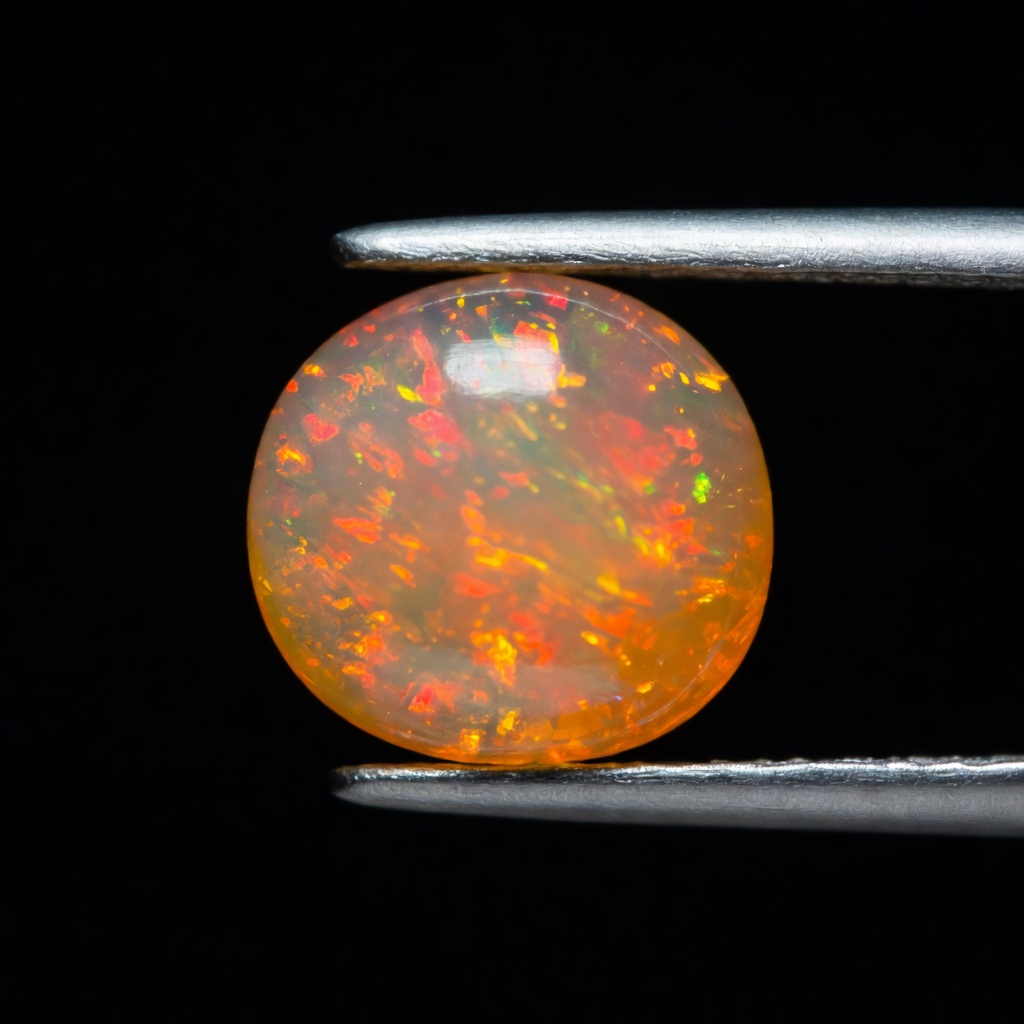
What Is Fire Opal? Understanding the Basics
Fire opal represents one of the most captivating varieties of opal, distinguished by its translucent to transparent body color that ranges from warm yellow to deep orange and cherry red. Unlike its precious opal counterparts that are prized primarily for their rainbow-like play-of-color, fire opal derives its value from its body color intensity and glass-like clarity. Chemically, fire opal consists of hydrated silicon dioxide with water content typically ranging between 3% to 10%, which contributes to its unique optical properties and requires specific care considerations. When beginning your fire opal buying guide research, understanding these fundamental characteristics helps distinguish genuine natural fire opal from imitations and lesser-quality specimens.
The primary distinction between fire opal and precious opal lies in the presence or absence of play-of-color, the optical phenomenon where flashes of rainbow colors move across the stone's surface. While some fire opals, known as precious fire opals, do exhibit play-of-color against their warm body tones, many high-quality specimens display only the characteristic orange-red hue without internal flash. This fundamental difference means that fire opal evaluation focuses heavily on color saturation, transparency, and clarity rather than the pattern intensity prized in black or white opal. Collectors and jewelry designers appreciate fire opal for its ability to mimic the glow of sunset or molten lava, offering a distinct aesthetic that stands apart from other opal varieties.
Historically, fire opal held tremendous significance in Mesoamerican civilizations, particularly among the Aztec and Mayan cultures who considered these gemstones sacred and symbolic of the elemental fire of creation. Archaeological excavations have unearthed fire opal jewelry and ceremonial objects dating back centuries, demonstrating the stone's enduring cultural importance in regions that remain primary sources today. The Querétaro region of Mexico continues this legacy, producing specimens that collectors worldwide seek for both their beauty and historical resonance. Understanding this cultural context enriches the purchasing experience, connecting modern buyers to ancient traditions of gemstone appreciation.
Fire Opal Origins: From Mexico to Ethiopia
The geological origins of fire opal significantly influence both its physical characteristics and market value, making provenance a critical factor in any purchasing decision. Mexican fire opal, specifically material sourced from the Querétaro mines, represents the industry gold standard due to the region's unique volcanic conditions that produce stones with exceptional clarity and color stability. These deposits formed within ancient volcanic flows where silica-rich waters deposited layers of opal within rhyolite host rock, creating specimens with the vivid orange-red hues that command premium prices. The Querétaro mines have operated for over a century, establishing a reputation for consistency and quality that newer sources struggle to match.
Ethiopian fire opal deposits discovered in the Wollo Province have emerged as significant competitors in the global market, offering stones that often display unique color patterns and larger crystal sizes than their Mexican counterparts. However, Ethiopian material sometimes presents challenges regarding water content stability, with some specimens requiring careful storage to prevent crazing or cracking due to environmental humidity changes. While Ethiopian fire opals can offer excellent value for collectors seeking large, visually striking stones, buyers should inquire about stabilization treatments and storage requirements when considering these alternatives. The expanding Ethiopian market has democratized access to fire opal, though purists often still prefer Mexican material for investment-grade purchases.
Origin affects fire opal value through multiple mechanisms, including color stability expectations, historical prestige, and collector desirability. Mexican stones typically command higher prices per carat due to their established reputation and generally stable nature, whereas Ethiopian stones may require disclosure of potential treatments or special care instructions. Additionally, fire opal origins from other locales such as Brazil, Australia, and the United States exist but rarely achieve the color intensity or market recognition of Mexican or Ethiopian material. When evaluating high-value specimens, documentation proving Mexican origin can add significant premium to the stone's base value, particularly for intense red specimens from specific mining districts.
Color Grading: Evaluating Fire Opal Quality
Color evaluation stands as the paramount consideration in fire opal value assessment, with the body color spectrum ranging from pale yellow and champagne through orange to the most coveted deep cherry red. The most valuable specimens display saturated orange-red combinations often described as "sunset" or "magma" coloration, where the hue remains vivid and consistent throughout the crystal. Pale yellow or milky orange stones, while attractive, generally fall into commercial-grade categories unless they possess exceptional clarity or size. Professional grading considers both the dominant hue and the presence of secondary color modifiers, with stones showing pure orange-red typically outperforming those with brownish or pinkish overtones.
The presence or absence of play-of-color creates distinct subcategories within fire opal classification, affecting both market positioning and pricing structures. Precious fire opal, which combines the warm body color with flashes of green, blue, or red play-of-color, represents the pinnacle of the category and can command prices rivaling fine black opal. However, common fire opal—defined by its body color alone without internal flash—remains highly desirable when the color saturation and transparency meet premium standards. Buyers should not dismiss non-precious fire opal as inferior, as many jewelry designers specifically seek the pure, glowing orange body color without distracting color flashes for contemporary settings.
Investment-grade fire opal color grading prioritizes intense saturation combined with medium to dark tone values, avoiding stones that appear washed out or overly dark. The most valuable color combinations feature vivid red-orange hues with high transparency that allows light to pass through and illuminate the stone from within, creating the characteristic "fire" effect. When examining potential purchases, compare stones under various lighting conditions, as natural daylight reveals true color better than artificial lighting which may mask undertones or enhance saturation artificially. For collectors building investment portfolios, prioritizing stones with certified "cherry red" or "deep orange" color grades from recognized laboratories provides documentation that supports future resale value.
Clarity and Transparency Standards
Fire opal clarity exists on a spectrum from crystal-clear transparency to translucent or milky opacity, with transparency levels directly correlating to price per carat in exponential fashion. The finest specimens achieve "crystal" status, allowing clear visibility through the stone without significant clouding, inclusions, or internal haziness that would obstruct light transmission. Translucent fire opals, while attractive and suitable for many jewelry applications, permit light passage but diffuse it enough to prevent clear visibility through the stone. Milky or opaque fire opals represent the most accessible price tier but generally appeal to niche markets rather than serious collectors seeking fire opal quality investments.
Eye-clean quality in fire opal differs from standards applied to diamonds or sapphires, as the gem type naturally accommodates certain inclusion types without catastrophic value reduction. Acceptable inclusions might include small crystal inclusions, minor cloud patches, or natural flow patterns that prove the stone's organic origin, provided they do not significantly impair transparency or create durability concerns. However, surface-reaching fractures, large included crystals, or dense clouding that obscures color concentration areas dramatically reduce value and may indicate potential instability. When evaluating fire opal clarity, examine the stone against a white background with diffuse lighting to identify any clarity characteristics that might affect long-term satisfaction.
The relationship between clarity and light performance proves particularly crucial in fire opal, as the stone's beauty relies heavily on internal illumination and glow. High-clarity stones with minimal inclusions allow light to penetrate deeply, bounce off the back facets, and return to the viewer's eye with maximum color intensity and brilliance. Conversely, included or cloudy material appears dull and lifeless regardless of body color intensity, failing to deliver the luminous quality that defines fine fire opal. For faceted stones, clarity becomes even more critical than in cabochon cuts, as facets require transparency to achieve proper light dispersion and scintillation.
Cut, Shape, and Carat Weight Considerations
The optimal fire opal cut depends largely on whether the cutter prioritizes color display or light performance, leading to two primary approaches: cabochon and faceted styles. Traditional cabochon cuts, featuring smooth, domed tops and flat bases, maximize color saturation and provide protective shaping that minimizes chipping risks for this relatively soft gemstone. Faceted fire opal cuts, increasingly popular in contemporary jewelry, require exceptional clarity but reward the owner with brilliant light return and modern aesthetic appeal. When selecting between these fire opal cut styles, consider the intended jewelry application; cabochons suit vintage-inspired designs and protective bezel settings, while faceted stones excel in pendant and earring designs where impact risk remains minimal.
Popular shapes for fire opal jewelry range from classic calibrated ovals and cushions to free-form designer cuts that follow the rough crystal's natural contours. Ovals and cushions represent the most commercially available shapes, offering efficient rough utilization and timeless appeal that suits both solitaire rings and multi-stone arrangements. Free-form or "fantasy" cuts have gained traction among artisan designers, particularly with Mexican material, allowing cutters to preserve maximum weight from irregular rough while creating unique, sculptural jewelry pieces. Emerald and pear shapes command premiums due to cutting complexity and the precision required to maintain color consistency across the stone's length.
Fire opal carat weight pricing follows exponential rather than linear scaling, with significant price jumps occurring at 3, 5, and 10-carat thresholds where larger clean material becomes increasingly scarce. Commercial-grade fire opals under 2 carats provide accessible entry points for new collectors, typically ranging from $50 to $300 per carat depending on color intensity. However, fine specimens exceeding 5 carats with intense red color and crystal clarity may command $2,000 to $5,000 per carat or higher, reflecting the rarity of large, clean rough. For investment purposes, prioritize stones between 3 to 10 carats, as this range offers the best liquidity while still representing genuinely rare material, whereas extremely large stones over 20 carats may appeal only to specialized collectors with limited resale markets.
Natural vs. Treated: What Buyers Must Know
The distinction between natural fire opal and treated material represents one of the most critical knowledge areas for prospective buyers, as treatments can significantly affect value, durability, and long-term satisfaction. Common treatments include smoking (exposure to smoke or sugar/acid solutions to darken body tone), dyeing (introducing artificial color to pale material), and fracture filling (using oils, resins, or glass to mask cracks). While some treatments like minor heating remain relatively stable, others such as dyeing may fade over time or under exposure to sunlight and cleaning solutions. Reputable dealers always disclose treatments, but the secondary market and discount retailers may offer treated stones as natural, necessitating vigilant examination.
Laboratory certification from recognized institutions such as the Gemological Institute of America (GIA) or American Gemological Laboratories (AGL) provides essential verification for significant fire opal purchases, particularly those exceeding $1,000. These reports confirm whether the stone is natural fire opal or has undergone treatments affecting its value, while also documenting origin when determinable. For high-value specimens, insist on reports that specifically address treatment detection, as standard gem identification reports might not automatically include treatment analysis unless requested. The certification cost, typically $100 to $300, represents minimal insurance when purchasing investment-grade material where treatment status affects value by 50% or more.
Visual cues that may indicate artificial enhancement include unnaturally uniform color distribution without the zoning typical of natural material, color concentrations specifically within fractures or surface-reaching inclusions, and surface residues suggesting dye or oil treatments. Smoked fire opal often appears unnaturally dark or brownish compared to naturally intense material, while fracture-filled stones may show "flash effects" or iridescence within cracks under magnification. When examining potential purchases, request to view the stone under magnification using a 10x loupe, looking for color inconsistencies, surface coatings, or filled fractures that would indicate treatment. If pricing seems significantly below market rates for the stated quality, assume treatment or synthetic origin until proven otherwise through independent laboratory verification.
Fire Opal Pricing and Value Factors
Current market pricing for fire opal spans an enormous range, from affordable commercial-grade specimens suitable for fashion jewelry to museum-quality collector pieces commanding five-figure prices per carat. Entry-level fire opals with pale yellow or orange body color, moderate inclusions, and smaller sizes typically trade between $50 and $200 per carat, offering accessible options for those beginning their collection. Fine commercial grades featuring good orange color and reasonable transparency generally fall between $300 and $800 per carat, representing the sweet spot for quality jewelry purposes. Investment-grade Mexican fire opal with intense cherry-red color, crystal clarity, and sizes over 5 carats can exceed $5,000 per carat, with exceptional specimens reaching $10,000 to $15,000 per carat at auction.
Several key value multipliers dramatically affect fire opal price beyond basic color and clarity grades, including origin verification, absence of treatment, and documentation quality. Mexican origin commands 20% to 50% premiums over Ethiopian material of equivalent visual quality, reflecting market confidence in Mexican stability and historical prestige. Untreated status multiplies value significantly, as treated stones may trade at 30% to 70% discounts compared to their natural counterparts. Additionally, stones accompanied by mine-specific documentation or historical provenance, such as pieces from closed or legendary Mexican mines, achieve collector premiums unrelated to intrinsic gemological quality.
Investment potential for fire opal remains strong for top-tier material but requires careful selection and realistic liquidity expectations. Unlike diamonds or rubies with established wholesale markets, fire opal represents a specialized collector market where liquidity depends on finding the right buyer rather than immediate cash conversion. Rare red Mexican specimens over 10 carats with documentation have shown steady appreciation of 5% to 10% annually over the past decade, outperforming many traditional investments. However, commercial-grade material and treated stones rarely appreciate significantly, functioning as consumable jewelry components rather than stores of value. For serious investors, building relationships with specialized dealers and focusing on untreated, vividly colored Mexican material provides the best probability of capital preservation and appreciation.
Choosing Settings and Jewelry Styles
Selecting appropriate settings for fire opal jewelry requires balancing aesthetic presentation with protective considerations due to the gemstone's relative softness and sensitivity to environmental factors. Bezel settings, which encircle the stone's perimeter with metal, provide optimal protection for daily wear applications, preventing edge chipping and reducing exposure to impact forces. V-prong settings offer compromise solutions that display more of the stone's pavilion while still protecting vulnerable corner points, particularly suitable for faceted stones in pendant designs. For ring applications, consider halo settings where surrounding melee diamonds or colored stones create a protective buffer while enhancing the center stone's visual impact.
Metal pairing significantly influences the perceived color intensity of fire opal, with warm-toned metals generally complementing the gem's natural orange-red hues more effectively than cool white metals. Yellow gold and rose gold settings amplify the warm glow of fire opal, creating cohesive color stories that appear intentional and harmonious. While white gold or platinum provide contemporary contrast, they may visually cool the stone's appearance, requiring more intense color saturation in the opal itself to maintain visual warmth. For stones with slight brownish or yellowish undertones, rose gold offers particular advantage, masking subtle color imperfections while enhancing the overall sunset aesthetic.
Design considerations vary significantly across jewelry types, with fire opal rings requiring the most protective engineering due to hand exposure to impact risks. For fire opal ring settings intended for regular wear, consider low-profile designs that minimize stone exposure above the finger plane, reducing snag and impact risks. Earrings and pendants allow more creative freedom, including faceted cuts and delicate prong settings, as these items experience less mechanical stress. When commissioning custom fire opal jewelry, work with jewelers experienced in opal setting techniques, as improper mounting pressure or thermal exposure during repair can damage these sensitive gemstones. Additionally, consider convertible designs where stones can be transferred between pendant and ring mountings, allowing versatile wear while limiting ring exposure to special occasions.
Care, Cleaning, and Maintenance
Proper fire opal care begins with understanding the gemstone's unique vulnerability to dehydration, thermal shock, and chemical exposure, requiring maintenance protocols distinct from harder gemstones like diamonds or sapphires. Cleaning should involve only mild soap, lukewarm water, and soft brushes, avoiding ultrasonic cleaners that can cause internal fracturing through vibration and thermal cleaners that risk dehydration or thermal shock. Harsh chemicals including bleach, ammonia, and acidic solutions can etch the opal surface or dissolve internal structure, necessitating removal of fire opal jewelry before household cleaning or swimming in chlorinated pools. After washing, pat stones dry with soft lint-free cloths rather than rubbing, which can generate static electricity attracting dust particles to the surface.
Storage recommendations for fire opal focus on preventing physical damage from harder gemstones and maintaining stable humidity levels to prevent crazing or cracking. Store fire opal pieces separately in soft cloth pouches or padded jewelry boxes, never allowing them to contact diamonds, rubies, sapphires, or other hard stones that could scratch the relatively soft opal surface. For long-term storage of valuable specimens, consider maintaining humidity levels between 50% to 70% using silica gel packets or specialized jewelry safes with climate control, particularly important for Ethiopian material. Avoid storing fire opals in safety deposit boxes for extended periods without periodic inspection, as the extremely dry conditions in many bank vaults can dehydrate stones over years, leading to irreversible cracking.
Durability concerns regarding water exposure require nuanced understanding, as natural fire opal from stable deposits can generally withstand normal wear including hand washing and rain exposure without damage. However, sudden temperature changes—such as moving from hot sunlight into air-conditioned spaces or wearing fire opal jewelry in hot tubs—create thermal shock risks that can cause immediate fracturing. Remove fire opal rings before cooking, baking, or handling frozen foods where temperature differentials pose threats. Additionally, be aware that some Ethiopian fire opals may be hydrophane, meaning they temporarily absorb water and become transparent when wet, returning to normal appearance upon drying—a characteristic that, while reversible, indicates higher care requirements than Mexican material.
Where to Buy: Trusted Sources and Red Flags
Finding reputable sources for fire opal purchases requires diligent vetting of dealers, auction houses, and online retailers to ensure authenticity, fair pricing, and ethical sourcing. Established colored stone dealers specializing in opal, particularly those with direct relationships to Mexican mining operations, offer the best combination of expertise, selection, and recourse should issues arise. Major auction houses like Christie's and Sotheby's occasionally feature important fire opal specimens in their jewelry auctions, providing access to investment-grade material with established provenance. Online retailers can provide excellent value and selection, but prioritize those offering detailed photography, return policies, and third-party certification rather than relying solely on vendor descriptions.
Essential questions to ask potential sellers include specific origin documentation, treatment status with laboratory verification, return policy terms, and whether the stone has undergone stability testing for hydration sensitivity. Reputable dealers willingly provide detailed provenance information, explaining whether Mexican fire opal comes from specific mines known for color stability or if Ethiopian material requires special care instructions. Inquire about the seller's experience with opal specifically, as general jewelry retailers may lack the specialized knowledge to evaluate these unique gemstones properly. Request to examine stones under various lighting conditions before purchase, and never feel pressured to buy immediately without opportunity for independent appraisal.
Warning signs of potential scams include pricing significantly below market rates for stated quality, vague or evasive answers regarding treatment or origin, and sellers who discourage independent certification. Synthetic fire opals, while relatively uncommon compared to synthetic diamonds, do exist and may be marketed as natural material by disreputable vendors; these typically show unnaturally perfect color distribution and lack natural inclusions under magnification. Extremely cheap pricing often indicates treated, composite, or imitation material—genuine natural fire opal with vivid color commands substantial prices, and "too good to be true" deals almost always represent misrepresented products. Trust your instincts: if a seller cannot provide clear documentation, appears uninformed about opal characteristics, or pressures for immediate sale without returns, seek alternative sources regardless of apparent bargains.
Frequently Asked Questions
What makes fire opal different from other types of opal?
Fire opal is characterized by its translucent to transparent body color ranging from yellow to orange to red, unlike precious opal which displays play-of-color against a white or dark body. While fire opal may show play-of-color, it's defined primarily by its warm body hue and glass-like clarity rather than the rainbow flash effect seen in black or white opal.
How much should I expect to pay for a quality fire opal?
Quality fire opals typically range from $50 to $500 per carat for commercial grades, while fine Mexican specimens with intense red-orange color and crystal clarity can command $1,000 to $5,000 per carat. Exceptional large stones with vivid color saturation and no treatments may exceed $10,000 per carat.
Are Mexican fire opals considered the best quality?
Mexican fire opals, particularly those from the Querétaro region, are generally considered the finest due to their vivid orange-red colors, excellent transparency, and stability. However, Ethiopian fire opals have emerged as high-quality alternatives, often displaying unique color patterns, though they may require more careful handling regarding hydration stability.
Can fire opals be worn every day in rings?
Due to their relative softness (5.5-6.5 on the Mohs scale) and sensitivity to abrupt temperature changes, fire opals are better suited for occasional wear or protected settings like pendants and earrings. If worn daily in rings, choose protective bezel settings and remove the jewelry during activities involving impact, chemicals, or extreme temperatures.
How can I tell if a fire opal is natural or treated?
Natural fire opals show consistent color distribution and natural inclusions under magnification, while treated stones may display color concentrations in fractures or unnaturally uniform hues. Always request certification from reputable laboratories like GIA or AGL for significant purchases, as treatments like smoking or dyeing can be difficult to detect with the naked eye.
What color of fire opal is most valuable?
Deep orange-red to cherry-red fire opals with strong saturation and crystal transparency command the highest prices. Stones exhibiting vivid red body color with hints of gold or orange, particularly those over 5 carats with eye-clean clarity, are considered the most desirable and valuable in the current market.
Do fire opals have play-of-color like black opals?
While some fire opals display play-of-color (known as precious fire opal), many exhibit only body color without the internal rainbow flash. Fire opals without play-of-color are still valuable based on their body color intensity and transparency. The presence of strong play-of-color significantly increases value but is not required for a stone to be classified as fire opal.
Is fire opal a good investment gemstone?
High-quality untreated Mexican fire opals from reputable mines have shown steady appreciation, particularly rare red specimens over 10 carats. However, fire opals are less liquid than diamonds or rubies. Investment potential depends on purchasing top-tier material with proper documentation, as commercial-grade stones rarely appreciate significantly.