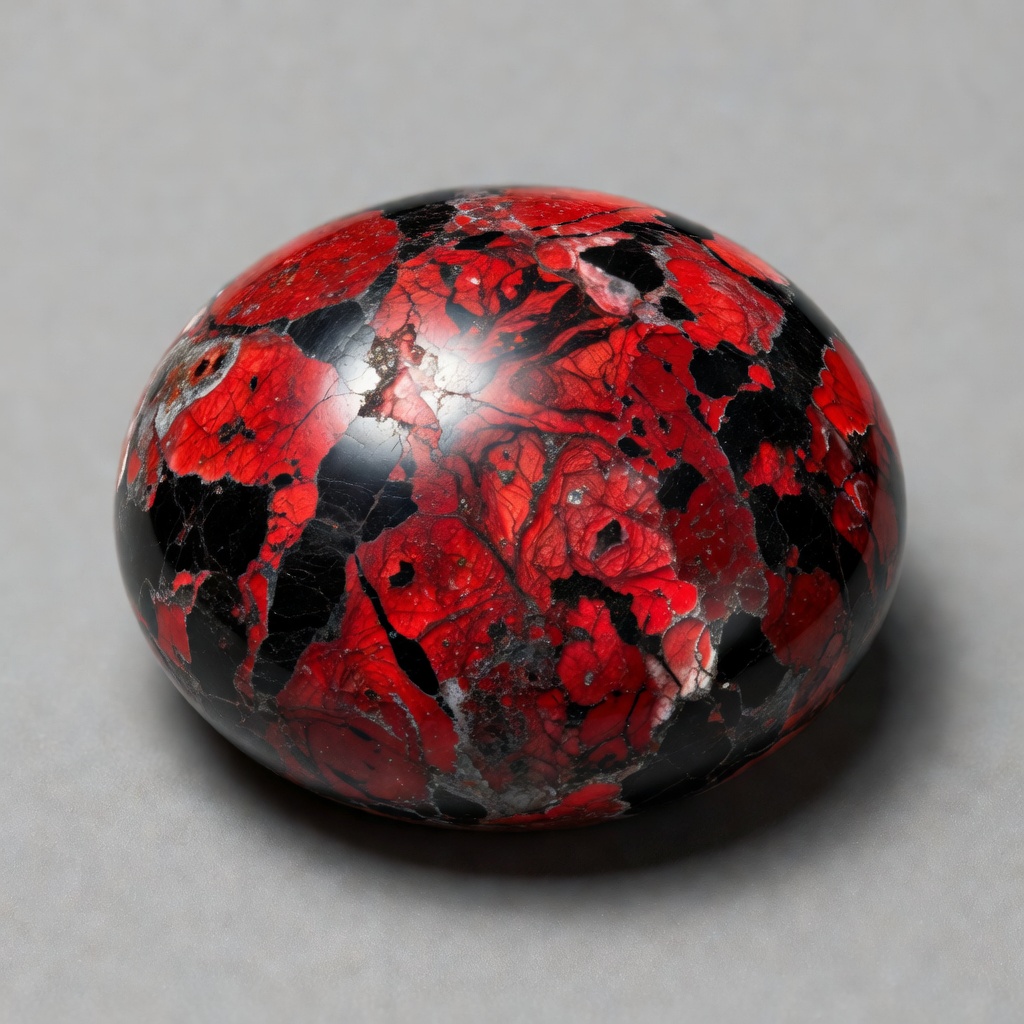
Understanding Eudialyte: Origins and Properties
Eudialyte represents one of the most geologically complex and visually striking gemstones available to collectors and jewelry enthusiasts today. This rare eudialyte stone forms exclusively within alkaline igneous rock complexes, specifically nepheline syenites and their associated pegmatites, where unique chemical conditions allow for its crystallization. The most significant deposits occur in Russia's Kola Peninsula, particularly within the Khibiny and Lovozero massifs, with additional notable sources found in Quebec and Nunavut, Canada, as well as minor occurrences in Greenland and Madagascar.
The distinctive chemical composition of eudialyte sets it apart from other red gemstones, containing significant amounts of zirconium, silicon, sodium, calcium, iron, and manganese arranged in a complex trigonal crystal system. This unique mineralogy contributes to its characteristic appearance and explains why large, gem-quality crystals remain exceptionally scarce in the marketplace. When examining eudialyte properties, collectors should note its relatively modest hardness of 5 to 5.5 on the Mohs scale, combined with a specific gravity ranging from 2.7 to 3.0, which helps distinguish genuine specimens from imitations.
Historically, eudialyte first gained recognition in 1819 when it was discovered in the Langesundsfjord region of Norway, though the name itself derives from the Greek words for "well decomposable" due to its solubility in acids. The mineral holds particular cultural significance in Lapland and surrounding Nordic regions, where local artisans have incorporated it into traditional decorative objects for generations. Modern gemological appreciation focuses primarily on the translucent to opaque red varieties, though the mineral naturally occurs in colorless, yellow, brown, and even violet hues depending on specific trace element substitutions within its complex crystal lattice.
Evaluating Color Quality in Eudialyte
Premium Color Grades and Valuation
When assessing red eudialyte for purchase, color intensity serves as the primary value determinant, with premium specimens displaying deep cherry-red to vivid raspberry hues commanding the highest market prices. The most desirable stones exhibit saturated, uniform coloration that appears to glow from within when properly cut and polished, resembling the finest rhodolite garnet or rubellite tourmaline. Top-tier material often originates from specific pockets within Russian mines where manganese concentrations reached optimal levels during formation, creating that signature intense crimson appearance that defines investment-grade specimens.
Understanding the nuances of eudialyte quality factors requires recognizing acceptable variations within the color spectrum. While pure red remains the gold standard, specimens displaying subtle pinkish-red or orangish-red secondary hues can still represent excellent value if the saturation remains strong. Professional dealers typically grade eudialyte using terminology similar to ruby classification, with "pigeon's blood" analogies occasionally applied to the finest Russian material, though buyers should verify such claims through independent laboratory analysis.
Understanding Natural Variations and Zoning
Natural color zoning and banding patterns frequently appear in eudialyte specimens, reflecting the changing chemical environments during their millions-of-years formation process. Concentric rings alternating between deep red and lighter pink zones often create visually appealing patterns that lapidaries strategically orient to maximize aesthetic appeal in cabochon cuts. These natural variations differ significantly from undesirable pale, washed-out colors that indicate lower manganese content and reduced desirability, often resulting in prices 60-70% lower than vividly colored counterparts of similar size.
The presence of black aegirine inclusions significantly impacts both the appearance and value assessment of red eudialyte, creating a distinctive spotted or webbed pattern that characterizes most authentic specimens. While some collectors specifically seek these "snowflake" patterns as proof of natural origin and visual interest, excessive black material can obscure the red body color and reduce transparency, thereby diminishing market value. Ideally, premium stones balance intense red coloration with minimal black veining, though completely clean material is virtually non-existent and should trigger authenticity concerns.
Clarity Standards and Inclusion Assessment
Distinguishing Natural Characteristics from Damage
Eudialyte clarity evaluation requires understanding the difference between acceptable natural mineral inclusions and detrimental fractures or cleavage breaks. Authentic specimens typically contain characteristic black aegirine needles, white calcite patches, or yellowish natrolite formations that serve as fingerprint inclusions confirming natural origin. These mineral guests, while technically reducing clarity grades according to traditional diamond standards, actually enhance authenticity verification and often create unique visual textures prized by mineral collectors.
However, surface-reaching fractures, internal cleavage cracks, and repair lines significantly compromise both durability and value. When examining genuine eudialyte identification characteristics, prospective buyers should use magnification to distinguish between the sharp, angular cleavage planes typical of eudialyte's perfect cleavage in one direction and the more rounded, natural inclusion boundaries. Fractured material presents stability risks for jewelry applications and typically commands prices 40-50% below comparable unfractured specimens.
Treatment Recognition and Enhancement Detection
The eudialyte market occasionally encounters treated or enhanced material designed to improve apparent clarity and color, requiring vigilant inspection by knowledgeable buyers. Common treatments include wax or oil impregnation to mask surface-reaching fractures and improve luster, though these temporary enhancements typically degrade within months of regular wear. Heat treatment remains rare due to eudialyte's sensitivity to thermal shock, though some pale material may undergo dyeing to simulate the premium cherry-red coloration associated with fine Russian specimens.
Identifying treated stones involves examining surface concordance between color concentrations and fracture patterns, as dyes tend to accumulate in cracks and surface imperfections. Additionally, treated material often displays unnaturally uniform coloration lacking the subtle variations typical of natural specimens. When purchasing significant pieces, always request documentation confirming no treatments, as undisclosed enhancements can reduce value by 80% or more while potentially compromising the stone's long-term stability in jewelry settings.
Cut, Shape, and Carving Considerations
The Dominance of Cabochon Cutting
The vast majority of eudialyte jewelry available today features cabochon cuts rather than faceted designs, reflecting both the material's physical limitations and aesthetic advantages. Cabochons—smooth, domed surfaces without facets—optimally display eudialyte's distinctive color patterns, banding, and mineral inclusions while minimizing the risk of chipping along cleavage planes. Expert lapidaries typically cut cabochons with dome heights ranging from low to medium profiles, as excessively high domes may create uneven color distribution while too-flat profiles fail to showcase the stone's depth and translucency.
When selecting cabochon-cut eudialyte cuts, examine the symmetry and polish quality carefully, as the relatively soft nature of the material (5-5.5 Mohs) makes it susceptible to scratching during the cutting process. High-quality cabochons should display smooth, mirror-like surfaces free from visible scratches, pits, or dull areas. The girdle edges should be gently rounded rather than sharp to reduce chipping risks during setting, particularly important for pieces intended for pendants or earrings where impact resistance remains crucial.
Faceting Challenges and Rare Exceptions
Faceted eudialyte remains exceptionally rare in the market due to the combination of perfect cleavage, moderate hardness, and typical inclusion content that makes faceting technically challenging and economically risky. Only transparent to highly translucent rough material with minimal fracturing warrants the investment of faceting time, and even then, only master cutters familiar with the material's quirks should attempt the work. When faceted specimens do appear, they typically command premium prices due to scarcity, with brilliant cuts and step cuts being the most common styles that maximize light return while minimizing stress on vulnerable crystal axes.
Freeform and asymmetrical cuts have gained popularity among contemporary designers working with eudialyte, particularly for statement pendants and brooches where artistic expression takes precedence over traditional gem cutting norms. These organic shapes often follow the natural contours of rough crystals, preserving maximum weight while creating unique, one-of-a-kind pieces. Matrix specimens—showing eudialyte embedded in its host rock—are frequently cut as freeform cabochons or left as natural specimens, appealing to mineral collectors who value geological context alongside gemological beauty.
Size, Weight, and Pricing Structure
Carat Weight Impact on Market Value
Eudialyte price structures follow exponential rather than linear progression as carat weights increase, particularly for fine-quality material suitable for jewelry. Stones under 5 carats typically fall into the commercial grade category, priced between $2 and $30 per carat depending on color intensity and clarity. However, once specimens exceed 10 carats while maintaining premium color and acceptable clarity, prices can jump to $50-$200 per carat or higher, reflecting the extreme scarcity of large, clean rough material in the mining districts.
Collector-grade specimens weighing 50 carats or more, particularly those showing exceptional crystal formations or matrix associations, often sell for lump-sum prices rather than per-carat calculations. These pieces may range from $500 to several thousand dollars depending on aesthetic qualities, provenance, and whether the specimen remains in its natural crystal form versus being cut into cabochons. When calculating eudialyte value, remember that usable clean areas within a large rough stone may represent only 20-30% of the total weight after cutting, explaining the steep price premiums for sizable finished gems.
Specimen Categories and Budget Considerations
Entry-level eudialyte suitable for beginning collectors or casual jewelry wear typically costs between $20 and $50 for small cabochons or tumbled stones ranging from 1 to 3 carats. These pieces usually display pale pink to medium red colors with visible black inclusions and may show minor surface imperfections. Mid-range specimens offering good color saturation and relatively clean appearance generally fall within the $100-$300 range for sizes between 5 and 10 carats, representing the sweet spot for serious enthusiasts seeking quality without investment-grade premiums.
Investment-grade eudialyte commanding prices above $500 typically features intense cherry-red color, minimal visible inclusions, expert cutting, and sizes exceeding 5 carats. Matrix specimens containing eudialyte crystals embedded in contrasting host rock can vary wildly in price, from $25 for small display pieces to $1,000+ for museum-quality formations from famous localities like the Khibiny Massif. When budgeting for acquisitions, allocate additional funds for professional certification and appropriate settings, as these ancillary costs often represent 20-30% of the total investment for fine pieces.
Authenticity Verification and Certification
Common Simulants and Market Deceptions
The rarity and distinctive appearance of quality red eudialyte have inevitably led to various simulants and deceptive practices in the marketplace. Common substitutes include dyed quartz, red jasper, or glass imitations that lack the complex internal structure and specific gravity of genuine material. Some unscrupulous dealers may offer "eudialyte" that is actually rhodonite or rhodochrosite, minerals that share similar pink-to-red coloration but possess entirely different chemical compositions and physical properties. Genuine eudialyte identification requires examining the characteristic black aegirine inclusions, which most simulants cannot accurately replicate.
Treated stones present another authentication challenge, particularly when pale eudialyte undergoes dyeing to simulate premium Russian red material. These enhancements often prove temporary, fading with exposure to sunlight, skin oils, or cleaning agents. Additionally, composite stones—featuring thin eudialyte veneers glued to backing materials—occasionally appear in inexpensive jewelry settings. These assembled gems fail standard specific gravity tests and may show visible glue lines or color discrepancies between layers when examined under magnification.
Laboratory Certification and Home Testing
For significant purchases, insist upon eudialyte certification from recognized gemological laboratories such as the Gemological Institute of America (GIA), American Gemological Laboratories (AGL), or similarly accredited institutions. These reports should specify natural origin, absence of treatment, and key identifying characteristics including refractive indices (typically 1.596-1.610), specific gravity measurements, and fluorescence reactions under UV light (usually weak to moderate yellowish or reddish). While certification adds $50-$200 to purchase costs, it provides essential documentation for insurance, resale, and peace of mind.
Home testing methods can provide preliminary authentication for experienced collectors. Measuring specific gravity using the hydrostatic method should yield results between 2.7 and 3.0, significantly higher than most simulants like quartz (2.65) or plastic imitations (1.05-1.55). A simple refractive index test using a refractometer can confirm the reading falls within eudialyte's range, while polariscope testing will reveal the doubly refractive nature of the trigonal crystal system. Red flags in online listings include prices significantly below market rates, stock photos rather than images of the actual item, and sellers unwilling to provide return privileges or certification options.
Trusted Sources: Where to Buy Eudialyte
Mineral Shows and Direct Relationships
Reputable mineral and gem shows represent the optimal venues for purchasing eudialyte stone specimens, offering the tactile examination opportunities essential for assessing color, clarity, and authenticity. Major events like the Tucson Gem and Mineral Show, Denver Gem and Mineral Showcase, and Munich Mineral Show feature established dealers who source material directly from mining operations or legitimate wholesalers. These venues allow buyers to compare multiple pieces simultaneously, examine rough material before cutting, and develop relationships with dealers who specialize in rare alkaline mineral suites including eudialyte.
When attending mineral shows, prioritize dealers who provide detailed locality information, provenance documentation, and transparent disclosure of any treatments. Russian mineral dealers often maintain direct connections to the Kola Peninsula mines, though export restrictions and geopolitical considerations have complicated supply chains in recent years. Canadian dealers specializing in Quebec minerals represent excellent alternatives, often offering competitive prices on good-quality material from the Mont Saint-Hilaire or Kipawa regions. Building long-term relationships with these specialists typically results in first access to new finds and preferential pricing on investment-grade material.
Evaluating Online Marketplaces and Dealers
Vetted online eudialyte dealers offer convenience for collectors unable to attend physical shows, though due diligence remains essential when buy eudialyte through digital platforms. Established dealers like those certified by the International Gem Society (IGS) or members of the American Gem Trade Association (AGTA) typically provide detailed photographs, video examinations, and return policies allowing inspection periods. Before purchasing, verify the dealer's reputation through independent reviews, Better Business Bureau ratings, and gemological forum discussions where experienced collectors share vendor experiences.
Avoid tourist trap gift shops near mining localities or generic souvenir stores, as these venues frequently mislabel common red stones as eudialyte or sell low-grade matrix material at inflated prices based on location proximity rather than quality. Similarly, exercise extreme caution with auction sites and marketplace platforms where individual sellers may lack gemological expertise or intentionally misrepresent material. When sourcing directly from international miners or rough dealers, confirm export documentation requirements and customs regulations, as eudialyte shipments from certain regions may require specific permits or certification to cross borders legally.
Durability Concerns and Wearability
Appropriate Jewelry Applications
Understanding eudialyte durability limitations proves crucial when designing or selecting eudialyte jewelry for regular use. With a Mohs hardness of 5-5.5 and perfect cleavage in one direction, this gemstone ranks among the softer, more fragile jewelry materials, comparable to opal or lapis lazuli in terms of wear resistance. Consequently, eudialyte performs best in protective settings for occasional wear pieces such as pendants, earrings, and brooches, where impact and abrasion risks remain minimal. These applications minimize contact with hard surfaces while showcasing the stone's distinctive coloration in highly visible locations.
Rings and bracelets featuring eudialyte require careful consideration and protective design elements, as these high-impact jewelry types expose stones to constant knocking against hard surfaces. If choosing eudialyte for rings, reserve them for dress rings worn on special occasions rather than daily wear engagement or wedding bands. The combination of moderate hardness and brittle tenacity means that sharp blows can cleave the stone along its perfect cleavage plane, resulting in catastrophic breakage that cutting or polishing cannot repair. For active individuals or those working with their hands, alternative red gemstones like spinel or ruby offer superior durability for daily wear applications.
Setting Selection for Protection
Protective setting styles significantly extend the wearable lifespan of eudialyte pieces, with bezel settings offering superior protection compared to prong styles. A well-designed bezel surrounds the stone's girdle with a continuous rim of metal, shielding edges from impacts while preventing snagging on clothing that might torque the stone. For cabochon-cut eudialyte, deep bezel walls that extend slightly above the stone's dome provide optimal protection without obscuring too much surface area. Double bezels or raised collet settings add structural integrity for larger specimens prone to stress concentrations.
When setting faceted eudialyte (rare though they are), avoid tension settings or fragile prong configurations that concentrate stress at specific points. Instead, choose basket settings with protective bars or V-prongs that distribute pressure across the stone's crown. Metal selection also influences protection levels, with 14k or 18k gold providing adequate support while platinum's stiffness offers superior protection against deformation that might transfer impact forces to the gemstone. Regular inspection of settings every six months by a professional jeweler helps identify loose stones or metal fatigue before catastrophic losses occur.
Care, Cleaning, and Storage Best Practices
Routine Maintenance Protocols
Proper eudialyte care begins with understanding the material's chemical sensitivity and physical vulnerabilities. Clean your eudialyte jewelry using only warm water (not exceeding 100°F), mild dish soap free from harsh detergents or moisturizers, and a soft-bristled brush such as a baby's toothbrush or dedicated jewelry cleaning brush. Gently scrub the stone's surface to remove accumulated oils, cosmetics, and environmental contaminants, taking care not to apply excessive pressure that might stress cleavage planes. Rinse thoroughly under lukewarm running water, ensuring no soap residue remains in setting crevices, and pat dry with a soft, lint-free microfiber cloth.
Avoid ultrasonic cleaners and steam cleaning equipment entirely, as the vibrations and thermal shock can exploit internal fractures or cleavage planes, causing stones to shatter even if they appear stable initially. Similarly, avoid chemical cleaning solutions, ammonia-based products, acids, or alcohol-based cleaners that might react with eudialyte's complex silicate structure or attack any filler materials present in treated stones. For pieces with significant dirt buildup or complex settings, professional cleaning by a jeweler experienced with soft stones provides the safest restoration option.
Environmental Considerations
Eudialyte maintenance requires careful storage practices to prevent scratching and environmental damage. Store eudialyte pieces separately from harder gemstones such as diamonds, sapphires, rubies, or quartz, which can easily scratch the relatively soft eudialyte surface. Individual soft cloth pouches, fabric-lined jewelry boxes with compartments, or acid-free tissue paper wrapping provide adequate protection. Avoid storing eudialyte in direct sunlight or hot display cases, as prolonged heat exposure can potentially cause color fading or thermal stress cracking in stones with existing fractures.
Temperature sensitivity extends to daily wear precautions; remove eudialyte jewelry before swimming in chlorinated pools or hot tubs, as thermal shock combined with chemical exposure creates risky conditions. Similarly, avoid wearing eudialyte during activities involving rapid temperature changes, such as moving between extreme outdoor cold and heated indoor environments, or during cooking where ovens and freezers create thermal gradients. Apply cosmetics, perfumes, and hairsprays before putting on eudialyte jewelry, as these products can create films on the stone surface that require aggressive cleaning to remove, potentially damaging the polish over time.
Investment Potential and Collection Value
Market Scarcity and Production Trends
The eudialyte investment landscape remains attractive due to genuine supply constraints resulting from limited active mining operations and declining production from historically significant sources. The Kola Peninsula mines, responsible for the finest red eudialyte specimens, face increasing operational challenges including depth limitations, environmental regulations, and infrastructure maintenance in remote Arctic conditions. No significant new eudialyte discoveries have emerged in recent decades to replace depleting reserves, suggesting that high-quality material will become progressively scarcer in coming years, potentially driving values upward for exceptional specimens.
Market analysis indicates that eudialyte collection value correlates strongly with documented locality, with specimens from specific famous mines like Yukspor or Khibiny commanding 30-50% premiums over generic Russian material. Collector preferences have shifted toward matrix specimens showing crystal formations in host rock, particularly when accompanied by associated rare minerals such as aegirine, arfvedsonite, or steenstrupine. Investment-grade pieces should possess impeccable provenance documentation, including specific mine names, discovery dates when available, and previous ownership history for significant historical specimens.
Documentation and Provenance
Maintaining detailed documentation significantly enhances resale value and insurability for eudialyte collections. Create digital archives including high-resolution photographs, laboratory certifications, purchase receipts, and any geological context information provided by the original dealer. For matrix specimens, preserve locality labels and mine tags that authenticate the source, as these paper trails become increasingly important as specimens change hands. Unlike diamonds or colored stones with established grading reports, eudialyte valuation often depends heavily on the specimen's story and documented authenticity.
Resale markets for fine eudialyte remain specialized, primarily functioning through mineral auction houses, established dealer networks, and high-end gem shows rather than general jewelry resale channels. While eudialyte does not liquidate as quickly as diamonds or gold, exceptional pieces from renowned localities typically retain or appreciate in value, particularly as Russian material becomes harder to export legally. Diversifying a collection across different forms—fine cabochons for jewelry, crystal specimens for display, and matrix pieces for geological interest—provides multiple exit strategies should market preferences shift between mineral specimens and cut gemstones.
Frequently Asked Questions About Eudialyte
What makes eudialyte valuable compared to other red gemstones?
Eudialyte's value stems from its rarity, unique chemical composition containing zirconium, and limited geographic sources primarily in Russia's Kola Peninsula. Unlike common red gems, high-quality eudialyte with intense cherry-red color and minimal black inclusions is genuinely scarce, making it highly sought after by collectors and mineral enthusiasts.
How much should I expect to pay for quality eudialyte per carat?
Entry-level eudialyte typically costs $2-5 per carat for smaller, pale specimens with visible inclusions. Medium-quality stones with good red color range from $10-30 per carat. Investment-grade eudialyte featuring deep cherry-red color, high clarity, and expert cutting can command $50-200+ per carat, especially in sizes exceeding 5 carats.
How can I tell if my eudialyte is genuine or a fake?
Authentic eudialyte displays distinctive black aegirine inclusions within a red matrix, has a specific gravity of 2.7-3.0, and shows weak to moderate fluorescence under UV light. Fakes often appear too uniform in color, lack natural mineral inclusions, or feel unusually light. Always request laboratory certification for expensive purchases and buy from reputable dealers only.
Is eudialyte suitable for engagement rings or daily wear jewelry?
Due to its 5-5.5 Mohs hardness and perfect cleavage, eudialyte is generally unsuitable for daily wear rings or bracelets. It's best reserved for occasional wear pieces like pendants, earrings, or brooches where impact risk is minimal. If used in rings, protective bezel settings and limited wear are essential to prevent chipping and scratching.
What is the best cut for eudialyte gemstones?
Cabochon cuts (smooth, domed tops) are universally preferred for eudialyte because they display the stone's distinctive color patterns and mineral inclusions beautifully while minimizing fracture risks. Faceted cuts are rare and risky due to cleavage planes, typically reserved only for exceptional transparent material by experienced lapidaries.
Does eudialyte have any metaphysical or healing properties?
Crystal healing practitioners associate eudialyte with heart chakra activation, emotional healing, and manifestation of one's life purpose. It's often called the 'Stone of the Heartland' believed to help release negative emotions and promote self-love. However, these properties are not scientifically proven and should not replace medical treatment.
Where does the finest eudialyte come from?
The world's finest eudialyte originates from the Kola Peninsula in Russia's Murmansk Oblast, specifically from the Khibiny and Lovozero alkaline massifs. Canadian deposits in Quebec and Nunavut produce good material, but Russian specimens typically exhibit the most intense red colors and largest crystal formations prized by collectors.
How do I clean and care for my eudialyte jewelry properly?
Clean eudialyte using only warm water, mild dish soap, and a soft brush. Avoid ultrasonic cleaners, steam cleaning, harsh chemicals, and acids. Store separately from harder gemstones (diamonds, sapphires, quartz) to prevent scratching. Remove eudialyte jewelry before physical activities, swimming in chlorinated water, or applying cosmetics and perfumes.