What Is Euclase? Understanding the Rare Gemstone
Euclase stands as one of the mineral kingdom's most coveted treasures, a beryllium aluminum silicate that distinguishes itself through its unique monoclinic crystal structure despite sharing chemical similarities with more common beryl varieties. First discovered in 1792 by the French mineralogist René Just Haüy, this remarkable gemstone derives its name from the Greek words "eu" (well) and "klasis" (breaking), referencing its perfect cleavage that challenges even master cutters. Unlike its more abundant cousins emerald and aquamarine, Rare Euclase crystals occur in significantly limited quantities, with fewer than twenty significant localities worldwide producing material suitable for faceting.
The Euclase gemstone value stems largely from this extreme scarcity combined with its exceptional optical properties, including a vitreous luster and refractive index ranging from 1.650 to 1.672 that exceeds that of aquamarine. Historical specimens from the Ouro Preto mines of Brazil have achieved legendary status among collectors, with museum-grade crystals from the 19th century commanding premium provenance value. Modern deposits in Colombia's Gachalá region and Zimbabwe's Mwami district occasionally yield exceptional material, though Brazilian material remains the benchmark for quality in the international market.
Factors Determining Euclase Market Value
Professional gemologists evaluate Euclase price factors through a sophisticated matrix that prioritizes color intensity above all other characteristics, followed closely by clarity, cut precision, and carat weight. Unlike diamonds that rely on standardized grading scales, gemstone valuation criteria for Euclase require specialized expertise due to the material's rarity and the significant impact of origin on desirability. Collectors specifically seek specimens demonstrating the gem's characteristic high dispersion and pleochroism, optical phenomena that create visual depth unavailable in common blue gemstones.
When assessing investment potential, experts examine the stone's transparency under various lighting conditions, noting that Euclase's perfect cleavage often results in internal fractures that significantly impact durability and value. The gemstone's brittleness necessitates protective settings for jewelry applications, meaning that stones intended for collection rather than wear typically command higher premiums due to their pristine condition. Documentation of specific mine localities, particularly the historic Santa Teresa mine in Brazil, can increase value by 15-30% compared to material from lesser-known sources.
Euclase Price Per Carat: 2024 Market Analysis
The current Euclase price per carat reflects a stratified market where quality differentials create exponential value gaps between commercial and collector-grade material. Entry-level specimens showing pale blue coloration with visible inclusions typically trade between $100 and $500 per carat, suitable for beginning collectors or educational collections. Fine quality blue specimens exhibiting medium saturation and eye-clean clarity command substantially higher prices ranging from $1,000 to $5,000 per carat, representing the sweet spot for serious investors seeking liquidity alongside appreciation potential.
At the pinnacle of the market, exceptional museum-grade stones featuring intense cornflower blue hues, flawless clarity, and precision cutting regularly exceed $10,000 per carat at specialized auctions and dealer networks. This Euclase cost guide reveals significant disparities between wholesale and retail pricing, with brick-and-mortar galleries typically applying markups of 40-100% over wholesale acquisition costs. Online marketplaces and direct-to-collector platforms have begun narrowing this gap, though authentication remains paramount when acquiring high-value specimens through digital channels.
Color Variations and Premium Pricing Tiers
Color serves as the primary value determinant in Blue Euclase price hierarchies, with intense saturated blues reminiscent of fine sapphire commanding the absolute highest premiums in the collector market. The Euclase color grades progress from colorless or pale blue varieties valued at the lower end of the spectrum, through blue-green and teal transitional hues, to the coveted intense royal blue specimens that define investment-grade material. Gemological analysis reveals that the most valuable stones display strong pleochroism showing deep blue along one crystal axis and pale blue or colorless perpendicular orientations, requiring master cutters to orient the table facet precisely to maximize face-up color.
Market preferences distinctly favor vivid saturation over lighter tones, with stones possessing gray or green undertones trading at 30-50% discounts compared to pure blue specimens. Recent auction data indicates that untreated natural color Euclase from classic Brazilian localities appreciates approximately 12% annually, outperforming many traditional investment vehicles. Collectors should note that while heat treatment is uncommon for this species, any enhancement significantly impacts value, making laboratory certification essential for verifying natural color origin in premium acquisitions.
Clarity, Cut Quality, and Weight Considerations
Euclase clarity grades follow a pragmatic scale adapted from the diamond industry but modified to account for the gem's characteristic inclusions and cleavage properties. Eye-clean specimens—those appearing flawless to the unaided eye—represent less than 10% of mined material and command substantial premiums over included stones that may display visible feathers or crystal inclusions. Custom cutting premiums apply significantly to this species, as the perfect cleavage requires specialized techniques to prevent fracturing during the polishing process, with precision faceting from renowned cutters like Stephen Kotlowski or Darryl Alexander adding 20-40% to base material value.
Carat weight creates exponential price increases in Euclase due to the rarity of large crystals; stones exceeding five carats in fine quality may command per-carat prices triple those of two-carat specimens. Gemstone cut quality assessment must account for optical performance under various lighting conditions, with well-cut stones displaying the material's characteristic brilliance and dispersion. Additionally, chatoyant Euclase exhibiting the rare cat's eye phenomenon represents an ultra-niche collecting category, with cabochon-cut specimens from Zimbabwe occasionally appearing at specialist mineral shows with price tags exceeding $15,000 for exceptional examples.
Euclase vs. Aquamarine and Other Blue Gems
The Euclase vs Aquamarine comparison reveals fascinating chemical paradoxes, as both minerals share the beryllium aluminum silicate composition yet crystallize in different systems—Euclase forming monoclinic crystals while Aquamarine crystallizes hexagonally. This structural distinction contributes to blue gemstone comparison challenges for consumers, though trained gemologists easily differentiate them through refractive index testing and pleochroism examination. Euclase exhibits distinctly higher brilliance and fire compared to Aquamarine's typically more subdued, watery appearance, with the rarity differential explaining why Euclase commands 3-5x price premiums over equivalent quality Aquamarine specimens.
Visual identification tips include examining luster differences, with Euclase displaying a more vitreous, diamond-like sparkle compared to Aquamarine's waxy to vitreous luster. In the broader blue gemstone market, Euclase occupies a unique position between mainstream jewelry stones like blue topaz and ultra-premium specimens like Kashmir sapphires. While blue topaz offers affordable accessibility at $20-50 per carat, and fine sapphires command $5,000-50,000+ per carat, Euclase provides a middle ground for sophisticated collectors seeking rarity without the liquidity constraints of the corundum market.
Sourcing Authentic Euclase: Buying Guide
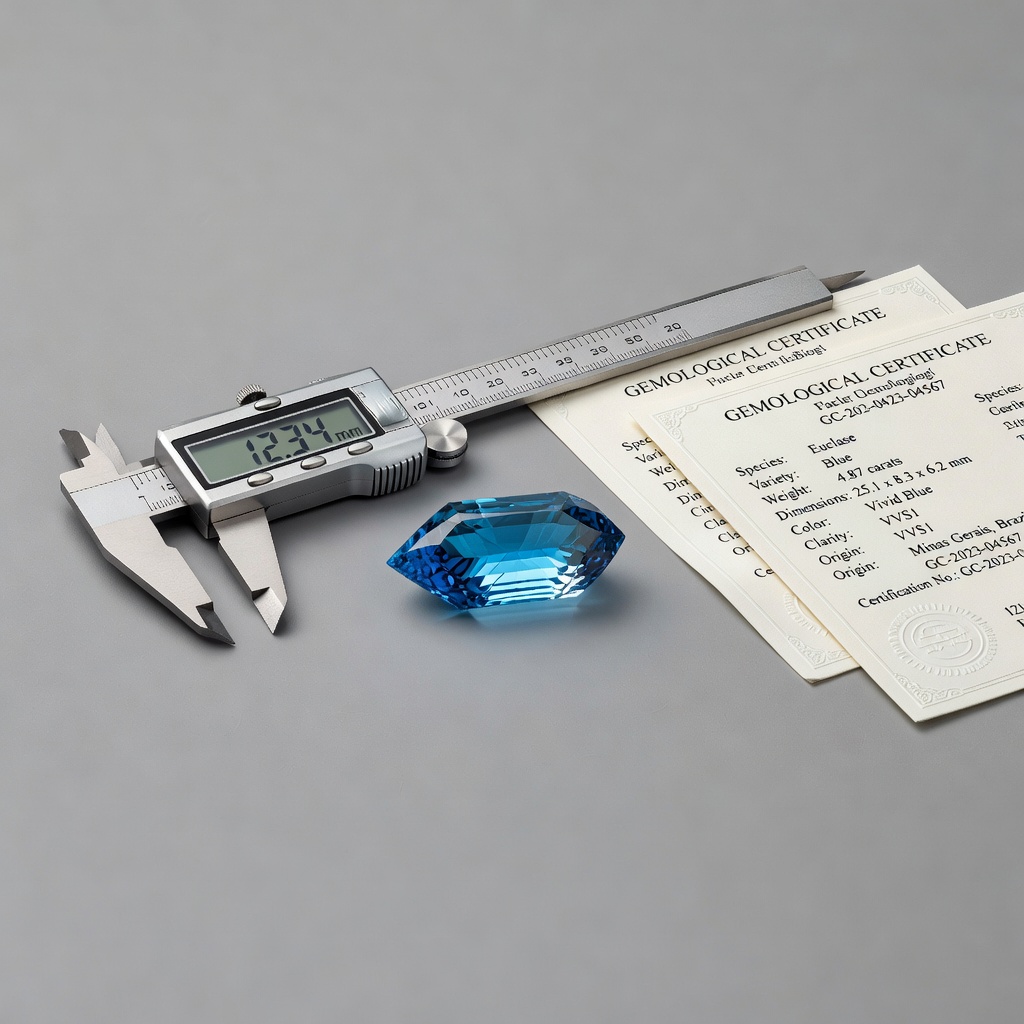
This comprehensive Euclase buying guide emphasizes that verification through GIA (Gemological Institute of America) or AGL (American Gemological Laboratories) certification represents the non-negotiable first step in acquiring authentic Euclase purchase specimens. Reputable dealers specializing in rare collector minerals, such as The Arkenstone, iRocks, or high-end galleries like Pala International, maintain established provenance documentation that traces specimens from specific mines through the cutting process. Geographic origin documentation significantly affects value, with material from Brazil's Ouro Preto region commanding particular respect due to historical significance and consistent quality parameters.
Red flags for synthetic or misrepresented material include prices substantially below market norms for stated quality grades, lack of independent laboratory certification, or sellers unable to provide specific locality information beyond generic "Brazil" attributions. Common misrepresentations include offering blue glass, synthetic spinel, or dyed quartz as natural Euclase, making refractive index verification essential. Serious collectors should request inclusion photography and spectral analysis reports when acquiring stones valued above $5,000, ensuring that natural growth features confirm authentic origin rather than manufactured imitations.
Investment Potential and Market Trends
Euclase investment grade specimens have demonstrated remarkable resilience and growth, with high-quality material appreciating 8-12% annually over the past decade according to specialized mineral market indices. This performance stems from increasing scarcity as historic mines deplete combined with growing recognition among mineral collectors and alternative asset investors seeking tangible portfolio diversification. Auction record analysis reveals consistent price escalation at major houses like Sotheby's and Christie's, where exceptional Brazilian specimens have achieved hammer prices exceeding $50,000 for single stones under ten carats.
However, gemstone market trends indicate important liquidity considerations; while diamonds and rubies enjoy broad markets, Euclase remains a specialized collector's item requiring patience when seeking buyers. Portfolio diversification benefits include low correlation with traditional equity markets and inflation hedging characteristics common to hard assets. Investment advisors specializing in tangible assets recommend allocating no more than 5-10% of alternative investment portfolios to rare gemstones, with Euclase representing an appropriate component for those seeking exposure to the rare mineral sector alongside established gems like alexandrite or spinel.
Care, Maintenance, and Value Preservation
Proper Euclase care tips begin with understanding the gem's Mohs hardness of 7.5, which while suitable for jewelry, requires protective settings due to the mineral's perfect cleavage and brittleness. Unlike harder gemstones that tolerate daily wear, Euclase demands protective bezel or halo settings when mounted in rings, with pendants and earrings representing safer choices for preserving condition. Gemstone preservation protocols strictly prohibit ultrasonic cleaning or steam exposure, as thermal shock or vibration can exploit cleavage planes causing catastrophic fracture.
Cleaning should utilize mild soap, lukewarm water, and soft brushes only, with immediate drying using lint-free cloths to prevent water spots affecting optical performance. Storage recommendations include individual soft pouches or compartmented boxes preventing contact with harder gems like diamonds or sapphires that could scratch Euclase's surface. Insurance valuation requires updating appraisals every 18-24 months given the gem's appreciation trajectory, with documentation including high-resolution photography, laboratory certificates, and purchase receipts stored in secure, fireproof locations or digital cloud storage with encryption protection.
Frequently Asked Questions About Euclase Value
How much is Euclase worth per carat?
Euclase typically ranges from $100 to $500 per carat for commercial grade material, while fine blue specimens command $1,000 to $5,000 per carat. Exceptional museum-quality stones with intense color and clarity can exceed $10,000 per carat, making it significantly more valuable than common beryl varieties.
What makes Euclase more expensive than Aquamarine?
Despite both being beryllium aluminum silicates, Euclase is considerably rarer than Aquamarine, with fewer quality deposits worldwide. Euclase crystals are typically smaller and more difficult to cut, plus the intense blue coloration is less common than Aquamarine's typical pastel blue, resulting in prices 3 to 5 times higher per carat.
Is treated Euclase worth less than natural material?
Yes, untreated natural Euclase commands premium prices in the collector market. While heat treatment is uncommon for this gem, any enhancement must be disclosed and typically reduces value by 20-40%. Always request laboratory certification from GIA or AGL to verify natural origin before purchasing investment-grade specimens.
What is the most expensive color of Euclase?
Intense cornflower to royal blue Euclase commands the highest prices, particularly when displaying strong saturation without gray or green undertones. Blue-green and teal varieties rank second in value, while colorless or pale blue material is significantly more affordable and readily available in the market.
Can Euclase be used in engagement rings?
While Euclase's 7.5 Mohs hardness allows for jewelry use, it's not recommended for daily-wear engagement rings due to its perfect cleavage and brittleness. It's better suited for pendants, earrings, or occasional wear rings with protective settings. Collectors primarily value Euclase as a mineral specimen rather than jewelry stone.
Where can I buy certified Euclase gemstones?
Purchase certified Euclase from established gem dealers specializing in rare minerals, reputable auction houses like Sotheby's or Christie's for high-end specimens, or verified sellers on platforms like GemRockAuctions. Always insist on independent laboratory certification from GIA, AGL, or GRS to verify authenticity and origin.
Does Euclase appreciate in value over time?
High-quality Euclase has shown consistent appreciation of 8-12% annually over the past decade due to increasing scarcity and growing collector interest. Investment-grade specimens with documentation of famous localities (like Ouro Preto, Brazil) tend to appreciate faster than commercial-grade material, though liquidity remains lower than mainstream gems.
How do I identify genuine Euclase from imitations?
Genuine Euclase exhibits distinct birefringence (double refraction), specific gravity of 3.0-3.1, and a vitreous luster. Common imitations include blue glass, synthetic spinel, or dyed quartz. Professional identification requires refractive index testing (1.65-1.67) and pleochroism examination, best confirmed through certified gemological laboratory analysis.