Understanding Euclase: Why Special Care Matters
Euclase stands as one of the mineral kingdom's most captivating treasures, a rare beryllium aluminum silicate gemstone prized by collectors for its exceptional clarity and striking color range from delicate blues to vibrant greens. Unlike more common jewelry stones, euclase combines rarity with distinct physical characteristics that demand vigilant attention from owners who wish to preserve both beauty and investment value. While many gem enthusiasts focus solely on carat weight or color saturation when acquiring euclase specimens, understanding the unique vulnerabilities of this material proves equally crucial for long-term satisfaction and heirloom preservation.
The most critical factor distinguishing Euclase Care and Cleaning from maintenance routines for harder stones like sapphires or diamonds lies in the gem's perfect basal cleavage. This geological term describes how euclase possesses one direction along which the crystal structure separates with perfect smoothness, creating planes of inherent weakness throughout the stone. Despite ranking 7.5 on the Mohs hardness scale—suggesting reasonable resistance to scratching—this cleavage characteristic renders euclase surprisingly susceptible to breakage upon impact, making proper handling protocols essential rather than optional for collectors.
Value preservation through meticulous maintenance extends beyond preventing catastrophic breakage to encompass the subtle preservation of luster and optical properties that make fine euclase specimens command premium prices at auction. Investment-grade euclase crystals from legendary localities like Ouro Prêto, Brazil, or the Zimbabwean mines require protective strategies that account for both physical fragility and chemical sensitivity. By implementing specialized care routines from the moment of acquisition, owners ensure that these rare gemstones retain their brilliance and structural integrity for generations, safeguarding both sentimental and financial value.
Physical Properties Affecting Euclase Maintenance
Comprehensive Euclase Care and Cleaning protocols must address the stone's distinctive physical properties, beginning with the perfect basal cleavage that represents the primary vulnerability for this gemstone. Unlike diamonds, which cleave in four directions but withstand daily wear remarkably well, euclase features a single perfect cleavage direction that creates an invisible plane of weakness running through the crystal structure. This characteristic means that a seemingly minor impact against a hard surface can cause the stone to split cleanly along these internal planes, often resulting in damage that appears instantaneous and irreversible to the untrained observer.
Thermal shock sensitivity presents another significant concern for euclase maintenance, as sudden temperature fluctuations can create internal stress within the crystal lattice leading to fractures or cleavage plane separation. Moving from a heated indoor environment into freezing winter air, or vice versa, subjects the stone to rapid expansion and contraction that tests the structural limits of the material. Similarly, exposure to hot water during cleaning or placement near heat sources like radiators or sunny windowsills can compromise the integrity of even high-quality specimens, necessitating strict temperature management protocols.
The pleochroic nature of euclase, which causes the gemstone to display different colors when viewed from various angles, also indicates sensitivity to light exposure that owners should monitor carefully. While not as photosensitive as amethyst or kunzite, prolonged exposure to intense ultraviolet light or high-energy visible light can potentially alter the delicate color balance of some euclase varieties over decades. When compared to other beryl family gemstones such as aquamarine or emerald, euclase proves significantly more fragile despite sharing chemical similarities, requiring more restrictive handling protocols than its geological cousins demand.
Daily Wear Guidelines and Handling Precautions
Practical Euclase jewelry protection begins with realistic assessments of appropriate wearing occasions, as this gemstone performs best in protective settings rather than as a daily-wear center stone. Activities involving physical contact, vibration, or potential impact—such as sports, gardening, weightlifting, or even vigorous cooking—should automatically trigger removal protocols for euclase pieces. Professional gemologists frequently encounter repair cases where euclase rings suffered damage during seemingly benign activities like opening car doors, gardening, or cleaning, illustrating how everyday motions can generate sufficient force to activate cleavage planes.
Proper removal techniques minimize the risk of accidental drops or pressure application to vulnerable points of the gemstone. Always grasp euclase jewelry by the metal components rather than the stone itself when taking pieces on or off, as finger pressure against the table or crown facets can create leverage that stresses internal cleavage planes. For rings, support the band from underneath while sliding off the finger, avoiding any twisting motion that might torque the setting and transfer stress to the mounted stone. These careful handling practices become particularly crucial for vintage pieces where previous wear may have already introduced microscopic stress fractures.
Temperature exposure limits require environmental awareness that extends beyond obvious heat sources to include incidental thermal hazards. Never wear euclase jewelry in situations where rapid temperature changes occur, such as moving from a heated spa into a cool pool, or when handling frozen goods followed by warm water washing. Physical impact risks multiply in social settings where bumping against doorframes, table edges, or other jewelry becomes likely, suggesting that euclase serves better as dinner party adornment than kitchen preparation companion. When in doubt regarding activity safety, removing and securing the gemstone represents the wisest course of action.
Safe Step-by-Step Cleaning Process
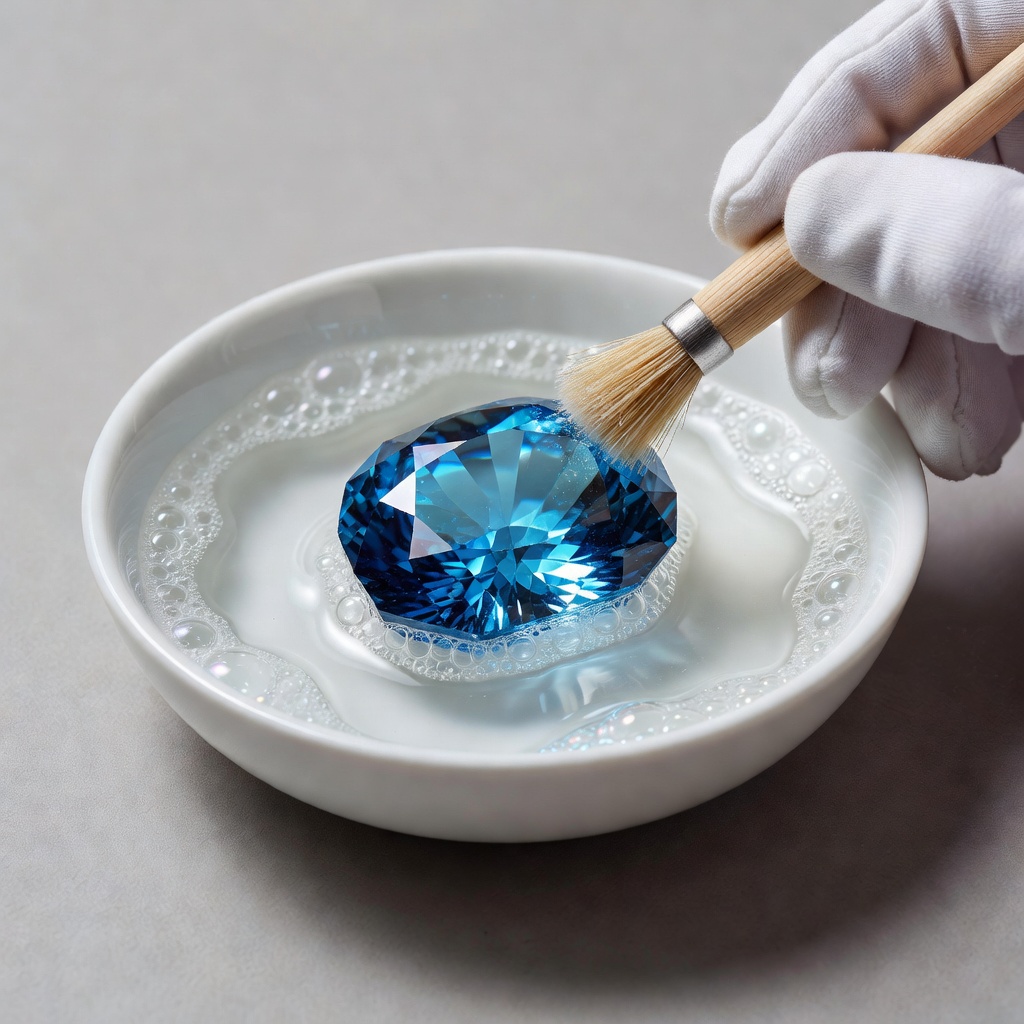
Executing proper Euclase gemstone cleaning requires patience and attention to detail, beginning with the preparation of an appropriate cleaning solution that balances efficacy with chemical gentleness. Start by filling a clean bowl with lukewarm distilled water, avoiding tap water which may contain minerals that leave deposits on the stone surface. Add two to three drops of mild, pH-neutral dish soap—specifically formulas free from moisturizers, antibacterial agents, or citrus additives that might leave residues or cause chemical reactions with the beryllium aluminum silicate composition.
Submerge the euclase jewelry completely in the solution, allowing it to soak for no more than three to five minutes to loosen accumulated oils and debris. Using a soft-bristled brush, such as a baby's toothbrush or specialized jewelry cleaning brush with natural bristles, gently agitate the surface around the crown and pavilion areas where dirt typically accumulates. Work with the lightest possible touch, brushing in straight linear motions rather than circular scrubbing that might catch on prongs or create torque on the stone. Pay particular attention to the area behind the stone where skin oils and soap scum from daily wear tend to collect, as this buildup significantly diminishes brilliance.
Rinsing procedures demand thoroughness to prevent soap film from dulling the gemstone's luster. Hold the jewelry under a gentle stream of lukewarm distilled water, ensuring the drain is closed or covered with a mesh guard to prevent accidental loss. Rotate the piece to allow water to flow across all surfaces, dislodging any remaining detergent residue that could cause cloudiness once dry. Drying requires lint-free microfiber cloths specifically designated for jewelry care, patting rather than rubbing the stone to absorb moisture without creating friction. Allow the piece to air dry completely on a clean towel for an additional ten minutes before storage or wear, ensuring no moisture remains trapped beneath prongs or in setting crevices.
Cleaning Methods and Chemicals to Avoid
Understanding what constitutes dangerous Cleaning rare gemstones practices proves equally important as knowing proper techniques, as several commonly recommended jewelry cleaning methods pose severe threats to euclase integrity. Ultrasonic cleaners, despite their popularity for diamond and sapphire maintenance, present absolute contraindications for euclase care. The high-frequency vibrations generated by these devices create microscopic shockwaves within the cleaning solution that can exploit existing cleavage planes or inclusions, potentially causing immediate fracturing or weakening the stone's internal structure to the point of future failure.
Steam cleaning devices similarly endanger euclase through thermal shock mechanisms, as the combination of extreme heat and pressure creates rapid temperature gradients within the crystal structure. The sudden expansion of surface layers while interior sections remain cooler generates stress that cleavage planes cannot accommodate, frequently resulting in visible cracks or internal feathering that destroys value. Even professional jewelers who regularly steam clean durable stones should never subject euclase to this treatment, regardless of the stone's apparent surface condition.
Chemical hazards extend beyond mechanical cleaning devices to include common household substances and commercial jewelry cleaners containing acids, bleach, ammonia, or alcohol bases. Hydrochloric acid vapors from swimming pools, chlorine bleach from cleaning products, and even acidic perspiration can etch or pit the surface of euclase over time. Abrasive compounds found in some toothpaste varieties or polishing agents create microscopic scratches that scatter light and reduce brilliance. When selecting commercial jewelry cleaners, verify explicitly that the formulation is safe for pearls and opals—if the label warns against these softer stones, it certainly poses risks to euclase as well.
Proper Storage Solutions for Euclase
Implementing effective Euclase storage solutions requires moving beyond simple jewelry box placement to strategic environmental control that addresses the stone's specific vulnerabilities. Individual soft cloth pouches made from suede, silk, or high-quality microfiber provide the primary defense against mechanical damage, cushioning the gemstone from accidental impacts and preventing contact with harder materials. For mounted pieces, fabric-lined compartments within dedicated jewelry boxes prevent movement and contact with metal clasps or other jewelry items that might scratch or chip the surface.
Separation from harder gemstones remains non-negotiable for euclase preservation, as contact with diamonds, rubies, sapphires, or even quartz during storage can scratch the surface or create impact points that later develop into cleavage failures. Store euclase pieces in distinct sections of your jewelry collection, preferably on separate levels or in different containers entirely from harder stones. This separation also prevents harder gems from acting as hammers against the euclase if the storage container is dropped or jostled during transport.
Climate-controlled storage environments mitigate thermal shock risks and prevent humidity fluctuations that might affect metal settings over time. Maintain stable room temperatures between 65-75 degrees Fahrenheit with relative humidity around 40-50 percent, avoiding attics, basements, or bathrooms where temperature and moisture levels fluctuate dramatically. For travel, utilize rigid jewelry cases with individual foam inserts or padded rolls that immobilize pieces completely, preventing the motion that could cause euclase to knock against case walls or other jewelry items during transit.
Professional Maintenance and Inspection Schedules
Comprehensive Euclase maintenance tips necessarily include professional oversight at regular intervals, with annual inspections by qualified gemologists serving as the minimum standard for pieces worn even occasionally. These examinations should include microscopic analysis of the stone's cleavage planes to detect early signs of stress, evaluation of setting security, and assessment of surface condition that might indicate the need for repolishing. Professional jewelers possess the magnification tools and lighting necessary to identify hairline cracks or opening feathers invisible to the unaided eye.
Knowing when to seek expert repolishing or re-cutting services requires understanding that euclase, like all gemstones, gradually accumulates surface scratches and abrasions that diminish optical performance. When cleaning no longer restores the vitreous luster characteristic of fine euclase, or when facet junctions appear rounded rather than sharp under magnification, professional repolishing becomes warranted. However, recutting decisions require careful cost-benefit analysis given euclase rarity, as weight loss during recutting might exceed value gains from improved clarity.
Prong and setting checks prove particularly crucial for mounted euclase stones, as the gem's brittleness means that loose settings create disproportionate risk compared to harder stones. A jeweler should verify that prongs remain tight against the stone without applying excessive pressure that might cause cleavage, and that gallery work shows no signs of metal fatigue. Additionally, updating documentation and insurance appraisals every two to three years ensures coverage reflects current market values for this increasingly rare material, protecting your investment against loss or damage.
Troubleshooting Common Euclase Issues
Even with diligent Euclase Care and Cleaning protocols, owners occasionally encounter issues requiring targeted solutions that restore brilliance without risking further damage. Cloudiness or loss of luster typically indicates accumulated soap residue, skin oils, or hard water deposits rather than permanent damage. Address this by preparing a fresh cleaning solution using distilled water and mild soap, soaking the stone for ten minutes to dissolve deposits, then rinsing under lukewarm distilled water while gently wiping with a microfiber cloth. If cloudiness persists after thorough cleaning, professional ultrasonic cleaning of the setting (with the stone removed) or repolishing of the euclase itself may be necessary.
Removing stubborn dirt without resorting to aggressive scrubbing requires patience and the right solvents. For organic materials like dried lotion or cooking oils, extended soaking in lukewarm soapy water often proves more effective than mechanical scrubbing. Use wooden picks or soft rubber-tipped tools to gently dislodge debris from beneath prongs or in crevices, never metal tools that might slip and scratch the surface. If home cleaning fails to remove stubborn deposits, professional steam cleaning of the mounting alone—never the euclase itself—can restore setting brilliance while preserving the stone.
Identifying early signs of cleavage damage or chips requires regular examination under good lighting, looking for reflective planes that appear suddenly where none existed before, or changes in how light passes through the stone. A feather inclusion that appears to lengthen, or a new line visible when tilting the stone, indicates progressing cleavage damage requiring immediate professional assessment. For neglected specimens showing significant surface wear or dulled luster, professional lapidaries specializing in rare beryl family stones can often restore brilliance through careful repolishing, though such intervention should be reserved for stones where the improvement justifies the risk and expense.
Long-Term Preservation Strategies
Sophisticated Euclase maintenance tips extend beyond daily cleaning to encompass systematic long-term strategies that ensure these rare gemstones survive as legacies for future generations. Creating detailed maintenance logs documenting cleaning dates, inspection results, wearing occasions, and any noticed changes in appearance establishes valuable provenance information while helping owners identify patterns that might indicate developing problems. Such records prove invaluable when transferring pieces to heirs or selling to collectors who value documented care histories.
Environmental controls for serious collectors should include dedicated storage safes or cabinets with humidity regulation and stable temperature maintenance, particularly for investment-grade specimens not intended for regular wear. Consider silica gel packets or electronic dehumidifiers for storage areas, replacing or recharging them regularly to prevent moisture accumulation that might affect metal settings. Rotation schedules for frequently worn pieces distribute wear across multiple items rather than concentrating stress on single specimens, extending the wearable lifespan of each individual stone.
Legacy planning for heirloom euclase jewelry requires educating future owners about the special care requirements unique to this material. Include written care instructions with estate documentation, specifying cleaning protocols, storage requirements, and professional inspection schedules. Consider establishing relationships with trusted jewelers who understand rare beryl care, providing heirs with contact information for professionals familiar with euclase vulnerabilities. By institutionalizing proper care knowledge alongside the physical gemstones, owners ensure that these rare treasures maintain their beauty and value across generational transfers.
Can I clean my euclase jewelry with an ultrasonic cleaner?
No, ultrasonic cleaners are not safe for euclase. The vibrations can exploit the stone's perfect cleavage planes, causing fractures or complete breakage. Always use gentle hand-cleaning methods with mild soap and lukewarm water instead.
How often should I clean my euclase gemstone?
Clean your euclase every 2-3 months with regular wear, or immediately after exposure to cosmetics, sweat, or household chemicals. For pieces worn occasionally, cleaning every 6 months is sufficient to prevent buildup without over-handling.
Is euclase durable enough for everyday wear?
While euclase rates 7.5 on the Mohs scale, its perfect cleavage makes it unsuitable for daily wear in rings or bracelets. It's best reserved for occasional wear in pendants or earrings where impact risk is minimal.
What type of soap is safe for cleaning euclase?
Use only mild, pH-neutral dish soap or specialized gemstone soap without moisturizers, fragrances, or harsh chemicals. Avoid antibacterial soaps and anything containing bleach, ammonia, or abrasive particles that could damage the surface.
Can euclase be damaged by sunlight or heat?
Yes, prolonged exposure to direct sunlight or high heat can potentially affect euclase color and cause thermal shock. Never leave euclase in hot cars, windowsills, or near heat sources. Clean using only lukewarm, not hot, water.
How should I store euclase with other gemstones?
Store euclase separately in individual soft cloth pouches or lined compartments. Keep it away from harder stones like diamonds, sapphires, or rubies that could scratch it, and prevent contact with stones that might chip its delicate edges.
Why does my euclase look cloudy after cleaning?
Cloudiness usually indicates soap residue or hard water deposits. Rinse thoroughly in fresh distilled water and pat completely dry with a lint-free cloth. If cloudiness persists, it may indicate surface damage requiring professional repolishing.
Can I wear euclase while swimming or showering?
No, remove euclase before swimming or showering. Chlorine, salt water, and soaps can damage the stone, while temperature fluctuations in showers create thermal shock risks. Additionally, slippery conditions increase drop and impact hazards.