Introduction to Ethiopian Opals: A Modern Gemstone Discovery
The discovery of precious opal deposits in Ethiopia's Wollo Province during 2008 fundamentally transformed the global gemstone market, introducing collectors and jewelry designers to a new source of exceptional fire and brilliance. Unlike the established Australian opal mines that had dominated the industry for over a century, these Ethiopian deposits revealed gems with unique hydrophane properties and crystal-clear body tones that offered distinct advantages for modern jewelry settings. The emergence of natural ethiopian opal varieties quickly captured the attention of high-end designers at major fashion houses, who appreciated the stones' ability to display intense color play rivaling the finest black opals from Lightning Ridge while remaining more accessible in price point.
Ethiopian opals differ significantly from their Australian counterparts in both geological formation and optical characteristics, creating a new category within the opal family that demands specialized knowledge for proper appreciation and care. While Australian opals typically form in sedimentary rock through ancient water percolation processes, Ethiopian specimens develop within volcanic rhyolite formations, resulting in different physical properties and stability factors that buyers must understand before purchasing. The primary mining regions of Mezezo and Shewa have produced distinct varieties ranging from the translucent crystal opals of Welo to the chocolate-brown specimens of Mezezo, each offering unique aesthetic qualities that appeal to different collector preferences and jewelry applications.
Since their introduction to international markets, these gems have experienced meteoric rises in both popularity and value, with premium welo opal specimens now commanding prices that rival traditional Australian precious opals. The relatively recent discovery means that many deposits remain underdeveloped compared to exhausted Australian mines, offering potential for continued supply while raising important questions about sustainable mining practices and community impact in Ethiopia's highland regions. For investors and collectors seeking comprehensive Ethiopian Opal Properties and Information, understanding the distinction between mining locations becomes crucial, as material from different regions exhibits varying degrees of stability, color intensity, and long-term value retention.
Geological Origins and Formation Process
Understanding the volcanic genesis of Ethiopian opals provides essential context for appreciating their unique characteristics and care requirements throughout ownership. Unlike Australian opals that form through sedimentary processes in ancient seabeds, natural ethiopian opal deposits originate from volcanic activity approximately 20-30 million years ago, when silica-rich solutions percolated through cracks and cavities within rhyolite bedrock. These hydrothermal fluids deposited microscopic silica spheres in regular patterns, creating the diffraction gratings responsible for precious opal's characteristic play-of-color, but the volcanic environment imparted distinct physical properties that differentiate these gems from sedimentary Australian varieties.
The specific geological conditions present in Ethiopia's highland regions, particularly in the Welo Province at elevations exceeding 8,000 feet, created perfect environments for opal deposition through gradual cooling and evaporation cycles. Volcanic glass and perlite within the host rock provided ideal cavities for silica accumulation, while the region's seasonal climate variations influenced the formation of hydrophane properties that allow these stones to absorb and release water. Geologists estimate that the opalization process occurred over millions of years as groundwater carrying dissolved silica slowly evaporated within volcanic voids, leaving behind the hydrated silicon dioxide structure that defines opal chemistry with water content typically ranging between 3% and 21%.
The mineral replacement processes visible in Ethiopian matrix opals demonstrate fascinating geological history, where original volcanic minerals gradually transformed into opal while retaining the external structure of the host material. This pseudomorphic replacement creates distinctive patterns where precious opal permeates through host rock, producing specimens that display both opalescent fire and interesting textural backgrounds. Unlike Australian boulder opals that form as thin seams on ironstone matrices, Ethiopian matrix varieties often show deeper penetration of opal material into volcanic hosts, resulting in different cutting possibilities and durability considerations for lapidary artists working with rough material from Mezezo and Shewa deposits.
Physical Properties and Identification Characteristics
Gemologists and collectors identify Ethiopian opals through specific diagnostic properties that distinguish them from other opal sources, with the hydrophane phenomenon serving as the primary identifying characteristic. When examining ethiopian opal properties, professionals observe that these stones possess specific gravity measurements ranging between 1.9 and 2.2, slightly lower than Australian precious opals due to their porous, sponge-like internal structure that can absorb significant quantities of water. Refractive index readings typically fall between 1.40 and 1.43, though these measurements may vary when the stone contains absorbed moisture, requiring gemologists to ensure specimens are thoroughly dried before testing for accurate identification.
The hydrophane property represents one of the most fascinating and challenging characteristics of these gems, causing the stones to temporarily become transparent or translucent when immersed in water or exposed to high humidity environments. This water absorption can cause visible dimensional changes, with some specimens expanding slightly when saturated and contracting upon drying, a phenomenon rarely observed in non-hydrophane Australian opals. Collectors should note that while this property creates interesting optical effects, it also necessitates careful handling during cleaning and wearing, as rapid water absorption followed by quick drying can create internal stresses within the stone's structure.
Body tone variations in Ethiopian opals range from completely crystal clear to milky opaque, with the transparent crystal varieties often commanding premium prices due to their ability to showcase intense fire against minimal background interference. On the Mohs hardness scale, these gems typically rate between 5.5 and 6.5, making them softer than quartz and requiring protective settings when used in jewelry that may encounter daily wear and tear. Microscopic examination reveals the structural composition of stacked silica spheres arranged in orderly patterns, with sphere size determining the specific colors displayed through light diffraction, typically ranging from 150 to 400 nanometers for the visible spectrum from violet through red.
Types and Varieties of Ethiopian Opals
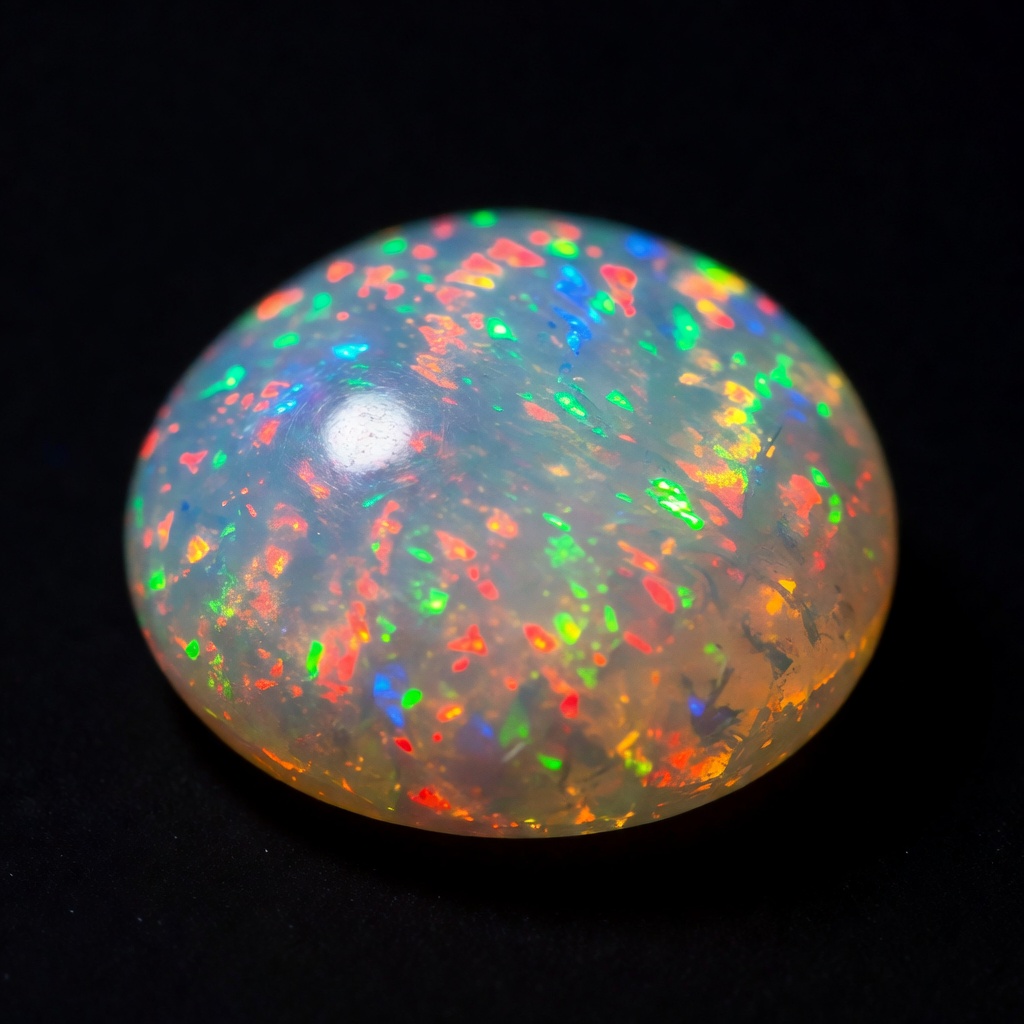
The diverse mining regions of Ethiopia produce distinct opal varieties that cater to different aesthetic preferences and investment strategies within the collector community. Welo opal, named after the Wollo Province where modern mining operations concentrate, represents the most prized variety due to its exceptional transparency, intense fire patterns, and relative stability compared to earlier Ethiopian discoveries. These specimens typically display crystal-clear to slightly milky body tones that allow maximum light transmission, creating vivid flashes of red, orange, green, and blue that appear to float within the stone's depths when properly cut and polished.
Mezezo opals present a dramatically different appearance, characterized by their distinctive chocolate brown to caramel body tones that provide rich backgrounds for contrasting fire patterns. These specimens often display unique pinfire or broad flash patterns against their dark backgrounds, creating visual effects similar to Australian black opals but with warmer, earthier undertones that appeal to collectors seeking alternatives to traditional black opal aesthetics. The brown coloration results from iron staining and mineral inclusions within the volcanic host material, and while generally stable, these varieties require careful evaluation for potential treatments such as smoking or dyeing that unscrupulous dealers might use to enhance background coloration artificially.
Shewa Province specimens include fascinating matrix opal varieties where precious opal permeates through volcanic host rock, creating specimens that combine opalescent fire with interesting geological textures. These matrix stones often appear as specimens displaying opal running through brown or tan rhyolite, offering affordable entry points for new collectors while providing unique jewelry possibilities that showcase natural stone-in-stone formations. True black opals from Ethiopia remain extremely rare and highly valued, with natural dark body tones resulting from iron and manganese inclusions rather than treatment; these exceptional specimens can command prices exceeding $5,000 per carat when displaying strong red or multicolor fire patterns against deep, naturally occurring dark backgrounds.
Color Play, Patterns, and Optical Phenomena
The visual appeal of Ethiopian opals centers on their spectacular play-of-color, with specific pattern types significantly influencing both aesthetic value and market desirability among connoisseurs. Flash fire patterns create broad, sweeping sheets of color that move across the stone's surface as it tilts, resembling the Northern Lights in miniature and providing dramatic visual impact ideal for statement jewelry pieces. Pinfire patterns consist of numerous small, distinct points of color scattered across the stone like stars in the night sky, while the rare and valuable harlequin pattern displays distinct geometric patches of color resembling checkerboards or mosaic tiles, commanding premium prices when found in Ethiopian material due to their scarcity.
Color stability represents a significant concern for Ethiopian opal owners, as some specimens may experience fading or color shifting when exposed to extreme environmental conditions including prolonged direct sunlight, excessive heat, or extremely dry storage conditions. Unlike Australian opals that generally maintain consistent appearance over decades, certain Ethiopian varieties require stable humidity levels to prevent dehydration that might cause crazing or color diminution. Under UV light examination, many Ethiopian opals display strong fluorescence reactions, typically glowing green or whitish-blue, which can help gemologists distinguish natural material from synthetic opals while providing collectors with an additional diagnostic tool for verification.
The directional quality of color in Ethiopian opals requires careful consideration during cutting and setting, as these stones often display their best fire when viewed from specific angles rather than showing consistent color from all directions. Master lapidaries orient Ethiopian rough to maximize face-up color display, sometimes sacrificing carat weight to achieve optimal optical performance in the final gemstone. Buyers should examine stones under various lighting conditions, including natural daylight and incandescent lighting, as Ethiopian opals may show different color dominance under different light sources, with some specimens displaying primarily green and blue in daylight while revealing hidden red and orange flashes under artificial illumination.
Durability Concerns and Stability Factors
Understanding opal gemstone durability proves essential for anyone considering Ethiopian opals for jewelry applications or long-term collection, as these beautiful gems require more careful handling than harder stones like sapphires or diamonds. Ethiopian opals exhibit particular sensitivity to thermal shock, meaning rapid temperature changes can cause internal fracturing or surface cracking known as crazing, which permanently damages both appearance and value. Jewelry wearers should avoid wearing Ethiopian opal rings while washing hands with hot water, moving between extreme temperature environments, or engaging in activities that might cause sudden temperature fluctuations that stress the gem's internal structure.
Crazing prevention requires maintaining stable environmental conditions, as dehydration poses the primary threat to these water-rich gemstones over time. When Ethiopian opals lose moisture too quickly, surface cracks may develop creating a network of fine lines resembling dried mud, irreversibly diminishing both beauty and structural integrity. Compared to Australian opals that formed in more stable geological conditions and typically contain lower, more consistent water content, Ethiopian varieties often exhibit higher porosity that makes them more susceptible to dimensional changes and cracking if stored in excessively dry environments such as safes with desiccants or desert climates without proper humidity control.
Water content fluctuations present unique challenges for Ethiopian opal owners, as the hydrophane nature of many specimens causes them to absorb moisture from humid air or direct contact with water, temporarily becoming transparent and potentially dulling the play-of-color until drying occurs. While this absorption does not necessarily damage the stone if allowed to dry naturally, repeated wetting and rapid drying cycles can create cumulative stress within the gem's structure. Long-term storage considerations for collectors should include maintaining moderate humidity levels between 40% and 60%, storing stones in breathable cotton or acid-free tissue rather than plastic bags that might trap moisture, and periodically inspecting collection pieces for early signs of crazing or color change that might indicate environmental stress requiring adjustment.
Metaphysical Properties and Symbolic Meanings
Beyond their geological beauty, Ethiopian opals carry rich ethiopian opal meaning and spiritual significance that has attracted crystal healers, meditation practitioners, and those seeking emotional balance through gemstone energy work. These stones are traditionally associated with emotional healing attributes, believed to help release past traumas, overcome fears, and bring suppressed feelings to the surface for healthy processing and resolution. Practitioners often recommend Ethiopian opals for artists, writers, and musicians seeking to enhance creativity, as the stone's play-of-color is thought to stimulate imagination and encourage the free flow of ideas from the subconscious mind into conscious creative expression.
In chakra healing systems, Ethiopian opals resonate strongly with the crown chakra, located at the top of the head, facilitating spiritual consciousness and connection to higher realms of awareness. Crystal therapists use these stones during meditation to deepen spiritual experiences, enhance psychic abilities, and promote lucid dreaming, believing that the hydrophane property symbolizes the stone's ability to absorb and transmute negative energies while maintaining inner clarity. The crown chakra activation attributed to these opals aligns with their historical use as protective talismans during spiritual journeys, shielding practitioners from negative influences while amplifying positive intentions and spiritual growth.
As the traditional October birthstone, Ethiopian opals hold special significance for those born under Libra and Scorpio zodiac signs, believed to amplify the positive traits of balance, transformation, and emotional depth associated with these astrological periods. The stone's connection to protection symbolism dates back centuries, with ancient cultures believing that opals could make the wearer invisible to enemies or guard against the evil eye through their dazzling color play that distracted malevolent forces. Modern energy workers value Ethiopian opals for their amplification properties, suggesting that these stones intensify thoughts, feelings, and energetic states, making them powerful tools for manifestation work when combined with clear intention and positive mindset practices.
Buying Guide: Quality Assessment and Valuation
Purchasing Ethiopian opals requires educated evaluation of multiple quality factors to ensure fair value and avoid treatments that might compromise long-term satisfaction with the acquisition. When assessing hydrophane opal quality, collectors should prioritize pattern evaluation, recognizing that premium specimens display distinct, organized patterns such as harlequin, broad flash, or rolling fire rather than the scattered, indistinct color patches typical of commercial-grade material. The brightness of fire serves as a critical value determinant, with top-quality stones showing vivid, brilliant color flashes even under subdued lighting conditions, while lower-grade material may appear dull or require bright direct light to display any play-of-color.
Transparency levels significantly impact valuation, with crystal-clear specimens that allow background objects to be seen through the stone commanding higher prices than milky or cloudy material, assuming equivalent fire intensity. Buyers must develop skills in identifying treatments, as some Ethiopian opals undergo smoking to darken body tone and enhance color contrast, dyeing to simulate black opal appearance, or fracture-filling with oil or resin to mask internal cracks and improve clarity. Natural, untreated Welo opals with strong fire patterns represent the gold standard for investment, while treated stones should be purchased at significant discounts with full disclosure from reputable dealers regarding any enhancement procedures performed.
Certification importance cannot be overstated when acquiring high-value Ethiopian opals, as trusted laboratory reports from institutions such as GIA (Gemological Institute of America), AGL (American Gemological Laboratories), or GRS (GemResearch Swisslab) provide verification of natural origin, treatment status, and geographic source. These reports document critical characteristics including dimensions, weight, body tone, transparency, and any detected treatments, providing buyers with documentation essential for insurance purposes and future resale. When evaluating certification, buyers should ensure the report specifically mentions "Natural Opal" and details any treatments, as some laboratories may use vague terminology that obscures enhancement methods; additionally, requesting written guarantees from dealers regarding treatment disclosure provides additional protection when investing in significant specimens.
Essential Care and Maintenance Protocols
Proper ethiopian opal care ensures that these delicate gems maintain their beauty and structural integrity across generations, requiring specific protocols that differ significantly from harder gemstone maintenance routines. Humidity control represents the foremost consideration for Ethiopian opal storage, as these stones thrive in stable environments with moderate humidity levels between 40% and 60%; excessively dry conditions risk dehydration and crazing, while overly humid environments might promote unwanted water absorption that temporarily alters appearance. Collectors should store Ethiopian opal jewelry in breathable containers with tight-fitting lids, optionally including small pieces of lightly dampened (not wet) cotton that maintain ambient humidity without contacting the stone directly, or utilize commercial humidors designed for gemstone preservation.
Cleaning methods for Ethiopian opals must avoid water immersion, ultrasonic cleaners, and steam cleaning equipment that can cause thermal shock or unwanted water absorption affecting the stone's appearance and stability. The safest cleaning technique involves using a soft, lint-free cloth slightly dampened with plain water to gently wipe the surface, followed immediately by drying with a separate soft cloth to remove any residual moisture. Owners should never use commercial jewelry cleaning solutions, ammonia-based products, or soap detergents on Ethiopian opals, as these chemicals can leave residues within the stone's porous structure that dull the play-of-color or cause long-term degradation of the silica composition.
Oil and chemical exposure pose particular risks, as hair products, perfumes, lotions, and hand sanitizers can penetrate the porous structure of hydrophane opals, causing discoloration or permanent staining that diminishes both beauty and value. Wearing precautions should guide jewelry selection, with Ethiopian opals best suited for pendants and earrings that experience minimal physical contact and environmental exposure, rather than rings that encounter daily impacts, abrasive surfaces, and frequent hand washing. When rings are preferred, protective bezel settings that surround the stone with metal provide superior protection compared to prong settings, while removing opal jewelry before swimming, bathing, cooking, or engaging in physical activities prevents exposure to water, heat, and impact damage that could compromise these beautiful but delicate gems.
Investment Potential and Market Trends
The Ethiopian opal market has evolved significantly since the initial 2008 discoveries, establishing itself as a legitimate alternative to Australian opals for both collectors and investors seeking appreciation potential in colored gemstones. Current price per carat ranges vary dramatically based on quality, with commercial-grade material suitable for fashion jewelry available between $10 and $50 per carat, while exceptional specimens displaying rare harlequin patterns, intense red fire, or natural black body tones can command $500 to $5,000 per carat or higher at international auction houses. Factors affecting value appreciation include the specific mining location, with Welo Province material generally commanding premiums over Shewa specimens due to superior stability and fire intensity, as well as the increasing scarcity of high-quality rough as miners must dig deeper into deposits.
Collector demand continues growing for specific pattern types, particularly specimens displaying the elusive true harlequin pattern or those exhibiting strong red or multicolor fire against crystal-clear backgrounds, driving competitive bidding at gem shows and online marketplaces. Sustainability and ethical mining considerations increasingly influence investment decisions, as conscious collectors seek dealers who maintain fair trade relationships with Ethiopian mining communities, ensuring that extraction benefits local economies while minimizing environmental impact in the delicate highland ecosystems. The artisanal nature of much Ethiopian opal mining, involving small-scale operations rather than industrial extraction, appeals to buyers prioritizing ethical sourcing despite potential supply inconsistencies compared to mechanized Australian operations.
Future supply projections suggest potential market stability challenges, as surface deposits in the Welo Province show signs of depletion, requiring more expensive deep mining operations to access remaining material. However, ongoing exploration in Ethiopia's Oromia region and other highland areas continues revealing new opal-bearing zones, potentially extending supply timelines while introducing new varieties to the market. For investors seeking comprehensive Ethiopian Opal Properties and Information, understanding that these gems represent relatively recent market entrants with shorter price history than Australian opals suggests both opportunity and risk, requiring careful authentication, quality assessment, and storage protocols to protect investments while the market continues maturing and establishing long-term value benchmarks.
Frequently Asked Questions About Ethiopian Opals
What makes Ethiopian opal different from Australian opal?
Ethiopian opals are primarily hydrophane, meaning they can absorb water and become transparent, whereas Australian opals are generally non-hydrophane with more stable water content. Ethiopian varieties often display more intense fire patterns and crystal clarity but require more careful handling due to their porous nature.
Is Ethiopian opal durable enough for everyday wear?
With a Mohs hardness of 5.5-6.5, Ethiopian opals are softer than many gemstones and susceptible to scratching. While suitable for occasional wear in protected settings like pendants or earrings, rings require protective bezel settings and careful wearing habits to prevent damage from impacts or abrasive surfaces.
Why does my Ethiopian opal change color or turn transparent?
This is due to the hydrophane property unique to many Ethiopian opals. When exposed to water or high humidity, these opals absorb moisture, becoming temporarily transparent and potentially dulling the play-of-color. The stone typically returns to its original state when dried naturally in a warm, dry environment over several days.
How should I clean and care for Ethiopian opal jewelry?
Clean Ethiopian opals using only a soft, damp cloth without soaps or chemicals. Never soak them in water, use ultrasonic cleaners, or steam cleaners. Store separately in a dry environment with low humidity, ideally with silica gel packets, and avoid exposure to oils, lotions, or perfumes.
What are the metaphysical properties of Ethiopian opal?
Ethiopian opals are associated with emotional healing, enhancing creativity, and stimulating spiritual consciousness. They are believed to activate the crown chakra, amplify thoughts and feelings, provide protection during spiritual work, and serve as powerful stones for meditation and transformation.
Are Ethiopian opals treated or enhanced?
Some Ethiopian opals undergo treatments including smoking (to darken body tone), dyeing, or fracture-filling with oil or resin to enhance appearance. Reputable dealers should disclose any treatments. Natural, untreated Welo opals with strong fire patterns command the highest prices in the market.
How much do high-quality Ethiopian opals cost?
Prices vary widely based on pattern, body tone, and fire intensity. Commercial grade stones may cost $10-50 per carat, while premium quality Welo opals with rare patterns like harlequin or black opal varieties can range from $500 to over $5,000 per carat for exceptional specimens.
Can Ethiopian opals lose their color or crack over time?
Yes, Ethiopian opals can be prone to crazing (developing surface cracks) due to dehydration or rapid temperature changes. Color stability varies by individual stone; some may fade if exposed to prolonged direct sunlight or extreme dryness. Proper storage in stable, moderate humidity conditions helps preserve their appearance.