
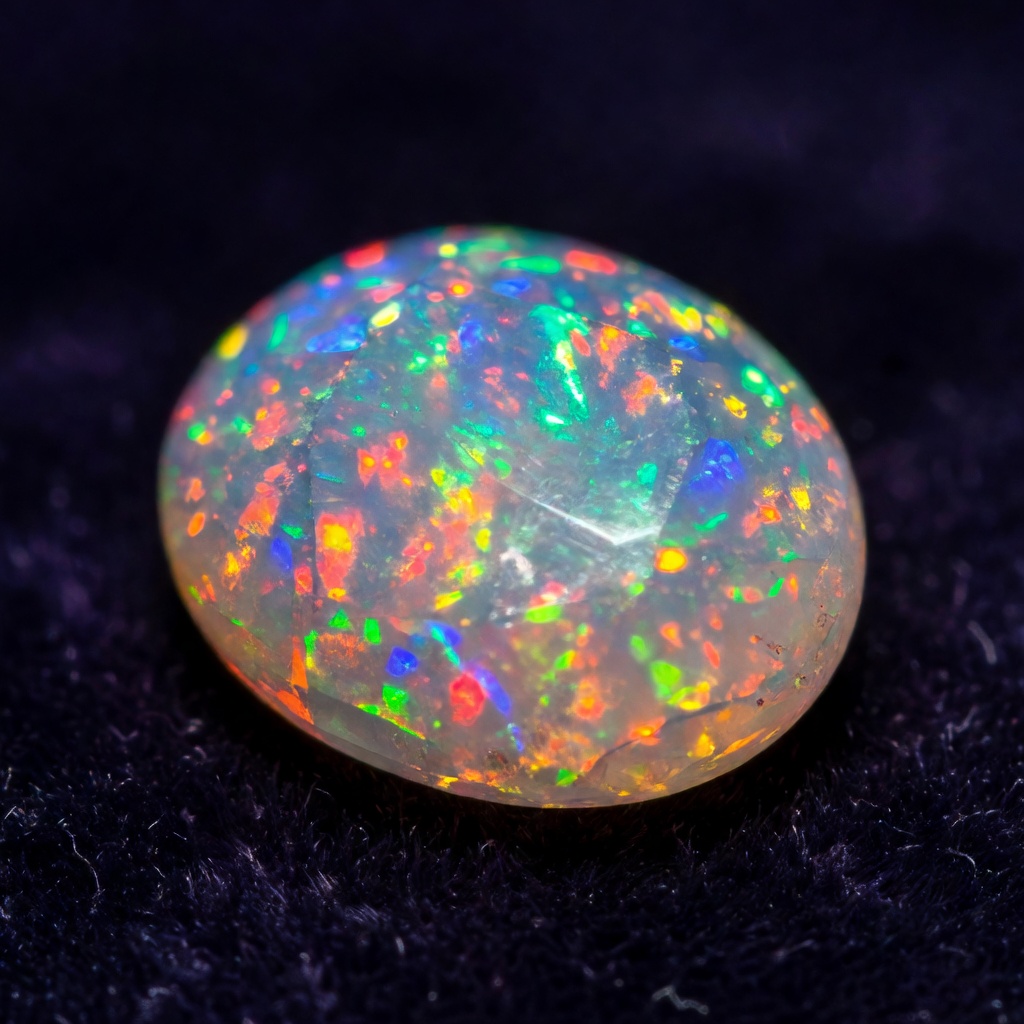
Understanding Ethiopian Opal Value Factors
Determining the true worth of Ethiopian opals requires examining several critical characteristics that separate commercial-grade stones from investment-quality specimens. The body tone and transparency levels serve as foundational pricing tiers, with crystal-clear water opals commanding significantly higher premiums than opaque white or milky materials. When evaluating natural Ethiopian opal value, gemologists assess the background darkness on the N1 to N9 scale, where lighter stones (N7-N9) typically fall into lower price brackets while darker body tones create dramatic contrast for color display.
The play-of-color intensity, pattern distribution, and color range ultimately determine whether a stone achieves premium status in the precious opal market value hierarchy. Stones exhibiting vibrant red flashes alongside orange and green command substantially higher prices than those displaying predominantly blue hues, which occur more frequently in Ethiopian deposits. Origin distinctions between Welo and Shewa deposits create notable market valuation differences, with Welo opals discovered in 2008 generally exhibiting superior stability and more intense fire than earlier Shewa material. Treatment history creates substantial price gaps, as undisclosed enhancement through smoking or sugar-acid processing can reduce a stone's long-term stability while artificially darkening its body tone to mimic more valuable black opal varieties.
Current Ethiopian Opal Price Per Carat Breakdown
Navigating the Ethiopian Welo opal prices requires understanding the distinct quality tiers that define current market standards. Commercial-grade stones displaying limited color play or muted fire typically range from $10 to $50 per carat, making them accessible for casual jewelry enthusiasts though lacking investment potential. Fine quality specimens exhibiting good fire across multiple color axes generally sell between $50 and $200 per carat, representing the sweet spot for serious collectors seeking both beauty and reasonable appreciation potential. Premium museum-grade Ethiopian opals featuring rare patterns, intense red fire, and exceptional clarity can command $200 to $1,000 or more per carat, particularly when certified as untreated natural material.
Understanding opal price per carat requires recognizing the exponential pricing curve that applies to larger specimens, a phenomenon distinct from most other gemstones. While a one-carat stone might retail for $100 per carat, a five-carat stone of identical quality could command $300 to $500 per carat due to scarcity factors. Stones exceeding ten carats with high-quality fire become exponentially rarer, often achieving prices of $1,000 to $3,000 per carat at wholesale levels. This carat weight multiplier effect makes large, clean Ethiopian opals particularly attractive for Ethiopian opal investment portfolios, though buyers must verify stability and absence of treatments before committing significant capital.
Color Patterns That Command Premium Prices
The specific chromatic display within an Ethiopian opal dramatically influences its position within the precious opal market value spectrum. Red fire represents the most valuable color component, with stones displaying predominant crimson flashes commanding two to three times the price of equivalent blue-green specimens. When evaluating an Ethiopian opal price guide, collectors prioritize stones showing orange and gold secondary flashes, creating the "sunset" effect highly prized in Asian markets. True black Ethiopian opals with red fire remain exceptionally rare and can rival Australian Lightning Ridge material in value, though most Ethiopian black opals result from treatment processes that significantly reduce their intrinsic worth.
Rare pattern formations can multiply base value by five to ten times, with harlequin and honeycomb patterns representing the pinnacle of collector desirability. Harlequin patterns display distinct geometric patches of color resembling diamond-shaped tiles, while honeycomb formations create hexagonal cells of fire that shift dramatically with viewing angle. Broad flash patterns generally outsell pinfire or pinpoint distributions because they create more dramatic visual impact when set in jewelry, though connoisseurs appreciate the delicate complexity of high-quality pinfire. Multidirectional color display commands higher prices than single-axis fire, as stones showing fire across multiple planes demonstrate superior gemological structure and cutting precision.
Types of Ethiopian Opals and Their Market Values
The structural classification of Ethiopian material significantly impacts Ethiopian Welo opal prices and requires distinct care considerations. Crystal or water opals exhibiting transparency fetch prices 30-50% higher than opaque white material of equivalent color quality, as their glass-like clarity allows for unique setting possibilities and superior light transmission. These transparent varieties, often called "hydrophane" Welo opals, possess microscopic porosity that causes them to absorb water and temporarily become transparent when submerged, requiring special pricing considerations due to their specific handling requirements and potential for cracking during dehydration.
Black Ethiopian opals occupy premium niche markets, though natural black material remains exceptionally rare compared to treated stones. Most black Ethiopian opals undergo smoking or sugar-acid processing to darken the body tone, reducing their opal price per carat by 40-60% compared to untreated specimens. Rough versus cut stone pricing dynamics introduce additional complexity, as rough material sells for 20-30% of finished gem prices but requires expert lapidary skills to maximize color bars. When calculating total investment costs, buyers must factor cutting fees ranging from $30 to $100 per stone plus potential yield loss of 60-80% during the cutting process, making pre-cut certified stones often more economical for inexperienced collectors.
Treatment Disclosure and Price Impact
Natural untreated stones command 40-60% premiums over treated equivalents in the natural Ethiopian opal value marketplace, making certification and disclosure critical for informed purchasing decisions. Common treatments include smoking (exposure to smoke to darken body tone), sugar-acid processing (carbon impregnation through thermal shock), and dyeing to enhance color saturation or create artificial black opal appearances. These treatments compromise the stone's long-term stability and violate ethical disclosure standards established by major gemological organizations, though they remain prevalent in unregulated markets and tourist destinations.
Certification from recognized laboratories such as GIA or IGI significantly affects buyer confidence and pricing by verifying natural status and documenting specific characteristics. When pursuing Ethiopian opal investment strategies, collectors should budget $50 to $200 for professional certification on stones exceeding $500 in value, as this documentation proves essential for resale and insurance purposes. Learning to identify treated stones using magnification reveals telltale signs such as dark concentrations in fractures, unnatural color zoning, or surface residue from dyeing processes. Fluorescence testing under long-wave ultraviolet light often exposes treatments, as natural Ethiopian opals typically display moderate chalky blue fluorescence while treated stones may show unusual reactions or darkened areas indicating carbon impregnation.
Where to Buy: Retail vs. Wholesale Price Differences
Understanding sourcing channels proves essential for navigating any comprehensive Ethiopian opal price guide and avoiding excessive markups. Wholesale rough markets in Addis Ababa offer 30-50% savings compared to Western retail prices, though this approach requires expertise in evaluating rough potential, understanding local business customs, and navigating export regulations. Direct purchasing from mining cooperatives in the Wollo Province provides access to first-release material, but international buyers must establish trusted relationships with local agents to ensure legitimate transactions and quality verification.
Online marketplaces provide pricing transparency but include platform markup fees ranging from 10-20% plus payment processing costs that inflate final prices. Specialized opal vendors with photographic transparency and return policies offer safer acquisition methods than general auction sites where photography manipulation remains common. Traditional jewelry stores typically charge 100-200% markups over loose stone prices due to overhead costs, inventory financing, and branding premiums. Gem shows in Tucson, Munich, and Bangkok represent cost-effective acquisition strategies, allowing direct comparison shopping and negotiation with multiple vendors while eliminating retail intermediary costs, though buyers must verify dealer credentials and request treatment disclosures.
Investment Potential and Market Trends
Ethiopian opal investment strategies require understanding market stability factors compared to established Australian and Mexican varieties that have dominated collector markets for decades. While Australian Lightning Ridge black opals remain the blue-chip standard, high-quality Welo material has demonstrated 5-15% annual appreciation over the past decade as global recognition increases. Supply constraints resulting from artisanal mining practices and limited mechanization in Ethiopian highland regions create natural scarcity that supports long-term value growth, particularly as easily accessible surface deposits deplete.
Growing Asian market demand, particularly from China and Thailand, drives price appreciation for high-end specimens with rare patterns and larger carat weights. However, liquidity considerations present challenges for collectors seeking quick returns, as the secondary market for Ethiopian opals remains less developed than for diamonds or colored stones like sapphires. Investment-grade specimens require proper documentation, stable storage conditions, and patience to realize optimal returns, making them suitable for long-term portfolio diversification rather than short-term speculation. The precious opal market value for Ethiopian material continues maturing as certification standards improve and major auction houses increasingly feature exceptional specimens in their jewelry sales.
Avoiding Common Pricing Scams and Overpayment
Protecting natural Ethiopian opal value requires vigilance against synthetic opal identification techniques that prevent artificial stone purchases. Laboratory-created opals, including Gilson and Kyocera products, display overly regular color patterns lacking the organic randomness of natural material, along with distinctive columnar growth structures visible under magnification. These synthetics typically sell for $5 to $20 per carat but appear frequently in misrepresented online listings and tourist markets where sellers exploit buyers' inability to distinguish artificial from natural fire.
Doublet and triplet detection methods protect against undisclosed assembled stones where thin opal layers attach to backing materials or receive quartz caps. Examining the stone's side profile reveals glue lines or color discontinuities, while immersion in water can separate layers in poorly constructed triplets. Photography manipulation awareness remains crucial for online purchasing safety, as sellers frequently photograph stones wet to enhance color saturation or use specific lighting angles that exaggerate fire intensity. Understanding appraisal value versus replacement cost versus market value distinctions prevents overpayment, as insurance appraisals often inflate replacement costs by 200-300% above actual cash value, creating unrealistic expectations about resale potential.
Care Costs and Long-term Value Preservation
Maintaining Ethiopian opal investment quality requires accounting for ongoing care costs that preserve precious opal market value over decades. Hydration requirements for hydrophane varieties necessitate humidity control systems costing $50 to $200 for proper storage cabinets, or regular water immersion protocols that demand careful timing to prevent cracking. Professional cleaning and re-polishing service fees accumulate over a gemstone's lifetime, with re-polishing costing $30 to $80 per stone every five to ten years depending on wear patterns and setting protection.
Insurance appraisal costs and specialty jewelry rider premiums add 1-2% annually to the total cost of ownership for valuable collections, though these expenses prove essential for protecting against loss or damage. Storage solutions to prevent cracking (crazing) that destroys value include avoiding extreme temperature fluctuations, maintaining 40-60% humidity levels, and storing stones in soft cotton with periodic moisture exposure. Unlike Australian opals, untreated Welo material demonstrates remarkable stability when properly hydrated, but neglecting these care requirements can reduce a $1,000 per carat stone to worthless fragments within months of dehydration stress.
Future Price Predictions and Market Outlook
Depletion timeline projections for major Welo mining regions suggest supply constraints will intensify within the next decade, potentially driving Ethiopian Welo opal prices upward by 50-100% for high-quality material. Current artisanal mining operations rarely exceed depths of 30 meters, meaning substantial reserves may remain undiscovered, though accessing deeper deposits requires capital investment and mechanization currently limited by infrastructure challenges. Climate change impact on Ethiopian highland mining operations presents additional uncertainty, as altered rainfall patterns affect both the seasonal accessibility of remote diggings and the hydrophane properties that make Welo opals distinctive.
Technological advancements in stabilization treatments may flood the market with enhanced material, potentially depressing prices for lower-quality stones while increasing demand for certified natural specimens. Emerging designer jewelry trends favoring large statement pieces and unique organic gemstones continue influencing demand patterns, positioning Ethiopian opals advantageously against more traditional diamond and sapphire selections. As global collectors increasingly recognize the exceptional color range and pattern diversity of fine Welo material, the precious opal market value for top-tier Ethiopian specimens appears positioned for sustained growth, particularly for untreated stones over five carats displaying rare red fire patterns.
Frequently Asked Questions
How much does Ethiopian opal cost per carat?
Ethiopian opal prices typically range from $10 to $1,000+ per carat depending on quality. Commercial grade stones with limited fire cost $10-$50 per carat, fine quality specimens with good color play range from $50-$200 per carat, while exceptional museum-grade pieces with rare patterns can exceed $1,000 per carat.
Why are Ethiopian opals generally cheaper than Australian opals?
Ethiopian opals are often more affordable due to higher production volumes from the Welo deposits discovered in 2008, less established brand recognition compared to Australian Lightning Ridge opals, and the hydrophane properties that require more careful handling. However, top-quality Ethiopian specimens can rival Australian black opals in price.
Do Ethiopian opals increase in value over time?
High-quality Ethiopian opals, particularly untreated Welo crystals with stable color, have shown steady appreciation of 5-15% annually over the past decade. Investment-grade stones with rare patterns (harlequin, red fire) and larger carat weights demonstrate the strongest value retention and growth potential as mining yields decrease.
What color Ethiopian opal is the most expensive?
Red fire Ethiopian opals command the highest prices, especially when combined with orange and gold flashes in a broad flash or harlequin pattern. Stones displaying predominant blue and green fire are more common and affordable, while true black Ethiopian opals with red fire are extremely rare and valuable.
How can I tell if an Ethiopian opal price is fair?
Evaluate fair pricing by comparing the stone's body tone, transparency, color range, and pattern intensity against market standards. Request certification for expensive pieces, compare prices across multiple reputable dealers, and ensure the seller discloses any treatments. Extremely low prices often indicate synthetic, treated, or assembled stones.
Are treated Ethiopian opals worth less than natural ones?
Yes, treated Ethiopian opals (smoked, sugar-acid processed, or dyed) typically sell for 40-60% less than natural untreated specimens. While treatments can enhance appearance, they compromise long-term stability and investment value. Always require disclosure of treatments and prefer certified natural stones for significant purchases.
What is the best place to buy Ethiopian opals for competitive prices?
For the best prices, purchase directly from Ethiopian miners at trade shows like Tucson or Munich, work with established wholesale dealers who import rough directly, or buy from specialized online opal vendors with photographic transparency. Avoid mall jewelry stores where markups typically exceed 200%.
Does size significantly affect Ethiopian opal pricing?
Yes, Ethiopian opals follow exponential pricing curves where larger stones cost significantly more per carat than smaller ones. Stones over 5 carats with high-quality fire command substantial premiums due to rarity, while specimens over 20 carats with good color pattern are considered investment-grade collector items.


