Why Ethiopian Opals Are Revolutionizing the Gem Market
The discovery of precious opal deposits in Ethiopia's Welo province in 2008 fundamentally transformed the global gemstone landscape, introducing collectors and jewelry designers to a material that defies traditional opal conventions. Unlike the sedimentary deposits found in Australia or the volcanic fire opals of Mexico, these new Ethiopian specimens emerged from volcanic ash layers with a unique hydrophane property that allows them to absorb water and temporarily become transparent. This distinctive characteristic, combined with an unprecedented range of body tones from crystal clear to deep black, has positioned Ethiopian opals as serious contenders in the high-end jewelry market, offering exceptional brightness and full-spectrum color play at more accessible price points than their Australian counterparts.
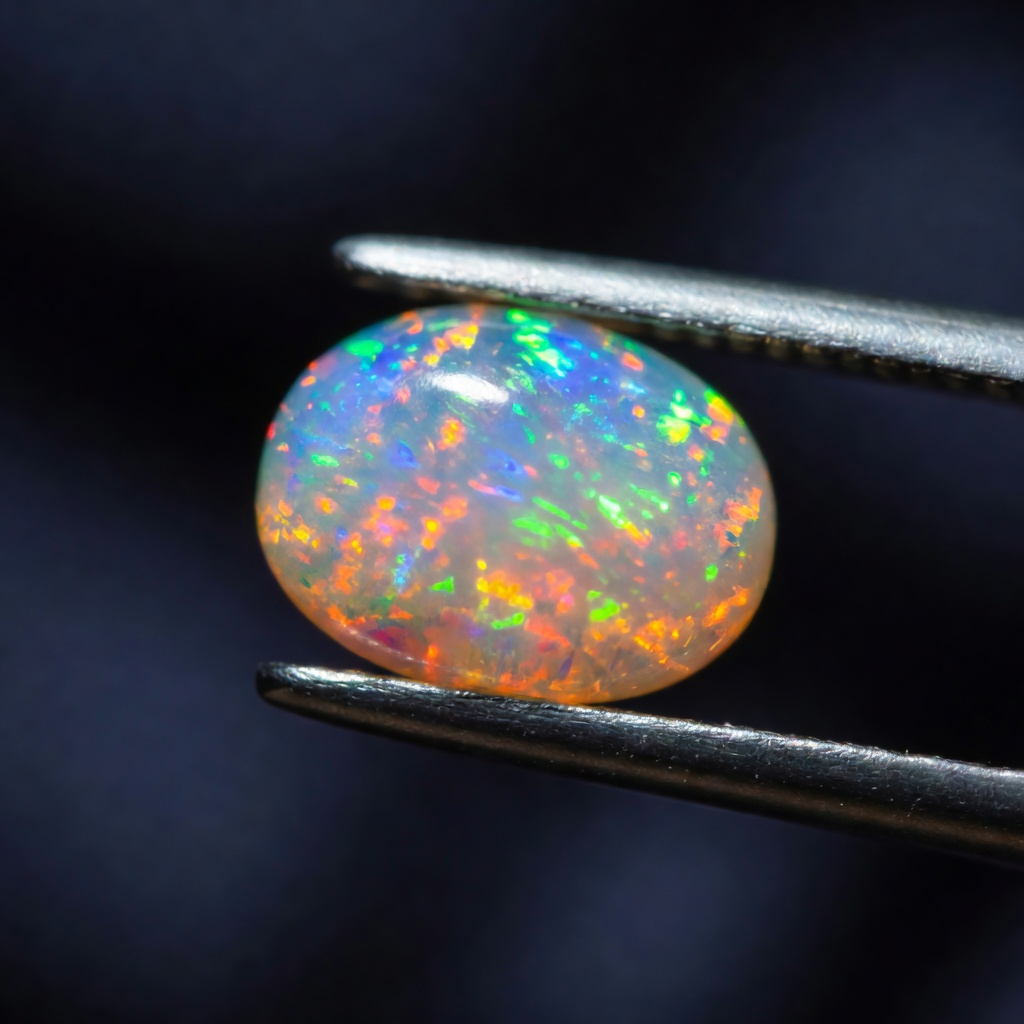
Before this discovery, the opal market relied heavily on Australian production, which had dominated for over a century with predictable supply chains and established quality grading systems. The emergence of Welo opals disrupted these norms by introducing stones with vivid neon-like flashes of red, orange, and green that often surpass the brightness of Lightning Ridge black opals. Contemporary jewelry houses now feature Ethiopian specimens in couture collections, capitalizing on their ability to display intense fire against both light and dark backgrounds, making them versatile for modern settings ranging from minimalist pendants to elaborate Art Deco-inspired cocktail rings.
Types and Varieties: From Welo Crystal to Black Opals
Understanding the geological diversity within Ethiopia's opal deposits requires familiarity with the two primary mining regions: Welo (Wollo) and Shewa. Welo opals, discovered in the northern region near the village of Wegel Tena, represent the most commercially significant variety, producing predominantly white and crystal base stones with exceptional transparency and vibrant color play. In contrast, Shewa province specimens, found earlier in the 1990s near the town of Mezezo, typically exhibit darker chocolate to brown body tones with more subdued fire, though they occasionally yield rare black opal material rivaling Australian gems in intensity.
The hydrophane nature of most Welo opals distinguishes them from virtually all other precious opal varieties worldwide. When these stones encounter water or high humidity, they absorb moisture into their silica structure, temporarily losing their play-of-color and becoming translucent or transparent until properly dried over hours or days. Non-hydrophane crystal opals, while less common in Ethiopian deposits, behave more like traditional Australian stones, maintaining their appearance regardless of environmental moisture. Buyers should request specific testing documentation when purchasing investment-grade pieces, as hydrophane properties significantly impact long-term care requirements and storage protocols.
Body tone variations create distinct market categories within Ethiopian opal classifications. White base opals display milky backgrounds that amplify blue and green fire flashes, while crystal varieties offer transparent to semi-transparent bases that create a three-dimensional depth effect for the color play. Jelly opals represent a middle ground with translucent, gelatinous appearances that soften the fire into ethereal glows. The rarest Ethiopian variety, true black opal with a natural dark base comparable to Australian specimens, commands premium pricing due to its ability to showcase vivid red and orange flashes against the deep background, though natural Ethiopian black opals remain significantly scarcer than treated dark stones.
Evaluating Play-of-Color: Quality Factors That Matter
When assessing Ethiopian opal quality factors, the pattern of color distribution often proves more significant than the specific hues present, with certain configurations commanding substantial premiums in the collector market. Harlequin patterns, characterized by broad, angular patches of color resembling a checkerboard or mosaic, represent the pinnacle of pattern rarity and can multiply a stone's value by factors of five or more compared to standard specimens. Pinfire patterns display tiny, closely spaced points of color resembling glitter, while broadflash creates large sweeping sheets of color that move dramatically across the stone's surface. Chinese writing patterns feature thin, intersecting lines of color resembling calligraphy, and peacock patterns showcase eye-like concentric circles of blue and green that mimic the bird's plumage.
Brightness levels significantly impact both the visual appeal and investment potential of Ethiopian opals, with the industry utilizing a B1 through B5 scale to quantify intensity. B1 stones display brilliant, neon-like color visible across rooms even under dim lighting conditions, while B5 specimens show subdued fire requiring direct bright light and specific viewing angles to appreciate. When examining directional versus non-directional stones, prioritize non-directional specimens that maintain consistent color play regardless of viewing angle, as directional stones may appear nearly colorless when tilted away from the optimal orientation. Exceptional Ethiopian crystal opals often achieve B1 or B2 brightness ratings with full-spectrum color visible from multiple directions, characteristics that justify premium pricing in the wholesale and retail markets.
Practical evaluation requires specific lighting conditions and examination techniques that reveal the stone's true character. Always inspect opals under both natural daylight and artificial incandescent lighting, as some treatments and synthetic materials respond differently to various light sources. Rotate the stone slowly to identify dead spots or areas lacking color play, which significantly diminish value even in otherwise attractive specimens. For hydrophane varieties, examine the stone completely dry, as water absorption temporarily enhances apparent transparency and brightness, potentially masking inclusions or weak color layers that become apparent once dehydrated.
Natural vs. Treated: Understanding Enhancement Methods
Distinguishing natural vs treated Ethiopian opal requires understanding several enhancement techniques designed to darken body tones and intensify apparent color play through artificial means. Smoking represents the most common treatment, where pale opals are wrapped in paper or buried in charcoal and heated until smoke particles penetrate the stone's surface pores, creating a dark background that makes color flashes appear more vivid. These treated stones typically show uneven color concentration near the surface or along fractures, and under UV light often display an unnatural chalky fluorescence distinct from the inert or weak fluorescence of natural material.
Sugar-acid treatments involve soaking porous opals in sugar solutions followed by sulfuric acid application, carbonizing the sugar to create permanent dark backgrounds through chemical reaction rather than surface coating. Detection requires magnification to identify concentration of dark color along surface-reaching fractures or inconsistent body tone depth. Fracture filling with oils, resins, or polymers masks internal cracks and enhances transparency temporarily, though these treatments typically degrade over months or years, leaving the buyer with a diminished stone. Advanced treatments may include dyeing to enhance apparent color play or create artificial black opal appearances, often identifiable through color concentrations in surface pits or along girdle edges.
Certification from recognized laboratories provides essential verification for significant purchases, with GIA (Gemological Institute of America) and AGL (American Gemological Laboratories) offering the most respected documentation for Ethiopian opals. These reports specifically identify hydrophane properties, confirm natural versus treated status, and document any detectable enhancements. For stones under $500, reputable Ethiopian government labs or established European gemological institutions provide acceptable verification, though buyers should verify the laboratory's accreditation through international gemological federations. Always request pre-purchase certification for investment-grade specimens, and be wary of sellers offering "natural" black Ethiopian opals at prices significantly below Australian black opal markets, as these often represent treated material.
Ethiopian Opal Pricing: Budget to Investment Grade
Understanding opal price per carat structures requires recognizing the dramatic valuation spreads between commercial grade material and exceptional collector specimens. Entry-level Ethiopian opals suitable for silver jewelry or beginner collections typically range from $10 to $50 per carat, featuring muted fire, visible inclusions, and directional color play visible only from specific angles. Mid-range stones with good brightness and interesting patterns command $50 to $200 per carat, suitable for gold settings and serious jewelry applications. Museum-quality specimens with rare harlequin patterns, B1 brightness ratings, and substantial carat weights can exceed $500 per carat, with exceptional large stones occasionally approaching $1,000 per carat for truly unique pieces.
Valuation multipliers depend on specific combinations of characteristics that create visual impact. Stones with red or orange fire command 20-30% premiums over those showing only blue and green, as warm colors indicate more precious opal content within the silica structure. Pattern rarity creates exponential rather than linear pricing increases, with confirmed natural harlequin patterns potentially worth ten times more per carat than pinfire specimens of equivalent brightness. Body tone affects pricing differentially depending on fashion trends, though natural black base Ethiopian opals currently trade at 40-60% premiums over crystal varieties when color intensity remains equal.
Market trends continue favoring Ethiopian opals as affordable alternatives to Australian material, with comparable brightness and pattern quality available at roughly one-third to one-half the price of equivalent Australian stones. However, pricing volatility remains higher for Ethiopian material due to political instability in mining regions and the hydrophane properties that require educated buyers. Investment collectors should focus on untreated stones over five carats with documented provenance, as these pieces show strongest appreciation potential while smaller commercial grade material serves primarily for jewelry production rather than asset appreciation.
Spotting Scams: Synthetic and Imitation Detection
The growing popularity of Ethiopian opals has stimulated production of convincing synthetics and assembled stones that require careful examination to identify. Laboratory-created Gilson opals and Kyocera synthetics replicate natural chemical compositions but display unnaturally regular color patterns with geometric precision absent in natural material. Under magnification, synthetic opals show columnar structures or snake-skin patterns along with uniform color distribution lacking the organic irregularities of mined stones. These synthetics typically feel warmer to the touch than natural opals due to different thermal conductivity and lack the hydrophane properties characteristic of Welo material.
Doublets and triplets represent common assembled stones where thin slices of natural opal veneer attach to backing materials like obsidian, black onyx, or potch (common opal) to simulate solid black opals. Examination from the side reveals glue lines or color discontinuities between layers, while the top surface often shows perfect flatness lacking the slight irregularities of natural crystal faces. Triplets add clear quartz or glass caps that magnify the opal layer but create distinct visual depth differences when viewed from angles. These assembled stones serve legitimate purposes in affordable jewelry when properly disclosed, but become fraudulent when sold as solid natural opals.
Red flags in online listings include prices significantly below market value for claimed quality grades, stock photos rather than images of the specific stone, and vague descriptions regarding treatment history. Sellers refusing to provide video documentation showing the stone from multiple angles under different lighting conditions often hide directional color play or assembly lines. Be particularly suspicious of "black Ethiopian opals" priced under $100 per carat, as natural material of this description rarely trades below $300 per carat. Always verify seller return policies allowing at least ten-day inspection periods, and consider independent appraisal for purchases exceeding $1,000 to confirm natural origin and disclosed treatments.
Essential Care Guidelines for Hydrophane Opals
Hydrophane opal care requires understanding the unique relationship these stones maintain with environmental moisture and the risks associated with water absorption. When exposed to water through washing, swimming, or high humidity, hydrophane opals absorb liquid into their porous silica structure, temporarily becoming transparent and losing their characteristic play-of-color until the moisture evaporates naturally over periods ranging from several hours to several weeks depending on stone size and environmental conditions. While this absorption rarely damages high-quality material if allowed to dry slowly in stable conditions, sudden temperature changes while water-saturated create internal stress that may cause cracking or crazing (surface cracking).
Proper drying techniques involve placing water-exposed stones in room-temperature environments with stable humidity levels between 40-60%, avoiding direct sunlight, heat sources, or desiccants that cause rapid dehydration. Never attempt to speed drying with hair dryers, ovens, or exposure to air conditioning vents, as thermal shock creates permanent damage. If accidental saturation occurs with a ring or pendant, remove the jewelry immediately and place it on a soft cloth in a closed container with a small piece of damp (not wet) cotton to moderate the drying rate, checking daily until normal color play returns.
Long-term storage recommendations emphasize maintaining stable environments that prevent both excessive dehydration and humidity exposure. Store Ethiopian opals in sealed containers with small humidity-control packets designed for musical instruments or cigar storage, avoiding standard jewelry boxes that allow air circulation. Never store these stones in bank safety deposit boxes for extended periods without periodic checking, as the ultra-low humidity in vaults can cause dehydration cracking over years. For cleaning, use only damp soft cloths without chemical cleaners, avoiding ultrasonic cleaners, steam cleaning, and exposure to oils, lotions, or perfumes that stain the porous surface permanently.
Where to Buy: Reputable Dealers and Smart Negotiation
Navigating opal buying tips effectively requires understanding the distinct advantages and risks associated with different purchasing channels, from established brick-and-mortar galleries to specialized online marketplaces. Physical stores allow immediate tactile examination, critical for assessing hydrophane properties and brightness levels under various lighting conditions, though inventory typically commands 30-50% premiums over online sources due to overhead costs. Online dealers specializing in Ethiopian material often provide superior value and selection, particularly those based in Addis Ababa with direct mining connections, provided they offer comprehensive video documentation and transparent return policies.
Essential questions to ask sellers before purchasing include specific origin documentation distinguishing Welo from Shewa material, detailed treatment disclosure with laboratory verification for black or dark stones, and clear explanations of return privileges including shipping cost responsibilities. Request information about mining dates, as newer material generally shows better stability than early Ethiopian production from 2008-2012. For hydrophane varieties, inquire about the stone's current hydration state and whether the photos show the material dry or conditioned, as wet stones photograph more brilliantly than their dry appearance.
Smart negotiation strategies focus on bundling multiple stones for volume discounts, particularly effective when purchasing from dealers at gem shows or direct importers. When buying online, always utilize the full inspection period by examining the stone under various lighting conditions immediately upon receipt, documenting any discrepancies between received material and photographic representations. For investment-grade purchases over $5,000, consider hiring an independent gemologist for pre-purchase evaluation or negotiating a contingency clause allowing return if independent certification reveals undisclosed treatments. Establish relationships with dealers who specialize specifically in Ethiopian material rather than general gem dealers, as specialized knowledge ensures accurate grading and fair pricing aligned with current market conditions.
Frequently Asked Questions
What makes Ethiopian opals different from Australian opals?
Ethiopian opals, particularly from the Welo region, are hydrophane, meaning they can absorb water and temporarily become transparent, unlike Australian opals. They typically display brighter, more vibrant color play with full spectrum flashes and often feature crystal or white bases rather than the black base common in Australian varieties.
Are Ethiopian opals stable, or do they crack easily?
Modern Welo opals are generally stable if properly cared for, though they remain more sensitive to sudden temperature changes and dehydration than Australian opals. Early Ethiopian specimens had stability issues, but current mining techniques produce durable stones. Proper storage away from heat and direct sunlight prevents crazing.
How much should I expect to pay for a quality Ethiopian opal?
Prices range from $10-50 per carat for commercial grade stones with muted fire, to $200-500+ per carat for exceptional gems with bright, directional color play and rare patterns like harlequin. Crystal Welo opals with vivid red and orange flashes typically command the highest premiums.
Can Ethiopian opals get wet?
Yes, but with caution. Hydrophane opals absorb water, temporarily diminishing their color play and making them transparent. While they usually return to normal when dry (which can take hours to weeks), prolonged water exposure or sudden temperature changes after wetting can cause cracking. Remove rings before washing hands or swimming.
How can I tell if an Ethiopian opal is treated or natural?
Examine the stone for uneven color concentration in the base indicating smoking, chalky fluorescence under UV light suggesting sugar treatment, or overly dark body tones. Natural opals show irregular color patterns and inclusions. Always request certification from reputable labs like GIA or AGL for purchases over $500.
What is the best pattern to look for when buying Ethiopian opals?
Harlequin (mosaic) patterns are most valuable and rare, followed by peacock, Chinese writing, pinfire, and broadflash patterns. However, brightness matters more than pattern name—choose stones displaying vivid, full-spectrum color play that remains visible from multiple viewing angles rather than focusing solely on pattern classification.
Is it safe to buy Ethiopian opals online?
Yes, when purchasing from established dealers with clear return policies (minimum 10-day inspection period), high-resolution photos and videos showing the stone dry from multiple angles, and verifiable certifications for higher-value pieces. Avoid marketplaces with prices significantly below market value and sellers unwilling to provide detailed treatment disclosures.
Do Ethiopian opals fade or change color over time?
Quality natural Ethiopian opals maintain their color permanently if stored properly in stable environments. However, exposure to oils, chemicals, or extreme dehydration can dull their appearance. Some treated opals may show fading if enhancements break down. Untreated Welo opals with stable water content retain their beauty indefinitely with proper care.