What Is Epidote? An Overview of This Distinctive Mineral
Epidote stands as one of the most visually striking and geologically significant minerals in the sorosilicate family, distinguished by its complex calcium aluminum iron composition. This remarkable mineral, classified chemically as a calcium aluminum iron sorosilicate, derives its name from the Greek word epidosis, meaning "increase" or "addition," a direct reference to the distinctive crystal habit where one side of the prismatic form is longer than the other. When exploring comprehensive Epidote Properties and Information, collectors and geologists alike appreciate how this mineral serves as an important indicator of metamorphic processes, revealing the intense pressure and temperature conditions deep within the Earth's crust.
The historical significance of Epidote extends beyond its geological importance into the realm of spiritual practices, where the Epidote crystal meaning has evolved over centuries of human interaction with this green stone. Ancient civilizations recognized the mineral's unique energy signatures, while modern crystal enthusiasts continue to value its distinctive appearance and purported metaphysical attributes. Found predominantly in metamorphic rocks worldwide, from the Austrian Alps to the mountains of Brazil, Epidote provides crucial insights into regional metamorphism and hydrothermal alteration processes that shape our planet's lithosphere.
Physical and Chemical Characteristics of Epidote
Understanding the fundamental Epidote mineral properties requires examining its complex chemical formula: Ca2(Al,Fe)3(SiO4)3(OH). This formula reveals the mineral's position within the Epidote group, showcasing a solid solution series where iron (Fe3+) and aluminum (Al) substitute for each other, creating variations in color and specific properties. When iron content dominates, the mineral displays the characteristic deep green to black-green hues collectors prize, whereas aluminum-rich specimens transition into Clinozoisite, presenting lighter green to yellowish or even colorless appearances that appeal to gemstone cutters seeking transparency.
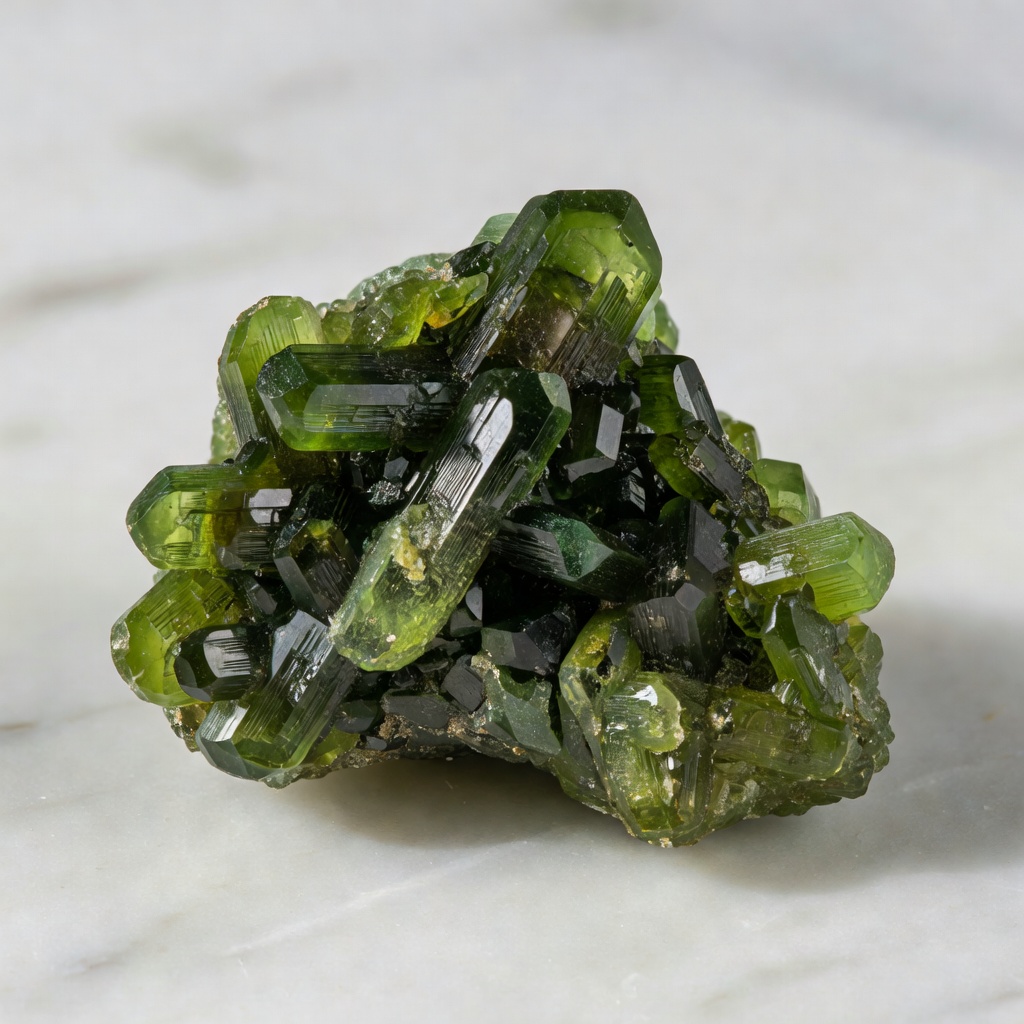
Crystallographically, Epidote belongs to the monoclinic crystal system, typically forming elongated, prismatic crystals with deeply striated surfaces parallel to the length of the crystal. The mineral registers between 6 and 7 on the Mohs hardness scale, making it sufficiently durable for various applications while remaining workable for lapidary purposes. Notably, Epidote exhibits perfect cleavage in one direction, a property that requires careful consideration during cutting and setting processes. With a specific gravity ranging from 3.2 to 3.5, Epidote feels noticeably heavier than many common minerals of similar size, providing a tactile clue for field identification.
Geological Formation and Primary Locations
The formation of Green Epidote stone occurs primarily through regional and contact metamorphism, where pre-existing rocks undergo transformation under intense heat and pressure without melting completely. During regional metamorphism, particularly in mafic igneous rocks and calcium-rich sediments, Epidote crystallizes as a stable phase under greenschist to amphibolite facies conditions, often appearing alongside albite, quartz, and chlorite. Contact metamorphism creates Epidote through the interaction of hot, mineral-rich fluids with surrounding country rock, producing spectacular crystal formations in skarn deposits and metamorphosed limestone environments.
Significant deposits of high-quality Epidote occur across several continents, with each locality producing distinctive characteristics appreciated by collectors. The Knappenwand region in Austria yields some of the world's finest specimens, featuring large, deeply colored prismatic crystals embedded in calcite matrices. Italy's Val Graveglia and Norway's Arendal district produce exceptional transparent material suitable for faceting, while Brazil's Minas Gerais state offers abundant specimen-grade material. In the United States, notable occurrences include the Prince of Wales Island in Alaska and various localities in Colorado, where metamorphic rocks host well-formed crystals associated with quartz, calcite, garnet, and amphiboles.
Visual Identification: Colors, Varieties, and Forms
Mastering Epidote gemstone identification begins with recognizing the mineral's characteristic color spectrum, which ranges from the delicate pistachio green that gives the Pistacite stone its nickname to deep, almost blackish-green in iron-rich specimens. This color variation directly correlates with iron content; higher iron concentrations produce darker, more saturated greens, while manganese substitutions can create reddish-brown to black varieties known as Piemontite. The most prized specimens display an intense, vivid green with good transparency, allowing light to penetrate and reveal the mineral's internal structure and occasional pleochroism.
Among the recognized varieties, Clinozoisite represents the aluminum-rich end member of the Epidote series, presenting in lighter green, yellow-green, or nearly colorless forms that occasionally yield faceted gemstones. Piemontite, containing significant manganese, displays distinctive red to reddish-brown colors and occurs prominently in the region of Piemonte, Italy, from which it derives its name. Perhaps the most commercially recognizable form is Unakite, a metamorphic rock composed of green Epidote, pink orthoclase feldspar, and clear quartz, creating a mottled pink-and-green appearance highly favored for cabochons, beads, and carved ornamental objects.
Metaphysical Properties and Crystal Healing Applications
The Epidote healing properties and spiritual significance have established this mineral as a cornerstone in contemporary crystal healing practices, building upon traditional Epidote crystal meaning that emphasizes growth and amplification. Practitioners utilize Epidote to enhance perceptual abilities, believing that the stone sharpens awareness of subtle energies and facilitates attunement to higher spiritual realms. This mineral is particularly valued for its reputed ability to increase whatever it touches—whether that manifests as amplifying energy levels, enhancing meditation depth, or accelerating manifestation processes in accordance with the user's intentions and actions.
Working primarily with the heart chakra, Epidote is believed to promote profound emotional healing by encouraging the release of negative patterns, resentment, and stagnant emotional blockages. Crystal healers often recommend placing Epidote over the heart during meditation to stimulate compassion, forgiveness, and personal growth. The stone's connection to the concept of "increase" extends to spiritual development, where it is thought to amplify the effects of other crystals when used in combination layouts, making it a versatile tool for energy workers seeking to intensify healing sessions or spiritual attunement practices.
Distinguishing Epidote from Similar Green Minerals
Accurate Epidote gemstone identification requires careful differentiation from visually similar green minerals that share market spaces and geological contexts. Green Tourmaline (Verdelite) presents the most common confusion, yet distinguishes itself through a trigonal crystal system rather than monoclinic, typically showing rounded triangular cross-sections versus Epidote's elongated prismatic forms. Additionally, Tourmaline exhibits pyroelectric properties and different pleochroism patterns, while Epidote's perfect cleavage and specific gravity of 3.2-3.5 provide definitive diagnostic criteria when standard gemological testing is available.
Diopside and green Augite represent other potential lookalikes, though Diopside generally displays a more vitreous luster and forms in shorter, more equant crystals compared to Epidote's characteristic elongated prisms. Green Augite, part of the pyroxene group, can be distinguished by its nearly 90-degree cleavage angles and different optical properties under polarized light. For field identification, simple tests include examining crystal habit, checking for the striations characteristic of Epidote prisms, and noting the mineral's association with specific metamorphic rock types. Professional identification utilizing refractive index measurements, specific gravity tests, and spectroscopic analysis provides conclusive verification for valuable specimens.
Practical Applications: From Collecting to Jewelry
The Green Epidote stone serves multiple practical purposes spanning scientific research, artistic craftsmanship, and metaphysical practices. Mineral collectors highly prize well-formed Epidote crystals for display specimens, particularly those featuring the classic deep green prisms perched aesthetically on contrasting matrix material such as white calcite or quartz. Museums and private collectors specifically seek specimens from classic localities like Knappenwand, Austria, where crystals can exceed several centimeters in length with exceptional clarity and color saturation, commanding premium prices in the specialty mineral market.
In jewelry applications, Epidote appears most commonly as cabochons that showcase its rich color while minimizing the visibility of inclusions and cleavage planes. Transparent material suitable for faceting remains relatively rare, requiring protective settings such as bezels that shield the gemstone's edges from impact. Beyond ornamental uses, Epidote serves as an important geological indicator mineral, helping geologists map metamorphic facies and identify zones of hydrothermal alteration during mineral exploration. Its presence in specific rock formations indicates particular temperature and pressure conditions, making it valuable for understanding regional geological history and potential mineral deposits.
Quality Factors and Market Valuation
Evaluating Epidote Properties and Information regarding market value requires understanding the specific criteria that distinguish museum-grade specimens from common material. Color intensity stands as the primary value factor, with specimens displaying vivid, saturated pistachio to forest green hues commanding the highest prices. Crystal clarity significantly impacts valuation, particularly for faceting material, where transparency allows for brilliant cutting. Size matters considerably in the specimen market, with large, well-formed crystals exceeding five centimeters considered exceptional, especially when displaying the characteristic striated prisms with terminations intact.
Price ranges vary dramatically based on quality and intended use. Common massive Epidote suitable for lapidary work or educational purposes may cost only dollars per pound, while exceptional specimen crystals from renowned localities can fetch thousands of dollars depending on size, aesthetics, and provenance. Gem-quality transparent Epidote remains relatively scarce, with faceted stones over one carat considered rare collector's items. Investment potential exists primarily for high-quality crystals with documented locality information and minimal damage, as these specimens appreciate steadily within the specialized mineral collecting community.
Care, Cleaning, and Maintenance Guidelines
Proper maintenance of Epidote specimens and jewelry requires understanding the specific Epidote mineral properties that affect durability and chemical sensitivity. Cleaning should be limited to mild soap and lukewarm water using a soft brush, as the mineral's perfect cleavage and potential inclusions make it vulnerable to damage from ultrasonic and steam cleaners. Harsh chemical cleaners, acids, and abrasive materials must be avoided entirely, as Epidote's calcium content makes it susceptible to etching and surface damage upon contact with even mild acids commonly found in household cleaning products.
Storage practices should account for Epidote's hardness of 6-7 on the Mohs scale, meaning harder minerals like quartz, topaz, or corundum can easily scratch its surface. Specimens should be wrapped individually in soft cloth or stored in compartmentalized cases to prevent contact with other minerals. Jewelry pieces featuring Epidote benefit from protective settings and should be removed before engaging in physical activities that might cause impact or abrasion. When displaying specimens, avoid direct sunlight for extended periods, as prolonged exposure can potentially fade the vibrant green colors that make this mineral so desirable.
Conclusion: The Enduring Appeal of Epidote
Exploring comprehensive Epidote Properties and Information reveals a mineral of remarkable geological complexity and multifaceted appeal. From its distinctive prismatic crystals formed deep within metamorphic rocks to its significant role in crystal healing traditions, Epidote bridges the gap between scientific inquiry and spiritual practice. The Epidote crystal meaning of increase and amplification resonates with collectors seeking growth in their personal collections and practitioners looking to enhance their energetic work.
Whether appreciated for its striking green beauty, its value as a geological indicator mineral, or its purported metaphysical properties, Epidote continues to captivate enthusiasts across disciplines. For those seeking to acquire specimens, reputable mineral dealers, gem shows, and established geological museums provide excellent starting points for building collections. As research continues into the formation conditions and regional variations of this complex sorosilicate, Epidote maintains its position as a cornerstone mineral for understanding metamorphic processes while serving as a beautiful and meaningful addition to any crystal collection.
Frequently Asked Questions About Epidote
What Is Epidote Used For?
Epidote is primarily used as a collector's mineral specimen due to its distinctive prismatic green crystals. It's also used in crystal healing for emotional growth, fashioned into jewelry as cabochons or faceted stones, and serves as an important geological indicator mineral for mapping metamorphic rock formations.
How Can I Identify Genuine Epidote?
Genuine Epidote displays characteristic pistachio to dark green colors, forms in elongated prismatic crystals with striations, has a hardness of 6-7 on the Mohs scale, and exhibits perfect cleavage. It often appears in metamorphic rocks and may show pleochroism (different colors when viewed from different angles).
What Are the Healing Properties of Epidote?
Epidote is believed to enhance perception, increase spiritual attunement, and amplify energy. It's associated with the heart chakra, promoting emotional healing, releasing negativity, and encouraging growth. Many practitioners use it to increase whatever they focus on, whether that's abundance, awareness, or healing.
Is Epidote Rare or Common?
Epidote is relatively common as a mineral species globally, but high-quality, well-formed crystals with intense color and good transparency are considered rare and valuable. Common Epidote is found in many metamorphic rock formations, while gem-quality material suitable for cutting is much scarcer.
What Color Should High-Quality Epidote Be?
High-quality Epidote typically displays an intense, vivid pistachio green to deep forest green color. The most prized specimens show strong color saturation without appearing too dark or blackish. Some collectors also value the lighter green Clinozoisite variety or the rare transparent crystals that can be faceted.
Can Epidote Be Worn as Jewelry Daily?
While Epidote has a hardness of 6-7, making it moderately durable, it's not ideal for daily wear in rings or bracelets due to its perfect cleavage, which makes it prone to chipping and breaking upon impact. It's better suited for pendants, earrings, or occasional wear pieces with protective settings.
Where Is the Best Epidote Found?
Notable high-quality Epidote deposits are found in Knappenwand, Austria (famous for large crystals), Italy, Norway, Brazil, and the United States (Alaska and Colorado). Austrian specimens are particularly prized by collectors for their size and exceptional crystal development.
What's the Difference Between Epidote and Unakite?
Unakite is actually a rock composed primarily of green Epidote, pink orthoclase feldspar, and quartz. While Epidote refers to the specific green mineral species, Unakite is the mottled pink and green metamorphic rock that contains Epidote as one of its main components. Unakite is popular for cabochons and carved items.