Understanding Epidote's Physical Properties
Before initiating any Epidote Care and Cleaning routine, mineral enthusiasts must understand the unique physical characteristics that define this calcium aluminum iron silicate mineral. Epidote typically ranks between 6 and 7 on the Mohs hardness scale, which suggests moderate durability comparable to quartz or feldspar. However, this hardness rating can be misleading because epidote possesses perfect cleavage in one direction, making it particularly susceptible to splitting along specific planes when subjected to mechanical stress or impact.
The chemical composition of epidote makes it especially vulnerable to acidic environments and harsh chemical cleaners that might safely clean other gemstones. As a complex silicate containing calcium, aluminum, and iron, epidote reacts negatively to even mild acids, which can etch the surface and permanently dull the characteristic vitreous luster. This sensitivity requires collectors to approach Cleaning Epidote Stones with neutral pH solutions only, avoiding common household cleaners that contain citric acid, vinegar, or other reactive compounds.
Color stability presents another variable consideration in Epidote Crystal Care, as different specimens exhibit varying degrees of photosensitivity. While the signature pistachio-green to deep forest-green hues remain stable in many specimens, prolonged exposure to ultraviolet radiation can cause fading in certain varieties, particularly those from specific localities. Understanding these physical limitations forms the foundation for developing an effective Epidote Maintenance Guide that preserves both structural integrity and aesthetic value for generations.
Pre-Cleaning Assessment and Preparation
Proper preparation distinguishes professional-grade mineral care from potentially damaging amateur attempts when Preparing to Clean Epidote specimens. Begin by conducting a thorough inspection under bright, natural light or full-spectrum LED illumination to identify existing fractures, internal inclusions, or loose matrix material that might worsen during cleaning. Pay particular attention to termination points and crystal edges where stress concentrates, as these areas represent the most vulnerable zones during any physical manipulation or liquid exposure.
Gathering appropriate materials before starting ensures you will not resort to improvised tools that might scratch or damage the specimen. Essential supplies include distilled water in a clean glass or ceramic container, soft camel hair brushes of various sizes for detailed work, and lint-free microfiber cloths that will not leave fibrous residue on crystal faces. Additionally, prepare a soft towel-lined drying area away from heat sources and direct sunlight where specimens can rest undisturbed after cleaning.
When dealing with valuable, rare, or sentimentally significant epidote specimens, always perform a spot test on a small, inconspicuous area before proceeding with full cleaning. Apply a dampened cotton swab to a less visible portion of the crystal or matrix to observe any adverse reactions such as color bleeding, surface etching, or structural weakening. This precautionary step, while seemingly cautious, has saved countless collectors from inadvertently damaging irreplaceable specimens worth thousands of dollars.
Safe Water-Based Cleaning Methods
The most fundamental technique for How to Clean Epidote involves careful application of lukewarm distilled water, as tap water contains dissolved minerals and chlorine that can leave unsightly residue or chemical deposits on crystal surfaces. Fill a clean bowl with room-temperature distilled water and prepare your soft-bristled brushes beforehand. The temperature should feel neutral to the touch—approximately 70-75°F—avoiding extremes that might induce thermal shock in specimens with internal fractures.
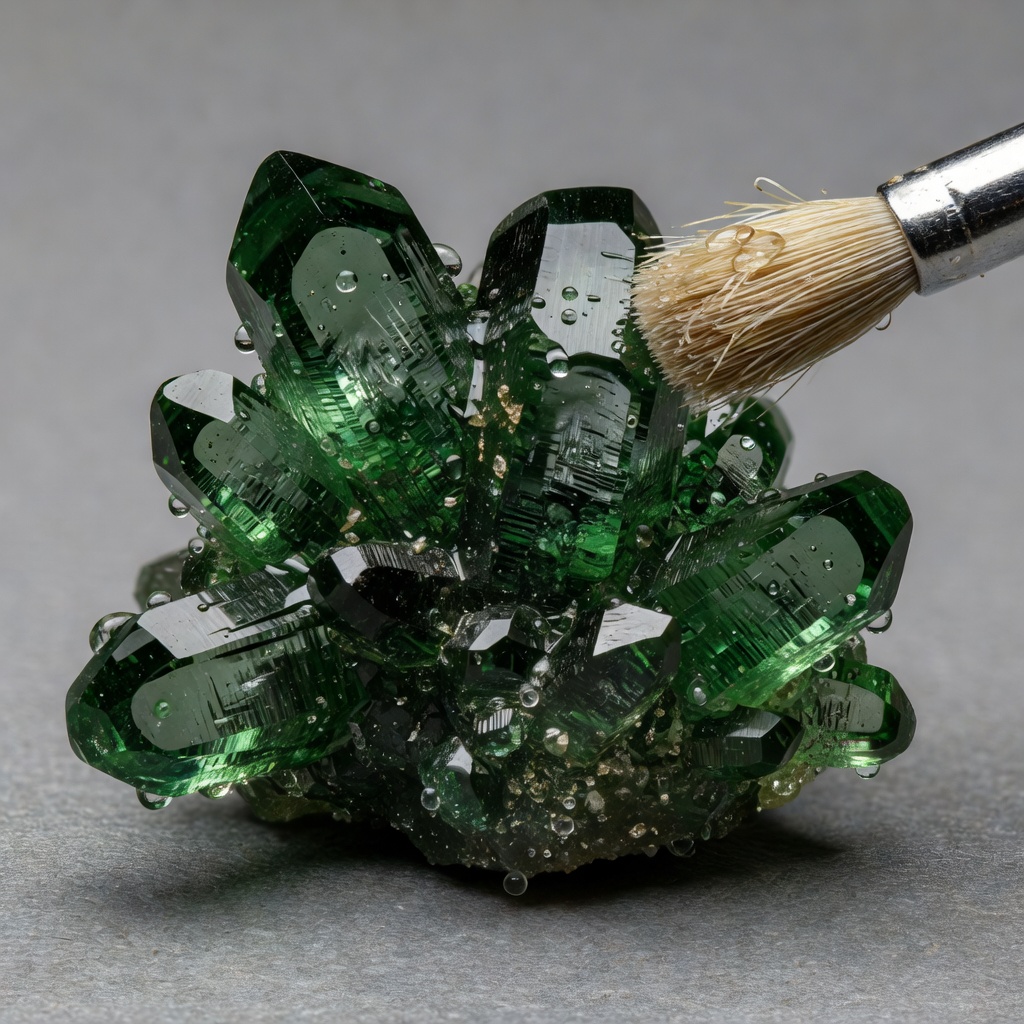
Gently immerse the epidote specimen for no more than two to three minutes, using soft camel hair or sable brushes to dislodge surface dust and debris. Always brush in the direction of crystal growth, following the natural longitudinal axis rather than scrubbing across termination points or perpendicular to crystal faces. This directional cleaning respects the cleavage planes and prevents accidental leverage that might snap delicate crystal terminations or loosen matrix attachments.
Limit soaking time strictly to the recommended 2-3 minute maximum, as prolonged submersion allows water to penetrate microscopic fractures or porous matrix material. Once surface debris loosens, remove the specimen immediately and proceed to drying protocols. For specimens with complex crystallography or attached matrix, use a soft stream of distilled water from a squeeze bottle to rinse away suspended particles rather than agitating the piece further in standing water.
Dry Cleaning Techniques for Sensitive Specimens
Many experienced collectors prefer Dry Cleaning Epidote methods for specimens showing signs of internal fracturing, porous matrix, or simply for routine dust removal between deeper cleanings. Canned air or a soft rubber dust blower provides the safest approach for removing loose particulate matter without physical contact that might abrade delicate crystal faces. Hold the nozzle at least six inches away from the specimen and use short, controlled bursts rather than sustained airflow that might destabilize loose crystals in cluster formations.
For debris lodged in crevices between intergrown crystals or within natural etch pits, wooden toothpicks or bamboo skewers offer precision tools that will not scratch the 6-7 hardness epidote surface. Select bamboo implements over metal dental picks, as the softer organic material provides tactile feedback before applying damaging pressure. Gently tease out accumulated dust and lint from these recesses, working patiently rather than forcing material free, which might lever against adjacent crystals.
Soft cosmetic brushes, particularly those designed for delicate eye makeup application, serve excellently for dusting display pieces without water exposure. The ultra-fine synthetic or natural fibers reach between crystal terminations while static electricity helps lift dust particles away from the surface. This method proves especially valuable for Epidote Dust Removal on specimens displayed in open air, allowing weekly maintenance without the risks associated with frequent wet cleaning cycles.
Removing Stubborn Stains and Deposits
Addressing discoloration requires particular caution during Epidote Stain Removal procedures, as the mineral's chemical sensitivity limits available options compared to harder, more inert stones. Iron stains, which commonly appear as orange-brown deposits on specimens collected from iron-rich environments, present the most challenging cleaning scenario. Unlike quartz or garnet, which might tolerate diluted acids for iron removal, epidote requires professional intervention for significant iron staining; home remedies using vinegar, oxalic acid, or CLR will permanently etch the crystal surface and destroy the polish.
For oily residues resulting from handling or environmental exposure, isopropyl alcohol at 70% concentration can be employed sparingly as a solvent, though immediate rinsing with distilled water remains mandatory. Apply the alcohol using a cotton swab to the affected area only, avoiding contact with matrix materials that might absorb the solvent. Follow immediately with a distilled water rinse and thorough drying to prevent alcohol residue from creating hazy films on the crystal surface.
Commercial iron-out products and aggressive chemical strippers, while effective on robust minerals like pyrite or quartz, remain absolutely contraindicated for Cleaning Iron Stains Epidote specimens. These formulations typically contain strong acids or reducing agents that will etch the epidote surface within seconds of contact, creating irreversible dull patches that destroy the specimen's value. When facing tenacious staining that resists gentle mechanical cleaning, resist the temptation to escalate chemical intensity and instead consult professional conservation services.
Proper Drying and Storage Protocols
Appropriate drying technique proves equally important as the cleaning process itself in comprehensive Epidote Care and Cleaning protocols. After water exposure, place specimens naturally on absorbent, unbleached cotton towels or microfiber cloths positioned away from heat sources, direct sunlight, or forced air currents. Allow gravity and natural evaporation to remove moisture over several hours or overnight, resisting the urge to speed drying with hair dryers or heating pads that create thermal gradients potentially causing internal fracturing.
Long-term Epidote Storage requires individual wrapping to prevent the "mineral box scratch" phenomenon common in poorly stored collections. Wrap each crystal separately in acid-free tissue paper, unbleached cotton cloth, or soft chamois leather pouches before placing them in compartmentalized storage boxes. This isolation prevents harder minerals like quartz or tourmaline from contacting and scratching the epidote surface during drawer movement or transportation.
Maintaining environmental stability between 40-60% relative humidity protects specimens from both dehydration and moisture damage. Excessively dry conditions can cause certain matrix materials to shrink and separate from the epidote crystals, while high humidity promotes oxidation of iron inclusions and potential mold growth on organic matrix components. Store collections in interior rooms away from exterior walls where temperature fluctuations remain minimal, ideally maintaining a stable range between 65-75°F year-round.
Environmental Protection Strategies
Strategic display placement constitutes a critical component of Epidote Care Tips that collectors often overlook until damage becomes apparent. Position epidote specimens away from windows and skylights, as prolonged UV exposure can fade the characteristic green coloration, particularly in transparent gemmy crystals from localities like Mali or Pakistan. If window display proves unavoidable, install UV-filtering glass or acrylic barriers that block 99% of ultraviolet radiation while still allowing visible light transmission for aesthetic appreciation.
Thermal shock presents another insidious threat to epidote integrity, requiring specimens be kept distant from heating vents, fireplaces, radiators, and air conditioning units. Rapid temperature fluctuations cause differential expansion between the epidote crystal and any attached matrix minerals, potentially inducing cleavage fractures or separation at contact points. Maintain specimens in stable thermal environments where daily temperature swings remain under 10°F to prevent cumulative stress damage.
Handling protocols significantly impact long-term preservation, as skin oils transfer readily to crystal surfaces creating difficult-to-remove residues that attract dust. Always handle epidote with freshly washed, dry hands or wear clean cotton gloves when moving valuable specimens. For display pieces, consider mounting them on acrylic stands rather than handling the crystals directly during dusting, minimizing physical contact and the subsequent cleaning cycles required to remove fingerprints.
Critical Cleaning Mistakes to Avoid
Understanding What Not to Do With Epidote proves as valuable as knowing proper techniques, as certain common cleaning methods cause irreversible damage within seconds. Never subject epidote to ultrasonic cleaners, regardless of how effectively these devices clean other jewelry items. The intense high-frequency vibrations exploit the perfect cleavage planes inherent in epidote's crystal structure, causing internal fractures, complete breakage along cleavage directions, or separation of crystals from matrix material.
Steam cleaning methods, whether from jewelry steamers or household appliances, create rapid temperature changes that induce thermal shock in epidote specimens. The combination of high heat and pressure forces moisture into microscopic fractures, which then expands during cooling, propagating cracks throughout the crystal structure. This damage often remains invisible initially, manifesting months later as visible fractures or cloudiness as the internal structure compromises.
Household cleaners, toothpaste, baking soda pastes, and abrasive powders belong nowhere near epidote collections. These materials either chemically etch the calcium aluminum silicate composition or physically scratch the 6-7 hardness surface with harder abrasive particles. Even "gentle" cleaners like dish soap often contain degreasers and fragrances that leave filmy residues requiring additional cleaning cycles. Stick exclusively to distilled water and soft mechanical methods to avoid these Epidote Cleaning Mistakes that destroy specimen value.
Professional Maintenance and Restoration
Valuable specimens requiring repair, stabilization, or cleaning of tenacious matrix material warrant consultation with certified mineralogists or professional conservators specializing in Professional Epidote Care. These experts possess access to non-acidic iron removal techniques, consolidants for stabilizing fractured pieces, and micro-sandblasting equipment capable of removing matrix without damaging the underlying epidote crystals. Investment-grade specimens, particularly those exceeding several hundred dollars in value or representing rare formations like epidote included in quartz, justify the expense of professional conservation.
Professional conservators employ specialized tools such as micro-chisels, air abrasion units using sodium bicarbonate, and precision microscopes to safely separate epidote from host rock or remove stubborn clay and iron oxide matrix. Unlike amateur attempts that often result in broken crystals or scratched surfaces, these specialists understand the crystallographic orientation and cleavage directions, working with rather than against the mineral's natural structure.
For serious collectors, museum-grade storage solutions including archival specimen boxes with polyethylene foam supports, climate-controlled display cases, and documentation systems represent the pinnacle of Epidote Restoration Services and preventive care. These systems protect specimens from environmental fluctuations, physical vibration, and light damage while providing accessibility for study and enjoyment. Consider professional assessment annually for significant collections to identify early signs of pyrite disease in matrix material, environmental damage, or necessary cleaning before minor issues become major restoration projects.
Frequently Asked Questions
Can I clean epidote with vinegar or lemon juice?
No, you should never clean epidote with vinegar, lemon juice, or other acids. Epidote is calcium aluminum iron silicate, which reacts negatively to acidic solutions. These substances can etch the surface, dull the luster, and permanently damage the crystal structure. Always use neutral pH distilled water for safe cleaning.
Is it safe to put epidote in water?
Yes, brief contact with distilled water is safe for epidote cleaning, but limit soaking to 2-3 minutes. While epidote is not water-soluble, prolonged soaking can allow water to seep into microscopic fractures, potentially causing internal damage or promoting mold growth in matrix specimens. Always dry thoroughly immediately after cleaning.
Can I use an ultrasonic cleaner for my epidote crystals?
Absolutely not. Ultrasonic cleaners are extremely dangerous for epidote due to its perfect cleavage properties. The intense vibrations can cause the crystal to split along cleavage planes, resulting in fractures or complete destruction of the specimen. Always use gentle manual cleaning methods instead.
How often should I clean my epidote specimens?
Clean epidote only when visibly dusty or dirty, typically every 3-6 months for display pieces. Over-cleaning increases the risk of accidental damage. For frequently handled jewelry or palm stones, clean monthly using only a soft damp cloth followed by immediate drying.
Does epidote fade in sunlight?
Yes, prolonged exposure to direct sunlight or strong UV light can cause color fading in some epidote varieties. The rich green pigments are photosensitive over time. Store and display epidote away from windows or use UV-filtering glass in display cases to preserve the vibrancy of your specimens.
How should I store epidote to prevent damage?
Store epidote crystals individually wrapped in acid-free tissue paper or soft cloth inside padded containers. Keep them in stable environments away from temperature fluctuations, ideally between 65-75°F with 40-60% humidity. Never toss loose epidote into drawers where they can contact harder minerals that might scratch their surfaces.
Can I wear epidote jewelry every day?
While epidote's 6-7 hardness allows for jewelry use, daily wear requires caution. Remove epidote rings and bracelets before physical activities, cleaning with chemicals, or showering. The cleavage makes it vulnerable to sharp impacts. Store jewelry pieces separately to prevent scratching from harder gemstones like diamonds or sapphires.
What is the safest way to remove iron stains from epidote?
Iron stains on epidote should ideally be addressed by professionals. Home removal attempts using iron-out solutions or oxalic acid often damage the crystal. For minor surface stains, try a soft brush with distilled water only. If stains persist, consult a mineral conservation specialist who can use controlled, non-acidic methods to preserve the specimen's integrity.