Enstatite Price Guide: Understanding Value in Rare Pyroxene Gemstones
Navigating the market for enstatite requires specialized knowledge of this uncommon pyroxene mineral, where prices can range from modest twenty-dollar specimens to museum-quality pieces commanding thousands of dollars. Unlike mainstream gemstones such as sapphires or emeralds with established market standards, enstatite valuation depends heavily on specific quality factors, geographic origin, and whether the material presents as a faceted gemstone, star cabochon, or crystalline mineral specimen. This comprehensive guide examines current market dynamics, pricing structures, and investment considerations for collectors and gem enthusiasts seeking to understand enstatite value per carat in today's specialized marketplace.
What Is Enstatite? Understanding This Rare Pyroxene Gemstone
Enstatite represents the magnesium end-member of the pyroxene mineral group, characterized by the chemical formula MgSiO3, and stands as one of the most challenging gemstones for cutters due to its distinct physical properties. This orthorhombic mineral typically forms in metamorphic and igneous environments, displaying a vitreous to pearly luster that distinguishes it from other silicate minerals. With a Mohs hardness of 5.5 and perfect cleavage in two directions, enstatite demands respect from lapidaries and jewelers who must account for its brittleness when designing jewelry pieces or preparing faceted stones.
Significant deposits of gem-quality enstatite occur in Sri Lanka, Myanmar (Burma), Tanzania, and Germany, with each locality producing material exhibiting distinct visual characteristics that influence market valuation. Sri Lankan deposits yield the rarest green transparent crystals, while Myanmar traditionally produces the finest star enstatite specimens, and German localities such as those in the Eifel region provide exceptional mineral specimens for collectors. Understanding the distinction between gem-quality crystals suitable for faceting and mineral specimens valued for their crystalline form proves essential for accurate price assessment, as these markets operate with different valuation metrics and buyer demographics.
Mineralogical Properties Affecting Value
The physical characteristics of enstatite directly impact its commercial viability and price potential, with specific gravity measurements ranging between 3.2 and 3.3 and refractive indices of 1.663-1.673 creating identification markers for gemologists. Brown enstatite gemstone varieties typically dominate the market, displaying colors ranging from bronze and honey to deep chocolate brown, while iron-free specimens from specific localities can achieve the rare green hue that commands significant premiums. These mineralogical constraints limit the size of cuttable rough, as the combination of cleavage planes and typical crystal habits rarely yields finished stones exceeding five carats, creating natural scarcity for larger specimens.
Key Factors That Determine Enstatite Prices
Evaluating enstatite value factors requires understanding a complex interplay between color intensity, clarity grades, carat weight, and cutting quality that differs substantially from more common colored stones. Unlike diamonds with standardized grading systems, enstatite pricing remains somewhat subjective, relying heavily on visual appeal and rarity indicators that experienced dealers and collectors recognize immediately. The market distinguishes between commercial material suitable for casual collectors and investment-grade specimens that demonstrate exceptional characteristics across all quality parameters.
Color Grading and Rarity Hierarchies
The color spectrum of enstatite creates distinct pricing tiers, with bronze and brown varieties representing the most accessible entry points for collectors, typically ranging from golden bronze to deep chocolate hues. Green enstatite from Sri Lanka occupies the apex of the color value pyramid, with transparent, vivid green specimens achieving prices ten to twenty times higher than their brown counterparts due to extreme rarity and visual similarity to more expensive peridot or tourmaline. Color zoning presents a significant challenge in enstatite valuation, as many crystals display uneven distribution of color intensity, requiring skilled cutters to orient the table to maximize the most desirable face-up appearance.
Clarity Standards and Transparency
Eye-clean enstatite specimens command substantial premiums over included material, though collectors often accept minor inclusions in larger stones where crystal size outweighs clarity concerns. Typical inclusions include magnetite crystals, minute fractures related to the mineral's cleavage, and fluid inclusions that may create interesting optical effects but generally reduce transparency. For faceted stones, transparency directly correlates with value, with crystal-clear material suitable for precision cutting fetching significantly higher prices per carat than translucent or opaque specimens better suited for cabochon cutting.
Carat Weight and Size Premiums
The relationship between size and price in enstatite follows an exponential curve rather than linear progression, with stones exceeding three carats commanding disproportionate premiums due to the scarcity of large clean rough. Most faceted enstatite available in the market weighs less than two carats, making specimens over five carats genuinely rare and suitable for serious collector portfolios or museum acquisitions. This size limitation stems from the mineral's crystal habit and cleavage characteristics, which fracture during extraction or cutting, preventing the production of large gems common in harder materials like corundum or beryl.
Cut Quality Considerations
Cutting enstatite presents unique challenges due to its perfect cleavage and moderate hardness, requiring lapidaries to orient the table perpendicular to the cleavage planes to prevent stone breakage during setting or wear. Step cuts and emerald cuts prove particularly challenging with enstatite, while brilliant cuts and modified cushion shapes allow better weight retention and structural integrity. Master cutters who specialize in rare pyroxene gemstones command premium fees for their work, with well-executed facet arrangements adding thirty to fifty percent to the base material value compared to commercially cut stones with windowed centers or poorly aligned cleavage.
Current Enstatite Price Per Carat (2024 Market Update)
The enstatite price per carat varies dramatically across quality grades, with current market data reflecting steady appreciation due to limited new mining operations and sustained collector interest in rare mineral species. Wholesale pricing structures distinguish between commercial parcels intended for bulk jewelry manufacturing and individual specimens marketed toward gemstone collectors and mineral enthusiasts. Understanding these price tiers enables buyers to assess whether specific specimens represent fair market value or inflated retail pricing.
Commercial Grade Pricing
Entry-level enstatite suitable for silver jewelry or beginning collectors typically ranges from $20 to $50 per carat, featuring lighter bronze colors, moderate inclusions, and standard commercial cutting. These stones often originate from Tanzanian deposits or represent smaller fragments from traditional mining operations, providing accessible opportunities for enthusiasts to acquire genuine enstatite without significant investment. While lacking the rarity premiums of fine material, commercial-grade enstatite offers excellent educational value for studying pyroxene gemstone characteristics and optical properties.
Fine Quality Valuations
Eye-clean enstatite with rich bronze or brown coloration, excellent transparency, and precision cutting commands between $50 and $200 per carat, depending on size and origin documentation. Stones in this category typically display optimal brilliance, minimal windowing, and colors deep enough to distinguish them from similar-looking but less valuable minerals like bronzite or hypersthene. Dealers specializing in rare gemstones often stock this quality tier, providing certificates of origin and detailed provenance that justify the mid-range pricing structure.
Collector Grade Premiums
The upper echelon of the enstatite market, comprising rare green varieties from Sri Lanka, large clean specimens exceeding three carats, or exceptionally rare color combinations, regularly achieves $200 to $500+ per carat at specialty auctions and dealer showrooms. These investment-grade pieces often accompany detailed mineralogical reports from prestigious laboratories, confirming not only the species identification but also the geographic origin that significantly influences valuation. Recent auction results indicate that museum-quality enstatite with documented provenance from classic localities can exceed these estimates when competitive bidding occurs among serious mineral collectors.
Comparative Market Analysis
When evaluating enstatite against similar pyroxene minerals, the market positions it between common hypersthene (typically $10-$30 per carat) and rare gem-quality diopside or spodumene varieties. Brown enstatite gemstone material often competes with bronzite in the marketplace, though purists distinguish between the two based on iron content and optical characteristics, with true enstatite commanding higher prices due to its classification as a distinct mineral species rather than a rock variety. This price positioning makes enstatite an attractive option for collectors seeking rare pyroxene specimens without entering the ultra-premium pricing tiers of alexandrite or fine spinel.
Star Enstatite vs. Faceted Stones: Valuation Differences
The phenomenon of asterism in enstatite creates a specialized subset of the market where star enstatite price structures diverge significantly from faceted material, reflecting both the rarity of suitable rough and the expertise required to reveal the optical effect. Unlike star rubies or sapphires with six-rayed stars, enstatite typically displays four-rayed asterism caused by the reflection of light from needle-like inclusions of magnetite or ilmenite aligned along crystallographic axes. This distinct optical signature appeals to collectors of phenomenal gemstones who seek alternatives to the more common corundum stars.
Asterism Quality and Cutting Requirements
Creating marketable star enstatite requires precise cabochon cutting with the base oriented parallel to the length of the inclusion needles, a technique demanding significant expertise to maximize star sharpness and centrality. The most valuable specimens display sharp, distinct rays that reach the edge of the cabochon dome without wavering, with the star remaining centered when viewed from directly above. Poorly oriented cuts result in off-center stars or weak, diffused rays that reduce value by fifty percent or more compared to optimally cut specimens.
Premium Pricing for Phenomenal Specimens
High-quality star enstatite typically commands a thirty to fifty percent premium over faceted stones of equivalent weight and color quality, with exceptional examples from Myanmar achieving prices exceeding $300 per carat for stones over five carats. The market particularly values sharp, silvery-white stars against deep bronze or brown backgrounds, creating dramatic contrast that enhances the visual impact of the gemstone. Collectors should verify that the star remains visible under single-point lighting rather than diffused light, as true asterism maintains its integrity under direct illumination while chatoyancy or sheen effects may disappear.
Market Availability and Collector Demand
Star enstatite represents a small fraction of the total enstatite market, with genuine asterism occurring in perhaps one percent of mined material suitable for cutting. This scarcity drives consistent demand among collectors of optical phenomenon gemstones, particularly those specializing in four-rayed stars found in diopside, garnet, and enstatite. Recent market trends indicate increasing interest in these phenomenal specimens as alternatives to the prohibitively expensive star rubies and star sapphires, suggesting potential for continued price appreciation in the star enstatite sector.
Mineral Specimens vs. Cut Gemstones: Dual Markets
The enstatite market operates along two distinct trajectories: faceted gemstones valued for jewelry use and mineral specimens prized for crystalline perfection, aesthetic matrix associations, and geological significance. Understanding both markets proves essential for comprehensive valuation, as exceptional mineral specimens sometimes achieve prices rivaling or exceeding cut stones, particularly when associated with rare mineral combinations or exhibiting unusual crystal habits. This dual market structure creates opportunities for collectors to specialize according to their interests while requiring different expertise for authentication and price assessment.
Crystalline Form Valuation Criteria
Mineral specimens derive value from crystal size, termination quality, luster, and aesthetic presentation, with single crystals exceeding two centimeters considered large for the species and commanding significant premiums. Perfectly terminated orthorhombic crystals with sharp edges and glassy faces appeal to systematic mineral collectors, while clusters or sprays of intergrown crystals attract those interested in mineralogical aesthetics. The presence of associated minerals such as bustamite, willemite, or calcite from classic localities like Franklin, New Jersey, or the Eifel region of Germany can multiply specimen values substantially due to the rarity of such combinations.
Matrix Specimens and Classic Localities
Enstatite crystals preserved on their original matrix rock provide geological context that enhances scientific and display value, particularly when the matrix features contrasting colors or textures that highlight the enstatite crystals. Specimens from historic mining districts carry provenance premiums, with pieces from defunct German localities or classic Sri Lankan gem gravels achieving prices at specialty mineral auctions that surprise observers unfamiliar with the specimen market. Documentation of the specific mine, date of extraction, and previous ownership history adds significant value to museum-grade pieces, sometimes increasing prices by factors of two to five over similar but undocumented material.
Price Calculations: Rough vs. Cut
Valuing raw enstatite requires different metrics than cut stones, with dealers often pricing matrix specimens by the piece based on overall aesthetic impact rather than per-carat or per-gram calculations. Loose crystals suitable for cutting might trade at $5 to $20 per gram for commercial quality, while exceptional crystals with termination quality too perfect to facet might achieve higher prices as display specimens than they would if cut into gemstones. This dichotomy requires collectors to decide between the immediate liquidity of cut stones versus the long-term appreciation potential of fine mineral specimens, with many serious collectors maintaining portfolios of both forms.
Geographic Origin Impact on Enstatite Valuation
Provenance significantly influences enstatite pricing, with material from specific localities commanding premiums based on color characteristics, historical significance, and perceived quality associations within the collector community. Unlike diamonds or sapphires where origin determination requires advanced spectroscopic analysis, enstatite often exhibits visual and inclusion characteristics that experienced dealers can associate with specific mining districts, though laboratory confirmation remains essential for high-value specimens. Understanding these geographic price hierarchies enables informed buying decisions and appropriate valuation expectations.
Sri Lankan Green Enstatite Premiums
Sri Lankan enstatite occupies the pinnacle of the value pyramid, with transparent green material from the gem gravels of Ratnapura and Elahera achieving prices substantially higher than brown varieties from other sources. The iron-poor composition of Sri Lankan enstatite produces the rare green coloration resembling peridot but with superior hardness and brilliance, making these specimens highly sought after by collectors of rare green gemstones. Stones over one carat in this color category represent extreme rarities, with prices escalating rapidly for clean specimens exceeding two carats, sometimes reaching $1,000 per carat for exceptional material.
Myanmar's Star Enstatite Legacy
Burmese deposits, particularly those associated with the Mogok Stone Tract, historically produced the finest star enstatite specimens, establishing Myanmar's reputation as the premier source for asterism material. While political situations have complicated recent mining operations, vintage Burmese star enstatite continues to command respect in the marketplace, with collectors specifically seeking pieces with documented pre-embargo origins. The typical bronze-brown color of Myanmar material provides excellent contrast for asterism, with local cutting traditions often producing high-domed cabochons that maximize the optical effect.
African Deposits and Market Accessibility
Tanzanian enstatite deposits, particularly those near the Umba Valley and Merelani regions, provide the market with accessible, affordable material that enables entry-level collectors to acquire genuine specimens without premium pricing. While generally producing smaller crystals with more included material than Asian sources, Tanzanian enstatite offers excellent crystal form for mineral specimens and acceptable rough for commercial cutting. This steady supply helps stabilize the lower end of the enstatite market, preventing the extreme price volatility seen in materials with single-source dependencies.
Provenance Documentation
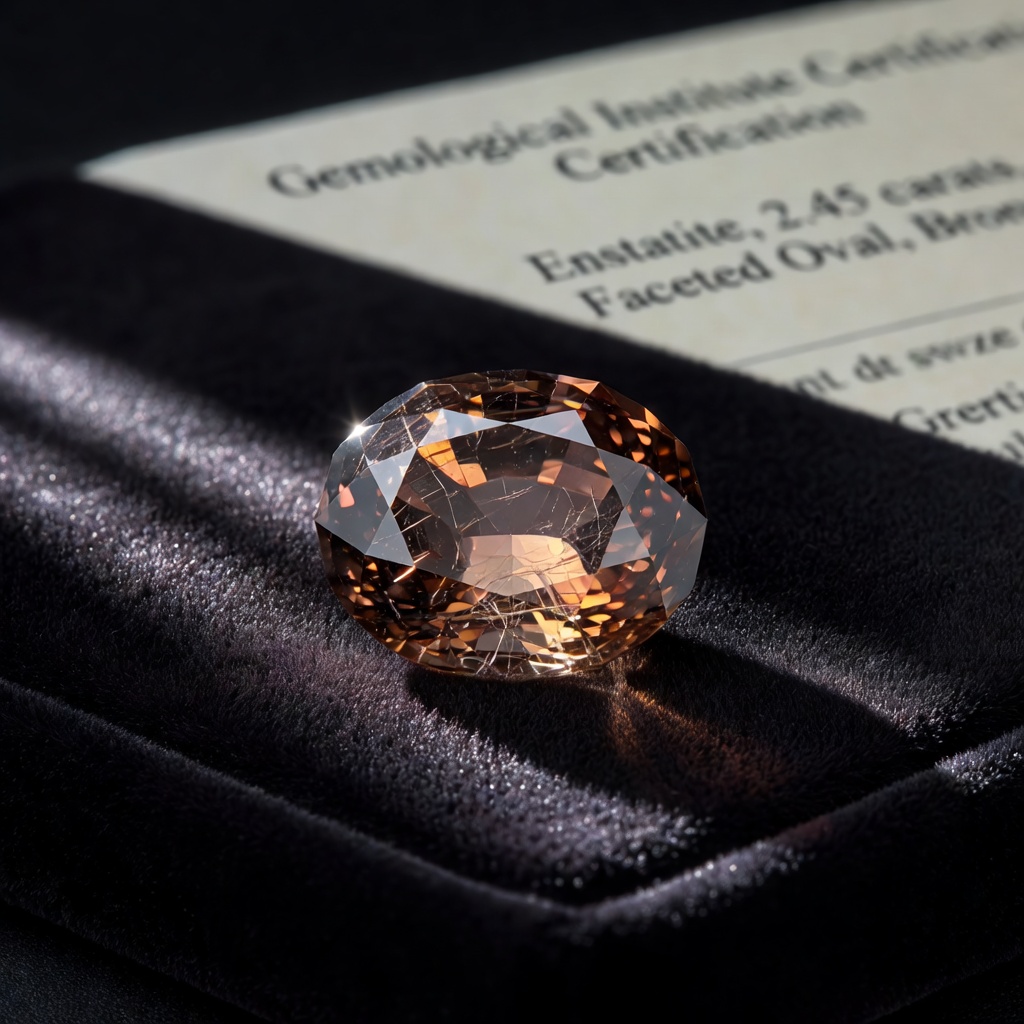
For high-value enstatite specimens, detailed provenance documentation including mining district, collection date, and chain of custody significantly impacts resale value and insurance valuations. Laboratory reports from institutions like GIA, AGL, or Gübelin that include origin opinions add credibility and liquidity to specimens, particularly for Sri Lankan and Myanmar material where origin significantly affects price. Collectors should maintain detailed records of purchases, including original receipts, dealer certificates, and any accompanying mineralogical literature that establishes the specimen's place in geological history.
Buying Enstatite: Trusted Sources and Authentication
Purchasing enstatite requires navigating a specialized marketplace where general jewelry retailers rarely stock the material, necessitating relationships with specialty gem dealers, mineral shows, and reputable online platforms dedicated to rare gemstones. The niche nature of enstatite creates both opportunities and risks for buyers, as limited market knowledge among general jewelers may result in misidentification or inappropriate pricing, while specialized dealers command expertise premiums justified by accurate identification and valuation services. Establishing trusted sources proves essential for building a quality collection while avoiding common pitfalls associated with similar-looking minerals.
Specialty Dealers vs. General Marketplaces
Reputable specialty gem dealers who focus on rare species provide the most reliable venues for acquiring quality enstatite, offering expertise in identification, cutting optimization, and market valuation that general online marketplaces cannot match. While platforms like eBay or Etsy may offer lower prices, the risk of purchasing misidentified hypersthene, bronzite, or even glass simulants increases significantly without expert verification. Established dealers at Tucson, Denver, and Munich mineral shows typically stock authenticated enstatite with proper documentation, providing opportunities for hands-on examination before purchase.
Laboratory Certification Importance
For purchases exceeding $500, obtaining laboratory certification from recognized institutions such as GIA (Gemological Institute of America), AGL (American Gemological Laboratories), or Gübelin provides essential verification of species, natural origin, and geographic source when possible. These reports confirm that the material is genuine enstatite rather than similar pyroxenes or treated material, though they rarely comment on valuation. Advanced testing including refractive index measurement, specific gravity determination, and spectroscopic analysis distinguishes enstatite from hypersthene with certainty, protecting buyers from the common misidentification that occurs in the marketplace.
Identification Challenges and Common Confusions
Distinguishing enstatite from hypersthene and bronzite presents ongoing challenges for collectors and jewelers, as these pyroxene minerals share similar appearance and physical properties requiring precise testing for definitive separation. Hypersthene, the iron-rich variety of the enstatite-ferrosilite series, typically displays stronger pleochroism and more metallic luster than magnesium-dominant enstatite, though visual identification alone proves unreliable. Bronzite, essentially enstatite with higher iron content displaying a bronzy sheen, often enters the market mislabeled as enstatite, though gemologically distinct; buyers should insist on specific mineralogical identification rather than accepting generic "bronze enstatite" descriptions.
Treatment Disclosure Verification
Fortunately for collectors, enstatite rarely undergoes enhancement treatments, with the vast majority of material sold in its natural state without heat, irradiation, or oiling that affects other gemstone species. However, verification of natural status remains essential, as some dealers might oil surface-reaching fractures to improve clarity appearance temporarily. Buyers should examine stones under magnification for residue in fractures and request written guarantees of natural, untreated status from sellers, particularly when purchasing high-value green Sri Lankan material where treatments might theoretically enhance color though they remain uncommon in practice.
Investment Potential and Market Trends
Evaluating enstatite as an investment vehicle requires understanding its position within the rare gemstone market, where liquidity constraints compete with scarcity-driven appreciation potential to create a specialized collecting niche. Unlike blue-chip gemstones such as diamonds, rubies, or emeralds with established auction houses and liquid secondary markets, enstatite represents an illiquid alternative investment best suited for long-term collectors with specific interest in pyroxene minerals rather than short-term speculators seeking quick returns. However, supply constraints and growing collector interest suggest sustained value appreciation for high-quality specimens with proper documentation.
Supply Constraints and Mining Economics
The sporadic and limited nature of enstatite mining operations creates natural supply constraints that support long-term price stability, as no major commercial mines operate specifically for enstatite extraction. Most gem-quality material enters the market as byproduct from mining operations targeting other gemstones or minerals, with Sri Lankan alluvial deposits and Tanzanian primary deposits producing material unpredictably based on seasonal weather patterns and artisanal mining activities. This irregular supply prevents market flooding while ensuring that existing high-quality specimens retain value due to the inability of producers to rapidly increase output in response to price signals.
Collector Demographics and Market Growth
Growing interest in rare pyroxene gemstones among systematic mineral collectors and alternative gemstone enthusiasts has expanded the enstatite market beyond traditional geological circles into jewelry design and lapidary arts communities. This demographic shift increases demand for both cut stones and mineral specimens, particularly among millennials and Gen Z collectors seeking unique alternatives to mainstream gemstones. Educational initiatives by mineral museums and gemological institutions continue raising awareness of enstatite's unique properties, potentially expanding the buyer pool for quality specimens over the coming decades.
Liquidity Considerations and Resale Strategies
Investors should approach enstatite with realistic expectations regarding liquidity, as selling periods may extend six months to several years depending on market conditions and the specific quality of the specimen. High-quality Sri Lankan green material and exceptional star enstatite offer the greatest liquidity due to consistent demand from serious collectors, while commercial-grade brown material may require significant discounting for quick sale. Auction houses specializing in rare gemstones, such as Heritage Auctions or Bonhams, occasionally feature fine enstatite in their jewelry and mineral sales, providing exit strategies for high-value pieces with documented provenance.
Long-Term Value Retention Analysis
Historical price data indicates that fine enstatite has appreciated steadily at rates exceeding inflation, though falling short of the dramatic increases seen in paraiba tourmaline or fine spinel during market surges. This steady appreciation pattern suits conservative collectors seeking portfolio diversification through tangible assets rather than aggressive investors seeking maximum returns. The combination of genuine geological rarity, limited new supply, and increasing collector sophistication suggests that museum-quality enstatite will continue gaining value, particularly as classic localities become depleted and previously unknown deposits fail to match the quality of historic sources.
Care and Maintenance to Preserve Value
Proper maintenance of enstatite specimens and jewelry requires understanding the mineral's physical limitations, as its Mohs hardness of 5.5 and distinct cleavage make it susceptible to damage from impact, thermal shock, and careless cleaning procedures. Preserving the value of enstatite investments demands protective settings for jewelry pieces, appropriate storage solutions for mineral specimens, and insurance considerations that acknowledge the stone's fragility compared to harder gems. Failure to observe proper care protocols can result in significant value loss through chipping, scratching, or cleavage fractures that reduce both aesthetic appeal and marketability.
Protective Settings and Wear Recommendations
Jewelry designers must account for enstatite's brittleness by utilizing protective bezel settings rather than exposed prong settings, particularly for rings that experience daily impact and abrasion. The gemstone's perfect cleavage makes it unsuitable for engagement rings or bracelets subject to mechanical stress, with pendants and earrings representing safer applications where the stone receives less direct contact with hard surfaces. Collectors should instruct jewelers to avoid applying excessive pressure during setting operations, as enstatite can split along cleavage planes if squeezed too tightly in mounting configurations.
Cleaning Protocols and Chemical Avoidance
Cleaning enstatite requires gentle methods avoiding ultrasonic cleaners, steam cleaners, and harsh chemical solutions that might exploit surface-reaching fractures or thermal shock vulnerabilities. Warm water with mild soap and a soft brush provides the safest cleaning method for both faceted stones and mineral specimens, followed by immediate drying with a soft cloth to prevent water spots. Chemical exposure to acids or bases should be avoided entirely, as these might etch the surface or attack mineral inclusions that provide structural integrity to the stone.
Storage and Handling Best Practices
Storage solutions must prevent enstatite from contacting harder gemstones such as diamonds, sapphires, or quartz that could scratch its surface, with individual soft pouches or compartmentalized display cases providing optimal protection. Mineral specimens require stable environments away from direct sunlight that might cause color fading in some varieties, and protection from vibration or movement that could damage delicate crystal terminations. Maintaining stable humidity levels prevents dehydration of any associated matrix minerals while avoiding condensation that might affect the enstatite's surface luster over extended periods.
Insurance and Documentation
High-value enstatite specimens and jewelry pieces require specialized insurance riders on homeowners or collection policies, with appraisals updated every three to five years to reflect market appreciation. Appraisers specializing in rare gemstones should document not only the Four Cs (color, clarity, cut, carat) but also geographic origin and any phenomenal optical effects that significantly influence replacement value. Photographic documentation including macro images of identifying inclusions or crystal features assists in recovery efforts should theft occur, while detailed provenance records support claims processing and verify the specimen's authenticity for insurers unfamiliar with this obscure gemstone species.
Frequently Asked Questions
What is the average price of enstatite per carat?
Commercial-quality enstatite typically ranges from $20 to $50 per carat, while fine specimens with good color and clarity command $50 to $200 per carat. Rare green varieties from Sri Lanka or large clean stones can exceed $500 per carat.
Is star enstatite more expensive than faceted enstatite?
Yes, high-quality star enstatite usually commands a 30-50% premium over faceted stones of equivalent quality due to its rarity and the cutting expertise required to orient the asterism properly. Sharp, centered four-rayed stars are particularly valued by collectors.
What makes green enstatite from Sri Lanka so valuable?
Green enstatite is exceptionally rare because most enstatite occurs in bronze or brown hues. Sri Lankan deposits produce the finest green material with superior transparency and color saturation, making these specimens highly sought after by collectors and commanding the highest market prices.
How can I verify if my enstatite is natural and untreated?
Request a certificate from a recognized laboratory like GIA, AGL, or Gübelin. Enstatite is rarely treated, but verification confirms natural origin and distinguishes it from similar minerals like hypersthene. Advanced testing may include refractive index measurement and specific gravity testing.
Why don't jewelers commonly use enstatite in rings?
Enstatite has a Mohs hardness of only 5.5 and distinct cleavage, making it susceptible to scratching and breaking in daily wear. It's better suited for pendants, earrings, or collector specimens rather than rings, which explains its niche status in the gem market.
Are enstatite mineral specimens worth collecting?
Absolutely. Well-formed enstatite crystals, especially those on matrix from classic localities like Germany or associated with bustamite, are highly prized by mineral collectors. Prices for museum-quality specimens can rival or exceed faceted gems, particularly for large, aesthetic crystals.
What is the difference between enstatite and hypersthene?
While both are pyroxene minerals, enstatite is the magnesium end-member (MgSiO3), whereas hypersthene contains significant iron (Mg,Fe)SiO3. Hypersthene typically shows stronger pleochroism and a more metallic luster. They require gemological testing to distinguish definitively, affecting valuation accuracy.
Does enstatite appreciate in value over time?
High-quality enstatite has shown steady appreciation due to limited new mining and increasing collector interest in rare gemstones. However, it's considered an illiquid investment compared to diamonds or rubies, best suited for long-term collectors rather than short-term speculators.