What Is Emerald? Introduction to the Precious Green Gemstone
Emerald is a precious gemstone variety of the mineral beryl, distinguished by its vivid green color that has captivated civilizations for over six thousand years. As a member of the beryl gemstone family, which includes aquamarine and morganite, emerald stands apart due to specific trace elements that create its signature verdant hue. The gemstone has held immense cultural significance across ancient Egyptian, Incan, and Mughal civilizations, often symbolizing fertility, rebirth, and eternal youth in historical contexts. Unlike other green beryl varieties that may appear pale or yellowish-green, true emeralds exhibit a deep, saturated green caused by chromium and vanadium substitutions within the crystal lattice.
Understanding emerald gemstone properties begins with recognizing that not all green beryl qualifies as emerald. Gemological institutes define emerald specifically as green beryl colored by chromium and/or vanadium with sufficient saturation to distinguish it from pale "green beryl" specimens. This distinction affects both value and collector interest, as true emeralds command prices exponentially higher than other beryl varieties. Basic identification characteristics for non-experts include examining the stone's color saturation, looking for characteristic inclusions known as "jardin," and checking for double refraction using a jeweler's loupe.
Physical Properties of Emerald: Durability and Structure
Understanding emerald hardness is crucial for anyone considering this gemstone for jewelry, as emeralds rate between 7.5 and 8 on the Mohs hardness scale. While this hardness level suggests reasonable resistance to scratching, emeralds possess distinct cleavage planes and internal characteristics that make them more brittle than other gems of similar hardness. The specific gravity of emeralds typically ranges from 2.67 to 2.78, reflecting the density of the beryl structure combined with trace element inclusions. These physical characteristics make emeralds suitable for jewelry that receives moderate wear, though they require more careful handling than rubies, sapphires, or diamonds.
Emeralds crystallize in the hexagonal crystal system, often forming as six-sided prisms terminated by flat basal planes, though natural crystals frequently show complex growth patterns and etched surfaces that gemologists use for identification purposes. The stones exhibit one direction of imperfect cleavage and typically display conchoidal to uneven fracture patterns when broken. These structural features mean that emeralds can chip along cleavage planes if struck with sufficient force, particularly at the girdle or corners of cut stones. When evaluating emerald properties and information for purchase, consider that protective settings such as bezels or halos help mitigate these durability concerns by shielding vulnerable points from direct impact.
Chemical Composition and Formation Process
The emerald chemical composition follows the base formula Be₃Al₂(SiO₃)₆, representing beryllium aluminum silicate with specific ionic substitutions that create the green coloration. Chromium and vanadium replace aluminum atoms in the crystal structure, with chromium typically producing the pure green tones while vanadium contributes bluish-green hues depending on concentration levels. These trace elements must be present in sufficient quantities to create the saturated color that distinguishes emerald from other pale green beryl varieties. The precise chemistry varies by geographic origin, creating subtle differences in color and clarity that experienced gemologists can identify.
Natural formation requires specific geological conditions involving hydrothermal fluids or pegmatitic environments where beryllium-rich solutions interact with chromium-bearing rocks like mica schist or ultramafic rocks. The presence of iron in the formation environment can modify the final color, creating variations that help distinguish between emeralds from different geographic origins, such as the iron-rich emeralds from Zambia versus the relatively iron-free stones from Colombia. Temperature and pressure conditions must remain stable over millions of years to allow the hexagonal crystals to grow to sufficient size for cutting. This complex formation process explains why fine emeralds are rarer than diamonds and why the beryl gemstone family produces so few specimens with the intense color required for emerald classification.
Optical Properties: Understanding Emerald's Unique Visual Characteristics
Emeralds exhibit distinctive optical properties that contribute to their visual appeal and help gemologists distinguish them from simulants or other green gemstones. The refractive index ranges from 1.565 to 1.602 with a birefringence of 0.005 to 0.009, creating subtle optical effects that skilled cutters must consider when orienting the stone to maximize color and minimize windowing. Pleochroism in emeralds manifests as different colors when viewed from different angles, typically showing blue-green along the optic axis and yellowish-green perpendicular to it, which affects emerald color grading and cutting decisions. These optical characteristics require careful consideration during the cutting process to ensure the table facet displays the most attractive color possible.
Most emeralds display a vitreous to waxy luster and range from transparent to translucent, though the presence of inclusions often creates a soft, velvety appearance that connoisseurs particularly prize in fine specimens from classic localities. The specific gravity, combined with refractive index measurements, provides gemologists with definitive diagnostic data for separating natural emeralds from imitations such as green glass or synthetic spinel. When examining emerald properties and information, note that fluorescence under ultraviolet light varies by origin; Colombian stones typically show strong red fluorescence due to chromium content, while Zambian stones often appear inert due to iron quenching effects. Understanding these optical nuances helps collectors appreciate why certain stones appear more lively or display superior "face-up" color compared to others of similar carat weight.
Emerald Quality Factors: The Four Cs and Beyond
When evaluating emeralds, color remains the paramount quality factor, with professional emerald color grading assessing three distinct components: hue (the basic color), tone (lightness to darkness), and saturation (intensity). The ideal stone displays a vivid, saturated green with minimal yellow or blue modifier tones, typically described as "emerald green" or "grass green" in the trade. Premium stones show a medium-dark tone with strong saturation, avoiding the pale appearance of low-quality material or the overly dark, murky look of stones with excessive inclusions or poor cutting. This color evaluation takes precedence over other factors, meaning a smaller stone with exceptional color may command higher prices than a larger stone with inferior hue or saturation.
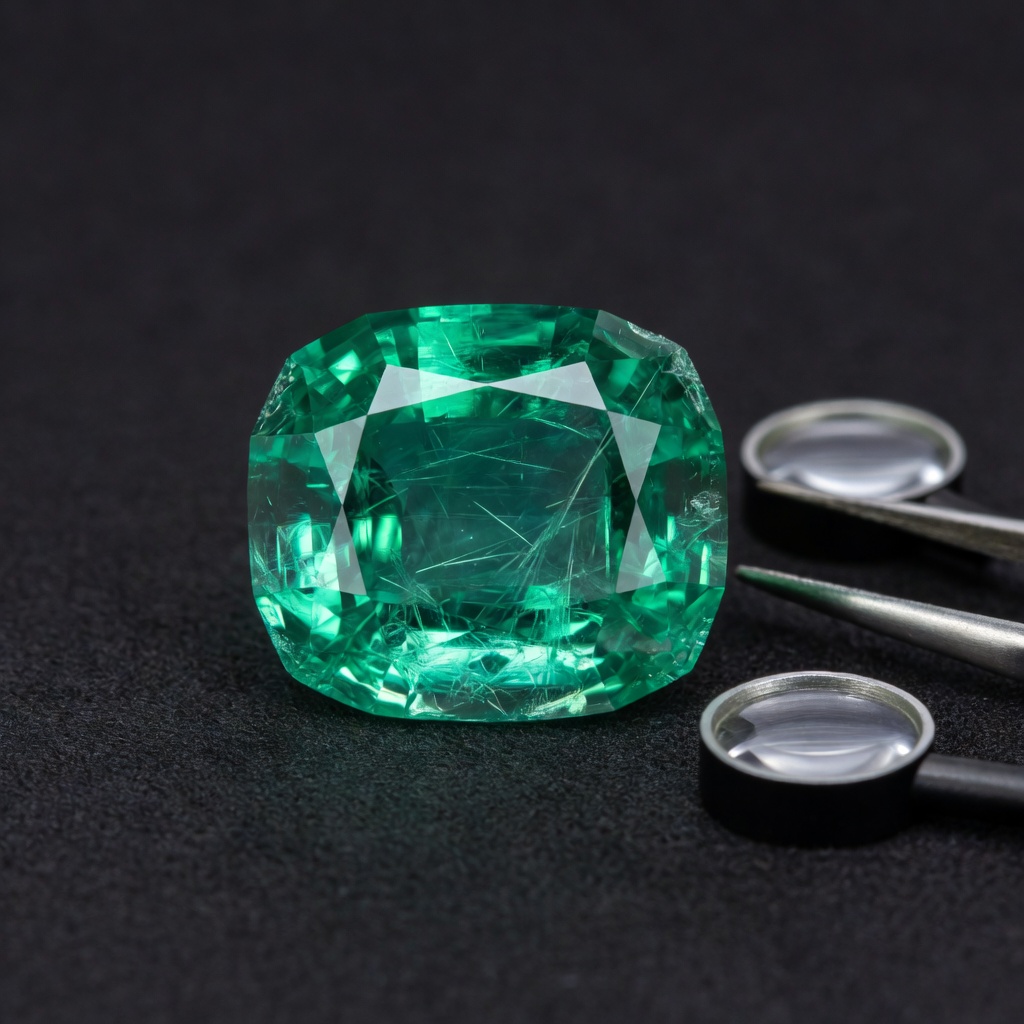
Clarity assessment in emeralds differs significantly from diamonds, as emerald inclusions, nicknamed "jardin" (French for garden), are not only accepted but expected in natural stones. These characteristic inclusions include fluid-filled cavities, growth tubes, and crystal inclusions that create unique fingerprint patterns visible under magnification. While heavily included stones with low transparency command lower prices, completely inclusion-free natural emeralds are extremely rare and valuable; most fine emeralds contain some internal characteristics that do not significantly detract from beauty if they do not threaten durability or severely impact transparency. Cutters face the challenge of maximizing color saturation while minimizing the visibility of inclusions, often choosing the emerald cut (step cut) with truncated corners that protects vulnerable points while showcasing the color through the large table facet.
Carat weight significantly impacts value, with prices increasing exponentially rather than linearly as stones approach and exceed one carat, particularly for fine-quality material. Cut quality affects both the stone's durability and its ability to display optimal color, with well-proportioned stones returning maximum light while poorly cut stones may show "windows" or extinction that reduce visual appeal. When purchasing emeralds, buyers should prioritize color first, then ensure the clarity characteristics do not threaten the stone's integrity, while considering how the cut maximizes the face-up appearance within their budget constraints.
Major Emerald Sources and Geographic Origins
Colombian emeralds have historically dominated the high-end market, with the Muzo, Chivor, and Coscuez mines producing stones renowned for their pure, saturated green color and exceptional transparency. The Muzo mine yields emeralds with a warm, grassy green hue often considered the industry standard for fine color, while Chivor material typically shows a slightly bluish cast with exceptional clarity. Coscuez produces a range of qualities but is particularly known for stones with distinctive crystal habits and inclusion patterns. Colombian emeralds generally contain less iron than African specimens, resulting in stronger fluorescence and what many collectors describe as a more "alive" or vivid appearance under various lighting conditions.
Zambian emeralds from the Kagem mine and other deposits have gained significant market share, offering deep, bluish-green colors with high iron content that produces exceptional clarity and slightly different fluorescence properties under UV light. These stones often appear cleaner to the eye than Colombian material, though the increased iron content typically results in a darker tone that requires careful cutting to maximize brightness. Brazilian deposits in Minas Gerais and Bahia, along with emerging Tanzanian sources, provide additional diversity in the market, offering various shades from light green to deep forest tones. Understanding emerald properties and information regarding origin helps collectors make informed decisions, as Colombian origins still command premium prices due to historical preference and the specific chemical purity of their material, though Zambian stones increasingly compete in the fine quality sector.
Common Treatments and Enhancements in Emeralds
Virtually all emeralds undergo some form of treatment, with oiling and resin filling representing the most common emerald treatments used to improve apparent clarity. Traditional cedar oil, synthetic oils, or modern polymer resins are introduced into surface-reaching fractures under vacuum or heat pressure, reducing the visibility of inclusions and improving transparency by minimizing the scattering of light at fracture interfaces. This practice dates back thousands of years and is considered standard in the industry, though the extent of treatment significantly affects value and long-term stability. The Gemological Institute of America classifies these clarity enhancements as Minor (faintly visible inclusions), Moderate (easily visible but not extreme), or Significant (highly visible filled fractures), with corresponding impacts on valuation.
Detection of these treatments requires microscopic examination, with advanced spectroscopic techniques identifying specific fillers such as palm oil, Joban oil, or synthetic resins like Opticon. Untreated emeralds with fine color represent extreme rarities that command substantial premiums in the collector market, sometimes selling for multiples of comparable treated stones. The impact of treatments on long-term care is significant, as oils may dry out or become discolored over time, requiring periodic re-treatment, while polymer resins offer greater stability but may react differently to cleaning chemicals. When researching emerald properties and information, understanding treatment disclosure is essential, as reputable sellers should provide laboratory reports indicating the extent of clarity enhancement, allowing buyers to make informed decisions about durability, maintenance requirements, and fair market value.
Care and Maintenance of Emerald Jewelry
Proper care of emerald jewelry requires understanding the gemstone's unique vulnerabilities, particularly regarding heat, chemicals, and mechanical stress that can damage both the stone and any existing clarity enhancements. Owners should never use ultrasonic cleaners or steam cleaning systems, as the vibrations can expand existing fractures or remove oil treatments, instead opting for gentle cleaning with warm, soapy water and a soft-bristled brush. Harsh household chemicals including bleach, ammonia, and abrasive cleaners can etch the stone's surface or break down filling materials, so emeralds should be removed before cleaning, swimming, or applying cosmetics. Given the emerald hardness and cleavage characteristics, prevention of damage is far more effective than repair.
Storage requires separate soft pouches or compartments away from harder gemstones like diamonds or sapphires that could scratch the surface, while periodic professional inspection ensures that prongs remain secure and oils have not dried out or degraded. Re-oiling treatments may become necessary every few years depending on wear patterns and environmental exposure, with professional jewelers able to restore the original appearance of treated stones through careful refilling procedures. Insurance considerations should include updated appraisals every two to three years, as emerald markets fluctuate and treatments may change over time, affecting replacement value. Understanding these maintenance requirements is crucial emerald properties and information for owners who wish to preserve their jewelry's beauty across generations while protecting their financial investment.
Investment and Valuation: Understanding Emerald Worth
Understanding emerald valuation requires recognizing the exponential relationship between size and price, with fine untreated emeralds over five carats potentially commanding prices exceeding those of diamonds on a per-carat basis. Investment-grade specimens require documentation from prestigious laboratories such as GIA, SSEF (Swiss Gemmological Institute), or Gübelin, which provide detailed reports on origin, treatment extent, and color quality that significantly influence market value. These certificates verify critical emerald properties and information including whether the stone is natural or synthetic, the geographic origin, and the presence or absence of treatments, creating transparency in a market where such factors dramatically affect pricing.
The rarity of untreated emeralds with exceptional color creates a distinct tier in the investment market, while treated stones, though beautiful, depreciate differently and require careful consideration regarding long-term value retention. Market trends show increasing appreciation for documented Colombian material and fine Zambian stones with minimal enhancement, particularly as mining depths increase and yields from traditional sources decrease. Compared to diamonds, rubies, and sapphires, emeralds offer unique investment characteristics tied to their geological rarity and the finite nature of primary deposits. When evaluating emerald color grading for investment purposes, stones displaying the coveted "old mine" Colombian green with minor or no treatment represent the most liquid and appreciating assets, though all fine emeralds with proper documentation can serve as tangible stores of value in a diversified portfolio.
Frequently Asked Questions About Emeralds
What Is the Mohs Hardness of Emerald and How Durable Is It?
Emerald rates 7.5-8 on the Mohs hardness scale, positioning it between quartz and corundum (sapphire/ruby) in terms of scratch resistance, which makes it suitable for jewelry with appropriate precautions. However, durability encompasses more than hardness, as emeralds contain natural inclusions and internal fractures along with distinct cleavage planes that make them more susceptible to chipping or breaking than other gems of similar hardness. When set in rings, emeralds benefit from protective settings such as bezels or halos that guard the girdle and corners from direct impact, while owners should remove emerald jewelry during activities involving potential blows, chemicals, or extreme temperature changes.
What Causes the Green Color in Emeralds?
The distinctive green color in emeralds results from trace amounts of chromium (Cr³⁺) and/or vanadium (V³⁺) substituting for aluminum atoms within the beryl crystal structure during formation. Chromium produces the pure, saturated green tones most prized in the market, while vanadium creates slightly bluish-green hues, with many fine emeralds containing both elements in varying ratios. The specific shade depends on the concentration of these chromophores and the presence of other elements like iron, which can mute the color or add yellow tones, explaining why Colombian emeralds often appear warmer and more vividly green compared to the bluish-green Zambian varieties.
Are Inclusions in Emeralds Normal or Do They Reduce Value?
Inclusions, traditionally called "jardin" (French for garden), are extremely common in natural emeralds and are accepted by the gem trade as proof of authenticity and natural origin. While heavily included stones with low transparency command lower prices, the presence of characteristic inclusions such as three-phase inclusions (liquid, gas, and crystal) actually helps gemologists identify natural versus synthetic emeralds. Exceptionally clean emeralds without visible inclusions are extremely rare and valuable, but most fine emeralds contain some internal characteristics that do not significantly detract from beauty if they do not threaten durability or severely impact transparency.
How Should I Clean My Emerald Jewelry Safely?
Safe cleaning of emerald jewelry involves using only warm water with mild, phosphate-free soap and a soft-bristled brush to gently remove accumulated oils and dirt from the surface and setting. Ultrasonic cleaners and steam cleaning systems should be strictly avoided because the vibrations can cause existing fractures to propagate, while heat and pressure can drive out clarity-enhancing oils or resins, permanently altering the stone's appearance. For emeralds with significant treatments or visible inclusions, professional cleaning once or twice yearly ensures proper maintenance without risking damage, allowing experts to assess whether re-oiling treatments are necessary.
Do Treated Emeralds Have Lower Value Than Untreated Ones?
Untreated emeralds with exceptional color and clarity command significant premiums in the market, often selling for multiples of comparable treated stones due to their extreme rarity and stable long-term appearance. However, the vast majority of emeralds on the market undergo minor oiling, which is widely accepted within the industry provided it is disclosed, and such stones retain substantial value when the treatment is minimal and the color is fine. Heavily treated emeralds with significant resin filling or dyed oils represent lower quality tiers with reduced values and potential stability issues, making disclosure of treatment extent crucial for fair valuation and informed purchasing decisions.
Where Do the Finest Emeralds in the World Come From?
Colombian emeralds, particularly those from the Muzo and Chivor mining regions in the Boyacá department, are historically considered the finest due to their pure, saturated green color and exceptional transparency with minimal iron content. The Muzo mine produces stones with a distinctive warm, grassy green hue often described as "old mine" color, while Chivor emeralds typically exhibit slightly better clarity with a subtle bluish undertone. Zambian emeralds from the Kagem mine represent the second major source of fine material, offering deep, bluish-green colors with higher clarity due to iron content, though they lack the distinctive fluorescence under ultraviolet light that characterizes Colombian stones.
What Is the Difference Between Emerald and Other Green Beryl Gems?
Emerald is specifically defined as green beryl colored by chromium and/or vanadium with sufficient saturation and tone to be considered "emerald green" rather than pale green. Other green beryl varieties, such as green beryl (pale green without chromium) or heliodor (yellowish-green to golden), lack the specific trace elements and color intensity required for emerald classification under modern gemological standards. The distinction matters significantly for valuation, as true emeralds command prices exponentially higher than other green beryl varieties, with gemological laboratories using spectroscopic analysis to confirm the presence of chromium and vanadium absorption spectra that define emerald.
Is Emerald Suitable for an Engagement Ring?
Emeralds can be used in engagement rings but require extra care and realistic expectations regarding durability compared to traditional choices like diamonds or sapphires. Selecting a protective setting such as a bezel, halo, or flush mount helps shield the stone from impact, while choosing an emerald with fewer surface-reaching inclusions reduces the risk of chipping during daily wear. Couples considering emerald engagement rings should understand that these stones require more maintenance, including periodic professional cleaning and potential re-oiling, and should remove the ring during activities involving household chemicals, sports, or manual labor to preserve the stone's beauty for generations.