Why Emerald Care and Cleaning Requires Special Attention
Emeralds have captivated jewelry enthusiasts for centuries with their mesmerizing deep green hues, but these precious gemstones require significantly more care than diamonds or sapphires. Unlike many other precious stones, emeralds naturally contain numerous inclusions known as "jardins" (French for gardens), which are internal fractures and trapped minerals that make the stone more brittle and susceptible to damage. Most emeralds on the market undergo treatment with oils or synthetic resins to improve their clarity and appearance, creating specific vulnerabilities that demand gentle cleaning approaches. Understanding these unique characteristics is essential for anyone seeking to preserve the beauty and value of their emerald jewelry for generations to come.
Improper cleaning techniques can permanently damage an emerald's surface, strip away essential oil treatments, or even cause the stone to crack along existing fracture lines. When you invest in emerald jewelry maintenance, you are not simply cleaning a stone; you are preserving a geological masterpiece that formed over millions of years under specific conditions. The combination of natural brittleness and modern treatments means that aggressive cleaning methods suitable for diamonds can destroy an emerald's integrity in seconds. Proper emerald care and cleaning requires patience, the right tools, and a thorough understanding of what makes these green gems uniquely delicate.
Understanding Emerald Durability and Vulnerabilities
While emeralds rank between 7.5 and 8 on the Mohs hardness scale, making them relatively resistant to surface scratching, their toughness tells a different story entirely. Toughness in gemology refers to a stone's resistance to breaking and chipping, and emeralds possess poor toughness due to their abundant internal fractures and inclusions. This contradiction between hardness and toughness creates a deceptive durability profile that confuses many jewelry owners who assume hardness equals indestructibility. Safe emerald cleaning methods must account for this structural weakness to prevent catastrophic damage during routine maintenance.
Temperature fluctuations pose significant threats to emerald gemstone preservation, as heat and sudden temperature changes can cause existing internal fractures to expand or worsen dramatically. Steam cleaning, hot water rinses, or even leaving emerald jewelry in a hot car can create thermal shock that turns microscopic fissures into visible cracks. Additionally, the chemicals found in everyday household products, including hairspray, perfume, cleaning agents, and even chlorine in swimming pools, can break down the oil treatments that fill surface-reaching fractures. Once these treatments dissolve, the emerald appears cloudier and less vibrant, significantly reducing both its aesthetic appeal and market value.
Daily Emerald Jewelry Maintenance Habits
Establishing consistent daily habits forms the foundation of effective emerald jewelry maintenance, and following these essential emerald cleaning tips will prevent the accumulation of damaging substances on your precious stones. Always put your emerald jewelry on last when dressing to minimize contact with cosmetics, perfumes, hairsprays, and lotions that contain chemicals potentially harmful to the stone's treatment. These beauty products often contain alcohol, acids, and oils that can degrade the cedar oil or synthetic resins filling the emerald's fractures, leading to a dull, lifeless appearance over time. By making your emerald pieces the final touch to your ensemble, you significantly reduce their exposure to these common household chemicals.
Remove emerald rings, earrings, and necklaces before engaging in household chores, exercise routines, or simple handwashing throughout the day. Kitchen work exposes emeralds to grease and harsh dish soaps, while gardening or cleaning activities risk physical impact against hard surfaces that could chip the stone. Even seemingly benign activities like washing hands with antibacterial soap can expose emeralds to chemicals that slowly erode their oil treatments. After each wear, gently wipe your emerald jewelry with a soft microfiber cloth to remove body oils, dust, and environmental pollutants that accumulate during normal use, preventing buildup that would require more aggressive cleaning later.
Safe Home Cleaning Methods for Emeralds
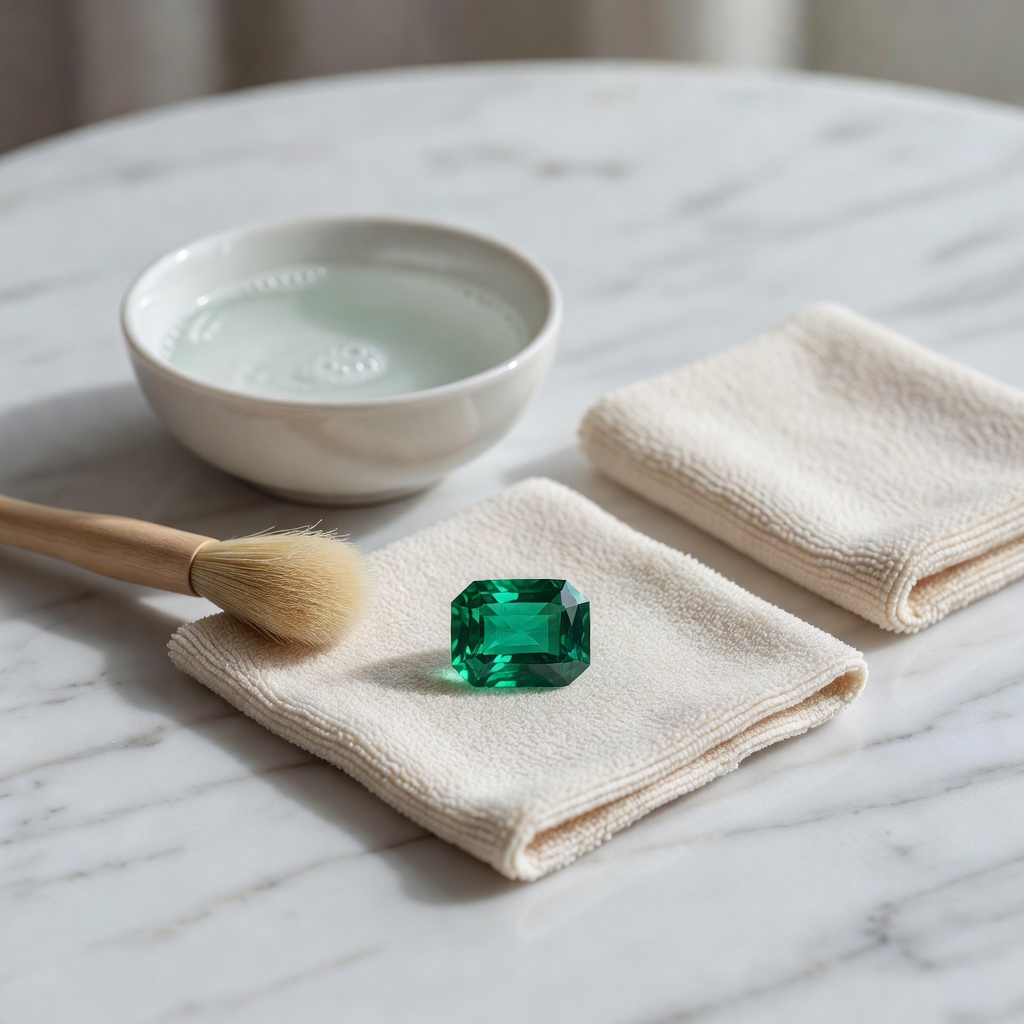
When your emerald jewelry requires more than a simple wipe-down, knowing how to clean emeralds properly at home can save you money while preserving your gemstone's integrity. Begin by preparing a mild emerald cleaning solution using lukewarm water—never hot—and a small amount of gentle, phosphate-free dish soap in a clean bowl. The water temperature should feel comfortable to the touch, approximately room temperature, to avoid thermal shock that could stress the stone's internal fractures. This simple solution effectively removes accumulated oils and dirt without introducing harsh chemicals that could damage oil treatments or the stone itself.
Place your emerald jewelry in the solution and allow it to soak for exactly two to three minutes maximum; never leave emeralds soaking overnight as prolonged water exposure can penetrate surface-reaching fractures and weaken oil treatments. Using a soft-bristled toothbrush or jewelry brush with extremely gentle pressure, carefully clean around the settings and underneath the stone where dirt commonly accumulates, taking care not to scrub the emerald surface aggressively. Rinse the piece immediately under lukewarm running water, ensuring all soap residue washes away, then pat dry thoroughly with a soft, lint-free cloth or allow to air dry on a clean towel. Complete drying is crucial because trapped moisture can affect the metal settings and potentially cloud the emerald's appearance if it seeps into untreated fractures.
What to Avoid: Common Emerald Cleaning Mistakes
Even well-meaning jewelry owners often damage their precious emeralds by using cleaning methods appropriate for harder, more durable gemstones like diamonds or rubies. Never use ultrasonic cleaners or steam cleaners on emeralds, as the intense vibrations can cause existing internal fractures to expand suddenly, potentially splitting the stone completely. Steam cleaning introduces dangerous heat and pressure that strips away oil treatments while creating thermal shock, and the forceful steam jets can loosen settings, risking the loss of your valuable gemstone. These aggressive cleaning technologies, while excellent for diamonds, represent some of the most dangerous emerald cleaning mistakes you can make.
Avoid abrasive cleaning agents including toothpaste, baking soda, or powdered cleansers that can scratch both the emerald surface and the metal setting, creating entry points for dirt and moisture. Harsh chemicals such as ammonia, bleach, acetone, or alcohol-based solutions will quickly break down oil treatments and can etch the stone's surface, causing permanent cloudiness and color degradation. Additionally, never expose emeralds to extreme heat sources, prolonged direct sunlight, or sudden temperature changes that can cause internal stress fractures. Safe emerald cleaning methods always prioritize gentleness over convenience, favoring mild soap and water over industrial-strength solutions or mechanical cleaning devices.
Deep Cleaning and Re-Oiling Considerations
Over time, even with meticulous care, emeralds may begin to appear dry, cloudy, or less vibrant as the oil treatments gradually diminish through normal wear and cleaning. Recognizing when your stone requires professional intervention involves examining the gem under good lighting for visible surface-reaching fractures that appear white, chalky, or unusually prominent against the green body color. When these fractures become conspicuous rather than subtle, or when the emerald loses its characteristic glow and depth despite gentle cleaning, it likely indicates that the original oil treatment has evaporated or washed away. Professional re-oiling with cedar oil or modern colorless oils can dramatically restore an emerald's appearance by filling these fractures and improving clarity.
This rejuvenation process should only be performed by certified gemologists or experienced jewelers who understand the specific refractive indices required to maintain the stone's natural look. The re-oiling process involves carefully cleaning the stone to remove old oils and debris, then immersing it in heated cedar oil under vacuum pressure to draw the liquid into surface-reaching fractures. It is important to understand that this treatment is temporary and may need repeating every few years depending on wear patterns and cleaning frequency. While some modern emeralds receive permanent fracture-filling treatments with synthetic resins, traditional oil-treated stones require ongoing professional emerald cleaning and maintenance to preserve their enhanced appearance.
When to Seek Professional Emerald Cleaning Services
While regular at-home maintenance keeps your emerald jewelry looking its best between visits, certain situations demand the expertise of certified gemologists and professional jewelers. Schedule professional emerald cleaning before important events such as weddings, galas, or photography sessions where you want your jewelry to appear absolutely pristine, as professionals possess specialized equipment to safely clean areas impossible to reach at home. An annual inspection by a qualified jeweler should be considered mandatory for emerald jewelry maintenance, particularly for frequently worn pieces like engagement rings or daily earrings. These yearly check-ups allow experts to identify loose settings, worn prongs, or microscopic damage before they result in stone loss or significant repair costs.
Professional jewelers utilize gentle steam and ultrasonic alternatives specifically designed for treated gemstones, along with high magnification tools that reveal hairline cracks or treatment breakdown invisible to the naked eye. They can safely clean intricate settings, vintage mountings, or pieces with multiple gemstones that require different care protocols simultaneously. Additionally, professionals can assess whether your emerald requires re-oiling or if the existing treatment remains intact, providing documentation of the stone's condition for insurance purposes. Investing in professional emerald cleaning services annually not only maintains the stone's beauty but also preserves its warranty and documentation, ensuring your heirloom remains secure and brilliant for future generations.
Proper Storage for Long-Term Emerald Preservation
Proper storage plays a critical role in emerald gemstone preservation, protecting your valuable pieces from physical damage and environmental factors that could degrade their appearance over time. Store each emerald piece separately in individual compartments of a fabric-lined jewelry box or wrap them in soft, lint-free pouches to prevent scratching from contact with other jewelry items. Never store emeralds alongside harder gemstones such as diamonds, sapphires, or rubies, as these can easily scratch the emerald's surface or chip its edges when jostled together in a drawer or travel case. The relatively soft nature of emeralds compared to these harder stones makes isolation essential for maintaining flawless surfaces.
Maintain stable humidity and moderate temperature in your storage area to prevent the stone from dehydrating, which can cause existing fractures to become more visible or lead to brittleness over extended periods. Avoid storing emerald jewelry in bathroom cabinets where steam and humidity fluctuations occur regularly, or in attics and basements subject to temperature extremes. Consider adding silica gel packets to your jewelry box to control moisture levels, but ensure they do not come into direct contact with the metal settings. For heirloom pieces or expensive collections, a home safe with climate control offers the ultimate protection for emerald jewelry storage, safeguarding against both theft and environmental degradation while maintaining the stability required for treated stones.
Identifying Signs of Damage or Wear
Regular visual inspection of your emerald jewelry helps catch early warning signs of damage before they develop into serious problems requiring costly repairs or stone replacement. Examine your emerald under bright, natural light or using a jeweler's loupe to check for new chips, cracks, or surface abrasions that weren't present when you acquired the piece. Cloudiness that persists even after gentle cleaning often indicates breakdown of oil treatments or the presence of dried cleaning residues trapped in surface-reaching fractures, signaling the need for professional attention. These emerald damage signs require immediate assessment to prevent further deterioration of the stone's structural integrity and appearance.
Inspect the prongs, bezels, and settings monthly to ensure the stone remains secure, looking for bent prongs, worn metal, or gaps between the stone and setting that could allow the emerald to slip out during wear. Pay particular attention to color changes, as significant fading or yellowing may signal excessive exposure to light, heat, or chemicals that have altered the stone or its treatment. If you notice any wobbling of the stone in its mounting, visible cracks that seem to deepen, or a sudden loss of transparency, discontinue wearing the piece immediately and consult a certified gemologist. Proactive emerald jewelry maintenance through careful observation extends the life of your gemstone and prevents the heartbreak of losing a cherished piece to preventable damage.
Frequently Asked Questions About Emerald Care and Cleaning
Can I Clean My Emerald Ring at Home?
Yes, you can safely clean emerald jewelry at home using a mild solution of lukewarm water and gentle, phosphate-free dish soap without worrying about damaging your precious stone. Simply soak the jewelry for 2-3 minutes, lightly brush around the settings with a soft-bristled toothbrush to remove accumulated debris, rinse immediately under lukewarm running water, and pat dry with a lint-free cloth. It is crucial to avoid harsh chemicals, commercial jewelry cleaners not specifically labeled for emeralds, and ultrasonic devices, and you should never soak your emeralds overnight as prolonged water exposure can penetrate fractures and compromise oil treatments.
How Often Should I Clean My Emerald Jewelry?
Light cleaning after each wear with a microfiber cloth is recommended to remove body oils, dust, and cosmetic residues that accumulate throughout the day. A more thorough cleaning with the mild soap and water solution can be done every 2-3 months, or whenever the stone appears dull, cloudy, or less vibrant than usual. Professional cleaning and inspection should be done annually by a certified gemologist to check for loose settings, microscopic damage, and to determine if re-oiling treatments are necessary to maintain the stone's optimal appearance.
Are Ultrasonic Cleaners Safe for Emeralds?
No, ultrasonic cleaners are absolutely not safe for emeralds and should never be used on these treated gemstones regardless of how convenient they may be for other jewelry. The intense vibrations can cause existing internal fractures to expand suddenly, potentially splitting the stone completely or turning microscopic inclusions into visible cracks that destroy the gem's clarity. Additionally, the heat generated by these machines can damage oil treatments and cause internal thermal stress, potentially cracking the stone while also loosening the settings that hold the emerald in place.
What Is the Best Cleaning Solution for Emeralds?
The safest and most effective cleaning solution is simply lukewarm water mixed with a small amount of phosphate-free, gentle dish soap, creating a mild bath that removes oils without introducing harmful chemicals. Avoid commercial jewelry cleaners unless the label specifically indicates they are safe for emeralds and oil-treated stones, as many contain ammonia or other solvents that strip away essential oil treatments. Never use ammonia, bleach, rubbing alcohol, or abrasive substances like baking soda or toothpaste, as these can etch the stone's surface, break down fracture fillings, and cause permanent cloudiness or color degradation.
Can I Wear My Emerald Jewelry Every Day?
While emeralds possess sufficient hardness for occasional wear, they require significantly more care than diamonds, sapphires, or rubies due to their internal fractures and oil treatments. Daily wear increases the risk of damage from accidental impacts against hard surfaces, exposure to household chemicals, cosmetics, and accumulated dirt that requires more frequent cleaning. For rings specifically, you should remove them during household tasks, exercise, handwashing, and before applying lotions or perfumes to minimize exposure to substances that can degrade oil treatments and scratch the stone's surface.
How Do I Know if My Emerald Needs Professional Re-Oiling?
Signs that your emerald may need professional re-oiling include visible surface-reaching fractures that appear white, chalky, or dry against the green body color, indicating that the original oil has evaporated or washed away. You may also notice a significant loss of luster, depth, or transparency, or a cloudy appearance that persists even after gentle cleaning with soap and water. A certified gemologist can properly assess the stone's condition using magnification and specialized lighting to determine if re-oiling with cedar oil is necessary to restore the emerald's clarity and protect its structural integrity.
Is It Safe to Soak Emeralds in Water?
Brief soaking for 2-3 minutes in lukewarm, soapy water is completely safe for routine cleaning and helps loosen dirt and oils from the stone's surface and setting. However, prolonged soaking can weaken oil treatments, allow water to penetrate surface-reaching fractures, and potentially cause the stone to appear cloudy if moisture becomes trapped inside untreated fissures. Always dry emeralds immediately and thoroughly after cleaning using a soft, lint-free cloth, and never soak them overnight or for extended periods, as this unnecessary exposure increases the risk of treatment degradation and setting damage.
Can I Use a Steam Cleaner on My Emerald Jewelry?
No, you should never use steam cleaners on emeralds under any circumstances, as the high heat and pressure create dangerous conditions for these treated gemstones. The extreme temperature can cause thermal shock that expands internal fractures, potentially cracking the stone or worsening existing inclusions that compromise the gem's structural stability. Steam can also strip away essential oil treatments, leaving fractures exposed and visible while diminishing the emerald's appearance, clarity, and overall market value significantly.