Why Emeralds Are Worth the Investment
Emeralds possess a captivating allure that sets them apart from diamonds and other colored gemstones in ways that transcend mere aesthetics. Unlike diamonds, which are prized for uniformity and brilliance, emeralds celebrate uniqueness through their rich, verdant hues and individual character marks that tell geological stories millions of years in the making. The depth of color found in a fine emerald evokes the vitality of spring forests and ancient royalty, creating an emotional connection that many collectors find more compelling than the cold sparkle of diamonds. For those seeking a gemstone with personality and historical significance, understanding how to buy emeralds becomes an essential journey into one of nature's most mesmerizing creations.
The 2024 gemstone market reveals compelling trends that position emeralds as increasingly attractive investments for discerning buyers. Demand for ethically sourced stones has surged by 34% over the past eighteen months, with consumers prioritizing transparent supply chains and sustainable mining practices from Colombia to Zambia. This shift toward responsible sourcing has actually strengthened the market for premium natural emeralds, as collectors recognize that finite, responsibly extracted gemstones carry both moral value and appreciation potential. Auction houses report that untreated Colombian emeralds from legendary mines like Muzo have outperformed many traditional investments, establishing these gems as tangible assets with enduring appeal.
This comprehensive emerald buying guide equips you with the knowledge necessary to navigate a complex marketplace with confidence and sophistication. You will learn to distinguish between commercial-grade stones and museum-quality specimens, understand why treatment history dramatically affects value, and recognize the subtle characteristics that separate Colombian, Zambian, and Brazilian origins. By mastering the technical aspects of emerald evaluation while understanding current market dynamics, you will transform from a cautious shopper into an informed collector capable of making purchases that bring both joy and financial wisdom.
Mastering Color, Clarity, Cut, and Carat Weight
Understanding the Color Hierarchy
Color reigns supreme in emerald valuation, with subtle variations in hue and saturation creating dramatic price differentials between seemingly similar stones. The most coveted emeralds display a vivid, slightly bluish-green that gemologists describe as "Muzo green" or "Old Mine" color, commanding premiums of 40-60% over yellowish-green specimens of comparable clarity. When evaluating emerald quality factors, position the stone under natural daylight or equivalent 5500K lighting to assess its true body color, as incandescent lighting can mask undesirable yellow undertones that reduce value. A practical example illustrates this hierarchy: a 2-carat emerald with pure green saturation might retail for $8,000 per carat, while a stone of identical weight showing yellowish-green tones could struggle to achieve $3,000 per carat.
Clarity Expectations and Jardin
Unlike diamonds, where flawless clarity represents the ideal, emeralds naturally contain characteristic inclusions known as "jardin" (French for garden) that collectors often embrace as proof of natural origin. These mossy, garden-like patterns of crystals, feathers, and needles are acceptable and expected in fine emeralds, provided they do not severely impact transparency or create structural weaknesses. However, distinguishing between acceptable jardin and problematic fractures requires careful examination under 10x magnification; surface-reaching fractures significantly compromise durability and should reduce the stone's price by 20-30%. When applying the emerald 4Cs framework, remember that moderately included stones with excellent color often outperform eye-clean stones with mediocre color, as the human eye prioritizes rich saturation over microscopic clarity.
The Critical Role of Cut
Proper cutting transforms rough emerald crystals into dazzling gems while maximizing color saturation and structural integrity, requiring cutters to navigate unique challenges unlike those faced with sapphires or rubies. Emerald crystals typically exhibit six-sided prismatic forms with specific color zoning, meaning master cutters must orient the table perpendicular to the crystal's length to display the most desirable green rather than bluish or yellowish secondary hues. The "emerald cut"—a stepped rectangular shape with truncated corners—was specifically developed for this gem to minimize pressure during setting and reduce the risk of chipping fragile corners. Poorly proportioned stones may exhibit "windowing" (see-through areas) or extinction (dark patches), reducing visual appeal despite excellent rough material; always inspect the stone face-up to ensure even color distribution across the entire table.
Carat Weight Versus Face-Up Appearance
Emerald rough density varies significantly by origin, meaning two stones of identical carat weight can present dramatically different visual sizes when set in jewelry. Colombian emeralds typically possess higher specific gravity (2.72) than Zambian material (2.67), resulting in slightly smaller face-up dimensions for the same weight, though this difference is often offset by Colombian stones' superior color saturation. When budgeting for significant purchases, consider that emerald prices increase exponentially rather than linearly with carat weight; a 3-carat fine emerald may cost four to five times more than three 1-carat stones of equivalent quality due to the rarity of large, clean rough. Savvy collectors often target stones between 1.50 and 2.99 carats, where the price-per-carat jump to three carats creates a "sweet spot" for acquiring substantial gems without entering the ultra-premium large-stone market.
Colombian, Zambian, and Brazilian Emerald Differences
The Prestige of Colombian Emeralds
Colombian emeralds maintain unparalleled prestige in the gemstone world, commanding the highest prices due to their pure, intense green coloration and historical significance dating back to pre-Columbian civilizations. The legendary Muzo and Chivor mines produce stones with warm, grassy green tones that appear to glow from within, lacking the bluish or grayish undertones sometimes found in African material. A recent auction at Sotheby's demonstrated this premium clearly: a 5.30-carat untreated Colombian emerald fetched $180,000 per carat, while a comparable Zambian stone of similar size and clarity achieved $45,000 per carat. For investment purposes, Colombian provenance adds documented value appreciation potential, particularly for stones accompanied by Gübelin or AGL reports confirming specific mine origins like Coscuez or La Pita.
Zambian Emeralds: Value and Clarity
Zambian emeralds from the Kafubu River belt offer exceptional value propositions for buyers prioritizing clarity and deep, forest-green coloration over historical pedigree. These stones typically contain fewer inclusions than their Colombian counterparts, often appearing eye-clean in sizes where Colombian material would show obvious jardin, making them ideal for statement jewelry where clarity impacts brilliance. The deep green hue, sometimes described as "blue-green" or "bottle green," appeals to modern aesthetic preferences and pairs exceptionally well with white gold and platinum settings. Collectors seeking maximum size within limited budgets often find that $15,000 purchases a remarkable 3-carat Zambian emerald with fine color, whereas equivalent Colombian material might require $40,000+ for comparable visual impact.
Brazilian and Emerging Sources
Brazilian emeralds, particularly those from the Santa Terezinha and Itabira districts, present budget-friendly alternatives with lighter, often yellowish-green tones that suit buyers seeking the emerald aesthetic without premium pricing. While rarely achieving the saturation of top Colombian material, fine Brazilian stones offer attractive apple-green colors at 40-50% lower price points, making them accessible entry points for new collectors. Meanwhile, emerging sources like Ethiopia's Shakiso mines and Afghanistan's Panjshir Valley are disrupting traditional markets with unique characteristics; Ethiopian emeralds display exceptional clarity with distinctive blue undertones, while Panjshir material rivals Colombian color in smaller sizes. These newer origins require careful certification to verify claims, but offer opportunities to acquire unusual gems before market recognition drives prices higher.
Understanding Oil, Resin, and Untreated Stones
Traditional Cedar Oil Treatment
Approximately 95% of natural emeralds undergo clarity enhancement through cedar oil or similar natural oils, a practice so standard that untreated stones are specifically marketed as "no oil" and command substantial premiums. This traditional treatment involves filling surface-reaching fractures with oil that has a refractive index close to emerald itself, rendering inclusions less visible to the naked eye without permanently altering the stone. When evaluating emerald treatments, understand that "minor" oil treatment (filling insignificant fissures) is universally accepted and does not dramatically impact value, whereas "moderate" or "significant" treatment levels should reduce prices by 30-50% depending on severity. Reputable dealers will disclose treatment levels clearly, often referencing GIA classifications: None, F1 (Minor), F2 (Moderate), or F3 (Significant).
The Problem With Polymer Resins
Modern polymer and epoxy resin fillers represent a controversial category of emerald treatments that discerning collectors should approach with caution or avoid entirely for investment-grade purchases. Unlike cedar oil, which can be removed and re-applied, hardened resins permanently alter the stone and may degrade or discolor over time, potentially requiring difficult removal processes that risk damage to the gem. These treatments often indicate that the emerald possessed significant fractures requiring aggressive filling to achieve commercial appearance, suggesting lower inherent quality than stones requiring only minor oiling. When comparing treated vs untreated emeralds, insist on written guarantees specifying "traditional oil only" and avoid stones described vaguely as "clarity enhanced" without specifying the substance used.
Investment-Grade Untreated Stones
Untreated emeralds represent the pinnacle of rarity and investment potential, with clean, unenhanced stones over two carats constituting less than 0.5% of the global market and commanding premiums of 50-100% over equivalent treated material. These exceptional gems, typically found only in specific pockets of Colombian mines like Muzo or Chivor, offer the security of knowing their beauty is entirely natural and permanent, requiring no periodic maintenance or re-oiling. A documented case from 2023 illustrates this value retention: a collector purchased a 3.80-carat untreated Colombian emerald for $85,000, while an identical-looking treated stone cost $42,000; eighteen months later, the untreated stone appraised at $112,000 while the treated example appreciated modestly to $48,000. For serious collectors building legacy collections, prioritizing untreated stones ensures maximum liquidity and appreciation potential, particularly when accompanied by prestigious lab reports confirming "no clarity enhancement."
Why GIA and AGL Certificates Matter
Recognizing Reputable Laboratories
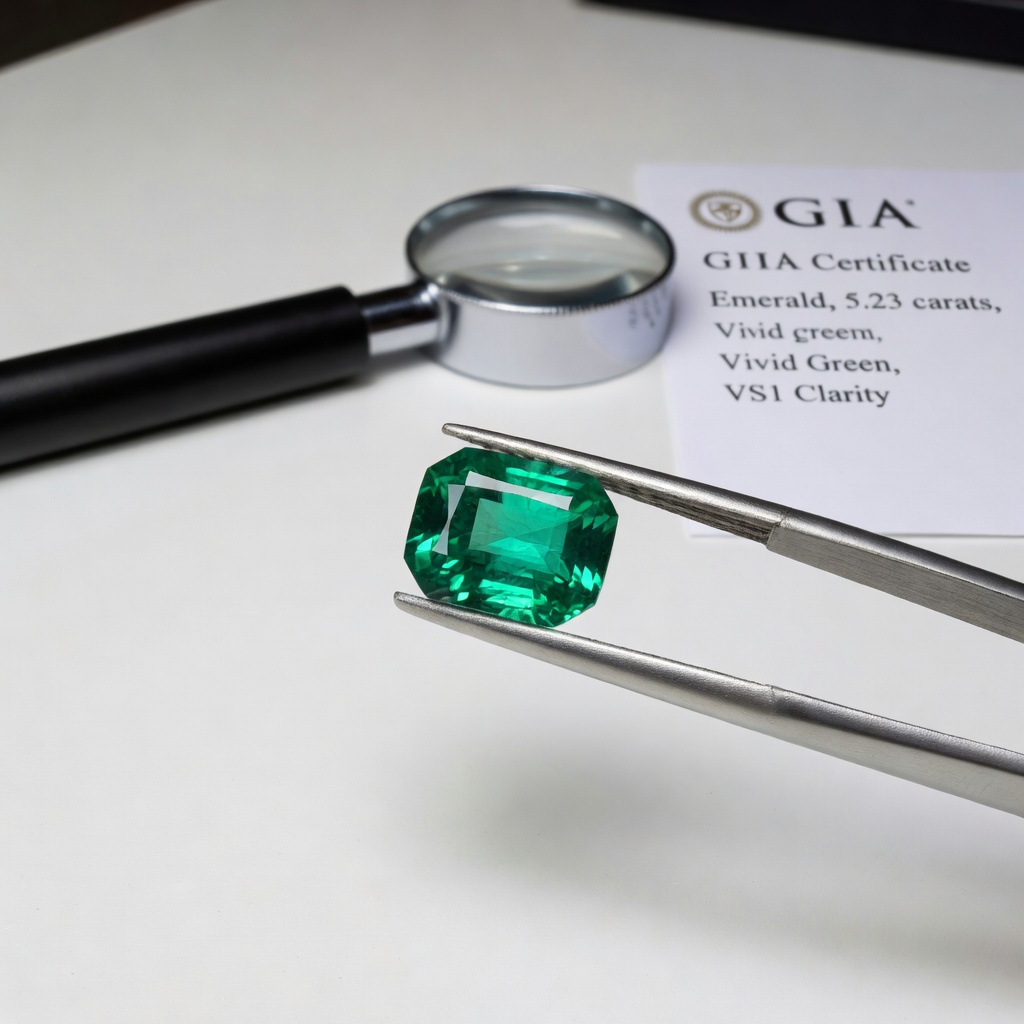
Emerald certification from internationally recognized laboratories provides the essential documentation that separates informed purchases from costly mistakes, with the Gemological Institute of America (GIA), American Gemological Laboratories (AGL), and Gübelin Gem Lab representing the gold standard for colored stone reporting. These institutions employ advanced spectroscopy, microscopy, and chemical analysis to determine origin, detect synthetics, and quantify treatment levels with scientific precision that independent appraisers or in-store gemologists cannot replicate. When reviewing a GIA emerald report, verify that the certificate number matches the physical report and can be cross-referenced on the laboratory's online database to prevent fraud involving photocopied or counterfeit documents. Lesser-known labs may provide inaccurate origin attributions or miss synthetic identification, potentially costing buyers thousands when misrepresented stones are later discovered.
Essential Certificate Components
Comprehensive emerald certificates must disclose specific information beyond simple identification, including precise color grade (often described as Green, Bluish Green, or specific trade names like "Muzo Green"), clarity enhancement type and degree, and geographical origin when determinable. The origin field carries particular significance for Colombian emeralds, as stones from specific mines command different premiums; AGL's prestigious "Classic™ Colombia" designation indicates material matching the historic standards of the finest Muzo production. Treatment disclosure should specify not only the presence of clarity enhancement but the substance used—whether traditional cedar oil, modern polymers, or "mixed type" combinations. Red flags include certificates stating "natural emerald" without treatment disclosure, vague origin attributions like "South America" rather than specific countries, or reports from laboratories lacking international accreditation.
Synthetic Detection and Verification
Professional laboratories utilize sophisticated equipment including infrared spectroscopy, ultraviolet-visible spectrophotometry, and laser ablation-inductively coupled plasma-mass spectrometry to distinguish natural vs lab emerald material with absolute certainty. Synthetic emeralds grown through flux or hydrothermal processes may appear visually identical to natural stones, displaying similar color and even manufactured "jardin" inclusions, but reveal their origins through distinctive growth patterns and chemical signatures invisible to standard gemological tools. When purchasing high-value emeralds, insist on recent certificates (issued within 12-18 months) as synthetic manufacturing techniques constantly evolve, potentially rendering older identification methods obsolete. For stones exceeding $10,000, consider obtaining dual certifications from both GIA and AGL to ensure comprehensive analysis and maximum resale confidence.
2024 Emerald Price Ranges and Smart Budgeting
Understanding Price Per Carat Tiers
Current emerald price guide data reveals three distinct market tiers that help buyers align expectations with realistic budgets for different quality levels. Commercial-grade emeralds ($200-$800 per carat) typically display light to medium color with visible inclusions and significant treatment, suitable for fashion jewelry but lacking investment potential; these stones often originate from Brazilian or Ethiopian mines with moderate oil treatment. Fine quality stones ($1,000-$5,000 per carat) offer vibrant color with acceptable clarity, usually representing the best value for engagement rings or important gifts, frequently sourced from Zambian mines with minor to moderate treatment. Premium Colombian emeralds with excellent color, good clarity, and minor treatment command $10,000+ per carat, with exceptional untreated specimens from famous mines reaching $50,000-$100,000+ per carat at auction houses.
Natural Versus Lab-Created Economics
The natural vs lab emerald decision significantly impacts budgeting, with laboratory-grown stones offering 80-90% cost savings while providing identical chemical composition and optical properties. A 2-carat fine-quality natural emerald might cost $6,000-$8,000, whereas a comparable lab-created stone sells for $600-$1,200, allowing buyers to acquire impressive size and color within modest budgets. However, lab-created emeralds lack the rarity and appreciation potential of natural stones, functioning as costume jewelry or temporary fashion pieces rather than generational assets or investment vehicles. For collectors building permanent collections, allocating funds toward smaller natural stones rather than larger synthetics typically provides greater long-term satisfaction and value retention.
Hidden Costs and Budget Allocation
Beyond the stone's purchase price, prudent buyers must account for insurance premiums (typically 1-2% annually of appraised value for high-value pieces), custom setting costs ($500-$3,000 depending on design complexity), and potential maintenance expenses including periodic re-oiling for heavily treated stones ($100-$300 per service). Experienced collectors follow the 70/30 rule: allocate 70% of your total budget to the emerald itself and 30% to the setting, ensuring the stone's quality drives value rather than elaborate metalwork. For example, with a $10,000 total budget, purchasing a $7,000 emerald and $3,000 setting optimizes value better than a $4,000 stone in a $6,000 designer mounting. Additionally, factor in immediate post-purchase expenses like independent appraisal verification ($150-$400) and specialized jewelry insurance riders that require detailed documentation.
Finding Reputable Dealers and Jewelers
Evaluating Brick-and-Mortar Establishments
Physical jewelry stores offer irreplaceable advantages for how to buy emeralds, allowing buyers to examine true color under various lighting conditions, assess actual size versus digital representations, and establish relationships with gemologists who provide ongoing education and maintenance services. Reputable emerald dealers with established storefronts typically invest heavily in inventory, demonstrating financial stability and commitment to the trade that online-only sellers may lack. When visiting high-end jewelers, request to view stones under different lighting—daylight-equivalent LED, incandescent, and natural window light—to detect color shifts that indicate undesirable undertones. Building a relationship with a Graduate Gemologist (GG) or Fellow of the Gemological Association (FGA) provides access to expertise when evaluating future purchases or requiring maintenance services like prong tightening or cleaning.
Vetting Online Vendors
Digital marketplaces offer expanded inventory and competitive pricing but require rigorous due diligence to avoid disappointment when purchasing where to buy emeralds remotely. Analyze return policies carefully, insisting on minimum 30-day inspection periods that allow time for independent appraisal; avoid vendors offering only 7-10 day returns, which suggests potential quality concerns. Examine customer review patterns across multiple platforms (Google, Yelp, Better Business Bureau), looking specifically for comments regarding accuracy of color representation, disclosure of treatments, and hassle-free returns rather than just shipping speed. Verify that online sellers provide GIA or AGL certification for all stones over $1,000 and offer high-resolution video showing the stone from multiple angles under natural lighting, not just studio photography that may enhance color saturation artificially.
Essential Questions and Red Flags
Before committing to any purchase, interrogate sellers regarding specific origin verification (not just "Colombian-style" color), exact treatment type and level, upgrade policies allowing trade-ins toward better stones, and buyback options for future liquidity. Red flags demanding immediate withdrawal from negotiations include high-pressure sales tactics emphasizing limited-time offers, reluctance to provide certification numbers for pre-purchase verification, or vague answers regarding sourcing that suggest undisclosed treatments or synthetic origins. A trustworthy dealer welcomes educated questions about emerald quality factors and provides written guarantees regarding treatment disclosure, offering recourse if independent appraisal reveals undisclosed enhancements. Always request a detailed invoice specifying origin, treatment, dimensions, and certification numbers to ensure legal protection and accurate insurance documentation.
Protect Yourself from Emerald Fraud
Identifying Synthetic Stones
Emerald scams frequently involve synthetic stones misrepresented as natural, requiring buyers to recognize visual clues while insisting on laboratory verification for significant purchases. Flux-grown synthetics often display wavy or chevron growth patterns visible under magnification, while hydrothermal varieties may show nail-like inclusions or seed plates that differ from natural jardin. Be particularly wary of stones advertised as "created emeralds" without clear synthetic disclosure, or those priced suspiciously below market rates for claimed origins; a $2,000 "Colombian" 3-carat emerald almost certainly indicates synthetic material or severe treatment. When examining synthetic emeralds being passed as natural, note that manufactured stones often appear "too perfect" with exceptional clarity in larger sizes rarely found in natural material, whereas genuine emeralds almost always show some characteristic inclusions.
Detecting Undisclosed Treatments
Unscrupulous sellers may market heavily fractured stones with polymer fillers as "lightly oiled" or "traditionally treated," significantly misrepresenting durability and value. Inspect stones under 10x magnification with fiber-optic lighting to identify "flash effects"—iridescent reflections at fracture interfaces that indicate filling materials rather than natural empty fissures. Ask specific questions about when the stone was last oiled; recently treated stones may appear exceptionally clean initially but reveal hidden fractures as oil dries or drains over months. Professional gemologists can detect polymer fillers using advanced techniques like infrared spectroscopy or "hot point" testing, making pre-purchase appraisal essential for stones exceeding $5,000.
Avoiding Certificate and Bait-and-Switch Schemes
Fraudulent operations utilize fake certificates bearing logos of reputable labs but with fabricated report numbers that do not appear in official databases; always cross-reference certificate numbers directly on GIA or AGL websites before purchasing. The bait-and-switch tactic involves showing buyers a specific certified stone, then delivering a different, inferior gemstone that superficially resembles the original; prevent this by photographing the specific stone next to its certificate number, noting unique inclusions as fingerprints, and having the delivered item immediately verified by an independent gemologist. Be cautious of sellers offering "certificates" from unknown laboratories with impressive-sounding names but no international accreditation, as these often represent paid advertising rather than objective analysis. When encountering deals that seem too good to be true—such as "investment-grade Colombian emeralds" at wholesale prices—remember that legitimate dealers maintain consistent pricing aligned with market standards, and drastic discounts usually indicate undisclosed problems.
Essential Tips for Emerald Jewelry Care
Proper Cleaning Techniques
Emerald care requires gentle handling that respects the stone's inherent characteristics, including natural fractures and potential oil fillings that react poorly to harsh cleaning methods. Clean your emerald jewelry using only warm water with mild, phosphate-free soap and a soft-bristled baby toothbrush, gently scrubbing the pavilion and table to remove accumulated oils and dirt. Never subject emeralds to ultrasonic cleaners or steam cleaning, as the vibrations and heat can expand existing fractures, loosen oil fillings, or cause catastrophic breakage in stones with significant jardin. After cleaning, pat the stone dry with a soft, lint-free cloth rather than air-drying, which can leave water spots that dull brilliance, and avoid exposing the gem to extreme temperature changes that stress internal inclusions.
Storage and Wear Guidelines
Due to moderate emerald durability (7.5-8 on the Mohs scale) combined with brittle natural characteristics, proper storage prevents contact with harder gemstones like diamonds, sapphires, or rubies that can scratch emerald surfaces. Store each emerald piece individually in soft cloth pouches or padded jewelry boxes with separate compartments, ensuring pendants do not rest against rings or bracelets that might cause abrasion. Remove emerald jewelry before engaging in sports, house cleaning, gardening, or any activity involving potential impact, harsh chemicals, or abrasive materials; even seemingly soft household dust contains silica particles that can scratch the stone's surface over time. Apply cosmetics, hairsprays, and perfumes before putting on emerald pieces, as chemical residues can accumulate in surface-reaching fractures and dull the stone's appearance.
Professional Maintenance Schedules
Schedule annual inspections with a qualified jeweler to check for loose prongs, worn settings, or developing chips that might compromise the stone's security, particularly for emerald rings worn regularly. Heavily treated emeralds may require periodic re-oiling every 3-5 years as natural oils gradually drain from fractures, a professional service costing $100-$300 that restores original clarity appearance. For untreated stones, simple professional polishing every few years removes surface scratches and restores luster without risking damage to fillings. Maintain detailed records of all professional services, treatments, and appraisals to ensure accurate insurance coverage and document the stone's condition history for future resale or estate planning purposes.
Your 10-Step Emerald Buying Checklist
Following a systematic emerald buying checklist ensures comprehensive due diligence while preventing oversight of critical details that separate wise investments from expensive mistakes. First, verify that the certificate comes from a reputable laboratory (GIA, AGL, or Gübelin) and cross-check the report number on the lab's official website to confirm authenticity. Second, confirm that the seller's written treatment disclosure matches the certificate exactly, noting whether the stone has minor, moderate, or significant enhancement and the specific substance used. Third, compare prices across at least three reputable sellers for stones of similar certified quality, ensuring you're paying fair market value rather than inflated retail margins.
Fourth, inspect the stone personally under 10x magnification to identify any undisclosed fractures or clarity issues not apparent in photography, taking time to view the gem under various lighting conditions. Fifth, thoroughly understand the return policy, insisting on minimum 30-day inspection periods that allow for independent appraisal without restocking fees. Sixth, for purchases exceeding $5,000, obtain an independent appraisal from a certified gemologist who does not sell jewelry to verify that the stone matches its description and certificate. Seventh, photograph the specific stone next to its certificate number before purchase to prevent bait-and-switch delivery issues.
Eighth, request written guarantees regarding origin and treatment, ensuring legal recourse if independent testing reveals misrepresentation. Ninth, evaluate the setting's protective qualities, choosing bezel or halo designs for daily wear rather than exposed prong settings that risk chipping. Tenth, arrange immediate insurance coverage through a specialized jewelry rider rather than standard homeowner's policies, ensuring full replacement value based on the independent appraisal. By adhering to this methodical approach to how to buy emeralds, you transform complex transactions into confident acquisitions that provide lasting satisfaction and value retention.
Frequently Asked Questions
What is the most important factor when buying an emerald?
Color is the most critical factor. Look for vivid, evenly distributed green with medium to medium-dark tone. Slight blue undertones are most desirable. While clarity matters, emeralds naturally contain inclusions (called 'jardin') that are acceptable and even prove natural origin.
Are all emeralds treated with oil?
Approximately 95% of natural emeralds receive some form of clarity enhancement. Minor cedar oil treatment is the industry standard and acceptable. However, polymer resin fillers are less desirable and should cost 30-50% less. Always insist on written treatment disclosure.
How can I tell if an emerald is real or synthetic?
The only definitive method is gemological testing by a certified lab (GIA, AGL). However, you can look for natural 'jardin' inclusions under magnification. Synthetic emeralds often display different inclusion patterns, gas bubbles, or curved growth lines. When in doubt, get a professional opinion.
What is a fair price for a 1-carat emerald?
In 2024, prices range dramatically based on quality: commercial-grade ($200-$800/ct), fine quality ($1,000-$5,000/ct), and premium Colombian stones ($10,000+/ct). A good quality 1-carat emerald typically costs $1,500-$3,000 with minor oil treatment and good color.
Are Colombian emeralds worth the premium price?
Colombian emeralds command 50-100% premiums for their pure green hue and historical prestige. For investment-grade stones, the premium is justified. However, Zambian emeralds offer excellent value with deep color at lower prices. Choose based on your budget and purpose—jewelry vs. investment.
Should I buy emeralds online or in person?
Both options work with proper precautions. In-person lets you evaluate true color and build gemologist relationships. Online offers better prices but requires buying from vendors with 30+ day return policies, excellent reviews, and proper certification. Never buy expensive stones online without a GIA/AGL certificate.
What does 'jardin' mean in emeralds?
'Jardin' is French for 'garden,' describing the natural, moss-like inclusion patterns unique to emeralds. These are considered acceptable and even desirable as proof of natural origin. However, heavy jardin that creates fractures significantly reduces durability and value. Minor jardin is normal and expected.
Can emeralds be worn daily?
Emeralds (7.5-8 Mohs) are softer and more brittle than diamonds or sapphires due to natural inclusions. They're best for occasional wear or protective settings like bezels or halos. Remove emerald jewelry for sports, cleaning, gardening, or manual labor. With proper care, they can last generations.