Introduction to Dumortierite Pricing
Dumortierite has emerged as a sought-after semi-precious gemstone among jewelry designers and mineral collectors seeking distinctive blue specimens without the premium costs associated with precious stones like sapphires or aquamarines. This aluminum borosilicate mineral, known for its striking royal blue to violet-blue hues, occupies a unique position in the gemstone market where quality variations create significant pricing disparities that confuse both novice buyers and experienced collectors. Understanding the Dumortierite Price Guide fundamentals becomes essential because this gemstone's value fluctuates dramatically based on origin locality, crystalline structure, and color saturation levels that separate commercial material from museum-grade specimens. Whether you are sourcing raw material for lapidary work, purchasing beads for jewelry production, or acquiring crystalline examples for mineral collections, navigating these price variations requires knowledge of market standards and quality indicators that prevent overpayment in an increasingly crowded marketplace.
Factors That Determine Dumortierite Value
Multiple intrinsic characteristics establish the market value of dumortierite specimens, creating distinct pricing tiers that separate budget-friendly material from investment-grade stones. Unlike diamonds with standardized grading systems, dumortierite valuation relies on nuanced visual assessment criteria that experienced dealers use to categorize inventory and set wholesale rates. Buyers who understand these dumortierite value factors can better evaluate whether asking prices align with actual material quality and rarity specifications.
Color Intensity and Saturation Levels
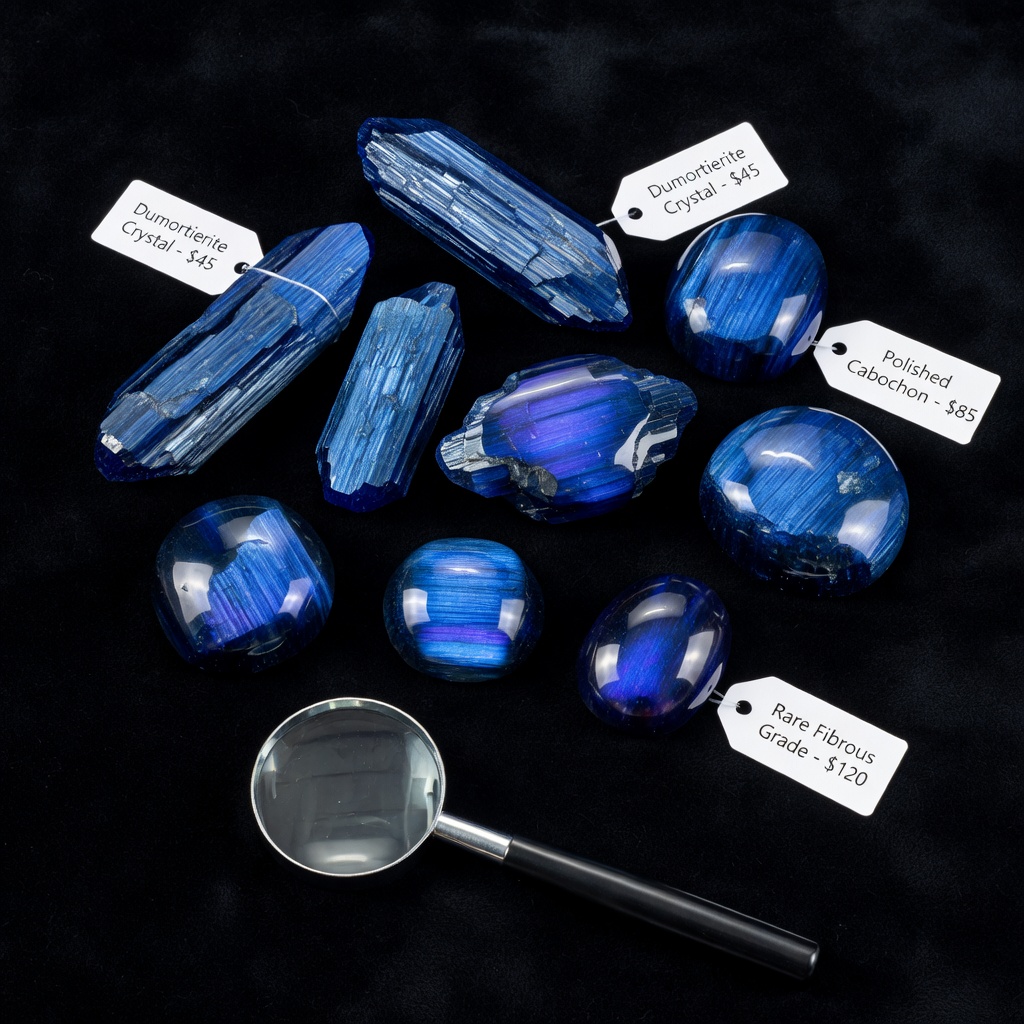
The most critical value determinant remains the depth and uniformity of the blue coloration, with specimens displaying intense royal blue or rare violet-blue tones commanding premium multiples over pale or unevenly colored material. Stones exhibiting maximum saturation without brownish or grayish secondary tones typically retail for three to five times the price of lightly colored commercial-grade rough. Exceptional specimens that display chatoyancy, creating a cat's eye effect when cut en cabochon, further elevate pricing due to their rarity and visual appeal in finished jewelry settings.
Clarity Standards and Inclusion Patterns
While dumortierite commonly contains natural inclusions and fibrous structures that contribute to its distinctive appearance, excessive cloudiness or visible fractures significantly diminish value for both specimen and gem-grade material. Transparent to translucent stones suitable for faceting represent the rarest and most expensive category, often requiring microscopic examination to verify clarity grades that justify prices exceeding fifty dollars per carat. Acceptable inclusions include the fine fibrous structures that create chatoyancy or delicate rutile needles, whereas surface-reaching fractures, heavy veining, or opaque mineral deposits reduce both durability and aesthetic appeal.
Cut Craftsmanship and Material Optimization
The transformation from rough to finished gemstone significantly impacts final valuation, with masterfully executed cabochons displaying optimal color orientation and symmetrical domes commanding substantial premiums over poorly cut specimens. Rough material suitable for slab cutting or tumbling sells at considerably lower per-carat rates than professionally fashioned cabochons, reflecting both the labor investment and material loss during cutting processes. Faceted dumortierite remains exceptionally rare due to the material's typical opacity and perfect cleavage challenges, making well-executed faceted stones valuable collector's items regardless of smaller carat weights.
Carat Weight and Economy of Scale
Larger dumortierite specimens exhibit exponential rather than linear pricing increases, particularly for clean material exceeding five carats in finished form or fifty grams in rough crystalline specimens. The availability of large, cohesive rough blocks has decreased significantly as traditional mining localities become depleted, driving prices upward for substantial pieces suitable for display or large jewelry pieces. However, commercial-grade tumbled stones and small beads follow different economic models where bulk purchasing reduces per-gram costs substantially, favoring jewelry makers who require volume over individual specimen perfection.
Dumortierite Price Per Carat Breakdown
Establishing realistic budget expectations requires understanding the dumortierite price per carat hierarchies that separate entry-level material from connoisseur selections. The market stratifies distinctly across three primary quality tiers, with occasional overlap depending on specific locality provenance and current supply chain availability from major producing regions including Madagascar, Brazil, and Nevada.
Commercial Grade Pricing
Entry-level material typically ranges from $2 to $10 per carat, encompassing pale blue to grayish-blue stones with visible inclusions, uneven color distribution, or smaller cabochon sizes under three carats. This category includes most tumbled stones, bead-grade material, and rough suitable for educational specimens or beginner lapidary projects where perfect clarity remains unnecessary. Wholesale purchasing in this tier often reduces costs to $0.50-$2 per carat when buying kilogram quantities of rough or large volumes of beads directly from importers.
Fine Quality Specimens
Intense blue material with good translucency and minimal visible flaws commands $15 to $40 per carat, representing the standard for quality jewelry production and serious collector acquisition. These stones typically originate from specific deposits in Madagascar or Brazil, displaying the saturated royal blue color that defines high-grade blue dumortierite value in international markets. Cabochons in this range usually exceed five carats, showing excellent polish and symmetrical cutting that maximizes color display.
Collector-Grade Premiums
Rare crystalline specimens, large clean cabochons exceeding twenty carats, or material displaying exceptional chatoyancy regularly exceed $100 per carat, with museum-quality pieces from depleted Nevada mines occasionally reaching $300-$500 per carat at specialty auctions. These investment-grade pieces require documentation of locality and often include laboratory certification verifying natural origin and absence of treatments. Specimens exhibiting the rare blue quartz variety, where dumortierite inclusions color quartz crystals, fall into this premium category due to their dual-mineral appeal and scarcity.
Comparative Market Analysis
When evaluating dumortierite price per carat against similar blue gemstones, dumortierite offers exceptional value compared to lapis lazuli, which typically ranges $5-$100 per carat depending on pyrite content and origin, or sodalite, which generally sells for $1-$15 per carat but lacks the hardness and durability of dumortierite. Unlike sapphires that command hundreds to thousands per carat, dumortierite provides affordable access to intense blue hues, making it economically attractive for statement jewelry pieces where budget constraints prohibit precious gemstone acquisition.
Different Forms and Their Market Prices
The physical presentation of dumortierite significantly influences pricing structures, with dumortierite rough price points differing substantially from finished goods or metaphysical market products. Understanding these form-based variations enables buyers to select the most cost-effective purchasing strategy for their intended application, whether creating custom jewelry, stocking retail inventory, or expanding mineral collections.
Raw Rough Material and Mineral Specimens
Unprocessed dumortierite rough price structures typically follow gram or kilogram pricing rather than carat measurements, with commercial-grade rough selling for $0.50-$3 per gram and high-grade crystalline material reaching $10-$30 per gram for pieces showing good color and crystal formation. Large display specimens exceeding one kilogram may command wholesale rates of $200-$800 per kilogram depending on aesthetic appeal and locality documentation. Mineral collectors specifically seek crystallized specimens from classic localities like Madagascar's Antsirabe region or Nevada's Oreana locality, where distinct crystal habits justify premiums over massive material suitable only for cutting.
Tumbled Stones and Palm Stones
Processed metaphysical products including tumbled stones retail for $2-$8 per piece for standard sizes (20-30mm), while larger palm stones (40-60mm) range from $15-$45 depending on color intensity and surface polish quality. The metaphysical market often applies significant markups to these products, with retail crystal shops pricing tumbled dumortierite at $0.50-$1 per gram compared to wholesale rough prices. Buyers seeking material for personal use or small-scale resale should consider purchasing rough and tumbling personally, or sourcing directly from lapidary wholesalers rather than metaphysical retailers to avoid 200-400% markup premiums.
Beaded Jewelry and Wholesale Economics
Dumortierite beads wholesale purchasing offers substantial savings for jewelry designers, with 15-inch strands of 6mm round beads typically ranging from $8-$25 wholesale versus $40-$80 retail, depending on color grade and bead quality. Bulk purchasing of ten or more strands often reduces per-strand costs by 30-50%, while full hanks (temporary strung beads sold in wholesale lots) provide the most economical option for production-scale operations. High-grade transparent blue dumortierite beads command premium pricing similar to semi-precious gemstone beads, whereas included or pale material sells at economic rates comparable to common jasper or agate varieties.
Cabochons and Custom Jewelry Settings
Finished cabochons carry significant labor premiums over rough material, with calibrated sizes for jewelry settings (8x10mm, 10x12mm, etc.) commanding 40-60% higher prices than freeform cabochons of equivalent weight. Custom-cut cabochons specifically oriented to display chatoyancy or particular color patterns may double standard pricing due to the expertise required to maximize material potential. Jewelry-grade cabochons with flat backs and consistent dome heights suitable for bezel settings represent the highest-value finished goods outside of rare faceted stones, particularly when cut from material showing the intense blue coloration that defines premium blue dumortierite value.
Color Variations and Pricing Tiers
Color serves as the primary visual differentiator in blue dumortierite value assessment, with specific hue variations creating distinct market categories that appeal to different buyer demographics and applications. Understanding these color-based pricing stratifications helps collectors identify undervalued specimens and assists jewelry makers in selecting appropriate material for specific design aesthetics.
Royal Blue Premium Segments
Stones exhibiting deep, saturated royal blue coloration without violet undertones represent the market apex, particularly when the color remains consistent throughout the specimen rather than concentrating in specific zones or veins. This color grade typically originates from high-grade Madagascar deposits or select Brazilian mines, commanding prices 300-500% higher than pale blue commercial material. Jewelry manufacturers specifically seek this color grade for high-end sterling silver or gold settings where the stone serves as the design focal point, justifying the material investment through finished piece premiums.
Violet-Blue Rarity Factors
Specimens displaying violet-blue or indigo coloration occur rarely enough to constitute a distinct collector category, often fetching prices comparable to or exceeding royal blue material due to scarcity rather than traditional aesthetic preference. These specimens typically result from specific trace element variations during formation, creating colors that shift between blue and violet depending on lighting conditions. The rarity of consistent violet-blue material makes these pieces particularly desirable among serious mineral collectors who prioritize unusual color expressions over standard commercial appearances.
Included Quartz Varieties and Blue Quartz Pricing
The variety known as blue quartz or dumortierite quartz, where dumortierite inclusions color crystalline quartz, follows unique pricing structures based on inclusion density and quartz clarity. Massive blue quartz material suitable for carving or sphere production sells for $5-$20 per pound wholesale, while crystallized specimens showing distinct quartz crystals with internal blue dumortierite inclusions command specimen-grade pricing based on crystal size and aesthetic appeal. High-grade blue quartz cabochons showing transparent quartz with suspended blue fibers retail for $20-$60 per carat, positioning them between standard dumortierite and precious gemstones in value hierarchy.
Treatment Detection and Value Impact
Natural, untreated dumortierite maintains higher value than treated material, though the gemstone generally receives less enhancement than porous stones like howlite or turquoise. Pale material occasionally undergoes dyeing to simulate high-grade royal blue coloration, with treated stones typically selling for 40-60% less than natural equivalents when disclosure occurs. Heat treatment remains rare but possible for improving color in specific specimens, making laboratory certification valuable for high-dollar purchases where natural origin justification supports pricing premiums.
Where to Buy Dumortierite: Price Comparisons
Strategic sourcing significantly impacts acquisition costs when looking to buy dumortierite, with price variations of 200-500% common between different retail channels for identical quality material. Understanding these marketplace dynamics enables buyers to optimize procurement budgets while ensuring authentic, quality specimens.
Online Marketplaces Versus Physical Retail
E-commerce platforms including specialized gem websites and mineral dealer networks typically offer competitive pricing 20-30% below brick-and-mortar crystal shops due to reduced overhead costs and direct-to-consumer models. However, online purchasing requires careful seller vetting, as photography lighting can dramatically enhance apparent color saturation beyond physical reality. Established online mineral dealers with return policies and detailed locality documentation generally provide the best value proposition for collectors seeking specific grades, while auction platforms offer potential bargains for knowledgeable buyers capable of authenticating material from photographs.
Gem Show Wholesale Opportunities
Regional and international gem and mineral shows represent optimal sourcing venues for serious buyers, offering wholesale pricing tiers typically 30-50% below retail with minimum purchase requirements ranging from $100-$500 depending on the dealer. The Tucson Gem and Mineral Show, Denver Gem Show, and Sainte-Marie-aux-Mines events provide access to direct importers from Madagascar and Brazil, eliminating intermediary markups. Buyers should prepare cash reserves and negotiate volume discounts, as show vendors often reduce prices significantly for multiple-item purchases or kilogram-quantity rough acquisitions.
Dealer Vetting and Red Flag Identification
Reputable dealers provide locality documentation, treatment disclosure, and fair return policies, whereas suspect operations often feature inconsistent pricing, vague origin descriptions, or claims of "rare" material that actually represents common commercial grade. Red flags include pricing significantly below market rates (suggesting dyed material or simulants), refusal to provide provenance information, or metaphysical pricing that exceeds material value by factors of five to ten. Establishing relationships with established dealers who specialize in specific localities, such as those focusing on African minerals or American gemstone deposits, typically yields better long-term value than transactional purchases from generalist vendors.
Direct-From-Cutter Advantages
Purchasing directly from lapidary artists who cut their own material eliminates multiple markup layers, often providing high-grade cabochons at prices comparable to wholesale rough when accounting for cutting labor. Custom cutting services allow buyers to select specific rough pieces and commission cuts optimized for particular jewelry designs, ensuring maximum material utilization and personalized results. Import considerations for bulk buyers include customs duties on gemstone imports (typically 0-5.5% for rough stones in many jurisdictions) and shipping insurance requirements for high-value specimens, factors that affect total acquisition costs but remain manageable for commercial quantities.
Authentication and Quality Grading
Verifying authenticity and establishing quality benchmarks protects buyers from misrepresentation and ensures fair pricing alignment with dumortierite quality grades. While no universal grading system exists specifically for dumortierite, adapting standardized gemological criteria helps create objective assessment frameworks.
Visual Inspection Techniques
Natural dumortierite exhibits specific diagnostic properties including a hardness of 7-8.5 on the Mohs scale, vitreous to dull luster depending on polish quality, and distinctive pleochroism showing different colors when viewed from different angles. Fibrous structures visible under 10x magnification confirm natural formation, whereas perfectly uniform coloration without natural variation may indicate dyeing. Specific gravity testing provides definitive identification, as dumortierite's density of 3.3-3.4 distinguishes it from lighter simulants like sodalite (2.3-2.4) or dyed howlite (2.5-2.6).
Common Simulants and Substitutes
Sodalite represents the most frequent natural simulant, displaying similar blue coloring but lacking dumortierite's hardness and typically showing white calcite veining absent in quality dumortierite. Dyed howlite and magnesite appear in inexpensive jewelry imitating high-grade dumortierite, identifiable by color concentration in surface fractures or uneven absorption patterns. Lapis lazuli, while visually distinct due to pyrite inclusions and deeper blue coloring, occasionally serves as a substitute in dark blue dumortierite varieties, though the presence of calcite matrix and metallic pyrite distinguishes true lapis.
Laboratory Certification Importance
For investment-grade specimens exceeding $500 or stones intended for high-value jewelry settings, certification from recognized laboratories (GIA, AGL, or regional gemological institutes) provides documentation of natural origin, absence of treatment, and specific locality identification when possible. Certification costs ranging from $50-$150 per stone become economically justified for premium material where authenticity significantly impacts resale value. Advanced testing including spectroscopic analysis can identify dye treatments or synthetic origins that visual inspection might miss, protecting substantial investments in rare specimens.
A-D Grading Scale Application
Applying a modified A-D grading system helps standardize dumortierite quality grades for commercial transactions: Grade A represents top-tier material with intense blue color, excellent clarity, and expert cutting suitable for fine jewelry; Grade B indicates good commercial quality with acceptable inclusions and consistent medium-blue color; Grade C encompasses pale or heavily included material suitable for beads, tumbled stones, or educational specimens; Grade D designates specimens with significant flaws, fractures, or poor color suitable only for industrial abrasive applications or very low-cost decorative items. This grading framework helps buyers communicate quality expectations and price negotiations across different market segments.
Investment Potential and Resale Value
While primarily acquired for aesthetic or metaphysical purposes, understanding dumortierite investment value helps collectors make informed acquisition decisions regarding long-term appreciation potential and market liquidity. Unlike precious gemstones with established auction markets, dumortierite occupies a niche collecting category with specific value drivers.
Current Market Trends and Demand Forecasting
The 2024-2025 market shows increasing demand for ethical sourced specimens and rare locality material, particularly as traditional Brazilian and Madagascar mines face depletion or regulatory challenges affecting export volumes. Collector interest has expanded beyond traditional North American and European markets into Asian collecting communities, creating new demand pressure for high-grade specimens. Current trends favor crystallized examples over massive material, with specimen prices for well-crystallized pieces appreciating 5-10% annually compared to stable pricing for commercial-grade cutting material.
Rare Locality Premiums
Specimens from specific depleted mines command substantial premiums, particularly material from the original Nevada discovery sites (Oreana and White Mountains) where mining ceased decades ago, creating finite supply constraints for American collectors. Madagascar material from the Antsirabe region maintains strong value due to exceptional color quality, while specific Brazilian localities like Bahia produce distinctive fibrous specimens prized for lapidary work. Documentation proving specific mine origins can double or triple specimen values compared to undifferentiated material simply labeled by country of origin.
Secondary Market Liquidity Considerations
Reselling dumortierite requires appropriate channels, with specialty mineral auctions, established dealer consignment, and collector network sales providing better returns than general auction platforms where buyer expertise may be limited. Investment-grade specimens generally require 6-18 months to liquidate at full value, whereas commercial material moves quickly at wholesale prices but offers minimal appreciation potential. Liquidity improves significantly for pieces over five carats with laboratory certification or documented locality provenance from famous mines.
Long-Term Value Stability
Compared to volatile collector minerals subject to speculative bubbles, high-quality dumortierite maintains steady value appreciation tracking inflation plus modest premiums for material from depleted sources. Unlike diamonds or colored gemstones with synthetic alternatives threatening natural values, dumortierite faces minimal synthetic competition, protecting natural specimen values. However, the market remains too specialized for liquid investment purposes, positioning dumortierite as a "passion investment" best suited for collectors who appreciate the material personally while benefiting from gradual appreciation over decade-long holding periods.
Care and Maintenance Cost Considerations
Long-term ownership costs affect total dumortierite crystal cost calculations, with proper maintenance preserving both aesthetic appeal and resale value across decades of ownership. Understanding durability characteristics and maintenance requirements helps owners budget appropriately for professional services or home care supplies.
Durability and Wear Resistance
With a hardness of 7-8.5, dumortierite resists scratching better than many ornamental stones, making it suitable for rings and bracelets subject to regular wear, though its perfect cleavage in one direction creates vulnerability to sharp impacts that may cause splitting. Jewelry pieces require protective settings that minimize exposure to direct blows, with bezel settings preferred over prong settings for cabochons to prevent edge chipping. Daily wear in rings may eventually show surface abrasion at contact points, requiring periodic repolishing every 5-10 years depending on activity levels and exposure to abrasive materials.
Professional Maintenance Versus Home Care
Professional cleaning and inspection services for dumortierite jewelry typically cost $25-$75 per piece at reputable jewelers, including ultrasonic cleaning (safe for untreated stones), prong tightening, and surface inspection for developing fractures. Home maintenance using warm soapy water and soft brushes suffices for regular cleaning, costing minimal amounts for supplies while avoiding risks associated with steam cleaners or harsh chemical dips that might affect any fillers or stabilizers in lower-grade material. Annual professional inspections help identify setting wear before stone loss occurs, representing insurance against the replacement cost of irreplaceable specimens.
Storage and Environmental Protection
Proper storage prevents color fading and physical damage, requiring individual cloth bags or compartmentalized trays that prevent contact with harder stones like diamonds or sapphires that might scratch dumortierite surfaces. Prolonged exposure to direct sunlight may cause slight fading in some treated or naturally pale specimens, necessitating dark storage for investment-grade pieces not regularly displayed. Climate-controlled environments prevent thermal shock that might exploit cleavage planes, with storage costs for serious collections potentially including humidity-controlled cabinets or safety deposit boxes for high-value specimens.
Repair and Restoration Pricing
Repairing scratched cabochons requires professional repolishing services costing $30-$100 depending on stone size and severity of damage, a process that removes minimal material while restoring surface luster. Loose stone resetting runs $40-$150 depending on metal type and setting complexity, with custom bezels for irregular specimens commanding premium fabrication costs. Major repairs involving fractured stones often prove uneconomical for commercial-grade material but justified for rare specimens where restoration preserves significant value despite repair costs exceeding raw material prices.
Conclusion and Smart Buying Tips
This comprehensive Dumortierite Price Guide establishes realistic expectations for acquiring quality material across various market segments while avoiding common pitfalls that lead to overpayment or disappointment. Successful dumortierite acquisition requires balancing quality aspirations with budget constraints while understanding the specific factors that justify premium pricing in this distinctive blue gemstone market.
Realistic Price Expectations
Budget-conscious buyers should expect to pay $2-$10 per carat for attractive commercial-grade material suitable for casual jewelry or beginning collections, while serious collectors seeking investment-grade specimens should allocate $50-$200 per carat for top-tier material with documentation. Jewelry makers purchasing rough for cutting should target $1-$5 per gram for usable material, whereas bead stringers find optimal value in wholesale strands priced at $0.40-$0.80 per gram when purchasing volume. Understanding these benchmarks prevents overpayment while ensuring fair compensation to ethical dealers providing quality material.
Budget Allocation Strategies
Collectors should allocate 60-70% of acquisition budgets toward fewer high-quality specimens rather than numerous lower-grade pieces, as rarity and exceptional quality drive appreciation more effectively than volume in mineral collecting. Jewelry makers benefit from diversifying purchases across rough material for custom cutting (40% of budget), calibrated cabochons for production work (40%), and premium specimen-grade pieces for statement designs (20%). Metaphysical practitioners seeking personal stones should prioritize energetic connection over investment-grade specifications, allocating modest budgets toward tumbled stones while verifying natural origin to avoid dyed material.
Pre-Purchase Evaluation Checklist
Before finalizing any dumortierite purchase, verify color consistency under natural and artificial lighting, request locality documentation for specimens priced above $100, confirm return policies for online purchases, test hardness if possible to rule out softer simulants, and compare pricing against three reputable sources to establish market norms. For expensive specimens, insist on laboratory certification or dealer guarantees of natural origin, and examine stones under magnification for treatment evidence or synthetic growth patterns. Documenting purchases with photographs and receipts preserves provenance information crucial for future resale or insurance claims.
Future Market Predictions
Emerging sources in Namibia and potential new discoveries in traditional mining regions may temporarily stabilize supply and moderate price increases for commercial-grade material through 2025-2026. However, depletion of historic localities ensuring continued appreciation for documented rare specimens, while growing interest in ethical sourcing may create premium pricing tiers for responsibly mined material with transparent supply chains. Buyers entering the market now position advantageously before potential supply constraints affect lower-grade material availability, particularly as industrial applications for dumortierite in high-temperature ceramics compete with gemstone material for limited rough supplies.
Frequently Asked Questions About Dumortierite Pricing
How much does dumortierite cost per carat?
Commercial grade dumortierite typically ranges from $2-$10 per carat, while high-quality specimens with intense royal blue color can fetch $20-$50 per carat. Rare collector pieces from specific localities like Madagascar may exceed $100 per carat depending on size, clarity, and crystalline structure.
Is dumortierite expensive compared to other blue gemstones?
No, dumortierite remains relatively affordable compared to precious blue gemstones like sapphires, blue diamonds, or high-grade aquamarine. It offers excellent value for collectors and jewelry makers seeking vibrant blue stones without the premium price tag associated with precious gems, typically costing significantly less than even mid-grade lapis lazuli.
What is the most valuable color of dumortierite?
Deep royal blue to violet-blue specimens command the highest prices in the market. Stones with uniform color saturation, minimal inclusions, and those displaying chatoyancy (cat's eye effect) are most valuable. Specimens from specific localities such as Madagascar or the rare Nevada blue quartz variety often carry premium pricing due to their exceptional color intensity.
Can I buy dumortierite in bulk for jewelry making?
Yes, wholesale dumortierite beads, rough material, and cabochons are readily available at significantly lower per-carat prices. Bulk rough material often ranges from $0.50-$3 per gram, while bead strands offer substantial savings for jewelry designers. Gem shows and direct importers typically require minimum purchases of $100-$500 for wholesale pricing tiers.
Does dumortierite increase in value over time?
While not a traditional investment gemstone like diamonds or rubies, high-quality dumortierite from depleted mines may appreciate modestly over decades. Commercial grade material tends to maintain stable value, whereas rare crystalline specimens from exhausted localities show the strongest potential for long-term appreciation among mineral collectors.
How can I tell if dumortierite is overpriced?
Compare the stone's color intensity and clarity against standard market rates, verify that deeply discounted stones aren't dyed or treated, check for origin documentation supporting premium claims, and cross-reference prices across multiple reputable dealers. Be wary of metaphysical markup pricing that exceeds material value by more than 300%.
Are treated dumortierite stones worth less?
Yes, dyed or heat-treated dumortierite typically sells for 30-50% less than natural, untreated material of similar appearance. While treatments are sometimes used to enhance pale material, collectors and serious buyers should always request disclosure of treatments and certification for high-value purchases to ensure natural origin and fair pricing.
Where is the best place to buy affordable dumortierite?
Reputable online mineral wholesalers, established crystal shops with transparent pricing, and gem and mineral shows offer the most competitive pricing. Avoid tourist trap shops and new age stores with heavy metaphysical markups. Purchasing directly from lapidary artists or established mineral dealers at shows often yields the best value for quality material.