Introduction to Dumortierite and Its Care Requirements
Dumortierite stands out in the mineral world with its striking denim to royal blue coloration, often mistaken for sodalite or lapis lazuli by novice collectors. This aluminum borate silicate mineral forms in metamorphic rocks and derives its name from the French paleontologist Eugène Dumortier, who first documented its discovery in 1881. The stone's distinctive fibrous structure gives it a silky luster when polished, making it a popular choice for cabochons, beads, and ornamental carvings that showcase its natural beauty.
Understanding proper Dumortierite Care and Cleaning begins with recognizing its unique physical properties. While the stone registers between 7 and 8.5 on the Mohs hardness scale, its fibrous crystal habit creates inherent brittleness that requires careful handling. Unlike uniformly crystalline gemstones such as sapphire or ruby, dumortierite's internal structure contains microscopic cleavage planes that can propagate into visible fractures if subjected to impact or improper cleaning techniques. Maintaining these stones requires balancing respect for their durability with awareness of their structural vulnerabilities.
Regular Dumortierite stone maintenance preserves not only the stone's vibrant blue hue but also its energetic properties valued by crystal healers and metaphysical practitioners. Exposure to harsh chemicals, extreme temperatures, or abrasive materials can dull the polish, create surface pitting, or exacerbate internal fractures. Whether you possess a raw specimen, a tumbled stone, or an intricate piece of jewelry, establishing consistent care routines ensures your dumortierite remains visually stunning and structurally sound for decades.
Understanding Dumortierite Hardness and Durability
The concept of blue dumortierite hardness requires nuanced understanding beyond the simple numerical rating on the Mohs scale. Measuring between 7 and 8.5, dumortierite technically qualifies as a hard stone capable of scratching glass and resisting minor abrasions encountered during daily wear. However, this hardness rating primarily reflects the mineral's resistance to surface scratching rather than its toughness or resistance to breakage. The fibrous, columnar crystal structure that gives dumortierite its characteristic appearance also creates planes of weakness within the stone.
When comparing durability with other blue crystals, dumortierite occupies a middle ground between softer stones like sodalite (Mohs 5.5-6) and harder materials like sapphire (Mohs 9). While sodalite readily scratches and shows wear, and sapphire resists nearly all scratching but can chip with impact, dumortierite presents unique challenges due to its perfect cleavage in one direction. This means that despite its impressive hardness number, the stone can split or fracture along specific crystallographic planes if dropped or struck against hard surfaces. Jewelry designers often protect dumortierite cabochons with bezel settings rather than exposed prong settings to mitigate this risk.
Collectors should note that Dumortierite stone maintenance routines must account for both the stone's surface hardness and its internal brittleness. A specimen might resist scratching from household dust (which often contains silica particles around Mohs 7), yet fracture when subjected to the rapid temperature changes of steam cleaning or the vibrational stress of ultrasonic cleaners. Understanding these dual characteristics helps owners avoid the common misconception that high Mohs hardness equates to invulnerability in all care scenarios.
Safe Cleaning Methods for Dumortierite Crystals
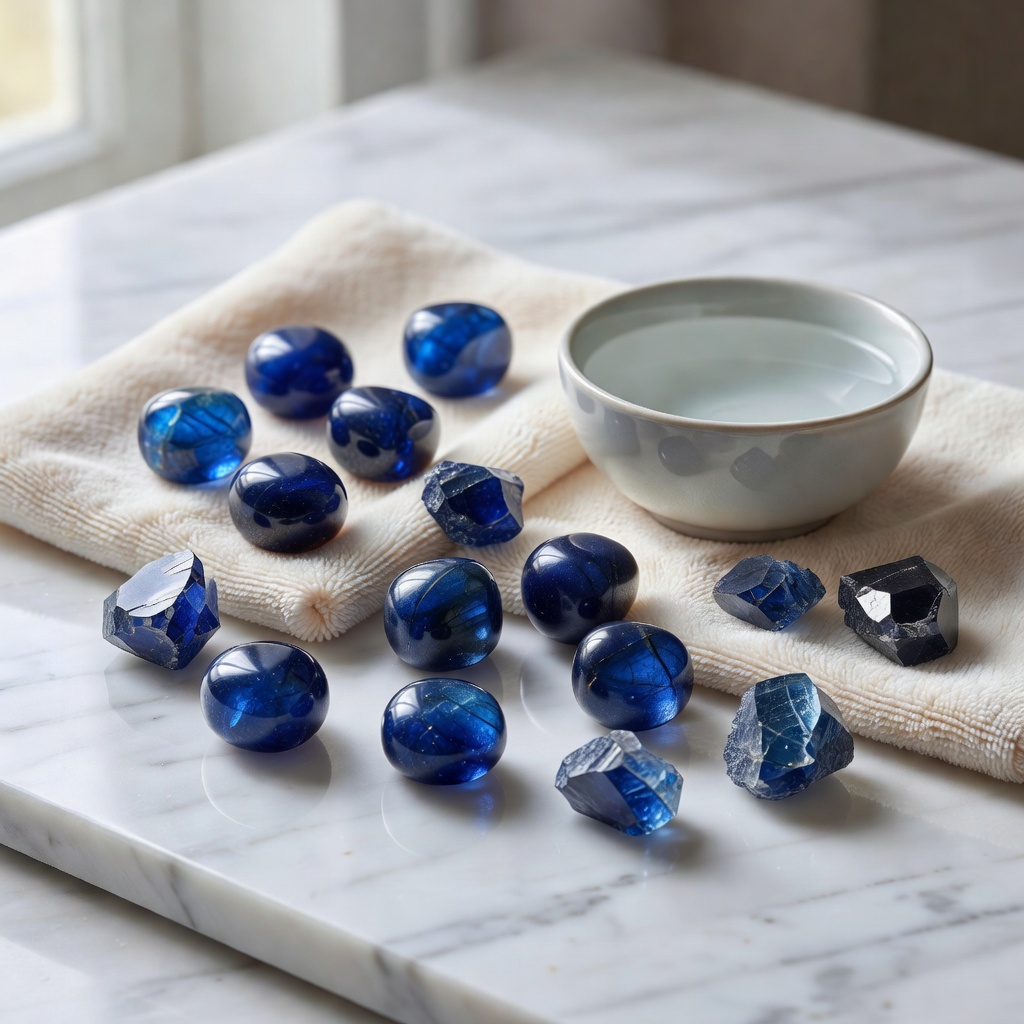
Proper Cleaning dumortierite crystal specimens requires gentle techniques that remove accumulated dirt without compromising structural integrity. Begin by preparing a solution of lukewarm water—approximately room temperature to slightly warm to the touch—and a mild, phosphate-free dish soap. Avoid hot water, as thermal shock can stress internal fractures. Submerge the stone briefly, no longer than a few minutes, to loosen surface grime and oils.
For stones with intricate carvings, natural crevices, or matrix material attached, employ a soft-bristled brush such as a baby toothbrush or specialized jewelry cleaning brush. Work gently in circular motions, paying special attention to areas where dust accumulates, such as around bezel settings or in the natural pits of rough specimens. The key is patience rather than pressure; allow the soap solution to do the work rather than scrubbing aggressively. For raw dumortierite with sharp crystal terminations, hold the specimen by its matrix or base to avoid pressure on delicate points.
Rinsing technique proves crucial for Dumortierite water safety and long-term clarity. Hold the stone under cool, running water rather than submerging it in a basin where soap residue might redeposit. Rotate the piece to ensure water flows across all surfaces, particularly underneath stone settings where soap can hide. If you notice any cloudiness after drying, this often indicates residual soap film requiring another brief rinse. Never use compressed air or heat to speed drying, as these methods can force water into microscopic fractures or cause thermal shock.
What to Avoid: Common Cleaning Mistakes
Protecting your investment in Dumortierite Care and Cleaning requires knowing which popular cleaning methods actually cause harm. Ultrasonic cleaners, despite their effectiveness with diamonds and sapphires, pose significant risks to dumortierite. The high-frequency vibrations can exploit existing inclusions, cleavage planes, or micro-fractures, potentially causing the stone to shatter internally or split along its fibrous structure. Similarly, steam cleaners subject the stone to rapid temperature fluctuations and high pressure, creating thermal shock that can fracture even apparently solid specimens.
Chemical exposure represents another major threat to Dumortierite water safety and overall integrity. Never expose dumortierite to bleach, ammonia, acetone, or acidic solutions including vinegar and lemon juice. These substances can react with the aluminum and boron content of the stone, etching the surface or causing permanent color changes. Even commercial jewelry cleaning solutions designed for gold and silver often contain chemicals too harsh for dumortierite. Household cleaners, hairspray, perfume, and cosmetics should never come into contact with the stone, as they can create chemical reactions or leave residues that attract more dirt.
Prolonged water exposure contradicts proper Dumortierite Care and Cleaning protocols despite the stone's apparent hardness. While brief rinsing proves safe, soaking dumortierite for hours or overnight can allow water to penetrate surface-reaching fractures, potentially causing internal staining or weakening the stone over time. Additionally, avoid cleaning dumortierite immediately after wearing it if the stone feels warm from body heat; allow it to return to room temperature first to prevent thermal shock. These precautions ensure that cleaning enhances rather than compromises your stone's beauty.
Special Care for Dumortierite Jewelry Settings
Maintaining Dumortierite jewelry care requires attention to both the gemstone and its metal housing, whether silver, gold, copper, or base metal alloys. When cleaning jewelry pieces, focus on the stone first using the mild soap method, then address metal tarnish separately without letting harsh metal cleaners touch the dumortierite. For silver settings that have tarnished, use a silver polishing cloth carefully, holding the cloth away from the stone surface to prevent abrasive contact. Copper settings may develop a patina that actually complements the blue dumortierite, but if removal is desired, use a mild copper cleaner applied with a cotton swab rather than immersing the entire piece.
Cleaning sessions provide ideal opportunities to inspect prongs, bezels, and clasps for security issues. Gently wiggle the stone with your finger (over a soft towel to catch it if loose) to detect any movement in the setting. Check prongs for bending or wear, particularly in rings that experience daily impact. If you discover loose settings, stop cleaning immediately and store the piece in a soft pouch until a professional jeweler can tighten the mountings. Attempting to clean loose stones risks them falling out and potentially chipping on hard surfaces.
Professional jewelry cleaning services offer value for intricate pieces, but always specify that your piece contains dumortierite and request no ultrasonic or steam cleaning. Reputable jewelers familiar with Cleaning dumortierite crystal settings will use soft brushes and mild solutions, inspecting under magnification for damage you might miss. Consider professional maintenance annually for frequently worn pieces like engagement rings or daily pendants, while occasional wear pieces might need professional attention only every few years. This proactive approach prevents stone loss and catches developing fractures before they become catastrophic breaks.
Proper Drying and Polishing Techniques
The drying phase of Dumortierite stone maintenance proves as important as the washing process itself. After rinsing, resist the urge to air-dry dumortierite for extended periods, as evaporating water can leave mineral deposits if your tap water is hard. Instead, pat the stone immediately with a lint-free microfiber cloth, soft chamois, or unbleached cotton towel. Work gently in one direction rather than circular motions to avoid capturing microscopic grit between the cloth and stone surface. For jewelry with complex settings, use a soft cosmetic brush to wick moisture from underneath stones and from between chain links.
Restoring shine to polished dumortierite requires avoiding abrasive compounds entirely. Unlike quartz or agate, dumortierite does not respond well to commercial polishing agents or rouge. If your stone appears dull after cleaning, a small amount of mineral oil applied with a soft cloth can temporarily enhance luster, though this requires reapplication as the oil dissipates. For permanently restoring shine to heavily scratched pieces, consult a professional lapidary who can repolish the stone using diamond compounds and felt wheels appropriate for the stone's hardness.
Handling rough or raw Cleaning dumortierite crystal specimens demands different techniques than polished stones. Raw specimens should never be rubbed dry, as this can break delicate crystal terminations or fibrous projections. Instead, place raw pieces on a dry towel in a stable position and allow gentle air circulation to complete drying. Never use heat lamps or hair dryers, as the thermal shock can cause fibrous dumortierite to split. Store raw specimens horizontally rather than standing them on points until completely dry to prevent water from pooling in crevices and causing mineral stains.
Storage Solutions for Long-Term Protection
Effective Dumortierite jewelry care extends beyond cleaning to include proper storage that prevents damage during periods of non-use. Each piece of dumortierite jewelry or individual specimen requires separate storage in soft pouches made of velvet, silk, or unbleached cotton. Hard jewelry boxes with individual compartments work well, but ensure the lining is fabric rather than wood or plastic, which can scratch the stone's surface. For collectors with multiple specimens, avoid tossing stones together in a drawer where harder materials can abrade the dumortierite's polish.
Environmental control plays a significant role in Dumortierite stone maintenance for long-term preservation. Store dumortierite away from direct sunlight, which can fade the vibrant blue coloration over months or years of exposure. Ideal storage locations maintain stable temperature and moderate humidity levels; avoid attics, basements, or bathroom counters where temperature fluctuations and high humidity can stress the stone. Silica gel packets in storage containers help control moisture, but ensure they do not touch the stone directly.
Separation from harder minerals prevents accidental scratching during storage. Keep dumortierite away from diamonds (Mohs 10), rubies and sapphires (Mohs 9), topaz (Mohs 8), and even quartz (Mohs 7) which can scratch dumortierite despite similar hardness numbers. Store dumortierite jewelry separately from metal chains that might kink around settings and cause pressure fractures. For display pieces, use stands that support the stone's weight evenly rather than balancing on narrow points, and position away from high-traffic areas where accidental bumping might occur.
Energetic Cleansing vs. Physical Cleaning
Discerning between spiritual Dumortierite cleansing methods and physical dirt removal helps practitioners maintain both the aesthetic and metaphysical properties of their stones. Physical cleaning, as previously described, removes oils, dust, and environmental contaminants that obscure the stone's natural luster. Energetic cleansing, however, addresses the subtle vibrations and energy accumulation that crystal healers believe affect the stone's effectiveness. Understanding both processes ensures comprehensive Dumortierite Care and Cleaning that honors both the material and energetic nature of the mineral.
Safe energetic cleansing methods for dumortierite include moonlight charging, particularly during the full moon when lunar energy peaks. Place the stone on a natural surface like wood or cotton near a window where moonlight can bathe it overnight. Smudging with sage, palo santo, or sweetgrass offers another water-free option; pass the stone through the smoke briefly while setting intentions for clearing. Sound cleansing using singing bowls, tuning forks, or bells provides vibration-based clearing without physical contact that might stress fragile specimens. These methods align with Dumortierite water safety concerns while addressing spiritual maintenance needs.
Some collectors use selenite slabs or clear quartz clusters to energetically cleanse dumortierite without water exposure. Placing dumortierite on a selenite charging plate for several hours supposedly clears accumulated energies while keeping the stone completely dry. Alternatively, burying dumortierite in dry brown rice or sea salt (in a bag to prevent salt contact) can absorb negative energy. However, never use salt water or bury directly in salt, as salt crystals can scratch the surface. Distinguish between when your stone needs physical cleaning (visible dirt, skin oils, cloudiness) versus energetic cleansing (after intense meditation sessions, healing work, or during astrologically significant times) to avoid unnecessary handling.
Daily Maintenance and Wear Guidelines
Integrating Dumortierite jewelry care into daily routines prevents cumulative damage that intensive cleaning sessions cannot reverse. Always remove dumortierite rings, bracelets, and pendants before showering, swimming, or entering hot tubs. Chlorinated pool water and saltwater both pose chemical risks, while soap scum from showering creates a filmy buildup that dulls the stone's appearance over time. Hot water from showers can also cause thermal shock, particularly if the stone was cool from air conditioning.
Establish a post-wear wiping routine to maintain Dumortierite stone maintenance between deep cleanings. After removing jewelry, use a soft microfiber cloth to wipe away skin oils, perspiration, and environmental pollutants accumulated during wear. Pay special attention to the back of cabochons and underneath settings where oils collect and can eventually work their way into fractures. This thirty-second ritual performed consistently prevents the need for aggressive cleaning methods later and keeps metal settings looking fresh.
Implement regular inspection schedules based on wear frequency. For daily-worn dumortierite rings, examine settings weekly using a jeweler's loupe or magnifying glass to catch loose prongs early. For pendants and earrings worn occasionally, inspect before each use. Check for chips along edges, hairline fractures that may have extended, or changes in color that might indicate chemical exposure. Keeping a simple log of inspection dates helps track the stone's condition over time and identifies when professional maintenance becomes necessary. This proactive approach embodies true Dumortierite Care and Cleaning philosophy.
Troubleshooting: Stains, Cloudiness, and Damage
Even with diligent Dumortierite Care and Cleaning, issues occasionally arise that require specific remediation techniques. Hard water deposits and mineral buildup appear as white, chalky spots that resist normal washing. To address these, create a solution of distilled water and mild soap—distilled water lacks the minerals present in tap water that cause the buildup. Soak the stone briefly (no more than five minutes), then use a soft brush to gently dislodge deposits from surface crevices. For stubborn mineral stains, a professional jeweler can use specialized ionic cleaning equipment that removes deposits without manual scrubbing.
Cloudiness often results from improper Cleaning dumortierite crystal attempts using harsh chemicals or abrasive cloths. If your stone appears hazy after cleaning with vinegar, window cleaner, or toothpaste (all too-common mistakes), rinse thoroughly with distilled water and mild soap to remove residue. Sometimes cloudiness indicates microscopic surface etching from chemical exposure, which requires professional repolishing. For jewelry cloudiness caused by lotion or sunscreen buildup, an alcohol-dampened cloth (applied carefully to the stone only) can cut through oily residues, though this should be followed by soap washing to remove all alcohol traces.
When professional intervention becomes necessary for damaged dumortierite, seek lapidaries or gemologists experienced with fibrous minerals. Deep scratches, significant chips, or internal fractures require assessment to determine if repolishing is possible without excessive weight loss. Some collectors choose to embrace minor imperfections as natural characteristics, while others opt for professional re-cutting for valuable specimens. Never attempt DIY repairs using superglue, epoxy, or home polishing compounds, as these amateur fixes often cause more damage than the original problem and significantly reduce the stone's value.
Frequently Asked Questions About Dumortierite Maintenance
Can dumortierite go in water?
Dumortierite can handle brief water exposure for cleaning, but prolonged soaking is not recommended. While it has a hardness of 7-8.5 on the Mohs scale, extended immersion may affect the stone's polish or weaken any fractures present. Always dry thoroughly immediately after rinsing.
How often should I clean my dumortierite stone?
For jewelry, perform a light wipe with a soft cloth after each wear to remove oils and sweat. A deeper cleaning with mild soap and water should be done every 2-4 weeks depending on use. Display pieces and raw specimens benefit from monthly dusting and quarterly deep cleaning.
Is it safe to clean dumortierite with salt?
Dry salt methods (burying in sea salt) are generally safe for energetic cleansing, but never use salt water solutions. Salt water can be abrasive and may cause pitting or surface damage over time, especially on polished dumortierite with existing micro-fractures.
Can I use an ultrasonic cleaner on dumortierite?
No, ultrasonic cleaners should be avoided. Despite dumortierite's relatively high hardness, the intense vibrations can exacerbate internal fractures, inclusions, or existing cleavage planes, potentially causing the stone to crack or shatter during the cleaning process.
Does dumortierite fade in sunlight?
Yes, prolonged exposure to direct sunlight can cause the vibrant blue color of dumortierite to fade over time. Store your stones away from windowsills and direct UV light. When displaying dumortierite, use indirect lighting to preserve its rich coloration.
Can I shower with dumortierite jewelry?
It's best to remove dumortierite jewelry before showering. Soap scum can build up on the surface creating a cloudy film, and hot water combined with harsh shower products may damage the stone or its setting over time. Hard water minerals can also leave deposits.
How do I clean raw dumortierite versus polished stones?
Raw dumortierite requires gentler handling due to its uneven surface and potential sharp edges. Use a soft brush (like a makeup brush or soft toothbrush) to remove dust from crevices rather than soaking. Polished stones can handle slightly more vigorous cleaning but still require mild soap and soft cloths.
What should I do if my dumortierite gets scratched?
Minor surface scratches on polished dumortierite may be buffed out by a professional lapidary or jeweler with proper polishing equipment. Do not attempt to sand or polish it yourself with household abrasives. Deep scratches or chips require professional assessment to determine if repolishing is possible without compromising the stone.