Introduction to Dumortierite: The Rare Blue Gemstone
Dumortierite stands as one of the gemstone world's most captivating yet underappreciated minerals, distinguished by its striking blue to violet-blue hues that rival more expensive alternatives like sapphires and tanzanites. Chemically classified as an aluminum borate silicate mineral, this rare blue gemstone forms through high-temperature, low-pressure metamorphic processes, typically appearing within aluminum-rich metamorphic rocks such as gneiss and schist. The mineral was first discovered in 1881 within the French Alps near Lyon and subsequently named after the renowned French paleontologist Eugène Dumortier, who made significant contributions to the study of fossilized organisms during the nineteenth century.
In recent years, market demand for this distinctive stone has experienced remarkable growth among both serious mineral collectors and practitioners of crystal healing arts who value dumortierite for its reputed metaphysical properties related to intellectual enhancement and emotional discipline. Unlike mass-produced commercial gemstones, high-quality specimens of blue dumortierite remain genuinely scarce in the marketplace, making this comprehensive dumortierite buying guide essential for anyone seeking to acquire authentic, investment-worthy pieces. Whether you are drawn to dumortierite for its aesthetic appeal in jewelry settings or its industrial applications in premium-grade porcelain and ceramics, understanding the fundamental characteristics of this mineral ensures you make informed purchasing decisions.
Understanding Dumortierite Quality Factors
Evaluating dumortierite quality factors requires attention to specific visual and structural characteristics that distinguish exceptional specimens from mediocre commercial-grade material. The most critical assessment criterion involves color intensity grading, which spans from pale, washed-out sky blue to intense, saturated deep violet-blue hues that command premium valuations in the collector market. Professional gemologists typically examine transparency levels, noting that while most high-quality blue dumortierite exhibits translucent to semi-transparent properties allowing light penetration, opaque varieties with exceptional color saturation can still hold significant value for cabochon cutting and ornamental carving.
Texture consistency plays an equally vital role in quality determination, as superior specimens display uniform fibrous structures without visible cracks, fractures, or surface-reaching inclusions that compromise structural integrity. When examining potential purchases, hold the stone against a diffused light source to identify internal stress fractures or cleavage planes that might indicate poor durability for jewelry applications. Collectors seeking museum-quality specimens should prioritize stones exhibiting chatoyancy or the rare "cat's eye" effect, which occurs when fibrous inclusions align parallel to one another, creating a luminous band that moves across the stone's surface when rotated.
Color Variations and Their Impact on Value
The nuanced spectrum of dumortierite color significantly influences market valuations, with specific shades commanding substantially higher prices than others based on rarity and aesthetic preferences. Royal blue specimens, characterized by deep, saturated tones reminiscent of fine Ceylon sapphires, typically achieve the highest prices per carat in both rough and cut forms, frequently selling for three to five times the value of lighter denim blue varieties. Conversely, stones exhibiting brownish-orange or reddish-brown coloration, while geologically fascinating and suitable for specialist collections, generally occupy lower pricing tiers due to reduced consumer demand for warm-toned variants of this typically blue mineral.
Rare violet-blue dumortierite, resulting from specific trace element substitutions within the crystal lattice, represents one of the most coveted color variations among serious collectors and commands prices exceeding $75 per carat for exceptional examples. Color zoning patterns, where distinct bands of varying blue intensity appear within a single specimen, create unique visual interest for lapidary artists but may decrease value for faceted gemstones intended for fine jewelry, as cutters struggle to achieve uniform color distribution in finished pieces. When assessing blue dumortierite value, examine the stone under multiple lighting conditions—natural daylight, incandescent, and fluorescent—to ensure the color remains stable and does not shift toward undesirable greenish or grayish undertones that indicate lower quality material.
Royal Blue vs. Denim Blue Preferences
Market analysis reveals distinct consumer preferences between these two primary color categories, with Asian markets historically favoring the intense royal blue specimens associated with wisdom and nobility, while Western collectors often appreciate the subtle, denim-like blue tones that complement contemporary jewelry designs. When investing in dumortierite for resale potential, prioritize the deeper royal blue varieties, as they demonstrate stronger price retention and appreciation trajectories in auction environments compared to their lighter counterparts.
Cut, Clarity, and Carat Weight Considerations
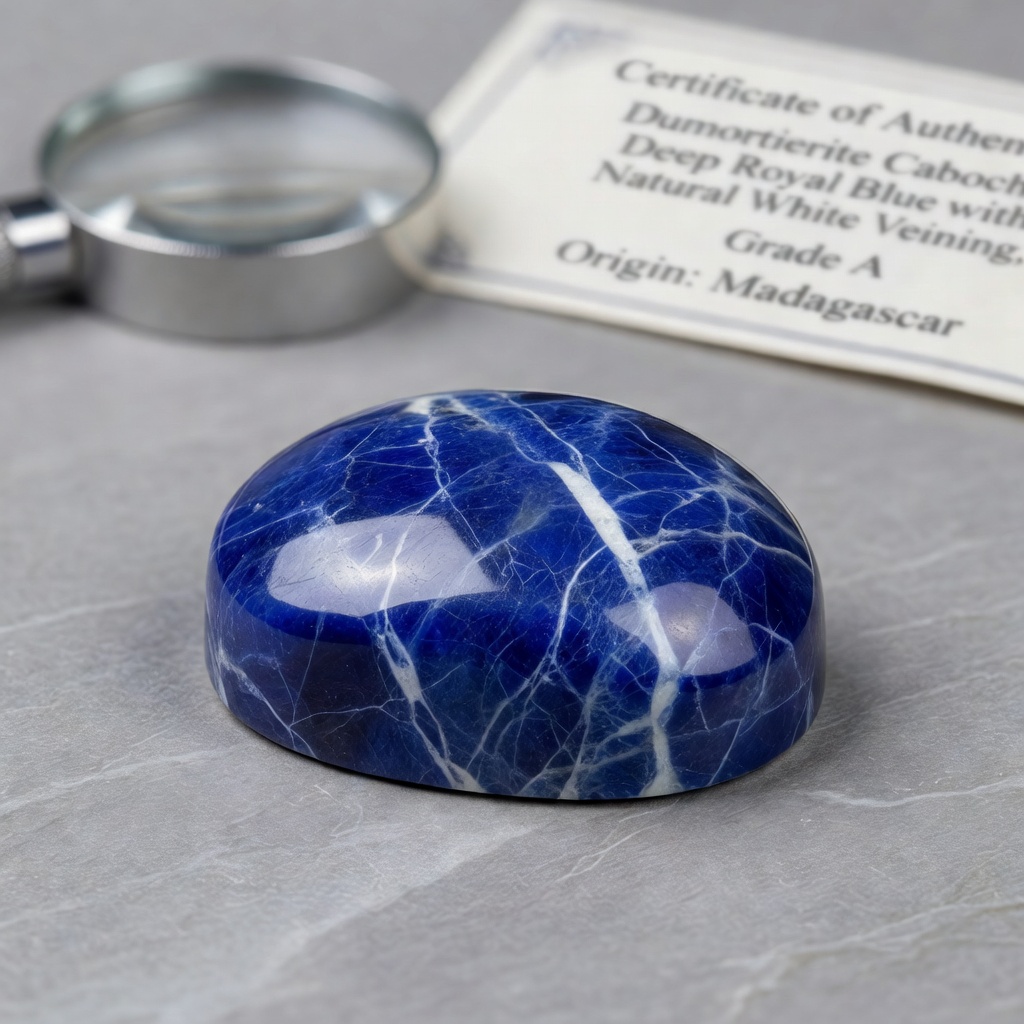
Understanding dumortierite cut types enables buyers to select specimens optimized for their intended use, whether for protective jewelry settings, display collections, or lapidary art projects. The vast majority of cut dumortierite appears as cabochons—smooth, domed surfaces without facets—that showcase the mineral's rich color and distinctive fibrous texture while minimizing the visibility of inclusions that would prove distracting in faceted stones. Faceted dumortierite remains exceedingly rare due to the mineral's perfect cleavage and fibrous structure, which present significant challenges to cutters; however, when successfully executed, these faceted stones can achieve prices exceeding $100 per carat for well-executed rounds or ovals exceeding five carats.
Clarity assessment in dumortierite differs fundamentally from transparent gemstones like diamonds, as the mineral naturally contains fibrous inclusions that actually confirm its authenticity and contribute to its distinctive appearance. Acceptable inclusions include fine, parallel fibrous structures that create silk-like reflections, while detrimental flaws encompass surface-reaching cracks, large dark mineral inclusions, or clusters of white calcite that disrupt color consistency. Regarding dumortierite carat weight, specimens suitable for jewelry typically range from one to twenty carats, with stones exceeding fifty carats considered museum-grade collectibles; unlike diamonds, per-carat prices for dumortierite actually increase with size due to the scarcity of large, clean rough material.
Size and Pricing Relationships
Unlike many colored gemstones where smaller stones dominate the market, exceptional dumortierite specimens above ten carats command disproportionately higher prices because large crystals with uniform color distribution prove geologically rare. When calculating budget allocations, expect to pay approximately 40-60% more per carat for stones exceeding five carats compared to smaller specimens of equivalent quality, reflecting the mathematical difficulty of extracting large, inclusion-free sections from naturally fractured rough material.
Natural vs. Synthetic: Spotting Authentic Dumortierite
The distinction between natural vs synthetic dumortierite represents a critical concern for collectors, as the market occasionally encounters dyed quartz, glass imitations, or heat-treated aggregates misrepresented as genuine natural material. Authentic dumortierite exhibits a specific gravity ranging from 3.3 to 3.4, noticeably heavier than quartz (2.65) or glass imitations (2.5), providing a simple diagnostic test for suspiciously inexpensive specimens offered through unofficial channels. Visual identification techniques focus on examining color distribution patterns; genuine stones display uneven, patchy coloration with fibrous zones, whereas dyed imitations often show unnaturally uniform saturation or color concentrations exclusively along surface-reaching fractures.
Common enhancement treatments include heat treatment to intensify blue coloration by altering the oxidation states of iron impurities within the crystal structure, and less commonly, surface dyeing of pale material to simulate higher-quality specimens. Microscopic examination remains the definitive authentication method, as natural dumortierite displays characteristic columnar or fibrous crystal structures under 10x magnification, while synthetic alternatives or glass imitations appear homogeneous without directional texture. When purchasing high-value specimens, insist on microscopic photography or detailed gemological descriptions that specifically mention the fibrous aggregate structure, as this documentation serves as your primary defense against fraudulent misrepresentation.
Testing at Home
While professional laboratory analysis provides definitive answers, collectors can perform preliminary assessments using a standard jeweler's loupe to search for natural mineral inclusions such as rutile needles or hematite flakes that indicate authentic formation processes. Additionally, the "hot point test"—carefully touching an inconspicuous area with a heated probe—can reveal dyed material through color bleeding or acrid odors, though this method risks damaging the stone and should only be performed by experienced gemologists.
Dumortierite Pricing Guide and Market Value
Current market analysis indicates that dumortierite price per carat varies dramatically based on quality parameters, with commercial-grade material suitable for beadwork and costume jewelry ranging from $5 to $15 per carat, while fine collector specimens with exceptional color and clarity command $30 to $50 per carat. Exceptional stones featuring the rare cat's eye phenomenon or deep violet-blue coloration from specific localities such as Brazil's Bahia region or Madagascar may exceed $100 per carat, particularly when accompanied by reputable laboratory certification verifying natural, untreated status. Wholesale purchasing strategies can reduce per-carat costs by 30-50% when acquiring rough material or parcel lots directly from mining operations or large distributors, though such transactions require substantial minimum purchases and gemological expertise to assess mixed-quality lots accurately.
Several factors significantly increase dumortierite value beyond basic color and clarity metrics, including documented provenance from historically significant localities such as the original French Alpine discoveries or Nevada's famous Oreana deposit. Untreated stones certified by major laboratories consistently outperform treated material in resale markets, with natural specimens retaining 60-80% more value than heat-enhanced equivalents of similar appearance. When evaluating dumortierite as an investment vehicle, focus on acquiring untreated specimens above five carats with documented chain of custody from reputable mining operations, as these parameters correlate strongest with long-term appreciation in the colored gemstone market.
Budget Planning for Collectors
First-time buyers should allocate $200-500 for entry-level specimens that demonstrate authentic characteristics without breaking budget constraints, while serious collectors building investment portfolios should prepare to invest $1,000-5,000 for museum-quality examples with exceptional provenance. Remember that dumortierite value correlates directly with documentation quality; spending an additional $50-100 on professional certification for purchases exceeding $300 typically yields positive returns through enhanced resale liquidity and buyer confidence.
Where to Buy Dumortierite: Trusted Sources
Identifying where to buy dumortierite requires careful vetting of suppliers, as this relatively obscure gemstone attracts both specialized mineral dealers knowledgeable about its properties and opportunistic sellers misrepresenting inferior material. Reputable online gemstone dealers such as GemSelect, The Arkenstone, and established eBay vendors with 99%+ positive feedback ratings and clear return policies provide accessible entry points for collectors unable to attend physical mineral shows. Major auction platforms including Heritage Auctions, Christie's, and Sotheby's occasionally feature significant dumortierite specimens within their mineral and gemstone categories, offering authentication guarantees and detailed condition reports that justify premium commission structures.
Mineral shows and gemological conferences, including the annual Tucson Gem and Mineral Show or regional events sponsored by the Mineralogical Society of America, offer unparalleled opportunities to examine specimens personally, compare pricing across multiple vendors, and establish relationships with specialized dumortierite dealers who source material directly from mining operations. When evaluating potential dumortierite dealers, scrutinize their willingness to provide detailed provenance information, magnification photographs of internal characteristics, and written guarantees of authenticity with reasonable return periods of at least seven days. Red flags signaling potential fraud include prices significantly below market rates (suggesting dyed quartz or glass), refusal to provide close-up photography, lack of physical address or contact information, and pressure tactics emphasizing "limited time" availability of supposedly rare specimens.
Online vs. In-Person Purchasing
While online marketplaces offer convenience and extensive selection, purchasing dumortierite in person allows critical assessment of color accuracy under natural lighting, as digital photography often fails to capture the subtle violet undertones that distinguish exceptional specimens from mediocre material. When buying online, insist on high-resolution video footage showing the stone rotating under daylight-balanced lighting, and verify that the seller offers full refunds including return shipping if the item does not match described specifications.
Certification and Documentation Essentials
Proper dumortierite certification serves as your insurance policy against misrepresentation and provides essential documentation for insurance coverage, estate valuation, and future resale transactions. Comprehensive gemological laboratory reports should include precise measurements, carat weight, color grade description, clarity characteristics diagramming the location of any inclusions, specific gravity measurements, and definitive statements regarding natural versus synthetic origin and any detected treatments or enhancements. Recognized certification bodies including the Gemological Institute of America (GIA), American Gem Society (AGS), and Gübelin Gem Lab maintain strict standards for colored stone identification and utilize advanced spectroscopic analysis to detect treatments that visual inspection might miss.
Essential documentation extends beyond laboratory reports to include country of origin verification, which significantly impacts both value and collectibility, as specimens from depleted historical mines command premiums over contemporary production. Treatment disclosure represents a legal and ethical requirement for gemstone certificates, with specific notation required for any heat treatment, dyeing, or fracture-filling processes that alter the stone's natural appearance or durability. When reviewing gemstone certificates, verify that the document includes a unique identification number corresponding to a micro-laser inscription on the stone's girdle or a detailed photographic inclusion plot that allows you to match the specific certificate to your physical specimen, preventing substitution fraud during future transactions.
Understanding Laboratory Grades
Unlike diamonds, which utilize standardized grading scales, colored gemstones including dumortierite receive qualitative descriptions that vary between laboratories, requiring buyers to familiarize themselves with each institution's terminology. GIA reports typically describe color using comparison to familiar objects (such as "vivid royal blue" or "denim blue"), while European laboratories might employ numerical color grading systems; always request explanation of any technical terminology before finalizing high-value purchases.
Caring for Your Dumortierite Purchase
Proper dumortierite care begins with understanding its physical properties, particularly its Mohs hardness rating of 7 to 8.5, which provides adequate durability for most jewelry applications while remaining vulnerable to scratching from harder materials such as diamonds, rubies, and sapphires. This hardness variation occurs because dumortierite is anisotropic, meaning hardness varies with crystallographic direction; fibers aligned perpendicular to a testing point register higher hardness than those aligned parallel, creating potential weak planes that could fracture under sharp impact. When cleaning dumortierite jewelry, utilize only mild soap and lukewarm water with a soft-bristled brush, as ultrasonic cleaners and steam cleaning equipment can exploit internal fractures or loosen stones from their settings through vibration and thermal shock.
Storage considerations play a crucial role in maintaining your stone's appearance, as dumortierite's fibrous structure can accumulate dust and oils in microscopic surface irregularities, gradually dulling its vitreous luster. Store pieces individually in soft cloth pouches or padded jewelry boxes, segregated from harder gemstones that might scratch the surface during accidental contact. For specimen collections, maintain stable humidity levels between 45-55% to prevent dehydration of any associated matrix minerals, and avoid prolonged exposure to direct sunlight which can potentially fade color in treated specimens, though natural dumortierite generally demonstrates excellent color stability under normal display conditions.
Professional Maintenance Schedules
Jewelry pieces featuring dumortierite should undergo professional inspection every twelve to eighteen months to check for loose settings, particularly for rings subjected to daily wear, as the stone's perfect cleavage in one direction creates potential vulnerability to chipping if struck against hard surfaces. Professional jewelers experienced with colored gemstones can perform gentle steam cleaning after inspecting for internal fractures, ensuring your dumortierite maintains its optimal appearance without risking damage from inappropriate cleaning methodologies.
Final Checklist for Smart Dumortierite Buying
Implementing systematic dumortierite buying tips ensures successful acquisitions that meet both aesthetic expectations and investment objectives. Before completing any purchase, interrogate vendors regarding specific origin localities, treatment histories, and return policies, requesting written confirmation of any verbal claims regarding natural, untreated status. Evaluate investment potential by researching recent auction results for comparable specimens, recognizing that while dumortierite does not appreciate as rapidly as Kashmir sapphires or Burmese rubies, rare, high-quality specimens demonstrate steady value retention and moderate appreciation over five-to-ten-year holding periods.
Authentication guarantees should include provisions for independent laboratory verification within a reasonable inspection window, with sellers agreeing to full refunds including shipping costs if third-party analysis reveals treatments or synthetic origin not disclosed at the time of sale. Resale value considerations favor stones accompanied by certification from internationally recognized laboratories, with documented provenance from collectible localities, and weights exceeding three carats for faceted stones or ten carats for cabochons. Always verify return policies specifically cover "change of mind" scenarios rather than merely guaranteeing against breakage, and confirm that the seller carries appropriate liability insurance covering shipments against loss or theft during transit.
Pre-Purchase Inspection Protocol
Conduct your examination using a 10x loupe under daylight-equivalent lighting to verify the fibrous structure characteristic of authentic material, check for surface-reaching fractures that might compromise durability, and confirm color distribution matches the seller's description. For online purchases, request short video clips showing the stone from multiple angles against a white background, specifically requesting views that demonstrate transparency levels and any potential color zoning before committing to the transaction.
Frequently Asked Questions
What is dumortierite and why is it considered valuable?
Dumortierite is a rare aluminum borate silicate mineral known for its distinctive blue to violet-blue coloration. It's valued for its scarcity, unique fibrous crystal structure, and use in both gemstone jewelry and industrial applications like high-quality porcelain.
How much does dumortierite cost per carat?
Quality dumortierite typically ranges from $5 to $50 per carat, with exceptional specimens featuring deep royal blue color and high clarity commanding premium prices up to $100 per carat or more.
How can I tell if my dumortierite is real or fake?
Authentic dumortierite displays a fibrous or columnar structure under magnification, has a specific gravity of 3.3-3.4, and shows uneven color distribution. Fake stones often appear too perfect in color uniformity and lack the natural fibrous texture.
What color dumortierite is most valuable?
Deep royal blue and violet-blue dumortierite command the highest prices. Stones with consistent, saturated color without brownish or greenish undertones are considered most desirable in the gemstone market.
Is dumortierite typically treated or enhanced?
Natural dumortierite is rarely treated, though some specimens may be heat-treated to improve color. Unlike many gemstones, dumortierite is commonly sold in its natural state, which adds to its appeal for collectors seeking untreated stones.
Where is the best place to buy authentic dumortierite?
Purchase from established gemstone dealers, reputable online marketplaces with authentication guarantees, or mineral shows where you can examine specimens in person. Always request certification for high-value purchases.
How do I care for dumortierite jewelry?
Clean dumortierite with mild soap and lukewarm water using a soft brush. Avoid ultrasonic cleaners, steam cleaning, and harsh chemicals. Store separately from harder gemstones to prevent scratching, as it has a Mohs hardness of 7-8.5.
What distinguishes dumortierite from sodalite or lapis lazuli?
While all three display blue colors, dumortierite features a distinctive fibrous structure and vitreous to dull luster, whereas lapis contains visible pyrite flecks and sodalite shows white calcite veining. Dumortierite is also harder and denser than sodalite.