Diopside (Chrome) Buying Guide: Everything You Need to Know Before Purchasing
Chrome diopside has emerged as one of the most compelling alternatives to expensive green gemstones like emeralds and tsavorites, offering collectors and jewelry enthusiasts an affordable entry into vivid forest green hues. This comprehensive buying guide explores the critical factors that determine quality, value, and longevity when selecting chrome diopside gemstone specimens for your collection or jewelry wardrobe. Understanding the nuances of this Siberian treasure will help you make informed decisions and avoid common pitfalls in the colored gemstone market.
What Is Chrome Diopside? Understanding the Gemstone
Chrome diopside belongs to the pyroxene mineral family and derives its spectacular green coloration from trace amounts of chromium within its chemical structure, specifically calcium magnesium silicate with chromium substitution. Unlike its cousin black star diopside, which displays asterism due to needle-like inclusions, chrome diopside gemstone material showcases a saturated green that ranges from vivid grass green to deep forest tones depending on concentration levels. The gemstone first entered the international market in 1988 following its discovery in the harsh, remote mines of Eastern Siberia, where extreme winter conditions limit mining operations to brief summer months, naturally restricting supply and enhancing exclusivity.
Discovered initially in the Inagli district of the Sakha Republic, Siberian chrome diopside quickly gained attention for its ability to rival far more expensive green stones at a fraction of the cost. Gemologists distinguish chrome diopside from other diopside varieties through spectroscopic analysis, which reveals chromium absorption bands rather than the iron-dominated spectra seen in common white or gray diopside. When evaluating specimens, remember that true chrome diopside will always display some degree of green coloration; colorless or black specimens represent different mineralogical varieties despite sharing the diopside name.
Color Quality: The Primary Value Factor
When assessing green diopside value, color reigns supreme as the most critical determinant, with premium specimens exhibiting a vivid, saturated forest green that appears almost glowing in natural daylight. The ideal color range spans from medium-dark green to intense verdant hues, avoiding the overly dark tones that appear nearly black or the pale, washed-out shades that lack visual impact. Chromium content creates this desirable coloration, while iron impurities typically produce undesirable brownish or grayish secondary hues that diminish both beauty and market value.
Color zoning presents a significant challenge in chrome diopside, as many crystals display uneven color distribution with lighter and darker bands running through the material. Expert cutters must orient the rough carefully to minimize visible zoning in the final faceted stone, often sacrificing weight retention for color consistency. When examining potential purchases, view the stone under various lighting conditions—incandescent light may reveal brownish undertones invisible in daylight, while diffused natural light best showcases the pure green saturation that defines exceptional material.
Evaluating Saturation and Tone
The most valuable chrome diopside color balances medium to medium-dark tone with strong saturation, creating depth without sacrificing brilliance or appearing opaque. Stones that achieve this "sweet spot" demonstrate why chrome diopside color comparisons to fine emeralds are not merely marketing hyperbole but legitimate observations of visual similarity. However, avoid stones so dark that they appear black in indoor lighting, as these lack the lively green presence that makes this gemstone distinctive and desirable.
Clarity Standards and Inclusion Patterns
Chrome diopside clarity expectations differ significantly from those applied to diamonds or even emeralds, with the gemstone typically containing characteristic inclusions that actually help identify natural origin. The most common internal features include fine needle-like crystals and distinctive "horsetail" inclusions—radiating clusters of fibrous material that resemble equine tail hairs and indicate natural formation. These diagnostic inclusions, while technically clarity characteristics, rarely detract significantly from value unless they severely impact transparency or create durability concerns.
For fine jewelry applications, seek eye-clean stones where inclusions remain invisible without magnification, particularly for pieces intended for daily wear like rings or bracelets. Collector specimens and budget-conscious buyers might accept lightly included material, especially in larger sizes where clean stones command prohibitive premiums. When examining chrome diopside inclusions, position the stone against a white background under strong lighting, rotating it slowly to assess whether internal features reach the surface, as surface-reaching fractures compromise both beauty and structural integrity during setting.
Durability Implications of Internal Features
While most chrome diopside inclusions are aesthetic rather than structural concerns, heavily included stones with numerous fractures or cleavage planes require protective settings and gentle handling. Stones with central inclusions visible to the naked eye typically trade at significant discounts but may suit pendants or earrings where impact risk remains minimal. Professional gemologists examine these stones under darkfield illumination to identify tension cracks that could expand during cutting or setting, ensuring your investment maintains its integrity throughout the jewelry creation process.
Cut Quality and Optical Performance
Optimal chrome diopside cut quality balances the material's physical limitations with optical performance goals, requiring cutters to navigate perfect cleavage directions and sensitivity to thermal shock during the cutting process. Standard brilliant cuts with modified pavilion angles typically maximize light return while minimizing the risk of chipping during polishing, though fancy shapes like cushions and ovals often suit the elongated crystal habits of rough material better than rounds. Recommended proportions include table percentages between 53-58% and depth percentages of 60-65%, though these may vary based on individual material density and color saturation needs.
Due to the rarity of fine rough material, custom cutting commands premium pricing but allows personalization for specific jewelry designs. Many cutters prefer step cuts or mixed cuts for darker material, as these styles minimize light leakage and help lighter-toned rough achieve better face-up appearance. When evaluating gemstone faceting quality, examine the stone face-up for windowing (see-through areas indicating shallow cutting) and extinction (dark areas suggesting excessive depth), both of which indicate suboptimal cutting that wastes potential beauty.
Light Performance Considerations
Chrome diopside's relatively high refractive index (1.675-1.701) provides excellent brilliance when properly cut, rivaling more expensive green alternatives in sparkle and life. However, the material's strong dispersion can create noticeable fire under direct lighting, which some collectors prize while others find distracting from the pure green body color. When selecting stones, observe them under diffuse natural light to assess true color, then under pinpoint lighting to evaluate brilliance and scintillation patterns.
Carat Weight and Size Rarity
The relationship between chrome diopside carat weight and availability follows an exponential scarcity curve, with gem-quality material over two carats representing genuine rarities and three-carat-plus stones qualifying as collector's items. This size limitation stems from the geological conditions of Russian diopside mines, where crystals rarely form in dimensions suitable for cutting larger stones, and the material's cleavage properties make cutting large specimens technically challenging with high fracture risk. Consequently, Russian diopside price structures increase dramatically per carat beyond the two-carat threshold, often quadrupling or quintupling for each additional carat of fine material.
For jewelry designers and consumers, this size reality influences setting strategies and budgeting expectations. Melee sizes ranging from 1.5mm to 3mm provide affordable accent options for pavé settings or multi-stone designs, offering the vivid green color at accessible price points. When considering larger specimens, expect to pay premiums comparable to fine tsavorites or even entry-level emeralds, though chrome diopside typically maintains a price advantage in equivalent sizes and qualities.
Size Recommendations by Jewelry Type
Earrings and pendants accommodate larger chrome diopside stones beautifully, as these settings protect the gem while showcasing its color in sizes that would prove prohibitively expensive in emerald or tsavorite. For rings intended for occasional wear, stones between one and two carats offer optimal balance between visual impact and practicality, providing substantial presence without the extreme fragility risks associated with very large specimens. Budget-conscious buyers should focus on the 0.75 to 1.5-carat range, where material remains relatively available and pricing remains accessible.
Geographic Origins: Siberian vs. Other Sources
Siberian chrome diopside from Russia's Sakha Republic (Yakutia) maintains its position as the industry standard for quality, with material from the Inagli and other regional mines exhibiting the purest green colors and finest clarity. The extreme Arctic conditions of these Russian diopside mines—where winter temperatures drop below minus 50 degrees Celsius—limit mining to brief summer seasons, naturally restricting supply and maintaining market stability. This Siberian material typically shows more saturated, pure green hues compared to secondary sources.
Pakistan has emerged as a secondary source for chrome diopside, though material from these deposits often displays slightly lighter tones or yellowish secondary hues compared to premium Siberian rough. While Pakistani material can yield beautiful gems, it generally commands lower prices and suits budget-conscious buyers or those seeking lighter green shades. Origin documentation significantly affects collector value, with verified Siberian material carrying premiums and provenance documentation becoming increasingly important for investment-grade specimens over two carats.
Origin Verification Methods
Advanced gemological laboratories can sometimes determine geographic origin through trace element analysis and inclusion studies, though chrome diopside origin reports remain less common than those for sapphire or emerald. Reputable dealers should provide detailed provenance information for significant purchases, including specific mine locations when available. When buying untreated chrome diopside from Siberia, request documentation specifying the Yakutia region, as this association adds cachet and resale value among knowledgeable collectors.
Treatments, Enhancements, and Certification
The vast majority of commercially available chrome diopside gemstone material enters the market completely natural and untreated, as the stone's vivid color requires no enhancement to appeal to consumers. Unlike emeralds, which routinely undergo oiling or resin filling, or sapphires, which often receive heat treatment, chrome diopside typically reaches cutters in its natural state. However, potential heat treatments exist to lighten overly dark material or improve clarity, making gemstone certification from reputable laboratories essential for significant investments.
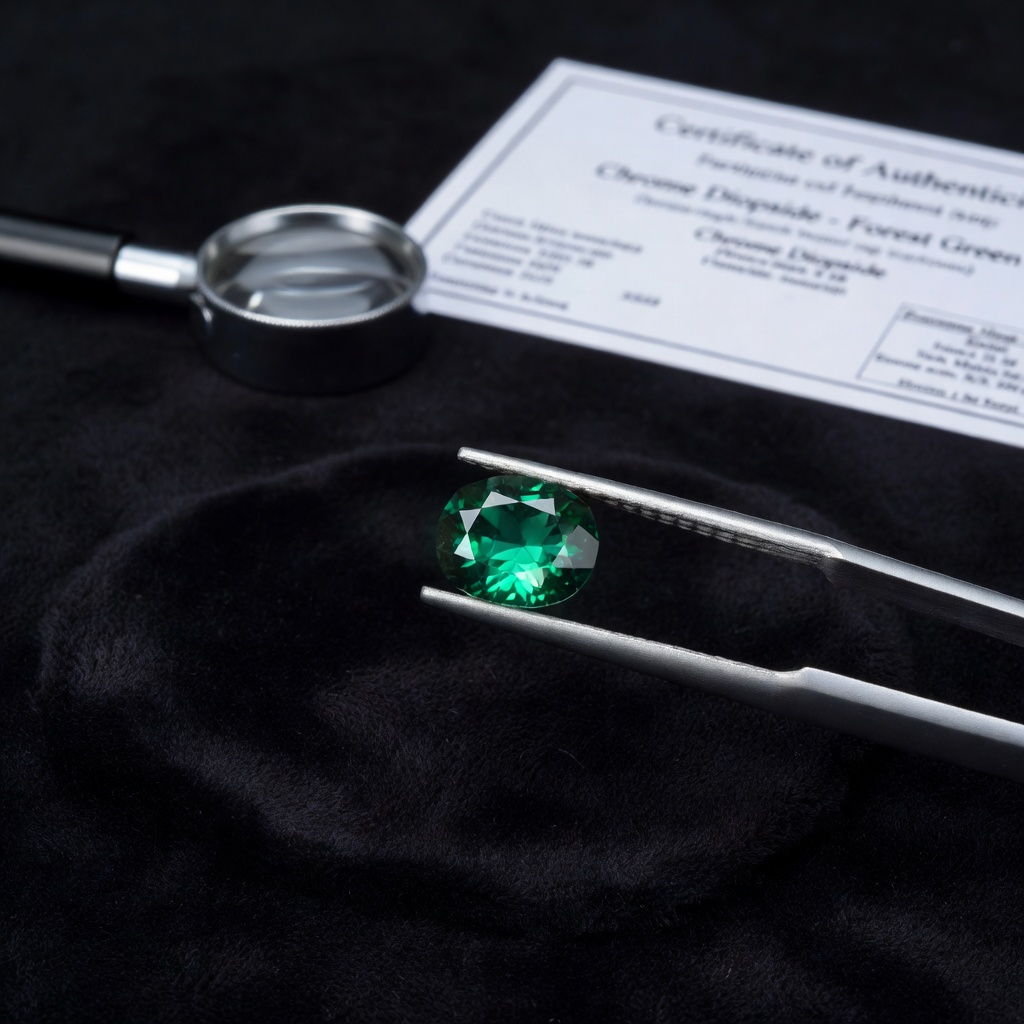
When purchasing stones over one carat or pieces valued over $500, insist upon reports from recognized laboratories such as GIA (Gemological Institute of America), AGL (American Gemological Laboratories), or independent certified gemologists. These certificates verify natural origin, disclose any treatments, and provide measurements and quality assessments that protect your investment. For collector-grade Siberian chrome diopside, AGL reports particularly valuable as they often include origin opinions and detailed inclusion photography.
Identifying Treatments
Heat-treated chrome diopside may show subtle signs including altered inclusion patterns, changes in color distribution, or slightly different spectroscopic signatures compared to natural material. While treatment does not necessarily disqualify a stone from consideration, undisclosed treatments constitute misrepresentation and affect value significantly. Always compare certification details against the seller's description, ensuring that "natural" claims align with laboratory findings regarding treatment status.
Jewelry Design and Setting Recommendations
Successful diopside jewelry buying requires understanding the gemstone's physical limitations and designing protection into the setting from the outset. With a Mohs hardness of 5-6, chrome diopside demands protective settings, particularly for rings that face daily impact and abrasion risks. Bezel settings provide the highest security, surrounding the stone's girdle with metal that prevents edge chipping and protects against blows. Halo settings offer similar protection while enhancing the visual size and color impact of the center stone through contrasting diamond or white sapphire surrounds.
Metal selection significantly affects the final appearance of chrome diopside jewelry, with yellow and rose gold enhancing the warmth and richness of the green through complementary color theory, while platinum and white gold create striking contrast that emphasizes the stone's cool forest tones. For pendants and earrings, where impact risk remains minimal, prong settings become viable options that maximize light entry and visual presence. When commissioning custom pieces, discuss girdle thickness with your jeweler, ensuring adequate metal coverage at the stone's widest point to prevent chipping during wear.
Application-Specific Recommendations
Chrome diopside excels in earrings and pendants, applications where the stone faces minimal mechanical stress while receiving optimal light exposure to showcase its color. For rings, consider occasional wear designs or protective cocktail styles rather than daily wear engagement ring substitutions. Three-stone rings with chrome diopside centers flanked by harder stones like diamonds or sapphires require careful prong placement to prevent the center stone from contacting harder materials during wear.
Care, Cleaning, and Durability Guidelines
Understanding chrome diopside care requirements ensures your jewelry maintains its beauty across decades of ownership, despite the material's moderate hardness limitations. The gemstone's Mohs hardness of 5-6 places it below everyday dust and sand particles (quartz, hardness 7), meaning prolonged exposure to unprotected wear will inevitably result in surface scratching and abrasion. Additionally, chrome diopside possesses distinct cleavage in two directions, creating planes of structural weakness that can result in chipping or splitting if struck against hard surfaces.
Clean chrome diopside using only mild soap and lukewarm water with a soft-bristled brush, gently removing accumulated oils and debris without risking thermal shock or chemical damage. Never subject these gemstones to ultrasonic cleaners or steam cleaning, as the vibrations and rapid temperature changes can exploit cleavage planes and cause catastrophic fractures. After cleaning, pat dry with a soft, lint-free cloth rather than rubbing, which could potentially scratch the surface if grit particles are present.
Storage and Maintenance Protocols
Store chrome diopside jewelry separately from harder gemstones like diamonds, rubies, or sapphires to prevent contact scratching; individual cloth pouches or compartmentalized jewelry boxes provide ideal protection. Remove rings before activities involving impact risks, including sports, gardening, or household chores. Annual inspections by a professional jeweler can identify loose settings or developing chips before they result in stone loss, particularly important for frequently worn pieces.
Smart Shopping Strategies and Red Flags
Navigating the market to buy chrome diopside online or in-person requires vigilance against misrepresentation and unrealistic pricing schemes. Quality chrome diopside typically ranges from $50 to $100 per carat for commercial grade material, $100 to $300 per carat for fine quality under two carats, and $500+ per carat for exceptional large specimens. Prices significantly below these benchmarks should trigger suspicion regarding synthetic substitutes, glass imitations, or undisclosed treatments.
Selecting reputable dealers constitutes the most critical shopping strategy, prioritizing established vendors with clear return policies, detailed specifications, and willingness to provide independent laboratory certification. Verify gemstone dealer selection criteria including membership in professional organizations like the American Gem Trade Association (AGTA) or similar international bodies that enforce ethical standards. When examining stones, beware of descriptors like "Siberian emerald" or "Russian emerald," as these represent misleading trade names intended to inflate perceptions of value through association with more expensive gems.
Avoiding Common Scams
Synthetic diopside exists but remains relatively rare; more commonly, unscrupulous sellers offer green glass, yttrium aluminum garnet (YAG), or dyed quartz as chrome diopside substitutes. These imitations lack the characteristic inclusions, specific gravity, and refractive index of natural material. Always examine stones under magnification for natural inclusion patterns, and request refractive index readings or specific gravity tests from sellers when purchasing uncertified material. If a deal appears too advantageous—such as a five-carat "flawless" chrome diopside for under $100—assume misrepresentation and seek verification from an independent gemologist before purchasing.
Frequently Asked Questions
What makes chrome diopside different from regular diopside?
Chrome diopside contains chromium trace elements that produce an intense forest green color, whereas regular diopside is typically white, gray, or pale green. The chromium content not only creates the vivid color that rivals emerald but also identifies it as the most valuable variety of the diopside mineral family.
Is chrome diopside expensive compared to other green gemstones?
Chrome diopside remains relatively affordable compared to emeralds or tsavorites, typically ranging from $50 to $500 per carat depending on quality. However, prices escalate dramatically for stones over 3 carats due to extreme rarity, making large specimens competitive with finer green garnets.
How can I verify my chrome diopside is natural and untreated?
Request a certificate from reputable laboratories like GIA or AGL verifying natural origin. Visually, natural chrome diopside often shows characteristic needle-like inclusions and may exhibit 'horsetail' patterns. Most quality chrome diopside is untreated, but certification confirms no heat treatment or artificial color enhancement.
What is the best jewelry setting for chrome diopside?
Due to its Mohs hardness of 5-6, chrome diopside performs best in protective settings like bezels or halos, particularly for rings. Earrings and pendants are ideal as they face less impact than rings. Yellow gold settings often enhance the green color, while platinum or white gold provide striking contrast.
Why are large chrome diopside stones so rare?
Chrome diopside crystals rarely form in sizes suitable for cutting stones over 2-3 carats. The Siberian mining conditions produce smaller crystals, and the material's cleavage properties make cutting larger stones challenging with high risk of fracture during the cutting process.
Can chrome diopside be worn daily?
While beautiful, chrome diopside requires careful handling for daily wear due to its moderate hardness of 5-6. It's best suited for occasional wear rings or protected settings. For daily wear, consider earrings or pendants where the stone faces less impact and abrasion risk.
How do I clean and care for chrome diopside jewelry?
Clean chrome diopside using only mild soap and lukewarm water with a soft brush. Avoid ultrasonic cleaners, steam cleaning, and harsh chemicals. Store pieces separately from harder gemstones to prevent scratching, and avoid exposure to sudden temperature changes that could cause thermal shock.
Where is the best place to buy chrome diopside?
Purchase from established gem dealers, reputable jewelry stores with return policies, or verified online vendors specializing in colored gemstones. Ensure the seller provides detailed specifications, origin information, and laboratory certification for significant purchases. Avoid deals that seem too good to be true, as they may indicate glass imitations or treated stones.