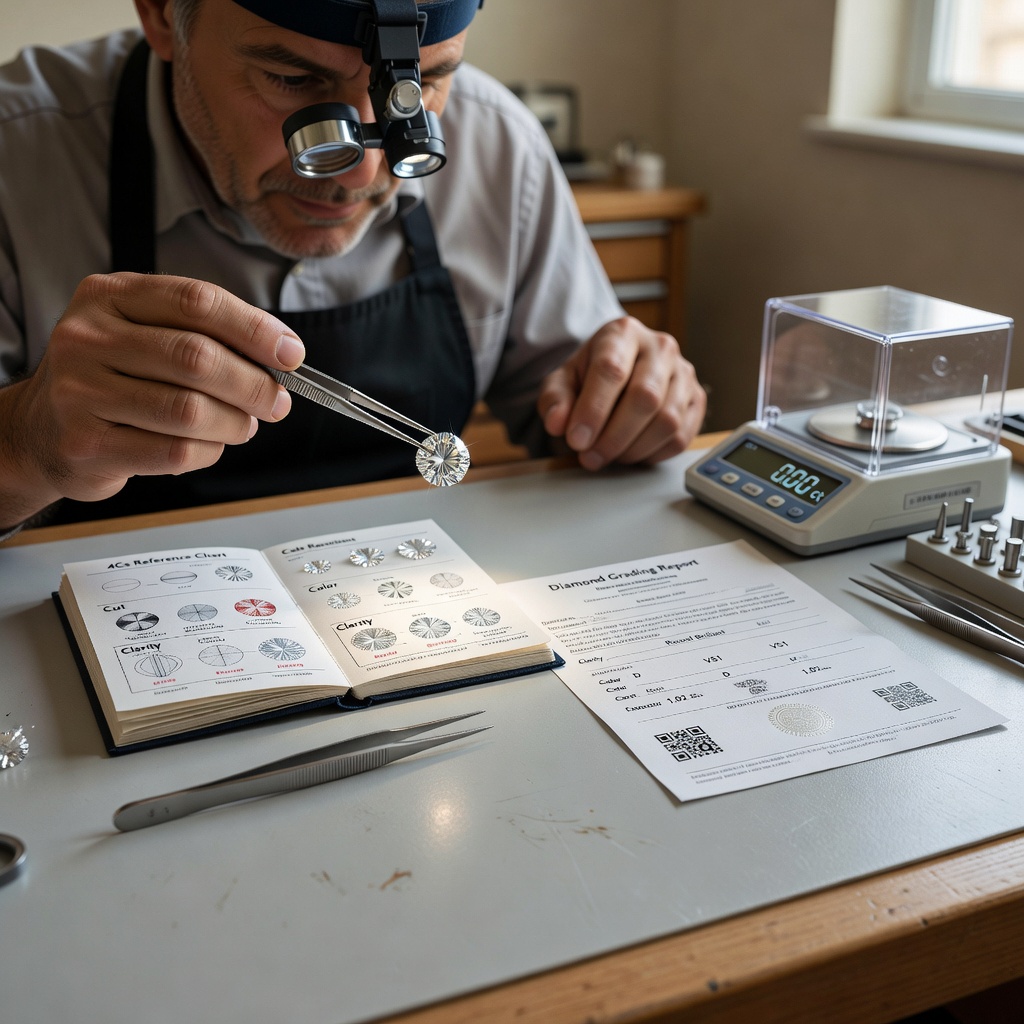
Introduction: Why Diamond Properties Matter
When people talk about Diamond Properties and Information, they usually mean the measurable qualities that determine how a diamond looks, performs, and holds value over time. These diamond characteristics include the well-known 4Cs (cut, color, clarity, and carat), but they also extend to factors like fluorescence, proportions, and the reliability of the grading source. Understanding these properties helps buyers avoid overpaying for specifications that don’t actually improve real-world beauty, and it helps professionals communicate quality consistently across different stones.
Diamond properties matter because they directly influence appearance (sparkle, brightness, and apparent whiteness), durability (risk of chipping or weakness from inclusions), and pricing (market demand for certain grades and “milestone” sizes). For example, a slightly smaller diamond with a top cut grade can look brighter and even larger than a heavier stone with poor proportions. In this guide, you’ll learn how to evaluate the 4Cs of diamonds, interpret a grading report, compare lab-grown vs natural diamonds, and apply practical buying and care strategies so your diamond performs beautifully for decades.
The 4Cs Overview: Cut, Color, Clarity, Carat
The 4Cs of diamonds are the global framework for describing diamond quality, and they sit at the heart of most Diamond Properties and Information resources. Cut refers to how well a diamond is proportioned and finished for light performance; color measures body color (typically D to Z); clarity grades the presence of inclusions and blemishes; and carat is the diamond’s weight. Each “C” influences price, but not all influence visible beauty equally—cut usually has the strongest impact on brilliance.
These factors also interact, which is where smart trade-offs can save money while improving appearance. As a practical example, shoppers often choose a near-colorless grade (such as G or H) paired with an eye-clean clarity (like VS2 or SI1) to free budget for an Excellent/Ideal cut. In real buying scenarios, that combination frequently produces a whiter-looking, more brilliant diamond than a higher color or clarity stone with a mediocre cut.
Consistency is crucial when comparing diamonds, which is why certification matters. Two diamonds described as “excellent” by different sellers may not be equal if they’re graded by different standards. A trusted lab report creates a common language for comparing diamond properties, confirming what you’re paying for, and reducing the risk of misrepresentation.
Diamond Color: Understanding The Color Scale
The diamond color scale most buyers encounter runs from D (colorless) to Z (noticeable light yellow or brown). The differences between adjacent grades can be subtle, especially once the diamond is mounted, but they become more visible as you move down the alphabet. In practice, many people find the “sweet spot” in the near-colorless range (G to J) where a diamond still appears bright while staying more budget-friendly than D-F grades.
Fluorescence and the ring setting can significantly influence perceived color. For instance, medium to strong blue fluorescence may make certain near-colorless diamonds look a touch whiter in sunlight, but it can also create haziness in a small percentage of stones—so it’s important to assess fluorescence on a case-by-case basis. Likewise, yellow gold or rose gold settings can visually “warm up” the diamond, making an H or I color look intentionally harmonious, while platinum or white gold can emphasize any warmth and may justify choosing a higher color grade.
To prioritize color effectively, start with your design and viewing habits. If the diamond will be set in yellow gold and worn mainly indoors, you can often select a slightly lower color grade with minimal visible trade-off. As a practical tip, compare color grades face-up (as the diamond is worn) and also from the side; step-cut diamonds like emerald cuts show body color more readily than brilliant cuts, so you may want a higher grade for those shapes if a crisp, icy look is the goal.
Clarity Grades: What To Look For
Diamond clarity grades describe how free a diamond is from internal inclusions and external blemishes, typically on a scale from Flawless (FL) down to Included (I1, I2, I3). Common inclusions include crystals, feathers, needles, clouds, and pinpoint groupings, while blemishes can include minor surface marks or abrasions. While high clarity can be impressive on paper, many inclusions are not visible without magnification, especially in smaller diamonds or in patterns that don’t interfere with light.
Clarity affects both appearance and durability, depending on the type and location of inclusions. A small inclusion near the edge can sometimes be hidden by a prong, but a feather (a small internal fracture) near the girdle might raise durability concerns if it’s large or positioned where the diamond could be struck. A practical approach is to evaluate not just the grade, but the inclusion map and comments on the report, and then confirm with magnified images or an in-person inspection.
Many shoppers aim for “eye-clean” rather than paying premiums for extremely high clarity. “Eye-clean” typically means inclusions can’t be seen at normal viewing distance without magnification, which can be achieved at SI1, VS2, or even SI2 in some cases depending on the diamond and shape. A strong budget strategy is to prioritize cut first, choose a color that suits your setting, and then select the lowest clarity that still appears clean to your eye—especially for busy halo settings or pavé designs where tiny visual distractions are naturally camouflaged.
Cut And Brilliance: More Than Shape
Cut quality is often confused with shape, but they’re different ideas. Shape refers to the outline—round, oval, princess, emerald, cushion, pear, marquise, radiant, and so on—while cut quality describes how well the diamond’s facets are proportioned and finished to return light. Among all diamond characteristics, cut quality typically has the strongest influence on sparkle, brightness, and fire, which is why it can make a slightly smaller diamond look more lively and impressive than a heavier, poorly cut stone.
Cut performance depends on proportions, symmetry, and polish. If a diamond is too deep, light can leak out the bottom and the stone may look smaller for its weight; if it’s too shallow, it can look glassy and lack contrast. As a practical example, two 1.00 ct round diamonds can look dramatically different: one with excellent proportions may appear bright edge-to-edge, while another with poor symmetry might show uneven patterns and dull areas under the table.
To maximize brilliance on a budget, consider prioritizing top-tier cut grades in the shape you want, then relax other criteria strategically. In round diamonds, an Excellent cut (and strong symmetry/polish) often delivers the most reliable performance; in fancy shapes, use visual tools like high-quality videos, ASET/Ideal Scope images when available, and reputable vendor assessments. If you’re choosing an oval or marquise, also evaluate bow-tie visibility; selecting a well-proportioned stone can reduce the dark bow-tie effect and improve face-up brightness.
Carat Weight And Perceived Size
Diamond carat weight measures mass, not visible size, and this distinction matters when comparing stones. Two diamonds with the same carat weight can look different in size depending on their dimensions and how weight is distributed (depth, girdle thickness, and overall proportions). For example, a 1.00 ct diamond cut too deep may face up like a smaller stone, while a well-cut diamond of slightly lower carat weight can appear larger from the top.
Pricing tends to scale sharply at popular “magic numbers” like 0.50 ct, 1.00 ct, 1.50 ct, and 2.00 ct because demand spikes at those milestones. A practical way to reduce cost without sacrificing appearance is to buy just under a threshold—such as 0.90–0.99 ct instead of 1.00 ct—where the face-up size difference is often hard to notice, but the price difference can be meaningful. Another example is choosing an elongated shape (oval or marquise) that typically provides more spread per carat, making the diamond look larger on the finger.
The best value comes from balancing carat with the other Cs rather than chasing weight alone. A common strategy is to set a minimum “spread” goal in millimeters, then find the best cut quality you can within that size range and your preferred color/clarity. If a jeweler is pushing carat weight while glossing over cut details, that’s a strong signal to slow down and compare options using measurable dimensions and verified grading.
Grading Reports And Lab Certification
A grading report is the document that ties a diamond’s claims to an independent assessment, and it’s one of the most important pieces of purchase protection. Major labs include GIA, AGS (historically influential for cut standards), and IGI (commonly used for lab-grown diamonds and also for natural stones). When buyers compare “GIA vs AGS” discussions, the key takeaway is consistency and strictness—top-tier labs are valued because their grading is widely trusted and easier to compare across sellers.
Reading a grading report becomes much easier when you know what to focus on. Start with the 4Cs (cut grade when applicable, color grade, clarity grade, and carat), then review the proportions section, which may include table percentage, depth percentage, crown and pavilion angles, and girdle thickness. Next, check the clarity plot diagram and comments to understand the type and location of inclusions; for example, an inclusion near the edge might be easier to set, while a dense cloud under the table could impact transparency.
Always verify the report number and, when available, match it to an inscription (serial number) on the diamond’s girdle. Reputable sellers will provide the report, allow you to confirm the number on the lab’s website, and disclose treatments or notable characteristics such as fluorescence. As a real-world buying tip, avoid relying solely on in-house “certificates” or vague appraisals that don’t come from recognized labs, especially for higher-value stones.
Natural Vs Lab-Grown Diamonds: Key Differences
The lab-grown vs natural diamonds question is mostly about origin and market dynamics, not basic performance. Lab-grown diamonds have the same chemical composition (carbon), crystal structure, and optical properties as natural diamonds, meaning they can look virtually identical when graded similarly. From a wearability perspective, both are durable, suitable for daily jewelry, and evaluated using the same core framework of diamond properties.
The biggest differences tend to be price, resale expectations, and disclosure. Lab-grown diamonds usually cost significantly less than natural diamonds of comparable grades, which can allow buyers to choose a larger carat weight or higher cut quality within the same budget. However, resale value and trade-in programs vary widely, and lab-grown stones often depreciate differently due to evolving production and pricing—so it’s wise to purchase primarily for enjoyment rather than as an investment.
Choosing between them depends on your priorities and how you plan to use the diamond. A lab-grown diamond can be a smart choice for buyers who want maximum size or higher specs for the money, especially for fashion-forward designs or large center stones. Natural diamonds may be preferred for buyers who value rarity, tradition, and certain long-term market perceptions; in either case, insist on clear disclosure and a reliable lab report so the stone’s identity and characteristics are fully documented.
Buying, Care, And Maintenance Tips
Buying a diamond confidently starts with setting priorities and using trustworthy data. Decide what matters most—sparkle, size, a colorless look, or a higher clarity—then build a balanced target range for the other Cs so you don’t overpay for invisible upgrades. A practical shopping method is to shortlist three to five certified diamonds with similar specs, compare face-up videos or in-person views, and then pick the stone that looks best rather than the one with the highest paper grade.
Verification and seller reputation are essential, especially online. Choose sellers who provide a recognized lab grading report, clear return policies, and transparent images (including magnified photos and 360° videos when possible). Helpful questions to ask a jeweler include: “Is this diamond eye-clean to my standards?”, “Can you show me the report number verification?”, and “Are there any durability risks noted in the comments such as large feathers near the girdle?”
Proper care preserves beauty and helps protect the setting that holds the diamond. Clean regularly with warm water, mild dish soap, and a soft brush to remove oils and lotions that reduce sparkle; rinse thoroughly and dry with a lint-free cloth. Store diamond jewelry separately to avoid scratching other pieces, have prongs checked at least once a year (more often for frequently worn rings), and insure higher-value items so accidental loss or damage doesn’t turn into a major financial setback.
Watch for warning signs of misrepresentation, such as refusal to provide the lab report, pressure tactics that discourage comparison shopping, or vague claims like “equivalent to GIA” without documentation. If a deal seems unusually good, confirm whether the stone is lab-grown, treated, or graded by a lenient or unknown lab. When in doubt, seek a second opinion from an independent jeweler or appraiser who can verify the diamond’s key characteristics before the return window closes.
Frequently Asked Questions
What Are The Main Diamond Properties I Should Know About?
The main properties are the 4Cs — cut, color, clarity and carat — plus certification, fluorescence and whether the diamond is natural or lab-grown. These determine appearance and value. Understanding how these factors interact helps you make trade-offs that improve beauty without paying for upgrades you can’t see.
How Does Diamond Color Grading Work?
Color is graded on a scale from D (colorless) to Z (light yellow/brown). The lower the letter (closer to D), the less body color the diamond shows; lighting and setting can affect perceived color. Many buyers choose near-colorless grades to balance a bright look with a better price.
Are Lab-Grown Diamonds The Same As Natural Diamonds?
Lab-grown diamonds have the same chemical, optical and physical properties as natural diamonds, but they typically cost less and have different resale implications. Always check certification and disclosure. The best choice depends on your budget, values, and whether long-term market perception matters to you.
Why Are Grading Reports Important When Buying A Diamond?
Grading reports from reputable labs (GIA, AGS) verify the 4Cs and other characteristics, ensuring you know exactly what you’re buying and helping prevent misrepresentation. They also make it easier to compare multiple diamonds fairly. Verifying the report number and any inscription adds an extra layer of confidence.
What Does 'Eye-Clean' Clarity Mean?
'Eye-clean' means inclusions or blemishes are not visible to the unaided eye at normal viewing distance. You can often prioritize cut and color over extremely high clarity if the diamond appears eye-clean. The best approach is to confirm eye-cleanliness for your standards in the specific shape and size you’re considering.
How Should I Balance The 4Cs On A Budget?
Decide which property matters most (e.g., size vs sparkle). Often the best value comes from prioritizing an excellent cut, choosing near-colorless grades, and opting for an eye-clean clarity rather than top-tier clarity. Shopping just below popular carat milestones can also reduce cost with minimal visible difference.
How Do I Care For And Maintain A Diamond To Preserve Its Properties?
Clean diamonds regularly with mild soap and a soft brush, store them separately to avoid scratches, have prongs checked by a jeweler, and insure high-value stones to protect their investment. Regular maintenance keeps the diamond bright and ensures the setting remains secure. If you wear your ring daily, consider a professional inspection at least once a year.