Introduction: Why A Diamond Price Guide Matters
A reliable Diamond Price Guide helps you make sense of what can feel like a confusing marketplace, where two diamonds that “look the same” can be priced thousands of dollars apart. Whether you’re shopping for an engagement ring, planning an anniversary upgrade, or evaluating a stone as an asset, the goal is the same: understand what drives value so you can compare options confidently. A strong diamond buying guide also protects you from the most common mistakes—overpaying at popular carat milestones, choosing a poor cut that dulls sparkle, or trusting a “deal” that lacks credible grading.
Diamond prices are primarily driven by the 4 Cs (Cut, Color, Clarity, Carat), plus certification, shape, fluorescence, and market conditions. Many buyers focus too heavily on carat weight and ignore cut quality, even though cut is one of the biggest determinants of visual beauty (and price). Another frequent misstep is comparing diamonds only by total price rather than by diamond price per carat and grading details, which can hide major quality differences. Use this guide to research baseline pricing, identify value ranges, and create an apples-to-apples comparison between stones from different sellers.
To get the most out of this Diamond Price Guide, start by setting a budget range, decide what matters most visually (size vs. sparkle vs. “icy” color), and then use price charts, grading reports, and seller policies to validate each choice. Think of the process as a checklist: confirm the grading lab, verify the key proportions, and compare multiple listings with similar specs. When you treat diamond shopping like a structured comparison project, you’ll be far more likely to land a diamond you love at a fair market price.
Understanding The 4 Cs And Their Price Impact
The 4 Cs—Cut, Color, Clarity, and Carat—form the foundation of diamond valuation and explain most price differences you’ll see in stores and online. Each “C” affects both beauty and rarity, which is why prices can rise quickly with small grading improvements. When you see a higher diamond price per carat, it’s typically because the stone sits in a rarer quality band (or hits a popular size threshold). Learning how the 4 Cs interact is the fastest way to avoid paying a premium for something you won’t actually notice.
As a practical example, consider two round diamonds that are both 1.00 carat: one is Excellent cut, G color, VS2 clarity; the other is Good cut, D color, IF clarity. Even though the second has “better” color and clarity, the first may look brighter and more lively because cut quality drives sparkle and light return. In real shopping situations, many people optimize value by choosing a slightly lower color or clarity that still faces up white and clean. That trade-off often frees budget for a better cut or a larger size, both of which can be more noticeable day-to-day.
Cut: The Biggest Visual Value Driver
Cut describes how well a diamond’s proportions and facets interact with light, impacting brightness, fire, and scintillation. For round brilliant diamonds, top cut grades can command meaningful premiums because they are harder to produce without sacrificing weight. A realistic shopping rule is that moving from “Good” to “Very Good” cut can add a noticeable cost increase, and moving from “Very Good” to “Excellent” can add another premium—often worth it for a center stone you’ll see daily. If you want maximum visual impact per dollar, prioritize cut first, then optimize the other Cs around it.
A practical tip is to compare two diamonds side-by-side under neutral lighting and spot lighting. If the “cheaper” stone looks glassy or dark in the center (a common issue with weaker cuts), it can appear smaller and less brilliant than a slightly smaller diamond with a top cut. As a buying habit, ask for the diamond’s proportions (table %, depth %, crown and pavilion angles) or choose listings that show light performance imagery. This is one of the most consistent ways to avoid overpaying for size while under-buying sparkle.
Color: Price Bands And Smart “Near-Colorless” Picks
Color measures how colorless a diamond appears, typically graded from D (colorless) down toward Z (noticeable tint). Price often jumps in predictable bands—especially as you move from near-colorless into colorless—because higher color grades are rarer. In many settings, particularly yellow gold, near-colorless diamonds (commonly in the G–I range) can appear very white to the naked eye and offer better value than paying a premium for D–F. This is a classic value strategy for buyers who prefer a larger or better-cut stone within the same budget.
For a real-world example, if you’re choosing a diamond for a yellow gold solitaire, you may not gain much visual benefit from paying extra for a D color. Instead, you can test an H color diamond beside an F color diamond and see if the difference is noticeable from normal viewing distance. Many shoppers choose the lowest color that still looks white “face-up,” then invest the savings into cut quality or a more impactful setting. This approach often improves overall satisfaction while keeping the total spend rational.
Clarity: Pay For “Eye-Clean,” Not Perfection
Clarity measures internal inclusions and external blemishes, and it can significantly influence price even when differences are invisible without magnification. Moving from SI to VS clarity typically increases price, and moving into VVS or IF can create steep premiums due to rarity. A practical shopping goal is “eye-clean,” meaning inclusions aren’t visible during normal wear. Many diamonds graded VS2 (and even some SI1) can look perfectly clean in person, especially in shapes and cuts that hide inclusions well.
To apply this in a purchase, ask the seller to confirm eye-clean status and specify the viewing distance and lighting conditions used. Also note inclusion type and location; a small inclusion near the edge may be hidden by a prong, while a dark inclusion under the table may be more visible. If your objective is beauty, not bragging rights, buying an eye-clean VS2 or SI1 can be a high-impact way to reduce diamond price per carat while maintaining an excellent appearance.
Carat: The Most Obvious Driver—And The Most Misunderstood
Carat measures weight, not size, though it correlates with face-up dimensions. Carat is also where you’ll see the most dramatic “threshold pricing,” meaning certain milestone weights (like 0.50, 0.75, 1.00) carry a premium. The result is that two diamonds with nearly identical visual size—say 0.95 and 1.00 carat—can have meaningfully different prices. Understanding carat-based price jumps is essential to answering “how much is a diamond” in a realistic way.
A practical value tip is to shop slightly below milestones, such as 0.90–0.99 instead of exactly 1.00. Many buyers cannot visually distinguish a 0.96 from a 1.00 once set, but pricing can drop substantially because the stone no longer sits in the “magic number” category. Combine that with strong cut quality and you can often achieve a ring that looks like a bigger purchase than it actually cost.
How Diamond Pricing Works: Retail Vs. Wholesale
Diamond pricing is shaped by a chain of markups and value adds—from mining and sorting to cutting, polishing, distribution, and retail presentation. By the time a stone reaches a jewelry counter, the price includes not just the diamond itself, but also operational costs, inventory risk, branding, and customer service. This is why two stores can quote different prices for similar diamonds, and why online listings may appear cheaper for comparable specifications. Understanding the pricing pipeline helps you estimate what’s reasonable and interpret any diamond cost chart you reference.
Retail pricing commonly includes higher margins than wholesale because of overhead, showroom costs, and service packages (sizing, cleaning, warranties, and in-person consultation). Online retailers may operate with lower overhead and faster inventory turnover, which can compress margins and create more competitive prices. Wholesale pricing is typically accessible through trade channels or specialized sellers, but it may come with fewer consumer protections or limited return windows. A smart shopper uses all three perspectives—retail, online, and wholesale ranges—to triangulate a fair price.
Market factors also influence pricing, including currency fluctuations, supply constraints, and seasonal demand spikes. Engagement season (often late fall through early winter) can increase demand for popular shapes and carat sizes, tightening availability and nudging prices upward. Conversely, certain periods may offer more negotiating room when stores want to move inventory. If you’re comparing prices over time, note that even when the 4 Cs stay constant, the market can shift enough to change “fair price” expectations.
Reading Diamond Price Charts And Price Per Carat
A diamond cost chart typically organizes pricing by carat weight brackets and quality tiers, reflecting that diamond price per carat rises as diamonds become larger and rarer. Importantly, total price is not linear: a 2.00 carat diamond is often far more than double the price of a 1.00 carat with similar quality. Charts also separate price bands by color and clarity, because moving from one grade to the next can shift a diamond into a new value tier. If you want to estimate what a diamond “should” cost, charts provide a baseline—then real listings show how cut quality, lab grading, and market conditions adjust the final number.
To use charts effectively, first identify the diamond’s carat bracket (for example, 0.90–0.99 or 1.00–1.49), then match color and clarity tiers as closely as possible. Next, account for cut and shape: round brilliants often command higher per-carat pricing than many fancy shapes due to demand and cutting yield. Finally, adjust for certification strength and seller reputation, because a top-lab report can narrow uncertainty and support higher pricing. This step-by-step approach avoids comparing a premium stone to a discounted one without understanding why the gap exists.
Common Price Jumps At Milestone Weights
Milestones like 0.50, 0.75, and 1.00 carat create visible “steps” in per-carat pricing. For example, a 0.49 carat and a 0.50 carat diamond may look extremely similar once set, but the 0.50 can carry a higher price per carat because it fits a popular category. The same pattern repeats around 0.70–0.75 and 0.95–1.00, where buyers strongly prefer the round-number label. When you see a sudden jump in a cost chart, it’s often a psychological demand premium, not a proportional beauty increase.
A practical shopping tactic is to pick a target spread below each milestone and filter searches accordingly. For instance, if your budget targets “about one carat,” start at 0.90 and stop at 0.99, then prioritize the best cut within those results. Many shoppers end up with a diamond that faces up nearly the same as a 1.00, but at a noticeably lower total price. This tactic is especially powerful when combined with an eye-clean clarity choice and a near-colorless grade.
Quick Method To Estimate Total Diamond Price
You can estimate total price by multiplying the listed diamond price per carat by the carat weight, then adjusting for key premiums and discounts. For example, if a chart suggests $7,500 per carat for a given quality tier and you’re evaluating a 0.90 carat diamond, a rough baseline would be $6,750 before considering cut grade, fluorescence, and certification. If that diamond has a top-tier cut and a strong lab certificate, the real market price may come in higher; if it has strong fluorescence that the market discounts, it may come in lower. This quick math helps you spot outliers and ask better questions before you fall in love with a listing.
As a practical tip, create a simple comparison table for your top 3–5 candidates: carat, color, clarity, cut, lab, fluorescence, measurements, and total price. Then compute price per carat and compare within that group, not across random inventory. This “mini-market” approach reveals whether a diamond is priced fairly relative to its peers. It also gives you a clear foundation for negotiation because you can point to comparable stones with similar specs.
Certification, Grading Labs, And Why They Matter
Diamond certification is one of the most important trust signals in any Diamond Price Guide because grading is not purely objective across all labs. A grading report reduces uncertainty by documenting the diamond’s 4 Cs, proportions, and identifying characteristics, which is especially crucial when buying online. In many markets, stones graded by strict, widely trusted labs command higher prices because buyers have more confidence they are getting what they pay for. Without credible certification, it becomes difficult to compare diamonds and easy to overpay.
In practice, buyers often discover that a “bargain” diamond is cheaper because the grading is lenient. For example, a stone graded as G/VS2 by a softer lab might receive a lower grade if sent to a stricter lab, meaning its market value is actually lower than it appears. That’s why certification is not just paperwork—it directly impacts pricing, financing, insurability, and resale expectations. If you want a purchase you can defend with evidence, prioritize strong certification from the start.
Comparing Major Labs: GIA, AGS, IGI, And HRD
GIA is widely regarded as the most recognized and consistently strict lab for natural diamonds, particularly for color and clarity grading. AGS has historically been highly respected for cut grading, especially for round stones, and is often associated with strong light performance standards. IGI is common in many retail and online channels and is widely used for lab-grown diamonds; market perception can vary, but it is frequently seen as less strict than GIA on some grades. HRD is well-known in certain regions and can be credible, but pricing and perception can depend on local market norms.
A practical rule is to compare like-for-like: if you’re comparing two diamonds and one has a GIA report while the other has an unfamiliar lab report, treat them as different quality until proven otherwise. Many experienced buyers will adjust budget expectations upward for GIA/AGS-graded stones because the grades tend to be more trusted in resale and trade contexts. If you’re trying to maximize value, you can still buy outside those labs, but you should price in the risk and validate the stone more carefully. When in doubt, choose the report that gives you the clearest, most transferable confidence.
What To Verify On A Certificate Before You Buy
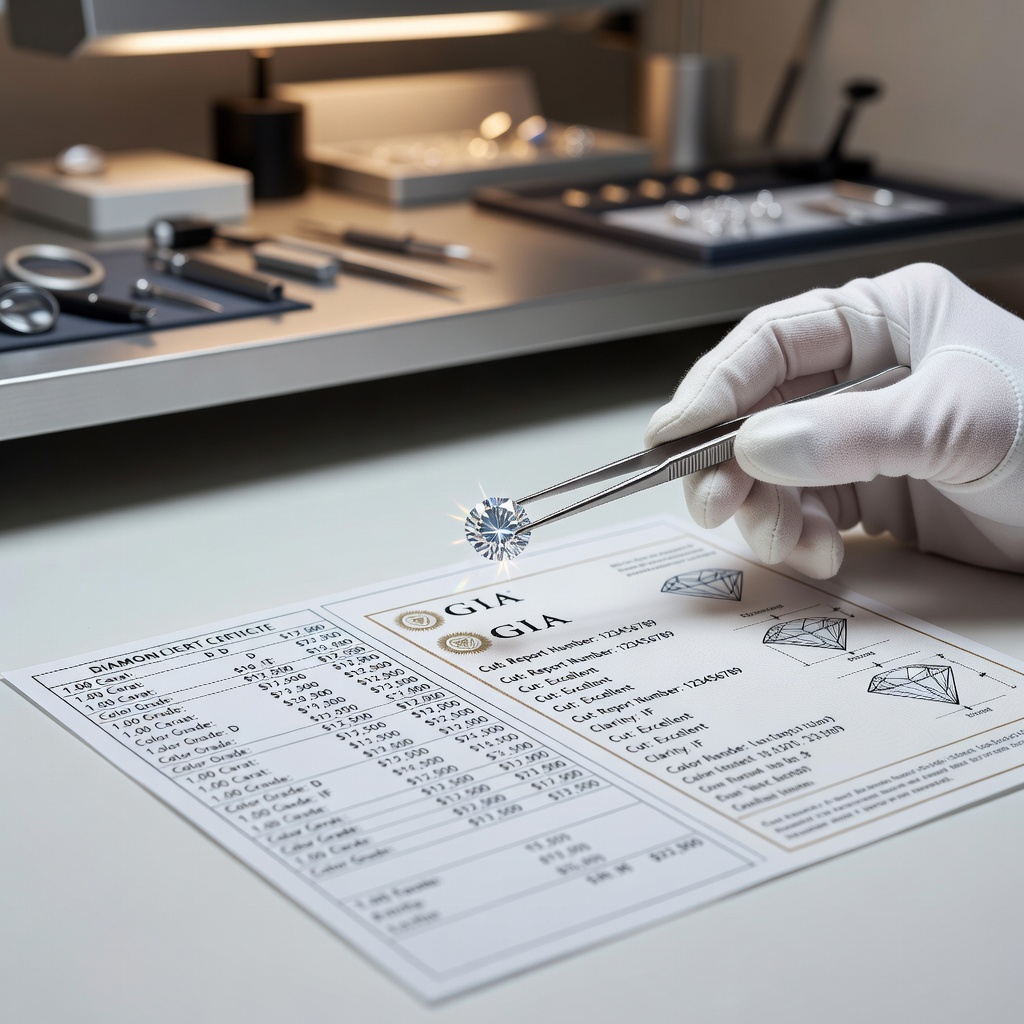
Before purchasing, match the report number on the certificate to the number inscribed on the diamond’s girdle if available. Verify the 4 Cs, measurements (to confirm face-up size), fluorescence, and any comments that may affect appearance, such as “clarity grade based on clouds not shown.” If the report includes a plot diagram, review inclusion placement to understand what might be visible and whether a setting can hide it. These checks take minutes and can prevent costly surprises.
It’s also smart to confirm that the seller’s listing exactly matches the report—especially carat weight to the hundredth, as small differences can affect pricing tiers. If buying online, request high-resolution images or videos and ask whether the stone is eye-clean at a normal viewing distance. If buying in-store, compare the diamond to others with similar specs to see whether it performs as expected. Certification is the baseline, but your own verification ties the paperwork to real-world appearance.
How Certification Affects Resale Value And Online Trust
Certified diamonds generally sell more easily and at stronger prices than uncertified stones because buyers can verify quality without relying solely on the seller’s word. In resale situations—such as upgrades, estate sales, or private transactions—a respected lab report reduces negotiation friction and lowers perceived risk. For online purchases, certification is often the difference between a confident decision and a leap of faith, since you may not see the diamond in person before it ships. As a result, diamond certification can influence both the upfront price and the long-term liquidity of the stone.
A practical example is the upgrade path offered by many retailers: they may require a GIA or AGS report for trade-in credit, or provide better terms when the diamond has a widely recognized certificate. If resale or upgrading matters to you, confirm those policy details before purchasing. Even if you plan to keep the diamond forever, a strong certificate serves as insurance documentation and can simplify appraisals. In short, certification is part of the diamond’s “financial identity,” not just a grading snapshot.
Real-World Buying Scenarios & Price Examples
Real budgets rarely align perfectly with “ideal specs,” so the best approach is to match diamond choices to your purpose: daily wear engagement ring, milestone anniversary piece, or an investment-oriented purchase. The question “how much is a diamond” is best answered through scenarios that include trade-offs, because there are many correct choices depending on what you value most. Engagement ring buyers often prioritize face-up presence and sparkle, while anniversary shoppers might prioritize upgrading size or improving color. Investors, when they participate at all, typically focus on rarity, documentation, and marketability.
Pricing ranges below are intentionally broad because market rates shift and because shape, cut precision, and certification can move numbers significantly. Use these scenarios as a framework to narrow your search filters and compare options using per-carat pricing logic. For each scenario, treat the diamond as one line item in the total project: setting style, metal choice, and customization can materially change the final spend. The most satisfied buyers plan the whole ring cost up front, not just the center stone.
Scenario 1: Engagement Ring On A Practical Budget
If your priority is a classic look with strong sparkle, consider a round or oval diamond just below a milestone weight, such as 0.90–0.99 carat. A common value combination is Excellent/Ideal cut (where applicable), near-colorless (around G–I), and eye-clean clarity (often VS2 or SI1 depending on the stone). This combination frequently delivers a “looks like one carat” presence without paying the full milestone premium. For engagement ring pricing, many buyers find this strategy maximizes visual impact where it matters most.
As an example approach, you might allocate most of the budget to the center stone and choose a simple solitaire setting in 14K gold to keep costs controlled. If you prefer more sparkle without increasing the center carat, a pavé band can add brilliance at a lower cost than jumping to the next carat tier. Ask the jeweler to show stones under different lighting and confirm the return policy if buying online. This scenario is ideal for buyers who want a strong ring presentation while maintaining financial flexibility.
Scenario 2: Anniversary Upgrade With Noticeable Size Increase
Anniversary upgrades often focus on a size jump that is clearly visible, such as moving from around 1.00 carat to the 1.20–1.50 range depending on budget. Because per-carat prices rise with size, value optimization becomes even more important; many buyers keep color and clarity in sensible “sweet spots” to afford the larger look. For instance, a well-cut 1.30 carat in the near-colorless range with eye-clean clarity can be more satisfying than a smaller stone with ultra-high color and clarity. The key is choosing a diamond that looks bright, faces up large, and fits the wearer’s lifestyle.
Setting choice plays a major role here: a halo can amplify perceived size, while a simple cathedral setting can make a larger center stone feel secure and balanced. If you’re upgrading, ask about trade-in or upgrade credit policies and whether they require certain certification labs. Also consider whether the recipient prefers a change in shape; switching from round to oval or elongated cushion can increase perceived size without increasing carat weight as much. This scenario works best when you plan the upgrade pathway and negotiate the total package, not just the diamond.
Scenario 3: Investment-Oriented Purchase With Resale In Mind
Diamonds are not a guaranteed investment, but if you’re purchasing with value retention as a priority, focus on liquidity and documentation. This typically means choosing a highly marketable shape (often round), top-tier cut performance, and strong diamond certification from a widely trusted lab. You may also prioritize higher color and clarity than a typical engagement purchase because rarity drives collector demand, though this comes with significantly higher pricing. In practice, investment-oriented buyers should be prepared for transaction costs and the possibility that resale offers will be below original retail pricing.
A practical example is selecting a stone with excellent cut, strong proportions, and a certificate that is easy for buyers to trust without additional verification. Keep all paperwork, ensure the report number matches any inscription, and consider an independent appraisal for documentation. If you plan to resell, buy from sources that operate transparently and avoid inflated “suggested replacement values.” This scenario is most viable for buyers who can access competitive pricing and who understand that patience and market timing can matter.
How Settings, Metal, And Customization Change Final Spend
Even when you’ve nailed the center diamond choice, the setting can shift the total cost meaningfully. Platinum typically costs more than 14K or 18K gold, and intricate designs with hand-setting, micro-pavé, or custom details add labor cost. Side stones and halos can increase sparkle and perceived size, but they also introduce additional quality decisions (matching color, clarity, and cut) that influence pricing. In other words, “engagement ring pricing” is as much about design complexity as it is about the center stone.
A practical budgeting method is to set a target split—many buyers aim to allocate the majority to the center diamond and reserve the remainder for the setting, taxes, and insurance. Ask for an itemized quote that includes the setting, center stone, side stones (if any), and any customization fees. If you’re working with a local jeweler, request CAD renderings and confirm timelines and revision policies. This prevents scope creep and ensures you’re comparing offers fairly across sellers.
Where To Buy: Online Marketplaces Vs. Local Jewelers
Where you buy can impact selection, price transparency, and the overall buying experience. Online retailers often provide large inventories, competitive pricing, and easy filtering by the 4 Cs, which can simplify comparison shopping for anyone using a Diamond Price Guide. Local jewelers offer hands-on viewing, personal service, and often better support for resizing, repairs, and long-term maintenance. The best choice depends on whether you value maximum selection and price efficiency or in-person guidance and aftercare.
Many successful shoppers use both channels strategically: they research online to understand fair pricing and specifications, then visit local stores to compare look and feel. This cross-checking approach can protect you from both overpaying in-store and under-evaluating a diamond online. If you treat the process like a two-step verification—digital research plus physical confirmation—you’ll typically end up with more confidence in the final purchase. This is a core tactic in any practical diamond buying guide.
Pros And Cons Of Online Retailers And Marketplaces
Online sellers often shine in price transparency, detailed filters, and broad inventory access, including niche specs that may be hard to find locally. Many provide high-quality videos, 360° views, and clear grading report links, which helps you compare diamonds efficiently. The trade-off is you may not see the diamond in person before purchase, and image quality can vary between sellers. Additionally, “marketplace” platforms may include multiple vendors, so return policies and service quality can differ from listing to listing.
A practical tip is to shortlist diamonds that share the same lab, similar cut quality, and similar proportions, then compare price per carat across those candidates. Read seller reviews beyond the platform if possible, and confirm whether the diamond is “in-house” or “virtual inventory,” as that can affect shipping time and inspection options. Always verify return windows, restocking fees, and who pays return shipping and insurance. This reduces the risk of a stressful return experience if the diamond doesn’t meet expectations.
Pros And Cons Of Brick-And-Mortar Jewelers
Local jewelers offer the advantage of seeing diamonds under real lighting and comparing several stones with your own eyes. This can be especially helpful when deciding between close color grades or assessing whether a clarity grade is truly eye-clean. Many stores also provide long-term services like cleaning, inspections, prong maintenance, and easy resizing. The downside is that selection may be limited, and pricing can be higher due to overhead and inventory carrying costs.
To shop smarter in-store, ask to see multiple diamonds that match your target specs and request the grading reports before you judge appearance. Bring notes from your online research, including typical per-carat pricing for similar grades, so you have a grounded basis for comparison. If a jeweler can’t provide a respected lab report or is reluctant to share details, treat that as a red flag. A reputable store should welcome an informed buyer and help you validate the choice.
Using Both Channels To Cross-Check Prices And Negotiate
A powerful strategy is to use online listings as a reference point when evaluating in-store quotes. If a local jeweler is priced higher, ask what value adds are included—such as better cut selection, superior setting craftsmanship, free lifetime maintenance, or a stronger upgrade policy. Conversely, if an online price looks unusually low, investigate why: weaker cut, less trusted certification, poor return policy, or missing details like fluorescence and proportions. Cross-checking makes it harder for you to be misled by incomplete comparisons.
As a practical example, you might select three comparable diamonds online (same shape, similar carat bracket, similar color/clarity, same lab) and calculate their average price per carat. Then you can ask a local jeweler whether they can source a similar stone and how close they can come to the benchmark, considering service and setting quality. This approach turns negotiation into a collaborative problem-solving conversation rather than a confrontation. It also keeps the focus on objective specifications and consumer protections.
Negotiation, Warranties, And Protecting Your Purchase
Negotiation is a normal part of diamond buying, especially in-store, and it often extends beyond the sticker price. Instead of asking only for a discount, you can negotiate for better value: upgraded setting details, free resizing, prong checks, extended warranties, or a stronger upgrade policy. A smart negotiation strategy is rooted in evidence—comparable pricing, clear specs, and an understanding of which features drive real value. This is where a structured diamond buying guide mindset pays off.
Protection matters just as much as negotiation because a diamond is a high-value, long-term purchase. Warranties, insurance, and documentation ensure you can maintain and verify the ring over time. The goal is to prevent problems like lost stones, unclear return conditions, or gaps between what was promised and what was delivered. A small amount of diligence up front can prevent expensive or emotional issues later.
Negotiation Strategies That Actually Work
Start by being specific: reference comparable diamonds by carat, lab, and grades, and ask whether the seller can match or narrow the gap. If the seller can’t lower the price, request added value such as a higher quality setting, complimentary engraving, or an upgrade to a better cut or fluorescence category. Timing can help; negotiating during slower retail periods may produce more flexibility. Keep the conversation focused on total package value, not just a single number.
A practical example is negotiating for a “better diamond at the same budget” by adjusting one C you won’t notice. For instance, you might accept a slightly lower clarity that remains eye-clean in exchange for a better cut grade or a slightly larger face-up measurement. Another effective tactic is asking for an all-in quote that includes taxes, setting, and any side stones, so you can compare sellers fairly. Clear, itemized numbers reduce misunderstandings and give you leverage to choose the best overall offer.
Warranties, Insurance, Buyback, And Upgrade Policies
Warranties vary widely: some cover manufacturing defects only, while others include routine maintenance like prong checks and tightening. Insurance is typically separate and can protect against loss, theft, or accidental damage—critical for daily wear engagement rings. Upgrade policies can be valuable if you expect to trade up in the future, but they often require the original certificate, condition checks, and sometimes a minimum upgrade amount. Buyback programs can sound appealing but may come with strict terms and lower-than-expected payout percentages.
As a practical checklist, ask the seller to put policy details in writing: return window length, restocking fees, whether returns require the original packaging, and how upgrades are valued. If a retailer offers “lifetime” coverage, clarify what “lifetime” means and what actions might void coverage, such as third-party resizing. Also consider an independent appraisal for insurance purposes, especially if your insurer requires it. Strong policies can justify a slightly higher price because they reduce long-term risk.
Final Purchase Protection Checklist
Before you finalize payment, verify that the diamond matches the grading report and that the report number is correct. Confirm the itemized receipt includes the diamond’s full description (carat, shape, color, clarity, cut, lab, and report number) and the setting details (metal type, total weight, side stone specs). If the diamond has a laser inscription, ask to see it under magnification and confirm it matches the certificate. These steps protect you if you ever need to return, insure, upgrade, or resell the ring.
It’s also wise to confirm shipping insurance and delivery procedures for online purchases, including signature requirements. If buying in-store, request a copy of the certificate and any appraisal documents before leaving, not “later by email.” Keep all paperwork in a safe place, and store digital backups as well. This documentation is part of the value of the purchase and supports everything from insurance claims to future upgrades.
Tips To Maximize Value And Avoid Overpaying
Maximizing value is about paying for what you can see and what the market rewards, not what sounds impressive on paper. The biggest wins usually come from avoiding milestone premiums, prioritizing cut quality, and selecting color and clarity grades that look great in real life. When you’re choosing a diamond, small spec adjustments can unlock meaningful savings without sacrificing beauty. The goal is a diamond that looks exceptional on the hand and holds up well under scrutiny—without paying for invisible upgrades.
Think of your decision as a balance between appearance, documentation, and total ownership cost. A diamond that’s slightly smaller but beautifully cut may look more brilliant than a heavier stone with weaker proportions. Similarly, a strong lab report can protect you from overpaying for inflated grades. Combine these principles with disciplined comparison shopping, and you’ll have a much clearer view of fair market value.
Choose Off-Milestone Carat Weights
One of the simplest ways to reduce cost is to buy just under common thresholds like 0.50, 0.75, and 1.00 carat. Because diamond price per carat often jumps at these milestones, a 0.98 carat diamond may cost noticeably less than a 1.00 while looking extremely similar once set. This is especially true in shapes that face up large for their weight, such as ovals. If your budget is tight, off-milestone shopping can be the difference between compromising on cut and getting a diamond that truly shines.
As a practical example, set your search filter to 0.90–0.99 for a “one carat look,” then compare the best cuts within that range. Ask sellers for measurements in millimeters, since face-up size is what people actually perceive. If two diamonds are close in mm size, you may be paying extra mostly for the label. This tactic is one of the most consistent ways to improve value without regret.
Prioritize Cut Over Color (In Most Cases)
Cut often delivers the biggest visible improvement, especially in round diamonds where excellent light performance creates standout sparkle. Many buyers pay extra for higher color grades expecting a whiter look, but then choose a mediocre cut that reduces brilliance. A bright, well-cut diamond can appear whiter and more lively than a poorly cut diamond with better paper grades. If you want the “wow” effect, put cut at the top of your priority list.
A practical approach is to set a minimum cut standard (such as Excellent/Ideal where available) and then adjust color and clarity within acceptable visual limits. For example, if moving from F to H allows you to upgrade from Very Good cut to Excellent cut, the result may look better in everyday wear. Also consider the metal: yellow or rose gold can make near-colorless choices look very white. This strategy frequently produces a better overall ring experience at the same total cost.
Use Design Choices To Increase Visual Impact
If you want more finger coverage without paying the premium for a larger center stone, consider design solutions. Halos, tapered baguette sides, or pavé bands can boost sparkle and perceived size with controlled cost. Certain shapes like oval, marquise, and pear also tend to look larger than round diamonds of the same carat weight because of their elongated outlines. These options can help you meet aesthetic goals without chasing expensive weight jumps.
As a practical example, a 0.90 carat oval in a delicate halo can present a bold look comparable to a heavier solitaire, depending on proportions. If you prefer a classic style, a thin band and a high-quality cut can make the center stone stand out more than a thicker, heavier setting. Ask to try similar rings on the hand, because perception changes dramatically based on finger size and setting style. This is one of the most effective levers for balancing budget and beauty.
Final Checklist For Comparing Offers And Confirming Fair Value
Before committing, compare at least three diamonds with similar lab certification, carat bracket, and cut quality, then evaluate price per carat and overall appearance. Confirm the return policy, warranty terms, and whether the seller provides aftercare services like inspections and cleaning. Review the grading report details, including measurements, fluorescence, and any comments that could affect transparency or sparkle. If anything is unclear, ask questions until you can explain the pricing difference in plain language.
As a practical workflow, build a one-page summary for each finalist: total price, price per carat, 4 Cs, lab, key proportions, and seller protections. This prevents “analysis drift” where emotions override comparisons after you see a diamond you like. If two options are close, choose the one with stronger cut performance and better documentation. That combination tends to deliver the best long-term satisfaction and the most defensible price.
Frequently Asked Questions
What Is The Average Diamond Price Per Carat?
The average price per carat varies widely by quality; lower-quality stones can be a few thousand per carat while high-quality diamonds can cost tens of thousands per carat. Use price charts and the 4 Cs to estimate. Comparing diamonds by certification and cut quality will make your per-carat comparisons much more accurate.
How Do The 4 Cs Affect Diamond Price?
Carat influences size-based price jumps, cut affects sparkle and can command premiums, and color and clarity shifts change price in predictable bands. Small improvements in any C can lead to significant price increases. The best value usually comes from prioritizing cut and choosing near-colorless and eye-clean ranges for color and clarity.
Does Diamond Certification Change The Price?
Yes. Certificates from top labs (GIA, AGS) usually add buyer confidence and can raise resale value; uncertified stones or reports from lesser-known labs often sell for less. Certification also makes it easier to compare offers and verify that the stone matches the listing details.
Should I Buy A Diamond Online Or In-Store?
Both options work. Online often offers better prices and selection, while in-store lets you inspect stones in person. Verify certificates, return policies, and seller reputation regardless of channel, and consider using both methods to cross-check pricing and quality.
How Can I Avoid Overpaying For A Diamond?
Compare per-carat prices, prioritize cut, look for off-milestone carat weights (e.g., 0.95 vs 1.00), verify certification, and get quotes from multiple sellers before deciding. Also confirm eye-clean clarity rather than paying for ultra-high clarity grades that may not look different in daily wear.
Are Diamonds A Good Investment?
Diamonds are not guaranteed investments. While high-quality, rare stones can hold value, most diamonds depreciate compared to retail price. If investing, focus on top-quality, certified stones and trusted markets, and understand that resale offers may be lower than expected.
What Additional Costs Should I Expect Beyond The Diamond Price?
Expect costs for the ring setting, metal, customization, taxes, insurance, appraisal, and possibly certification or regrading fees. Factor these into your total budget so you can compare complete ring quotes fairly. Planning for these extras also helps you avoid compromising on diamond quality at the last minute.