Diamond Care And Cleaning: The Complete Guide To Long-Lasting Sparkle
Diamonds are famously durable, but “durable” is not the same as “maintenance-free.” Over time, everyday oils, lotions, soap film, and dust build up on the stone and in the setting, reducing the sparkle you expect from a well-cut diamond. Diamond Care and Cleaning is really a combination of safe at-home habits, smart cleaning methods, and periodic professional checks that protect both the diamond and the jewelry holding it.
This guide walks you through practical, proven ways to maintain brilliance at home, avoid common damage risks, and know when to bring your jewelry to a jeweler. You’ll also learn how different settings and metals affect your choices, and how to adapt your routine for rings, earrings, and necklaces. If you’ve ever wondered why your diamond looks dull even though it’s “clean,” the steps below will help you troubleshoot and restore shine.
Why Proper Diamond Care Matters
Even the most brilliant diamond can look flat when it’s coated with residue. Skin oils, sunscreen, hairspray, and hand lotion create a thin film on the diamond’s surface, and that film blocks light from entering and reflecting back properly. The result is less fire and brilliance—often the first sign people notice that they need better diamond maintenance.
Neglect can also affect the jewelry itself. Dirt and grime collect under prongs and around the gallery, and that buildup can hide early warning signs like worn prongs or small cracks in the metal. For example, a ring worn daily can slowly develop thin or snag-prone prongs; if you only notice once a stone feels loose, you’re already at higher risk of losing it. The goal of Diamond Care and Cleaning is to keep your jewelry looking bright, protect the setting, and catch small problems before they become expensive repairs.
Understand Your Diamond And Its Setting
Knowing how to care for diamonds starts with separating “stone care” from “setting care.” The diamond itself is highly resistant to scratching, but the setting—prongs, bezels, and channel walls—can wear down, bend, or loosen over time. Many cleaning issues aren’t about the diamond at all; they’re about grime trapped in the setting or damage caused by harsh cleaning methods that weaken metal or dislodge small accent stones.
Setting style changes how you should clean. Prong settings expose more of the diamond, so they tend to sparkle well but collect residue underneath and can snag; cleaning requires getting under the stone gently with a soft brush. Bezel settings are more protective but can trap soap film around the edge where the metal meets the diamond, so rinsing thoroughly is essential. Channel and pavé settings often include many small stones; aggressive brushing or powerful ultrasonic cycles can loosen tiny stones if the setting is worn.
Metal type matters in jewelry care as well. Platinum is tough and less prone to losing metal, but it can still develop micro-scratches and a patina that makes the piece look less bright. Gold (especially 14k and 18k) can wear at prong tips over time, and chlorine exposure can be particularly unkind to certain gold alloys. If you’re cleaning diamond jewelry frequently, gentler methods plus regular inspection help preserve both the diamond and the metalwork.
Daily Habits To Preserve Sparkle
The easiest diamond cleaning tips start with preventing buildup in the first place. Put jewelry on after applying lotion, sunscreen, perfume, or hairspray, and take it off before household cleaning to keep chemicals and grime away from the setting. It’s also wise to remove rings during sports, weightlifting, gardening, and cooking messy foods—activities that cause impact, abrasion, or heavy residue under the stone.
Build a simple end-of-day ritual if you wear diamonds frequently. Wipe the diamond and metal gently with a clean, soft microfiber cloth to remove oils before you store it, especially after a long day. Store jewelry in a way that prevents pieces from rubbing together; diamonds can scratch other gemstones and even other diamonds if they knock repeatedly. These small habits reduce how often you need deep cleaning and help your jewelry look consistently bright.
Quick routine checks can prevent a sudden loss. Once or twice a week, hold the ring near your ear and gently tap it with your finger; a faint rattle can suggest a loose stone (stop wearing it and have it checked). Look for prongs that appear lifted, snag on fabric, or look uneven compared to the others. These simple observations are a practical part of how to clean diamonds safely because cleaning is most effective when the setting is secure.
Safe Home Cleaning Methods
For most pieces, the safest way to handle Diamond Care and Cleaning at home is a gentle soap-and-water method. This approach removes oils and residue without exposing the setting to harsh chemicals or abrasion. It’s especially useful for cleaning a diamond ring that’s worn daily, where lotion and soap film can quickly dull the stone.
Step-By-Step: Gentle Diamond Cleaning At Home
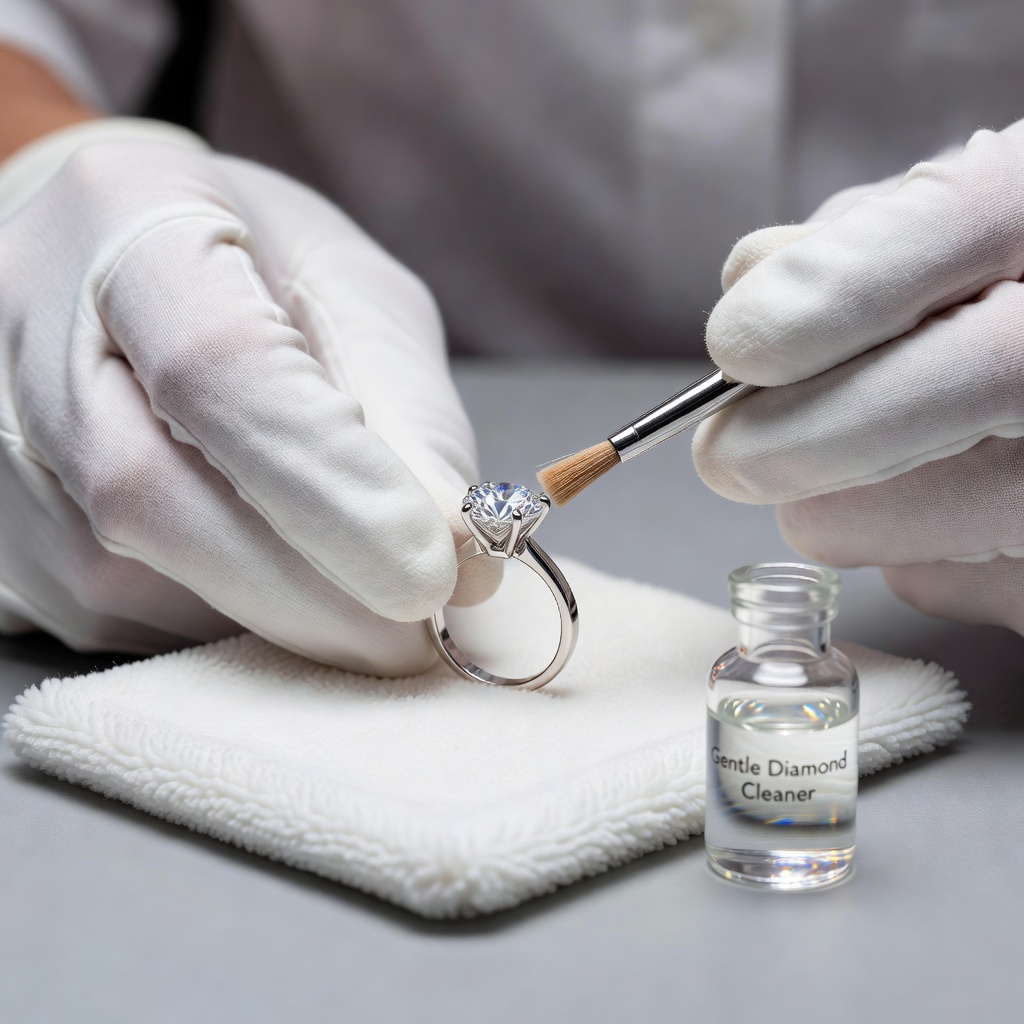
Start with a small bowl of warm (not hot) water and add a few drops of mild dish soap. Place the jewelry in the solution for about 15–20 minutes to soften oils and grime, then use a very soft toothbrush or a designated soft jewelry brush to clean around the diamond and under the setting. Focus on the underside (the area that touches skin) because that’s where residue builds fastest and blocks light.
Rinse thoroughly under lukewarm running water, ideally with a strainer or a plugged drain to prevent accidents if the piece slips. Any soap left behind can create a film that makes diamonds look cloudy, so take your time here. Pat dry with a lint-free cloth and let the piece air-dry fully before storing; moisture trapped in crevices can attract more dirt and make metal look dull over time.
What To Avoid When You Clean Diamonds
Avoid harsh chemicals like bleach, chlorine, acetone, and strong solvents, especially around the setting. While diamonds are resilient, the metal and any accent stones may not be, and chemical exposure can weaken prongs or damage finishes. Also avoid abrasive toothpaste, baking soda scrubs, and rough cloths that can scratch metal and create a worn look that makes the entire piece appear less bright.
If you’re cleaning different cuts and styles, adjust your technique instead of increasing force. For example, princess and emerald cuts can show smudges and film more quickly due to larger facets, so thorough rinsing and drying matter more than scrubbing harder. For halo and pavé styles, use light strokes and let soaking do most of the work, so you don’t snag or stress delicate bead-set stones.
Using Ultrasonic And Steam Cleaners — Risks And Benefits
Ultrasonic and steam cleaning can be effective, but they aren’t universal solutions. An ultrasonic cleaner uses vibrations to shake loose debris from hard-to-reach places, which can be helpful when cleaning diamond rings with intricate galleries. However, ultrasonic cleaner diamonds guidance depends heavily on the condition of the setting and the presence of other stones.
Ultrasonic cleaning can be harmful if your jewelry has loose prongs, thin metal, older settings, or many small accent stones. The vibration may worsen existing looseness and cause stones to fall out—especially in pavé, micro-pavé, or channel settings that have experienced wear. A practical rule: if you haven’t had the setting inspected recently, don’t assume ultrasonic is safe, even if the center diamond itself is strong.
Steam cleaning is commonly used by jewelers and can remove stubborn buildup quickly. It’s often safe for diamonds in solid settings, but it can be risky for heat-sensitive or porous gemstones, and it can force debris deeper if the piece is already compromised. If you’re deciding between a home ultrasonic device and professional services, choose professional cleaning when the jewelry is valuable, has multiple stones, is antique, or shows any sign of looseness. In those cases, a jeweler can inspect first, then use the safest method for that specific piece.
Cleaning Different Jewelry Types (Rings, Earrings, Necklaces)
Jewelry care works best when you match the cleaning method to how the item is worn and constructed. Rings collect the most oils and grime because they touch skin and surfaces all day, while earrings often collect hairspray and skincare residue. Necklaces can build up film near the clasp and along areas that sit on the skin, and delicate chains require a gentler approach to avoid kinks or stretching.
Rings: Deep Cleaning Where Grime Hides
Cleaning a diamond ring effectively means focusing under the stone and around prongs, where hand lotion and soap accumulate. Soaking and gentle brushing are usually enough, but repeat the soak if the ring has been worn daily for weeks without cleaning. As a practical tip, clean rings at night rather than right before going out, so you can allow full drying time and reduce the chance of slipping a damp ring off at a sink.
For cluster, halo, and pavé rings, use especially light pressure and a soft brush angle. Instead of scrubbing across the top where small stones are set, brush from the side and underside to avoid catching prongs or beads. If you notice any “snagging” on fabric after cleaning, stop wearing the ring and schedule an inspection, since that can indicate a prong has lifted.
Earrings: Small Parts, Big Residue
Studs and small hoops can accumulate product buildup on posts and backs, which can lead to dull appearance and discomfort. Soak earrings briefly, then brush gently around the setting and along the post, and rinse thoroughly. Dry completely before wearing; moisture trapped behind earlobe contact points can attract more debris and reduce shine.
If you have screw backs or intricate settings, consider using a soft cloth wipe between deeper cleanings. A practical example: if you use hairspray daily, wiping studs once a week can dramatically reduce film so you don’t need aggressive cleaning later. For any earrings with gemstone accents (not just diamonds), confirm those stones are safe for your chosen method before using ultrasonic or steam.
Necklaces And Bracelets: Gentle On Chains And Clasps
Chains can tangle or weaken if handled roughly, so avoid vigorous brushing on delicate links. Instead, soak the necklace, then use a soft brush only on the diamond setting and around the clasp where residue accumulates. Rinse with care, supporting the chain so it doesn’t whip against the sink and kink.
For mixed-metal pieces, rinse thoroughly and dry well to prevent water spots and dullness that can mask the diamond’s brightness. If the necklace includes other gemstones, choose the mild soap method and avoid heat or chemicals unless you’re certain all materials are compatible. When in doubt, professional cleaning is a safer choice than risking damage to a multi-material piece.
Storage And Travel Tips To Prevent Damage
Diamond maintenance isn’t just about cleaning; it’s also about preventing scratches, loosening, and accidental loss when the jewelry is off your body. Store each piece separately, ideally in individual soft pouches or in a compartmentalized jewelry box so items don’t rub together. Diamonds can scratch other gemstones and can also abrade metal surfaces, so “one pile on a dresser” is a common cause of cosmetic wear.
For at-home storage, consider anti-tarnish cloth or lined compartments, especially for silver accents or mixed-metal designs that can discolor and make the piece look less crisp. Keep jewelry away from bathroom humidity and away from cleaning supplies, perfumes, and chlorine-based products. A simple, practical tip is to create one consistent storage spot (like a small box in a bedroom drawer), which reduces rushed, forgetful placement near sinks where pieces can fall or get splashed with chemicals.
For travel, use a zippered case with individual sections or a travel roll that prevents pieces from moving. Pack diamond rings so the setting doesn’t snag fabrics and prongs aren’t pressed against hard surfaces; using a dedicated ring slot is ideal. Avoid leaving jewelry in hot cars or near extreme temperature changes, and never place diamonds loose in a pocket or toiletry bag where friction and impact can damage the setting or cause loss.
When To Seek Professional Inspection And Repair
Even with great at-home Diamond Care and Cleaning, professional inspection is a key part of diamond maintenance. You should see a jeweler if the stone feels loose, if prongs look uneven or snag, if the ring looks dull immediately after home cleaning, or if you notice chips, cracks, or changes in how the stone catches light. Professional tools and magnification can reveal wear that’s easy to miss at home.
During a professional cleaning and inspection appointment, a jeweler typically checks prong integrity, tightness of stones, wear on the shank, and the overall condition of the setting. They may use ultrasonic or steam cleaning as appropriate, followed by polishing the metal if needed to restore shine. A practical case example: a ring that still looks cloudy after soap-and-water cleaning often has compacted residue under the stone; professional cleaning can remove buildup from tiny crevices that a home brush can’t reach.
How often you should schedule checks depends on wear. For daily-wear engagement rings, a professional inspection every 6–12 months is a common recommendation, and more often if you have pavé or a delicate setting. For occasional-wear pieces, annual checks may be enough, especially if they’re stored properly and cleaned gently before and after use. If you’ve recently had resizing or repair work, an extra check shortly afterward can confirm stones remained secure.
Common Mistakes To Avoid And Quick Troubleshooting
One of the biggest mistakes in how to clean diamonds is treating them like indestructible objects rather than precision-set jewelry. Avoid harsh household chemicals, abrasive cloths, and “DIY hack” cleaners that can scratch metal or weaken prongs. Also avoid trying to bend prongs back, glue stones, or tighten settings yourself; these DIY repairs often create bigger problems and increase the chance of losing a diamond.
If your diamond looks cloudy after cleaning, troubleshoot systematically. First, re-rinse thoroughly to remove soap film, then dry with a lint-free cloth and inspect under bright light. If cloudiness persists, it could be residue trapped beneath the stone, product buildup from heavy lotions, or simply metal dullness around the setting making the diamond appear less lively; a jeweler’s steam cleaning and inspection can often solve this quickly.
If you suspect a chipped stone or feel a loose setting, take “safe emergency” steps immediately. Stop wearing the piece, place it in a soft pouch or small box, and store it somewhere secure until you can see a jeweler. If a stone is lost, keep the jewelry and any fragments you find, and avoid further handling that could distort the setting; a jeweler can assess whether the mounting can be repaired and matched with a replacement diamond.
FAQ
How Often Should I Clean My Diamond Jewelry At Home?
For regular wear, clean your diamonds at home every 1–2 weeks with warm water, mild dish soap, and a soft brush to maintain sparkle and remove oils and residue. If you use a lot of lotion or hair products, you may benefit from a quick weekly wipe with a microfiber cloth between deeper cleanings. Keeping a consistent schedule also helps you spot early signs of loosening or wear.
Is It Safe To Use An Ultrasonic Cleaner On My Diamond Ring?
Ultrasonic cleaners can be safe for solid diamonds but may loosen delicate settings or damage accent stones; consult your jeweler if your piece has fragile settings or other gemstones. If the ring is older, has pavé, or hasn’t been inspected recently, professional cleaning is typically safer. When in doubt, use the gentle soap-and-water method at home.
Can I Use Commercial Jewelry Cleaners On Diamonds?
Many commercial cleaners are safe, but check labels for harsh chemicals like bleach or ammonia; choose products formulated for diamonds and follow instructions carefully. Avoid anything that recommends aggressive scrubbing or has gritty textures that can scratch metal. If your piece includes other gemstones, verify the cleaner is safe for all materials, not just diamonds.
How Do I Store Diamond Jewelry To Prevent Scratches And Damage?
Store each piece separately in soft pouches or compartmentalized boxes, avoid piling items together, and keep diamonds away from abrasive surfaces and harsh chemicals. Diamonds can scratch other jewelry, so separation is key. For travel, use a secure case with individual sections to prevent movement and snagging.
Will Professional Cleaning Make My Diamond Look Different Than Home Cleaning?
Yes — professional cleaning (including steam or ultrasonic at a jeweler) and polishing can remove deeper buildup and restore brilliance more thoroughly than typical home methods. Jewelers also clean areas that are hard to reach safely at home, such as tight galleries and behind certain settings. An added benefit is that professional cleaning usually includes an inspection for loose stones and worn prongs.
What Should I Do If My Diamond Becomes Loose Or A Prong Breaks?
Stop wearing the piece and take it to a reputable jeweler immediately to secure the stone and repair the setting; avoid attempting DIY fixes that can cause loss of the stone. Place the jewelry in a small box or soft pouch to prevent further damage while you transport it. If a stone falls out, keep the setting and any recovered stone together for evaluation.
Are There Cleaning Methods To Avoid For Diamond Rings With Other Gemstones?
Yes — softer or porous gems (e.g., opal, pearl, emerald) can be damaged by ultrasonic, steam, or harsh chemicals; use gentle cleaning methods or consult a jeweler for mixed-piece care. The mild soap-and-water method is a safer default for multi-stone jewelry, provided you use a soft brush and rinse well. If you’re unsure what accent stones you have, a jeweler can identify them and recommend safe options.
Does Swimming In A Pool Or Hot Tub Harm Diamonds?
The diamond itself resists chlorine, but chlorine can weaken certain metal settings over time; remove diamond jewelry before swimming to protect the mounting and reduce chemical exposure. Pools and hot tubs also increase the chance of loss due to cold water shrinkage and slippery fingers. Taking jewelry off before swimming is one of the simplest long-term diamond maintenance habits.