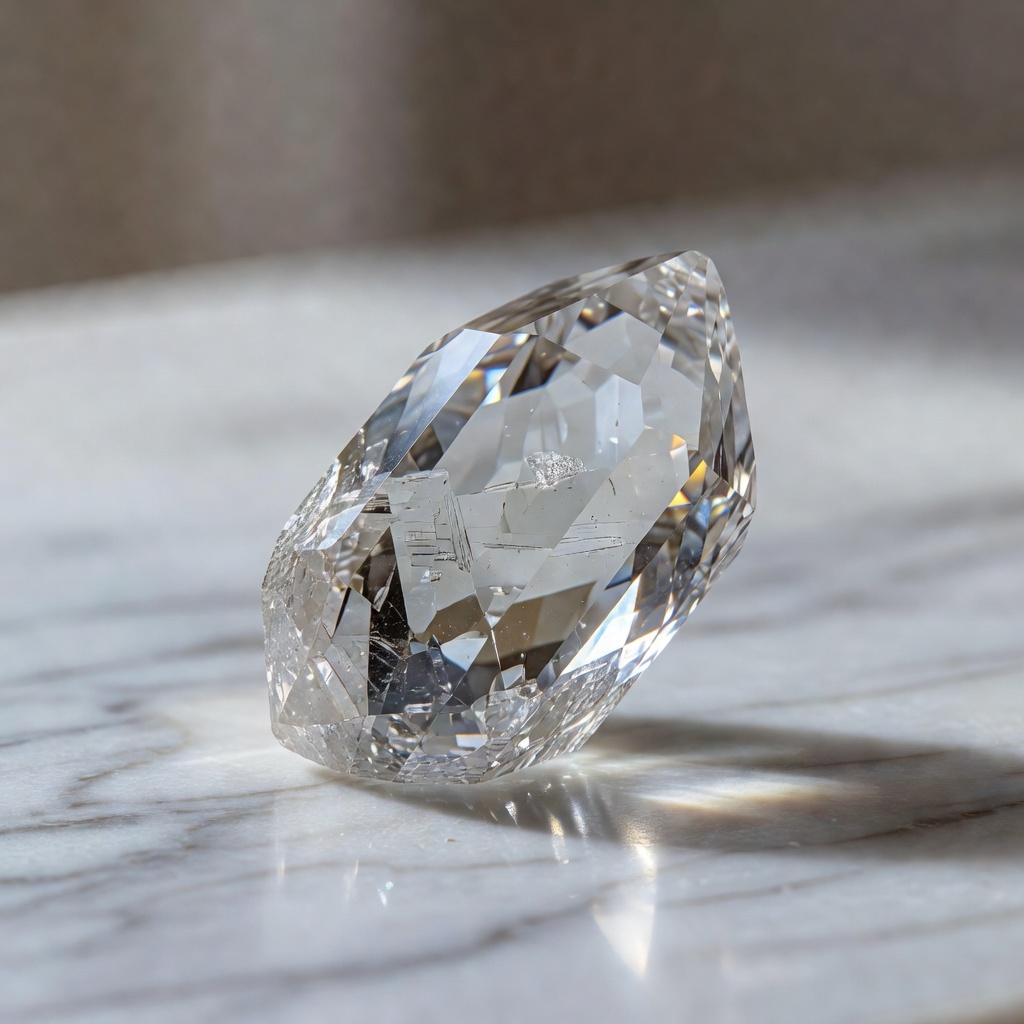
What Is Danburite? An Introduction to This Rare Crystal
Danburite stands as one of the most spiritually significant yet underappreciated gemstones in the mineral kingdom, offering collectors and healers alike a unique combination of aesthetic beauty and metaphysical potency. This calcium borosilicate mineral, chemically composed of calcium, boron, silicon, and oxygen, crystallizes in the orthorhombic system to form prismatic structures that captivate both scientific minds and spiritual seekers. The Danburite crystal meaning extends far beyond its chemical composition, encompassing themes of angelic communication, heart-centered healing, and spiritual enlightenment that have made it increasingly popular among modern crystal enthusiasts.
The history of this remarkable mineral dates back to 1839 when American mineralogist Charles Upham Shephard first identified distinctive crystals in Danbury, Connecticut, subsequently naming the mineral after its type locality. While the original Connecticut deposits have long since been depleted, the name has persisted to describe this exceptional stone found in various locations worldwide. Unlike many minerals that present in limited color ranges, Danburite offers remarkable diversity in its visual presentation, occurring in transparent to translucent specimens ranging from water-clear and milky white to pale yellow, delicate pink, and even rare brownish hues that collectors prize for their earth-toned warmth.
When examining high-quality specimens, particularly those from Charcas, Mexico, one immediately notices the exceptional clarity and vitreous luster that distinguish premium Danburite from similar-looking minerals. The crystal's natural transparency allows light to pass through with minimal interruption, creating an optical purity that gem cutters value for faceted jewelry pieces. Whether you encounter a raw, terminated crystal with its characteristic chisel-like ends or a brilliantly faceted gemstone set in fine jewelry, understanding the fundamental Danburite properties and information helps distinguish this stone from lookalikes such as quartz, topaz, or calcite that share visual similarities but possess distinctly different mineralogical characteristics.
Geological Origins and Formation of Danburite
Understanding the geological genesis of Danburite provides crucial context for appreciating why this mineral remains relatively scarce in the collector's market compared to more common crystals like quartz or amethyst. This mineral typically forms under specific geological conditions within high-temperature metamorphic rocks and complex pegmatite deposits, environments where boron-rich fluids interact with calcium-bearing minerals under intense pressure and heat. These formation conditions limit Danburite's occurrence to specific geological settings, making significant deposits rare and geographically scattered across the globe.
Modern mining operations have identified several world-class localities that produce specimens of varying qualities and characteristics. The Charcas mining district in San Luis Potosí, Mexico, currently represents the premier source for transparent, gem-quality Danburite crystals, often producing colorless to pale yellow specimens with exceptional clarity and size. Madagascar yields distinctive pink and peach-colored varieties that command premium prices due to their rarity and aesthetic appeal. Other significant deposits include Mogok, Myanmar (Burma), famous for its gemstone-rich geological environment, and several localities throughout Japan where Danburite occurs in association with unique mineral assemblages. Each location imparts subtle variations in crystal habit, coloration, and associated minerals that experienced collectors use to identify specimen provenance.
In its natural environment, Danburite frequently associates with a distinctive suite of minerals that provide important clues for field identification and collection. It commonly occurs alongside black tourmaline (schorl), fluorite in various colors, calcite, quartz, and occasionally rare earth minerals. These associations prove particularly valuable for mineralogists and prospectors searching for new deposits, as the presence of tourmaline and fluorite often indicates the boron-rich environments favorable for Danburite crystallization. When examining specimens from these localities, collectors should examine the matrix material carefully, as well-formed Danburite crystals perched on contrasting matrix rock create display pieces that showcase both the primary mineral and its geological context, significantly enhancing the specimen's scientific and aesthetic value.
Physical and Chemical Properties of Danburite
The Danburite physical properties establish this mineral as an exceptional candidate for both mineralogical study and jewelry applications, offering durability and optical characteristics that rival more commonly known gemstones. With a Mohs hardness rating between 7 and 7.5, Danburite possesses sufficient durability for daily wear in rings, pendants, and earrings, resisting scratching from everyday contact while remaining workable enough for skilled lapidaries to facet into brilliant cuts. This hardness level places it between quartz (7) and topaz (8), making it harder than many popular gemstones including opal, pearl, and peridot, yet not so hard as to present significant cutting challenges for experienced gem cutters.
Crystallographically, Danburite belongs to the orthorhombic crystal system, typically forming prismatic crystals with distinctive wedge-shaped or chisel-like terminations that serve as diagnostic identification features. These terminations often display complex pyramidal forms with multiple faces meeting at sharp angles, creating the characteristic "spear point" appearance that distinguishes Danburite from the hexagonal terminations of quartz or the basal cleavage of calcite. The specific gravity of Danburite ranges from 2.97 to 3.02, giving it a substantial "heft" when held in the hand compared to similarly sized quartz specimens (specific gravity 2.65), a tactile difference that experienced collectors often use for preliminary field identification.
One of the most fascinating diagnostic properties of Danburite involves its reaction to ultraviolet light, displaying distinctive fluorescence that varies by locality and chemical composition. Most specimens exhibit a bright blue to white luminescence under short-wave ultraviolet light, though some Mexican material shows cream or yellowish fluorescence, while certain pink specimens from Madagascar may appear inert or show weak responses. This fluorescence property proves invaluable for Danburite gemstone identification, particularly when distinguishing it from non-fluorescent lookalikes such as white topaz or colorless quartz. Additionally, Danburite typically shows perfect cleavage in one direction and good cleavage in another, meaning that while durable for jewelry, rough specimens require careful handling to prevent cleaving along these natural planes of weakness.
Danburite Healing Properties and Metaphysical Benefits
Within the realm of crystal healing and energy work, Danburite healing properties have earned this stone recognition as one of the premier minerals for emotional rehabilitation and spiritual evolution. Practitioners consistently report that Danburite carries an exceptionally high vibrational frequency that facilitates the release of deeply buried emotional trauma, chronic anxiety, and unresolved grief without the overwhelming intensity sometimes associated with other powerful healing stones. Unlike grounding stones that work slowly through physical stabilization, Danburite operates primarily on the higher chakras and subtle bodies, creating a sense of lightness and liberation as it helps release attachments to past pain and limiting belief systems.
From a spiritual perspective, Danburite has gained significant reputation as a stone of angelic communication and interdimensional connection. Many metaphysical practitioners place Danburite on their altars or meditation spaces specifically to facilitate contact with guardian angels, spirit guides, and ascended masters, reporting that the stone creates a "celestial gateway" that enhances intuitive reception and spiritual downloads. This property makes it particularly valuable for those engaged in channeling work, automatic writing, or deep meditative practices aimed at accessing higher states of consciousness. The stone's energy signature resonates with the pure white light of spiritual truth, helping to cut through illusion and reveal the highest path forward in any situation.
On the mental and intellectual planes, Danburite serves as an exceptional ally for students, researchers, and decision-makers requiring enhanced clarity and focus. The stone's energy promotes organized thinking, improved memory retention, and the ability to process complex information without becoming overwhelmed by details. Business professionals often keep Danburite on their desks to support strategic planning and ethical decision-making, as the stone is said to align intellectual pursuits with heart-centered wisdom, ensuring that choices benefit all stakeholders rather than serving narrow self-interest. Whether used during meditation, carried as a pocket stone, or placed in study environments, Danburite creates a mental atmosphere conducive to breakthrough insights and inspired solutions to persistent problems.
Danburite and Chakra Alignment: Heart and Crown Connection
As a Danburite chakra stone, this crystal occupies a unique position in energy healing modalities due to its ability to simultaneously activate and align both the heart chakra (Anahata) and the crown chakra (Sahasrara), creating a seamless energetic bridge between human love and divine consciousness. The heart chakra resonance focuses specifically on unconditional love, compassion, and emotional healing, helping practitioners move beyond conditional love based on reciprocity toward a more expansive, universal love that encompasses all beings. When placed over the heart center during meditation or energy work, Danburite gently dissolves protective armor built around the heart due to past betrayals or emotional wounds, restoring trust and openness without compromising healthy boundaries.
Simultaneously, Danburite exerts powerful influence over the crown chakra, the energy center associated with spiritual enlightenment, divine connection, and higher consciousness. Unlike some crown chakra stones that can create ungrounded, spacey sensations, Danburite maintains a heart-centered anchor that keeps spiritual experiences integrated with emotional reality. This dual action proves particularly valuable for spiritual practitioners who seek to embody their highest wisdom in everyday relationships and practical matters, rather than escaping into ethereal realms disconnected from human experience. The stone facilitates what many traditions call "descent of grace," bringing higher spiritual insights down into physical manifestation through the heart center.
The bridging energy between these two chakras creates what crystal healers term "compassionate wisdom" or "enlightened love," a state of being where spiritual understanding directly informs emotional responses and relationships. This makes Danburite an exceptional stone for spiritual teachers, healers, counselors, and anyone in service-oriented professions who must balance deep spiritual insight with empathetic human connection. Advanced practitioners often use Danburite in layouts that run energy from the crown down through the heart and into the earth star chakra, creating a complete circuit that grounds celestial energy into practical, loving action. Regular work with this stone can result in a profound integration of spiritual and emotional selves, eliminating the sense of separation between "higher" spiritual pursuits and "lower" human emotions.
How to Identify Genuine Danburite: Tips and Tricks
Accurate Danburite gemstone identification requires attention to specific mineralogical characteristics that distinguish authentic specimens from common lookalikes such as quartz, topaz, calcite, or even glass imitations. The most reliable visual indicator involves examining the crystal terminations, which consistently display characteristic chisel-like or wedge-shaped formations resulting from Danburite's orthorhombic crystal system. These terminations differ distinctly from the six-sided pyramidal points of quartz or the flat basal terminations of calcite, instead showing complex multi-faceted ends that resemble sharpened pencil points or small spearheads. When examining rough specimens, look for these distinctive terminations combined with vertically striated prism faces that run the length of the crystal.
Hardness testing provides another crucial diagnostic tool for separating Danburite from softer imitations or similar-looking minerals. With its Mohs hardness of 7 to 7.5, genuine Danburite will readily scratch glass and resist scratching from a steel knife blade (hardness 5.5), while remaining susceptible to scratching by topaz (hardness 8) or sapphire (hardness 9). This property proves particularly valuable for distinguishing Danburite from calcite, which shares similar transparency and crystal habit but registers only 3 on the Mohs scale, meaning it can be scratched by a copper coin or fingernail. When testing unknown specimens, try scratching an inconspicuous area with a pocket knife; if the material scratches easily, it is almost certainly calcite rather than Danburite.
Ultraviolet fluorescence testing offers a sophisticated method for confirming Danburite identity, particularly when visual and hardness tests prove inconclusive. Most authentic Danburite specimens display distinctive blue, white, or cream-colored luminescence under short-wave UV light (254 nm wavelength), though the intensity and color may vary by locality. Mexican material typically shows strong blue-white fluorescence, while some pink varieties may show weaker responses. Glass imitations will show no fluorescence or display uniform greenish tints typical of manganese-doped glass, while calcite usually fluoresces red or pink under UV light. For collectors investing in significant specimens, purchasing a portable short-wave UV lamp provides an invaluable tool for field verification and authentication of Danburite acquisitions.
Danburite vs Similar Crystals: Calcite and Topaz Comparison
Understanding the distinctions in a Danburite vs calcite comparison proves essential for collectors and buyers, as these two minerals frequently occur together in nature and can appear visually similar to untrained eyes, particularly when both present as colorless, transparent crystals. The most dramatic difference lies in hardness: Danburite measures 7 to 7.5 on the Mohs scale, making it suitable for jewelry and resistant to scratching, while calcite registers only 3, rendering it too soft for most jewelry applications and susceptible to damage from everyday handling. This hardness differential means that calcite can be easily scratched with a copper coin or steel blade, whereas Danburite requires harder materials to mark its surface. Additionally, calcite exhibits strong double refraction (birefringence), causing images viewed through the crystal to appear doubled, while Danburite shows only weak to moderate double refraction.
When comparing Danburite to topaz, another common lookalike, distinctions become more subtle and require careful examination of crystal structure and physical properties. While both minerals share similar hardness ranges (topaz measures 8, slightly harder than Danburite's 7-7.5), they crystallize in different systems: Danburite forms in the orthorhombic system with distinctive wedge-shaped terminations, while topaz crystallizes in the orthorhombic system but typically forms prismatic crystals with flat basal terminations and one perfect cleavage plane. Topaz also possesses higher specific gravity (3.4-3.6 compared to Danburite's 2.97-3.02), making topaz specimens noticeably heavier when held in the hand. Furthermore, topaz rarely fluoresces under UV light, while Danburite typically shows strong blue or white luminescence, providing a quick field test for differentiation.
Price and availability considerations also distinguish these minerals in the marketplace. Calcite remains extremely common and inexpensive, with even large display specimens rarely exceeding modest price points, while quality Danburite commands significantly higher prices due to its relative scarcity and gemological value. Topaz, particularly imperial topaz or blue varieties, often exceeds Danburite prices, making Danburite an attractive alternative for those seeking durable, clear gemstones without the premium associated with precious topaz. For collectors building systematic mineral collections, acquiring specimens of all three minerals side-by-side provides invaluable hands-on education regarding their tactile and visual differences, enhancing one's ability to identify Danburite accurately in various settings from mineral shows to estate sales.
Caring for Your Danburite Crystal: Cleansing and Storage
Proper maintenance of your Danburite specimens ensures that these energetic and aesthetic treasures remain vibrant and effective for generations, requiring specific care protocols that acknowledge both their physical durability and energetic sensitivity. For energetic cleansing, practitioners recommend methods that honor the stone's high vibrational nature without exposing it to potentially damaging elements. Moonlight bathing, particularly during full moons, provides gentle yet effective energetic clearing, allowing the stone to release accumulated negative energies while recharging its natural luminosity. Alternatively, smudging with white sage, palo santo, or sweetgrass effectively clears stagnant energies from Danburite, as the smoke penetrates the crystal's energetic matrix without physical contact. Placing Danburite on a selenite charging plate or within an amethyst geode offers another safe method for continuous energy maintenance, as these stones naturally transmute negative vibrations while amplifying positive frequencies.
While Danburite's hardness of 7-7.5 suggests relative durability, specific environmental factors require avoidance to preserve the stone's luster and structural integrity. Prolonged water exposure, particularly in salt water or chlorinated environments, may gradually dull the surface polish or affect any natural inclusions within the crystal. Harsh chemical cleaners, ultrasonic cleaners, and steam cleaning methods used in commercial jewelry settings can potentially damage Danburite, especially if the stone contains natural fractures or inclusions that might expand under thermal shock. For routine physical cleaning, simply wiping the stone with a soft, damp cloth followed by immediate drying with a microfiber towel suffices to remove dust and skin oils without risking damage to the crystal surface.
Storage considerations for Danburite focus on preventing contact with harder minerals that might scratch its surface, while maintaining energetic hygiene between uses. Individual soft cloth pouches, fabric-lined compartment boxes, or padded mineral display cases provide ideal storage solutions, keeping each specimen separated from harder stones such as diamonds, sapphires, or rubies that could scratch the Danburite's surface. When displaying Danburite in mineral cabinets, consider placement away from direct sunlight, as prolonged exposure to intense UV radiation may cause fading in certain colored varieties, particularly pink or yellow specimens. For jewelry pieces, storing Danburite rings or pendants in separate compartments within jewelry boxes prevents abrasion from metal settings or contact with other gemstones, preserving the stone's brilliant luster and faceting precision over years of enjoyment.
Where to Buy Quality Danburite: Buying Guide
Navigating the marketplace for quality Danburite requires knowledge of reputable sources and price expectations to ensure authentic acquisitions that meet both aesthetic standards and budget constraints. Established mineral and gem shows, such as the Tucson Gem and Mineral Show or regional mineral society events, offer unparalleled opportunities to examine specimens in person, allowing buyers to assess clarity, color, and crystal formation directly before purchasing. Specialized mineral dealers with established reputations in the geological community provide another reliable source, often offering detailed provenance information and authenticity guarantees that protect buyers from misrepresented specimens. For those purchasing online, seek certified retailers who provide multiple high-resolution photographs, detailed measurements, and clear return policies, with particular attention to sellers who specialize in collector minerals rather than generic crystal shops that may lack expertise in distinguishing Danburite from similar-looking minerals.
Price ranges for Danburite vary significantly based on clarity, size, color intensity, and crystal perfection, with small rough specimens starting at modest prices accessible to beginning collectors, while large, transparent, well-terminated crystals commanding premium investments. Clear to white specimens under two inches typically range from affordable to moderately priced, depending on crystal perfection and luster. Golden or yellow varieties from Mexico often carry slight premiums due to their warm aesthetic appeal, while rare pink specimens from Madagascar represent the highest price tier due to extreme scarcity. Faceted gemstones present another pricing category entirely, with clean stones over five carats becoming exponentially more valuable due to the scarcity of inclusion-free material large enough for cutting, with high-quality faceted pieces potentially reaching significant per-carat prices comparable to semi-precious gemstones.
When evaluating potential purchases, several red flags indicate potential misrepresentation or fake specimens that buyers should recognize immediately. Extremely low prices for supposedly large, perfect crystals often indicate glass imitations or dyed calcite passed off as Danburite. Examine photographs carefully for perfectly uniform coloration (suggesting glass) or visible effervescence marks where acid testing might have occurred (indicating calcite). Dyed specimens may show color concentrations in fractures or along crystal edges, whereas natural Danburite coloration remains consistent throughout the crystal structure. Requesting certification from recognized gemological laboratories provides additional security for significant investments, though such documentation may not be available or necessary for smaller collector specimens. Building relationships with trusted dealers who guarantee authenticity and offer educational support proves invaluable for developing a quality Danburite collection that maintains both scientific integrity and monetary value.
Frequently Asked Questions About Danburite
What are the main Danburite properties and information collectors should know?
Danburite is a calcium borosilicate mineral with a hardness of 7-7.5, known for its prismatic orthorhombic crystals and colors ranging from clear to pale yellow or pink. It was discovered in Danbury, Connecticut, and is prized by collectors for its clarity, distinctive chisel-shaped terminations, and metaphysical properties related to angelic communication and heart chakra healing.
Is Danburite rare and valuable?
While Danburite is not as common as quartz, it is considered moderately rare, with high-quality transparent specimens from Mexico and Madagascar commanding premium prices. Faceted gemstones over 5 carats are particularly valuable due to the scarcity of clean material large enough for cutting, though rough specimens remain accessible to most mineral collectors.
How can I tell if my Danburite is real or fake?
Authentic Danburite exhibits distinctive orthorhombic crystal formations with wedge or chisel-shaped terminations, has a hardness of 7-7.5 (able to scratch glass but not sapphire), and often shows blue or white fluorescence under short-wave UV light. Fake specimens may be glass (showing conchoidal fractures) or calcite (much softer at 3 on Mohs scale and effervescing with acid).
What chakra is Danburite associated with?
Danburite primarily resonates with the heart chakra, promoting unconditional love, emotional healing, and compassion. It also strongly activates the crown chakra, facilitating spiritual awakening, divine connection, and angelic communication. Many practitioners use it to create a clear channel between the heart and crown chakras for higher guidance.
Can Danburite go in water?
While Danburite has a hardness of 7-7.5 making it relatively water-safe for brief rinsing, prolonged water exposure is not recommended as it may affect the crystal's luster over time. It is best cleansed using dry methods such as moonlight, smudging with sage, or placing on a selenite charging plate rather than water baths.
What is the difference between white Danburite and golden Danburite?
White or colorless Danburite is the most common variety and is highly prized for its clarity and high vibrational energy. Golden or yellow Danburite, often found in Mexico, contains trace elements that create its warm hue and is associated with solar plexus activation, confidence, and personal power in addition to the standard heart and crown chakra properties.
Does Danburite have any side effects or contraindications?
Danburite is generally considered a gentle, high-vibration stone with no known negative side effects. However, its intense crown chakra activation may cause dizziness or headaches in sensitive individuals when first working with the stone. It is recommended to start with short meditation sessions and ground yourself afterwards using hematite or black tourmaline.
Where is the best place to display Danburite in my home?
Danburite is best placed in meditation spaces, bedrooms, or altars where its calming, high-vibrational energy can be fully appreciated. Keeping it near your bed may enhance dream recall and angelic communication, while placing it in living areas promotes peaceful, loving energy. Avoid direct sunlight to prevent potential fading of colored varieties.