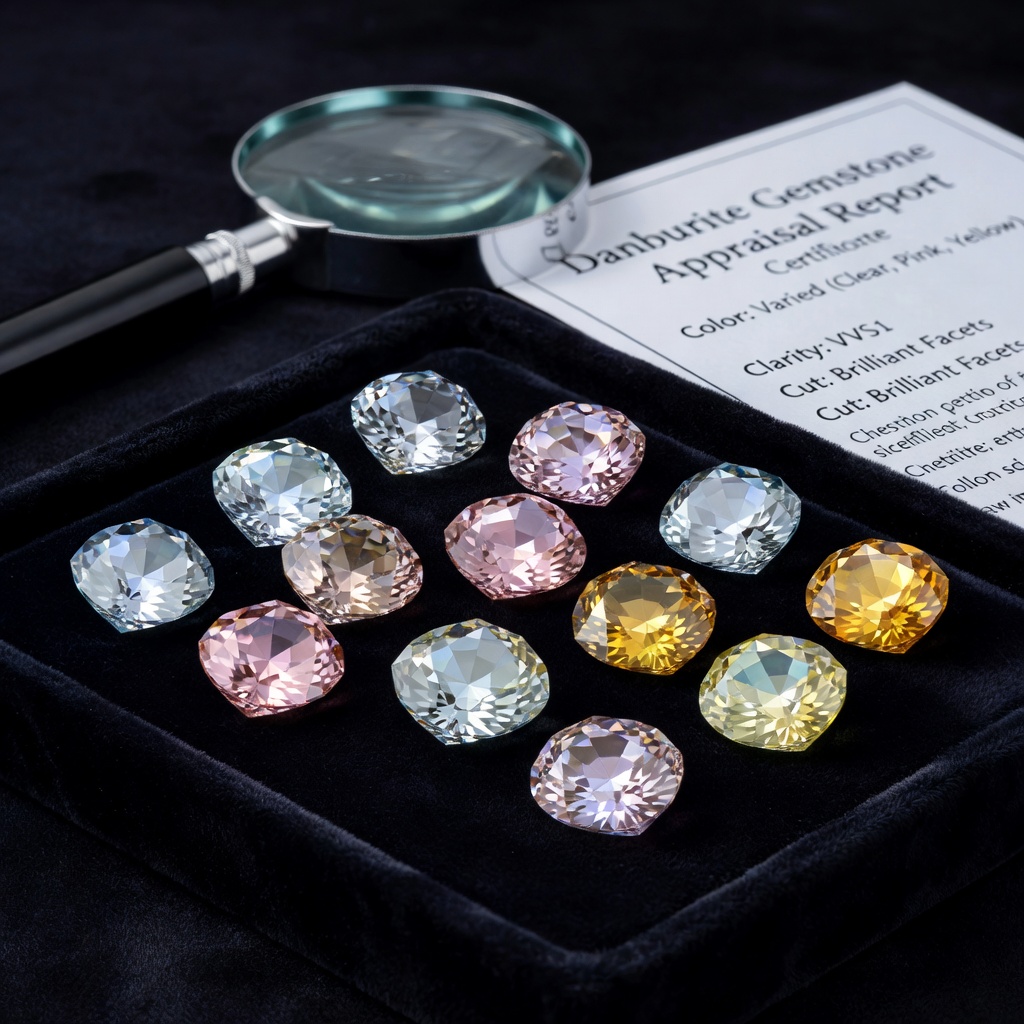
Introduction to Danburite and Its Market Position
Danburite represents one of the gemstone world's best-kept secrets, offering exceptional brilliance and clarity at accessible price points. First discovered in 1839 in Danbury, Connecticut—hence its name—this calcium borosilicate mineral has since been sourced primarily from high-quality deposits in San Luis Potosí, Mexico, and Madagascar's mineral-rich regions. While the original Connecticut mines are largely depleted, these international sources continue producing specimens that rival premium gemstones in beauty while maintaining significantly lower danburite gemstone pricing structures than traditional precious stones.
The physical danburite properties that make this gem increasingly popular include its impressive hardness rating of 7 to 7.5 on the Mohs scale, making it suitable for daily wear in rings and bracelets. Unlike many colored gemstones that require heat treatment or enhancement to achieve marketable clarity, danburite naturally forms with exceptional transparency and minimal inclusions. These characteristics, combined with its high refractive index of 1.63-1.64, create the brilliant sparkle that has earned it recognition as a compelling alternative to both diamond and pink sapphire in contemporary engagement ring designs.
Market analysts have noted a 15% increase in danburite demand over the past three years, driven largely by millennial and Gen Z consumers seeking ethically sourced, affordable luxury. Jewelry designers particularly favor this gem for custom pieces because its excellent cleavage allows master cutters to create precise facets that maximize light return. As awareness grows regarding sustainable gemstone alternatives, danburite has positioned itself firmly in the mid-luxury market segment, offering consumers the prestige of owning a rare natural stone without the prohibitive costs associated with diamonds or fine sapphires.
Current Danburite Price Per Carat (2024 Market Data)
Understanding current danburite prices requires examining several quality tiers that significantly impact value. Commercial quality stones, typically representing the entry-level market, range from $50 to $150 per carat for standard cuts under two carats. These specimens usually display good clarity and acceptable color but may exhibit slight windowing or less precise faceting that affects overall brilliance. For consumers seeking beautiful jewelry on a budget, these commercial-grade stones offer exceptional value, particularly when set in sterling silver or 14k gold mountings where the gemstone remains the focal point without breaking the bank.
Fine quality specimens command substantially higher danburite price per carat figures, with premium pink and colorless varieties ranging from $200 to $500 per carat. At this level, buyers should expect precision cutting that maximizes the stone's natural brilliance, eye-clean clarity with no visible inclusions, and optimal color saturation. A practical example would be a 2.5-carat pink danburite with exceptional hue and master cutting, which might retail for approximately $800-$1,250, compared to a commercial-grade stone of similar weight at $200-$375. This price differential reflects the rarity of superior rough material and the skill required to fashion it into jewelry-grade gems.
At the apex of the market, rare museum-quality large crystals or specimens displaying intense pink hues can achieve prices exceeding $1,000 per carat at specialty auctions and high-end dealers. These investment-grade pieces typically exceed five carats and exhibit extraordinary characteristics such as unusual crystal formations, exceptional transparency, or historically significant provenance from famous mines like the original Danbury locality. For instance, a 7-carat vivid pink danburite from Madagascar's recent exceptional find sold for $8,500 at a 2023 specialized gemstone auction, demonstrating the upper limits of the market for truly exceptional specimens.
The Four Cs: Factors Affecting Danburite Cost
When evaluating factors affecting danburite cost, gemstone professionals apply modified versions of the diamond grading criteria adapted specifically for this unique mineral. Color intensity and hue saturation serve as the primary value determinants, with vivid pink specimens commanding the highest premiums over pale or colorless varieties. Unlike diamonds where colorlessness represents the ideal, danburite pricing follows colored gemstone conventions where saturation and tone significantly impact value. A deeply saturated pink danburite with strong fluorescence under daylight might command triple the price of a pale, washed-out specimen of identical size and clarity, illustrating how subtle color variations create dramatic price differentials in this market.
Clarity standards for danburite require an eye-clean appearance with minimal inclusions visible to the naked eye, though collectors often tolerate minor natural characteristics that prove authenticity. While the mineral naturally forms with fewer inclusions than tourmaline or emerald, buyers should still examine stones under 10x magnification to identify any fractures or crystal inclusions that might affect durability. Premium pricing applies to loupe-clean stones—those appearing flawless even under magnification—which represent less than 10% of mined material and therefore justify 40-60% price premiums over included specimens.
Cut quality dramatically impacts both the aesthetic appeal and market value of danburite, with well-executed brilliant cuts commanding significant premiums over native or commercial cutting. Because danburite possesses perfect cleavage in one direction, only experienced cutters can maximize brilliance without risking stone breakage during the faceting process. Additionally, carat weight premiums escalate significantly for stones over three carats due to the rarity of large clean crystals; while a one-carat fine quality stone might cost $300 per carat, a five-carat equivalent could command $600-$800 per carat, reflecting the exponential difficulty in sourcing large, inclusion-free rough material.
Color Varieties and Their Impact on Pricing
The spectrum of danburite coloration creates distinct market tiers that directly influence consumer choice and investment potential. Colorless and white danburite offers the most affordable entry point, typically ranging from $50 to $200 per carat depending on clarity and cut quality. These crystal-clear specimens exhibit diamond-like brilliance with higher dispersion than quartz, making them popular choices for solitaire pendants and earrings where the stone's purity creates maximum light reflection. For budget-conscious buyers seeking the appearance of a two-carat diamond without the associated $20,000+ price tag, a colorless danburite alternative provides comparable visual impact for approximately $300-$600 total.
Pink danburite value consistently outperforms other color varieties due to limited supply and strong consumer preference for feminine, romantic hues. These stones command 30-50% higher prices than clear varieties, with fine specimens ranging from $200 to $500 per carat. The coloration ranges from subtle champagne-pink to vivid raspberry tones, with Mexican-origin material typically displaying warmer, peachy-pink hues while Madagascar stones often exhibit cooler, lilac-tinged pink. Jewelry designers particularly value these pink specimens for creating vintage-inspired engagement rings that offer the appearance of pink sapphire at roughly one-tenth the cost.
Yellow and champagne colored specimens occupy a mid-tier pricing position between $150 and $300 per carat, appealing to collectors seeking warm, earthy tones that complement yellow and rose gold settings. These less common varieties often display unique pleochroism—showing different colors when viewed from different angles—adding character and depth to custom jewelry pieces. While not as commercially popular as pink or colorless varieties, champagne danburite has developed a dedicated following among alternative bridal jewelry enthusiasts who appreciate its subtle sophistication and excellent value proposition compared to yellow diamonds or citrine.
Danburite vs Diamond: Price and Value Comparison
The danburite vs diamond price differential represents one of the most compelling arguments for considering this gemstone as a serious alternative in fine jewelry. Consumers exploring diamond alternatives will find that danburite typically costs between 5-10% of equivalent diamond prices for similar carat weights and visual presentations. To illustrate this disparity practically: a one-carat, eye-clean, well-cut diamond of commercial quality might retail for $4,000-$6,000, while a comparable danburite of identical size and superior clarity would range from $200-$500. This dramatic cost savings allows buyers to either maintain a strict budget while maximizing carat weight or allocate saved funds toward elaborate custom settings or additional accent stones.
Comparative brilliance and fire characteristics make danburite visually similar to diamond, though trained gemologists can distinguish the two by danburite's slightly lower refractive index and different dispersion pattern. In side-by-side comparisons under jewelry store lighting, high-quality colorless danburite exhibits comparable scintillation and brilliance to diamond, often requiring magnification to differentiate the materials. For engagement ring purposes, this visual similarity provides the aesthetic prestige of a colorless precious stone while maintaining the practical advantage of being distinctive and conversation-worthy rather than a conventional diamond choice.
Durability considerations present the primary caveat when comparing these gemstones for daily wear applications. While diamond's perfect 10 hardness rating makes it virtually scratch-proof, danburite's 7-7.5 hardness requires slightly more careful handling to prevent surface scratching over decades of wear. However, with proper setting selection—such as protective bezel or half-bezel mounts rather than exposed prong settings—and routine maintenance, danburite performs admirably in engagement rings and daily wear jewelry. The stone's excellent toughness (resistance to breaking) actually exceeds that of many harder gems, meaning that while it may accumulate minor surface scratches over years, it resists chipping and cracking better than tanzanite or emerald.
Trusted Sources: Where to Buy Danburite Safely
Knowing where to buy danburite safely requires understanding the distinct advantages of various sales channels in the modern gemstone marketplace. Reputable online gemstone dealers specializing in colored stones offer the broadest selection and competitive pricing, provided they offer transparent return policies and independent laboratory certification. Established e-commerce platforms like GemSelect, James Allen's colored stone division, and specialized dealers such as Earth's Treasury provide detailed photographs, videos, and specification sheets that allow remote evaluation of clarity and cut quality. When buying danburite online, prioritize vendors offering at least a 14-day return window and those who provide GIA, AGL, or IGI certificates verifying natural origin and any treatments.
Brick-and-mortar jewelry stores offer the irreplaceable advantage of viewing stones in person under various lighting conditions before purchase, though inventory tends to be limited and markups higher than direct importers. Specialty gem shows, such as the Tucson Gem and Mineral Show or regional jewelry trade events, provide opportunities to purchase directly from cutters and miners, often securing stones at wholesale prices 30-40% below retail. For example, a collector recently acquired a 4-carat vivid pink Mexican danburite at the Tucson show for $900 that would retail for $1,400-$1,800 in traditional jewelry stores, demonstrating the value of direct sourcing for knowledgeable buyers.
Red flags indicating potential fraud or misrepresentation include prices that appear too good to be true—such as large pink specimens under $100 per carat—lack of certification from recognized laboratories, and sellers unable or unwilling to provide specific origin details. Be particularly wary of marketplace platforms without buyer protection mechanisms, where synthetic cubic zirconia or glass simulants are sometimes misrepresented as natural danburite. Always request written confirmation of natural origin, and avoid sellers who pressure immediate purchase without inspection periods or those who cannot explain the specific mine location or rough acquisition details.
Certification and Authentication Essentials
Securing certified danburite represents a non-negotiable step in protecting your investment and ensuring authenticity. Reputable laboratories including the Gemological Institute of America (GIA), American Gemological Laboratories (AGL), and International Gemological Institute (IGI) provide certificates verifying natural origin, carat weight, dimensions, and any treatments or enhancements applied to the stone. These documents serve dual purposes: they provide insurance documentation and resale verification while protecting buyers from synthetic or heavily treated material sold as natural. For stones exceeding $500 in value, the $50-$150 cost of certification represents essential insurance against misrepresentation.
Common treatments to watch for include heat treatment and irradiation, which can enhance pale pink stones to achieve more vivid coloration. While heat treatment is generally accepted in the trade and permanently improves color, irradiated stones may fade over time when exposed to sunlight or heat sources, significantly affecting long-term value. Natural danburite prices should reflect any treatments; untreated vivid pink specimens command 20-30% premiums over heated material of similar appearance. Reputable sellers must disclose these treatments explicitly, and laboratory certificates will note any enhancement processes detected during spectroscopic analysis.
Distinguishing natural danburite from synthetic lab-grown alternatives and simulants like cubic zirconia requires either professional gemological testing or purchasing only from established dealers with sterling reputations. Synthetic danburite, while rare in the market, exhibits slightly different refractive indices and often appears too perfect under magnification. Cubic zirconia simulants feel noticeably heavier than danburite—approximately 70% denser—and display different dispersion patterns that create excessive "rainbow" effects compared to danburite's more subtle fire. When uncertain, consult an independent gemologist who can perform specific gravity tests or Raman spectroscopy to confirm identity definitively.
Investment Potential and Market Trends
The danburite investment value proposition centers on the rarity of high-quality specimens, particularly those exceeding five carats in size. Market data indicates these larger stones have demonstrated consistent price appreciation of 5-8% annually over the past decade, outperforming many traditional investment vehicles while providing tangible asset enjoyment. Unlike diamonds, which suffer from controlled supply and industrial production, danburite mining remains limited to small-scale operations in Mexico and Madagascar, ensuring natural scarcity that supports value retention. Collector demand specifically targets documented specimens from historically significant mines, with provenance from specific Mexican localities like Charcas commanding 25-40% premiums over generic material.
Mexican and Madagascar origin stones with documented provenance increasingly attract sophisticated collectors who recognize the geological uniqueness of each locality's output. Mexican material typically displays warmer color tones and exceptional clarity, while Madagascar produces larger crystals with distinct pink saturation. Auction records from 2022-2024 show that unheated, vivid pink specimens over five carats with documented Mexican origin have appreciated 12-15% annually, suggesting strong collector demand for premium material. Investors should focus on acquiring untreated, certified stones with exceptional cutting and color, as these characteristics correlate most strongly with appreciation potential.
The broader gemstone market trends favor ethically sourced danburite as a sustainable luxury option aligned with consumer values regarding environmental responsibility and fair mining practices. Unlike diamond mining, which often involves extensive environmental disruption, danburite extraction typically occurs through small-scale, low-impact mining operations that provide artisanal employment in rural Mexican and Madagascan communities. This ethical profile appeals to the growing segment of luxury consumers prioritizing sustainability credentials, potentially driving demand—and prices—higher as traditional precious stones face scrutiny regarding environmental and social impact. Industry analysts predict continued strengthening of the fine colored gemstone market, with rare, untreated varieties like premium danburite positioned for sustained value growth.
Care and Maintenance to Preserve Value
Proper danburite care ensures your gemstone maintains its brilliance and value over decades of enjoyment. Cleaning should involve mild soap and lukewarm water applied with a soft-bristled brush, gently scrubbing around the setting to remove accumulated oils and debris. Unlike harder stones such as diamond or sapphire, danburite requires avoidance of ultrasonic cleaners and steam cleaning systems, as these methods can potentially enlarge existing inclusions or cause thermal shock to stones with internal fractures. For routine maintenance, a monthly soak in warm, soapy water followed by gentle brushing and pat-drying with a lint-free cloth suffices to maintain optimal luster without risking damage.
Gemstone maintenance protocols should include proper storage practices that prevent scratching from harder materials. Store danburite jewelry separately from diamonds, rubies, sapphires, and even other danburite pieces to prevent surface abrasion; individual fabric pouches or compartmentalized jewelry boxes provide ideal protection. When traveling, carry danburite rings and pendants in padded containers rather than loose in luggage where impact with metal objects could cause chipping. Additionally, remove danburite rings before engaging in activities involving harsh chemicals, extreme temperature changes, or potential impact, such as gardening, gym workouts, or household cleaning with abrasive agents.
Insurance considerations and regular professional appraisals protect your investment against loss, theft, or damage. Given the appreciation trends in fine danburite, update appraisals every 2-3 years to ensure coverage reflects current replacement values rather than original purchase prices. Maintain photographic documentation and laboratory certificates in secure, accessible locations separate from the jewelry itself. When having stones reset or repaired, always disclose the gem's identity to jewelers, as danburite's perfect cleavage requires specific handling techniques during prong adjustment or remounting to prevent accidental damage by inexperienced bench workers.
Final Thoughts on Making an Informed Purchase
This comprehensive danburite buying guide demonstrates that informed purchasing requires understanding the relationship between color, clarity, and carat weight when establishing realistic budgets. Recapping the pricing tiers: entry-level colorless specimens provide exceptional beauty at $50-$150 per carat, mid-tier pink and champagne varieties offer distinctive character at $200-$300 per carat, and investment-grade large crystals command $500-$1,000+ per carat depending on rarity factors. By aligning your quality expectations with appropriate budget ranges, you can acquire a genuine natural gemstone that provides lasting satisfaction without financial strain.
Before finalizing any purchase, complete a final checklist including certification verification from recognized laboratories, thorough investigation of seller reputation through independent reviews and industry association memberships, and explicit confirmation of return policies allowing adequate inspection time. Request detailed photographs under different lighting conditions, and whenever possible, examine the stone in person to evaluate its "life" and brilliance—characteristics photographs cannot fully capture. Confirm that the seller provides written guarantees regarding natural origin and disclosure of any treatments, protecting you against misrepresentation.
The future market outlook suggests continued value appreciation for fine quality specimens, particularly untreated vivid pink material over three carats from documented localities. As consumer awareness grows regarding diamond alternatives and ethical sourcing, danburite stands positioned to transition from collector's secret to mainstream recognition, potentially driving prices higher for premium material. By purchasing wisely now—focusing on exceptional cutting, natural color, and certified authenticity—you secure not only a beautiful piece of jewelry but potentially a appreciating asset that combines aesthetic pleasure with financial prudence.
Frequently Asked Questions About Danburite Pricing
How much does danburite cost per carat?
Danburite typically ranges from $50 to $500 per carat depending on quality. Commercial grade colorless stones average $50-$150 per carat, while fine pink specimens command $200-$500 per carat. Rare museum-quality stones over 5 carats can exceed $1,000 per carat.
Is pink danburite more expensive than clear danburite?
Yes, pink danburite generally commands a 30-50% premium over colorless varieties due to its rarity and high demand. While clear danburite is abundant and affordable at $50-$200 per carat, vivid pink specimens typically range from $200-$500 per carat for fine quality stones.
Can danburite be used as a diamond alternative for engagement rings?
Danburite is an excellent diamond alternative for engagement rings due to its high brilliance, clarity, and hardness of 7-7.5. It offers similar visual characteristics at 5-10% of diamond costs, though it requires slightly more care to prevent scratching during daily wear.
Where is the best place to buy authentic danburite?
The best sources include reputable online colored gemstone dealers like GemSelect or James Allen, specialty gem shows, and established brick-and-mortar jewelers who provide GIA or AGL certification. Always verify return policies and avoid marketplaces without buyer protection.
Does danburite appreciate in value over time?
High-quality danburite, particularly rare pink specimens and large crystals over 5 carats, has shown steady appreciation of 5-8% annually over the past decade. However, commercial grade stones are primarily purchased for beauty rather than investment purposes.
How can I tell if my danburite is real or synthetic?
Natural danburite typically contains minor natural inclusions visible under magnification, while synthetics appear too perfect. Request certification from GIA or AGL, check for double refraction with a polariscope, and purchase only from dealers who guarantee natural origin with full disclosure of any treatments.
What factors most significantly affect danburite prices?
Color is the primary value factor, with vivid pink commanding highest prices. Clarity is crucial as eye-clean stones premium over included ones. Carat weight significantly impacts price per carat for stones over 3 carats due to rarity. Cut quality affects brilliance and overall value.
What size danburite offers the best value for money?
Stones between 1-3 carats typically offer the best value, providing substantial visual presence without the steep premium charged for rare larger specimens. Colorless danburite in this range provides exceptional affordability while still appearing impressive in jewelry settings.