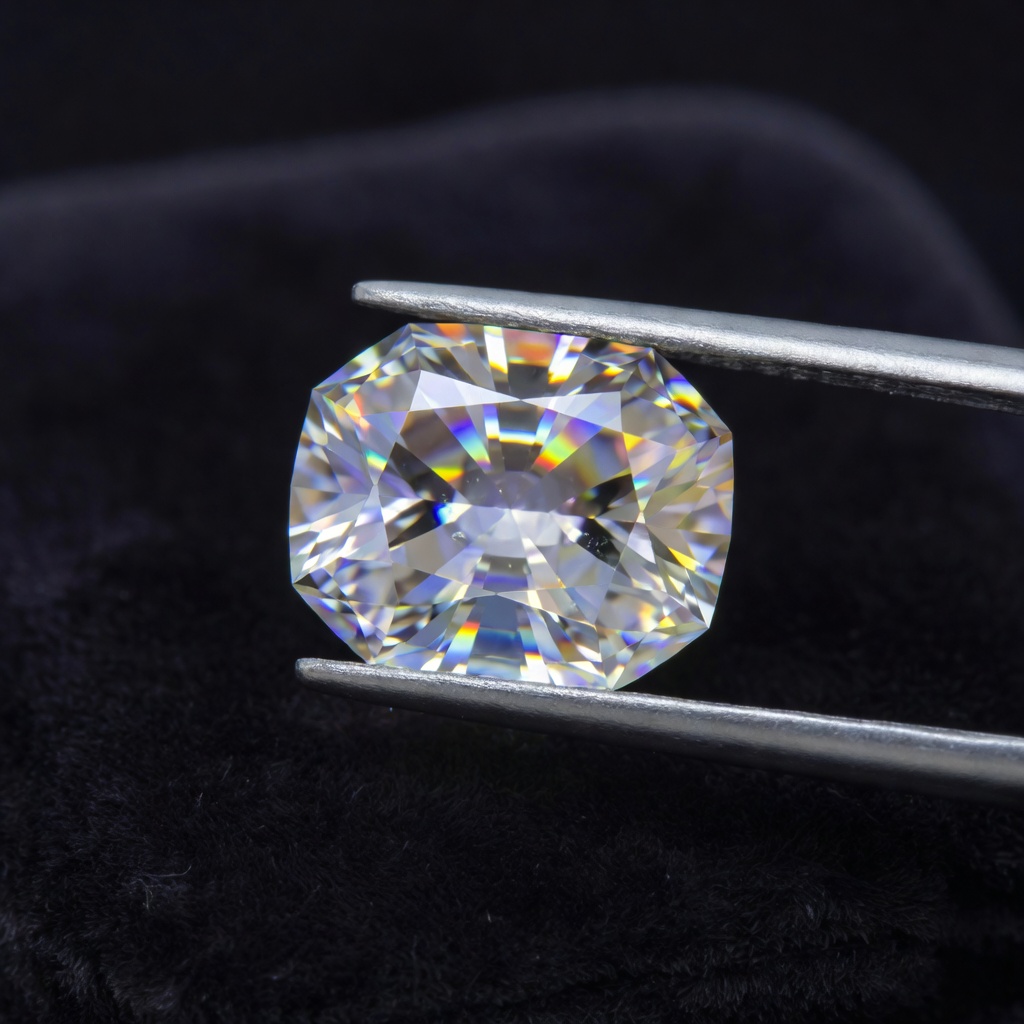
What Is Danburite? Understanding This Rare Gemstone
Danburite represents one of the gemstone world's best-kept secrets, offering exceptional brilliance and clarity that rivals more expensive alternatives. Chemically classified as calcium borosilicate with the formula CaB₂(SiO₄)₂, this orthorhombic crystal structure produces gems with remarkable transparency and a vitreous luster that catches light beautifully. First discovered in 1839 by mineralogist Charles Shepard in Danbury, Connecticut (hence its name), this danburite gemstone has since been unearthed in more significant deposits across Mexico, Myanmar, Madagascar, Japan, and Russia, with the Charcas mines in San Luis Potosí, Mexico producing the finest specimens available today.
The optical properties of danburite explain its growing reputation as a sophisticated diamond alternative. With a refractive index ranging from 1.630 to 1.636 and a dispersion rate of 0.017, natural danburite exhibits impressive fire and brilliance that distinguishes it from other white gemstones. Unlike white topaz or quartz, which can appear glassy or "sleepy," well-cut danburite displays lively scintillation across its facets. Additionally, this gemstone typically forms with fewer inclusions than many other minerals, often yielding eye-clean stones even in larger carat weights, making it an excellent choice for those seeking a natural danburite center stone without the premium price of diamond.
Evaluating Danburite Quality: The Essential 4 Cs
Understanding how to assess danburite quality factors requires familiarity with the modified 4 Cs framework adapted for this unique gemstone. While the diamond industry relies heavily on strict grading scales, danburite evaluation emphasizes color purity, transparency, and cut precision over rigid categorization. When examining potential purchases, prioritize stones that display excellent transparency without hazy or milky appearances, as these characteristics indicate superior crystal formation and proper cutting techniques that maximize light return.
Color Grading and Clarity Standards
Color assessment for danburite differs from diamond grading, utilizing descriptive terminology rather than alphabetical scales. The most desirable colorless specimens should appear pure white without yellow, brown, or gray undertones that diminish brilliance. For colored varieties like pink danburite, evaluate the saturation and consistency across the stone, noting that evenly distributed color commands significant premiums over zoned or patchy specimens. Regarding danburite clarity, this gemstone belongs to the Type I category, meaning it typically forms without visible inclusions, though you should still inspect for eye-clean standards—meaning no inclusions visible to the naked eye from a distance of 6-12 inches.
Cut Quality and Carat Considerations
The cut quality dramatically impacts danburite's performance, with brilliant cuts including rounds, ovals, and cushions maximizing the stone's natural dispersion and fire. Step cuts such as emeralds or asschers showcase clarity beautifully but may sacrifice some brilliance, making them suitable only for exceptionally clean stones. Carat weight affects rarity exponentially rather than linearly; while 1-2 carat stones remain readily available, specimens exceeding 5 carats become increasingly scarce and command substantial premiums per carat. For engagement rings or statement pieces, consider that danburite's relatively affordable danburite price per carat allows buyers to select larger stones without compromising quality.
Color Variations: From Crystal Clear to Golden Champagne
While most collectors associate natural danburite with water-clear transparency, the gemstone actually occurs in a spectrum of subtle hues that significantly impact value and desirability. Colorless or "white" danburite constitutes approximately 90% of market availability, offering the diamond-like appearance that drives its popularity as an alternative gemstone. These stones should ideally display no tint whatsoever, though some specimens may show extremely faint yellow or gray undertones that slightly reduce value while remaining attractive for jewelry purposes.
The rarest and most valuable color varieties include delicate pink and golden-yellow champagne tones. Pink danburite, caused by trace manganese impurities during crystal formation, commands premium prices two to three times higher than colorless equivalents, particularly when the hue reaches saturation levels resembling pale pink sapphire. Golden or champagne danburite, resulting from iron content, offers a warm, vintage aesthetic increasingly popular in rose gold settings. When evaluating colored specimens, examine them under various lighting conditions—natural daylight reveals true color best, while incandescent lighting may mask undertones or enhance undesirable brown casts.
Selecting Shades for Specific Applications
Color selection should align with intended jewelry use and metal choice. Colorless danburite pairs magnificently with platinum or white gold for classic bridal jewelry, while pink varieties create stunning contrast in rose gold engagement rings or pendant designs. For collectors seeking unique specimens, bi-colored or "parti" danburite showing zones of different colors represent extreme rarities, though these require expert cutting to display both hues attractively. Remember that unlike treated stones, these color variations in natural danburite remain stable over time and will not fade with exposure to light or heat.
Clarity Standards and Visual Perfection
Danburite clarity standards rank among the most stringent in the gem industry due to the mineral's tendency toward exceptional transparency. Most gem-quality danburite falls into the "loupe clean" or "eye clean" categories, meaning inclusions remain invisible without magnification or cannot be seen with the unaided eye. This characteristic makes danburite particularly suitable for jewelry styles featuring large tables or open settings where inclusions would otherwise be obvious, such as solitaire engagement rings or pendant designs where the stone receives direct observation.
When inspecting danburite, familiarize yourself with common inclusion types including fingerprint patterns (healed fractures), small crystal inclusions, and two-phase inclusions containing both liquid and gas bubbles. While these features confirm natural origin, avoid stones with surface-reaching fractures or feathers that compromise structural integrity, particularly if you plan daily wear. For investment-grade specimens or important jewelry pieces, prioritize stones grading VVS (Very Very Slightly included) or better, though VS (Very Slightly included) stones offer excellent value for fashion jewelry where minor inclusions remain invisible to casual observation.
Impact of Clarity on Brilliance and Budget
Clarity directly affects a danburite gemstone's light performance; stones with numerous inclusions scatter light rather than allowing it to reflect efficiently, resulting in a "sleepy" or lifeless appearance. When working with limited budgets, consider that danburite's natural clarity means even moderately included stones often appear cleaner than equivalent grades in other gemstones. However, for pieces intended as heirlooms or significant gifts, investing in higher clarity grades ensures the stone maintains its sparkle and value over decades of ownership.
Carat Weight and Size Selection Guide
Understanding how danburite carat weight influences availability and pricing helps buyers make informed decisions aligned with their aesthetic goals and budget constraints. The gemstone market typically offers danburite in sizes ranging from 0.5 carats up to 10 carats, though specimens exceeding 5 carats of fine quality become exponentially rarer. For everyday jewelry such as engagement rings or earrings, stones between 1 and 3 carats provide optimal balance between visual impact and practical wearability, appearing substantial without overwhelming the setting or risking damage during activities.
Price scaling follows a non-linear trajectory, with danburite price per carat increasing significantly at certain thresholds. While a 1-carat fine quality stone might cost $50 per carat, a 5-carat equivalent of similar quality could command $150 or more per carat due to rarity. Collector-grade specimens exceeding 10 carats, particularly in rare pink or yellow hues, may reach auction-level pricing unavailable in standard retail channels. When selecting size, consider the "face-up" dimensions rather than carat weight alone; danburite's specific gravity (approximately 3.0) means it faces up slightly smaller than diamond of equivalent weight, though this difference remains minimal in practical terms.
Optimal Sizes by Jewelry Type
Ring designs typically showcase danburite best in sizes between 1.5 and 3 carats, providing adequate surface area to display the stone's brilliance while remaining comfortable for daily wear. Pendant designs accommodate larger specimens, with 3 to 5 carat stones creating elegant focal points that draw attention without excessive weight against the chain. For earrings, matched pairs between 1 and 2 carats each offer symmetrical beauty without stretching earlobes, though smaller accent stones of 0.25 to 0.5 carats work beautifully in halo or cluster designs surrounding larger center gems.
Danburite Pricing Guide and Budget Planning
Navigating the danburite buying guide pricing landscape requires understanding the quality tiers that distinguish commercial-grade stones from collector specimens. Entry-level danburite, characterized by slight inclusions, suboptimal cutting, or faint color tints, typically ranges from $20 to $40 per carat, suitable for fashion jewelry or beginner collectors testing the market. Mid-tier stones offering eye-clean clarity, excellent cut, and pure colorless appearance generally command $40 to $80 per carat, representing the sweet spot for engagement rings and fine jewelry where appearance matters significantly.
Premium danburite, including rare pink danburite or exceptional colorless specimens exceeding 5 carats with perfect clarity, can reach $100 to $200 per carat or higher. When comparing value against alternatives, danburite offers superior brilliance to white topaz ($10-20 per carat) while costing significantly less than moissanite ($300+ per carat) or diamond ($3,000+ per carat). Unlike white sapphire, which can appear dull or "windowed," danburite maintains lively fire even in larger sizes, providing better value retention and visual satisfaction for budget-conscious buyers seeking diamond alternatives.
Budget Allocation for First-Time Buyers
First-time purchasers should allocate approximately 60% of their budget toward the center stone, reserving 40% for high-quality settings that protect the gem. For a $500 total investment, this translates to roughly $300 for a 3-4 carat fine quality danburite and $200 for a solid 14k gold or platinum mounting. Avoid the temptation to maximize carat weight at the expense of cut quality; a smaller, well-cut stone outperforms a larger poorly-cut specimen in brilliance and long-term satisfaction. Additionally, factor certification costs into your budget if purchasing investment-grade pieces, as laboratory reports from GIA or AGL add $50-100 to the total but provide essential verification of natural danburite status.
Certification and Authenticity Verification
Securing proper documentation represents a critical step in any danburite buying guide, protecting consumers against misrepresentation and ensuring genuine natural danburite rather than synthetics or simulants. Reputable laboratories including the Gemological Institute of America (GIA), American Gemological Laboratories (AGL), and Gem Research Swisslab (GRS) provide certificates detailing species identification, natural versus synthetic origin, color description, clarity characteristics, and any treatments applied. These reports serve not only as purchase verification but also as essential documentation for insurance appraisals and future resale value.
While synthetic danburite exists—primarily created through hydrothermal growth processes for industrial applications—it rarely enters the jewelry market due to the gemstone's relative affordability. However, unscrupulous sellers might attempt to pass off white topaz, cubic zirconia, or even glass as danburite. Authentic natural specimens typically display specific inclusion patterns under magnification, including growth zoning and natural crystal imperfections, whereas synthetics may show curved growth lines or appear suspiciously perfect. Always request magnification photos or loupe examination before purchasing significant specimens, particularly when buying danburite jewelry online where physical inspection proves impossible.
Treatment Disclosure and Red Flags
One advantage of danburite is its typical lack of treatment; unlike many gemstones that require heating or irradiation to enhance color, danburite usually enters the market in its natural state. However, always request explicit treatment disclosure, as rare heat treatment might occur to improve color in some specimens. Red flags requiring immediate caution include prices significantly below market rates (suggesting glass or synthetic substitutes), sellers unwilling to provide independent laboratory certification, vague origin descriptions, and claims of "flawless" stones without documentation. Reputable dealers welcome questions regarding sourcing and gladly provide detailed provenance information for their natural danburite inventory.
Jewelry Settings and Design Applications
Selecting appropriate settings for danburite jewelry requires balancing aesthetic goals with protective considerations, given the gemstone's 7 to 7.5 Mohs hardness rating and distinct cleavage plane. While sufficiently hard for daily wear, danburite demands protection from sharp impacts that might cause chipping along cleavage directions. White gold and platinum settings enhance colorless danburite's diamond-like appearance, creating seamless color continuity that maximizes the stone's brilliance. For pink danburite, rose gold settings create warm, complementary palettes that emphasize the gem's delicate hue, while yellow gold offers vintage appeal particularly suited to Art Deco-inspired designs.
Setting styles significantly impact both protection and light performance. Prong settings allow maximum light entry from all angles, enhancing brilliance but leaving the girdle vulnerable to impact; consider six-prong designs for stones exceeding 2 carats to distribute pressure evenly. Bezel settings, where metal encircles the stone's perimeter, provide superior protection for active wearers, though they slightly reduce light return from the sides. Half-bezel or "tension" styles offer compromise solutions, securing the stone while maintaining visibility. For engagement rings—a growing trend in alternative bridal jewelry—consider cathedral settings that elevate the stone while providing structural support, or halo designs that combine danburite centers with diamond accents for enhanced sparkle.
Durability Considerations for Daily Wear
When designing danburite ring settings for daily wear, prioritize low-profile mountings that reduce the likelihood of snagging or impact against hard surfaces. Avoid ultra-thin prongs or delicate wirework that might bend and release the stone during activities. For earrings and pendants, where impact risk decreases, more elaborate settings including pavé accents or intricate galleries become viable options. Always ensure the mounting includes proper bearing surfaces that distribute pressure across the stone's pavilion rather than concentrating stress at single points, which could initiate fractures along cleavage planes.
Care, Cleaning, and Maintenance Best Practices
Proper maintenance ensures your danburite gemstone retains its brilliance and structural integrity throughout decades of wear. With a hardness rating of 7 to 7.5 on the Mohs scale, danburite resists scratching from everyday dust and contact, though it remains vulnerable to harder materials including diamonds, sapphires, and household abrasives. Clean your danburite jewelry using warm water mixed with mild dish soap, gently scrubbing with a soft-bristled toothbrush to remove accumulated oils and debris from behind the stone and within the setting. Avoid ultrasonic cleaners and steam cleaning, as thermal shock or vibration might exacerbate existing fractures or inclusions, particularly in stones with internal feathers or two-phase inclusions.
Storage practices prevent accidental damage when jewelry remains unworn. Store danburite pieces separately from harder gemstones in individual fabric-lined compartments or soft pouches; contact with diamonds or rubies can scratch danburite's surface, diminishing polish and luster. Remove danburite rings before engaging in physical activities including sports, gardening, or heavy lifting, as sharp impacts against hard surfaces can chip the stone despite its reasonable hardness. For professional maintenance, schedule annual inspections with a qualified jeweler who can check for loose prongs, worn settings, and accumulated damage before minor issues escalate into stone loss.
Professional Maintenance Schedules
Establish a professional maintenance routine every 12 to 18 months for frequently worn danburite pieces. During these inspections, jewelers should tighten prongs, check for girdle damage or chips, and professionally repolish the stone if surface scratches have accumulated. For estate pieces or vintage danburite jewelry, request a comprehensive examination including checking for previous repairs or treatments that might affect durability. Keep documentation of all professional cleanings and repairs to maintain provenance records, particularly important for investment-grade specimens or antique pieces where history significantly impacts value.
Where to Buy: Trusted Sources and Final Checklist
Finding reputable sources for quality danburite requires research into specialized colored stone dealers rather than general jewelry chains, as this gemstone remains niche compared to mainstream options. Established online retailers specializing in colored gemstones often offer superior selection and pricing compared to brick-and-mortar stores, provided they provide detailed photographs, videos, and return policies. Look for vendors who provide 360-degree video imaging showing the stone's clarity characteristics, and who offer inspection periods of at least 10 to 30 days allowing evaluation by independent appraisers. Local independent jewelers with colored stone expertise provide tactile examination opportunities, though their inventory might prove limited compared to specialized dealers.
Before finalizing any purchase, utilize this comprehensive checklist: Verify the stone matches described specifications for color, clarity, and carat weight; confirm treatment status and request written disclosure; ensure the certificate matches the stone via laser inscription or detailed plotting diagrams; evaluate the return policy including restocking fees; and verify the seller's reputation through reviews or industry associations like the American Gem Trade Association (AGTA). When comparing danburite vs diamond or other alternatives, request side-by-side comparisons under various lighting conditions to appreciate the unique optical properties that make danburite distinctive.
Essential Questions for Sellers
Arm yourself with specific questions when engaging sellers: "What is the exact origin of this stone?" (Mexican material typically commands premium prices); "Has this stone undergone any heat treatment or color enhancement?"; "Can you provide a recent laboratory certificate from GIA, AGL, or equivalent?"; and "What is your policy regarding returns if an independent appraiser finds discrepancies?" Reputable sellers answer confidently and provide documentation without hesitation. Avoid vendors who pressure immediate decisions, dismiss certification importance, or cannot explain danburite price per carat variations within their inventory. Remember that purchasing danburite jewelry represents an investment in both beauty and value, warranting the same diligence applied to diamond or sapphire acquisitions.
Frequently Asked Questions
What is danburite and where does it come from?
Danburite is a calcium borosilicate mineral discovered in Danbury, Connecticut, though major deposits are now found in Mexico, Myanmar, and Madagascar. It's prized for its exceptional clarity and diamond-like brilliance.
How much does danburite cost per carat?
Danburite typically ranges from $20 to $200 per carat depending on quality. Colorless stones are more affordable ($20-$50/carat), while rare pink or yellow specimens can command $100-$200+ per carat for high-quality pieces.
Is danburite durable enough for everyday wear?
With a hardness of 7 to 7.5 on the Mohs scale, danburite is suitable for most jewelry applications including engagement rings, though it requires protective settings to prevent chipping during rough activities.
How can I tell if my danburite is natural?
Always request a certificate from reputable labs like GIA or AGL. Natural danburite often contains specific inclusions like fingerprints or crystal growth patterns, while synthetics may appear too perfect or show curved growth lines under magnification.
What color of danburite is most valuable?
While colorless danburite is most common, rare pink and golden-yellow varieties command the highest prices due to scarcity. The value increases significantly with saturation, with vivid pink stones being the most prized by collectors.
Is danburite a good diamond alternative?
Yes, danburite offers excellent brilliance and fire similar to diamond at a fraction of the cost. With higher dispersion than diamond and exceptional clarity, it provides beautiful sparkle for budget-conscious buyers seeking white gemstone jewelry.
How should I clean and care for danburite jewelry?
Clean danburite using warm soapy water and a soft brush. Avoid ultrasonic cleaners and harsh chemicals. Store separately from harder gemstones like diamonds or sapphires to prevent scratching, and remove during heavy physical activities.
Can danburite be heat treated or enhanced?
Danburite is typically not heat treated or enhanced, as it naturally occurs with excellent clarity. However, always ask sellers for treatment disclosure. Any color improvements are rare, making natural color variations more valuable to collectors.