What Is Clinohumite? Understanding This Rare Gemstone
Clinohumite stands as one of the most extraordinary discoveries in the world of gemology, representing a rare magnesium silicate mineral that belongs to the exclusive humite group of nesosilicates. First identified in 1876 from the renowned Fuka Mine located in the Okayama Prefecture of Japan, this remarkable mineral derives its name from the Greek word "klinein," meaning "to incline," referencing its distinct monoclinic crystal structure that differentiates it from orthorhombic humite. Unlike more commonly encountered gemstones that populate jewelry store displays, clinohumite remains exceptionally scarce, with gem-quality specimens representing some of the rarest cut stones available to collectors and connoisseurs. When examining Clinohumite Properties and Information, mineralogists note its close relationship to other humite group minerals including chondrodite, norbergite, and prolectite, though clinohumite specifically contains the highest fluorine content and distinctive structural arrangements that create its characteristic optical properties.
The status of clinohumite as a Clinohumite gemstone of significant value emerged only in recent decades when substantial deposits were discovered in Central Asia, transforming it from a mineralogical curiosity into a coveted collector's item. Historically, the Fuka Mine produced the type specimens that defined the species, yet these Japanese crystals rarely achieved the size and clarity necessary for faceting into jewelry-grade stones. Modern collectors often compare clinohumite to other rare orange gemstones, though its unique combination of chemical composition, formation environment, and optical characteristics places it in a distinctive category separate from more common gems like citrine or spessartine garnet. The extreme scarcity of this mineral means that even experienced gemologists may handle only a handful of authenticated specimens throughout their entire careers, underscoring the importance of proper documentation when acquiring these treasures.
Physical and Chemical Properties of Clinohumite
Understanding the fundamental physical characteristics of clinohumite requires examining its precise chemical architecture, which follows the formula Mg9(SiO4)4F2, indicating a complex arrangement of nine magnesium atoms, four silicate tetrahedra, and two fluorine atoms within its molecular structure. This Clinohumite chemical formula places it firmly within the nesosilicate subclass, where isolated SiO4 tetrahedra connect through intervening cations, creating a dense, durable framework that contributes to the mineral's specific gravity ranging between 3.17 and 3.35 depending on variations in fluorine-to-hydroxyl ratios. Gemologists appreciate that these chemical variations can slightly alter the physical properties of individual specimens, though all maintain the essential characteristics that define the species. The density of clinohumite exceeds that of many common gemstones, giving cut stones a satisfying heft when handled, a tactile quality that experienced collectors often use as an initial diagnostic indicator.
On the Mohs hardness scale, clinohumite registers approximately 6, positioning it between orthoclase feldspar and quartz in terms of scratch resistance, which presents both opportunities and limitations for jewelry applications. This moderate hardness means that while clinohumite can withstand normal handling with reasonable care, it remains susceptible to abrasion from harder materials including dust particles, which often contain quartz at hardness 7. The mineral exhibits brittle tenacity with imperfect cleavage in one direction and displays conchoidal fracture patterns when broken, characteristics that require lapidaries to exercise extreme caution during the cutting process to prevent accidental cleavage damage. When evaluating Clinohumite properties for potential jewelry use, gemologists recommend protective settings that shield the stone from direct impact, particularly given its propensity for fracturing along cleavage planes under stress.
Distinctive Color Range and Optical Characteristics
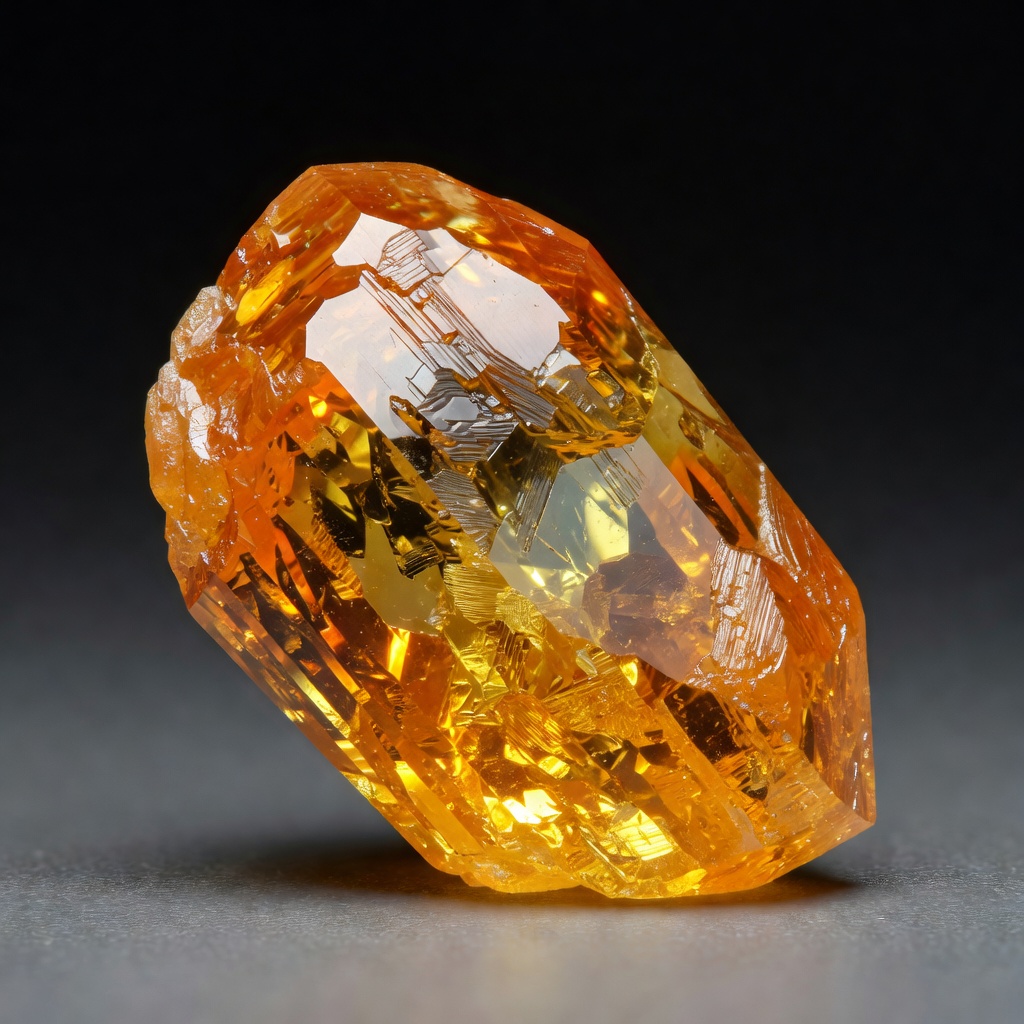
The most immediately striking feature of clinohumite is its magnificent coloration, ranging from vibrant honey-orange to deep reddish-orange and yellow-orange hues that rival the finest precious imperial topaz or mandarin garnet. These colors result primarily from trace impurities and structural defects within the crystal lattice, particularly the presence of titanium and iron substituting for magnesium in specific crystallographic sites, creating charge transfer mechanisms that absorb certain wavelengths of light while transmitting the warm orange tones that define this rare orange gemstone. Unlike many colored gems that derive their hues from single chromophores, clinohumite's coloration involves complex interactions between multiple trace elements and the crystal field effects of its unique structure, resulting in colors that possess remarkable depth and saturation rarely encountered in other minerals. High-quality specimens from the Pamir Mountains display an intense orange reminiscent of sunset fire, while material from other localities may show more yellowish or brownish undertones depending on specific geological formation conditions.
Optically, clinohumite demonstrates strong pleochroism, a phenomenon where the crystal displays different colors when viewed from different crystallographic directions, typically showing orange to yellow-orange or brownish variations that skilled cutters must consider when orienting the table facet to maximize color impact. The refractive index values range from 1.631 to 1.668 with a birefringence of approximately 0.036, contributing to the stone's brilliance and fire when properly faceted, though these optical properties require careful polishing to achieve maximum light return. Transparency in quality specimens ranges from transparent to translucent, with the most valuable material displaying eye-clean clarity that allows light to pass unobstructed through the crystal, enhancing its vitreous to resinous luster. Gemologists examining Clinohumite optical properties under magnification often observe distinctive inclusion patterns including healing fractures, fluid inclusions, and occasionally calcite crystals that provide clues to the stone's geological formation history while potentially affecting its clarity grade.
Geological Origins and Mining Locations
Clinohumite forms exclusively under high-temperature contact metamorphic conditions where carbonate rocks interact with silica-rich magmatic intrusions, typically occurring in skarn deposits and metamorphosed limestone environments that provide the necessary magnesium, silicon, and fluorine components. These specific geological requirements limit the mineral's occurrence to regions where tectonic forces have created the perfect confluence of heat, pressure, and chemical ingredients, resulting in the extreme rarity that characterizes fine gem material. The primary sources for gem-quality clinohumite include the treacherous Pamir Mountains of Tajikistan and the remote Badakhshan Province of Afghanistan, where miners extract crystals from high-altitude deposits that formed millions of years ago when granitic magmas intruded into dolomitic limestones. These Central Asian localities have produced the finest known specimens, including crystals exceeding two centimeters in size with exceptional clarity and intense orange coloration that command premium prices in the international market.
Beyond the celebrated Central Asian deposits, notable occurrences include the original type locality at the Fuka Mine in Japan, where the mineral was first described, though Japanese material rarely reaches gem quality compared to Tajikistani specimens. The legendary Vesuvius volcano in Italy has produced clinohumite as part of its complex metamorphic assemblage, while the Taymyr Peninsula in Russia's Siberian Arctic has yielded significant specimens including some of the largest crystals known to science. Geologists studying Clinohumite formation note its consistent association with high-temperature mineral assemblages including calcite, dolomite, forsterite, monticellite, and various spinel group minerals, which together indicate formation temperatures exceeding 500 degrees Celsius. When prospecting for Clinohumite locations, mineralogists look for specific geological indicators such as marble host rocks, fluorine-rich mineralization, and evidence of contact metamorphism near igneous intrusions, though even in favorable environments, the mineral remains elusive and sporadically distributed.
Crystallography and Structural Analysis
Crystallographically, clinohumite crystallizes in the monoclinic system, forming prismatic crystals that often exhibit flattened or elongated habits with distinct striations parallel to the c-axis, though well-formed euhedral crystals remain exceptionally rare in nature. Typical crystal sizes range from microscopic grains visible only under magnification to exceptional specimens measuring over two centimeters in length, with most gem material falling between these extremes at sizes rarely exceeding one carat when faceted. The mineral shares a structural relationship with the olivine group, specifically resembling forsterite in its basic silicate framework, but differs through the incorporation of additional layers containing magnesium, fluorine, and hydroxyl groups that create the distinct humite structure type. These structural nuances place clinohumite within the broader category of Humite group minerals, which includes the polymorphs humite (orthorhombic) and clinohumite (monoclinic), along with related species chondrodite and norbergite that differ primarily in their layer stacking sequences and chemical compositions.
Under microscopic examination, clinohumite frequently displays complex twinning patterns following the {001} plane, along with undulatory extinction and characteristic inclusion assemblages that help distinguish it from similar-appearing minerals. The crystal structure consists of alternating layers of forsterite-like magnesium silicate sheets and brucite-like magnesium hydroxide/fluoride layers, creating a unique architecture that explains the mineral's physical properties including its perfect cleavage in one direction. Advanced analytical techniques such as X-ray diffraction reveal precise lattice parameters of a = 13.68 Å, b = 4.75 Å, c = 10.27 Å, and β = 100.8°, confirming its monoclinic symmetry and distinguishing it from orthorhombic humite despite their chemical similarity. For collectors examining Clinohumite crystal structure, these crystallographic details manifest as distinctive optical effects and breakage patterns that require careful observation and measurement to properly identify.
Metaphysical Properties and Healing Benefits
Within the realm of crystal healing and metaphysical practices, clinohumite has garnered attention for its purported association with the solar plexus chakra, the energy center located in the upper abdomen that practitioners believe governs personal power, self-confidence, and emotional resilience. Healers working with Clinohumite crystal meaning suggest that the stone's warm orange vibration resonates specifically with this chakra, helping to dispel feelings of inadequacy while promoting courage, motivation, and the will to pursue one's ambitions without fear of judgment or failure. Crystal therapy practitioners often recommend placing clinohumite directly on the solar plexus during meditation sessions, claiming that its energy stimulates the metabolic processes and enhances the body's ability to convert food and experiences into usable energy and wisdom. While these metaphysical properties remain outside the scope of scientific validation, many collectors appreciate clinohumite for its aesthetic beauty while remaining open to its potential subtle energetic influences.
Beyond chakra work, Clinohumite healing properties allegedly include powerful applications for emotional healing, particularly in alleviating symptoms of depression, seasonal affective disorder, and chronic pessimism by infusing the aura with solar energy and optimism. Practitioners suggest carrying the stone during times of creative block or low motivation, believing that it stimulates the imagination while providing the energetic support necessary to manifest creative visions into physical reality. Some crystal healers utilize clinohumite for grounding purposes, asserting that despite its high-energy appearance, the stone contains strong earth element vibrations that help stabilize scattered energies and reconnect the user with the grounding forces of the planet. Whether used in meditation grids, worn as jewelry, or simply displayed as a specimen, clinohumite serves as a reminder of the rare and precious nature of both geological formations and personal inner strength, offering a tangible connection to the intense pressures and transformations that create beauty in the natural world.
Identification Methods and Authentication
Proper Clinohumite identification requires distinguishing this rare mineral from visually similar orange gemstones including spessartine garnet, citrine, hessonite garnet, and orange sapphire, each of which possesses distinct optical and physical properties that separate them from clinohumite. Spessartine garnet, perhaps the most common simulant, typically shows higher hardness (7-7.5 on Mohs scale) and lacks the strong pleochroism exhibited by clinohumite, while citrine displays uniaxial optical character and lower specific gravity compared to clinohumite's biaxial positive optical signature and density of 3.17-3.35. Experienced gemologists rely on diagnostic inclusions visible under 10x magnification, including distinctive "fingerprint" inclusions, calcite crystals, and two-phase inclusions that characterize natural clinohumite while rarely appearing in other orange gems. The conchoidal fracture pattern and imperfect cleavage of clinohumite also differ from the concoidal to uneven fracture of garnet and the conchoidal fracture without cleavage of quartz.
Spectroscopic analysis provides definitive genuine clinohumite testing, with the stone showing distinct absorption bands in the blue region around 415-420 nanometers and sometimes 460-470 nanometers, creating a diagnostic spectrum that trained gemologists can recognize using a spectroscope. Advanced testing methods including Raman spectroscopy and X-ray fluorescence can confirm the presence of magnesium, silicon, and fluorine while ruling out simulants or synthetic alternatives, though synthetic clinohumite remains virtually nonexistent due to lack of commercial demand and the complexity of its formation. Given the high value and extreme rarity of quality specimens, collectors should always insist upon laboratory certification from reputable institutions such as the Gemological Institute of America (GIA), American Gemological Laboratories (AGL), or similar internationally recognized bodies that can provide detailed reports confirming identity, geographic origin, and treatment status. When purchasing significant specimens, request documentation that specifically tests for clinohumite rather than generic "orange gemstone" certifications, ensuring that the substantial investment reflects genuine rarity.
Market Value, Collectibility and Investment Potential
The Clinohumite value in the current gemstone market reflects its extreme scarcity, with prices typically ranging from $500 to $2,000 or more per carat depending on size, quality, color intensity, and provenance, placing it among the most expensive colored gemstones relative to its size. Several critical factors influence valuation, with color saturation representing the primary determinant—stones displaying vivid, pure orange without brownish undertones command significant premiums over those with yellowish or brownish modifiers. Clarity significantly impacts pricing, as eye-clean specimens over one carat remain exceptionally uncommon, while inclusions that do not significantly impact transparency may be acceptable in stones possessing exceptional color. The cut quality also affects value, with well-executed brilliant cuts that maximize the stone's moderate refractive index and pleochroic effects fetching higher prices than poorly proportioned stones that leak light through the pavilion.
As a rare gemstone investment, clinohumite presents unique opportunities and challenges for collectors, with the extreme rarity of fine material suggesting potential appreciation as known deposits become depleted or inaccessible due to geopolitical instability in primary source regions. Market trends indicate increasing scarcity of fine specimens over one carat, with major auction houses occasionally featuring clinohumite in important jewelry sales, typically achieving strong prices due to competitive bidding among specialist collectors. Unlike blue diamonds or Burmese rubies that have established investment markets, clinohumite remains a niche collecting area requiring specialized knowledge, meaning that liquidity may be limited compared to more mainstream gems, though rarity often translates to steady value retention during economic fluctuations. Serious collectors should focus on acquiring stones with impeccable documentation, exceptional color from known localities such as Tajikistan, and sizes exceeding one carat, as these specimens represent the pinnacle of availability and are most likely to appreciate in value while providing aesthetic enjoyment.
Proper Care, Cleaning and Storage Guidelines
Maintaining the beauty of clinohumite requires understanding its moderate hardness and sensitivity to thermal shock, necessitating specific Clinohumite care protocols that differ from harder gemstones like sapphire or diamond. For routine cleaning, use only mild soap and lukewarm water with a soft-bristled brush—such as a baby toothbrush—to gently remove accumulated oils and debris from the surface and setting, avoiding vigorous scrubbing that might scratch the surface or loosen the stone from its mounting. Never subject clinohumite to ultrasonic cleaners or steam cleaning devices, as the thermal shock from rapid temperature changes can cause internal fracturing or cleavage damage, particularly in stones with existing inclusions or internal stress. Harsh chemicals including household cleaners, chlorine, acids, and even commercial jewelry cleaning solutions may damage the surface or attack any fillers used to improve clarity, potentially permanently altering the stone's appearance.
Proper storage constitutes an essential aspect of gemstone maintenance for clinohumite, requiring separate padded containers or individual soft cloth bags that prevent contact with harder gemstones which might scratch its surface. Store clinohumite jewelry away from direct sunlight for prolonged periods, as excessive heat buildup in display cases or windowsills may damage the stone, though normal wearing does not present significant fading risks. When traveling, carry clinohumite pieces in rigid, padded containers rather than loose in jewelry rolls where harder items might abrade the surface. Remove clinohumite rings before engaging in physical activities, household chores, or gardening, as impacts against hard surfaces can chip or fracture the stone, while exposure to abrasive materials will gradually dull the polish and reduce brilliance over time.
Conclusion: The Enduring Appeal of Clinohumite
Clinohumite occupies a unique and privileged position in the pantheon of collectible gemstones, representing the perfect convergence of scientific interest, aesthetic beauty, and extreme rarity that defines the most coveted mineral specimens. As we have explored throughout this comprehensive guide to Clinohumite Properties and Information, this remarkable mineral challenges collectors to look beyond the familiar boundaries of diamond, ruby, and sapphire to appreciate the subtle complexities of the earth's rarest creations. Future availability of quality material remains uncertain given the limited geographic sources and the challenging mining conditions in primary localities such as Tajikistan and Afghanistan, suggesting that current specimens may represent a finite resource that becomes increasingly difficult to acquire as time progresses. For those considering building a collection, prioritize acquiring well-documented specimens with laboratory certifications, focusing on color quality and clarity over sheer size, as even small clinohumite gems possess an inner fire and geological significance that transcend their physical dimensions.
Whether appreciated for its crystal chemistry, its warm orange glow, or its metaphysical associations with personal power and joy, clinohumite rewards the knowledgeable collector with a tangible connection to the extreme geological forces that create such rarity. As gemology advances and new deposits potentially emerge, the fundamental characteristics of clinohumite—its complex formation, limited occurrence, and captivating beauty—ensure its permanent place in the highest tiers of mineral collecting. For the discerning enthusiast who values exclusivity and natural wonder over mass-market availability, clinohumite offers an unparalleled opportunity to own a piece of geological history that few others will ever hold.
Frequently Asked Questions About Clinohumite
What Makes Clinohumite So Rare and Valuable?
Clinohumite is exceptionally rare due to its limited geographic occurrence and the specific geological conditions required for formation. Quality gem-grade material is found primarily in Tajikistan and Afghanistan, with most crystals being microscopic or too included for faceting. Faceted stones over 1 carat are extremely uncommon, driving prices significantly higher than more common gemstones.
How Can I Tell if My Clinohumite Is Real or Synthetic?
Natural clinohumite exhibits specific diagnostic features including characteristic inclusions, distinct pleochroism showing orange to yellow color shifts, and a refractive index between 1.631-1.668. Synthetic versions are virtually nonexistent due to lack of commercial demand, but simulants like citrine or spessartine garnet should be distinguished by hardness testing and optical properties. Always request certification from reputable labs like GIA for verification.
What Is the Chemical Composition of Clinohumite?
Clinohumite has the chemical formula Mg9(SiO4)4F2, indicating it is a magnesium silicate mineral containing fluorine. It belongs to the humite group of nesosilicates, structurally related to olivine but with distinct hydroxyl and fluorine content variations. The formula can show slight variations with partial substitution of fluorine by hydroxyl groups in natural specimens.
Where Does the Best Quality Clinohumite Come From?
The finest gem-quality clinohumite originates from the Pamir Mountains in Tajikistan and the Badakhshan Province in Afghanistan, where contact metamorphic deposits produce crystals with intense orange coloration and exceptional clarity. The original Japanese type locality at Fuka Mine produced good specimens but rarely gem-quality material. Recent discoveries in Russia's Taymyr Peninsula have also yielded notable specimens.
Does Clinohumite Have Any Industrial Uses Beyond Jewelry?
Currently, clinohumite has no significant industrial applications due to its extreme rarity and the small size of available crystals. Unlike common industrial minerals, clinohumite is valued exclusively as a collector's gemstone and mineral specimen. Scientific interest exists for studying its crystal structure and formation conditions in metamorphic petrology, but commercial industrial use is economically unfeasible.
What Healing Properties Are Associated With Clinohumite Crystals?
Crystal healers associate clinohumite with the solar plexus chakra, believing it enhances personal power, confidence, and emotional resilience. It is thought to alleviate depression, promote joy and optimism, and stimulate creative energy. Some practitioners use it for grounding purposes and connecting with earth energies, though these metaphysical properties are not scientifically proven and should not replace medical treatment.
How Should I Clean and Care for My Clinohumite Gemstone?
Clean clinohumite using only mild soap and lukewarm water with a soft-bristled brush. Avoid ultrasonic cleaners, steam cleaning, and harsh chemicals including acids and household cleaners. Store separately from harder gemstones (above 6 on Mohs scale) to prevent scratching. Remove jewelry before physical activities, and protect from sudden temperature changes that could cause thermal shock and fracturing.
Is Clinohumite Suitable for Everyday Wear in Rings?
Due to its Mohs hardness of 6 and brittle nature, clinohumite is not recommended for everyday wear in rings or bracelets where impact risk is high. It is better suited for occasional wear pieces, pendants, earrings, or brooches where physical contact is minimized. Protective settings such as bezels can help, but owners should exercise caution to prevent scratching, chipping, or cleavage damage during daily activities.