Introduction to Clinohumite and Its Market Value
Clinohumite stands as one of the rarest titanium-bearing silicate minerals within the humite group, captivating gemologists and collectors with its extraordinary orange to yellow-orange hues. Discovered in 1876 within the limestone deposits of the Mount Vesuvius region in Italy, this gemstone remained largely unknown to the jewelry market until significant deposits were unearthed in the Pamir Mountains of Tajikistan during the late 20th century. Unlike commercially abundant stones such as sapphires or rubies, clinohumite occurs in such limited quantities that the total annual yield of facetable material worldwide would barely fill a small coffee cup. This extreme scarcity positions clinohumite as a true connoisseur's stone, requiring specialized knowledge to navigate its complex valuation landscape.
When developing a comprehensive Clinohumite Price Guide, understanding the mineral's geological constraints becomes essential for accurate market assessment. Gem-quality crystals form exclusively under high-pressure, low-temperature metamorphic conditions, typically within contact zones between limestone and intrusive igneous rocks. These specific formation requirements explain why fewer than five significant deposits exist globally, with only the Tajikistan and Russian sources producing material suitable for fine jewelry. For investors and collectors seeking rare clinohumite gemstones, recognizing these supply limitations helps contextualize why prices often exceed those of diamonds on a per-carat basis, despite limited mainstream recognition.
The gemological significance of clinohumite extends beyond mere rarity to encompass unique optical properties that distinguish it from look-alike stones such as spessartite garnet or sphalerite. With a hardness of 6 on the Mohs scale and perfect cleavage in one direction, clinohumite presents distinct cutting challenges that further reduce the availability of fine specimens. Accurate pricing data serves as a crucial safeguard against market misinformation, particularly given the stone's susceptibility to confusion with less valuable orange gems. Serious collectors rely on detailed valuation frameworks to distinguish between commercial-grade rough and investment-quality crystals that may appreciate significantly over decades.
Understanding Quality Grades and Their Impact on Pricing
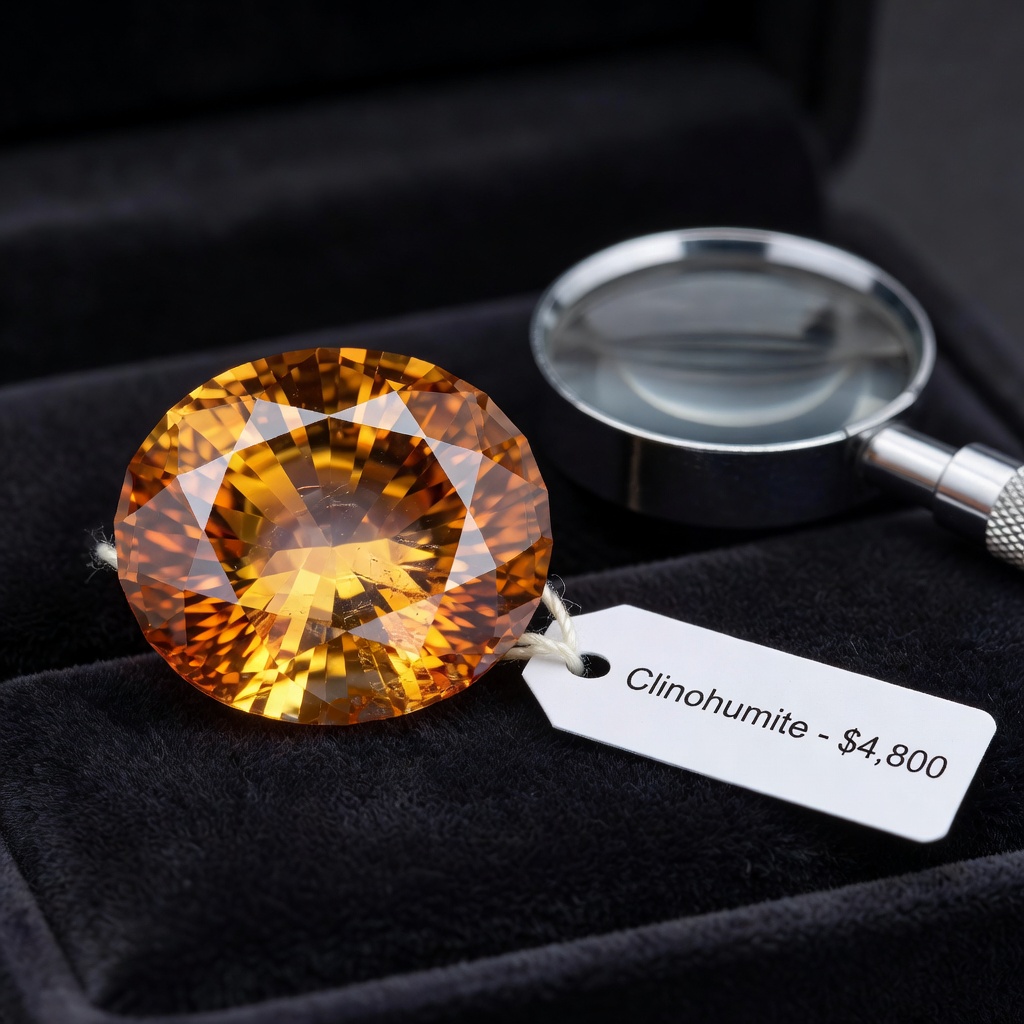
The valuation of clinohumite follows a strict hierarchy based on color intensity, with the most desirable specimens displaying a pure, vivid orange to golden-orange hue reminiscent of high-quality spessartite garnet or imperial topaz. Stones exhibiting brownish undertones or dull yellow coloration typically command 40-60% less than their intensely colored counterparts, regardless of clarity characteristics. The premium color grade, often described as "Fanta orange" or "mandarin" within the trade, represents less than 10% of total production, creating significant clinohumite value per carat differentials between aesthetic tiers. Collectors should examine stones under various lighting conditions, as some specimens display color shift between incandescent and daylight sources, affecting their desirability among purists.
Clarity assessment for clinohumite requires understanding the mineral's typical inclusion patterns, which commonly feature needle-like crystals of rutile, hematite flakes, or two-phase inclusions that resemble fingerprints under magnification. While completely eye-clean stones command the highest premiums, the market accepts minor inclusions that do not significantly impact transparency or durability, particularly in stones exceeding one carat. Clinohumite quality factors emphasize transparency over absolute inclusion-free status, with stones maintaining good light transmission despite minor internal characteristics valued higher than opaque or heavily included specimens. Cutters often orient crystals to minimize the appearance of these natural features while maximizing color saturation through the table facet.
Cut quality significantly influences pricing due to the mineral's cleavage challenges and tendency toward rough with irregular shapes. Master cutters must balance weight retention against optical performance, frequently choosing protective designs such as bezels or recessed settings rather than exposed corners. The yield from rough to finished gem typically ranges between 15-25%, meaning a 5-carat crystal might produce only a 1-carat faceted stone, directly impacting clinohumite value per carat calculations. Superb cutting that minimizes windowing while maintaining intense face-up color can increase value by 30-50% compared to poorly executed stones of similar rough quality, particularly in fancy shapes like cushions or ovals that preserve weight efficiently.
Current Clinohumite Price Per Carat (2024 Market Analysis)
The contemporary market for clinohumite demonstrates clear stratification across quality tiers, with commercial-grade material ranging from $500 to $1,500 per carat for smaller stones under one carat with moderate inclusions and acceptable color. This entry-level segment typically features stones from lesser-known localities or those with slightly brownish tones, suitable for collectors beginning their exploration of rare gems without requiring substantial capital investment. Dealers often parcel these stones in matched sets for jewelry manufacturing, though individual specimen purchases remain available through specialized colored stone vendors. When evaluating clinohumite value per carat at this level, buyers should prioritize structural integrity and cutting precision over absolute color intensity.
Fine quality specimens exhibiting intense orange coloration, eye-clean clarity, and expert cutting command substantially higher prices, typically falling between $2,000 and $5,000 per carat depending on size and origin documentation. This tier represents the sweet spot for serious collectors seeking Tajikistan clinohumite prices that balance aesthetic excellence with relative availability, particularly for stones between 0.75 and 1.5 carats. Market data from 2024 indicates steady appreciation within this category, driven by increasing awareness among high-net-worth collectors in Asian markets seeking alternatives to traditional blue and red gemstones. Investment-grade pieces in this range typically include laboratory certification verifying natural origin and absence of treatment, essential documentation for future liquidity.
Exceptional museum-grade clinohumites exceeding 2 carats with superior color and clarity represent the pinnacle of the market, with clinohumite value per carat ranging from $5,000 to $15,000 or higher for truly extraordinary specimens. These stones appear so infrequently that pricing often occurs through private negotiation rather than published lists, with recent auction results showing intense competition for stones over 3 carats. The price differential between rough material and finished gems becomes most pronounced at this level, as the risk of breaking large crystals during cutting adds substantial premium to successful faceted stones. Collectors should anticipate that stones over 5 carats, if available, may command prices approaching $25,000 per carat or more, reflecting their status as irreplaceable geological treasures.
Geographic Origin and Its Effect on Gemstone Value
The Pamir Mountains of Tajikistan produce clinohumite of such exceptional quality that origin has become the primary value determinant for high-end specimens, with material from this region commanding 25-40% premiums over equivalent stones from other localities. Tajikistan clinohumite prices reflect the unique geological conditions of the Koksha Valley deposits, where contact metamorphism between granitic intrusions and magnesium-rich limestones created crystals with unmatched transparency and pure orange coloration. Stones from this origin typically exhibit strong fluorescence under long-wave ultraviolet light, a characteristic highly prized by collectors and often specified in purchase requirements. Documentation proving Pamir Mountain origin can increase resale value significantly, making provenance research essential for investment acquisitions.
Russian material, primarily from the Taymyr Peninsula and Murun Massif in Siberia, occupies the secondary tier of the market, offering excellent color but often with slightly different hue characteristics compared to Tajikistan stones. Siberian clinohumites frequently display more yellowish-orange tones or subtle brownish components, though exceptional specimens rival the best Pamir material. These stones carry historical significance dating to Soviet-era mineralogical collections, appealing to collectors interested in the gemological heritage of Russian deposits. While rare clinohumite gemstones from Russia command respectable prices, they generally trade at 15-20% discounts to equivalent Tajikistan material unless accompanied by exceptional size or historical documentation.
Material from Afghanistan, Italy, and other minor localities typically occupies the commercial end of the market, often lacking the transparency and color intensity that define premium clinohumite. Italian specimens, while historically significant as the original source, rarely achieve gem quality suitable for faceting, instead serving as important mineral specimens for systematic collectors. Afghan material shows promise but remains largely unproven in terms of consistent commercial production, creating pricing volatility based on sporadic availability. For high-value purchases, independent laboratory origin reports from institutions such as the GIA or AGL provide essential verification, as visual distinction between sources requires advanced spectroscopic analysis beyond the capabilities of most dealers.
Size, Rarity, and Carat Weight Premiums
The scarcity of faceted clinohumites exceeding 2 carats creates an exponential pricing model that defies standard gemstone valuation curves, with stones doubling or tripling in per-carat price with each half-carat increment above one carat. This dramatic escalation stems from the crystallographic limitations of the humite group, which rarely forms large, clean crystals capable of yielding sizable cut stones. Most clinohumite crystals measure less than 5 millimeters in their longest dimension, and internal fracturing or inclusions typically eliminate 80-90% of rough material from consideration for gems over one carat. Understanding humite mineral pricing requires recognizing that availability drops precipitously above specific weight thresholds, creating artificial scarcity even within an already rare material.
Collector specimens versus jewelry-grade material present distinct value propositions, with crystal specimens containing visible matrix or rough surfaces often commanding prices comparable to cut stones among mineral enthusiasts. Complete crystals with terminated faces, particularly those showing the mineral's characteristic monoclinic prismatic habit, attract systematic collectors who prioritize geological perfection over wearability. However, the investment market strongly favors faceted stones, as jewelry applications provide broader resale opportunities and established pricing benchmarks. When evaluating clinohumite value per carat across these categories, faceted stones typically offer superior liquidity, while exceptional crystals appeal to specialized museum collections.
Specific weight categories trigger significant price increases, with stones between 1.00 and 1.49 carats forming the standard collector grade, while those between 1.50 and 2.99 carats entering the rare category commanding 50-100% premiums. The jump to 3.00+ carats represents a qualitative market shift, as such stones appear perhaps once or twice annually in international markets, requiring custom settings and specialized insurance considerations. Dealers report that stones over 5 carats effectively have no established market price, with valuations determined entirely by competitive bidding among specialized collectors. For investment purposes, acquiring stones at the 1.50-2.00 carat threshold often provides optimal balance between rarity and marketability.
Certification, Authentication, and Associated Costs
Proper documentation forms an essential component of any comprehensive Clinohumite Price Guide, with laboratory grading fees from recognized institutions such as GIA, AGL, or Gubelin ranging from $150 to $500 depending on the level of analysis required. Basic identification reports verify natural clinohumite and screen for treatments, while premium origin reports providing geographic attribution cost significantly more but add substantial value to high-end specimens. Advanced testing utilizing Raman spectroscopy, energy-dispersive X-ray fluorescence (EDXRF), and ultraviolet-visible (UV-Vis) spectroscopy distinguishes clinohumite from simulants such as spessartite garnet, sphalerite, or heat-treated citrine that may appear visually similar. These authentication costs, while seemingly high relative to the stone's value for smaller specimens, prove essential for pieces exceeding $5,000 to ensure marketability and insurance coverage.
The distinction between natural and treated material significantly impacts clinohumite quality factors and pricing, with untreated stones commanding 20-40% premiums over heat-treated material. While clinohumite rarely undergoes enhancement compared to other gemstones, gentle heating may occur to reduce brownish tones or improve clarity, requiring disclosure under international gemstone trading standards. Oil or resin treatments to mask surface-reaching fractures also appear in lower-quality material, though these significantly degrade value and durability. Buyers should insist on recent laboratory reports specifically testing for treatment indicators, as older documentation may not include modern screening protocols for low-temperature heat treatment or polymer fillings.
Origin documentation carries particular weight in the clinohumite market, with Tajikistan clinohumite prices for certified material consistently outperforming undocumented stones of similar appearance. The cost of origin reports typically adds $200-$400 to certification expenses but can increase resale value by thousands of dollars for fine specimens, representing excellent return on investment for documentation. Some laboratories now offer "country of origin" guarantees backed by extensive reference databases of inclusion scenes and chemical fingerprints specific to individual mining localities. For stones purchased without initial documentation, retroactive certification costs should be factored into acquisition pricing, particularly when buying from estate collections or older inventories where origin information may be anecdotal rather than scientifically verified.
Buying Channels: Retail Dealers vs Auction Houses
High-end colored stone dealers specializing in rare gems typically apply markup structures of 30-100% above wholesale costs for clinohumite, reflecting the capital intensity of maintaining inventory in an illiquid market and the expertise required to authenticate material. Established dealers with direct mining connections in Tajikistan or Russia may offer superior selection and pricing compared to general jewelers, though minimum purchase requirements often apply for first-time clients. Building relationships with reputable specialists provides access to pre-market material and estate pieces not publicly listed, crucial advantages when seeking specific size or quality categories. When pursuing orange gemstone investment strategies through retail channels, buyers should verify dealer membership in professional organizations such as the American Gem Trade Association (AGTA) or International Colored Gemstone Association (ICA).
Major auction houses including Sotheby's, Christie's, and Bonhams occasionally feature exceptional clinohumite specimens in their jewelry and important gemstones sales, typically adding buyer's premiums of 20-25% to hammer prices. These venues provide access to historically significant pieces with impeccable provenance, though the combination of premiums and competitive bidding often pushes final prices above retail levels. Auction records for clinohumite remain sparse due to the stone's rarity, but recent sales of important specimens have exceeded $10,000 per carat, establishing public benchmarks for insurance and valuation purposes. For rare clinohumite gemstones exceeding 3 carats, auction houses may provide the only viable sales channel, as private dealers rarely maintain inventory at this rarity level.
Online marketplaces present mixed opportunities for clinohumite acquisition, with significant authentication risks offsetting potential price advantages. While platforms specializing in colored stones occasionally list clinohumite, the stone's rarity makes it a target for misrepresentation, with cheaper orange gems occasionally substituted or origin claims fabricated. Wholesale purchasing through gemological conventions such as the Tucson Gem Show provides opportunities to handle material personally and negotiate directly with miners or cutters, though these events require substantial gemological knowledge to navigate effectively. Regardless of channel, payment methods offering buyer protection prove essential, with wire transfers to unknown sellers presenting unacceptable risks for high-value orange gemstone investment purchases.
Investment Potential and Future Market Trends
Supply scarcity projections indicate that clinohumite represents a genuinely depleting resource, with the primary Tajikistan deposits showing declining yields as accessible material becomes exhausted after three decades of limited production. Unlike diamonds or sapphires, where new discoveries periodically flood markets, clinohumite's specific geological requirements make new deposit discoveries statistically improbable, supporting long-term price appreciation theories. Mining operations in the Pamir Mountains face increasing logistical challenges and political complexities, further constraining supply streams to Western markets. These factors position clinohumite within the category of "legacy gemstones" where existing specimens may represent the majority of material available for future generations, creating compelling orange gemstone investment narratives for patient capital.
Growing collector demand in Asian and Middle Eastern markets has fundamentally altered the clinohumite landscape over the past decade, with Chinese and UAE collectors showing particular appetite for rare orange gems that complement traditional preferences for imperial jade and fire opal. This demographic shift has increased competition for fine specimens at international shows, with Asian buyers often willing to pay premiums for stones with strong fluorescence or exceptional size. The cultural significance of orange as a color of prosperity and good fortune in Chinese traditions aligns perfectly with clinohumite's aesthetic characteristics, suggesting sustained demand growth. Market analysts tracking Clinohumite Price Guide trends note that price appreciation has averaged 8-12% annually for fine quality stones over the past ten years, outperforming many traditional investment vehicles.
Historical price appreciation data reveals that clinohumite has appreciated more rapidly than comparable rare gems such as alexandrite or red beryl, partly due to starting from a lower base of recognition and market infrastructure. However, liquidity considerations present significant challenges for investors seeking short-term returns, as the specialized nature of the market requires months or years to locate appropriate buyers for high-value specimens. Unlike gold or blue-chip stocks, clinohumite cannot be liquidated quickly without substantial price concessions, making it suitable only for investors with 5-10 year holding periods and diversified portfolios. Successful orange gemstone investment in clinohumite requires accepting these liquidity constraints while capitalizing on the stone's absolute scarcity and growing collector base to achieve substantial long-term appreciation.
Total Cost of Ownership: Insurance and Care
Securing appropriate insurance coverage for high-value clinohumite requires specialized jewelers' block policies or scheduled personal property endorsements, as standard homeowner's insurance typically caps coverage for unlisted gemstones at inadequate levels. Annual premiums generally range from 1-2% of appraised value, with costs varying based on security measures, geographic location, and stone rarity. Professional appraisals updating replacement values should occur every 2-3 years given the stone's price volatility, with appraisal fees for clinohumite ranging from $150-$400 depending on complexity and documentation requirements. When maintaining a comprehensive Clinohumite Price Guide for insurance purposes, owners should retain purchase receipts, laboratory certificates, and detailed photographs to expedite claims processing in case of loss.
Proper storage conditions prove essential for preserving clinohumite quality factors over time, as prolonged exposure to intense sunlight or ultraviolet radiation may cause subtle color fading in some specimens, particularly those with natural fluorescence. Storage in dark, fabric-lined boxes away from direct light sources prevents photochemical degradation, while maintaining stable humidity levels between 40-60% prevents potential damage to any fracture fillings or surface-reaching inclusions. Unlike some sensitive gems, clinohumite does not require special atmospheric controls, but rapid temperature fluctuations should be avoided to prevent thermal shock given the mineral's perfect cleavage. For investment-grade specimens stored in bank vaults, annual inspection ensures that environmental conditions remain optimal and that settings remain secure.
Cleaning and maintenance protocols for clinohumite emphasize gentle treatment due to the mineral's relative softness (6 Mohs) and cleavage susceptibility. Ultrasonic and steam cleaners pose unacceptable risks, potentially causing fractures or loosening stones from settings, while harsh chemical solvents may attack surface-reaching inclusions or treatments. The recommended cleaning method involves lukewarm water with mild soap and a soft brush, followed by careful rinsing and pat-drying with lint-free cloths. For rare clinohumite gemstones worn in jewelry, removing pieces during physical activities, exposure to cosmetics, or household cleaning prevents accidental damage that could significantly impact value. Long-term preservation strategies also include periodic professional inspection of mountings to ensure prongs remain tight, protecting these irreplaceable stones from loss.
Frequently Asked Questions
How much does clinohumite cost per carat?
Clinohumite typically ranges from $500 to $1,500 per carat for commercial grade, $2,000 to $5,000 for fine quality, and can exceed $5,000 per carat for exceptional stones over 2 carats with intense orange coloration.
Why is clinohumite so expensive compared to other gemstones?
Clinohumite commands high prices due to extreme rarity—it's found in only a few locations worldwide, with gem-quality material limited primarily to the Pamir Mountains. Additionally, crystals rarely yield cut stones over 1-2 carats, making larger faceted gems exceptionally scarce.
What color clinohumite is most valuable?
The most valuable clinohumite displays an intense, pure orange to orange-yellow hue with high transparency. Brownish or dull yellow tones are less desirable. Stones with strong fluorescence under UV light also command premiums in the collector market.
Is clinohumite from Tajikistan worth more than other origins?
Yes, Tajikistan (Pamir Mountains) clinohumite generally commands the highest prices due to superior color intensity and transparency. Russian material is also valued but often exhibits slightly different color characteristics, while specimens from other localities typically sell at 20-30% discounts.
How rare is clinohumite compared to diamonds?
Gem-quality clinohumite is significantly rarer than diamonds. While diamonds are mined in tons annually, facetable clinohumite crystals number only in the hundreds of carats per year worldwide, making large clean specimens thousands of times rarer than diamonds.
Can clinohumite be treated or enhanced, and does this affect price?
Clinohumite is rarely treated, but some specimens may undergo gentle heating to improve color. Untreated natural stones command 20-40% premiums over treated material. Always request laboratory certification to verify natural status when purchasing investment-grade pieces.
What size clinohumite gemstones are typically available?
Most faceted clinohumites available on the market range from 0.25 to 1.5 carats. Stones over 2 carats are considered extremely rare and collectible, while specimens over 5 carats are museum-grade pieces that seldom appear on the open market.
Is clinohumite a good investment for gemstone collectors?
Clinohumite shows strong investment potential due to absolute scarcity and increasing collector demand, particularly in Asian markets. However, it requires specialized knowledge, proper certification, and long-term holding periods (5-10 years) to realize significant appreciation.