Introduction to Clinohumite: The Rare Orange Treasure
Clinohumite stands as one of the rarest and most coveted gemstones in the mineral world, distinguished by its captivating orange to brownish-yellow coloration that rivals the finest imperial topaz and spessartine garnets. This extraordinary gem was first discovered in the early 20th century within the marble deposits of the Pamir Mountains in Tajikistan, which remains the primary source for gem-quality specimens today. Additional deposits have been found in Russia's Taymyr Peninsula and Tanzania's Merelani Hills, though these locations yield significantly fewer facetable stones, making high-quality clinohumite a true collector's prize. Unlike more common gemstones that flood the market, clinohumite's extreme rarity means that each specimen represents a unique geological event where magnesium-rich limestone underwent specific contact metamorphism under precise temperature and pressure conditions.
The distinctive honey-orange hue of clinohumite results from trace amounts of iron and titanium within its crystal structure, creating a warmth that few other gemstones can replicate. However, this rarity comes with responsibility for owners, as clinohumite requires significantly more specialized care than harder stones like diamonds, sapphires, or rubies. Understanding the proper Clinohumite Care and Cleaning protocols is essential for preserving both the aesthetic beauty and investment value of this delicate treasure. Unlike quartz-based gems that can withstand daily abuse, clinohumite's specific chemical composition and physical properties demand a thoughtful approach to maintenance that respects its geological fragility while ensuring generations of enjoyment.
Understanding Clinohumite Durability and Vulnerabilities
Before implementing any maintenance routine, understanding clinohumite hardness and inherent vulnerabilities provides the foundation for proper preservation. Clinohumite registers a 6 on the Mohs hardness scale, placing it significantly softer than quartz (7) and drastically less durable than corundum varieties (9) or diamond (10). This relative softness means that everyday dust particles, which often contain microscopic quartz grains, can potentially scratch clinohumite's surface during routine wear or cleaning. The Clinohumite hardness Mohs scale rating also indicates that the stone is susceptible to abrasion from harder jewelry items, metal settings, and common household materials that owners might not consider threatening to their gemstone collection.
Beyond surface scratching, clinohumite possesses perfect cleavage in one direction, creating natural planes within the crystal structure that can split or chip under sudden impact or pressure. This cleavage characteristic makes the stone particularly vulnerable to damage from sharp blows, even those that might not affect more fracture-resistant gems like jade or tourmaline. Additionally, clinohumite demonstrates notable sensitivity to thermal shock, meaning rapid temperature changes can cause internal fractures to expand or create new stress lines within the crystal. Exposure to acids, including common household substances like vinegar or lemon juice, can etch the surface and dull the polish, while prolonged heat exposure may alter the stone's distinctive coloration. These vulnerabilities necessitate a comprehensive understanding of clinohumite durability before attempting any cleaning or wearing protocols.
Essential Daily Handling and Wear Guidelines
Implementing proper clinohumite jewelry handling techniques begins with adopting the "last on, first off" rule, a fundamental practice that minimizes exposure to potentially damaging chemicals and physical stress. This protocol involves putting on your clinohumite jewelry only after applying cosmetics, hairsprays, perfumes, and lotions, as these products often contain alcohols, acids, and oils that can create a film on the gemstone's surface or seep into microscopic fractures. Conversely, clinohumite pieces should be the first items removed when returning home, preventing accidental contact with hard surfaces during clothing changes or evening routines. This simple habit significantly reduces the accumulation of buildup that requires aggressive cleaning later while protecting the setting from unnecessary torque or pressure.
Daily gemstone care for clinohumite specifically requires avoiding wear during physical activities, including exercise, gardening, cooking, or household chores. The combination of sweat, which contains salts and acids, coupled with the risk of impact against countertops, dishes, or exercise equipment, creates an environment ripe for damage. When wearing clinohumite rings, be mindful of grip-intensive activities that might cause the stone to contact metal door handles, car keys, or desk surfaces. For necklace and earring wearers, avoid allowing the stones to rest against hard table edges or bathroom counters when leaning forward. Consider reserving clinohumite pieces for special occasions rather than daily wear, and always remove them before swimming in chlorinated pools or hot tubs, as chemical exposure combined with temperature variations poses particular risks to this sensitive Humite group mineral.
Safe At-Home Clinohumite Cleaning Methods
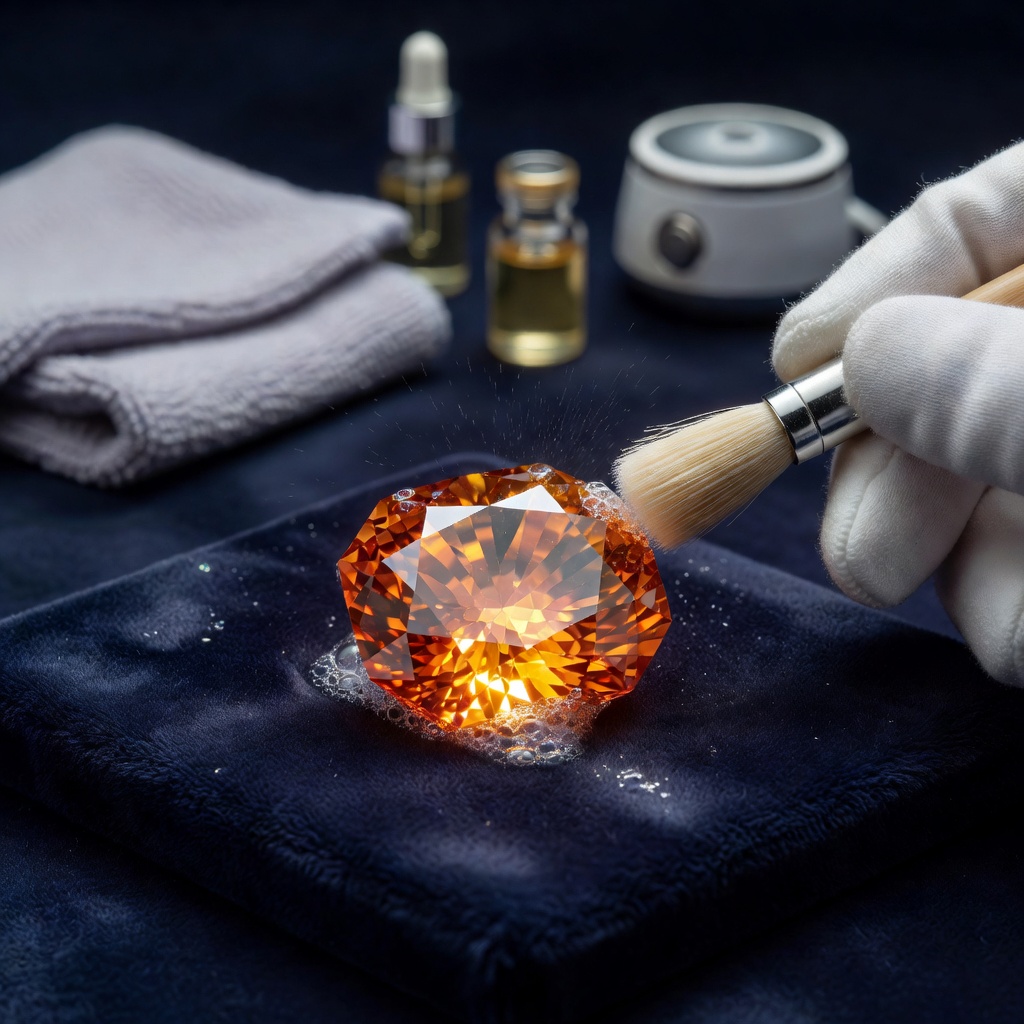
When performed correctly, Clinohumite Care and Cleaning at home can maintain your gemstone's brilliance without risking damage to its delicate structure. The safest and most effective method involves preparing a solution of lukewarm water—never hot or boiling—and mild phosphate-free dish soap, which lacks the harsh chemicals found in standard detergents. Fill a small bowl with this solution and allow your clinohumite jewelry to soak for approximately 15 to 20 minutes, which helps loosen accumulated oils, dust, and cosmetic residues without mechanical abrasion. This gentle approach to Rare orange gemstone care respects the stone's chemical sensitivity while effectively addressing the buildup that naturally occurs during wear.
After soaking, use a soft-bristled brush, ideally a baby toothbrush with extra-fine bristles, to gently remove any remaining debris from the stone's surface and around the setting prongs. Work in gentle circular motions without applying pressure, allowing the bristles to do the work rather than forcing them against the gem. Once cleaning is complete, rinse the piece thoroughly under lukewarm running water, ensuring all soap residue is removed as dried detergent can create a dulling film. Pat the jewelry dry immediately using a lint-free microfiber cloth or chamois, avoiding paper towels which can leave scratches. For optimal Home cleaning clinohumite results, place the dried piece on a soft towel in a safe location away from sinks or edges, allowing any residual moisture to evaporate completely before returning the item to storage. Never use compressed air or heat sources to speed drying, as these can cause thermal shock.
Professional Cleaning and Maintenance Protocols
While home maintenance forms the backbone of clinohumite preservation, certain situations demand Professional gemstone cleaning services from certified gemologists who understand the specific needs of this rare mineral. Professional intervention becomes necessary when home cleaning fails to restore brilliance, when you notice loose settings, or when the stone requires inspection for microscopic damage that might not be visible to the untrained eye. Certified professionals possess the magnification tools and lighting equipment necessary to examine internal inclusions and cleavage planes, identifying potential weaknesses before they develop into visible cracks or chips. They can also assess whether the setting itself requires tightening or restoration to prevent stone loss.
It is crucial to explicitly warn any jeweler or cleaning service against using ultrasonic cleaners or steam cleaning equipment on your clinohumite. The intense vibrations of ultrasonic baths can cause existing inclusions to expand and potentially shatter the stone along its cleavage planes, while steam cleaning creates dangerous thermal shock that may fracture the gem internally. Instead, request manual cleaning using the same mild soap solutions recommended for home care, performed by technicians who will handle the piece with appropriate delicacy. Establish a schedule for Gemstone maintenance services every 6 to 12 months, depending on wear frequency, to ensure professional inspection of both the stone and its mounting. During these visits, ask for documentation of the stone's condition, creating a baseline for tracking any changes in clarity, color, or structural integrity over time.
Optimal Storage Solutions for Long-term Protection
Proper Clinohumite jewelry storage represents a critical component of preservation strategy, particularly given the stone's vulnerability to scratching from harder materials. Always store clinohumite pieces in individual soft fabric compartments, padded jewelry pouches, or lined boxes that prevent contact with other gemstones. The ideal storage environment features stable temperature and moderate humidity levels, avoiding bathrooms or kitchens where steam and temperature fluctuations are common. Direct sunlight exposure should be minimized, as prolonged UV radiation may cause fading in some specimens, particularly those with lighter orange or yellowish tones. Consider using anti-tarnish strips in your storage area, but ensure they do not come into direct contact with the gemstone itself.
Separation from harder gemstones is non-negotiable when implementing effective Gemstone protection methods. Diamonds, sapphires, rubies, and even quartz pieces can easily scratch clinohumite's surface if stored together in a jewelry box or travel case. Create a dedicated section for your softer gems, or utilize individual soft cloth bags for each clinohumite piece. For necklace storage, hang items separately to prevent chain tangling that might cause stones to knock against each other or the clasp hardware. When traveling, carry clinohumite in a hard-sided case with foam padding rather than loose in a cosmetic bag where keys or metal accessories might cause damage. These Clinohumite storage practices, while seemingly meticulous, ensure that your investment remains pristine during periods of non-wear and extends the interval between necessary polishing treatments.
Common Cleaning Mistakes to Avoid
Understanding what not to do is equally important as knowing proper cleaning techniques when caring for this delicate Humite group mineral. One of the most dangerous Clinohumite cleaning errors involves using ammonia-based cleaners, commercial jewelry dips, or alcohol-based solutions that promise quick sparkle restoration. These aggressive chemicals can etch the surface of clinohumite, dulling its polish and potentially altering its refractive index, which affects how light travels through the stone. Similarly, acid-based cleaners, including natural solutions like lemon juice or vinegar, can react with the mineral's chemical composition, causing irreversible surface damage that requires professional re-polishing to correct.
Many well-meaning owners commit Gemstone care mistakes by employing abrasive household materials such as toothpaste, baking soda, or commercial scrubbing powders to remove stubborn buildup. These substances, while effective on harder materials, act as sandpaper on clinohumite's relatively soft surface, creating microscopic scratches that accumulate over time and create a permanently cloudy appearance. Another critical error involves exposing the gem to extreme heat sources, including hair dryers, steam cleaners, or direct sunlight through magnifying windows, which can cause thermal shock. Never attempt to clean clinohumite using boiling water or by placing it in dishwashers, as the combination of heat, harsh detergents, and mechanical agitation creates a perfect storm for catastrophic damage. When in doubt about any cleaning method, consult a professional gemologist rather than risking irreversible damage to this rare specimen.
Recognizing and Addressing Damage
Even with meticulous care, clinohumite may eventually show signs of wear that require professional attention, making early recognition of damage essential for effective intervention. Regularly inspect your stone under good lighting for surface scratches that appear as fine lines disrupting the gem's luster, chips along facet edges or the girdle, or cloudiness that suggests accumulated microscopic abrasions. Hold the stone against a dark background and rotate it under a single light source to check for new internal fractures or feathers that might indicate impact damage. Pay particular attention to the table facet, as this large, flat surface typically shows the first signs of scratching from daily wear. If you notice any looseness in the setting or hear rattling when gently shaking the piece near your ear, cease wearing immediately to prevent stone loss.
When damage occurs, professional Clinohumite damage repair options include re-polishing to remove minor surface scratches or re-cutting for more significant chips that affect the stone's symmetry and light performance. However, these procedures result in weight loss and potential value reduction, emphasizing the importance of prevention over restoration. A master gem cutter can sometimes repurpose a chipped stone into a smaller but flawless gem, though this requires sacrificing carat weight. For pieces showing extensive wear, consider retiring the item from daily rotation and reserving it for occasional wear only, preserving its condition for future generations. Document any damage with high-resolution photographs before and after repair, maintaining these records alongside your appraisal documentation. Remember that some inclusions and characteristics are natural to clinohumite and do not constitute damage, so seek professional evaluation to distinguish between natural features and wear-induced defects.
Investment Protection and Documentation
Given clinohumite's extreme rarity and increasing value in the collector's market, treating your gemstone as a tangible investment requires comprehensive documentation and protection strategies. Maintain updated appraisals from certified gemologists every two to three years, or more frequently if market conditions shift dramatically, ensuring your insurance coverage reflects current replacement values. These appraisals should specifically note the stone's color intensity, clarity characteristics, carat weight, and any treatments it may have undergone, as these factors significantly impact both value and care requirements. Photograph your clinohumite from multiple angles under consistent lighting conditions, creating a visual record that can help identify the stone if lost or stolen, and document its condition over time for insurance claims regarding damage.
Understanding treatment disclosures is crucial for proper Clinohumite investment care, as some specimens undergo oiling or resin filling to improve clarity, treatments that require specific maintenance protocols and affect long-term durability. Keep all purchase receipts, laboratory certificates, and treatment reports in a secure location separate from the jewelry itself, preferably in a fireproof safe or safety deposit box. Consider specialized jewelry insurance riders that cover mysterious disappearance and damage, rather than relying solely on standard homeowner's policies that may have limitations on high-value single items. When traveling with clinohumite, carry copies of documentation separately from the pieces, and utilize hotel safes rather than leaving items in luggage or unattended rooms. This level of Gemstone insurance documentation not only protects your financial investment but ensures that future owners will understand the provenance and care history of this exceptional rare clinohumite gemstone.
Frequently Asked Questions
Can I use an ultrasonic cleaner for my clinohumite jewelry?
No, ultrasonic cleaning is not recommended for clinohumite. The vibrations can expand existing inclusions and fractures, potentially causing the stone to crack or shatter due to its cleavage planes and relative softness.
How often should I clean my clinohumite gemstone?
For pieces worn regularly, clean your clinohumite every 2-3 weeks using mild soapy water and a soft brush. If worn occasionally, cleaning after each use is sufficient to remove oils and perspiration.
Is clinohumite safe to wear every day?
While possible, daily wear is not recommended due to clinohumite's Mohs hardness of 6. It's susceptible to scratching from daily activities and harder materials. Reserve daily wear for protected settings and occasional use for optimal preservation.
What should I do if my clinohumite gets scratched?
Do not attempt DIY polishing. Consult a professional gemologist who can evaluate whether re-polishing is viable. Minor scratches may be removed through professional polishing, but deep damage may require recutting.
Can I expose clinohumite to sunlight?
Brief exposure is generally safe, but prolonged direct sunlight or intense heat may cause color fading in some specimens. Store clinohumite away from windows and direct UV exposure to maintain its vibrant orange hue.
Is steam cleaning safe for clinohumite gemstones?
No, steam cleaning poses significant risks to clinohumite. The thermal shock from steam can cause internal fractures to expand and potentially break the stone. Always stick to lukewarm water methods.
What is the best way to store clinohumite when not wearing it?
Store clinohumite in a soft fabric pouch or lined jewelry box compartment, completely separate from other jewelry. Keep it away from harder gemstones and ensure the storage area has stable temperature and moderate humidity.
Can I use commercial jewelry cleaners on clinohumite?
Avoid most commercial cleaners, especially those containing ammonia, alcohol, or acids. Only use mild, phosphate-free dish soap diluted in water. When in doubt, consult a gemologist for pH-neutral cleaning solutions specifically safe for clinohumite.