
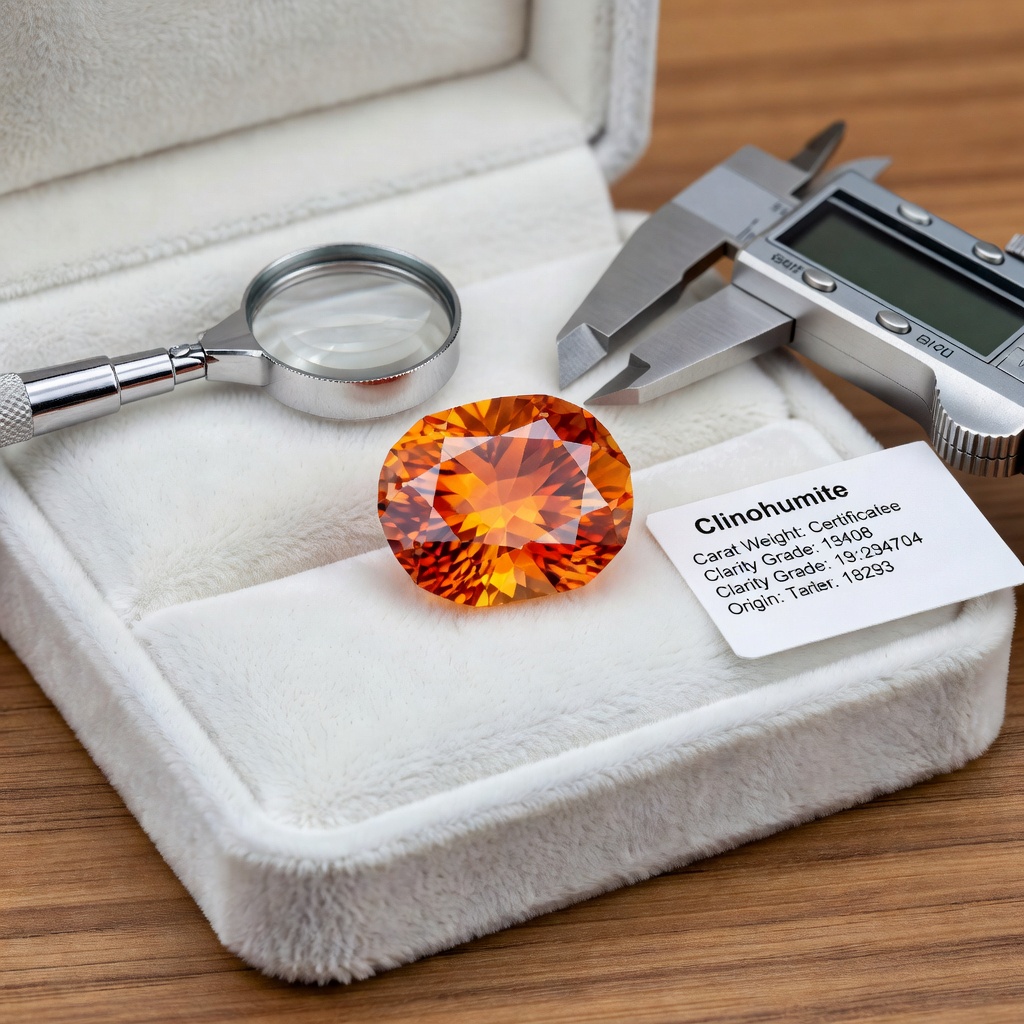
What is Clinohumite? Understanding This Rare Gemstone
Clinohumite represents one of the gem world's most extraordinary discoveries, belonging to the humite group minerals that form under specific high-pressure, high-temperature metamorphic conditions deep within the earth's crust. This calcium magnesium silicate hydroxide fluoride crystallizes in the monoclinic system, creating the distinct optical properties that make rare clinohumite gemstones so captivating to collectors and connoisseurs. Unlike more common jewelry stones, clinohumite requires unique geological circumstances involving contact metamorphism between limestone and magnesium-rich igneous intrusions, resulting in its extreme scarcity. First discovered in the Pamir Mountains of Tajikistan during the 1980s, subsequent findings in Siberia's Taymyr Peninsula and Afghanistan's Badakhshan Province have yielded only limited quantities of facetable material, cementing its status as a true collector's prize.
The rarity of clinohumite cannot be overstated when compared to other prestigious collector gemstones such as alexandrite or red beryl, as viable mining operations produce merely kilograms of rough material annually versus tons of more common precious stones. Gem-quality clinohumite crystals rarely exceed sizes suitable for cutting stones above two carats, with the majority of discoveries yielding specimens under one carat after faceting losses. Historical records indicate that clinohumite remained virtually unknown to the jewelry market until the late 20th century, when Russian mineralogists identified the first transparent crystals suitable for ornamental use. Today, this delayed market emergence creates unique opportunities for astute collectors seeking to acquire rare clinohumite gemstones before mainstream recognition drives prices substantially higher.
Color Grading: Evaluating Orange and Yellow Hues
When evaluating orange clinohumite quality, collectors must understand the narrow color spectrum that determines both aesthetic appeal and market value, ranging from pale lemon yellow through honey gold to the coveted deep reddish-orange and burnt orange hues. The most desirable specimens display vivid saturation with medium to medium-dark tones, avoiding the washed-out appearance of lightly colored material or the overly dark, brownish cast that diminishes brilliance. Tajikistan clinohumite typically produces the most intense orange colors due to specific trace element compositions in the Pamir Mountain deposits, while Tanzanian material often exhibits lighter, more yellowish-orange tones that command lower prices despite comparable clarity. Experienced buyers should examine stones under various lighting conditions, as high-quality clinohumite maintains its color intensity in incandescent, fluorescent, and natural daylight without significant graying or browning.
Fluorescence properties serve as crucial authentication markers and quality indicators for discerning collectors, with genuine clinohumite displaying distinct reactions under ultraviolet light that differentiate it from simulants. Most high-quality specimens exhibit moderate to strong yellowish-orange or greenish fluorescence under long-wave UV light, creating an additional layer of visual interest for collectors who appreciate gemstone luminescence. When purchasing investment-grade material, request to view the stone under UV illumination to verify this characteristic reaction, as the absence of fluorescence may indicate treatment or misidentification. Additionally, pleochroism in clinohumite creates color shifting between yellow-orange and brownish tones depending on viewing angle, a phenomenon that skilled cutters leverage to maximize the face-up color display in finished gems.
Clarity Standards and Inclusion Patterns
Clarity assessment for collectible clinohumite requires understanding the typical inclusion patterns that characterize this gem type, as completely eye-clean specimens represent exceptional rarities that command significant premiums. Most natural clinohumite contains distinctive crystal inclusions, fingerprint patterns, and healing fractures that resemble those found in peridot or tourmaline, serving as proof of natural origin rather than detracting significantly from value. However, heavily included stones with surface-reaching fractures or large central inclusions may compromise structural integrity, making them unsuitable for jewelry settings despite their appeal as mineral specimens. When examining potential acquisitions, use 10x magnification to distinguish between acceptable internal characteristics and problematic inclusions that might affect durability or optical performance.
Eye-clean standards in the clinohumite market differ substantially from those applied to commercial gemstones like sapphires or aquamarines, with collectors often accepting minor inclusions visible only under magnification in exchange for superior color or size. Stones with slight haziness or scattered tiny crystals that remain invisible to the unaided eye typically fall into the mid-range pricing tier, while loupe-clean specimens without any visible inclusions represent the pinnacle of quality for serious collectors. Transparency levels significantly impact pricing, with crystal-clear material allowing maximum light return and scintillation commanding prices three to five times higher than cloudy or heavily included stones of similar color. When building a collection, consider acquiring both included specimens that demonstrate natural growth characteristics and investment-grade eye-clean stones that offer greater liquidity in the resale market.
Cut Quality and Carat Weight Considerations
Maximizing beauty in clinohumite requires specialized cutting expertise due to its biaxial positive optical character and distinct cleavage properties, making faceting style selection critical for displaying optimal brilliance and color. The most successful cuts typically include modified brilliant designs, cushions, and ovals that minimize cleavage risk while maximizing face-up appearance, whereas emerald cuts or other step designs may emphasize inclusions and reduce apparent vitality. Cutters must carefully orient the rough crystal to align the table perpendicular to the optimal color axis, as improper orientation can result in washed-out or uneven color distribution that destroys value regardless of rough quality. Due to these orientation challenges and the mineral's brittle nature, custom cutting clinohumite typically costs 30-50% more per carat than cutting more durable materials like quartz or garnet.
Rough yield percentages for clinohumite remain notoriously low, with cutters typically recovering only 15-25% of the original crystal weight after faceting, significantly less than the 40-50% yield common for harder gemstones. This substantial material loss directly impacts clinohumite price per carat calculations, as a finished two-carat gem requires starting with eight to twelve carats of clean rough material, explaining the exponential price increases for larger stones. Availability thresholds create distinct market categories, with stones under one carat appearing periodically in the market, one to two carat specimens requiring dedicated searching, and stones exceeding two carats representing extraordinary rarities that may take years to locate. When budgeting for acquisitions, remember that a three-carat fine clinohumite may cost ten to fifteen times more per carat than a one-carat stone of equivalent quality due to these scarcity factors.
Pricing Guide: What to Expect Per Carat
Understanding clinohumite price per carat requires recognizing the extreme quality spectrum that separates commercial specimens from museum-grade collector pieces, with entry-level pricing beginning around $100 to $500 per carat for small, included stones under one carat. These accessible specimens typically display light yellow to brownish-orange colors with visible inclusions and may suit collectors seeking representative examples of humite group minerals without significant investment. Mid-range market values for eye-clean 1-2 carat stones with decent color saturation generally fall between $1,000 and $3,000 per carat, representing the sweet spot for serious collectors seeking wearable jewelry pieces with investment potential. At the premium tier, large clinohumite specimens over two carats displaying vivid burnt orange to reddish-orange hues with exceptional clarity can command $5,000 to $10,000 or more per carat, rivaling fine alexandrite or paraiba tourmaline in rarity-adjusted pricing.
Several factors drive price volatility in the rare clinohumite market, including political instability in primary source regions like Tajikistan and Afghanistan, which can suddenly restrict supply and cause rapid price appreciation. The limited number of specialized dealers handling this material means that individual transactions can significantly impact perceived market values, unlike the more stabilized pricing of commonly traded gems. Additionally, new discoveries occasionally flood the market temporarily, creating buying opportunities before supplies tighten again, though such events remain unpredictable and rare. When purchasing clinohumite as an investment, budget for the upper end of your target range to acquire the finest quality available, as premium specimens historically appreciate faster than commercial-grade material during market upswings.
Authentication: Avoiding Synthetics and Look-Alikes
Distinguishing genuine clinohumite from simulants requires careful gemological testing, particularly when differentiating clinohumite vs sphene (titanite), which shares similar yellow-orange hues but displays significantly higher dispersion and double refraction. Sphene exhibits fire and brilliance exceeding that of diamond, whereas clinohumite shows more subdued optical performance with a refractive index ranging from 1.63 to 1.67 and specific gravity between 3.1 and 3.2, markedly different from sphene's measurements. Hessonite garnet and Madeira citrine present additional identification challenges, though both lack clinohumite's characteristic fluorescence under UV light and possess different hardness and optical properties that trained gemologists can readily detect. Always request comprehensive testing that includes refractive index, specific gravity, and fluorescence examination when purchasing high-value specimens to ensure authenticity.
While natural clinohumite typically receives no treatment, enhancing its appeal for purist collectors, the market occasionally encounters oiling or resin filling intended to mask surface-reaching fractures and improve apparent clarity. Heat treatment remains extremely rare and difficult to detect in clinohumite, making laboratory certification from reputable institutions like GIA (Gemological Institute of America) or AGL (American Gemological Laboratories) essential for significant purchases. These certifications should specifically state "no indications of heating" or "natural color" to protect your investment, as treated stones command substantially lower prices and may prove difficult to resell to knowledgeable collectors. When examining loose stones, check for unusual surface reflections or color concentrations along fracture lines that might indicate artificial filling, and insist on microscopic photography showing internal features before completing remote purchases.
Where to Buy Clinohumite: Dealers and Marketplaces
Navigating where to purchase clinohumite requires distinguishing between reputable specialized colored stone dealers who understand this niche market and general jewelry retailers who may misidentify or misrepresent material. Established dealers attending major trade shows like the Tucson Gem and Mineral Show often maintain direct relationships with miners in Tajikistan and Tanzania, offering first selection of new discoveries before stones reach broader markets. When evaluating online platforms, verify that sellers provide detailed photographs under multiple lighting conditions, comprehensive laboratory certification, and reasonable return policies allowing inspection by an independent gemologist. Be wary of auction sites or marketplace listings offering clinohumite at prices significantly below market rates, as these often involve misidentified hessonite garnet, citrine, or even glass imitations.
Building direct relationships with miners or rough dealers in source countries can yield exceptional specimens at favorable prices, though this approach requires extensive knowledge to evaluate rough material accurately and carries higher risks regarding payment security and export regulations. Professional associations like the International Gem Society or the American Gem Trade Association maintain directories of vetted dealers specializing in rare collector stones, providing safer entry points for new collectors. When attending trade shows, visit the AGTA GemFair or specific colored stone pavilions rather than general merchandise areas, as these venues enforce stricter ethical and disclosure standards regarding treatments and origins. Regardless of purchase venue, this Clinohumite Buying Guide recommends acquiring stones with existing laboratory reports rather than relying on dealer-provided identifications, protecting both novice and experienced collectors from costly misidentifications.
Care, Setting, and Durability Factors
With a Mohs hardness of only 6, rare clinohumite gemstones require careful consideration regarding jewelry applications, as they scratch relatively easily and exhibit sensitivity to thermal shock that can cause fracturing during jewelry repair or cleaning. This hardness level places clinohumite similar to opal or tanzanite, meaning it suits occasional-wear pieces rather than daily-wear rings that encounter frequent impact against hard surfaces. When setting clinohumite, choose protective mountings such as bezels, partial bezels, or protective V-prongs that shield the girdle edges from direct blows, avoiding exposed prong settings that leave vulnerable corners unprotected. Jewelers experienced with rare collector gems recommend against ultrasonic or steam cleaning, instead suggesting gentle washing with mild soap, warm water, and soft brushes to maintain surface polish without risking thermal or mechanical damage.
For collectors intending to wear their clinohumite regularly, earrings and pendants present safer options than rings, as these settings minimize impact risk while showcasing the gem's distinctive color against skin or clothing. If ring wear proves essential, consider protective designs featuring halo settings or raised bezels that absorb impact before it reaches the gem, and remove the piece during activities involving hand contact with hard surfaces. Storage requires individual soft pouches or compartmented boxes to prevent contact with harder gemstones like diamonds or sapphires that could scratch the clinohumite surface. When traveling with collectible clinohumite, carry pieces in hand luggage rather than checked baggage to avoid temperature extremes in cargo holds, and consider removing rings when washing hands in public restrooms where thermal shock from hot water could potentially damage the stone.
Investment Potential and Collection Strategy
The investment potential for collectible clinohumite has strengthened considerably over the past decade, driven by increasing collector demand for rare orange gems and diminishing supply from historically productive mines in Tajikistan. Market analysis indicates that fine clinohumite has appreciated steadily at rates exceeding 10-15% annually for top-quality specimens, outperforming many traditional investment vehicles while offering the tangible enjoyment of owning a natural work of art. When building a collection, consider focusing on specific parameters such as Tajikistan origin stones over two carats with certified natural color, as these represent the most liquid segment of the market when resale becomes necessary. Alternatively, acquiring a range of sizes and qualities allows collectors to enjoy the full spectrum of clinohumite's appearance while maintaining flexibility for future trading or upgrading.
Documentation and provenance significantly impact resale value in the rare gem market, making it essential to retain original laboratory certificates, purchase receipts, and any historical information regarding the stone's mining origin or previous ownership. High-resolution photographs taken under standardized lighting conditions at the time of purchase create baseline records for tracking condition changes and verifying authenticity during future transactions. For long-term storage, maintain stable humidity and temperature conditions away from direct sunlight, as extreme environmental fluctuations could potentially affect the stone's surface or any included materials. Insurance coverage should reflect replacement costs based on current market values rather than original purchase prices, requiring periodic reappraisals every two to three years to maintain adequate protection as clinohumite values continue appreciating in the rare gem marketplace.
Frequently Asked Questions About Clinohumite
What Makes Clinohumite So Rare Compared to Other Gemstones?
Clinohumite is one of the rarest gemstones on earth, with gem-quality material found only in specific high-pressure, high-temperature geological environments in Tajikistan, Siberia, and Tanzania. Unlike diamonds or sapphires, clinohumite crystals rarely grow large enough to produce faceted stones over 2 carats, making fine specimens hundreds of times rarer than diamond. The combination of restricted geological formation conditions, limited mining localities, and the extreme difficulty of recovering clean rough material suitable for cutting contributes to its status as a true collector's gemstone that serious enthusiasts may search years to acquire.
How Much Does Clinohumite Cost Per Carat?
Clinohumite pricing varies dramatically by quality, with small, included stones costing $100-$500 per carat, while eye-clean 1-2 carat specimens typically range $1,000-$3,000 per carat. Exceptional large stones with vivid orange color can command $5,000 to $10,000+ per carat, reflecting their extreme scarcity in the market. These prices place high-quality clinohumite in the same investment category as fine alexandrite or paraiba tourmaline, with larger specimens often appreciating significantly faster than smaller commercial-grade material.
What Color Clinohumite Is Most Valuable?
The most valuable clinohumite displays a vivid, saturated reddish-orange to burnt orange hue with medium to medium-dark tone. Stones from Tajikistan often show the most desirable deep orange colors, while lighter yellow or brownish specimens command significantly lower prices regardless of clarity. When evaluating color, look for stones that maintain their intensity under various lighting conditions without appearing brown or gray, as these represent the pinnacle of quality for this rare gemstone variety.
How Can I Tell if Clinohumite Is Real or a Look-Alike?
Authentic clinohumite can be distinguished from similar gems like sphene or hessonite garnet by its specific gravity (3.1-3.2), refractive index (1.63-1.67), and distinct fluorescence under long-wave UV light. Always request certification from reputable labs like GIA or AGL, and be wary of stones priced significantly below market value. Professional gemological testing remains the only reliable method for positive identification, as visual similarities to hessonite garnet, citrine, or sphene can fool even experienced collectors without proper instrumentation.
Is Clinohumite Treated or Enhanced?
Natural clinohumite is typically untreated, which adds to its appeal for collectors seeking pure, natural gemstones. However, some lower-quality material may undergo oiling or resin filling to improve clarity appearance, while heat treatment remains extremely rare and difficult to detect. Laboratory certification is essential for high-value purchases to confirm the absence of treatments, as enhanced stones command substantially lower prices and may prove difficult to resell to knowledgeable collectors seeking natural specimens.
Is Clinohumite Durable Enough for an Engagement Ring?
With a Mohs hardness of 6, clinohumite is relatively soft and brittle compared to sapphires or diamonds. While suitable for occasional wear, it's not recommended for daily-wear engagement rings unless set in protective bezel settings. It's better suited for pendants, earrings, or collector specimens where impact risk is minimal, as the stone's sensitivity to thermal shock and tendency to scratch make it impractical for hands-on daily activities that traditional engagement rings endure.
Where Is the Best Place to Buy Clinohumite?
The best sources include specialized colored stone dealers at trade shows like Tucson, established online retailers with return policies, and direct connections with miners in Tajikistan. Avoid general auction sites without authentication guarantees. Always verify the dealer's reputation through professional organizations like the American Gem Trade Association and insist on independent laboratory certification before completing significant purchases, as the specialized nature of this gem requires dealers with specific expertise in rare collector stones.
What Gems Are Commonly Mistaken for Clinohumite?
Clinohumite is frequently confused with sphene (titanite), which shows higher dispersion and different optical properties; hessonite garnet, which is harder and lacks fluorescence; and Madeira citrine, which is much softer and has different refractive indices. Professional gemological testing is the only reliable method for positive identification, as these look-alikes can appear visually similar to untrained observers but possess distinctly different values and care requirements. Always verify identity through certified laboratory reports when building a serious collection.


