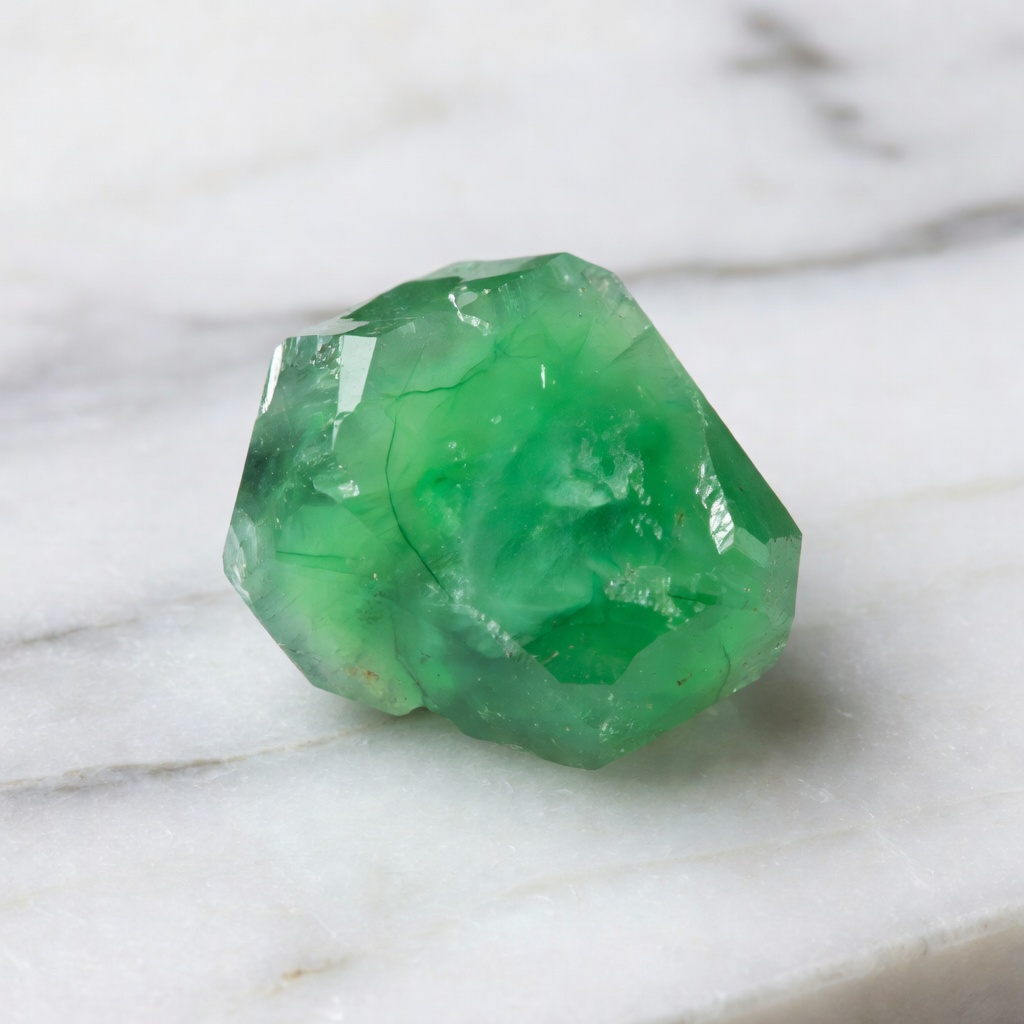
What Is Chrysoprase? Understanding This Green Gemstone
Chrysoprase represents one of nature's most captivating green gemstones, distinguished as a rare variety of chalcedony quartz that derives its mesmerizing color from trace nickel inclusions within its silica structure. Unlike emerald or peridot, which owe their green hues to chromium or iron respectively, this gemstone's apple-green to deep jade-like appearance comes specifically from nickel oxide deposits that create its signature translucent quality. Collectors and jewelry enthusiasts prize chrysoprase for its unique combination of affordability and visual impact, often describing its color as ranging from the bright freshness of new spring leaves to the deep, mysterious tones of ancient forest canopies.
Historically, chrysoprase held tremendous significance across ancient civilizations, with archaeological evidence revealing its use in Greek, Roman, and Egyptian jewelry and talismans dating back thousands of years. Alexander the Great reportedly wore a chrysoprase gemstone into battle, believing it granted him courage and protection, while Egyptian pharaohs incorporated the stone into elaborate ceremonial pieces to symbolize growth and renewal. The ancient Greeks associated this green chalcedony with the goddess Venus, attributing to it the power to promote love and fertility, a tradition that continues in modern crystal healing practices today.
When evaluating chrysoprase meaning in contemporary gemology, experts emphasize the stone's remarkable color consistency and natural variations. High-quality specimens display an even, saturated apple-green color without brownish or yellowish undertones, while lower-grade material may appear pale or mottled. The finest chrysoprase exhibits a translucent quality that allows light to penetrate several millimeters into the stone, creating an almost glowing effect that distinguishes it from opaque green gemstones like jade or aventurine.
Physical Characteristics and Chemical Composition
Understanding chrysoprase properties and information requires examining its unique chemical composition, which follows the formula SiO2 (silicon dioxide) with distinctive nickel content typically ranging between 0.5% to 3% that creates the characteristic green coloration. This cryptocrystalline quartz structure consists of microscopic interlocking quartz crystals so fine that they appear smooth and homogeneous to the naked eye, distinguishing chrysoprase from macrocrystalline quartz varieties like amethyst or citrine. The nickel ions replace silicon in the crystal lattice, absorbing specific wavelengths of light to produce the stone's desirable green spectrum without requiring additional treatments or enhancements.
Chrysoprase hardness ranks between 6 and 7 on the Mohs scale, making it sufficiently durable for various jewelry applications including rings, pendants, and earrings, though it requires protection from harder materials like diamonds, rubies, or sapphires. This hardness level places it alongside other popular jewelry stones such as turquoise and moonstone, offering reasonable resistance to scratching while remaining workable for artisans who carve intricate designs or polish smooth cabochons. When selecting chrysoprase for daily wear pieces, jewelers often recommend protective settings such as bezels or halos to shield the stone's edges from potential impacts that could cause chipping or fractures.
The gemstone typically presents a translucent to opaque appearance with a vitreous to waxy luster when polished, though premium specimens from Australia often achieve a glass-like shine that enhances their visual depth. Unlike transparent gemstones that require faceting to maximize brilliance, chrysoprase is usually cut en cabochon—featuring a smooth, rounded, and unfaceted surface—that best displays its color saturation and any subtle internal patterns. Some master cutters create elaborate carvings or beads from high-quality material, taking advantage of the stone's uniform texture and ability to hold fine detail without crumbling or cracking under carving tools.
Where Does Chrysoprase Come From? Global Sources
The world's premier chrysoprase deposits occur in Queensland, Australia, specifically within the Marlborough district, where miners extract high-quality apple-green specimens renowned for their exceptional color saturation and translucency. Australian chrysoprase forms within weathered nickel-bearing laterite deposits and ophiolite rocks, geological environments where ancient oceanic crust has undergone millions of years of chemical weathering and mineral replacement. The specific geological conditions in Queensland, including the presence of nickel-rich ultramafic rocks and a favorable climate for laterization, create the perfect environment for forming these prized gemstones, with some mines producing material so fine it rivals imperial jade in appearance.
Significant alternative sources include the historic mining region of Szklary, Poland, which has produced chrysoprase since the 14th century and continues to yield material with characteristic deeper green tones and interesting matrix patterns. Minas Gerais, Brazil, represents another important source, particularly for material used in beaded jewelry and carvings, while Tanzania, Kazakhstan, and the United States (notably California and Arizona) contribute smaller quantities to the global market. Each locality produces chrysoprase stone with subtle variations in color intensity and clarity; for instance, Polish material often displays a slightly more yellowish-green hue compared to the pure apple-green of top Australian specimens.
Prospectors and geologists identify potential chrysoprase origins by searching for specific geological indicators including serpentinite rocks, nickel laterite profiles, and areas with a history of hydrothermal activity. The formation process typically requires millions of years as silica-rich solutions percolate through nickel-bearing host rocks, gradually depositing chalcedony that incorporates the green-coloring nickel compounds. Modern mining operations in Australia employ open-pit techniques to access these shallow deposits, while artisanal miners in other regions often use hand tools to carefully extract the fragile material without causing fractures that would reduce its value in the gemstone market.
Chrysoprase Healing Properties and Spiritual Benefits
Metaphysical practitioners celebrate chrysoprase healing properties for their profound connection to the heart chakra, positioning this gemstone as a powerful tool for emotional healing, relationship harmony, and fostering unconditional love. When placed over the heart during meditation or worn as a pendant resting near the cardiac center, chrysoprase is believed to dissolve energetic blockages that prevent the giving and receiving of affection, helping individuals release past traumas and embrace vulnerability in healthy relationships. Crystal healers often recommend this stone for clients recovering from heartbreak or betrayal, as its gentle green vibration supposedly encourages forgiveness without forcing emotional processing faster than the individual's natural rhythm allows.
Beyond emotional matters, chrysoprase chakra work extends to promoting optimism, compassion, and prosperity consciousness, with many users reporting enhanced creativity and business success when keeping the stone in their workspace or cash register. The gemstone's association with Venus and the heart center translates into practical applications for attracting new relationships or deepening existing bonds, making it a popular choice for engagement rings or anniversary gifts among spiritually-minded couples. Some practitioners create crystal grids combining chrysoprase with rose quartz and green aventurine to amplify intentions related to love, abundance, and emotional growth.
Traditional healing systems attribute additional physical benefits to chrysoprase stone benefits, including support for detoxification processes, fertility enhancement, and the promotion of restful sleep patterns. Ancient Roman physicians prescribed chrysoprase elixirs for treating gout and eye diseases, while medieval texts recommended wearing the stone to prevent nightmares and ensure pleasant dreams. Modern holistic practitioners suggest placing chrysoprase under the pillow or on the nightstand to combat insomnia caused by racing thoughts or anxiety, though they caution against ingesting any gemstone preparations without professional medical supervision.
Chrysoprase vs Jade: Key Differences Explained
Distinguishing between chrysoprase vs jade requires careful visual inspection, as both gemstones share similar green colorations but exhibit distinctly different optical properties and structural compositions. Chrysoprase typically displays a brighter, more translucent apple-green appearance with a slightly waxy to vitreous luster, while jade (whether nephrite or jadeite) tends toward a more opaque, mottled appearance with a characteristic greasy or waxy sheen that lacks the depth of light penetration seen in fine chrysoprase. When held against a bright light source, quality chrysoprase reveals its semi-transparent nature, allowing light to pass through edges several millimeters thick, whereas even thin sections of jade remain largely opaque.
Hardness and durability differences significantly affect jewelry wearability and carving applications between these two green gemstones. While chrysoprase hardness measures 6-7 on the Mohs scale, nephrite jade ranks slightly higher at 6-6.5 but possesses exceptional toughness due to its fibrous interlocking crystal structure, making it ideal for intricate carvings and objects subject to impact. Jadeite jade, measuring 6.5-7, offers superior durability for daily wear rings and bracelets compared to chrysoprase, which requires more protective settings and careful handling to prevent surface scratches or chips. Artisans carving detailed sculptures often prefer jade for its resistance to fracturing, while chrysoprase works better for jewelry pieces where translucency and color are prioritized over structural complexity.
Market value distinctions and accessibility create important considerations for collectors and jewelry enthusiasts choosing between these materials. High-quality imperial jadeite commands prices exceeding those of diamonds per carat, while fine Australian chrysoprase offers comparable visual beauty at a fraction of the cost, making it an attractive alternative for budget-conscious consumers seeking green gemstone jewelry. Chrysoprase identification in the marketplace requires vigilance against dyed chalcedony or glass imitations masquerading as both chrysoprase and jade, though chrysoprase generally shows more uniform color distribution than the often mottled or veined appearance of natural jade. For collectors, untreated chrysoprase with vivid color represents a sound investment as supplies dwindle, while jade remains the traditional choice for those seeking cultural significance and historical prestige.
Chrysoprase in Jewelry: Settings and Styles
Jewelry designers favor specific cutting styles for chrysoprase that maximize its color display, with cabochons representing the most popular format due to their ability to showcase the stone's translucency and even color distribution. Unlike faceted gemstones that rely on light return and sparkle, chrysoprase cabochons feature smooth, domed surfaces that create a glowing effect as light penetrates and reflects within the material, particularly effective for rings and pendants where the stone moves against the wearer's body. Bead makers utilize high-quality rough to create graduated strands for necklaces, while master carvers craft intricate cameos, flowers, or animal figures that take advantage of the material's uniform texture and ability to hold fine detail without splintering.
Optimal metal pairings significantly enhance chrysoprase jewelry aesthetics, with yellow gold and rose gold settings providing warm contrasts that emphasize the stone's cool green tones, while sterling silver offers a contemporary look that highlights the gem's crisp, apple-fresh coloration. Vintage-inspired designs often feature chrysoprase in elaborate gold filigree settings reminiscent of Art Nouveau or Victorian eras, when the stone experienced particular popularity for brooches and statement necklaces. Modern minimalist designers increasingly incorporate chrysoprase into sleek bezel-set pendants or stackable rings, recognizing that the stone's natural beauty requires little embellishment to create striking visual impact.
Durability considerations influence setting recommendations, with protective bezels or halo designs strongly advised for chrysoprase rings subjected to daily wear, while pendants and earrings face fewer risks of impact damage. Chrysoprase stone benefits from designs that minimize exposure to hard surfaces, making drop earrings and collar necklaces excellent choices for showcasing the material safely. When designing custom pieces, jewelers should account for the stone's sensitivity to heat, avoiding torch work directly on the setting once the stone is mounted, and ensuring that prong settings feature rounded tips that won't catch on clothing or create pressure points that could fracture the material.
How to Identify Genuine Chrysoprase Stones
Accurate chrysoprase identification begins with careful visual inspection techniques that distinguish natural inclusions from glass or plastic imitations commonly found in the marketplace. Genuine chrysoprase exhibits subtle color variations and natural inclusions visible under 10x magnification, such as tiny nickel-bearing mineral spots, wisps of white chalcedony, or dendritic patterns that indicate natural formation processes. In contrast, glass imitations often appear too perfect with uniform color distribution and may show bubbles, swirl marks, or conchoidal fractures when examined closely, while plastic simulants feel unusually warm to the touch and can be scratched easily with a pin.
Understanding common treatments helps collectors avoid misrepresented material, as some dealers apply dyeing and heating methods to pale chalcedony varieties to simulate the desirable apple-green color of natural chrysoprase. Dyed stones often display color concentrations in surface-reaching fractures or along edges, and may show unusual fluorescence under UV light compared to the inert or weak greenish fluorescence of natural material. Heat treatment can lighten or alter the color of chrysoprase, though this is less common than dyeing; treated stones may appear slightly brittle or show color zoning that differs from the gradual transitions seen in natural specimens.
Professional gemological testing provides definitive answers for valuable specimens, utilizing refractive index measurements (authentic chrysoprase registers at 1.530-1.539) and specific gravity testing (2.58-2.64) to confirm identity. Real chrysoprase will scratch glass (hardness 5.5) but can be scratched by topaz or corundum, providing a simple field test for rough material, though this method risks damaging finished jewelry pieces. Advanced laboratories may employ spectroscopic analysis to detect the specific nickel absorption spectrum that characterizes natural chrysoprase, offering the most reliable verification for investment-grade stones or antique pieces where provenance remains uncertain.
Proper Care for Your Chrysoprase Gemstones
Maintaining the beauty of chrysoprase requires adherence to specific cleaning protocols using mild soap, lukewarm water, and soft brushes only, avoiding harsh chemicals or abrasive materials that could scratch the surface or alter the color. Create a gentle cleaning solution using a few drops of mild dish detergent in warm water, soaking the jewelry for several minutes to loosen accumulated oils and dirt before gently scrubbing with a soft-bristled toothbrush, paying special attention to the area behind the stone where buildup commonly occurs. After cleaning, rinse thoroughly under lukewarm running water, ensuring the drain is closed or use a bowl to prevent accidental loss, then pat dry immediately with a soft, lint-free cloth to prevent water spots from forming on the surface.
Proper storage recommendations include keeping chrysoprase pieces in soft cloth pouches separate from harder gemstones like diamonds, sapphires, or rubies that could scratch the relatively soft surface during contact. Ideally, store chrysoprase jewelry in individual compartments within a fabric-lined jewelry box, or wrap pieces in acid-free tissue paper before placing them in a drawer, protecting them from both physical damage and prolonged exposure to air that might cause slight drying or color changes over time. When traveling, transport chrysoprase in padded containers rather than loose in luggage, as the stone can fracture if subjected to sharp impacts or pressure from heavier objects.
Critical warnings against ultrasonic cleaners, steam cleaning, and prolonged sun exposure help prevent permanent damage that fades color or causes internal fracturing. The nickel compounds responsible for chrysoprase's green color are sensitive to heat and light, meaning extended exposure to direct sunlight or hot display cases can cause noticeable fading or browning over months or years. Never use ultrasonic or steam cleaning devices on chrysoprase, as the vibrations and thermal shock can weaken internal structures or exacerbate existing fractures, potentially causing the stone to shatter during the cleaning process or subsequent wear.
Frequently Asked Questions
What is chrysoprase and how does it differ from other green gemstones?
Chrysoprase is a rare variety of chalcedony quartz that gets its distinctive apple-green color from nickel inclusions. Unlike emerald (a beryl) or jade (nephrite or jadeite), chrysoprase is translucent chalcedony with a waxy luster, making it unique in both appearance and composition among green gemstones.
What are the main chrysoprase healing properties?
Chrysoprase is renowned for its heart-healing properties, promoting emotional balance, compassion, and forgiveness. It's believed to attract prosperity and new relationships while alleviating anxiety and depression. Many crystal healers use it for detoxification support and improving sleep quality.
How can I tell if my chrysoprase is real or fake?
Genuine chrysoprase exhibits natural color variations and may show subtle inclusions under magnification, while fakes often appear unnaturally uniform. Real chrysoprase feels cool to the touch and has a specific gravity of 2.58-2.64. When in doubt, consult a gemologist for refractive index testing, as authentic chrysoprase registers at 1.530-1.539.
What chakra is chrysoprase associated with?
Chrysoprase is primarily associated with the heart chakra (Anahata). Its vibrant green energy helps open and balance this chakra, facilitating the giving and receiving of love, enhancing emotional intelligence, and promoting deep inner healing from past traumas or heartbreak.
Is chrysoprase expensive compared to other gemstones?
Chrysoprase is moderately priced compared to precious gems like emerald or ruby, making it accessible for most collectors. High-quality Australian chrysoprase with intense apple-green color commands premium prices, while paler or heavily included specimens are more affordable. It generally costs more than common chalcedony but less than high-grade jade.
How should I clean and care for chrysoprase jewelry?
Clean chrysoprase using mild soap and lukewarm water with a soft brush, then pat dry with a lint-free cloth. Avoid ultrasonic cleaners, steam cleaning, and harsh chemicals. Store separately from harder gemstones to prevent scratching, and keep away from direct sunlight or heat sources that can cause color fading over time.
Where is the highest quality chrysoprase found?
The finest quality chrysoprase, known for its vivid apple-green color and excellent translucency, comes from the Marlborough district in Queensland, Australia. Other notable sources include Szklary in Poland and various locations in Brazil, Tanzania, and the United States, though Australian material remains the most prized in the gemstone market.
Can chrysoprase be worn every day?
Yes, with proper care, chrysoprase can be worn daily. With a hardness of 6-7 on the Mohs scale, it's durable enough for regular wear but should be protected from hard impacts and scratches. Rings should ideally have protective bezel settings, while pendants and earrings are safer options for daily use than bracelets or rings.