
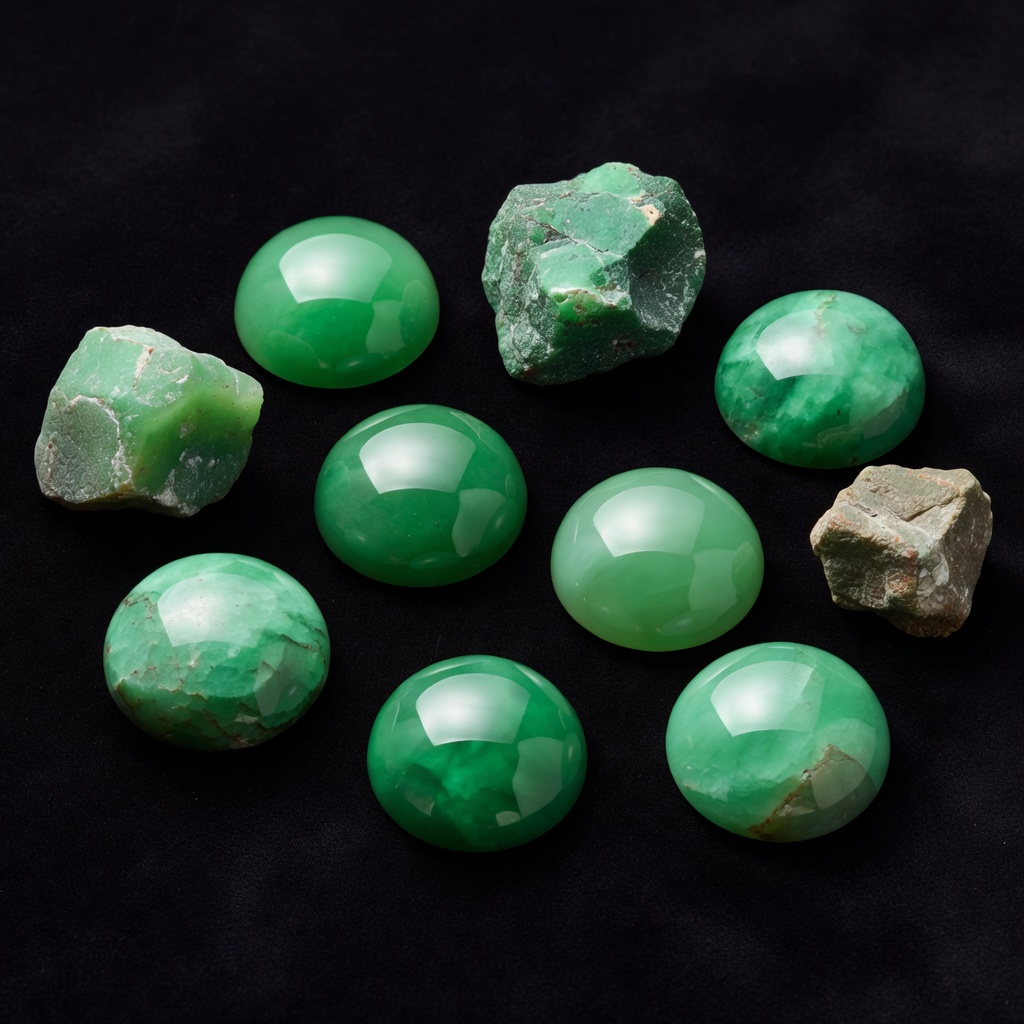
Introduction to Chrysoprase Pricing
Chrysoprase stands as one of the most valuable varieties of chalcedony, distinguished by its striking apple-green coloration caused by nickel-bearing minerals within the silica structure. This gemstone has experienced resurgent popularity among jewelry designers and collectors who appreciate its unique combination of translucency and vibrant color that rivals far more expensive green gemstones. Understanding the nuances of chrysoprase valuation requires familiarity with geological factors, market dynamics, and quality grading systems that differentiate commercial material from museum-grade specimens.
The contemporary market for this green chalcedony has expanded significantly as consumers seek alternatives to traditionally expensive emeralds and jadeite. Prices vary dramatically based on origin, color saturation, and clarity, with specimens from depleted Australian mines commanding substantial premiums over newer Tanzanian or Brazilian discoveries. Whether you are a first-time buyer seeking an affordable cabochon or a serious collector hunting for investment-grade material, this comprehensive Chrysoprase Price Guide will navigate you through the complex pricing structures governing this beautiful gemstone.
Current Market Values and Per Carat Costs
Understanding chrysoprase value per carat requires recognizing the distinct pricing tiers that separate commercial material from exceptional specimens. Commercial grade chrysoprase, characterized by lighter green tones, moderate translucency, and minor inclusions, typically trades between $10 and $30 per carat in today's wholesale markets. These stones suit mass-market jewelry production and provide accessible entry points for consumers seeking the distinctive green chalcedony appearance without premium investments.
Fine quality chrysoprase displaying the coveted apple-green saturation with high translucency and minimal visible inclusions commands significantly higher prices, generally ranging from $50 to $150 per carat depending on size and origin. Top-tier material exhibiting exceptional color consistency and clarity can exceed $200 per carat, particularly for large clean pieces over ten carats where rarity factors become predominant valuation drivers. Auction records and specialty dealer catalogs occasionally document sales of extraordinary Australian specimens reaching $300-400 per carat when combined with historical provenance or unusual size characteristics.
Color Grading and Its Impact on Price
Color represents the paramount chrysoprase quality factor, with apple green saturation serving as the industry benchmark for premium pricing. Stones displaying the ideal balance of yellow and blue undertones—reminiscent of fresh Granny Smith apples—command the highest market values, while material leaning toward olive or yellow-green hues typically sells at 40-60% discounts. Experienced gemologists evaluate color using standardized lighting conditions, as chrysoprase can exhibit significant appearance changes under incandescent versus daylight sources due to its unique nickel chromophore structure.
Translucency levels dramatically affect light transmission value, with gem-quality material requiring sufficient clarity to allow light penetration while maintaining body color intensity. The most valuable specimens achieve a "glowing" appearance where light diffuses evenly throughout the stone, whereas opaque or heavily clouded material sells at commodity prices regardless of color intensity. Color zoning and uniformity calculations also influence pricing, with single-tone specimens without banding or mottling commanding 25-35% premiums over stones exhibiting visible color variation or dendritic inclusions that disrupt the visual field.
Origin and Source: Australian Chrysoprase Costs
Australian chrysoprase cost structures reflect the geological superiority and historical significance of material extracted from Queensland's Marlborough district, widely considered the source of the world's finest specimens. Marlborough chrysoprase distinguished itself through exceptional translucency combined with pure apple-green coloration free from the brownish undertones common in material from other localities. Current market conditions show premium Australian material commanding 150-200% price premiums over equivalent-quality stones from Tanzania or Brazil, with documented provenance from specific Marlborough mines adding additional collector premiums.
Comparison with Tanzanian and Brazilian material reveals significant cost differentials, with African chrysoprase typically trading at $15-40 per carat for good quality despite sometimes showing comparable color to mid-tier Australian stones. Brazilian production, primarily from Minas Gerais, generally offers the most affordable entry points at $8-25 per carat, though material often requires stabilization treatments due to fracturing. Documentation and provenance value premiums have become increasingly important as Australian deposits face depletion and strict environmental regulations limit new extraction, making vintage Marlborough material with original mining documentation particularly valuable to serious collectors.
Cut, Clarity, and Carat Weight Considerations
Buying chrysoprase gemstones requires understanding how cutting styles impact both aesthetic appeal and market valuation, with cabochon cutting representing the traditional and most cost-effective approach for this material. Cabochons maximize weight retention and minimize the visibility of inclusions while showcasing chrysoprase's desirable translucency and color depth, typically pricing 20-30% lower than equivalent-weight faceted stones. Faceted chrysoprase remains relatively rare due to the material's softness (6.5-7 on the Mohs scale) and cleavage tendencies, though skilled cutters occasionally produce brilliant cuts for high-end designer pieces where light performance justifies the higher per-carat prices and cutting risks.
The impact of inclusions and fractures on value cannot be overstated, with clean specimens free from surface-reaching cracks commanding exponential premiums over included material. Exponential price increases characterize large clean specimens over 10 carats, where supply constraints create auction-level demand; a 20-carat flawless Australian cabochon might command $300 per carat while a 5-carat stone of similar quality sells for $80 per carat. This "size premium" phenomenon reflects the geological rarity of large chrysoprase nodules without internal fracturing, as the material commonly forms in thin veins or fractured deposits that limit the recovery of substantial clean pieces.
Chrysoprase vs Similar Gemstones Price Comparison
The chrysoprase vs jade price differential highlights chrysoprase's positioning as an accessible luxury alternative, with fine Imperial Jadeite Jade commanding $1,000-50,000+ per carat compared to chrysoprase's $50-150 per carat range for top quality. While nephrite jade offers closer price parity at $20-200 per carat depending on quality, chrysoprase provides distinct advantages in translucency and color consistency that appeal to modern jewelry designers. This significant price gap allows consumers to acquire substantial, high-impact green gemstones for cocktail rings or pendants at fractions of jade costs, making chrysoprase particularly popular in contemporary statement jewelry.
Value proposition comparisons with prase and other green chalcedony varieties reveal chrysoprase's market dominance, as prase (chlorite-included chalcedony) typically sells for $5-20 per carat due to its darker, less vibrant green tones and opacity. Australian chrysoprase specifically occupies a unique market position between common chalcedony varieties and precious gems like emerald, offering the rarity and cachet of fine origin material without the extreme prices of beryl or corundum. Market positioning as an affordable luxury alternative has driven increased demand among millennials and Gen Z collectors who prioritize ethical sourcing and distinctive aesthetics over traditional precious stone status.
Retail vs Wholesale Pricing Structures
Understanding green chalcedony prices requires examining the markup structures that differentiate rough material markets from finished jewelry retail, with typical jewelry markup percentages for chrysoprase pieces ranging from 100-300% above wholesale gemstone costs. Brick-and-mortar retailers typically apply 2.5-3x multipliers to cover overhead, insurance, and setting costs, while online direct-to-consumer vendors might operate on 1.5-2x markups while offering broader selections. Custom designers often work on cost-plus pricing models, charging gemstone costs plus 20-40% design fees plus metal and labor, making designer chrysoprase pieces potentially better values than mass-produced items despite higher absolute prices.
Rough material acquisition costs for lapidaries vary significantly based on purchase volume and source relationships, with Australian rough trading at $50-200 per pound for cutting-grade material compared to $10-40 per pound for Tanzanian parcels. Custom cutting and setting service fees impact final consumer costs substantially, with professional cabochon cutting services charging $30-100 per stone plus material loss during cutting (typically 40-60% weight loss from rough to finished). These service fees explain why rough material bargains often fail to translate to finished jewelry savings for consumers lacking cutting equipment and expertise, making pre-cut stones frequently more economical for individual buyers despite higher per-carat asking prices.
Authentication and Treatment Disclosure
Laboratory certification costs and necessity considerations represent critical chrysoprase quality factors for high-value purchases, with major laboratories like GIA or AGL charging $50-150 for standard identification reports on chrysoprase specimens. While certification adds upfront costs, documentation proves essential for investment-grade material over $500 total value or when purchasing vintage pieces where natural origin might be questioned. Unscrupulous dealers occasionally substitute dyed chalcedony or even synthetic quartz for natural chrysoprase, making professional verification advisable for significant acquisitions.
The price impact of dye treatments and enhancements creates substantial market segmentation, with natural, untreated Australian material commanding 40-60% premiums over dyed or heat-treated equivalents. Common treatments include polymer impregnation to stabilize fractured material (which must be disclosed) and surface dyeing to enhance pale green stones to apple-green appearance. Natural vs synthetic identification methods include microscopic examination for dye concentrations in fractures, specific gravity testing (natural chrysoprase measures 2.58-2.64), and ultraviolet fluorescence examination, though definitive testing requires spectroscopic analysis available only through certified laboratories.
Investment Outlook and Future Price Trends
Depletion of premium Australian deposits continues affecting chrysoprase value per carat trajectories, with Marlborough region mines producing only 10-15% of 1990s volume levels due to resource exhaustion and environmental protection policies. This supply constraint has driven 8-12% annual appreciation rates for documented Australian material over the past decade, outperforming many traditional colored gemstones in consistent value retention. Mining restrictions suggest continued tightening of high-end supply, particularly for untreated material over 15 carats, positioning existing stocks for potential significant appreciation as new discoveries fail to match historical Australian quality.
Growing collector interest in vintage chrysoprase reflects broader trends in estate jewelry markets, with Art Deco and Mid-Century Modern pieces featuring large Australian cabochons achieving 40-60% premiums at specialty auctions compared to equivalent modern cut stones. Auction market performance and historical appreciation data indicate that untreated chrysoprase from documented Australian sources has maintained value through economic downturns better than treated material or stones from secondary localities. While speculative investment carries risks due to limited liquidity compared to diamonds or sapphires, chrysoprase offers tangible asset diversification for gem portfolios, particularly as global recognition of this historically underappreciated stone continues expanding among jewelry connoisseurs.
Smart Buying Tips and Final Recommendations
Effective budget allocation strategies for different quality tiers maximize value in chrysoprase acquisitions, with collectors advised to prioritize color over size when funds are limited. For budgets under $500, focus on smaller (3-5 carat) high-color Australian cabochons rather than larger pale or included stones that lack long-term value retention. Mid-range buyers ($500-2,000) should seek untreated Marlborough material between 10-20 carats with documentation, while investment-grade collectors should target exceptional specimens over 25 carats with laboratory certification verifying Australian origin.
Red flags to avoid when evaluating sellers include prices significantly below market rates (often indicating dyed or synthetic material), reluctance to provide origin documentation, and descriptions using vague terms like "chrysoprase-like" or "green chalcedony" without specific locality information. An inspection checklist before purchase completion should include verifying translucency against strong light (should show even glow without dark spots), checking for surface cracks under 10x magnification, confirming color stability through acetone testing for dyes, and requesting UV fluorescence examination to detect polymer treatments. Working with established dealers who offer return privileges and laboratory verification options provides essential protection when navigating the nuanced chrysoprase marketplace.
Frequently Asked Questions About Chrysoprase Pricing
How much does chrysoprase cost per carat?
Chrysoprase typically ranges from $10 to $150 per carat depending on quality. Commercial grade material with lighter color costs $10-$30 per carat, while fine Australian apple-green chrysoprase with high translucency commands $50-$150 per carat. Exceptional large specimens can exceed $200 per carat.
Why is Australian chrysoprase more expensive?
Australian chrysoprase, particularly from Queensland's Marlborough region, commands premium prices due to its superior apple-green color, higher translucency, and historical reputation. Additionally, many Australian deposits are depleted or regulated, limiting supply and driving up costs compared to Tanzanian or Brazilian material.
Is chrysoprase a good investment?
While not traditionally considered a blue-chip investment gemstone like sapphire or ruby, high-quality natural chrysoprase has shown steady appreciation, particularly Australian material. Collector interest in untreated, large specimens is growing, though liquidity is lower than mainstream gems. Buy for enjoyment first, with potential appreciation as a secondary benefit.
How can I tell if chrysoprase is real or dyed?
Natural chrysoprase displays uneven color distribution under magnification and appears slightly translucent. Dyed material often shows concentrated color in fractures or surface cracks. Request a gemological certificate for expensive pieces, or conduct a spot test with acetone (dye may transfer). Price significantly below market rates often indicates treatment.
Does chrysoprase increase in value over time?
High-quality, untreated chrysoprase has historically maintained or increased in value, particularly material from depleted Australian mines. However, commercial grade and treated stones typically depreciate. Rarity, size, and provenance are the primary drivers of long-term value appreciation in the chrysoprase market.
What's the difference between chrysoprase and chrysophrase?
There is no difference—both spellings refer to the same gemstone (green chrysoprase chalcedony). 'Chrysoprase' is the standard modern gemological spelling, while 'chrysophrase' is an older or regional variant. Pricing remains identical regardless of spelling used by sellers.
Should I buy rough or cut chrysoprase?
Buy cut stones if you want immediate jewelry use or guaranteed quality visibility. Rough material offers better per-carat pricing for lapidaries but carries risks of internal fractures or color inconsistencies. Unless you have cutting experience, pre-cut cabochons provide better value security despite higher upfront costs.
Are treated chrysoprase stones worth less?
Yes, dyed or heat-treated chrysoprase typically sells for 30-60% less than natural, untreated material. Treatments must be disclosed, and treated stones rarely appreciate in value. However, they offer an affordable option for fashion jewelry where natural origin isn't paramount. Always verify treatment status before purchasing.


