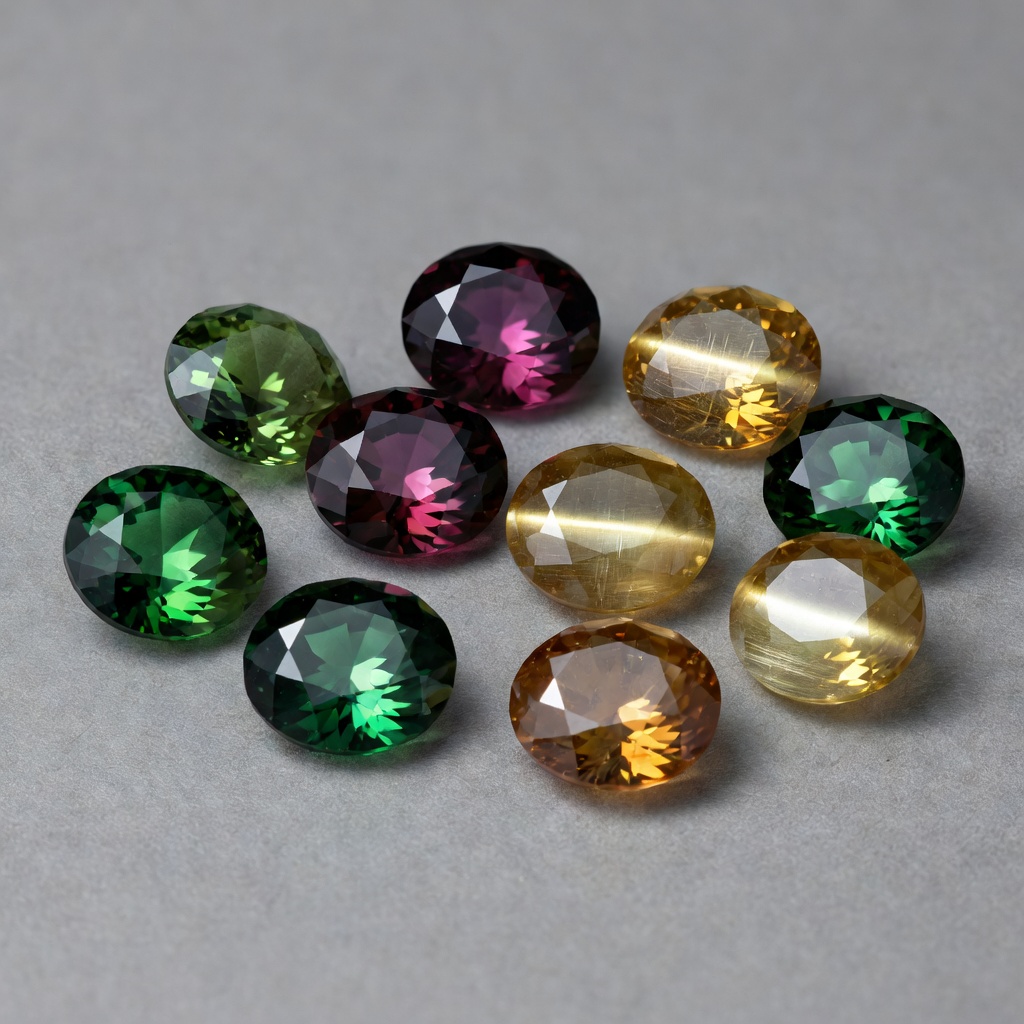
What Is Chrysoberyl? An Overview
Chrysoberyl stands as one of the most misunderstood yet fascinating gemstones in the mineral kingdom, defined scientifically as beryllium aluminum oxide with the chemical formula BeAl₂O₄. This remarkable crystal belongs to the orthorhombic crystal system, forming distinctive tabular or prismatic crystals that often display pseudo-hexagonal habits when twinned. Unlike many popular gemstones that capture public imagination through marketing campaigns, chrysoberyl has earned its place in history through exceptional durability and rare optical phenomena that continue to captivate gemologists and collectors alike. When exploring comprehensive chrysoberyl properties and information, one discovers a gem that bridges the gap between common jewelry stones and rare mineral specimens.
The etymology of chrysoberyl reveals its golden heritage, deriving from the Greek words "chrysos" meaning gold and "beryllos" referring to gem crystals. This naming convention dates back to antiquity when miners first discovered these yellowish-green crystals in river gravels and mountain deposits. Historical records indicate that chrysoberyl adorned the jewelry collections of Victorian aristocracy and appeared frequently in Portuguese and Spanish royal regalia during the 18th and 19th centuries. Ancient texts often confused these stones with peridot and topaz, leading to misidentifications that persisted until modern gemological testing established definitive diagnostic criteria.
A persistent misconception plagues chrysoberyl regarding its relationship to beryl, despite sharing similar nomenclature. Golden beryl, also known as heliodor, represents a completely different mineral species with the formula Be₃Al₂Si₆O₁₈, whereas true chrysoberyl contains no silicon in its chemical structure. Understanding chrysoberyl vs beryl requires examining hardness differences, with chrysoberyl ranking 8.5 on the Mohs scale compared to beryl's 7.5 to 8. Additionally, beryl crystallizes in the hexagonal system while chrysoberyl forms orthorhombic crystals, creating distinctly different optical behaviors and physical characteristics that trained gemologists can identify instantly.
Chemical Composition and Physical Properties
The fundamental building blocks of chrysoberyl consist of beryllium aluminum oxide arranged in a densely packed crystal lattice that contributes to its exceptional durability. With chrysoberyl specific gravity measurements ranging between 3.70 and 3.72, this gemstone feels noticeably heavier than similarly sized specimens of quartz or beryl when held in the hand. The high specific gravity results from the dense atomic arrangement of beryllium and aluminum ions, creating a substantial feel that distinguishes genuine chrysoberyl from lighter imitations or look-alike materials. Gemologists frequently use heft testing as a preliminary identification method when examining rough specimens or unset stones.
Perhaps the most celebrated physical characteristic of chrysoberyl is its impressive chrysoberyl hardness mohs rating of 8.5, positioning it as the third-hardest naturally occurring gemstone behind diamond (10) and corundum varieties like sapphire and ruby (9). This exceptional hardness translates directly into remarkable scratch resistance, allowing chrysoberyl jewelry to maintain its polish and surface integrity even after decades of daily wear. Unlike softer gems that require protective settings or occasional repolishing, chrysoberyl withstands the abrasion encountered in rings and bracelets without showing significant wear patterns. The hardness factor makes this gemstone particularly valuable for heirloom pieces intended to pass through multiple generations.
Durability assessment extends beyond hardness to include cleavage characteristics and fracture patterns that influence how chrysoberyl behaves under stress. Unlike diamond or topaz, which exhibit perfect cleavage planes that can lead to splitting, chrysoberyl possesses no cleavage, instead displaying a conchoidal to uneven fracture when subjected to extreme impact. This absence of cleavage combined with high hardness creates excellent toughness, meaning the gem resists both scratching and breaking under normal wearing conditions. Jewelers appreciate this combination when creating tension settings or intricate designs that might compromise softer or more brittle gemstones.
Optical Properties and Light Behavior
Chrysoberyl exhibits striking pleochroism chrysoberyl effects that reveal different colors when viewed from various crystallographic directions, a phenomenon particularly noticeable in strongly colored specimens. When examining a yellow-green crystal through a dichroscope, observers typically detect color variations ranging from green to yellowish-green or honey-gold depending on the viewing angle. This pleochroic behavior results from differential absorption of light wavelengths along different crystal axes, creating visual depth and complexity that enhances the gem's apparent richness. Cutters must consider these directional color differences when orienting facets to maximize face-up color or achieve specific aesthetic effects in the final polished stone.
The refractive index of chrysoberyl ranges from 1.744 to 1.755 with a birefringence of 0.008 to 0.010, values that place it well above quartz and beryl in optical density. These optical constants create brilliant flashes of light and strong luster that contribute to the gem's visual appeal in jewelry settings. When light enters a chrysoberyl crystal, the high refractive index bends the rays significantly, creating the potential for excellent brilliance when properly faceted. Gemological laboratories utilize refractive index testing as a primary diagnostic tool, as these values remain consistent across different varieties including yellow chrysoberyl, alexandrite, and cat's eye specimens.
Vitreous luster characterizes most chrysoberyl varieties, giving polished surfaces a glass-like shine that ranges from transparent to translucent depending on clarity and cut quality. Transparent crystals allow light to pass completely through the stone, enabling brilliant cutting styles that maximize light return and scintillation. Translucent specimens, particularly those containing inclusions that create chatoyancy, receive cabochon cuts that emphasize surface phenomena rather than internal brilliance. The combination of high refractive index and vitreous luster ensures that even darker or more included chrysoberyl specimens maintain an attractive, glossy appearance that catches the eye across a room.
Alexandrite: The Phenomenal Color-Change Variety
Alexandrite chrysoberyl represents the rarest and most valuable variety of this mineral species, displaying a remarkable color-change phenomenon that shifts between green or blue-green in daylight to red, purple, or raspberry tones under incandescent lighting. This dramatic transformation occurs due to the presence of chromium ions within the crystal lattice, which absorb specific wavelengths of light differently depending on the light source's spectral output. Daylight contains abundant blue wavelengths that the chromium absorbs, allowing green transmission, while incandescent light emphasizes red wavelengths that the stone transmits to create the appearance of different colors. No other gemstone exhibits such a complete and vivid color reversal, making alexandrite one of the most prized collector's gems in existence.
The discovery of alexandrite in Russia's Ural Mountains during the 1830s coincided with the coming of age of Tsar Alexander II, resulting in the gem's royal namesake and its designation as Russia's national stone. Original Russian material set the standard for quality, displaying intense emerald-green to raspberry-red shifts that modern gemologists still reference when evaluating new finds. Unfortunately, the Russian deposits depleted significantly by the late 19th century, making fine Ural alexandrite exceptionally rare and valuable on today's market. Contemporary collectors often pay premium prices for authenticated Russian specimens over one carat, with prices escalating exponentially for larger sizes.
Modern color change chrysoberyl production centers primarily in Brazil's Minas Gerais region and various East African localities including Tanzania, Madagascar, and Zimbabwe. Brazilian alexandrite typically shows bluish-green to purple color shifts, while African material often displays yellowish-green to brownish-red or orange changes that differ subtly from the classic Russian standard. Recent discoveries in Sri Lanka have also produced fine alexandrite, though these gems often require careful evaluation to distinguish from color-change garnet or synthetic corundum. When purchasing alexandrite, collectors should prioritize stones showing strong saturation in both color phases with minimal brown or gray modifiers that reduce the dramatic contrast between daylight and incandescent viewing conditions.
Cat's Eye Chrysoberyl (Cymophane) Explained
Cat's eye chrysoberyl, historically known as cymophane gemstone, displays chatoyancy—a captivating optical phenomenon where a sharp band of light moves across the surface resembling the slit pupil of a feline eye. This effect arises from parallel microscopic hollow tubes or needle-like inclusions oriented along the crystal's c-axis, which reflect light in a concentrated line perpendicular to their alignment. Unlike chatoyancy in other gem species such as tourmaline or apatite, chrysoberyl cat's eyes display exceptionally sharp, silvery lines that remain distinct under various lighting conditions. The finest specimens exhibit a "milk and honey" effect where one side of the stone appears lighter than the other when the eye line is positioned centrally.
Maximizing the cat's eye effect requires precise cabochon cutting with the base parallel to the needle inclusions and the dome height calibrated to focus light properly. Master cutters must orient the rough crystal carefully, as even slight misalignment results in multiple fuzzy lines or an off-center eye that significantly reduces value. The ideal cabochon features a high, symmetric dome that allows the eye to open and close smoothly as the stone moves under light sources. Experienced lapidaries often spend hours studying rough crystals before cutting to ensure optimal orientation, as mistakes cannot be corrected once material is removed.
Quality evaluation of cymophane gemstone specimens depends on several factors including eye sharpness, body color, translucency, and the prominence of the milk-and-honey effect. The most valuable cat's eye chrysoberyl displays a sharp, silvery-white line against a translucent honey-gold or apple-green background color. Stones should appear semi-transparent rather than opaque, allowing light to penetrate and illuminate the eye effect from within. When selecting cat's eye jewelry, buyers should examine the stone under single-point lighting to verify that the line remains straight and centered, moving smoothly as the gem rotates without breaking into multiple lines or disappearing at certain angles.
Geological Formation and Mining Sources
Understanding chrysoberyl geological formation requires examining two distinct geological environments where these crystals develop: granite pegmatites and high-pressure, low-temperature metamorphic rocks. In pegmatite deposits, slow cooling of beryllium-rich magma allows large crystals to form within coarse-grained matrices, sometimes producing transparent crystals weighing several pounds. Metamorphic formations occur when aluminum and beryllium-rich rocks undergo transformation under specific temperature and pressure conditions, creating the chromium-rich environments necessary for alexandrite formation. The rarity of simultaneous beryllium and chromium availability explains why alexandrite occurs far less frequently than yellow or green chrysoberyl varieties.
Primary chrysoberyl mining locations span several continents, with Sri Lanka (historically Ceylon) remaining the most significant source for high-quality yellow chrysoberyl and exceptional cat's eye specimens. Sri Lankan deposits produce gems from alluvial gravels where weathering concentrates heavy minerals into gem-bearing layers that miners wash and sieve. Brazil contributes substantial quantities of both yellow chrysoberyl and alexandrite from the Minas Gerais region, where pegmatite and mica schist formations yield fine crystals. Madagascar, Tanzania, and Myanmar (Burma) also produce notable quantities, with each locality imparting subtle color characteristics that experienced dealers can often identify by sight.
Environmental factors during crystal growth significantly influence final gem quality, including size, clarity, and inclusion patterns that determine suitability for different cutting styles. Rapid temperature fluctuations during formation can create stress fractures or healing cracks, while the presence of specific trace elements determines whether a crystal develops into ordinary yellow chrysoberyl, rare alexandrite, or chatoyant cymophane. Alluvial deposits often yield the finest material because natural tumbling during transport removes fractured portions, leaving only durable, high-quality crystals. Modern mining operations increasingly utilize advanced geophysical surveying to locate primary deposits before they weather into secondary alluvial concentrations, potentially preserving larger crystals that might otherwise break during natural transport processes.
Identification Methods and Authentication
Professional chrysoberyl identification relies heavily on refractive index testing using a refractometer, where readings between 1.744 and 1.755 immediately distinguish chrysoberyl from similar-appearing gems like peridot (1.654-1.690) or tourmaline (1.614-1.666). Specific gravity testing provides additional confirmation, with chrysoberyl's 3.70-3.72 range contrasting sharply with quartz (2.65) or beryl (2.67-2.90). Gemologists often perform both tests sequentially, as the combination of high refractive index and high specific gravity creates a diagnostic signature unique to chrysoberyl among common gemstones. Advanced laboratories may employ Raman spectroscopy to identify the specific molecular vibrations characteristic of the beryllium aluminum oxide structure.
Distinguishing natural chrysoberyl from synthetic chrysoberyl detection challenges requires careful examination of inclusions and growth patterns visible under magnification. Natural stones typically contain fingerprints, two-phase inclusions, or growth zoning that differ from the curved growth lines or flux inclusions found in laboratory-created material. Synthetic alexandrite, produced via flux growth or hydrothermal methods, has become increasingly sophisticated, requiring advanced spectroscopic analysis to detect subtle differences in chromium absorption patterns. Glass imitations pose less threat to experienced buyers but may deceive casual observers; these lack the birefringence of genuine chrysoberyl and often show rounded bubble inclusions rather than the angular mineral inclusions typical of natural gems.
Practical field testing for chrysoberyl includes hardness testing against known materials and observation of pleochroism using a dichroscope. Because chrysoberyl scratches quartz (7) and topaz (8) but not corundum (9), scratch testing on inconspicuous areas can provide preliminary confirmation of identity. The strong trichroism seen in many chrysoberyl specimens—showing green, yellow-green, and reddish-orange when viewed through different crystal axes—helps distinguish it from singly refractive glass or synthetics. When purchasing significant specimens, always request certification from recognized laboratories such as GIA, AGL, or Gubelin, which provide detailed reports on species, variety, origin, and treatment status.
Jewelry Applications and Design Considerations
The exceptional durability of chrysoberyl makes it ideal for chrysoberyl jewelry intended for daily wear, including engagement rings, bracelets, and cufflinks that might suffer damage if set with softer stones. Its 8.5 hardness rating ensures that rings maintain their polish despite constant contact with household surfaces, keys, and other materials that would scratch softer gems like opal or pearl. Jewelry designers appreciate chrysoberyl's ability to take and hold precise facet edges, allowing for intricate cutting styles that remain crisp over decades of wear. The gem's high refractive index ensures that even smaller stones contribute significant brilliance to finished pieces.
Transparent chrysoberyl varieties respond beautifully to various cutting styles, with emerald cuts emphasizing clarity and color, oval brilliants maximizing light return, and round brilliants creating classic, timeless appearances. Alexandrite particularly benefits from custom cutting that orients the table to display maximum color change when viewed face-up, sometimes requiring asymmetrical pavilion angles to balance pleochroic colors. Cat's eye specimens demand cabochon cuts exclusively, with the height and symmetry of the dome directly influencing the sharpness and movement of the eye effect. Mixed cuts that combine step-cut crowns with brilliant-cut pavilions offer unique optical performances for high-end designer pieces.
Setting recommendations vary by variety, with transparent chrysoberyl tolerating prong settings that expose maximum surface area to light, while cat's eye varieties often require bezel or semi-bezel mountings that protect the domed surface from impact. When designing with alexandrite, jewelers should consider how the setting metal influences color perception; white metals enhance the blue-green daylight color while yellow gold may subdue the red incandescent phase. Chrysoberyl gemstone value increases significantly in custom-designed pieces that showcase unique optical properties, with collector markets particularly favoring innovative settings that allow viewing of color change or chatoyancy from multiple angles.
Care, Cleaning, and Maintenance Guidelines
Proper chrysoberyl care begins with understanding that while the gem resists scratching, it may contain fractures or inclusions that require gentle handling during cleaning procedures. The safest cleaning method involves soaking the jewelry in warm water mixed with mild dish soap for fifteen to twenty minutes, followed by gentle brushing with a soft-bristled toothbrush to remove accumulated oils and debris. This approach effectively cleans behind settings and along girdle edges without risking thermal shock or mechanical damage to the stone. Ultrasonic cleaners and steam cleaning devices, while generally safe for untreated chrysoberyl, should be avoided for cat's eye varieties or stones with visible fractures that might expand under vibration or heat.
Storage practices significantly impact the long-term appearance of cleaning chrysoberyl gemstones and their settings, particularly when multiple pieces share jewelry boxes. Despite chrysoberyl's high hardness, diamonds (10), moissanite (9.25), and corundum (9) can scratch its surface, creating abrasion marks that dull the polish over time. Store chrysoberyl pieces in individual soft pouches or compartmentalized jewelry boxes that prevent contact with harder gems. Additionally, protect chrysoberyl from sudden temperature changes that might stress inclusions or fracture fillings, removing rings before washing hands with very hot water or entering saunas.
Chemical exposure presents minimal risk to chrysoberyl compared to porous gems like opal or pearl, but harsh chemicals including chlorine bleach, ammonia, and concentrated acids can potentially damage mounting materials or attack surface-reaching inclusions. Remove chrysoberyl jewelry before swimming in chlorinated pools, cleaning with household chemicals, or applying hairspray and perfume, as these substances can create buildup that requires aggressive cleaning to remove. For antique chrysoberyl pieces or estate jewelry showing signs of previous damage, consult a professional jeweler for cleaning recommendations, as old stones may have undisclosed treatments or fragile settings that require specialized care protocols.
Market Value and Investment Potential
Understanding chrysoberyl value requires recognizing the vast price differentiation between common yellow-green varieties and the phenomenally rare alexandrite. Fine quality yellow chrysoberyl typically commands modest prices ranging from hundreds to a few thousand dollars per carat depending on size and clarity, making it an accessible option for collectors seeking durable, attractive gems without premium investments. In contrast, fine alexandrite with strong color change can exceed diamond prices on a per-carat basis, with exceptional Russian or Brazilian specimens over three carats fetching tens of thousands of dollars per carat at auction. This price disparity reflects the geological rarity of chromium-rich chrysoberyl formation compared to the more common iron-bearing varieties.
Several factors influence alexandrite investment potential beyond the basic color-change phenomenon, including saturation intensity in both color phases, clarity levels that allow maximum light transmission, precision cutting that optimizes color display, and carat weights that exceed the one-carat threshold where prices escalate exponentially. Stones showing pure green to red changes without brown, gray, or purple modifiers command significant premiums over those with muddy or weak color shifts. The origin also affects value, with documented Russian Ural material carrying historical premiums despite comparable quality from Brazilian deposits. Investment-grade alexandrite should always accompany laboratory certificates confirming natural origin, absence of treatment, and detailed color-change descriptions.
Collector trends indicate increasing appreciation for fine cat's eye chrysoberyl, particularly specimens displaying the rare "milk and honey" effect with sharp, silvery eye lines and translucent honey-colored bodies. While alexandrite receives the most media attention, knowledgeable collectors recognize that exceptional cymophane over five carats with perfect eye alignment represents equal or greater rarity. Market analysts note steady price appreciation for untreated, high-quality chrysoberyl across all varieties as mining yields decline and consumer awareness increases regarding this underappreciated species. For investors seeking tangible assets with historical significance and geological rarity, chrysoberyl offers a compelling alternative to more commonly traded gemstones, with the dual advantages of everyday wearability and significant appreciation potential for fine specimens.
Frequently Asked Questions
What is the hardness of chrysoberyl on the Mohs scale?
Chrysoberyl ranks 8.5 on the Mohs hardness scale, making it the third-hardest natural gemstone after diamond (10) and corundum (9). This exceptional hardness, combined with its lack of cleavage, makes it highly durable and suitable for everyday jewelry wear.
How can I tell the difference between alexandrite and regular chrysoberyl?
The primary distinction is the color-change phenomenon. Alexandrite displays green to blue-green colors in daylight and shifts to red, purple, or raspberry tones under incandescent light. Regular chrysoberyl remains yellowish-green to green regardless of lighting conditions, lacking the chromium-induced color shift.
Is chrysoberyl the same as beryl?
No, despite the similar name, chrysoberyl (BeAl₂O₄) and beryl (Be₃Al₂Si₆O₁₈) are completely different mineral species. Chrysoberyl is harder (8.5 vs 7.5-8), has a different crystal structure (orthorhombic vs hexagonal), and contains no silicon in its chemical formula, whereas beryl is a silicate mineral.
What causes the cat's eye effect in chrysoberyl?
The cat's eye effect, or chatoyancy, results from parallel microscopic hollow tubes or needle-like inclusions oriented along the crystal's axis. When cut as a cabochon with the base parallel to these inclusions, light reflects off them creating a sharp, moving line resembling a cat's eye.
Where is the best quality chrysoberyl found?
Sri Lanka (Ceylon) historically produces the finest yellow and golden chrysoberyl including exceptional cat's eye specimens. Russia's Ural Mountains yielded the original and most prized alexandrite, though Brazil and East Africa now produce significant quantities of fine color-change material.
Is chrysoberyl suitable for engagement rings?
Yes, chrysoberyl is excellent for engagement rings due to its high hardness (8.5), excellent toughness, and brilliant luster. It resists scratching and chipping better than many popular gems like emerald or tanzanite, though alexandrite commands premium prices while yellow-green varieties offer affordable alternatives.
How do I clean and care for chrysoberyl jewelry?
Clean chrysoberyl using warm water with mild dish soap and a soft toothbrush. Avoid ultrasonic cleaners and steam cleaning, especially for stones with fractures or cat's eye varieties. Store separately from harder gems to prevent scratching, and avoid exposure to harsh chemicals or sudden temperature changes.
Why is alexandrite more expensive than other chrysoberyl varieties?
Alexandrite commands premium prices due to extreme rarity, particularly for stones showing strong color change with high saturation. Natural alexandrite is significantly rarer than diamond, and fine specimens over 3 carats are exceptionally scarce. The combination of chromium content requirements, specific geological conditions, and limited sources drives its value far above yellow or green chrysoberyl.