
Understanding Chrysoberyl: Properties and Varieties
Chrysoberyl is a remarkable beryllium aluminum oxide mineral with the chemical formula BeAl₂O₄, distinguished by its exceptional durability and striking optical characteristics. Unlike its name might suggest, chrysoberyl is not related to beryl (which includes emeralds and aquamarines) but stands as its own distinct mineral species with unique properties that make it ideal for fine jewelry. The stone typically presents in shades of yellow, yellow-green, or brownish-green, though its most famous varieties command premium prices due to rare optical phenomena that captivate collectors and gem enthusiasts worldwide.
When discussing chrysoberyl varieties, it is essential to distinguish between three distinct types: standard chrysoberyl, alexandrite, and cat's eye chrysoberyl (cymophane). Standard chrysoberyl displays a vitreous luster and transparent to translucent clarity in its characteristic yellow-green hues. Alexandrite represents the rare color-change variety that appears emerald green in daylight and transforms to raspberry red under incandescent light, while cat's eye chrysoberyl exhibits chatoyancy—a sharp line of reflected light that moves across the stone's surface resembling a feline eye. Understanding these distinctions proves crucial for proper care, as each variety may require specific considerations beyond basic Chrysoberyl Care and Cleaning protocols.
The exceptional durability of this gemstone stems from its impressive Mohs scale hardness 8.5 rating, placing it just below corundum (sapphires and rubies at 9) and diamonds (10). This chrysoberyl hardness means the stone resists scratching from everyday dust and debris, which typically contain quartz particles rating 7 on the scale. However, the mineral's toughness—its resistance to breaking and chipping—exceeds that of many harder stones, making chrysoberyl an excellent choice for rings and bracelets subject to regular wear. Additionally, chrysoberyl exhibits pleochroism, displaying different colors when viewed from different angles, a property that requires careful consideration during cleaning to ensure all facets maintain their optical integrity.
Daily Chrysoberyl Care and Handling Essentials
Implementing proper gemstone handling techniques begins with the simple habit of putting on your chrysoberyl jewelry last when dressing and removing it first when returning home. This practice minimizes exposure to cosmetics, hairsprays, and perfumes, which often contain alcohol, oils, and chemical compounds that can create a dulling film on the stone's surface. When applying hand creams or lotions, ensure they have fully absorbed into your skin before wearing chrysoberyl rings, as these products can accumulate in setting crevices and beneath the stone, attracting dirt and reducing brilliance over time.
Despite the impressive chrysoberyl hardness, impact prevention remains a critical aspect of daily care that many owners overlook. While the stone resists scratching admirably, a sharp blow against a hard surface can chip or fracture even this durable gem, particularly along facet junctions or thin girdle edges. Remove chrysoberyl rings before engaging in household chores, gardening, sports, or any activity involving hard surfaces or potential chemical exposure. When removing your jewelry, grasp it by the metal band or setting rather than the stone itself to prevent the transfer of skin oils and reduce the risk of accidentally dropping the piece.
Establish a weekly routine of visual inspections to catch potential problems before they result in stone loss or damage. Hold your chrysoberyl jewelry up to your ear and shake it gently; any rattling sound indicates a loose setting requiring immediate professional attention. Examine prongs with a magnifying glass to ensure they remain securely bent over the stone's edges, checking for signs of wear, thinning, or lifting that might compromise the gem's security. For pieces worn daily, such as engagement rings or staple necklaces, these inspections prove particularly vital, as the metal settings experience gradual stress from regular contact with surfaces and clothing.
Safe At-Home Chrysoberyl Cleaning Methods
Mastering how to clean chrysoberyl at home requires only basic supplies and careful attention to detail, ensuring your gemstone maintains its brilliance without risking damage. Begin by preparing a solution of lukewarm water—not hot, as temperature extremes can stress some settings—and a few drops of mild pH-neutral dish soap free from degreasers or moisturizers. Place your chrysoberyl jewelry in this solution and allow it to soak for approximately ten to fifteen minutes, which helps loosen accumulated oils, dust, and cosmetic residues that daily wear inevitably deposits on the stone's surface and within its setting.
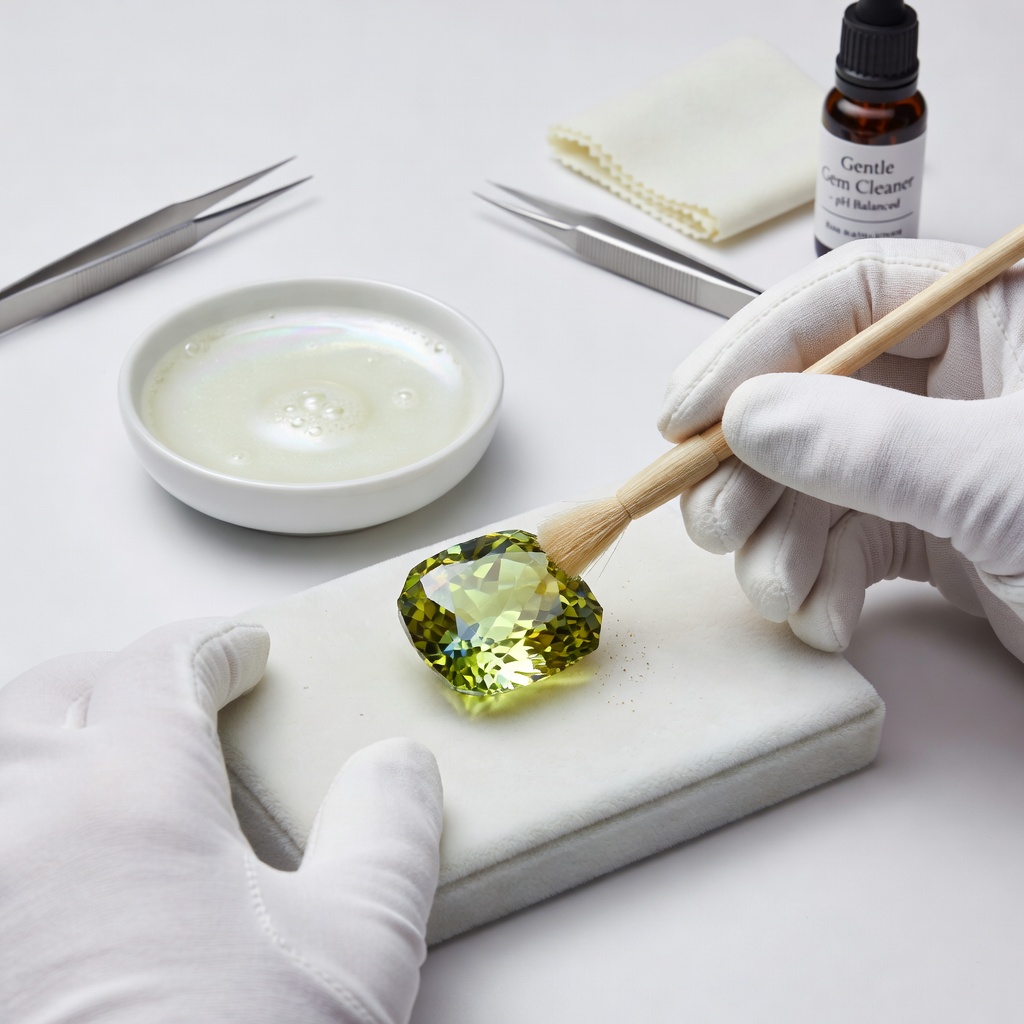
Selecting appropriate tools represents a crucial step in effective chrysoberyl cleaning; opt for a soft baby toothbrush with rounded bristles or a clean, unused soft makeup brush rather than standard toothbrushes with stiff nylon bristles. Gently brush the stone and setting, working the soft bristles around the prongs and underneath the gemstone where grime typically accumulates most heavily. Always brush in a direction away from the setting rather than toward it, reducing the risk of catching bristles on prongs and potentially loosening the stone while dislodging debris from hard-to-reach areas.
Thorough rinsing prevents soap residue from creating a filmy haze that dulls chrysoberyl's natural luster, so rinse the piece under a gentle stream of lukewarm running water, ensuring the drain is securely plugged or covered with a mesh strainer to prevent catastrophic loss. Pat the jewelry dry using a lint-free microfiber cloth rather than paper towels or tissues, which can leave scratch-inducing fibers or lint particles on both the stone and metal. For intricate settings or pieces with multiple stones, use a soft camel-hair brush or compressed air to remove moisture from crevices before final drying, ensuring no water spots mar the metal's finish.
Cleaning Mistakes: What to Avoid with Chrysoberyl
Understanding chrysoberyl cleaning mistakes proves equally important as knowing proper techniques, as several common practices can inadvertently damage your valuable gemstone or its setting. While chrysoberyl's hardness might suggest it could withstand ultrasonic cleaners, these devices generate high-frequency vibrations that can loosen prongs, especially in older pieces or jewelry with already compromised settings. Furthermore, if your chrysoberyl contains natural inclusions or fractures—common in alexandrite and cat's eye varieties—the ultrasonic vibrations may expand existing weaknesses or cause internal damage invisible to the naked eye.
Avoid steam cleaning systems entirely, as the intense heat and pressure create risks of thermal shock that can fracture the stone or damage certain types of treatments sometimes applied to enhance color. When selecting gemstone cleaning solutions, steer clear of harsh household chemicals including bleach, ammonia, acetone, and alcohol-based cleaners, which can attack metal alloys in the setting, remove protective rhodium plating from white gold, or degrade organic fillers sometimes found in vintage jewelry. Similarly, abrasive materials such as baking soda, toothpaste, or commercial scouring powders will scratch both the gemstone's surface and the metal setting, permanently dulling the polish that gives chrysoberyl its desirable vitreous luster.
Temperature shock presents a subtle but serious risk when cleaning chrysoberyl; never transfer jewelry directly from hot cleaning solutions into cold rinsing water or expose pieces to extreme temperature fluctuations. Sudden contraction and expansion of the metal setting relative to the gemstone can stress prongs or cause the stone to become loose in its mounting. Additionally, avoid cleaning chrysoberyl near open drains or sinks without protective strainers, as the combination of slippery soap and smooth stones creates perfect conditions for accidental loss during the cleaning process.
Proper Storage Solutions for Chrysoberyl Jewelry
Implementing jewelry storage best practices ensures your chrysoberyl pieces remain pristine and protected when not adorning your person. Store each chrysoberyl item in individual soft cloth pouches, fabric-lined jewelry box compartments, or acid-free tissue paper to prevent contact with other pieces that might scratch the stone or tangle delicate chains. While chrysoberyl hardness of 8.5 provides excellent scratch resistance against most materials, harder gemstones including diamonds, sapphires, and rubies can still mar its surface, necessitating separation from these materials in your jewelry collection.
Maintaining appropriate environmental conditions extends beyond simple physical separation; control humidity levels in your storage area to prevent metal tarnishing and potential corrosion of settings that could compromise stone security. Include silica gel packets in your jewelry box to absorb excess moisture, particularly important in humid climates or during seasonal changes that promote condensation. For silver-set chrysoberyl, consider anti-tarnish strips or cloths that protect the metal without exposing the gemstone to harmful chemical vapors that some anti-tarnish treatments might emit.
Travel storage requires particular attention to chrysoberyl storage protocols, as pieces transported in luggage or handbags face increased risks of impact and abrasion. Invest in a dedicated travel jewelry case featuring individual padded slots, secure closures, and rigid exterior protection that prevents crushing. Never toss chrysoberyl jewelry loose into purse pockets or cosmetic bags where keys, coins, or other items can scratch the surface or snag prongs. For extended travel or storage of valuable alexandrite or cat's eye specimens, consider portable safes or hotel safe deposit boxes rather than leaving pieces vulnerable in unsecured luggage.
Professional Chrysoberyl Maintenance and Inspection
While diligent home care forms the foundation of chrysoberyl maintenance, periodic professional gemstone cleaning and inspection by certified jewelers remains essential for preserving both beauty and security. Schedule comprehensive professional maintenance every six to twelve months, depending on wear frequency, during which a qualified gemologist will clean the piece using professional-grade steam or ultrasonic equipment appropriate for the specific setting condition. These visits allow experts to access areas impossible to clean thoroughly at home, such as the pavilion and girdle junctions where accumulated grime significantly impacts light performance.
During professional inspections, jewelers examine prong integrity, checking for thinning metal, cracks, or lifting that might indicate impending stone loss, using magnification tools to detect issues invisible to the untrained eye. For antique chrysoberyl pieces or those with intricate filigree work, professionals can assess whether the setting requires retipping, rebuilding, or tightening to maintain optimal stone security. If your chrysoberyl has developed surface scratches or abrasions that dull its brilliance, jewelers can perform repolishing services that restore the original luster without significantly reducing carat weight, though this should be done sparingly to preserve the stone's dimensions.
Maintain detailed documentation of your chrysoberyl purchases, including laboratory certificates, appraisal reports, and photographic evidence of the stone's condition, updating insurance valuations every two to three years as chrysoberyl—particularly fine alexandrite—appreciates significantly in value. Professional appraisals should note any treatments, origin, and specific variety, as these factors influence both value and care requirements. For museum-quality specimens or investment-grade stones, consider establishing relationships with specialists who understand the unique conservation needs of high-value chrysoberyl, ensuring your pieces receive appropriate expertise throughout their lifetime.
Specialized Care for Alexandrite and Cat's Eye Varieties
Alexandrite cleaning and cat's eye chrysoberyl maintenance demand additional considerations beyond standard chrysoberyl care due to the unique optical phenomena that establish their value and desirability. Alexandrite's famous color-change phenomenon, shifting from green in daylight to red under incandescent light, requires protection from prolonged exposure to intense heat or ultraviolet radiation, which can potentially alter or fade these sensitive color properties over time. When cleaning alexandrite, use only lukewarm water rather than hot solutions, and avoid leaving the stone in direct sunlight for extended periods, as excessive UV exposure may gradually diminish the intensity of its remarkable color transition.
Preserving the chatoyancy—the moving line of light—in cat's eye chrysoberyl necessitates careful orientation during both cleaning and storage to maintain the parallel needle-like inclusions that create this effect. Never attempt to rotate or reorient a cabochon-cut cat's eye stone in its setting, as the cutter specifically positioned the dome to center the eye effect, and any shifting will reduce or eliminate the phenomenon's visibility. Clean cat's eye varieties with extra gentleness, avoiding any brushing motion across the dome that might scratch the surface and disrupt the light reflection essential to the stone's beauty, instead wiping in smooth parallel motions that follow the orientation of the chatoyant band.
Both alexandrite and high-quality cat's eye chrysoberyl command premium prices that warrant enhanced security measures and setting considerations. Opt for protective bezel settings or halo designs that shield the gem's edges from impact, particularly important for cabochon cuts that lack the protective facet junctions of faceted stones. When storing these valuable varieties, consider keeping them in dark, cool environments that protect alexandrite's color sensitivity, and handle them with white cotton gloves during cleaning to prevent oil transfer that might temporarily mask the optical effects you wish to preserve and display.
Troubleshooting Common Chrysoberyl Care Issues
Addressing chrysoberyl care issues promptly prevents minor problems from escalating into permanent damage or stone loss. When confronting stubborn dirt buildup that resists standard cleaning, extend the soaking time to twenty or thirty minutes using a solution of warm water and mild dish soap, adding a single drop of clear ammonia only for severely soiled pieces with robust settings—though this should remain a last resort given potential risks to certain metals. For debris trapped beneath the stone in closed-back settings, use a wooden toothpick or orangewood stick to carefully dislodge material, working gently to avoid scratching the pavilion or loosening the mounting.
Cloudiness or film accumulation typically results from soap residue, skin oils, or cosmetic buildup rather than internal stone damage, though persistent haziness after thorough cleaning may indicate microscopic surface scratches requiring professional repolishing. If your chrysoberyl appears dull despite cleaning, examine it under bright light to determine whether the cloudiness sits on the surface (removable with additional cleaning) or within the stone (indicating potential damage). Never attempt DIY polishing with commercial buffing compounds or rotary tools, as these can generate heat that fractures the stone or remove excessive material, permanently altering the gem's proportions and value.
Discovering a loose stone constitutes a gemstone maintenance problem requiring immediate cessation of wear to prevent catastrophic loss. Place the jewelry in a secure container rather than continuing to wear it, as daily movement can work the stone completely free of compromised prongs. For antique chrysoberyl pieces showing signs of aged glue in costume jewelry settings, avoid water immersion entirely, as moisture dissolves vintage adhesives; instead, consult a conservator specializing in vintage jewelry to stabilize the piece before any cleaning attempts. Restoring brilliance to dulled surfaces always proves safest when left to professionals who possess the lapidary equipment and expertise to repolish without compromising the structural integrity of this beautiful but finite resource.
Long-Term Preservation and Heirloom Care
Developing strategies for long-term gemstone care ensures that chrysoberyl pieces remain vibrant heirlooms capable of transmitting beauty across generations. Environmental factors including light exposure, temperature fluctuations, and atmospheric pollutants affect chrysoberyl gradually over decades, potentially causing subtle changes in color or surface degradation invisible during daily wear but cumulative over time. Store heirloom chrysoberyl in acid-free, archival-quality materials away from direct sunlight and heat sources such as radiators or attic spaces, maintaining stable temperatures between 65-75 degrees Fahrenheit to minimize thermal stress on both stone and setting.
When preparing chrysoberyl preservation for inheritance, create comprehensive care instructions documenting the stone's variety, origin, treatments, and specific maintenance requirements to guide future owners. Include photographs showing the stone's condition at transfer, appraisal values, and contact information for trusted jewelers familiar with the piece, ensuring that heirs understand the distinction between standard chrysoberyl and valuable alexandrite or cat's eye varieties. For antique pieces exceeding fifty years in age, schedule assessments every three to four months rather than annually, as aged metal alloys and historical setting techniques often require more vigilant monitoring than modern mountings.
Museum-quality specimens or significant investment pieces benefit from conservation strategies that prioritize preservation over regular wear, including climate-controlled storage, minimal handling, and periodic professional assessment by gemological conservators. Consider rotating heirloom pieces between display and storage, allowing stones to "rest" from light exposure and wear stress while maintaining family connection through occasional use during special occasions. Document any changes in appearance, however subtle, to establish baseline conditions that help identify when professional intervention becomes necessary, ensuring that these remarkable gemstones—with their exceptional hardness and captivating beauty—continue to inspire admiration for centuries to come.
Frequently Asked Questions
Can I use an ultrasonic cleaner for my chrysoberyl jewelry?
While chrysoberyl rates 8.5 on the Mohs hardness scale, ultrasonic cleaners are not recommended. The vibrations can loosen settings, especially if the stone has existing fractures or inclusions. Additionally, if your chrysoberyl is an alexandrite or cat's eye variety, the ultrasonic waves may damage the phenomena that give these stones their value. Stick to warm soapy water and soft brushing for safe cleaning.
How often should I clean my chrysoberyl ring or pendant?
For chrysoberyl jewelry worn regularly, clean it at home every 2-4 weeks using mild soap and warm water to remove skin oils and daily grime. Schedule professional cleaning and inspection every 6-12 months to check setting integrity and perform deep cleaning. If you wear your chrysoberyl daily, increase home cleaning frequency to weekly to maintain optimal brilliance.
Is chrysoberyl safe to wear every day?
Yes, chrysoberyl is excellent for daily wear due to its high hardness (8.5 Mohs) and excellent toughness. It resists scratching better than many gemstones, including emerald and tourmaline. However, avoid wearing it during heavy manual labor, sports, or when using harsh chemicals, as hard impacts can still chip the stone and chemicals can damage the setting or dull the polish over time.
What's the difference between chrysoberyl and alexandrite care?
Alexandrite is actually a variety of chrysoberyl, so basic care is identical. However, alexandrite requires extra protection of its color-change phenomenon—avoid prolonged exposure to extreme heat or sudden temperature changes that might affect its optical properties. Cat's eye chrysoberyl also needs gentle handling to preserve its chatoyancy (the moving line effect). Both varieties command higher prices, warranting more cautious handling than standard yellow-green chrysoberyl.
Can I shower or swim with my chrysoberyl jewelry?
While occasional water exposure won't immediately damage chrysoberyl, it's best to remove it before showering or swimming. Soap scum can create a film that dulls the stone's luster, chlorine in pools can damage metal settings, and cold water may cause your fingers to shrink, increasing the risk of losing your ring. Salt water can also leave residue that requires additional cleaning.
How should I store chrysoberyl to prevent scratches?
Store chrysoberyl separately from diamonds, sapphires, and rubies, which can scratch it despite its high hardness. Use individual soft cloth pouches or fabric-lined jewelry box compartments. Avoid tossing it into a drawer with other jewelry. For travel, use a dedicated jewelry case with padded slots. While chrysoberyl can scratch softer gems like opal or pearl, harder gems can damage it, so separation is crucial.
What should I do if my chrysoberyl loses its shine or appears cloudy?
Cloudiness usually results from accumulated soap, lotion, or skin oils. Soak the stone in warm water with mild dish soap for 15-20 minutes, then gently brush with a soft toothbrush. If cloudiness persists, it may indicate scratches on the surface or damage to the pavilion facets—consult a professional jeweler for repolishing. Never use toothpaste or baking soda, as these abrasives can permanently damage the polish.
Can I use commercial jewelry cleaning solutions on chrysoberyl?
Most commercial jewelry cleaners are safe for chrysoberyl, but avoid solutions containing ammonia, bleach, or alcohol, as these can degrade certain setting materials or remove oils from porous materials nearby. Stick to mild pH-neutral soaps or cleaners specifically labeled safe for colored gemstones. When in doubt, warm water with a drop of mild dish soap remains the safest and most effective cleaning method.


