Understanding Chrysoberyl's Unique Appeal in the Gemstone Market
Chrysoberyl represents one of the most misunderstood yet rewarding gemstones available to collectors and investors today. Despite its name similarity, this beryllium aluminum oxide mineral shares no chemical relationship with beryl (which includes emerald and aquamarine), instead offering superior durability with a hardness of 8.5 on the Mohs scale. This exceptional toughness, combined with remarkable optical phenomena found in certain varieties, positions chrysoberyl as an ideal candidate for fine jewelry that withstands daily wear while maintaining its brilliance. The mineral crystallizes in the orthorhombic system, typically forming in pegmatites and high-pressure, low-temperature metamorphic rocks, which contributes to its formation of large, clean crystals suitable for significant gemstone cuts.
The growing collector interest in chrysoberyl stems from three distinct varieties that offer diverse aesthetic appeals: the phenomenal alexandrite with its dramatic color-change ability, the mesmerizing cat's eye (cymophane) displaying chatoyancy, and the elegant transparent yellow to green chrysoberyl prized for its vitreous luster and exceptional clarity. Unlike better-known gemstones such as diamonds or rubies that dominate mass markets, chrysoberyl maintains an air of exclusivity due to genuine rarity rather than manufactured scarcity. When developing your chrysoberyl buying guide strategy, understanding these fundamental distinctions becomes crucial for making informed acquisition decisions that balance aesthetic preferences with long-term value retention.
Types and Varieties: Alexandrite vs. Cat's Eye vs. Yellow Chrysoberyl
Navigating the chrysoberyl family requires distinguishing between three varieties that command vastly different market positions and price points. Alexandrite stands as the crown jewel of the family, exhibiting the rare color-change phenomenon where the stone appears emerald green to blue-green in daylight or fluorescent lighting, then transforms to raspberry red to purple-red under incandescent or candlelight. This dramatic shift occurs due to the presence of chromium ions that absorb specific wavelengths of light differently depending on the light source, creating what gemologists describe as the "alexandrite effect" when seen in other minerals. When considering alexandrite buying tips, prioritize stones that display strong saturation in both color phases rather than those that appear muddy or brownish in either lighting condition.
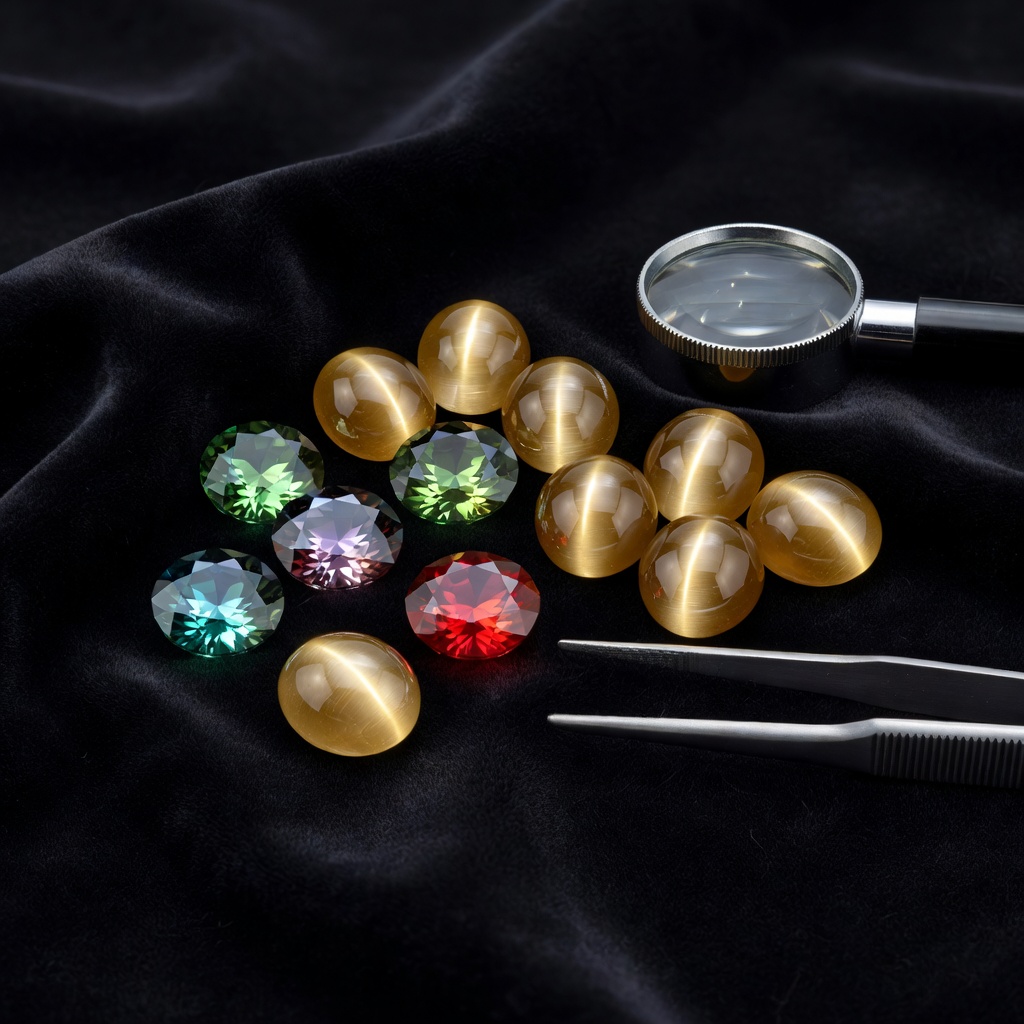
Cat's eye chrysoberyl, historically known as cymophane, derives its value from chatoyancy—a silky band of reflected light that moves across the stone's surface when rotated. This optical effect results from the presence of microscopic tube-like inclusions aligned parallel to each other, creating the appearance of a cat's eye. Premium specimens exhibit the coveted "milk and honey" effect, where one side of the stone appears milky white while the opposite side shows a translucent honey color, with the sharp eye line dividing these zones. In contrast, transparent yellow and green chrysoberyl lacks these phenomenal properties but compensates with exceptional brilliance, high clarity, and attractive colors ranging from lemon yellow to mint green, often displaying strong pleochroism when faceted.
The rarity hierarchy places Russian alexandrite at the pinnacle, followed by high-quality cat's eye specimens, with transparent chrysoberyl being the most accessible yet still commanding respect among connoisseurs. Russian material from the Ural Mountains, now largely depleted, set the standard for color change alexandrite with its distinct green-to-red shift, while modern Brazilian and African sources often produce stones with less dramatic color changes or different hue combinations. Cat's eye chrysoberyl surpasses other chatoyant gems like tiger's eye or star sapphires in hardness and rarity, making it particularly desirable for collectors seeking durable phenomenal gemstones.
Color Grading Standards for Premium Selection
Establishing objective quality parameters for chrysoberyl requires variety-specific grading systems that acknowledge the distinct value drivers for each type. For alexandrite, the percentage of color change serves as the primary quality indicator, with premium stones displaying a complete transformation where neither green nor red dominates disproportionately. Gemological laboratories quantify this change as a percentage, with stones exhibiting 80-100% color change commanding the highest premiums in the chrysoberyl value factors hierarchy. The saturation of both hues matters equally; ideal specimens show vivid grass green or teal in daylight and pure ruby red or purple-red under incandescent light, avoiding the brownish or grayish modifiers that significantly reduce value.
Evaluating cat's eye chrysoberyl requires assessing the sharpness and centrality of the eye line, which should appear as a single, straight, silver-white band positioned precisely in the center of the cabochon when viewed face-up. The best examples display a "rolling" effect where the line remains sharp and distinct even when the stone is tilted, rather than fading or breaking into multiple lines. Body color preferences lean toward honey-yellow or greenish-yellow tones, with the contrast between the eye line and background color enhancing the visual impact. Translucency balance proves crucial—too transparent and the eye line weakens, too opaque and the "milk and honey" effect disappears.
For transparent yellow and green chrysoberyl, color grading focuses on saturation and freedom from brownish or grayish overtones that dull the appearance. Lemon yellow to golden hues typically command higher prices than greenish-yellow, while mint green specimens outperform olive or brownish-green stones. Faceted stones require examination from multiple angles due to strong pleochroism, where the crystal shows different colors (usually yellow, green, and reddish-brown) depending on viewing orientation. Master cutters orient these stones to minimize the brownish direction while maximizing the yellow or green face-up color, a technique that significantly impacts the final gemstone quality factors assessment.
Clarity, Cut and Carat Weight Considerations
Clarity expectations vary dramatically across chrysoberyl varieties, requiring buyers to adjust their standards according to the specific type being evaluated. Alexandrite typically contains natural inclusions including "feathers," crystals, and "silk" (rutile needles) that may actually enhance value by confirming natural origin, though eye-clean stones command significant premiums. Unlike diamonds where inclusions are strictly detrimental, alexandrite allows for some internal characteristics provided they do not significantly impact transparency or durability. Cat's eye chrysoberyl fundamentally requires inclusions—the parallel hollow tubes or needle-like crystals—to create the chatoyant effect, meaning completely clean cat's eye stones do not exist and would actually be less valuable without the eye effect.
Cutting styles optimize the display of each variety's unique properties, with faceted cuts dominating alexandrite and transparent yellow chrysoberyl while cabochons serve cat's eye exclusively. Alexandrite cutters must balance maximum weight retention with optimal color display, often choosing mixed cuts or brilliant styles that minimize windowing while showcasing the color change from multiple angles. Step cuts can emphasize the pleochroic nature but may dilute the color-change effect, making mixed cuts or modified brilliants preferable for this color change alexandrite. For cat's eye, the cabochon must feature a high dome to focus light properly into the eye line, with the base parallel to the included fibers and the dome height typically ranging from 60-75% of the stone's width for optimal effect.
Carat weight impacts pricing exponentially rather than linearly, particularly for alexandrite where stones exceeding one carat with strong color change become exponentially rarer. The price per carat may jump from $3,000 for a fine 0.90-carat stone to $8,000 or more for a comparable 1.10-carat specimen due to this scarcity threshold. Cat's eye chrysoberyl shows similar dramatic increases above five carats, where large clean crystals with sharp eye effects become genuinely scarce. When evaluating chrysoberyl value factors, consider that smaller stones with exceptional quality often represent better value than larger stones with mediocre characteristics, particularly for investment purposes.
Natural vs. Synthetic: Detection and Disclosure
The distinction between natural vs synthetic chrysoberyl carries significant financial implications, with laboratory-grown alexandrite flooding the market at prices often 5-10% of natural equivalents. Flux-grown synthetics, pioneered by companies like Chatham and Kashan, mimic natural formation conditions but reveal themselves under magnification through curved growth lines, flux inclusions resembling wispy veils, or unusually perfect clarity. Pulled (Czochralski process) alexandrite shows distinctive curved striations or color banding not found in natural material, while hydrothermal synthetics may contain seed plates or characteristic inclusion patterns. These synthetic varieties often display color changes that appear too perfect or "muddy" compared to the crisp transition seen in high-quality natural stones.
Beyond synthesis, treatment detection plays a crucial role in alexandrite identification and valuation. While alexandrite rarely undergoes enhancement due to the sensitivity of its color-change mechanism to heat, yellow and green chrysoberyl may receive heat treatment to improve color saturation or remove brownish tones. Cat's eye varieties occasionally undergo oiling or resin filling to mask surface-reaching inclusions that interrupt the eye line, though this practice is less common than in emeralds. Advanced treatments such as fracture filling or diffusion processing require sophisticated laboratory equipment including infrared spectroscopy, Raman spectroscopy, and laser ablation inductively coupled plasma mass spectrometry (LA-ICP-MS) to detect definitively.
Full disclosure from vendors represents an ethical and legal requirement, with reputable dealers providing detailed information about origin, treatments, and natural versus synthetic status before purchase. When acquiring significant specimens, insist on examination by independent gemological laboratories such as GIA, AGL, or Gübelin, who can definitively distinguish natural from synthetic material and identify any treatments applied. Documentation should specifically address the color-change percentage for alexandrite and the presence of any artificial color modification, as untreated natural chrysoberyl commands substantial premiums over enhanced material in the investment market.
Origin Significance and Geographic Sources
Provenance dramatically influences alexandrite buying tips and valuation strategies, with geographic origin serving as both a quality indicator and historical marker. The Ural Mountains of Russia produced the original alexandrite discoveries in the 1830s, establishing the "classic" standard that remains the benchmark for quality today. Russian material characteristically displays the most dramatic color change from vivid emerald green to raspberry red, often accompanied by characteristic inclusion patterns and historical significance that drive collector demand. As these original deposits have been largely depleted for over a century, fine Russian alexandrite appears primarily in estate sales and auction houses, commanding prices five to ten times higher than equivalent-quality material from other localities.
Modern commercial sources include Brazil (specifically the Hematita and Santa Terezinha mines), which produces the majority of current alexandrite supply, though often with less distinct color changes leaning toward blue-green to purple rather than pure green to red. Sri Lanka (Ceylon) yields alexandrite with typically larger crystals but often weaker color change or brownish modifiers, alongside significant deposits of yellow chrysoberyl and cat's eye material. India, Madagascar, and Tanzania contribute to the market with distinct characteristics—Tanzanian material often shows strong color change but smaller crystal sizes, while Indian deposits produce fine cat's eye chrysoberyl with sharp eye effects.
The impact of origin extends beyond immediate aesthetic considerations to affect long-term investment liquidity and collector demand. Stones with documented Russian provenance, verified through inclusion photography and chemical analysis, maintain stronger resale markets and auction performance compared to newer sources. However, exceptional specimens from Brazil or East Africa occasionally surpass mediocre Russian stones in value, emphasizing that quality ultimately trumps origin in chrysoberyl value factors assessment. When purchasing for investment purposes, prioritize documented origin reports from prestigious laboratories like Gübelin or AGL, whose databases track geographic chemical signatures with high accuracy.
Pricing Guide and Investment Analysis
Current market valuations for chrysoberyl reflect extreme variability based on variety, quality, and size, requiring sophisticated understanding of tiered pricing structures. Fine alexandrite with strong color change (80% or greater) and clean clarity currently ranges from $3,000 to $15,000 per carat for stones under two carats, with exceptional Russian specimens or large Brazilian stones exceeding $50,000 per carat. Commercial quality alexandrite showing weak color change or significant inclusions may trade between $500 and $2,000 per carat, representing accessible entry points for collectors while offering limited appreciation potential. The chrysoberyl jewelry investment market particularly favors untreated alexandrite over two carats with documented Russian or premium Brazilian origin, which have shown consistent auction performance increases of 10-15% annually over the past decade.
Cat's eye chrysoberyl pricing depends primarily on eye line sharpness, body color, and size, with fine honey-colored specimens displaying sharp, centered eyes commanding $500 to $2,000 per carat. Exceptional large stones exceeding ten carats with perfect eye alignment and strong milk-and-honey effects can exceed $5,000 per carat, though such specimens rarely appear on the open market. Transparent yellow chrysoberyl remains the most accessible variety, with fine faceted stones ranging from $100 to $500 per carat, though large clean specimens over five carats may command premium prices due to their rarity.
The investment outlook for high-quality chrysoberyl remains bullish due to fundamental supply constraints—alexandrite deposits are finite and increasingly difficult to mine, while demand from collectors in Asia and the Middle East continues growing. Unlike diamonds or sapphires where synthetic production threatens natural value, the complexity of alexandrite's color change makes synthetic detection relatively straightforward, protecting natural stone values. Auction records from Christie's and Sotheby's demonstrate that fine alexandrite, particularly antique Russian stones, performs comparably to fine ruby or emerald in terms of price per carat appreciation, making it a legitimate alternative for colored stone portfolio diversification.
Certification and Professional Documentation
Proper documentation serves as the foundation of any significant chrysoberyl acquisition, protecting both the financial investment and the authenticity of the specimen. Premier gemological laboratories including the Gemological Institute of America (GIA), American Gemological Laboratories (AGL), and Gübelin Gem Lab provide comprehensive reports verifying natural origin, identifying treatments, and documenting quality parameters. For alexandrite, these reports should include spectroscopic analysis confirming chromium content as the color-change cause, along with quantitative assessment of the color-change percentage under standardized daylight and incandescent lighting conditions. Gemstone certification from these institutions provides global recognition and facilitates future resale or insurance claims.
Beyond basic identification, advanced reports may include origin determination through chemical fingerprinting, particularly crucial for Russian alexandrite where provenance significantly impacts value. These determinations rely on trace element analysis detecting specific combinations of iron, gallium, and other elements characteristic of particular mining districts. For cat's eye chrysoberyl, certification should confirm the chatoyancy results from natural needle inclusions rather than synthetic fibers or assembled constructions, while also documenting any clarity enhancements such as oiling.
Insurance appraisals require separate documentation from identification reports, establishing replacement value based on current market conditions rather than simply confirming authenticity. When securing chrysoberyl authenticity documentation, ensure the appraiser specializes in colored stones rather than diamonds, as the valuation methodologies differ significantly. Maintain digital and physical copies of all certificates, including photographs of the stone's inclusions (the "fingerprint" that identifies your specific gem), and update appraisals every three to five years to reflect market appreciation, particularly for investment-grade alexandrite.
Smart Buying Strategies and Vendor Selection
Locating reputable sources for chrysoberyl requires navigating a marketplace where specialized knowledge significantly outweighs general jewelry retail experience. Established colored stone dealers who maintain membership in professional organizations such as the American Gem Trade Association (AGTA) or the International Colored Gemstone Association (ICA) adhere to strict ethical codes regarding disclosure and treatment representation. High-end auction houses including Sotheby's, Christie's, and Bonhams regularly feature estate alexandrite and cat's eye chrysoberyl with comprehensive provenance documentation, though buyer's premiums (typically 20-25%) must be factored into investment calculations. Specialized online platforms can offer competitive pricing, but where to buy chrysoberyl online requires rigorous vetting of return policies and certification requirements.
When evaluating potential purchases, insist on viewing alexandrite under multiple lighting conditions—natural daylight, fluorescent lighting, and incandescent bulbs—to verify the color-change effect personally. Reputable vendors will facilitate this examination and provide detailed photographs showing both color phases. Critical questions include: Does the vendor offer a no-questions-asked return period (minimum 10 days) allowing independent verification? Can they provide origin documentation from recognized laboratories? What is their policy regarding treatment disclosure, and do they guarantee the stone against undisclosed enhancements?
Red flags in the purchasing process include prices significantly below market rates (suggesting synthetic material or misrepresented origin), vague descriptions of "partial" or "subtle" color change in alexandrite, and reluctance to provide independent laboratory certification. Be particularly wary of stones described as "Russian-style" or "Uralian-type" without accompanying Gübelin or AGL origin reports, as these terms often mask Brazilian or African material. When following alexandrite buying tips, remember that legitimate dealers welcome scrutiny and questions about their inventory, while those pressuring for immediate decisions or offering "too good to be true" pricing often conceal material defects or synthetic origins.
Setting, Care and Long-term Maintenance
The exceptional durability of chrysoberyl, ranking 8.5 on the Mohs hardness scale with excellent toughness due to the absence of cleavage planes, makes it suitable for daily wear including engagement rings and bracelets exposed to regular impact. This hardness exceeds that of emerald (7.5-8), tanzanite (6-7), and tourmaline (7-7.5), placing chrysoberyl among the most practical colored gemstones for active lifestyles. However, faceted alexandrite requires thoughtful setting design to protect pointed girdles and sharp facet junctions from chipping, making bezel settings, partial bezels, or protective V-prongs preferable to exposed four-prong settings for ring designs. Cat's eye chrysoberyl in cabochon cuts actually proves more durable for rings than faceted versions due to the absence of sharp edges and the protective nature of the domed surface.
Setting recommendations vary by variety: alexandrite benefits from open-back settings that allow light transmission to display the color-change effect fully, while cat's eye requires settings that protect the base while allowing observation of the chatoyant effect from above. Yellow chrysoberyl works beautifully in vintage-inspired settings that complement its lemon-to-golden hues, often paired with yellow gold to enhance warmth or white metals to create contrast. For chrysoberyl care, the stone's chemical stability means it resists attack from acids and heat better than many gemstones, though extreme thermal shock should still be avoided.
Maintenance protocols for chrysoberyl remain straightforward due to the stone's durability. Ultrasonic and steam cleaning generally prove safe for untreated natural material, effectively removing accumulated dirt and oils from jewelry wear. However, stones with surface-reaching fractures or unknown treatments should be cleaned using only warm soapy water and a soft brush to avoid potential damage. Avoid exposure to harsh chemicals including chlorine bleach, hydrofluoric acid, or prolonged contact with cosmetics and hairsprays that may dull the surface over time. Store chrysoberyl jewelry separately from harder gems like diamonds or sapphires to prevent scratching, and have prongs and settings checked annually by a jeweler familiar with colored stone care to ensure long-term security of these valuable specimens.
Frequently Asked Questions About Chrysoberyl Purchasing
What is the difference between chrysoberyl and alexandrite?
Alexandrite is actually a rare variety of chrysoberyl, distinguished by its unique color-change ability from green in daylight to red in incandescent light. Regular chrysoberyl occurs in yellow, green, or brownish tones without the color-change effect, while cat's eye chrysoberyl displays a sharp line of reflected light called chatoyancy. All three varieties share the same chemical composition (beryllium aluminum oxide) and hardness (8.5 Mohs), but alexandrite contains trace amounts of chromium that create its famous color-changing property, making it significantly more valuable and rare than other chrysoberyl varieties.
How much does high-quality chrysoberyl cost per carat?
Pricing varies dramatically by variety: fine alexandrite with strong color change ranges from $3,000 to $15,000+ per carat, with Russian origin commanding premiums up to $50,000+ per carat for exceptional stones. Cat's eye chrysoberyl typically ranges from $500 to $2,000 per carat depending on line sharpness, while transparent yellow chrysoberyl is more accessible at $100-$500 per carat. Size significantly impacts pricing, with alexandrite prices increasing exponentially for stones over one carat and cat's eye stones over five carats due to their extreme rarity in larger sizes.
How can I tell if alexandrite is natural or synthetic?
Natural alexandrite typically contains characteristic inclusions like 'feathers,' 'fingerprints,' or silk, while synthetic versions often show curved growth lines, flux inclusions, or are too clean. The color change in synthetics may appear too dramatic or 'muddy.' Always request certification from reputable labs like GIA or AGL, as visual identification requires gemological training and equipment. Flux-grown synthetics often display wispy veil-like inclusions or metallic flux inclusions under magnification, while pulled synthetics show curved striations not found in natural crystals.
What color change percentage should I look for when buying alexandrite?
Premium alexandrite should display a distinct color shift of at least 70-80% between green/blue-green in daylight and red/purple-red in incandescent light. The most valuable stones show a complete change with saturated hues in both lighting conditions. Avoid stones that appear brown or gray in either light source, as this indicates lower quality. The speed of transition also matters—fine alexandrite changes color immediately upon switching light sources, while lesser quality stones may show intermediate hues or gradual shifts that dilute the dramatic effect.
Is chrysoberyl durable enough for engagement rings?
Yes, with a hardness of 8.5 on the Mohs scale, chrysoberyl is excellent for daily wear including engagement rings—harder than emerald and tanzanite. However, alexandrite is typically faceted and may chip if struck hard, so protective settings are recommended. Cat's eye varieties in cabochon cuts are actually more durable for rings due to the absence of sharp edges. The mineral's lack of cleavage planes means it resists breaking along specific directions better than diamonds or topaz, making it highly resistant to accidental impact during normal wear.
Do chrysoberyl gemstones receive treatments or enhancements?
Most high-quality chrysoberyl is untreated, which adds to its value. However, some yellow or green chrysoberyl may undergo heat treatment to improve color, and occasionally oils or resins are used to mask surface-reaching inclusions in cat's eye varieties. Alexandrite is rarely treated, making natural, untreated specimens highly desirable. Always request disclosure of any treatments, as untreated natural chrysoberyl commands significant premiums over enhanced material, particularly for investment-grade specimens where treatment history affects long-term value retention.
Where is the best place to buy genuine chrysoberyl?
Purchase from established colored stone specialists, reputable auction houses (Sotheby's, Christie's), or dealers who are members of professional organizations like AGTA or ICA. For alexandrite specifically, buy from vendors who allow examination under different lighting conditions. Online purchases should only be made from dealers offering detailed photos, videos showing color change, and comprehensive return policies. Avoid general jewelry stores lacking colored stone expertise, and never purchase significant alexandrite without independent laboratory certification verifying natural origin and treatment status.
Why is Russian alexandrite more expensive than other origins?
Russian Ural Mountain alexandrite commands premium prices because it represents the 'classic' standard with the most dramatic color change from emerald-green to raspberry-red, and the original mines are largely depleted. While Brazilian and East African alexandrites can be beautiful, they often show less distinct color shifts or different hues. The historical significance and extreme rarity of fine Russian material drive investment value. Additionally, the romantic association with Imperial Russia and the gemstone's discovery on the future Czar Alexander II's birthday adds provenance value that collectors prize, making documented Russian origin a significant factor in auction performance and resale liquidity.