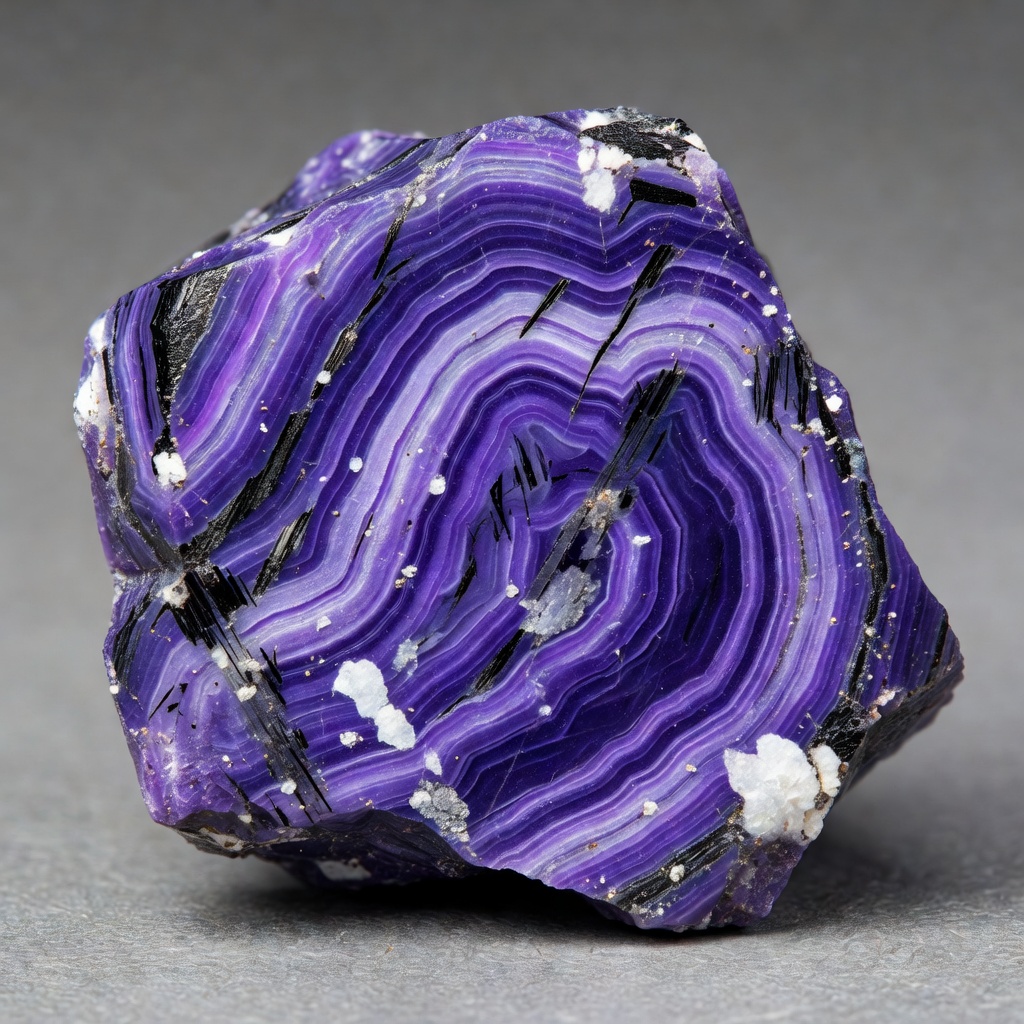
Introduction: What Is Charoite?
Charoite stands as one of the most visually striking and geologically mysterious gemstones ever discovered, captivating mineralogists and spiritual practitioners alike with its intense violet hues and swirling patterns. First identified in the 1940s along the Chara River in the Sakha Republic of Siberia, Russia, this remarkable stone remained relatively unknown to the Western world until the 1970s when larger deposits were unearthed in the Murun Massif. The name "Charoite" derives directly from the Chara River, though some mineralogists initially suspected it might be a mislabeled form of sugilite due to its similar purple coloration and rarity. Today, collectors recognize Charoite as a distinct silicate mineral with no other known commercial deposits anywhere else on Earth, making it one of the most geographically exclusive gemstones in existence.
The extreme rarity of Siberian Charoite cannot be overstated, as it forms only under highly specific geological conditions involving the intrusion of alkali syenite into limestone formations under tremendous heat and pressure. This single-source origin creates significant scarcity in the marketplace, with mining operations limited to the harsh, remote regions of Yakutia where winter temperatures regularly plunge below minus 40 degrees Celsius. Crystal healers and metaphysical practitioners seek this unique stone for its reputed ability to facilitate deep transformation and spiritual awakening, while lapidary artists prize the material for its chatoyant luster and complex patterning that resembles flowing silk or feathered wings. Understanding comprehensive Charoite Properties and Information helps both collectors and healers appreciate why this stone commands premium prices and deserves careful preservation.
Geological Properties and Mineral Composition
From a mineralogical perspective, Charoite presents a fascinating complex hydrous potassium calcium sodium silicate with traces of barium, strontium, and occasionally manganese contributing to its distinctive coloration. The chemical formula K(Ca,Na)₂Si₄O₁₀(OH,F)·H₂O reveals its hydrous nature, explaining why the stone requires careful handling away from prolonged water exposure and extreme heat that could destabilize its crystalline water content. Researchers have identified the Charoite mineral composition as belonging to the monoclinic crystal system, though individual crystals rarely appear in isolation; instead, the material typically forms as fibrous aggregates that create the stone's characteristic swirling, interlocking patterns when viewed under magnification or polished into cabochons.
The Charoite geological properties include a Mohs hardness ranging between 5 and 6, placing it softer than quartz but harder than opal, which influences how jewelry designers approach setting and wearing this material. Specific gravity measurements typically fall between 2.54 and 2.78, slightly lighter than many silicate minerals due to its hydrous content and fibrous structure. Geologists believe Charoite forms through complex metasomatic processes where hot, alkaline-rich fluids alter existing limestone deposits, creating the unique combination of potassium feldspar, aegirine, and the charoite mineral itself that gives finished specimens their complex visual character. These formation conditions occur so rarely in nature that despite extensive geological surveys across similar alkaline massifs worldwide, no secondary deposits have ever been discovered, cementing Charoite's status as a true geological unicorn.
Physical Characteristics and Visual Identification
Authentic Purple Charoite gemstone specimens display an unmistakable range of violet hues spanning from delicate lilac and lavender to deep, royal purple and nearly black amethyst tones, often within a single polished surface. The most prized examples exhibit strong chatoyancy—commonly called the cat's eye effect—where fibrous inclusions create a silky, glowing sheen that seems to move across the stone's surface as you tilt it under light sources. Natural Charoite almost invariably contains distinctive inclusions including black aegirine needles (which create dramatic contrast against the purple background), white calcite patches or streaks, and occasionally orange-brown tinaksite crystals that add additional color complexity to the matrix.
Mastering Charoite identification requires understanding how to distinguish genuine material from common imitations such as dyed howlite, sugilite, or even purple-dyed quartz. Dyed howlite lacks the natural fibrous structure and chatoyancy of real Charoite, often displaying unnaturally uniform color saturation and visible dye concentrations in surface cracks, whereas authentic Charoite shows color variation following its natural fibrous bands. Sugilite, while also rare and purple, typically presents a more opaque, waxy luster with less distinct patterning and rarely contains the black aegirine inclusions characteristic of Charoite. When examining rough specimens, look for the complex intergrowth patterns where Charoite mineral fibers interlace with feldspar and aegirine, creating the swirling, feathery textures impossible to replicate in synthetic or dyed materials.
Metaphysical Properties and Spiritual Significance
Within crystal healing traditions, practitioners celebrate the Charoite stone meaning as the "Stone of Transformation," attributing to it the power to catalyze profound soul-level cleansing and accelerate spiritual evolution. Unlike gentler healing crystals that work gradually, Charoite is believed to operate as a spiritual power tool that confronts deep-seated fears, compulsive behaviors, and resistance to change, forcing the user to acknowledge and release patterns that no longer serve their highest good. The stone's energy signature supposedly bridges the gap between the physical and spiritual realms, making it invaluable for those undergoing major life transitions such as career changes, relationship endings, or spiritual awakenings that require shedding old identities.
The Charoite metaphysical properties extend to psychic protection and entity cleansing, with many practitioners using it to break negative attachments or clear energetic debris accumulated through traumatic experiences. When placed in meditation spaces, Charoite is said to create a vortex of high-vibrational energy that dissolves illusions and reveals truth, helping individuals distinguish between genuine spiritual guidance and ego-based fantasies. Some crystal therapists report that holding Charoite during shamanic journeying facilitates access to past life memories and karmic pattern recognition, allowing for the resolution of ancient soul contracts that influence present-day circumstances. For those working through addiction or obsessive-compulsive tendencies, Charoite offers grounding energy that supports willpower while simultaneously opening the heart to self-forgiveness.
Healing Properties and Therapeutic Benefits
Holistic healers associate Charoite healing properties with specific physical organs, particularly emphasizing its supportive role in liver detoxification and pancreas regulation, making it popular among those managing diabetes or metabolic disorders. Crystal therapy practitioners often place Charoite directly over the liver area during energy healing sessions, believing it stimulates the organ's natural filtering processes and aids in breaking down environmental toxins and emotional stress chemicals stored in bodily tissues. Some naturopaths recommend Charoite elixirs prepared using the indirect method (to avoid water contact with the stone) for supporting blood pressure regulation and improving circulation, though such practices should always complement rather than replace conventional medical treatment.
Emotionally, Charoite serves as a powerful ally for processing trauma, alleviating insomnia caused by racing thoughts or nightmares, and reducing generalized anxiety disorders. The stone's calming yet transformative vibration helps transmute negative emotions such as anger, jealousy, and resentment into higher frequencies of acceptance and spiritual understanding. Many crystal therapists recommend sleeping with Charoite under the pillow or on the nightstand to prevent nocturnal panic attacks and promote restorative sleep patterns, particularly for individuals recovering from post-traumatic stress disorder. For auric field purification, practitioners sweep Charoite wands or palm stones through the energy field to remove energetic cords, psychic debris, and emotional attachments left by toxic relationships.
Chakra Alignment and Energy Work Applications
The Charoite chakra healing profile centers primarily on the crown chakra (Sahasrara), where its high-frequency violet rays stimulate spiritual insight, cosmic consciousness, and connection to divine wisdom. Unlike stones that merely open the crown chakra without grounding, Charoite uniquely anchors spiritual downloads into physical reality, preventing the spaciness or dissociation sometimes associated with intense crown activation. When placed at the crown during meditation, practitioners report experiencing expanded awareness, enhanced dream recall, and clearer communication with spirit guides or higher self aspects.
Simultaneously, Charoite resonates powerfully with the heart chakra (Anahata), facilitating the integration of spiritual understanding with unconditional love and compassionate action. This dual resonance creates a coherent energy flow between the heart and crown centers, allowing individuals to process spiritual insights emotionally rather than intellectually. The stone also stimulates the third eye chakra (Ajna), enhancing intuitive abilities, clairvoyance, and psychic vision while maintaining protective boundaries against lower astral entities. For chakra balancing layouts, place Charoite between the heart and throat chakras to facilitate speaking one's spiritual truth, or use it in combination with grounding stones like black tourmaline or smoky quartz to maintain energetic stability during deep transformational work.
Jewelry Uses and Care Guidelines
When incorporating Purple Charoite gemstone material into jewelry designs, artisans typically favor pendants, earrings, and brooches over rings or bracelets due to the stone's relative softness and vulnerability to impact damage. The Mohs hardness of 5-6 means Charoite can scratch relatively easily when worn on hands that encounter hard surfaces, countertops, or metal objects throughout daily activities. Protective bezel settings that cover the stone's edges prove essential for preserving cabochons, while avoiding ultrasonic cleaners or steam cleaning prevents thermal shock and moisture infiltration into the stone's hydrous structure.
Proper care for Charoite jewelry involves gentle cleaning using only lukewarm water, mild phosphate-free soap, and a soft microfiber cloth or natural bristle brush for removing accumulated oils or debris. Never soak Charoite for extended periods or expose it to harsh chemicals including household cleaners, perfumes, or hairsprays that could etch the surface or alter its color. Storage requires separation from harder gemstones like diamonds, sapphires, or quartz in individual soft cloth pouches to prevent scratching, and keeping pieces away from direct sunlight prevents the fading of its vibrant purple hues over time. For energetic maintenance of jewelry pieces, smudging with sage or placing on selenite charging plates proves safer than water-based cleansing methods.
Charoite vs. Similar Purple Gemstones
Accurate Charoite identification requires distinguishing it from visually similar purple minerals, particularly sugilite, lepidolite, and purple fluorite, each possessing distinct chemical compositions and visual characteristics. While both Charoite and sugilite display purple coloration and originate from limited geographical sources, sugilite typically presents a more uniform, opaque royal purple to magenta color with a waxy, almost porcelain-like luster rather than Charoite's silky chatoyancy. Sugilite rarely contains the black aegirine needles or white calcite patches common in Charoite, and under magnification, sugilite shows a granular structure rather than fibrous intergrowth patterns.
Lepidolite, a lithium-rich mica mineral, appears softer (Mohs 2.5-4) and displays a flaky, platy structure with perfect cleavage that differs dramatically from Charoite's tough, interlocking fibrous aggregate. Purple fluorite, while sometimes confused with lower-grade Charoite, possesses perfect octahedral cleavage, lower hardness (Mohs 4), and typically shows color zoning or banding rather than swirling fibrous patterns. Siberian Charoite remains distinctive due to its exclusive Russian origin, so verifying provenance documentation serves as an initial screening tool. For definitive identification, gemological laboratories employ advanced techniques including Raman spectroscopy, X-ray diffraction analysis, and refractive index testing to confirm the unique chemical signature and crystalline structure that separates Charoite from all other purple gemstones.
Buying Guide: Quality Factors and Pricing
Evaluating high-quality Charoite Properties and Information for purchase requires careful examination of color intensity, pattern complexity, and the visibility and distribution of inclusions across the stone's surface. Premium specimens display deep, saturated violet to purple colors with distinct chatoyant flashes and intricate swirling patterns resembling silk, feathers, or flowing water, while lower-grade material may appear muddy grayish-purple with indistinct patterning. Inclusions of black aegirine and white calcite, when artistically distributed, can enhance rather than detract from value by creating dramatic contrast and visual interest, though excessive calcite may reduce durability and color saturation.
Market pricing for Charoite varies significantly based on quality, with commercial-grade cabochons ranging from $10 to $30 per carat, while exceptional museum-quality specimens with intense color and perfect chatoyancy can command $100 or more per carat. When purchasing, always request authenticity certificates from reputable gemological laboratories, particularly for investment-grade pieces, and verify ethical sourcing from Russian mining operations that follow environmental and labor standards. Be wary of prices that seem too good to be true, as genuine Charoite's single-source scarcity prevents deep discounting, and synthetic or dyed imitations frequently flood the lower end of the market. Establish relationships with dealers who specialize in Russian minerals or Siberian gemstones to ensure access to properly documented, ethically sourced material.
Conclusion: Working with Your Charoite Stone
Understanding comprehensive Charoite stone meaning and physical properties allows collectors and healers to forge deeper relationships with this extraordinary Siberian mineral while preserving its rarity for future generations. Whether you acquire Charoite for its geological significance as a single-source phenomenon or its metaphysical reputation as a catalyst for transformation, treat this stone as the precious rarity it represents. For meditation practices, hold your Charoite palm stone during new moon rituals to set intentions for personal growth, or create crystal grids combining Charoite with amethyst and rose quartz to amplify heart-crown chakra connections.
Daily wear practices should emphasize mindful interaction with your Charoite jewelry, removing pieces before physical labor, bathing, or sun exposure to prevent damage. By respecting the stone's physical limitations while honoring its spiritual potency, you participate in preserving one of Earth's most exclusive mineral treasures. As mining operations in Siberia continue under challenging conditions and global demand increases, responsible stewardship of existing Charoite specimens becomes increasingly important for maintaining access to this remarkable purple gemstone that bridges geological science and spiritual transformation.
Frequently Asked Questions
What are the essential Charoite properties and information for beginners?
Charoite is a rare purple silicate mineral found only in Siberia, Russia, with a hardness of 5-6 on the Mohs scale. It features distinctive swirling patterns of violet, lavender, and black, and is prized for both its geological uniqueness and metaphysical properties related to transformation and spiritual growth.
How can I tell if my Charoite is genuine or a fake?
Authentic Charoite displays complex swirling patterns with chatoyancy (cat's eye effect) and often contains black aegirine or white calcite inclusions. Fakes like dyed howlite lack the fibrous structure and natural color variations. Real Charoite is only found in Russia, so verify sourcing documentation and consider professional gemological testing for expensive pieces.
Which chakra is Charoite associated with?
Charoite primarily resonates with the crown chakra (Sahasrara) for spiritual connection and the heart chakra (Anahata) for emotional healing. It uniquely bridges these energy centers, facilitating the integration of higher spiritual wisdom with compassionate heart-centered action, while also activating the third eye for enhanced intuition.
Can Charoite be damaged by water or sunlight?
While brief exposure to lukewarm water for cleaning is safe, prolonged soaking should be avoided due to Charoite's hydrous composition. Direct sunlight can fade its vibrant purple colors over time, so store Charoite jewelry in a dark place and avoid wearing it during extended sun exposure to preserve its striking appearance.
What are the main healing benefits of wearing Charoite?
Charoite is believed to support liver and pancreas function, aid in detoxification processes, and help regulate blood pressure. Emotionally, it helps release deep-seated fears, overcome insomnia, reduce anxiety, and transform negative emotions into spiritual learning experiences, making it valuable for those undergoing major life transitions.
Why is Charoite so expensive and rare?
Charoite's extreme rarity stems from its single-source origin in the Murun Mountains of Yakutia, Siberia, where it forms under specific geological conditions involving limestone intrusions. The remote location, harsh climate, limited mining operations, and the stone's increasing popularity among collectors and healers drive its premium pricing compared to more common gemstones.
How should I cleanse and charge my Charoite crystal?
Cleanse Charoite by smudging with sage or palo santo, placing it on a selenite charging plate, or using sound vibrations from singing bowls. Avoid salt water and harsh chemicals. To charge it, place Charoite under moonlight (especially during the full moon) or bury it in earth overnight, as it responds well to natural earth and lunar energies.
What is the difference between Charoite and Sugilite?
While both are purple gemstones, Charoite displays characteristic swirling fibrous patterns with chatoyancy and often contains black or white inclusions, whereas Sugilite typically shows a more uniform, opaque royal purple to magenta color with a waxy luster. Charoite contains potassium, calcium, and sodium silicates, while Sugilite is a potassium sodium iron lithium silicate, and Sugilite is primarily found in Japan and South Africa rather than Russia.