Understanding Charoite Value in Today's Gemstone Market
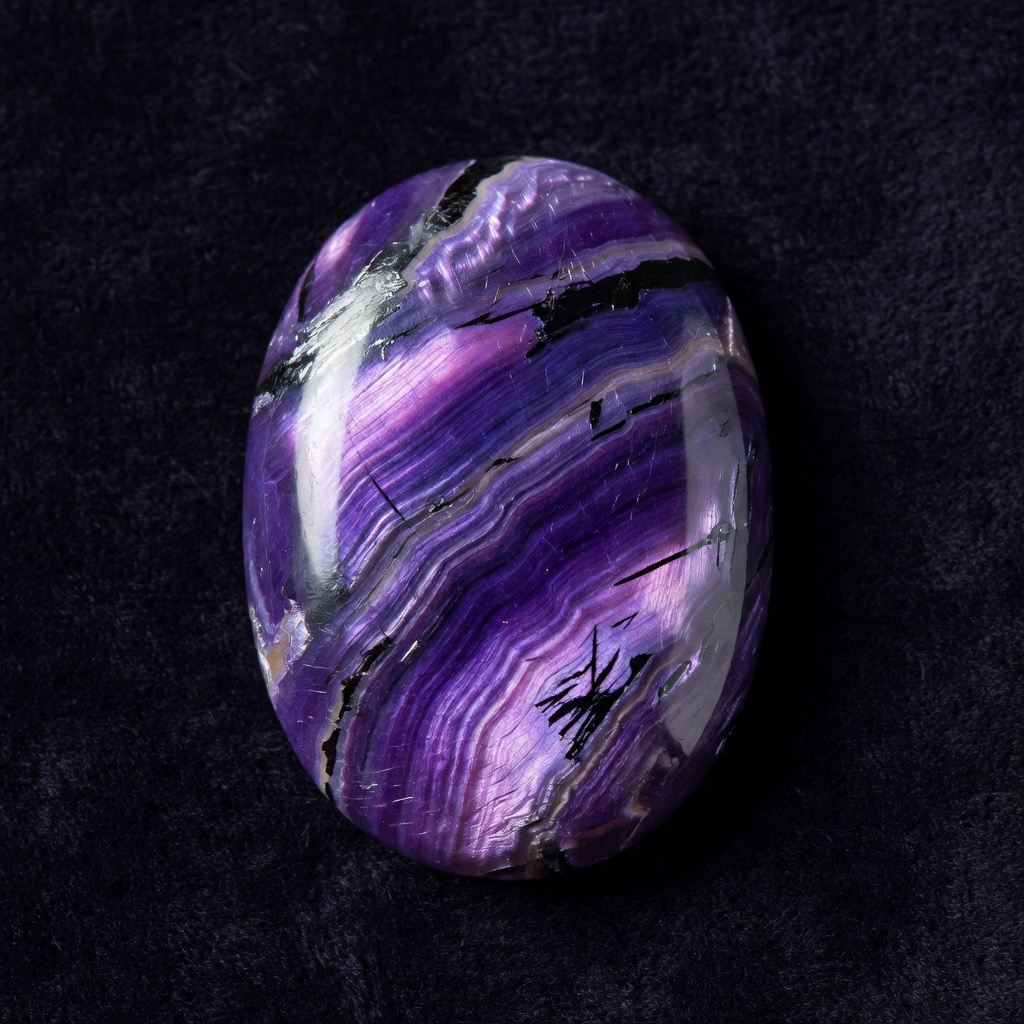
Charoite stands as one of the most visually striking and geologically unique gemstones available to collectors and jewelry enthusiasts today. This rare silicate mineral, discovered in the 1940s but not widely recognized until the 1970s, emerges exclusively from the Murun Massif in the Sakha Republic of Siberia, Russia, making it a true single-source gemstone with inherent scarcity value. The stone's distinctive purple coloration, ranging from delicate lilac to deep violet, combined with its characteristic swirling fibrous patterns and chatoyant bands, creates an otherworldly appearance that distinguishes it from all other purple gemstones like amethyst or sugilite. Understanding charoite value requires appreciating both its aesthetic uniqueness and its limited geological availability, factors that continue to drive increasing demand across crystal healing communities, mineral collectors, and fine jewelry designers seeking rare materials for bespoke creations.
The exclusivity of charoite's origin cannot be overstated when evaluating its market position. Unlike diamonds, sapphires, or emeralds that occur in multiple global localities, charoite deposits exist solely within a single alkaline massif measuring approximately 10 square kilometers in the remote Russian wilderness. This extreme geographic limitation, combined with challenging mining conditions in Siberia's harsh climate and increasing Russian export restrictions on rough mineral materials, creates a supply bottleneck that fundamentally supports strong pricing structures. For investors and collectors, this means that high-quality specimens represent not just beautiful objects but tangible assets with documented scarcity, similar to other single-source gems like tanzanite or larimar, though charoite remains significantly more affordable than these counterparts while showing comparable appreciation potential.
Charoite Price Per Carat Breakdown
When evaluating charoite price per carat, buyers encounter a wide spectrum of pricing that reflects the material's diverse quality grades and available treatments. Commercial grade charoite, typically characterized by light purple coloration, minimal chatoyancy, and visible matrix or inclusions, generally trades between $0.50 to $2.00 per carat, making it accessible for bead makers and costume jewelry manufacturers. High-grade gem quality material, featuring deep violet saturation with distinct swirling patterns and visible chatoyancy (the cat's eye effect created by fibrous inclusions), commands significantly higher prices ranging from $3.00 to $10.00 per carat depending on the cutter's skill and the stone's overall aesthetics. At the premium end of the spectrum, exceptional collector specimens exhibiting intense, saturated royal purple colors with dramatic black aegirine needle inclusions creating striking contrast patterns can achieve prices of $20 to $100+ per carat, particularly when the lapidary work maximizes the stone's natural artistry.
Size significantly impacts charoite price per carat due to the rarity of finding clean material suitable for cutting larger cabochons or faceted stones. While smaller calibrated stones under 5 carats remain relatively available in commercial qualities, specimens exceeding 10 carats with clean, pattern-rich material become exponentially rarer and command substantial premiums. For example, a 15-carat cabochon exhibiting AAA-grade color and chatoyancy might retail for $200-$300, whereas three separate 5-carat stones of equivalent quality might total only $150, demonstrating the scarcity value of larger intact pieces. This pricing structure mirrors that of other ornamental gemstones where the difficulty of extracting large, clean rough material from the host rock creates inherent value premiums for substantial specimens.
Key Factors Affecting Russian Charoite Prices
Several critical quality determinants govern Russian charoite price structures, with color intensity standing as the primary value driver in the current market. Stones displaying deep, saturated royal violet or intense purple hues with minimal gray or brown undertones consistently achieve the highest prices, as these colors represent the most desirable aesthetic for both jewelry applications and mineral collections. Pale lilac or washed-out lavender specimens, while still authentically charoite, trade at significant discounts unless they possess exceptional pattern qualities that compensate for the lighter coloration. Professional lapidaries often orient rough material specifically to maximize color depth when viewed face-up, a cutting decision that can increase a stone's market value by 40-60% compared to poorly oriented pieces cut from the same rough.
Pattern quality and chatoyancy create the second major pricing tier within Russian charoite price evaluations. The most valuable specimens exhibit distinct swirling, feathering, or concentric banding patterns caused by the mineral's complex intergrowth of charoite, tinaksite, and canasite. Chatoyant bands that shift and move as the stone rotates under light source indicate fine fibrous structure and significantly enhance value, particularly when these optical effects contrast against the purple background. Strategic inclusions of black aegirine needles, rather than detracting from value as inclusions typically do in other gems, often increase desirability when they create artistic patterns resembling brushstrokes or dendritic formations against the purple canvas. Finally, cut and polish quality substantially affects pricing; poorly executed lapidary work with uneven domes, visible scratches, or dull finishes can reduce a stone's value by 50% or more compared to professionally finished specimens, regardless of the rough material's inherent quality.
Quality Grades and Pricing Tiers
The commercial charoite market recognizes distinct quality grades that help standardize charoite value assessments across dealers and collectors. AAA Grade represents the pinnacle of available material, characterized by saturated deep purple to violet colors, distinct chatoyancy visible under normal lighting conditions, minimal fractures or structural weaknesses, and artistic patterning without muddy or indistinct areas. This top tier typically commands $8 to $15 per carat for cut stones, with exceptional pieces occasionally exceeding this range. AA Grade encompasses medium purple stones with visible patterns but less intense saturation, potentially minor inclusions that don't significantly detract from appearance, and good but not exceptional chatoyancy, generally trading between $3 to $7 per carat depending on size and cut quality.
Commercial Grade charoite serves the mass jewelry and craft markets, featuring light purple colors, muddled or indistinct patterns, and potential structural issues like internal fractures or soft areas that prevent fine polishing. This material, priced from $0.50 to $2 per carat, works well for beaded jewelry, inlay work, and pieces where the purple color itself rather than pattern quality drives the design. Beyond these cut stone grades, Specimen Grade material appeals to mineral collectors seeking raw, uncut crystals still attached to their host matrix, often featuring associated minerals like aegirine, feldspar, or tinaksite. These pieces eschew carat pricing entirely, instead selling as complete geological specimens based on aesthetic appeal, crystal formation quality, and overall size, with museum-quality clusters from the Murun Massif ranging from hundreds to thousands of dollars depending on rarity and presentation.
Charoite Jewelry vs. Rough Stone Pricing
Understanding charoite jewelry prices requires distinguishing between raw material costs and finished goods markups across different product categories. Raw rough pieces suitable for cutting or collection typically range from $5 to $50 for small specimens under 100 grams, while museum-quality clusters with exceptional crystal formations or rare matrix associations can command $200 to $2000 or more from serious mineral collectors. Cabochons in calibrated sizes (8x10mm, 10x14mm, 18x25mm, etc.) represent the most common jewelry-ready format, with prices spanning $15 to $150 per stone depending on the grade, thickness, and whether the cutter maintained consistent domes and girdle edges suitable for standard settings.
Bead strands offer another entry point into charoite jewelry prices, with 16-inch strands ranging from $25 for commercial grade, irregularly shaped light purple beads to $300 for high-grade, uniformly shaped rounds or rondelles with deep color saturation. Finished jewelry carries significant markups over material costs, with retail prices typically reflecting 3-5 times the stone's wholesale value for sterling silver settings, and 5-10 times or higher for gold mountings due to metal costs and craftsmanship premiums. For example, a $30 charoite cabochon set in a simple sterling silver pendant might retail for $150-$200, while the same stone in a 14k gold designer setting could command $400-$600. This pricing structure emphasizes the importance for budget-conscious buyers to purchase loose stones from reputable dealers and commission custom settings separately, often reducing total costs by 40-60% compared to purchasing equivalent finished pieces from retail jewelry stores.
Where to Buy Authentic Charoite Safely
Securing genuine material requires knowing where to source authentic charoite buying opportunities while avoiding the prevalent counterfeit market. Reputable mineral dealers specializing in Russian stones offer the safest acquisition channel, particularly those providing provenance documentation tracing material directly to the Murun Massif through established Russian export channels. These specialists typically maintain relationships with Siberian miners and lapidaries, ensuring ethical sourcing while providing authenticity guarantees essential for investment-grade purchases. Major international gem shows, particularly the Tucson Gem and Mineral Show in Arizona and the Denver Gem and Mineral Show, allow buyers to physically inspect rough and cut material, chat with knowledgeable dealers about specific specimens' origins, and compare quality grades side-by-side before committing to significant purchases.
Online marketplaces present significant risks for authentic charoite buying due to the widespread availability of dyed howlite, sugilite, and even purple-dyed calcite masquerading as genuine charoite. Red flags include prices below $0.30 per carat for cut stones, uniform coloration without natural variation or chatoyancy, and sellers unable to provide specific locality information beyond "Russia" or "Siberia." Direct Russian suppliers and lapidaries accessible through specialized mineral forums or established import businesses offer alternatives for experienced buyers seeking rough material for custom cutting, though these transactions require understanding of international shipping regulations and potential customs complications. When purchasing online, insist on high-resolution photographs showing the stone's fibrous structure, request video demonstrating chatoyancy, and verify return policies before completing transactions over $100.
Market Trends and Investment Potential
Historical data reveals strong appreciation in charoite market value over the past decade, with high-grade material experiencing 200-300% price increases since 2014. This appreciation stems from tightening Russian mining regulations, increased export restrictions on rough minerals, and growing international recognition of charoite's unique aesthetic properties. Supply constraints appear permanent rather than cyclical; the single-source geology of the Murun Massif means no new deposits can be discovered elsewhere, while existing mines face increasing operational costs and environmental oversight that limit production volumes. These fundamentals support continued price stability or growth, particularly for AAA-grade material suitable for fine jewelry and serious mineral collections.
Current market analysis indicates divergent trends across quality tiers, with collector demand in Asian markets, particularly China and Japan, driving premium specimen prices significantly higher while commercial grade prices remain relatively stable. The 2024 market outlook suggests stable to increasing prices for high-grade material with exceptional color and pattern, while commercial grade prices may see modest inflation keeping pace with general gemstone market trends. For investors, this indicates a "flight to quality" strategy similar to art or wine markets, where concentrating capital in exceptional pieces rather than volume purchases of commercial material offers superior appreciation potential. Specimens featuring rare associations with other Murun Massif minerals, particularly catapleiite or tinaksite, command additional premiums among specialist collectors and represent niche investment opportunities within the broader charoite market.
Identifying Fake or Treated Charoite
The growing popularity of this purple stone has unfortunately spawned numerous imitations, making genuine charoite identification skills essential for prospective buyers. Common counterfeits include dyed howlite (which lacks chatoyancy and shows uniform color saturation), sugilite (a genuinely rare purple mineral but with different chemical composition and crystal structure), lepidolite (a lithium-rich mica with distinctly flaky cleavage), and various synthetic materials or assembled doublets. Visual inspection under 10x magnification reveals charoite's diagnostic fibrous, swirling structure resembling flowing silk or brushstrokes, while imitations typically appear uniformly colored or show dye concentrations in surface-reaching fractures. Genuine charoite also exhibits a distinctive waxy to pearly luster distinct from the glassy shine of many substitutes.
Physical testing provides additional genuine charoite identification methods for suspicious specimens. Charoite rates 5-6 on the Mohs hardness scale, meaning it can be scratched by a steel knife blade or quartz but will scratch materials like calcite or fluorite. Common imitations like howlite (hardness 3.5) scratch much more easily, while quartz-based fakes (hardness 7) resist steel scratching. Specific gravity testing offers definitive identification; charoite's density ranges from 2.54-2.68, distinguishable from sugilite (2.74-2.79) and significantly different from howlite (2.53-2.59 though howlite feels noticeably lighter in hand). Price red flags remain the most accessible warning sign; authentic charoite cannot be profitably mined, cut, and distributed at prices below $0.30 per carat for finished stones, making extremely cheap listings on auction sites or mass-market platforms almost certainly counterfeit or heavily treated material.
Caring for Your Charoite Investment
Proper charoite maintenance preserves both the aesthetic beauty and monetary value of your gemstone collection or jewelry pieces. Cleaning should involve only mild soap and lukewarm water applied with a soft-bristled brush, gently removing accumulated oils and debris without risking damage to the stone's surface. Avoid ultrasonic cleaners and steam cleaning systems entirely, as these can exploit existing fractures or cleavage planes within the stone, potentially causing catastrophic breaks in material that appeared stable under normal conditions. Chemical cleaners, including ammonia-based solutions, alcohol, and acetone, may react with charoite's complex silicate composition, dulling the polish or etching the surface over repeated exposures.
Storage protocols form the second pillar of effective charoite maintenance, requiring separation from harder gemstones that could scratch charoite's relatively soft surface. Store charoite pieces in individual soft cloth bags or padded jewelry boxes, keeping them away from diamonds, sapphires, rubies, quartz, and topaz that could cause abrasion during movement or travel. Prolonged exposure to direct sunlight or intense UV light may gradually fade the vibrant purple coloration, particularly in lighter-colored specimens, making storage in dark jewelry boxes or drawers preferable to display cases with constant lighting. For worn cabochons showing surface scratches or dulled luster after years of enjoyment, professional re-polishing by a lapidary familiar with charoite can restore the original brilliance, though this process removes minimal material and should not be undertaken frequently on small or thin stones.
Making Smart Purchasing Decisions
Navigating this Charoite Price Guide effectively requires balancing personal aesthetic preferences with objective quality indicators to maximize both enjoyment and value retention. When evaluating potential purchases, prioritize color saturation and pattern intensity over perfect clarity, as charoite's inherent inclusions and fibrous structure define its character rather than detract from it. A stone with vivid purple color and dramatic swirling patterns but minor surface-reaching inclusions typically offers better long-term satisfaction and value than a cleaner stone with washed-out coloration. For significant investments exceeding $500, always request documentation certifying Russian origin from the Murun Massif, as this provenance verification protects against purchasing misidentified material or future synthetic productions.
Building relationships with trusted dealers provides access to pre-market high-grade material before it reaches general retail channels, often at favorable pricing. Experienced collectors recommend focusing on "character pieces" that speak to personal taste while meeting objective quality standards, rather than pursuing generic "investment grade" stones devoid of individual appeal. Consider the intended use when allocating budget; rough specimens for lapidary projects allow customization but require skill and equipment, while finished cabochons offer immediate usability but less flexibility. Finally, maintain realistic expectations regarding charoite's hardness limitations—reserve the finest specimens for protective settings like pendants and earrings rather than rings subjected to daily impact, ensuring your investment remains beautiful for generations while potentially appreciating in value as global supplies continue tightening.
Frequently Asked Questions About Charoite Pricing and Value
How much does charoite cost per carat?
Charoite pricing varies significantly by quality: commercial grade ranges from $0.50-$2.00 per carat, while high-grade gem material with deep purple color and distinct chatoyancy commands $3.00-$10.00+ per carat. Rare collector specimens with exceptional patterns can exceed $50 per carat. Size also impacts pricing substantially, with stones over 10 carats commanding premium multiples due to the rarity of finding large, clean rough material suitable for cutting.
Why is charoite expensive compared to other purple stones?
Despite being a relatively common mineral compositionally, charoite is expensive due to its extreme rarity—it's found in only one location on Earth (the Murun Massif in Siberia). Limited mining output, difficult extraction conditions, and increasing international demand for this unique purple stone drive prices higher than amethyst or other purple gems. The single-source geology ensures that supply cannot increase to meet growing global demand, creating a natural scarcity that supports strong pricing structures comparable to tanzanite or larimar.
What color charoite is most valuable?
The most valuable charoite displays deep, saturated violet to royal purple colors with distinctive swirling fibrous patterns and chatoyancy (cat's eye effect). Stones featuring contrasting black aegirine inclusions that create dramatic patterns against the purple background command premium prices in the collector market. Pale lilac or grayish-purple material trades at significant discounts unless exceptional patterning compensates for the lighter coloration.
How can I tell if my charoite is real or fake?
Authentic charoite exhibits a characteristic fibrous, swirling structure visible under magnification, hardness of 5-6 on the Mohs scale (softer than quartz), and specific gravity of 2.54-2.68. Common fakes include dyed howlite (uniform color, no chatoyancy) and sugilite (different crystal structure). When in doubt, seek laboratory certification from recognized gemological institutes, particularly for expensive specimens where provenance documentation should accompany the stone.
Is charoite a good investment gemstone?
High-grade charoite shows strong investment potential due to its single-source geology and increasing mining restrictions in Russia. Prices have appreciated 200-300% over the past decade. However, focus on AAA-grade material with exceptional color and pattern, as commercial grade offers limited appreciation potential. Investment success requires purchasing from reputable sources with documentation, as the market for rare specimens remains strongest among serious mineral collectors who demand authenticated material.
Where is the best place to buy authentic charoite?
Purchase from reputable gem dealers who specialize in Russian minerals, established lapidaries with physical locations, or major gem and mineral shows where you can inspect stones personally. Avoid generic online marketplaces offering suspiciously low prices. Always request documentation of Russian origin for purchases over $100, and build relationships with trusted dealers who can provide provenance information and authenticity guarantees.
Can I wear charoite jewelry every day?
While charoite can be worn regularly, its 5-6 Mohs hardness makes it softer than quartz, topaz, or corundum. It's best suited for pendants and earrings rather than rings that receive impact. Remove charoite jewelry before heavy physical activity, cleaning with chemicals, or showering to preserve its polish and prevent damage. With reasonable care, charoite jewelry lasts decades, though professional re-polishing may eventually be needed to restore luster to worn cabochons.
Does charoite require special care or cleaning?
Clean charoite using only mild soap and lukewarm water with a soft brush. Never use ultrasonic cleaners, steam cleaners, or harsh chemicals, as these can damage the stone's surface or loosen settings. Store charoite separately from harder gemstones to prevent scratching, and avoid prolonged exposure to direct sunlight which may gradually fade its vibrant purple color. Regular gentle cleaning after wearing helps maintain the stone's distinctive waxy luster and prevents buildup of skin oils that can dull the surface appearance.