What Is Cat's Eye Chrysoberyl? Understanding Cymophane
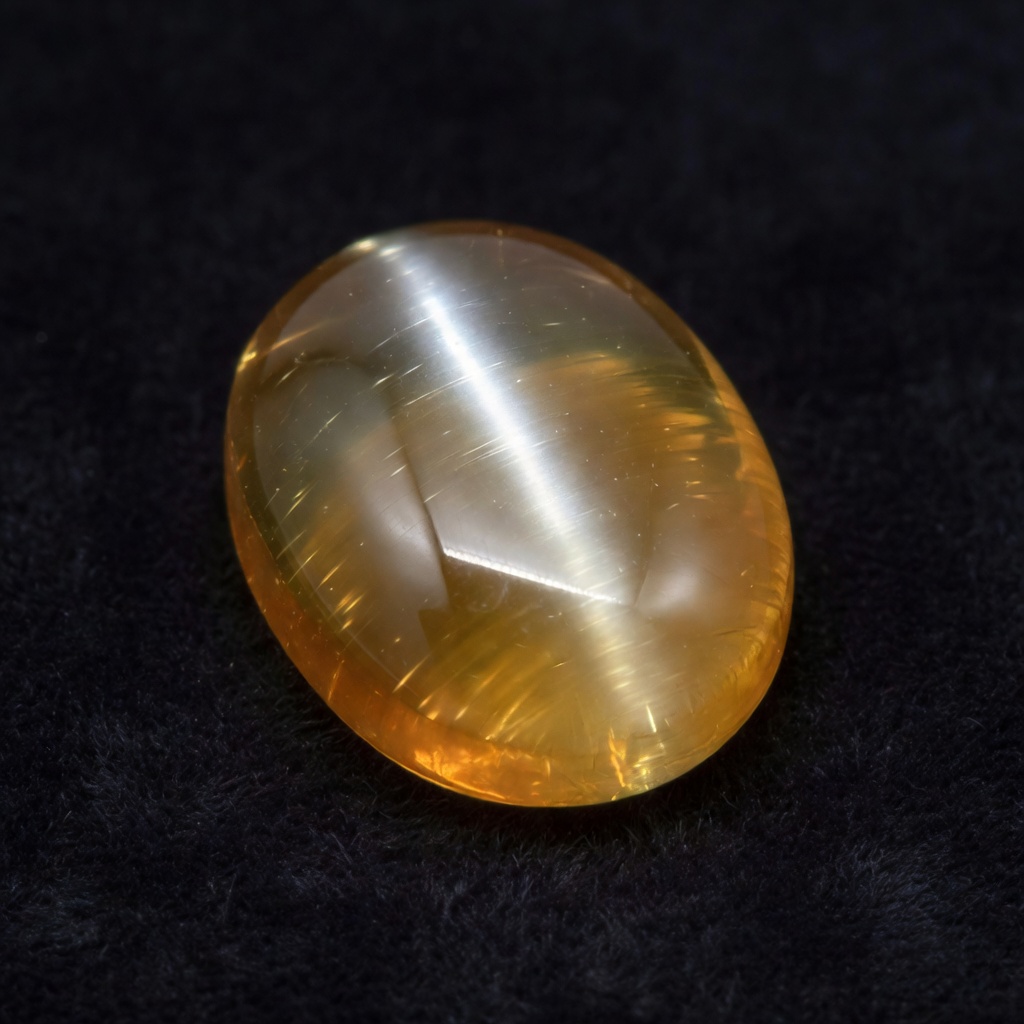
Cat's eye chrysoberyl, scientifically known as cymophane, represents one of the most captivating optical phenomena in the gemstone world, distinguished by its singular chatoyant band that resembles the slit pupil of a feline. Unlike the commonly encountered tiger's eye or quartz cat's eye varieties found in commercial jewelry, genuine chrysoberyl cat's eye is a precious gemstone with a hardness of 8.5 on the Mohs scale, making it significantly more durable and rare than its namesake imitations. The mineral composition consists of beryllium aluminum oxide with traces of iron and chromium that contribute to its distinctive coloration, requiring specific geological conditions involving high-pressure, low-temperature metamorphic environments to form the parallel silk inclusions necessary for the chatoyancy effect.
Distinguishing between the various chrysoberyl varieties is essential for understanding cymophane gemstone pricing and value propositions. While alexandrite represents the color-change variety of chrysoberyl and transparent yellow-green chrysoberyl stands as the standard form, cymophane specifically refers to the chatoyant variety displaying the moving eye phenomenon. These three varieties share identical chemical compositions but command vastly different market values based on their optical properties and rarity factors. Alexandrite typically achieves the highest per-carat prices due to its dramatic color-change effect, though exceptional cymophane specimens with honey-colored bodies and razor-sharp eyes can approach similar valuations in the current market.
The rarity status of natural cat's eye chrysoberyl continues to escalate as traditional mining sources experience depletion, particularly in Sri Lanka where the finest material has been extracted for centuries. Historical significance plays a substantial role in current valuations, as Vedic astrology has revered this gemstone for millennia as "Lehsunia" or "Vaidurya," believed to protect against evil spirits and enhance spiritual awareness. This cultural importance drives significant demand in Indian and Southeast Asian markets, where fine specimens command premiums exceeding those in Western markets. When consulting a comprehensive cat's eye chrysoberyl price guide, collectors must account for these metaphysical market drivers alongside geological quality factors.
The Chatoyancy Effect: How Optical Quality Drives Value
The mesmerizing chatoyancy effect that defines cymophane results from microscopic, parallel-oriented hollow tubes or needle-like inclusions of rutile and hematite suspended within the crystal structure. These silk inclusions align perpendicularly to the crystallographic axis, creating a single concentrated band of reflected light that appears to glide across the gemstone's surface when rotated under direct illumination. The mechanism requires precise geological conditions during formation, where slow cooling allowed these inclusions to arrange themselves in perfect parallel alignment without disruption, making the finest examples exponentially rarer than standard chrysoberyl crystals.
The sharpness and positioning of the eye fundamentally determine chatoyant chrysoberyl value in the marketplace. Premium specimens exhibit a bright, silvery-white line that remains crisp and well-defined across the entire dome of the cabochon, contrasting sharply against the body color without appearing diffused or broken. Off-center eyes significantly reduce value, as symmetrical positioning demonstrates masterful cutting technique and optimal raw material utilization. Stones displaying weak, milky, or multiple eye lines suggest inferior cutting orientation or poor inclusion density, typically relegating such pieces to commercial-grade pricing tiers regardless of their carat weight or color intensity.
Cut orientation and cabochon geometry require sophisticated lapidary expertise to maximize the cats eye optical phenomenon. The dome height must be calibrated precisely to the depth and density of the silk inclusions; too flat a dome fails to concentrate the reflected light sufficiently, while excessive height creates shadowing that obscures the eye's movement. Expert cutters orient the rough so that the chatoyant band runs perpendicular to the longest axis of the cabochon, ensuring the eye appears straight and centered when viewed from above. The "opening and closing" effect—where the eye appears to widen and narrow as the stone moves toward and away from light sources—serves as a critical evaluation standard, with superior stones displaying dramatic, lightning-quick transitions that captivate viewers and justify significant price premiums.
The Four Cs: Grading Criteria for Valuation
Professional gemologists evaluate cat's eye chrysoberyl using modified criteria adapted from diamond grading, with particular emphasis on characteristics that enhance or detract from the chatoyancy phenomenon. Color standards for premium specimens range from translucent honey-yellow to vibrant greenish-yellow hues, with the most valuable stones displaying a semi-transparent body that allows light to penetrate and illuminate the internal silk structure. Stones with excessive opacity fail to transmit the backlighting necessary for optimal eye visibility, while overly pale or washed-out colors lack the contrast needed to showcase the chatoyant line effectively. The interplay between body color and eye line creates the signature "milk and honey" effect that collectors prize, where the stone appears to contain a distinct boundary between illuminated and shadowed regions.
Clarity considerations for natural chrysoberyl quality factors differ significantly from transparent gemstones, as the very inclusions that create chatoyancy are desirable rather than detrimental. However, the type and placement of additional inclusions matter considerably; surface-reaching fractures, heavy clouding, or black carbon spots that interrupt the eye line substantially reduce value. Acceptable inclusions include minor feathering away from the chatoyant band and small crystal inclusions that do not interfere with light reflection. Stones with "milk"—a hazy, turbid quality that diffuses the eye—command lower prices than those with crystalline transparency, even when the chatoyancy appears sharp, as this milkiness indicates excessive microscopic inclusions beyond the organized silk necessary for the effect.
Cut quality for cat's eye chrysoberyl focuses exclusively on cabochon preparation, as faceting would destroy the chatoyant effect by dispersing the parallel light reflection. The ideal cut features a high, symmetrical dome with a smooth, polished surface free of scratches or pitting, with the base (bottom) cut flat and parallel to the girdle to ensure proper orientation when set in jewelry. Carat weight impacts pricing through exponential rather than linear increases; while commercial-grade material under 2 carats might retail for $200 per carat, fine specimens exceeding 5 carats can command $3,000 to $5,000 per carat due to the extreme rarity of large, inclusion-perfect crystals. This cats eye stone price per carat escalation becomes particularly pronounced above 10 carats, where museum-quality stones may achieve five-figure per-carat valuations at specialized auctions.
2024 Price Ranges by Quality Tier
The current market for cat's eye chrysoberyl operates across three distinct quality tiers, each serving different collector demographics and investment objectives. Commercial grade stones, typically priced between $100 and $500 per carat, characterize the entry-level market with acceptable but imperfect chatoyancy, often displaying brownish or grayish body colors with slightly diffused eye lines. These specimens usually weigh under 3 carats and may exhibit minor surface imperfections or slight asymmetry in the cabochon cut, making them suitable for fashion jewelry or astrological purposes where metaphysical properties take precedence over optical perfection. While these stones provide accessible entry points for new collectors, they lack the appreciation potential and liquidity of higher-tier material.
Fine quality specimens represent the investment-grade segment, commanding cats eye stone price per carat figures between $1,000 and $5,000 depending on size and origin characteristics. These stones display sharp, mobile silver eyes against honey or greenish-yellow translucent bodies, with excellent symmetry and minimal visible inclusions beyond the essential chatoyant silk. Typically ranging from 2 to 8 carats, fine quality cat's eye chrysoberyl from Ceylon sources dominates this category, offering the optimal balance of visual impact and market liquidity. Collectors targeting this tier should expect complete documentation of natural, untreated status and may encounter stones with alexandrite-like body colors that bridge the gap between standard cymophane and color-change varieties.
Collector and museum-grade pieces transcend standard retail channels, achieving prices exceeding $10,000 per carat at specialized auctions and private sales. These extraordinary specimens typically exceed 10 carats while maintaining perfect eye sharpness, exceptional transparency, and provenance from historic Sri Lankan mines now largely depleted. Historical auction records demonstrate consistent price appreciation for such pieces, with a 28-carat honey-colored Ceylon cat's eye selling for $180,000 in 2022, establishing a benchmark for chatoyant chrysoberyl value at the highest levels. Investment advisors monitoring the colored gemstone market note that fine cat's eye chrysoberyl has outperformed many traditional assets over the past decade, driven by Asian market demand and irreplaceable scarcity as mining yields continue to decline.
Color Spectrum: From Honey to Alexandrite-Like Hues
The body color of cat's eye chrysoberyl significantly influences market valuation, with premium pricing reserved for translucent honey-yellow and greenish-yellow specimens that maximize the contrast between the stone's base hue and the silvery chatoyant line. These "honey" colored stones derive their value from the warm, golden transparency that resembles high-quality citrine or topaz while maintaining the unique optical phenomena exclusive to chrysoberyl. Stones exhibiting this coveted coloration with minimal brown undertones can command 30-50% premiums over similar-quality specimens with secondary brown or olive modifiers, as the pure honey tone best showcases the "milk and honey" effect when properly illuminated.
Color saturation impacts overall valuation nonlinearly, with intensely saturated stones performing better than either pale or overly dark examples. However, alexandrite vs cats eye price comparisons reveal interesting market dynamics when cat's eye chrysoberyl displays alexandrite-like greenish body colors with subtle color-shift tendencies under different lighting conditions. While true alexandrite commands higher base prices due to its dramatic color-change phenomenon, exceptional cymophane with greenish-yellow bodies approaching alexandrite's daylight appearance can achieve price parity with lower-grade alexandrite, particularly when the chatoyancy effect remains sharp and centered. This color crossover creates a niche market for "alexandrite cat's eye" specimens that display both phenomena, commanding the highest premiums in the cymophane category.
Brown and gray undertones substantially reduce marketability and honey colored chrysoberyl value, as these modifiers create a muddy, unappealing base that obscures the chatoyant line's brilliance. Stones with pronounced brown secondary hues typically trade at 40-60% discounts compared to honey equivalents, finding use primarily in astrological markets where color preferences may differ from Western gemological standards. Gray undertones indicate excessive iron content or poor crystallization conditions, resulting in "sleepy" stones lacking the vitality and light return that characterize premium specimens. When evaluating color, prospective buyers should examine stones under multiple lighting conditions—natural daylight, incandescent, and LED—to ensure the body color remains attractive across environments and does not shift into undesirable brown or gray territories.
Geographic Origins and Provenance Premium
Provenance significantly influences valuation in the cat's eye chrysoberyl market, with Ceylon (Sri Lankan) material establishing the quality benchmark against which all other sources are measured. Sri Lankan deposits, particularly those in the Ratnapura and Elahera regions, have historically produced the finest honey-colored crystals with dense, perfectly aligned rutile inclusions necessary for superior chatoyancy. Ceylon cats eye value reflects this heritage, with documented Sri Lankan specimens commanding 20-40% premiums over equivalent-quality material from other localities. The island's alluvial deposits yielded stones with exceptional transparency and that distinctive "milk and honey" appearance that remains the industry standard, though modern mining has diminished both the quantity and quality of new production, enhancing the scarcity premium for vintage Ceylon material.
Brazilian deposits, primarily located in Minas Gerais and Espírito Santo, represent the second most significant source of cat's eye chrysoberyl, typically producing material with characteristic greenish-yellow to olive body colors. While Brazilian stones often exhibit excellent chatoyancy, they generally lack the warm honey tones associated with Sri Lankan classics, instead displaying cooler, more yellow-green hues that appeal to specific market segments. Pricing for fine Brazilian material typically ranges 15-25% below comparable Ceylon stones, offering value-oriented collectors access to high-quality chatoyancy without the provenance premium. However, exceptional Brazilian specimens with intense saturation and sharp eyes can achieve parity with mid-grade Sri Lankan material, particularly when cut by master lapidaries who maximize the optical effect.
Indian, Madagascar, and various African sources contribute additional material to the market, though with variable quality profiles that require careful individual assessment. Indian cat's eye chrysoberyl, primarily from the Orissa region, often displays darker, more brownish tones suitable for the domestic astrological market but less desirable in international fine jewelry contexts. Madagascar produces limited quantities of fine material occasionally rivaling Ceylon quality, while Tanzanian and Zimbabwean deposits yield smaller crystals typically under 3 carats. Documentation requirements for high-value origin claims have become increasingly stringent, with reputable laboratories such as GIA, SSEF, and AGL providing origin reports that verify geographic source through trace element analysis and inclusion microscopy. For investment-grade purchases exceeding $5,000 per carat, such certification proves essential for resale and insurance purposes, as undocumented origin claims significantly limit cats eye chrysoberyl origins premiums in the secondary market.
Treatments, Synthetics, and Authentication
The cat's eye chrysoberyl market faces ongoing challenges from treatments and synthetic productions that require sophisticated detection methods to identify. Common treatments include colorless oiling or resin filling of surface-reaching fractures to improve apparent clarity and stability, though these enhancements must be disclosed and significantly impact value. More egregious practices involve dyeing pale or gray chrysoberyl to simulate the coveted honey color, or fracture-filling with colored substances to mask internal cracks that would otherwise render stones unmarketable. These treatments compromise the structural integrity and long-term stability of the gemstone, with treated cats eye chrysoberyl value typically ranging 50-70% below untreated equivalents depending on the treatment's extent and permanence.
Laboratory-grown cat's eye chrysoberyl, while rare compared to synthetic corundum or spinel, exists in the marketplace and requires careful identification through advanced gemological testing. Flux-grown synthetics may display curved growth lines, unnaturally perfect clarity, or inclusion patterns that differ from natural silk arrangements. The price differential between natural and synthetic material is substantial, with laboratory-grown stones typically retailing for $20-$50 per carat regardless of size, compared to hundreds or thousands for natural equivalents. When evaluating natural chrysoberyl quality factors, certification from major laboratories including GIA (Gemological Institute of America), AGL (American Gemological Laboratories), or SSEF (Swiss Gemmological Institute) provides essential verification of natural, untreated status for purchases intended for investment or collection.
Red flags for potential treatments or synthetics include unnaturally uniform coloration without the subtle zoning typical of natural crystals, prices significantly below market norms for claimed quality grades, and vendors unwilling to provide independent laboratory reports. At-home preliminary testing techniques include specific gravity testing (natural chrysoberyl measures 3.70-3.72) and refractive index verification (1.746-1.755), though these require specialized equipment. The "dot test"—placing the stone over a printed dot to observe how the chatoyant line interacts with the background—can reveal diffusion patterns inconsistent with natural material. Ultimately, for any purchase exceeding $1,000, professional certification remains the only reliable method to confirm authenticity and absence of treatments, protecting buyers from misrepresentation while ensuring natural chrysoberyl quality factors align with the price paid.
Investment Potential and Market Trends
Cat's eye chrysoberyl presents compelling investment characteristics driven by fundamental supply constraints and evolving demand patterns in global markets. Mining depletion in traditional Sri Lankan sources has reduced annual production of fine material by approximately 60% over the past two decades, while Asian market expansion—particularly in China, India, and Thailand—has increased collector demand exponentially. This supply-demand imbalance suggests continued chatoyant chrysoberyl value appreciation for investment-grade specimens, with historical data indicating average annual returns of 8-12% for fine honey-colored stones over 5 carats during the past fifteen years. Unlike more volatile speculative commodities, cat's eye chrysoberyl benefits from intrinsic scarcity; no new major deposits have been discovered capable of producing significant quantities of Ceylon-quality material, ensuring existing fine specimens retain their rarity premium.
Collector demand patterns reveal distinct regional preferences that influence liquidity and pricing strategies. Asian markets, heavily influenced by Vedic astrology and feng shui traditions, prioritize larger stones (over 5 carats) with strong chatoyancy for astrological talismans, often accepting slightly lower color grades than Western collectors if the optical effect remains dramatic. Western markets, particularly in the United States and Europe, emphasize color quality and transparency alongside chatoyancy, preferring honey tones and museum-quality specimens for high jewelry creations. This geographic diversification provides multiple exit strategies for investors, though liquidity requires access to specialized auction houses such as Christie's, Sotheby's, or Bonhams, or established dealer networks rather than general retail channels. A comprehensive gemstone investment guide should note that while cat's eye chrysoberyl lacks the immediate liquidity of gold or equities, it offers portfolio diversification benefits with low correlation to traditional financial markets.
Comparative analysis against alexandrite reveals interesting diversification opportunities; while alexandrite commands higher absolute prices, exceptional cat's eye chrysoberyl sometimes offers better value propositions per unit of rarity. Alexandrite's dramatic price escalation over $10,000 per carat for fine material creates entry barriers for mid-level investors, whereas fine cymophane provides access to precious chrysoberyl at more accessible price points with similar supply constraints. Storage and insurance considerations favor cat's eye chrysoberyl's durability (8.5 Mohs hardness) over softer investment gems like emerald or opal, reducing damage risk during handling and transport. However, investors must maintain realistic liquidity expectations; selling periods typically range from three to six months for fine material, requiring patient capital allocation and relationships with reputable dealers who can access international buyer networks.
Expert Buying Strategies and Certification
Navigating the cat's eye chrysoberyl market requires sophisticated sourcing strategies that prioritize authenticity verification and value preservation. Selecting reputable dealers represents the critical first step, with established gemstone houses in Colombo, Bangkok, and Tucson (during the annual gem shows) offering the most reliable inventory of fine material. Auction houses specializing in colored gemstones provide access to estate pieces and collector-grade specimens with established provenance, though buyers should anticipate buyer's premiums of 15-25% above hammer prices. Private sales through dealer networks often yield better values for knowledgeable buyers, as these transactions eliminate retail markups while allowing direct examination of the stone's optical characteristics under various lighting conditions before purchase.
Negotiation tactics differ significantly between retail environments and private transactions. In retail settings, emphasis on cat's eye chrysoberyl price guide benchmarks and comparable sales data can justify discount requests, particularly for stones lacking premium origin documentation. Private sales require relationship building and cash payment capabilities to secure optimal pricing, with serious collectors often establishing ongoing partnerships with specific dealers who source material matching their quality criteria. When buying cats eye gemstone specimens for investment, insist on "no treatment" guarantees in writing and retention periods allowing independent laboratory verification before finalizing transactions. Reputable sellers welcome third-party authentication and typically offer full refund policies if laboratory analysis reveals undisclosed treatments or synthetic origins.
Essential documentation extends beyond simple purchase receipts to include detailed laboratory reports verifying natural origin, absence of treatment, and specific quality parameters affecting valuation. Insurance requirements mandate professional appraisals from accredited gemologists (GIA Graduate Gemologists or ISA-certified appraisers) specifying replacement values based on current market conditions rather than purchase price alone. High-value specimens require specialized storage in safe deposit boxes or home safes with humidity control, as extreme temperature fluctuations can potentially affect any filled fractures in treated stones. For collections exceeding $100,000 in total value, scheduled personal articles policies provide superior protection compared to standard homeowner's coverage, ensuring full replacement value without depreciation deductions. Maintaining organized records of provenance, previous ownership history, and exhibition history further enhances resale value for museum-grade pieces, as documented gemstone histories attract premium bids from serious collectors seeking stones with distinguished pedigrees.
Frequently Asked Questions
How much does cat's eye chrysoberyl cost per carat?
Cat's eye chrysoberyl typically ranges from $100 to $500 per carat for commercial quality, while fine specimens with sharp honey-colored eyes command $1,000 to $5,000 per carat. Exceptional museum-quality stones with perfect chatoyancy can exceed $15,000 per carat, particularly those over 10 carats from Ceylon.
What makes cat's eye chrysoberyl so expensive compared to other cat's eye stones?
Unlike tiger's eye or quartz cat's eye, chrysoberyl is extremely rare, ranking 8.5 on the Mohs hardness scale with excellent durability. The genuine article requires specific parallel needle inclusions creating a sharp, mobile eye effect that synthetic alternatives cannot perfectly replicate, plus its status as a precious gemstone alongside alexandrite.
How can I tell if my cat's eye chrysoberyl is real or synthetic?
Authentic cat's eye chrysoberyl shows a sharp, single band of light that moves across the stone when rotated, whereas imitations often show multiple bands or diffused chatoyancy. Real specimens have a specific gravity of 3.70-3.72 and refractive index of 1.746-1.755. Always request certification from GIA or AGL for purchases over $1,000.
Is cat's eye chrysoberyl a good investment gemstone?
Yes, high-quality natural cat's eye chrysoberyl has shown steady appreciation due to depleted mining in Sri Lanka and increasing Asian market demand. Fine specimens over 5 carats with honey color and sharp eyes have historically outperformed many traditional investments, though liquidity requires specialized auction channels or dealer networks.
What's the difference between cat's eye chrysoberyl and alexandrite?
Both are chrysoberyl varieties, but alexandrite displays color-change (green in daylight to red in incandescent light) while cat's eye shows chatoyancy. They share the same chemical composition but different optical phenomena. Alexandrite typically commands higher prices, though exceptional cat's eye specimens with alexandrite-like body color can approach similar values.
Does the origin really affect cat's eye chrysoberyl price?
Absolutely. Ceylon (Sri Lankan) material commands the highest premiums due to its historically superior honey color and sharp eye quality. Brazilian stones are typically more available and affordable, while Indian material varies widely. Documentation proving Sri Lankan origin can increase value by 20-40% for fine specimens.
What color is most valuable in cat's eye chrysoberyl?
The most valuable color is translucent honey-yellow to greenish-yellow with a sharp silvery-white eye line. Stones with brown or gray undertones are less valuable. Rare specimens showing an alexandrite-like color change combined with chatoyancy command the highest prices in the market.
Should I buy treated or natural cat's eye chrysoberyl?
Always prioritize untreated natural stones for investment purposes, as treatments significantly reduce value. Common treatments include oiling to hide surface cracks or dyeing to enhance color. While treated stones are acceptable for costume jewelry, they typically sell for 50-70% less than untreated equivalents and have poor resale potential.