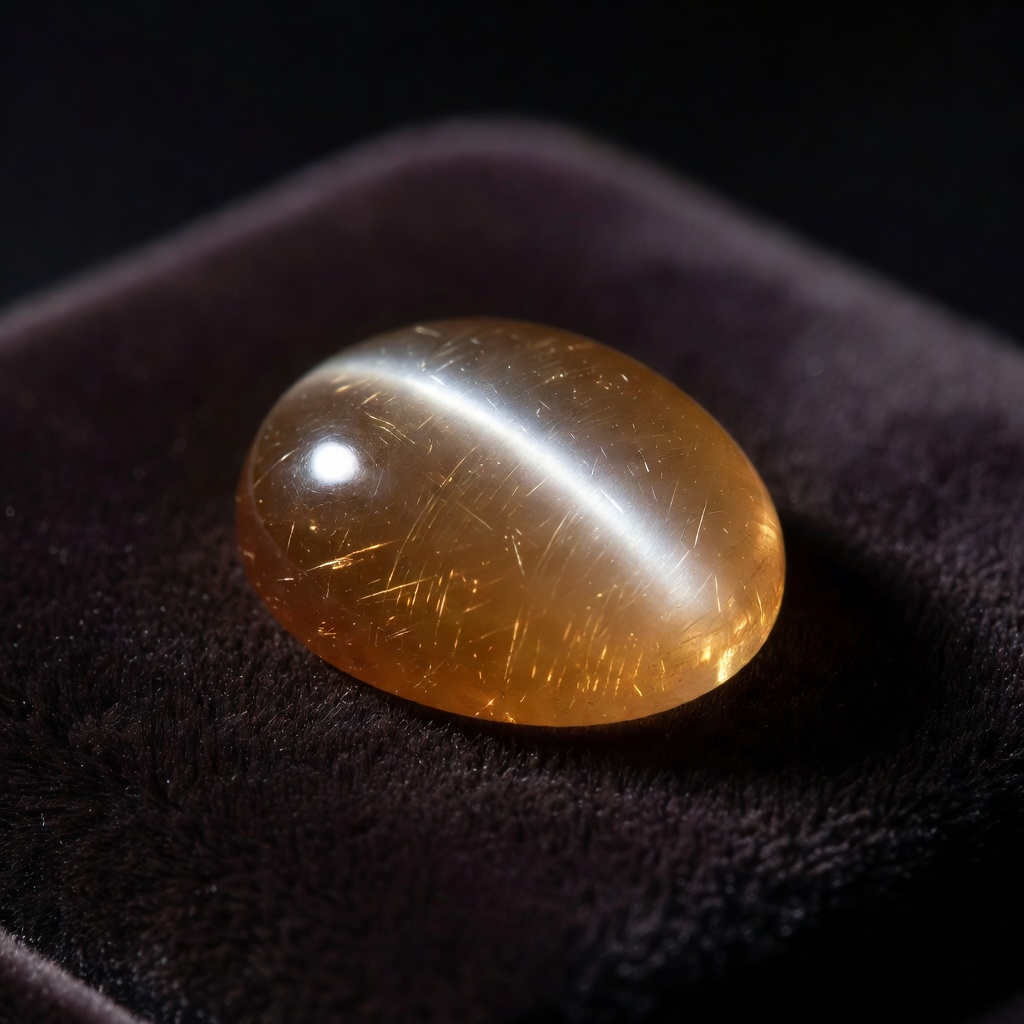
Understanding Cat's Eye Chrysoberyl: An Introduction
Cat's Eye Chrysoberyl, scientifically known as the cymophane variety, represents one of the most captivating optical phenomena in the gemstone world, formed under specific geological conditions within pegmatite deposits and high-grade metamorphic rocks. Unlike its more common namesake tiger's eye (which is actually chatoyant quartz), genuine chrysoberyl cat's eye possesses a distinct chemical composition of beryllium aluminum oxide that contributes to its exceptional hardness and unique optical properties. When beginning your Cat's Eye Chrysoberyl Buying Guide journey, understanding that cymophane shares its mineral species with the famous alexandrite and ordinary chrysoberyl becomes crucial for proper identification and valuation.
The rarity of fine specimens significantly exceeds that of diamond or ruby, with gem-quality material representing less than one percent of all chrysoberyl mined globally, commanding premium prices that appreciate consistently in the investment market. Distinguishing between authentic cat's eye chrysoberyl and inferior quartz substitutes requires careful examination, as many dealers misleadingly label chatoyant quartz as "cat's eye" without specifying the mineral species, creating confusion for unwary buyers. True cat's eye chrysoberyl exhibits a specific gravity of 3.70-3.72 and a refractive index range of 1.746-1.755, physical constants that separate it definitively from quartz cat's eye, which possesses notably lower density and different optical characteristics.
The Science of Chatoyancy: What Creates the Eye
The mesmerizing chatoyant effect that defines this gemstone originates from the precise alignment of microscopic silk inclusions composed of hollow tubes or needle-like cavities oriented parallel to the crystal's c-axis, creating a single concentrated band of reflected light. When light strikes these parallel inclusions, it reflects back in a narrow, sharp line perpendicular to the tube direction, producing the distinctive "eye" that seems to glide across the stone's surface as you rotate it under illumination. Premium specimens display a silvery-white eye line that remains sharp and distinct under various lighting conditions, whereas inferior stones may show diffuse, wavy, or multiple eye lines that indicate imperfect silk alignment or poor cutting orientation.
Evaluating the quality of chatoyancy requires examining three critical factors: the sharpness of the eye line, its straightness across the dome, and the smoothness of its movement when the stone is rotated between light sources. The most valuable specimens exhibit a single, well-defined eye that remains perfectly straight and centered, while double-eye phenomena—created when silk aligns in two different directions—generally command lower prices due to the divided visual impact. When examining potential purchases, tilt the stone under a single point light source such as a penlight or sunlight beam to verify that the eye moves fluidly without breaking, fading, or developing multiple bands, ensuring you select a gem with optimal optical performance.
Color Grading: From Honey to Greenish-Yellow
The body color of cat's eye chrysoberyl ranges from greenish-yellow through golden brown to the highly coveted honey color that collectors and connoisseurs prize above all other variations. The legendary "milk and honey" effect represents the pinnacle of color quality, occurring when a translucent honey-colored body displays a milky, opalescent sheen on one side while the opposite side reveals the warm golden hue, creating a striking contrast when light passes through the stone. This phenomenon requires specific translucency levels that allow light to penetrate the gem while the silk inclusions scatter illumination to create the milky appearance, a delicate balance that only the finest specimens achieve.
When evaluating honey color chrysoberyl, compare stones under natural daylight and incandescent lighting to assess how the body color shifts between greenish-yellow and golden-brown tones, noting that premium honey colors maintain their warmth without appearing muddy or grayish. Brownish tones generally indicate iron content that reduces both transparency and value, often selling for 60-70% less than comparable honey-colored specimens, while greenish-yellow varieties occupy a middle tier in the pricing hierarchy. For investment purposes, seek stones with translucent, saturated honey coloring that allows the eye line to appear sharp and bright against the body color, avoiding stones that appear too dark or opaque, as excessive density obscures the chatoyant effect and diminishes the gem's visual appeal.
Cut and Shape: Perfecting the Cabochon Cut
Unlike faceted gemstones that rely on precise angles to maximize brilliance, cat's eye chrysoberyl requires a cabochon cut—a smooth, domed surface without facets—to properly display the chatoyant phenomenon, making the cutter's skill paramount to the final value. The dome height must reach specific proportions relative to the stone's width, typically maintaining a height-to-width ratio between 40-60%, as flat domes fail to concentrate the reflected light properly while excessively high domes appear clumsy and waste valuable rough material. Professional lapidaries orient the rough crystal so the silk inclusions run parallel to the base of the cabochon, ensuring the eye line appears centered and perpendicular to the length of the oval or round shape, a precision task that requires extensive experience with chrysoberyl's crystallographic structure.
Symmetry requirements for high-value specimens demand that the eye line sit perfectly centered along the length of the cabochon, remaining straight and unbroken from end to end without wandering toward the edges or appearing off-center. Off-center eyes reduce the stone's value by 20-40% depending on severity, as they indicate poor cutting decisions or irregular silk distribution within the rough crystal, while crooked eye lines suggest improper orientation during the cutting process. When selecting your gemstone, examine the dome profile carefully to ensure it displays a uniform curve without flat spots or asymmetrical bulges, and verify that the base remains flat and parallel to the table plane to ensure the stone sits properly in jewelry settings and displays the eye optimally when worn.
Clarity and Silk Inclusions: The Balancing Act
In most gemstones, inclusions represent flaws that diminish value, but silk inclusions in cat's eye chrysoberyl function as essential structural elements that create the very phenomenon collectors seek, transforming potential defects into desirable characteristics. These silk inclusions consist of extremely fine, parallel channels or tubular cavities filled with liquid or gas, distributed evenly throughout the crystal to produce a uniform chatoyant band rather than scattered reflective patches; however, the concentration must remain balanced to achieve optimal translucency without crossing into opacity. Stones that appear too transparent lack sufficient silk to generate a sharp eye line, appearing weak or invisible under normal lighting, while excessively included specimens appear milky or hazy throughout, obscuring the body color and reducing the dramatic contrast that defines fine material.
When evaluating clarity, focus specifically on surface-reaching fractures, feathers, or cavities that compromise the structural integrity of the cabochon dome, as these represent genuine flaws distinct from the desirable internal silk. Surface fractures near the apex of the dome pose particular risks for durability, as the pointed curve of the cabochon concentrates stress at these points, potentially leading to chipping or cracking during setting or daily wear. Use a 10x loupe to examine the dome surface for any breaks that reach the exterior, and avoid stones with visible cracks under the table area, as these not only threaten durability but also disrupt the path of light through the stone, potentially breaking the continuity of the eye line or creating distracting reflective anomalies.
Carat Weight and Investment Sizing
The scarcity of fine cat's eye chrysoberyl increases exponentially with size, with gem-quality specimens exceeding three carats representing genuine rarities and stones over five carats appearing so infrequently that they command auction-level attention from serious collectors. Most mining operations produce commercial-grade material in the one to two-carat range suitable for jewelry, while investment-grade stones typically begin at three carats with exceptional honey color, sharp centered eyes, and minimal visible inclusions beyond the necessary silk. The price per carat does not increase linearly but rather geometrically as stones pass the three-carat and five-carat thresholds, with fine five-carat specimens often commanding four to six times the per-carat price of comparable two-carat stones due to extreme rarity.
For jewelry purposes, stones between one and two carats offer excellent wearability and accessibility, fitting comfortably into rings and pendant designs without excessive weight or cost, while providing the full cat's eye phenomenon for personal enjoyment. Investment collectors should target stones weighing three carats or more with GIA or AGL certification confirming natural origin and untreated status, as these sizes demonstrate the strongest historical appreciation and liquidity in the secondary market. When building a collection, consider that stones between five and ten carats with premium characteristics appear perhaps once or twice yearly in major international markets, making immediate acquisition advisable when such specimens become available through reputable dealers, provided the price aligns with current market valuations for comparable auction results.
Certification and Authentication Essentials
Acquiring comprehensive gemstone certification from internationally recognized laboratories such as the Gemological Institute of America (GIA), American Gemological Laboratories (AGL), or the Swiss Gemmological Institute (SSEF) remains non-negotiable when purchasing cat's eye chrysoberyl, particularly for investment-grade specimens exceeding $2,000 per carat. These reports confirm the stone's identity as natural chrysoberyl (cymophane variety) rather than synthetic counterparts or simulants such as fiber-optic glass or quartz cat's eye, documenting critical characteristics including refractive index, specific gravity, and optical phenomena. Advanced testing methods employed by these laboratories can detect synthetic chrysoberyl through examination of curved growth striae or unusual inclusion patterns, protecting buyers from increasingly sophisticated laboratory-grown material that enters the market periodically.
Understanding treatment disclosures proves equally important, as while high-quality cat's eye chrysoberyl typically requires no enhancement, some lower-grade material undergoes dyeing, oiling, or fracture-filling to improve apparent clarity and color, treatments that significantly impact long-term value and durability. Acceptable treatments remain limited primarily to standard cleaning and cutting, with any color modification or clarity enhancement requiring explicit disclosure on the certificate and corresponding price adjustments downward of 30-50% compared to untreated material. When reviewing documentation, verify that the report specifically addresses chatoyancy quality and notes whether the eye appears single or double, as these details affect valuation, and ensure the certificate number matches the stone through laser inscription or detailed plotting diagrams that prevent substitution fraud.
Pricing Guide and Market Valuation
Current market pricing for cymophane spans three distinct quality tiers, with commercial-grade material featuring brownish tones, slightly off-center eyes, or visible inclusions ranging from $500 to $1,500 per carat depending on size and cutting quality. Fine commercial specimens displaying honey coloring with sharp, centered eyes and good translucency typically command between $2,000 and $5,000 per carat, while exceptional investment-grade stones over five carats with the milk-and-honey effect regularly achieve $10,000 to $20,000 per carat at major auction houses such as Christie's and Sotheby's. The premium for honey color over brownish tones reaches 300-400% at equivalent sizes and clarity levels, reflecting the market's strong preference for the classic golden translucency that defines the variety's aesthetic pinnacle.
Auction records demonstrate consistent appreciation for top-tier specimens, with a 23-carat honey-colored cat's eye chrysoberyl setting a notable record when it achieved over $25,000 per carat, highlighting the extraordinary value placed on large, clean specimens with perfect optical phenomena. When valuing stones privately, consider that the market differentiates sharply between Sri Lankan material, which traditionally commands the highest prices due to historical association with premium honey colors, and Brazilian or Indian sources that may produce slightly different color profiles. For accurate valuation, consult recent auction results from major houses rather than retail pricing guides, as the wholesale-to-retail markup varies significantly between dealers, and investment liquidity depends heavily on purchasing at or below current wholesale replacement values.
Where to Buy: Dealer Selection and Red Flags
Reputable sources for acquiring quality cat's eye chrysoberyl include established colored stone dealers with specific expertise in chrysoberyl varieties, international gem shows such as the Tucson Gem and Mineral Show or Bangkok Gem and Jewelry Fair, and trusted online marketplaces that provide detailed photography, video demonstration of the chatoyant effect, and comprehensive return policies. When you buy cat's eye chrysoberyl, prioritize dealers who specialize in chrysoberyl and alexandrite, as their expertise ensures proper orientation of the eye, accurate color grading, and legitimate certification from recognized laboratories rather than in-house documents of questionable authority. Professional dealers should willingly provide video footage showing the stone rotated under point-source lighting to demonstrate the eye's movement, sharpness, and centering, essential documentation that static photographs cannot adequately convey.
Several critical red flags should trigger immediate caution, including prices significantly below market rates (suggesting quartz cat's eye masquerading as chrysoberyl), descriptions referring to "Sri Lankan quartz" or simply "cat's eye" without specifying chrysoberyl, and reluctance to provide independent laboratory certification. Be particularly wary of stones described as "alexandrite cat's eye" or marketed with claims of color-change properties, as these represent distinct varieties that should not be confused, and such mislabeling indicates either ignorance or deliberate deception on the seller's part. Always insist on return periods of at least seven to ten days, allowing time for verification by an independent gemologist, and negotiate payment terms that include escrow services for transactions exceeding $10,000, protecting both parties while ensuring the stone matches described specifications before funds transfer permanently.
Care, Setting, and Maintenance
With a hardness of 8.5 on the Mohs scale, cat's eye chrysoberyl offers excellent durability suitable for daily wear in rings, bracelets, and pendants, resisting scratching from most common materials while maintaining its polish longer than softer chatoyant alternatives such as tiger's eye or apatite cat's eye. Despite this hardness, the cabochon dome remains vulnerable to chipping if struck against hard surfaces, making protective bezel settings preferable to prong settings for ring designs, as the metal rim absorbs impact that might otherwise damage the stone's curved surface. When designing jewelry, position the stone so the eye line runs perpendicular to the finger length when worn, maximizing the visual impact as the hand moves and light strikes the gem from various angles throughout the day.
Cleaning requires only mild soap and warm water with a soft brush, as ultrasonic cleaners—while generally safe for untreated chrysoberyl—may exacerbate existing fractures or loosen settings over time, making gentle hand-cleaning the preferred method for valuable specimens. Avoid exposure to harsh chemicals, extreme temperature fluctuations, or steam cleaning, as these may affect any trace liquids within the silk inclusions or potentially damage fracture-filled stones that slipped through without proper disclosure. For storage, keep cat's eye chrysoberyl pieces separate from harder gemstones such as diamonds, sapphires, or rubies, as these can scratch the chrysoberyl surface despite its relatively high hardness, and store in soft cloth pouches or lined jewelry boxes to prevent contact with metal edges or other jewelry items that might mar the polished dome.
Frequently Asked Questions
What makes Cat's Eye Chrysoberyl different from other cat's eye gemstones?
Cat's Eye Chrysoberyl (cymophane) is distinct from quartz cat's eye or apatite cat's eye due to its superior hardness (8.5 on Mohs scale), sharp silvery-white chatoyant band, and the prized 'milk and honey' effect where one side appears honey-colored and the other milky when light passes through.
How much should I expect to pay for a quality Cat's Eye Chrysoberyl?
Prices range from $500-$1,500 per carat for commercial quality with visible inclusions, $2,000-$5,000 for fine honey-colored specimens, and $10,000+ per carat for exceptional gems over 5 carats with sharp, centered eyes and translucent honey body color.
What is the best color for Cat's Eye Chrysoberyl?
The most valuable color is 'honey' or 'apple green' honey, displaying a translucent golden-yellow to greenish-yellow body color with a sharp silvery-white eye line. Brownish or grayish tones significantly reduce value, while the milk-and-honey effect visible when rotating the stone indicates top quality.
How can I tell if my Cat's Eye Chrysoberyl is real?
Authentic cat's eye chrysoberyl displays a sharp, single bright line that moves smoothly across the stone when rotated, has a specific gravity of 3.70-3.72, and shows pleochroism. Always demand certification from GIA or AGL, as quartz cat's eye and glass imitations are common but lack the hardness and specific optical properties.
Is Cat's Eye Chrysoberyl treated or enhanced?
High-quality cat's eye chrysoberyl is typically untreated. Unlike other gemstones, heating or oiling rarely improves appearance and may damage the silk inclusions necessary for the chatoyant effect. However, always verify through lab certification, as dyeing and fracture-filling occasionally occur in lower-quality material.
What carat size is best for investment purposes?
While 1-2 carat stones are suitable for jewelry, investment-grade specimens typically start at 3+ carats with exceptional quality. Stones exceeding 5 carats with sharp eyes, honey color, and good transparency are extremely rare and command strong premiums at auction, showing better long-term appreciation potential.
Can Cat's Eye Chrysoberyl be worn daily?
Yes, with a hardness of 8.5, cat's eye chrysoberyl is suitable for daily wear in rings, though protective bezel settings are recommended to preserve the cabochon dome. It resists scratching better than quartz cat's eye (hardness 7) and requires only mild soap and water for cleaning.
How does Cat's Eye Chrysoberyl compare to Alexandrite?
Both are varieties of chrysoberyl mineral species, but alexandrite displays color-change (green to red) while cat's eye shows chatoyancy. Alexandrite is generally more expensive per carat, though fine honey-colored cat's eye chrysoberyl over 5 carats can rival alexandrite prices due to extreme rarity in large sizes.