What Is Boulder Opal? Understanding Australia's Gemstone Treasure
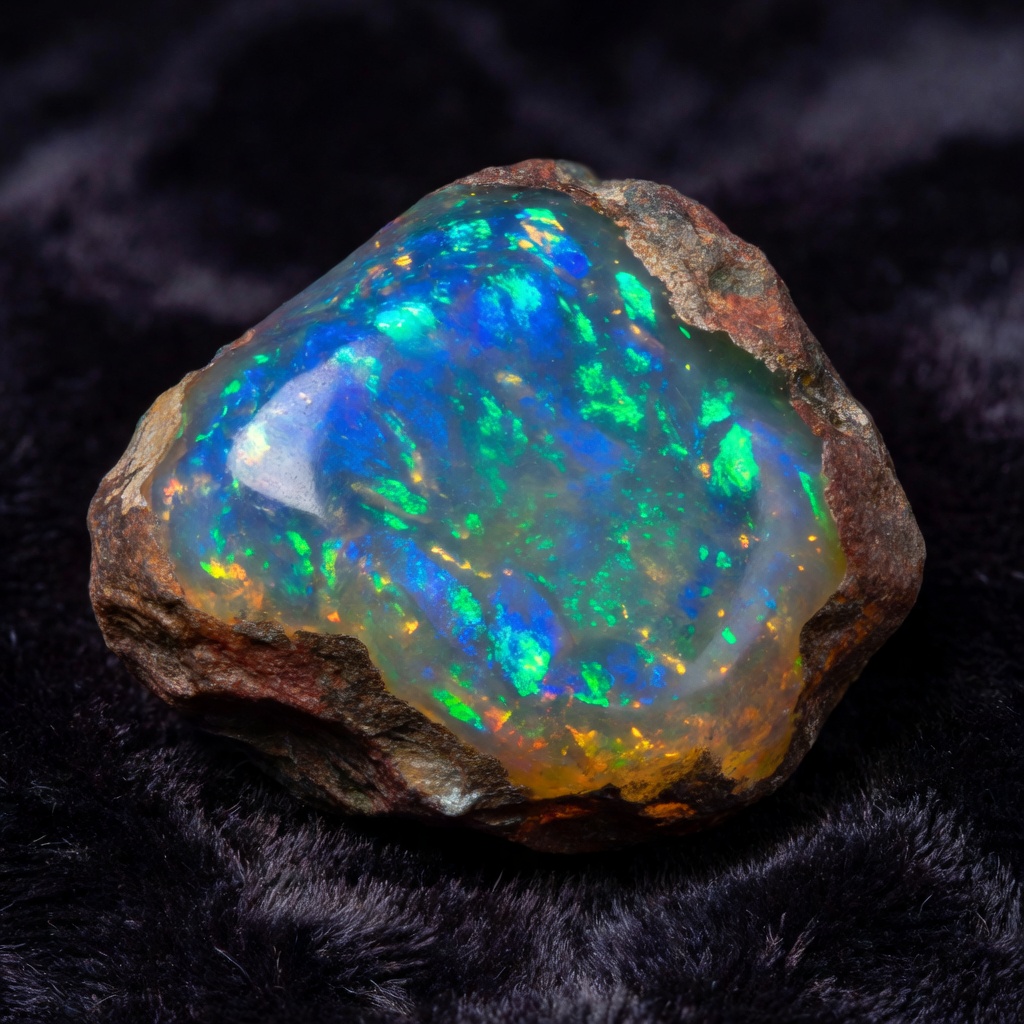
Australian boulder opal represents one of the most distinctive and geologically fascinating gemstones available in today's market. Unlike other opal varieties that form in sedimentary clay layers, boulder opal develops within the ironstone boulders of Queensland's vast outback regions, specifically around Winton, Quilpie, and Yowah. The formation process occurs when silica-rich water seeps into cracks and voids within ironstone boulders, depositing microscopic silica spheres that create the characteristic play-of-color over millions of years. This unique geological setting results in a gemstone that carries its host rock as a natural backing, creating the ironstone matrix opal appearance that collectors and jewelry enthusiasts prize.
Understanding the differences between boulder opal and other varieties helps buyers make informed decisions. Black opal from Lightning Ridge features a dark potch backing or body tone but lacks the natural ironstone matrix found in boulder specimens. White opal, predominantly from South Australia's Coober Pedy, displays a light or white body tone without any dark backing material. Boulder opal occupies a unique middle ground, offering dark body tones that enhance color vibrancy while maintaining the organic, rugged beauty of its ironstone host. The natural brown to dark chocolate-colored ironstone backing acts as a permanent enhancer, making the opal's colors appear more vivid and saturated compared to lighter varieties.
The durability advantages of boulder opal cannot be overstated when compared to its more fragile cousins. The ironstone matrix provides structural support that significantly reduces the risk of cracking or crazing, making these stones ideal for jewelry that receives daily wear. While precious opal alone ranks relatively soft at 5.5-6.5 on the Mohs hardness scale, the ironstone backing adds considerable stability and impact resistance. This natural reinforcement allows cutters to create thinner opal layers that maximize color display while maintaining structural integrity, a combination impossible to achieve with solid precious opal alone.
Essential Quality Factors Every Buyer Must Evaluate
When assessing opal quality factors, the body tone scale serves as the fundamental starting point for valuation. The Australian Opal Association recognizes a standardized scale from N1 to N4 for boulder opal, where N1 represents the darkest body tone and N4 indicates lighter, greyish tones. Darker body tones (N1-N2) create a dramatic canvas that makes the play-of-color appear brighter and more vivid to the human eye, commanding significantly higher prices than lighter specimens. When evaluating potential purchases, examine the stone against a white background in natural daylight to accurately assess whether the body tone falls into the premium dark category or the more affordable mid-range.
Brightness ratings determine how vividly the stone displays its spectral colors under various lighting conditions. Professional dealers categorize brightness from "dull" (B4) through "bright" (B2) to "brilliant" (B1), with brilliant stones exhibiting colors that seem to glow from within even under subdued lighting. To test brightness effectively, move the stone from direct sunlight to shade and observe how quickly the colors remain visible. A truly brilliant boulder opal will maintain strong color visibility in indoor lighting, while duller specimens may appear lifeless away from bright light sources. This characteristic significantly impacts boulder opal grading and long-term satisfaction with your purchase.
Transparency levels create distinct market categories within boulder opal specimens. Crystal boulder opal allows light to pass through the precious opal layer, creating an ethereal, three-dimensional color effect that seems to float within the stone. Opaque varieties, while potentially displaying brighter surface colors, lack this depth but often command lower prices and prove more durable for certain jewelry applications. When examining transparency, hold the stone up to a light source to determine if you can see through the opal layer while the ironstone backing remains opaque. This combination of translucent precious opal over dark ironstone creates the coveted "window" effect that represents the pinnacle of boulder opal desirability.
Decoding Color Play: Patterns That Determine Value
The color hierarchy in boulder opal follows a specific valuation pyramid with red commanding the highest premiums due to its rarity and visual impact. Red fire appears when larger silica spheres diffract light at wider angles, requiring precise geological conditions that occur less frequently than those producing green or blue colors. Orange and yellow occupy the middle tier, offering warm, sunset-like hues that complement many skin tones and metal settings. Blue and green represent the most common colors, providing accessible entry points for new collectors while still offering spectacular visual appeal. When evaluating a stone, rotate it slowly to identify the dominant color; stones displaying red flashes even in small patches command prices five to ten times higher than predominantly blue specimens of similar size.
Rare pattern types elevate certain boulder opals into investment-grade categories that appreciate significantly over time. The harlequin pattern resembles a mosaic of angular, closely packed color patches resembling a checkerboard or honeycomb, representing the most sought-after and valuable configuration. Flagstone patterns display larger, irregular color patches separated by ironstone matrix, creating a natural terrazzo effect that appeals to contemporary jewelry designers. Chinese writing patterns feature fine, linear color streaks that resemble calligraphy, occurring when silica deposits follow microscopic fractures in the host rock. These pattern identifiers require careful examination under 10x magnification to distinguish true rare patterns from common broad flash or pinfire effects.
Directional viewing angles reveal the dynamic nature of boulder opal color play and significantly impact wearability. Unlike diamonds that sparkle uniformly, opals display colors that shift and change based on viewing angle and light source position. Premium specimens exhibit "rolling flash" patterns where colors seem to move across the surface as the stone tilts, creating an animated quality that captivates observers. When shopping for boulder opal jewelry settings, test how the stone appears when worn at different angles; some stones display brilliant color face-up but appear dull when viewed from the side. This directional quality makes personal examination crucial before purchase, as photographs rarely capture the full range of color behavior.
Matrix Matters: Evaluating the Ironstone Backing
The optimal ratio of precious opal to host rock significantly affects both aesthetic appeal and structural integrity. Ideal specimens display between 20% to 80% opal exposure across the surface, with the ironstone matrix providing a natural frame that enhances the color play through contrast. Too little opal coverage results in a "patchy" appearance that lacks visual impact, while too much opal exposure risks structural weakness and potential cracking under stress. When examining ironstone matrix opal, look for an even distribution of color bars that follow the natural contours of the host rock, avoiding stones where the opal layer appears unnaturally thick or thin in sections.
Understanding the distinction between matrix opal and true boulder opal prevents costly purchasing mistakes. Matrix opal occurs when precious opal permeates the ironstone itself, creating a speckled or streaked appearance throughout the host rock rather than forming distinct color bars. While attractive in its own right, matrix opal typically commands lower prices than boulder opal with defined precious opal layers. True boulder opal features a clear demarcation between the dark ironstone backing and the translucent to opaque precious opal layer above it. Use a loupe to examine the boundary between materials; genuine boulder opal shows a relatively sharp transition, whereas matrix opal displays opal material dispersed throughout the ironstone structure.
Ironstone thickness affects both the cutting stability and the setting options available for finished stones. Thicker ironstone backings provide maximum durability for rings and bracelets that encounter daily impacts, while thinner backings work beautifully for pendants and earrings where weight reduction improves comfort. However, excessively thick ironstone increases the carat weight without adding value to the visible opal, potentially inflating prices disproportionately. When evaluating boulder opal backing, consider the intended jewelry application; stones destined for protective bezel settings can accommodate thinner ironstone, while prong settings require substantial backing material to ensure the stone remains secure under pressure.
Size, Cut, and Carat Weight Considerations
Boulder opal cutting styles prioritize color retention over geometric perfection, resulting in the freeform shapes that characterize this variety. Unlike diamonds or sapphires cut to standard dimensions, boulder opals follow the natural opal seams within ironstone boulders, creating organic silhouettes that maximize the precious opal exposure. Skilled cutters analyze rough boulders for weeks, studying color bars to determine the optimal orientation that displays maximum face-up color. This approach means that carat weight distribution often favors irregular dimensions, with some stones measuring significantly larger in one direction than another. When selecting stones, prioritize color coverage over carat weight alone, as a smaller stone with full face color outperforms a larger stone with patchy coverage.
Current boulder opal price per carat ranges reflect the vast quality spectrum available in today's market. Commercial grade specimens suitable for casual jewelry typically sell between $50 to $200 per carat, displaying moderate brightness with predominantly blue and green colors. Fine quality stones exhibiting bright fire across multiple colors command $500 to $1,500 per carat, suitable for significant jewelry pieces and beginning collections. Investment-grade specimens featuring red fire, rare patterns, and exceptional brilliance regularly exceed $5,000 per carat, with museum-quality pieces reaching significantly higher. These prices fluctuate based on mining yields from Queensland fields, with recent limited production driving upward pressure on fine material prices.
Cabochon requirements ensure optimal light interaction and protection for the relatively soft opal material. A proper cabochon features a smoothly domed upper surface that allows light to enter and exit at angles that maximize color play while eliminating sharp edges that could chip during wear. The dome height should measure approximately one-fifth to one-sixth of the stone's width, providing adequate curvature without creating excessive bulk. Examine the polish quality under magnification; high-grade boulder opals display a glass-like surface free of scratches or pits that could harbor dirt and diminish brilliance. Avoid stones with flat or poorly polished surfaces, as these cutting shortcuts significantly reduce the stone's ability to display its full color potential.
Natural vs. Treated: Spotting Enhancements and Fakes
Understanding natural vs treated opal distinctions protects buyers from overpaying for enhanced or synthetic material. Common treatments include smoking, where stones are wrapped in paper and heated to carbonize residual oils, creating a darker body tone that mimics higher-value black opal. Sugar treatment involves soaking opal in sugar solution before acid bathing, leaving carbon deposits in pores that darken the appearance. Fracture filling uses oils, waxes, or modern glass composites to hide cracks and improve clarity temporarily. These treatments significantly diminish value and stability, making identification crucial for serious collectors.
Distinguishing solid boulder opal from assembled stones requires careful examination of the stone's edges and surface. Doublets consist of a thin opal slice glued to a dark backing material, while triplets add a clear quartz cap over the opal layer. Examine the side profile with a loupe; solid boulder opal shows natural ironstone backing that blends organically with the opal layer, whereas doublets display a distinct glue line or color mismatch between layers. The "needle test" involves gently probing the surface with a fine needle; solid opal feels hard and cool, while wax-filled fractures or glued layers may feel slightly yielding. Always examine stones from the side and back, not just the face, to identify potential assembly lines.
Gemological certification provides essential verification for high-value purchases, offering independent assessment of treatments and authenticity. Reputable laboratories including the Gemological Institute of America (GIA), American Gemological Laboratories (AGL), and Gemological Association of Australia issue reports detailing whether stones are natural, treated, or assembled. For investment-grade purchases exceeding $1,000 per carat, insist on certificates that specifically address boulder opal authenticity and note any treatments detected. Be wary of "certificates" issued by the seller rather than independent labs, as these may omit crucial information about enhancements. The modest cost of professional grading, typically $50-$200 depending on the service level, provides invaluable protection when purchasing significant specimens.
2024 Market Pricing Guide and Investment Potential
Current boulder opal investment trends indicate strong appreciation for fine material amid limited new mine production. Entry-level commercial specimens with moderate brightness and common blue-green colors trade between $50 to $500 per carat, accessible for beginning collectors and fashion jewelry applications. Mid-tier stones exhibiting bright multi-color fire and interesting patterns range from $1,000 to $3,000 per carat, representing the sweet spot for jewelry enthusiasts seeking beauty with moderate appreciation potential. True investment-grade material featuring red fire, harlequin patterns, or exceptional brilliance commands $5,000 to $20,000+ per carat, with historical data showing consistent annual appreciation rates exceeding traditional investment vehicles when purchased wisely.
Red flags indicating overpricing or misrepresentation require vigilant attention during the buying process. Be extremely cautious of sellers claiming "Lightning Ridge black opal" status for boulder specimens, as these distinct varieties command different price premiums. Unnaturally uniform darkness across the entire stone surface may indicate smoking or dye treatments rather than natural body tone. Prices significantly below market rates often signal assembled stones, synthetics, or treated material masquerading as natural. When encountering stones priced at $50 per carat claiming "rare red fire," assume enhancement or misrepresentation until proven otherwise through independent verification.
Investment-grade characteristics extend beyond basic color to include specific optical and physical properties that ensure long-term value retention. Seek stones with brightness ratings of B1 or B2 that maintain color visibility under indoor lighting conditions. Rare patterns including harlequin, Chinese writing, or exceptional rolling flash patterns outperform standard pinfire or broad flash configurations in resale markets. Stones weighing over 5 carats with full face color coverage become exponentially rarer and more desirable to serious collectors. Documented provenance from specific Queensland mines like Yowah or Koroit adds historical value, particularly for stones exhibiting distinctive characteristics associated with those fields. Remember that liquidity varies significantly across price tiers; while commercial material sells readily, investment-grade pieces may require specialized auction houses or dealer networks to realize full value.
Jewelry Setting Selection for Protection and Beauty
Protective boulder opal jewelry settings prioritize bezel mounting over prong styles for daily wear pieces. Bezels wrap the stone's circumference with a metal rim that absorbs impacts and prevents edge chipping, crucial for a material ranking 5.5-6.5 on the Mohs hardness scale. Partial bezels or tension settings expose vulnerable opal edges to potential damage from accidental strikes against hard surfaces. For rings intended for regular wear, insist on full bezel settings with walls extending slightly above the opal's dome to provide maximum protection. Prong settings work acceptably for occasional-wear pendants or earrings where impact risk remains minimal, but require frequent inspection to ensure prongs remain tight and supportive.
Metal selection significantly impacts the perceived color intensity of boulder opal specimens. Yellow and rose gold complement stones featuring warm color palettes of red, orange, and yellow fire, creating harmonious combinations that enhance the stone's natural warmth. White gold and platinum provide striking contrast against blue and green dominant stones, making cool colors appear more vivid through complementary color theory. Sterling silver offers an affordable option for large statement pieces, though the metal's softness requires thicker settings to prevent deformation that could loosen the stone. Consider the ironstone backing color when selecting metals; yellow gold can clash with greyish ironstone, while white metals universally complement the dark brown to black tones typical of high-quality boulder opal.
Design considerations vary significantly across jewelry categories based on durability requirements and wear patterns. Opal ring design requires low-profile settings that minimize exposure to desk impacts and daily knocking, with the stone's surface sitting flush with or slightly below the surrounding metal. Pendants allow for larger, more dramatic stones since they avoid the impact risks associated with hand wear, though protective bezels remain recommended for active lifestyles. Earrings benefit from lighter weight ironstone backings to prevent stretching of earlobes, with screw-back or secure latch mechanisms essential given opal's value. For all applications, ensure the setting allows adequate light entry from the sides and top; overly enclosed mountings can suffocate the opal's color play, diminishing the very characteristic that makes these stones valuable.
Long-Term Care and Maintenance Protocols
Proper boulder opal care begins with understanding appropriate cleaning methods that preserve the stone's natural oils and surface integrity. Clean your opal using only mild soap, lukewarm water, and a soft microfiber cloth or natural bristle brush with extremely gentle pressure. Avoid ultrasonic cleaners, steam cleaners, and harsh chemical solutions including ammonia, bleach, and alcohol, as these can dehydrate the opal or attack the ironstone matrix. After washing, pat the stone dry immediately rather than allowing water spots to evaporate, as mineral deposits from tap water can dull the surface over time. For routine maintenance between washes, simply wipe the stone with a damp cloth to remove skin oils and environmental contaminants that accumulate during wear.
Storage recommendations focus on preventing physical damage and environmental stress that could lead to cracking or crazing. Store boulder opal jewelry separately from harder gemstones like diamonds, sapphires, or rubies that could scratch the relatively soft opal surface. Use individual soft cloth pouches or lined jewelry boxes with compartments that prevent pieces from contacting each other. Contrary to popular myth, quality boulder opal does not require water or glycerin storage; these practices actually risk damaging the stone by promoting fungal growth or chemical reactions with jewelry metals. Instead, maintain moderate humidity levels in your storage area and avoid exposing opals to direct sunlight or extreme temperature fluctuations that could cause thermal shock.
Addressing the persistent myth of water damage versus legitimate care concerns requires clarifying opal's physical properties. Solid boulder opal contains no adhesive layers and is not porous enough to absorb damaging amounts of water; brief contact with water during hand washing or rain poses no threat to the stone. However, doublets and triplets (which feature glued layers) should never be soaked, as water penetration can cloud the adhesive and destroy the stone's appearance. The genuine risk involves rapid temperature changes rather than water exposure; removing opal jewelry before entering saunas, hot tubs, or freezing conditions prevents thermal expansion stress that causes cracking. Regular wear actually benefits opal by maintaining stable temperature conditions and allowing natural skin oils to condition the surface, though rigorous activities requiring gloves or impact risk warrant removal.
Where to Buy: Trusted Sources and Due Diligence
Authentic Australian boulder opal dealers concentrate in specific geographic regions and online marketplaces with established reputations. Queensland mining towns including Winton, Quilpie, Yowah, and Lightning Ridge host family-owned operations that have extracted and sold opal for generations, offering direct-from-mine pricing and unmatched selection. Established online dealers with physical storefronts in these regions provide remote buyers access to inventory through detailed photography and video documentation. Avoid tourist trap shops in major cities that markup prices significantly while offering lower-grade material targeted at uninformed travelers. When purchasing online, verify that the seller provides multiple high-resolution images including side views and videos showing the stone's directional color play under various lighting conditions.
Essential questions to ask sellers form your boulder opal buying guide checklist and reveal the dealer's expertise and transparency. Inquire specifically about the mine location and field of origin, as certain Queensland fields produce distinctive color characteristics that affect value. Request explicit confirmation that the stone is natural and untreated, and ask whether any fracture filling or color enhancement has been applied. Question the return policy duration and conditions; reputable dealers offer at least 7-14 day inspection periods allowing independent appraisal. Ask about the ironstone backing thickness and whether the stone has been stabilized with any foreign substances. Professional dealers welcome these questions and provide detailed documentation, while evasive responses or pressure tactics indicate potential problems.
Return policy requirements and independent appraisal recommendations provide final safeguards for significant investments. Never purchase high-value opal from sellers refusing returns or offering only store credit; legitimate dealers stand behind their material with full money-back guarantees. Upon receiving any purchase over $500, immediately take the stone to an independent gemologist for verification that the material matches the seller's description regarding treatment status, assembly, and quality grade. Document the stone's characteristics upon receipt through detailed photography to protect against switch fraud. For international purchases, verify customs regulations regarding opal importation and ensure the seller provides accurate valuation for duty purposes. Building relationships with established dealers who remember your preferences and alert you to new acquisitions matching your criteria often yields better long-term results than chasing single "bargain" purchases from unknown sources.
Frequently Asked Questions About Boulder Opal
What makes boulder opal different from black opal?
Boulder opal forms naturally within ironstone host rock, keeping the brown matrix as a backing, while black opal comes from Lightning Ridge with a dark potch backing or body tone. Boulder opal typically shows more unique freeform shapes and is often more durable due to the ironstone support. The ironstone backing in boulder opal creates a natural, organic appearance with undulating surfaces, whereas black opal usually features smoother, more uniform surfaces cut from sedimentary clay deposits.
How much should I expect to pay for quality boulder opal?
Commercial grade boulder opal typically ranges from $50 to $200 per carat, while fine quality specimens with bright fire and rare patterns can command $500 to $2,000+ per carat. Exceptional investment-grade pieces with red harlequin patterns may exceed $5,000 per carat. Prices vary significantly based on brightness, color range, pattern rarity, and body tone darkness, with single-color blue stones at the lower end and multi-color red-dominant stones at the premium tier.
Is boulder opal durable enough for daily wear rings?
Yes, boulder opal is actually more durable than other opal types due to the ironstone matrix backing, ranking 5.5-6.5 on the Mohs scale. However, rings require protective bezel settings and should be removed during heavy physical activities to prevent impact damage to the precious opal layer. The ironstone backing provides structural support that reduces cracking risks compared to solid precious opal, though the opal surface itself remains susceptible to scratching from harder materials.
How can I tell if boulder opal is natural or treated?
Examine the stone under magnification for dye concentrations in cracks (indicating smoking/sugar treatment), check for glue lines indicating doublets, and look for unnaturally uniform darkness. Always request a certificate from a recognized gemological laboratory like GIA or AGL for high-value purchases. Natural boulder opal displays color variations that follow the irregular contours of ironstone fractures, while treated stones often show color concentrations in surface-reaching cracks or unnaturally even color distribution.
What color pattern is most valuable in boulder opal?
Red fire commands the highest premium, especially when displayed in rare patterns like harlequin (mosaic), flagstone, or Chinese writing. Broad flash patterns are common and affordable, while pinpoint or rolling flash patterns add moderate value depending on brightness and color range. The combination of red color with a harlequin pattern represents the pinnacle of boulder opal desirability, often fetching prices ten to twenty times higher than equivalent-sized stones displaying only blue pinfire patterns.
Do boulder opals need special oils or liquids to prevent cracking?
No, this is a common myth. Quality boulder opal does not require oils, water, or glycerin storage. These substances can actually damage the stone by attracting dirt or causing chemical reactions. Store opals in soft cloth away from extreme temperature changes and direct sunlight. The ironstone backing in boulder opal provides natural stability that eliminates the need for hydration, unlike some other opal varieties that might benefit from humidity control in extremely arid environments.
Can boulder opal be damaged by water or humidity?
Solid boulder opal is not porous and won't be damaged by water, humidity, or occasional washing. However, avoid ultrasonic cleaners, steam cleaning, and harsh chemicals. Doublet or triplet opals (which have glue layers) should never be soaked, as water can penetrate and cloud the stone. Normal exposure to hand washing or rain poses no threat to solid boulder opal, though you should dry the stone promptly to prevent water spots from minerals in tap water.
Where is the best place to buy authentic boulder opal?
Purchase from established dealers in Queensland mining towns like Winton, Quilpie, or Yowah, or reputable online sellers offering detailed photos, videos, and return policies. Avoid tourist traps and always verify that the seller provides full disclosure on treatments and offers independent certification for investment-grade pieces. Look for dealers who are members of industry associations such as the Australian Opal Association or Gemmological Association of Australia, as these memberships require adherence to ethical standards and accurate representation practices.