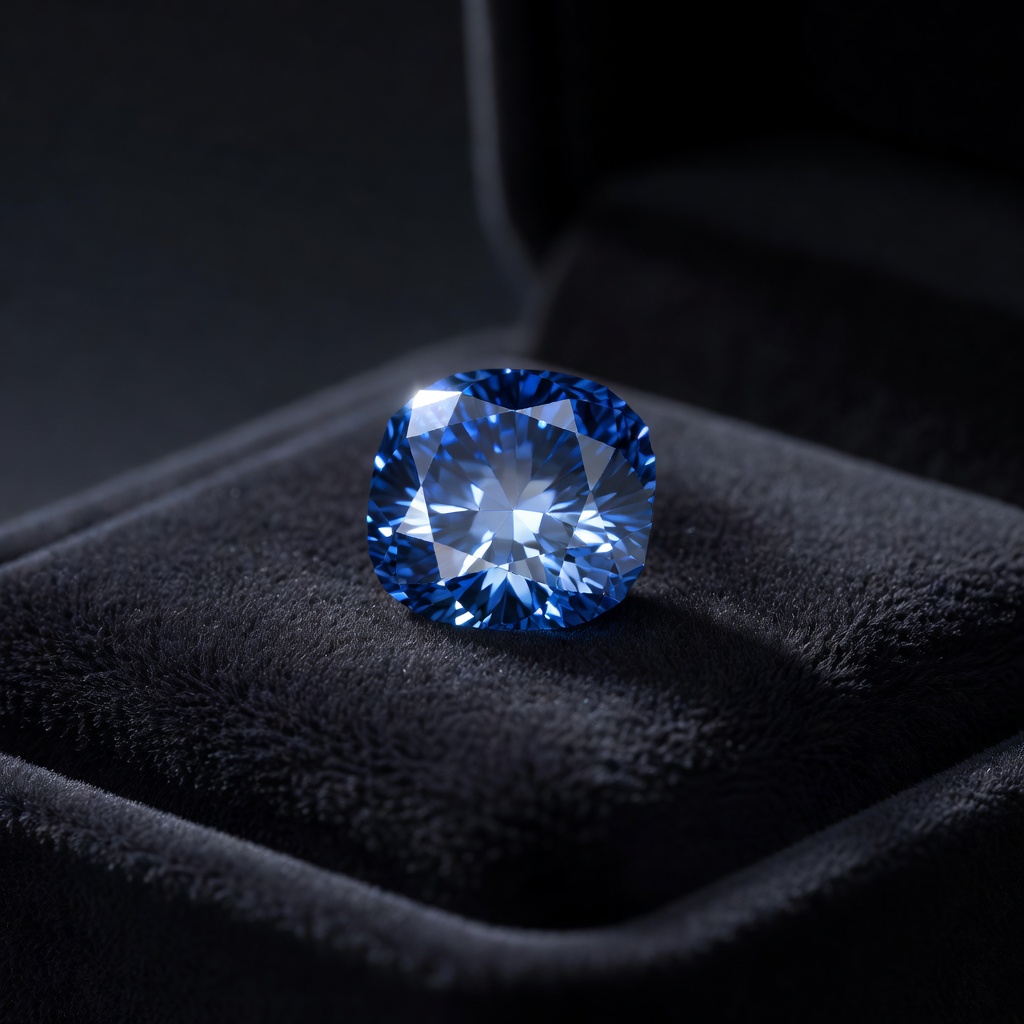
Introduction to Blue Diamonds: Nature's Rarest Treasures
Blue diamonds represent the pinnacle of rarity in the gemstone world, captivating collectors and investors with their ethereal oceanic hues and extraordinary scarcity. These magnificent gems belong to the category of Type IIb fancy colored diamonds, distinguished by the presence of boron atoms within their carbon crystal structure. Unlike their colorless counterparts that dominate the jewelry market, natural blue diamonds constitute less than 0.02% of all diamonds mined globally, making them more elusive than pink, yellow, or even most red diamonds. This extreme rarity, combined with their mesmerizing color reminiscent of deep ocean waters and twilight skies, has cemented their status as the ultimate symbol of exclusivity and prestige among connoisseurs of fine gems.
Throughout human history, blue diamonds have held profound cultural and symbolic significance across civilizations, often associated with divine favor, royal authority, and supernatural protection. Ancient Hindu texts referenced these celestial stones as fragments of fallen stars, while European monarchs coveted them as talismans against evil and emblems of unshakeable power. The enduring mystique surrounding blue diamonds stems not only from their visual splendor but also from their geological journey spanning billions of years deep within Earth's mantle, where unique conditions allowed boron to incorporate into diamond crystals. Understanding comprehensive Blue Diamond Properties and Information becomes essential for anyone seeking to appreciate or acquire these extraordinary natural treasures.
The Science Behind Blue Diamond Coloration
The mesmerizing blue coloration in these rare gems originates from a fascinating interplay between chemistry and physics at the atomic level. When trace amounts of boron replace carbon atoms in the diamond's lattice structure, the resulting boron blue diamond exhibits unique optical properties that distinguish it from all other diamond varieties. Boron atoms possess one fewer electron than carbon, creating electron holes that absorb red, yellow, and green light wavelengths from the visible spectrum while allowing blue light to transmit and reflect back to the observer's eye. This selective absorption creates the characteristic blue hue that ranges from delicate sky tones to deep, saturated ocean colors depending on the concentration and distribution of boron throughout the crystal.
Gemologists classify natural blue diamonds as Type IIb diamonds, a designation indicating both their chemical purity and semiconducting electrical properties. Unlike Type I diamonds that contain nitrogen impurities, Type IIb stones are essentially free of nitrogen while containing sufficient boron to conduct electricity—a property unique to this diamond category. The distinction proves crucial for identification purposes, as other blue diamonds might result from radiation exposure or laboratory treatments rather than natural boron incorporation. Additionally, many natural blue diamonds exhibit subtle color modifiers including gray, green, or violet undertones that significantly affect their classification and market value. A stone graded as Fancy Blue with gray undertones commands different pricing than a pure Fancy Vivid Blue, demonstrating how these subtle chemical variations create distinct visual personalities within the blue diamond family.
Color Modifiers and Their Impact
Secondary colors in blue diamonds occur due to additional trace elements or structural anomalies beyond the primary boron content. Gray modifiers typically result from hydrogen inclusions or radiation exposure during formation, creating a steely, metallic appearance that some collectors prize for its sophisticated aesthetic. Greenish-blue stones often indicate natural radiation damage over millions of years, while violet undertones suggest complex interactions between boron and crystal lattice distortions. When evaluating fancy colored diamonds, gemologists carefully document these modifiers using terminology such as "Fancy Grayish Blue" or "Fancy Green-Blue," with pure blues without secondary colors commanding premium prices in the collector market.
Professional Grading Standards for Blue Diamonds
The Gemological Institute of America (GIA) employs a specialized grading methodology for blue diamonds that diverges significantly from the traditional 4Cs used for colorless stones. Rather than prioritizing clarity or cut as primary value determinants, colored diamond grading focuses predominantly on the three components of color: hue (the basic color), tone (lightness to darkness), and saturation (intensity of color). The GIA fancy color scale for blue diamonds progresses from Faint Blue through Very Light, Light, Fancy Light, Fancy, Fancy Dark, Fancy Deep, and culminates in fancy vivid blue diamond classifications. Each grade represents a specific combination of tone and saturation, with Fancy Vivid representing the most intensely saturated colors without darkness or graying—achieved by less than 1% of all natural blue diamonds.
Professional evaluation requires controlled lighting conditions and comparison against master stones to ensure consistency across laboratories. Graders assess the stone face-up through the table, examining how light interacts with the color-causing elements throughout the crystal. Unlike colorless diamonds where inclusions significantly impact value, blue diamonds often tolerate visible inclusions if they don't detract from the face-up color appearance. This grading philosophy recognizes that color reigns supreme in fancy colored diamonds, with a Fancy Vivid Blue SI1 clarity stone potentially worth exponentially more than a Fancy Light Blue IF clarity diamond of equal size. The presence of secondary colors dramatically affects pricing hierarchies, with pure blues commanding premiums 20-40% above equivalent grades with gray or green modifiers.
Documentation and Certification Requirements
Accurate grading reports from reputable laboratories like GIA, AGS, or Gübelin provide essential documentation establishing a blue diamond's natural origin, color grade, and treatment status. These certificates include detailed color plots showing hue distribution, fluorescence characteristics, and clarity diagrams essential for insurance and resale purposes. Serious collectors should never consider purchasing high-value blue diamonds without accompanying laboratory documentation that explicitly states "Natural Color" rather than "Treated Color" or "Undetermined," as these distinctions carry enormous financial implications in the investment marketplace.
Physical Properties and Unique Characteristics
Beyond their aesthetic magnificence, blue diamonds exhibit extraordinary physical properties that distinguish them from both colorless diamonds and other gemstones. Like all diamonds, they maintain the maximum hardness rating of 10 on the Mohs scale, providing exceptional durability suitable for daily wear in various jewelry settings. However, Blue Diamond Properties and Information extends far beyond mere hardness into fascinating realms of physics and materials science. The boron content responsible for their coloration imparts unique semiconducting capabilities, making Type IIb diamonds the only naturally occurring semiconductors in the mineral world. This property enables specific applications in advanced electronics and quantum computing research, though gem-quality stones remain too valuable for industrial use.
The thermal conductivity of blue diamonds rivals that of colorless diamonds, exhibiting exceptional heat transfer capabilities that contribute to their distinctive "ice-like" tactile sensation. Under ultraviolet light, many blue diamonds display fascinating fluorescence patterns ranging from milky blue to intense orange-yellow reactions. Some exceptionally rare specimens exhibit phosphorescence—a sustained glow after the UV source is removed—creating an otherworldly luminescence that captivates gemologists and collectors alike. These optical phenomena result from specific defect centers within the crystal lattice interacting with ultraviolet radiation, providing additional diagnostic tools for distinguishing natural stones from synthetics or treated alternatives. Understanding these unique characteristics proves essential for proper identification, valuation, and appreciation of these geological marvels.
Optical Phenomena and Identification Markers
Advanced spectroscopic analysis reveals distinctive absorption patterns in blue diamonds, particularly the "boron band" visible in infrared spectra that confirms natural Type IIb classification. Some stones exhibit the "Hope Chalk" effect—a reddish-orange phosphorescence first documented in the famous Hope Diamond that persists for several seconds after UV exposure. These subtle characteristics serve as fingerprint-like identifiers helping gemologists verify authenticity and natural origin while providing insights into the geological conditions present during the diamond's billion-year formation period deep within Earth's mantle.
World's Most Legendary Blue Diamonds
The Hope Diamond stands as perhaps the most famous colored diamond in existence, a 45.52-carat Fancy Dark Grayish-Blue stone with a documented history spanning four centuries and multiple royal collections. Originally cut from the Tavernier Blue acquired by French gem merchant Jean-Baptiste Tavernier in the 17th century, the stone became the French Blue before being recut into its current cushion antique brilliant form following the French Revolution. The diamond's journey through the collections of King Louis XIV, socialite Evalyn Walsh McLean, and finally the Smithsonian Institution has cemented its place in popular culture, though gemologists value it equally for its rare Type IIb classification and distinctive red phosphorescence under UV light.
The auction market has witnessed record-breaking sales establishing blue diamonds as legitimate alternative investment vehicles. The Oppenheimer Blue, a 14.62-carat rectangular-cut Fancy Vivid Blue diamond, sold for $57.5 million at Christie's Geneva in 2016, setting a price-per-carat record that stood for years. The Wittelsbach-Graff diamond, originally a 35.56-carat Fancy Deep Grayish-Blue stone from India's Golconda mines, underwent controversial recutting by Laurence Graff to improve its clarity and color grade, resulting in a 31.06-carat Fancy Deep Blue stone that sold for $24.3 million. The Blue Moon of Josephine, a 12.03-carat Fancy Vivid Blue Internally Flawless diamond discovered at the Cullinan Mine, fetched $48.4 million in 2015, demonstrating the extraordinary premiums commanded by famous blue diamonds with impeccable provenance and gemological characteristics.
Provenance and Historical Significance
The geological and historical provenance of legendary blue diamonds significantly impacts their cultural and monetary value beyond mere carat weight and color grades. Stones originating from India's ancient Golconda mines, such as the Wittelsbach-Graff and the original Hope Diamond rough, carry particular prestige due to the region's historical reputation for producing the world's finest diamonds before African discoveries in the 19th century. Modern collectors increasingly prioritize documented origin reports from specific mines, with Cullinan blue diamonds commanding particular respect in contemporary auction markets.
Geographic Origins and Mining Sources
The Cullinan Mine (formerly Premier Mine) in South Africa represents the primary contemporary source of significant blue diamonds, consistently producing exceptional stones that dominate auction markets and high jewelry collections. This kimberlite pipe, located approximately 40 kilometers east of Pretoria, has yielded numerous record-breaking blues including the Blue Moon of Josephine and the historic Cullinan diamond fragments. The mine's unique geological formation, characterized by specific pressure and temperature conditions combined with rare boron-rich fluids, creates the perfect environment for blue diamond rarity to manifest in commercial quantities, though "commercial" remains relative given that only a handful of significant blues emerge annually from thousands of tons of extracted ore.
Historically, India's Golconda region produced the legendary blue diamonds that adorned Mughal emperors and European royalty, including the rough material that became the Hope Diamond and the Wittelsbach-Graff. These ancient alluvial deposits, now largely depleted, yielded diamonds with distinctively high clarity and unique color characteristics that modern collectors covet. The closure of Australia's Argyle Mine in 2020 marked the end of another important source, as the mine occasionally produced small but intensely colored blue-violet diamonds alongside its famous pink stones. This progressive depletion of diamond mining locations capable of producing natural blue stones creates ongoing supply constraints that drive market prices upward while making existing specimens increasingly precious for collectors and investors seeking tangible hard assets.
Future Supply Considerations
Geological surveys indicate limited additional deposits capable of producing significant blue diamond quantities, with most kimberlite pipes yielding predominantly nitrogen-rich Type I stones. Advanced exploration techniques including spectral analysis of indicator minerals help geologists identify potentially boron-rich formations, yet the specific combination of geological factors necessary for blue diamond formation remains exceedingly rare. This supply limitation suggests that natural blue diamonds will become progressively scarcer in coming decades, potentially accelerating price appreciation for existing specimens in private collections and museum holdings.
Investment Value and Market Analysis
The blue diamond investment market has demonstrated remarkable resilience and growth, with natural fancy blues consistently outperforming traditional financial instruments over extended holding periods. Current market pricing reflects extreme rarity, with lighter Fancy Light Blue stones commanding approximately $50,000 to $200,000 per carat, while saturated fancy colored diamond value reaches $1 million to $4 million per carat for Fancy Vivid specimens depending on size and clarity characteristics. These figures represent 10 to 50 times the pricing of equivalent colorless diamonds, establishing blue diamonds as distinct asset class requiring specialized knowledge and substantial capital commitment.
Historical data spanning the past two decades reveals price appreciation of 300-500% for natural blue diamonds, with particular strength in the Fancy Vivid category where supply constraints meet increasing demand from Asian collectors and institutional investors. The auction market provides essential liquidity for high-value specimens, with major houses like Christie's, Sotheby's, and Phillips conducting dedicated colored diamond sales that attract global bidding. Portfolio diversification benefits prove particularly attractive to high-net-worth individuals seeking tangible assets uncorrelated with equity markets, currency fluctuations, or geopolitical instability. Unlike gold or silver, each blue diamond represents a unique, non-fungible asset with individual characteristics affecting valuation, requiring expert guidance for acquisition and eventual disposition.
Market Trends and Collector Demographics
Emerging market collectors, particularly from China, Hong Kong, and the Middle East, increasingly drive demand for investment-grade blue diamonds, viewing them as portable stores of wealth and status symbols. The development of fancy color diamond investment funds and increased institutional interest suggests continued market maturation, though liquidity remains concentrated at the ultra-high-end where stones exceed $1 million in value. Savvy investors focus on "sweet spot" stones ranging from 1 to 5 carats with Fancy Intense to Fancy Vivid grades, balancing liquidity concerns with appreciation potential while avoiding the extreme illiquidity associated with museum-quality specimens exceeding 10 carats.
Distinguishing Natural vs. Treated Blue Diamonds
The high value associated with natural blue diamonds has unfortunately encouraged sophisticated treatment methods and synthetic production techniques that require expert detection capabilities. HPHT (High Pressure High Temperature) treatment can modify off-color diamonds to appear blue by altering their internal crystal structure and defect centers, though these treated stones lack the boron content and semiconducting properties of natural Type IIb diamonds. Natural vs treated blue diamonds differentiation requires advanced spectroscopic analysis available only at major gemological laboratories, as visual identification proves increasingly challenging as treatment technologies advance.
Irradiation processes, often combined with annealing, create artificial blue color by damaging the crystal lattice to produce color centers that absorb specific light wavelengths. While these treated stones may appear visually similar to natural blues, they lack the geological history and intrinsic value of boron-containing natural diamonds. Laboratory-grown blue diamonds present additional complications, as HPHT and CVD (Chemical Vapor Deposition) methods can introduce boron during growth to create genuine Type IIb stones indistinguishable from natural diamonds without sophisticated testing. Diamond treatment detection relies on fluorescence patterns, spectroscopic analysis, and microscopic examination of growth features, making comprehensive certification from GIA or equivalent laboratories absolutely mandatory for any significant purchase.
Certification and Disclosure Standards
Ethical dealers provide full disclosure regarding treatments or synthetic origins, with GIA reports clearly stating "Natural," "Treated," or "Laboratory-Grown" alongside specific color grades. The Federal Trade Commission mandates disclosure of gemstone treatments affecting value, though unscrupulous sellers may exploit knowledge gaps among consumers. Buyers should insist on "Natural Color" designations specifically, as some reports might describe stones as "Blue" without clarifying whether the color results from natural boron, irradiation, or coating treatments that may prove unstable over time.
Expert Buying Guide and Selection Criteria
When buying blue diamonds, experienced collectors prioritize color intensity above all other factors, recognizing that a Fancy Vivid Blue with visible inclusions commands higher prices than a flawless Fancy Light Blue of equivalent size. This represents a fundamental departure from colorless diamond purchasing strategies where clarity and cut dominate valuation. Prospective buyers should examine stones under various lighting conditions, as blue diamonds may appear dramatically different under incandescent, fluorescent, or natural daylight, with the most valuable stones maintaining their color saturation across lighting environments. The "face-up" appearance matters more than technical clarity grades, provided inclusions don't threaten durability or create obvious visual distractions.
Setting selection significantly impacts the perceived color of blue diamonds, with platinum and 18k white gold providing neutral backgrounds that enhance rather than compete with the stone's natural hue. Yellow gold settings, while popular for colorless diamonds, can cast warmth that diminishes the perception of blue saturation, making them generally unsuitable for investment-grade blue diamonds. Blue diamond certification must include origin reports when available, treatment disclosure, and color grade confirmation from recognized laboratories. Buyers should verify that certificates match the stone via laser inscription or detailed plotting diagrams, and should consider independent verification for stones exceeding $100,000 in value to ensure documentation accuracy.
Negotiation and Market Timing
The blue diamond market operates somewhat differently from colorless diamond trading, with inventory scarcity often limiting negotiation leverage. However, buyers can optimize value by monitoring auction results to establish fair market pricing, building relationships with dealers specializing in fancy colors, and considering slightly smaller stones with better color grades over larger stones with weaker saturation. Off-catalog purchases from mining companies or cutters occasionally provide opportunities before stones reach retail markets, though such transactions require substantial expertise and capital commitments.
Care, Maintenance, and Preservation
Proper blue diamond care ensures these precious assets maintain their brilliance and value across generations, though their extreme hardness makes them relatively low-maintenance compared to softer gemstones. Professional cleaning using ultrasonic or steam methods effectively removes accumulated oils and debris from set stones, restoring maximum light performance and color saturation. However, owners should exercise caution with fracture-filled or clarity-enhanced stones, as heat and vibration from ultrasonic cleaners may damage certain treatments. Annual professional inspections verify prong integrity and setting security, preventing costly loss or damage to irreplaceable specimens.
Storage considerations become crucial for collectors owning multiple high-value gemstones, as diamonds can scratch softer jewelry pieces including rubies, sapphires, and emeralds. Individual soft pouches or lined jewelry boxes with separate compartments prevent contact damage while protecting delicate settings. Insurance coverage requires updated appraisals every two to three years reflecting current market values, as gemstone maintenance documentation affects claim settlements and resale potential. High-value blue diamonds warrant specialized security measures including safe deposit boxes or home safes rated for jewelry protection, with scheduled appraisals from GIA-certified gemologists ensuring documentation remains current with rapidly appreciating market values.
Long-Term Preservation Strategies
For investment-grade stones not intended for regular wear, climate-controlled storage prevents potential damage from extreme temperature fluctuations or humidity, though diamonds remain chemically stable under normal environmental conditions. Owners should maintain detailed provenance records including purchase receipts, laboratory certificates, and historical documentation, as provenance significantly impacts auction values for important stones. Professional photography and third-party grading verification create additional documentation layers protecting against loss or disputed authenticity during future transactions or estate transfers.
Frequently Asked Questions
What element causes the blue color in natural blue diamonds?
Trace amounts of boron in the diamond's carbon structure absorb yellow and red light from the spectrum, reflecting blue wavelengths back to the eye. This makes blue diamonds Type IIb semiconductors, unlike regular Type I diamonds.
How much more valuable are blue diamonds compared to colorless diamonds?
Natural blue diamonds typically command 10 to 50 times the price of equivalent colorless diamonds. Fancy Vivid Blue stones can exceed $4 million per carat at auction, while colorless D-flawless diamonds average $15,000-$20,000 per carat.
Can blue diamonds be created in laboratories?
Yes, both HPHT (High Pressure High Temperature) and CVD (Chemical Vapor Deposition) methods can create laboratory-grown blue diamonds by introducing boron during growth. These must be clearly disclosed and certified as laboratory-grown.
What is the difference between Fancy Light Blue and Fancy Vivid Blue?
Fancy Light Blue shows a noticeable but softer blue color, while Fancy Vivid Blue displays the most saturated, intense color without darkening or graying. Fancy Vivid represents less than 1% of all blue diamonds and commands the highest premiums.
Where do most blue diamonds come from today?
The Cullinan Mine (formerly Premier Mine) in South Africa produces the majority of the world's blue diamonds, including the famous Blue Moon diamond. Historically, India's Golconda region produced legendary blues, while Australia's now-closed Argyle mine occasionally yielded small blue-violet stones.
Are blue diamonds suitable for daily wear in engagement rings?
Yes, with a hardness of 10 on the Mohs scale, blue diamonds are extremely durable for daily wear. However, their extreme rarity and value often makes owners reserve larger stones for special occasions or secure settings to prevent loss.
How can I tell if a blue diamond has been treated or irradiated?
Only gemological laboratories can definitively identify treatments. Treated stones often show color concentrations around inclusions or unusual fluorescence patterns. Always require a GIA or equivalent certificate explicitly stating 'Natural Color' before purchasing.
Do blue diamonds appreciate in value over time?
Historically, natural fancy blue diamonds have shown strong appreciation, with prices increasing 300-500% over the past two decades. Their extreme rarity, declining mine production, and increasing collector demand suggest continued long-term value retention.