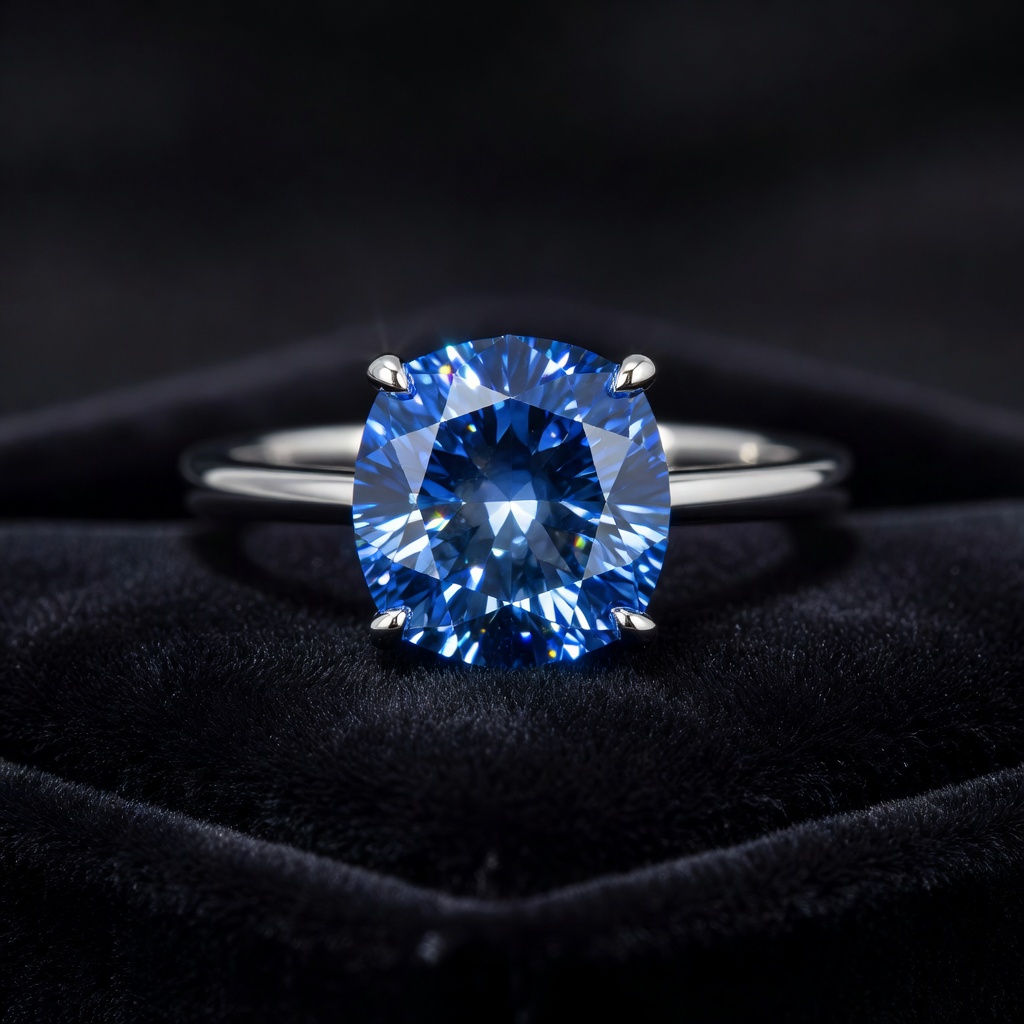
Understanding Blue Diamond Rarity and Value
The formation of blue diamonds represents one of nature's most extraordinary geological accidents, occurring when trace amounts of boron become incorporated into the carbon crystal structure during formation deep within the earth's mantle. This rare chemical substitution, happening approximately 400 miles below the surface, creates the mesmerizing blue coloration that distinguishes these gems from their colorless counterparts. Unlike nitrogen impurities that create yellow diamonds, boron atoms absorb yellow light and reflect blue wavelengths, resulting in hues ranging from delicate sky tones to deep oceanic saturation.
Blue diamonds represent less than 0.1% of all diamonds mined globally, making them rarer than pink diamonds and exponentially scarcer than white diamonds in nature. The primary sources include the Cullinan Mine in South Africa and the now-extinct Argyle Mine in Australia, with only a handful of stones exhibiting natural blue color discovered annually worldwide. This extreme scarcity drives the Blue Diamond Price Guide into premium territory, with even modest specimens commanding significant premiums over equivalent white diamonds.
Price ranges for blue diamonds span from accessible entry-level pieces to ultra-high-end collector investments, typically starting around $3,000 per carat for treated or lightly colored natural stones and escalating to over $3 million per carat for exceptional Fancy Vivid blues. Understanding where a specific stone falls within this spectrum requires careful evaluation of color intensity, natural origin verification, and overall quality parameters that differ significantly from traditional white diamond grading standards.
The Fancy Blue Color Scale: How Intensity Affects Pricing
The Gemological Institute of America (GIA) grades blue diamonds on a specific color intensity scale that directly correlates with market valuation, ranging from Fancy Light Blue through Fancy, Fancy Intense, Fancy Deep, and culminating in Fancy Vivid Blue. Each ascending grade represents exponentially greater rarity, with price multipliers often reaching 3-5 times per grade level when comparing otherwise identical stones. A Fancy Light Blue diamond weighing one carat might retail for $15,000, while a Fancy Vivid Blue of identical size and clarity could command $150,000 or more, illustrating the dramatic impact of color saturation on fancy blue diamond prices.
The blue diamond color scale also accounts for secondary hues that significantly modify market value, with pure blue commanding the highest premiums while greenish-blue or greyish-blue modifiers reduce desirability among collectors. Stones exhibiting greenish undertones typically trade at 20-30% discounts compared to pure blues, whereas greyish modifiers can reduce values by 40-60% depending on their prominence. When evaluating these modifiers, consider that subtle violet undertones, particularly in Argyle-origin stones, may actually enhance value due to their unique provenance and desirability among connoisseurs.
Practical purchasing strategy suggests prioritizing color intensity over other factors when working within budget constraints, as a smaller Fancy Vivid stone typically appreciates faster and retains liquidity better than a larger Fancy Light Blue diamond. For example, a 0.80-carat Fancy Vivid Blue often outperforms a 1.50-carat Fancy Light Blue as an investment vehicle, despite the latter's larger physical presence. Always examine stones under various lighting conditions, as some lower-grade blues appear grey or washed out in natural daylight compared to their appearance under jewelry store lighting.
Natural vs. Treated Blue Diamonds: Price Implications
The distinction between natural vs treated blue diamonds represents the most critical factor in valuation, with artificial enhancement processes creating market confusion and potential financial pitfalls for unwary buyers. High-Pressure High-Temperature (HPHT) treatment and irradiation processes can transform off-color white diamonds or brownish diamonds into attractive blue stones that mimic natural coloration to the untrained eye. These treatments, while creating visually appealing gems, result in price differentials where natural blues command 10-50 times more than their treated counterparts, making authentication absolutely essential before purchase.
Treated blue diamonds typically range from $3,000 to $8,000 per carat for commercial qualities, offering accessible entry points for jewelry enthusiasts prioritizing aesthetics over investment potential. However, these stones carry virtually no resale value in the investment market and may experience color instability if exposed to extreme heat during jewelry repairs or cleaning processes. Natural blue diamonds, conversely, appreciate consistently and maintain liquidity among collectors, with documented historical performance showing 10-15% annual appreciation for high-quality specimens over the past two decades.
Identification methods require laboratory spectroscopic analysis to detect treatment signatures, as visual examination alone cannot reliably distinguish natural from treated stones. Natural blue diamonds exhibit specific absorption patterns in the infrared spectrum and often contain unique mineral inclusions such as sulfide clouds or hydrogen-related defects that differ from treated stones. Always insist on GIA certification specifically stating "Natural Color" rather than "Color Origin Undetermined" or explicit treatment disclosure, and be wary of stones accompanied by less stringent laboratory reports that may miss subtle treatment indicators.
Price Analysis by Carat Weight and Size Categories
The blue diamond carat price structure follows exponential rather than linear scaling, with dramatic price escalations occurring at specific carat thresholds that reflect supply constraints in larger sizes. Entry-level specimens ranging from 0.25 to 0.99 carats provide accessible opportunities for new collectors, typically pricing between $3,000 and $50,000 depending on color intensity and clarity grades. In this category, Fancy Light Blues with minor secondary hues offer the most affordable entry points, while Fancy Intense stones without modifiers command premiums at the upper end of the range, making this tier ideal for jewelry purposes rather than pure investment plays.
Investment-grade blue diamonds typically fall within the 1.00 to 2.99-carat range, where prices escalate to $50,000-$500,000+ depending on color quality and provenance. Stones in this category attract serious collectors and represent the most active trading segment in the secondary market, offering reasonable liquidity while maintaining appreciation potential. For example, a 1.50-carat Fancy Intense Blue with VS clarity might trade around $200,000 retail, while the same weight in Fancy Vivid could exceed $600,000, demonstrating how color intensity overshadows size in valuation metrics at this level.
Ultra-rare large stones exceeding 3.00 carats achieve auction-level pricing that routinely exceeds $1 million per carat for top-tier Fancy Vivid specimens, with the finest examples approaching $4 million per carat. These museum-quality pieces rarely appear on the open market, often trading through private treaty sales between established collectors and specialized dealers. When evaluating larger stones, consider that price premiums for "magic sizes" (exactly 3.00, 5.00 carats) often justify purchasing slightly smaller stones with better color quality, as the per-carat price difference between a 2.90-carat and 3.00-carat stone can exceed 15% despite minimal visual size difference.
The 4Cs Modified: Clarity, Cut, and Carat in Colored Diamonds
Traditional diamond grading prioritizes the D-Z color scale and emphasizes clarity, but fancy blue diamond prices follow modified rules where color intensity overwhelmingly dominates valuation hierarchies. Unlike white diamonds where VS clarity commands significant premiums over SI grades, blue diamonds often tolerate inclusions that do not significantly impact face-up color appearance, allowing buyers to allocate budgets toward superior color rather than microscopic perfection. A Fancy Vivid Blue with SI1 clarity frequently outperforms a Fancy Intense Blue with IF clarity as an investment vehicle, challenging conventional wisdom about diamond purchasing.
Optimal cutting styles for blue diamonds differ significantly from traditional round brilliants, with cushion, radiant, and modified brilliant cuts preferred for maximizing color face-up appearance. These shapes retain more weight in the pavilion and feature cutlet designs that create longer light paths through the stone, intensifying the perceived blue saturation. Round brilliant cuts, while popular for white diamonds, often dilute color intensity in fancy colored stones and typically trade at 10-20% discounts compared to fancy shapes of equivalent quality, making them opportunistic purchases for budget-conscious collectors.
Inclusion types affect blue diamond transparency and pricing differently than in white diamonds, with clouds and crystals potentially enhancing the "sleepy" or "velvety" appearance that collectors prize in certain blue diamond varieties, particularly those from the Argyle mine. However, dark inclusions positioned centrally under the table can create " extinction" zones that dull color appearance, significantly reducing value. When evaluating clarity, examine the stone under diffused lighting rather than intense spot lighting, as this reveals how the inclusion pattern affects overall color distribution and transparency in real-world viewing conditions.
Famous Blue Diamonds and Historical Market Records
The Oppenheimer Blue, a 14.62-carat Fancy Vivid Blue rectangular-cut diamond, established a benchmark for blue diamond investment potential when it sold for $57.5 million at Christie's Geneva in 2016, representing approximately $3.93 million per carat. This sale demonstrated the astronomical premiums commanded by stones combining large size, exceptional color saturation, and impeccable provenance, setting records that stood until the De Beers Cullinan Blue auction in 2022. Analyzing these auction results reveals that fancy blue diamond prices at the ultra-high-end have consistently outperformed traditional equity markets and even other colored diamond categories over five and ten-year holding periods.
The Hope Diamond, weighing 45.52 carats and exhibiting a rare Fancy Dark Greyish-Blue coloration, has shaped collector perception for centuries despite its alleged curse legends, establishing blue diamonds as objects of fascination and desire in popular culture. While the Hope Diamond's specific color grade would not command the same per-carat price as a Fancy Vivid stone today, its historical significance and size category make it literally irreplaceable, illustrating how provenance and uniqueness can override standard grading metrics for museum-quality specimens. This historical context drives demand among ultra-high-net-worth collectors seeking to acquire pieces of comparable rarity and distinction.
Argyle blue diamond value has escalated dramatically since the mine's closure in 2020, with these Australian-origin stones commanding premiums of 30-50% over equivalent African blues due to their unique violet-blue coloration and finite supply. The Argyle mine produced less than 0.1% blue diamonds during its operation, with only a handful of Fancy Vivid stones ever emerging from the Kimberley region. Collectors specifically seeking Argyle blues should verify origin documentation through Argyle Pink Diamonds certificates or GIA origin reports, as these stones represent distinct investment categories separate from Cullinan or Golconda-origin blues, with separate price trajectories reflecting their extreme scarcity.
Certification and Authentication Essentials
Navigating the Blue Diamond Price Guide requires rigorous authentication protocols centered on GIA Colored Diamond Grading Reports, the industry gold standard for natural color verification and quality assessment. These specialized reports provide detailed color origin determination, explicitly stating whether the color is natural or treated, and include color grade diagrams showing the stone's face-up appearance. When reviewing documentation, verify that the report specifically states "Natural Color" in the color origin section rather than ambiguous language, and confirm that the certificate number matches the laser inscription on the diamond's girdle to prevent substitution fraud.
Origin reports and traceability documentation have become increasingly important for premium stones, with GIA's Origin services providing scientific verification of geographic source for mines including Argyle, Cullinan, and Golconda. These reports add 5-15% premiums to stone values among informed collectors and provide essential provenance documentation for estate planning and insurance purposes. For investment-grade purchases exceeding $100,000, consider supplementing GIA reports with additional spectroscopic analysis from independent laboratories to detect any treatments that might have emerged since initial certification, particularly for stones purchased in secondary markets.
Red flags in documentation suggesting undisclosed treatments include reports from lesser-known laboratories without colored diamond expertise, certificates over five years old for high-value stones (as treatment detection technology constantly improves), and vague color descriptions lacking specific intensity grades. Be particularly cautious of stones graded as "Fancy Blue" without intensity modifiers by non-GIA labs, as these may represent treated stones that would receive lower grades or treatment disclosures under GIA standards. Always verify the laboratory's reputation through the International Laboratory Accreditation Cooperation (ILAC) and ensure the seller provides a buy-back guarantee contingent on independent re-verification of natural origin.
2024 Market Trends and Investment Outlook
Current blue diamond investment trends reflect severe supply constraints following the Argyle mine closure and reduced production at Cullinan, creating a supply-demand imbalance that continues driving prices upward despite broader economic uncertainties. The 2024 market shows particular strength in the 1-3 carat Fancy Intense to Fancy Vivid range, where auction clearance rates exceed 85% and private sales frequently exceed high estimates. This tightening supply environment suggests continued appreciation potential, with industry analysts projecting 8-12% annual value increases for investment-grade natural blues over the next five-year cycle.
Comparison between auction and retail pricing reveals spreads of 15-25% for equivalent stones, with auction houses like Christie's and Sotheby's often achieving premiums for stones with documented provenance or celebrity ownership history. However, retail purchasers through specialized colored diamond dealers often benefit from immediate availability and flexible payment terms that auction houses cannot match, making retail channels preferable for portfolio building rather than trophy acquisitions. Smart investors diversify acquisition channels, utilizing auctions for exceptional one-off pieces while building core holdings through established dealer relationships.
Portfolio diversification benefits for colored diamond investors include low correlation with traditional equity and bond markets, inflation hedging characteristics, and portable wealth storage advantages that appeal to geopolitically mobile high-net-worth individuals. Unlike gold or cryptocurrencies, blue diamonds offer aesthetic enjoyment while appreciating, though they require longer holding periods (5-10 years minimum) to realize optimal returns due to transaction costs and market liquidity constraints. For serious collectors, allocating 5-10% of alternative investment portfolios to rare colored diamonds, with blue diamonds representing the anchor position due to their extreme rarity, provides both financial upside and tangible asset security.
Smart Buying Strategies: Where and How to Purchase
Securing optimal fancy blue diamond prices requires choosing between reputable auction houses and specialized colored diamond dealers, each offering distinct advantages depending on your timeline and expertise level. Auction houses provide transparency through competitive bidding and detailed condition reports, though buyer's premiums typically add 20-25% to hammer prices. Specialized dealers offer educational support, customization options, and often better value for stones just below auction threshold qualities (typically under $50,000), while providing access to inventory unavailable at public auction.
Online purchasing considerations demand heightened diligence, requiring escrow services that release funds only after independent verification of the stone and its documentation. Never purchase high-value blue diamonds through standard e-commerce platforms without physical examination by an independent gemologist; instead, utilize dealers offering "viewing periods" allowing return privileges contingent on GIA re-certification. When buying online, insist on high-resolution videos showing the stone under natural daylight, LED lighting, and incandescent sources to accurately assess color appearance across different environments.
Negotiation tactics specific to the fancy colored diamond market emphasize relationship building over aggressive haggling, as the small community of legitimate dealers values long-term client relationships. Offer wire transfer payments rather than credit cards to secure 2-3% discounts, and consider purchasing during summer months (June-August) when the market traditionally slows and dealers may offer more flexible terms. For investment purchases, negotiate buy-back agreements guaranteeing future liquidity at predetermined formulas, and always request trade-up policies allowing exchange toward larger or more intense stones as your collection matures.
Maintaining Value: Care, Insurance, and Resale Considerations
Preserving value within this Blue Diamond Price Guide framework requires specialized insurance appraisal requirements that accurately reflect replacement costs in the current market rather than historical purchase prices. Standard homeowner's policies rarely cover high-value colored diamonds adequately, necessitating riders or specialized jewelry insurance through companies like Chubb or Lloyd's of London that understand the replacement complexities of rare colored stones. Update appraisals every 18-24 months, as market appreciation can quickly render original purchase documentation insufficient for full loss recovery.
Proper storage protocols prevent color fading or damage risks, though natural blue diamonds remain chemically stable under normal conditions. Store stones individually in soft cloth pouches to prevent scratching, and avoid exposure to harsh chemicals or ultrasonic cleaners that might damage mounting settings. While natural blue diamonds do not fade, treated stones require protection from extreme heat (such as jeweler's torches during repairs) that might reverse color enhancement processes, making it essential to inform any jeweler working on your pieces about potential treatment histories even for certified natural stones as a precautionary measure.
Resale market liquidity varies significantly by quality tier, with Fancy Vivid blues maintaining active dealer networks and auction consignment options, while lower-grade stones may require longer marketing periods. Optimal timing for divestment typically aligns with major auction seasons (May and November in Geneva, April and December in New York) when collector attention concentrates. Maintain meticulous documentation including original purchase receipts, all laboratory reports, and any provenance history to maximize resale values, as incomplete paperwork can reduce offers by 10-15% in the secondary market.
Frequently Asked Questions
How much does a 1 carat blue diamond cost?
A 1 carat blue diamond ranges from $10,000 for a Fancy Light Blue with secondary hues to over $200,000 for a Fancy Vivid Blue. Treated blue diamonds cost significantly less, typically $3,000-$8,000 per carat, but lack investment value compared to natural stones.
Are blue diamonds a good investment compared to white diamonds?
Blue diamonds have historically outperformed white diamonds as investments, appreciating 10-15% annually over the past decade due to extreme rarity. Fancy Vivid blues show the strongest appreciation, while treated or lower-intensity blues offer less investment potential.
How can I tell if a blue diamond is natural or treated?
Always require a GIA Colored Diamond Grading Report that specifically states 'Natural Color.' Treated diamonds are labeled as 'Artificially Irradiated' or 'HPHT Processed.' Natural blues show specific spectroscopic signatures and often contain mineral inclusions that labs can identify.
What is the rarest shade of blue diamond?
Fancy Vivid Blue with no secondary color modifiers (pure blue) is the rarest and most valuable. Argyle blue diamonds from the now-closed Australian mine command additional premiums due to their unique violet-blue coloration and extreme scarcity.
Why are blue diamonds more expensive than sapphires?
While both are corundum family gems, blue diamonds are exponentially rarer—occurring in only a handful of mines globally versus widespread sapphire deposits. Diamonds also possess superior hardness (10 vs. 9 Mohs) and brilliance, plus the geological rarity of boron inclusion during formation.
Do blue diamonds hold their color over time?
Natural blue diamonds maintain their color permanently as the blue comes from boron atoms integrated into the crystal structure during formation. However, treated blue diamonds may fade if exposed to extreme heat or UV light over extended periods.
Where is the best place to buy a certified blue diamond?
Purchase from established colored diamond specialists, reputable auction houses (Christie's, Sotheby's), or dealers with GIA graduate gemologists on staff. Always verify the seller's membership in professional organizations like the Colored Diamond Association and insist on independent lab certification.
How does fluorescence affect blue diamond prices?
Unlike white diamonds where fluorescence can reduce value, medium to strong blue fluorescence in blue diamonds often enhances the perceived color intensity, potentially increasing value by 5-10%. However, very strong fluorescence may create a hazy appearance in some lighting conditions.