What Is Black Opal? Understanding the Basics
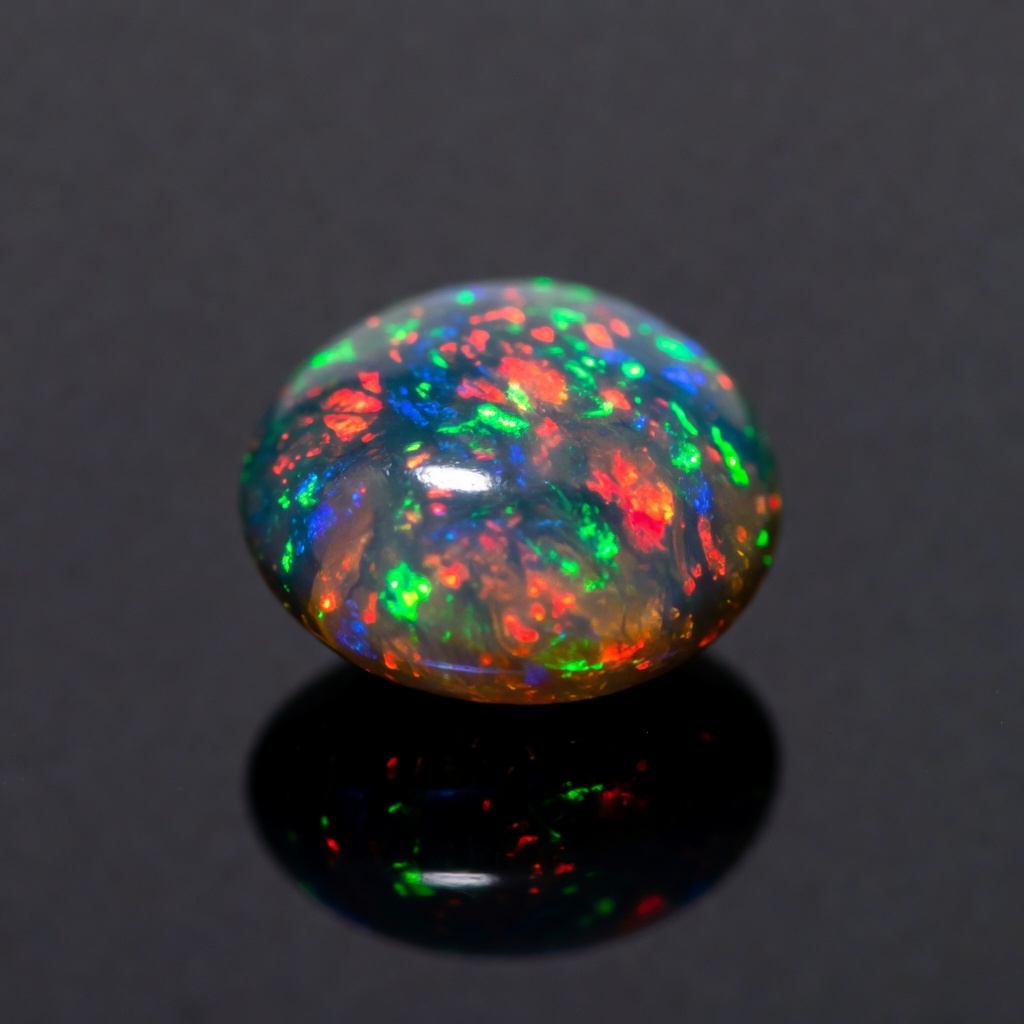
Black opal represents the pinnacle of opal variety, classified as precious opal exhibiting a dark body tone ranging from N1 to N4 on the standardized opal body tone scale. Unlike common opal varieties that lack optical phenomena, black opal displays the coveted play-of-color against a dark background that serves as nature's perfect canvas for spectral brilliance. This dark base fundamentally distinguishes black opal from other varieties and significantly influences both its visual impact and market valuation in the gemstone industry.
The distinction between black opal and its close relatives—white opal and boulder opal—lies primarily in the body tone and host rock association. White opal, also called milky opal, possesses a light or white background rated N7 through N9 on the body tone scale, producing a more ethereal, subtle color display that lacks the dramatic contrast of its darker counterpart. Boulder opal, while sometimes dark in appearance, forms within ironstone matrix host rock, with the natural brown ironstone backing visible in the finished gemstone, whereas true black opal is cut from nodules where the dark body tone permeates the entire precious opal material.
Understanding body tone proves essential when evaluating Black Opal Properties and Information for acquisition purposes. The body tone scale, developed by the Australian Opal Cutters' Association, ranges from N1 (jet black) through N9 (milky white), with the N1 to N4 range qualifying as black opal. This classification system directly correlates with value; stones exhibiting N1 or N2 body tones command premium prices because the darkness intensifies the perceived brightness of the diffracted colors, creating that sought-after "pinfire" or "broad flash" effect that collectors prize above all other precious opal characteristics.
Physical Composition and Optical Properties
At the molecular level, black opal consists of hydrated silica with the chemical formula SiO₂·nH₂O, containing between 6% and 10% water content trapped within its amorphous structure. This water content remains critical to the stone's stability; if the gem dehydrates over time or through improper storage, it may develop microscopic cracks known as "crazing" that permanently damage its appearance. The gemstone's internal structure comprises countless microscopic silica spheres arranged in a three-dimensional grid pattern, with the uniformity of these spheres determining the quality and intensity of the optical phenomena displayed.
On the Mohs hardness scale, black opal rates between 5.5 and 6.5, making it softer than many popular gemstones like sapphires or diamonds, yet harder than pearls or turquoise. This moderate hardness requires protective settings in jewelry to prevent scratching or chipping during daily activities. The specific gravity of black opal typically falls between 1.98 and 2.20, slightly lighter than quartz, which helps gemologists distinguish natural opal from certain imitations during laboratory testing procedures.
The mesmerizing play-of-color that defines black opal composition results from the physics of diffraction gratings within the silica sphere lattice. When light enters the opal, it diffracts through these uniformly sized spheres—typically measuring 150 to 300 nanometers in diameter—separating white light into its spectral components through constructive interference. The size of the spheres determines the colors displayed: larger spheres produce reds and oranges, while smaller spheres create blues and violets. This optical phenomenon makes black opal one of the most complex opal gemstone characteristics in the mineral kingdom, requiring precise geological conditions to form over millions of years.
Australian Black Opal Origins and Mining
Lightning Ridge, located in New South Wales approximately 770 kilometers northwest of Sydney, stands as the premier global source for Australian black opal, producing approximately 90% of the world's supply of this precious gemstone. The town's unique geology features sandstone and claystone horizons from the Early Cretaceous period, where silica-rich water percolated through ancient rock formations, depositing opal in voids and cracks over 100 million years ago. Miners at Lightning Ridge have extracted some of the most spectacular specimens in history, including the famous "Halley's Comet" opal and the "Royal One," demonstrating why Lightning Ridge opal commands legendary status among collectors.
While Lightning Ridge dominates the market, secondary deposits exist at Mintabie in South Australia and White Cliffs in New South Wales, though these locations typically produce material with different characteristics. Mintabie opal often displays crystal or semi-black qualities rather than the deep N1 body tones of Lightning Ridge, while White Cliffs is historically significant as the site of Australia's first commercial opal field but now produces limited quantities. These regional variations affect both the appearance and value proposition of stones, with provenance playing a significant role in establishing authenticity and desirability.
Extracting black opal requires specialized underground mining techniques due to the unpredictable nature of opal-bearing formations. Miners sink vertical shafts up to 30 meters deep, then tunnel horizontally along "levels" following "nobbies" or opal-bearing nodules through sandy claystone. The work proves dangerous and speculative; miners often operate claims no larger than 50 meters by 50 meters, using jackhammers and hand tools to avoid damaging fragile opal veins. Modern operations employ tunnelling machines and improved ventilation systems, but the essence of opal mining remains a gamble where months of excavation might yield nothing or suddenly reveal a pocket worth millions of dollars.
Color Patterns and Phenomena Explained
The visual allure of black opal centers on its pattern types, with certain configurations commanding extraordinary premiums due to rarity and aesthetic appeal. The Harlequin pattern, characterized by large, angular patches of color arranged in a checkerboard or mosaic fashion, represents the most coveted and rare pattern, often fetching prices exceeding $10,000 per carat for fine specimens. Pinfire patterns display tiny, closely set points of color resembling stars in a night sky, while Broad Flash and Rolling Flash patterns show large color patches that sweep across the stone's surface as it moves, creating a dynamic, living appearance that captivates viewers.
Color hierarchy within precious opal characteristics follows a specific value spectrum based on rarity within the stone's play-of-color. Red stands as the most valuable hue, particularly pure red or red-orange combinations, because larger silica spheres required to produce red light are statistically less likely to form in uniform arrays. Violet and orange follow closely in the value pyramid, while green and blue, though beautiful, occur more frequently and thus command lower prices unless displayed in exceptional brightness or rare patterns. A black opal displaying a full spectral range including red, orange, yellow, green, blue, and violet against an N1 body tone represents the absolute zenith of black opal value factors.
Brightness rating scales further quantify these visual characteristics using the B1 through B7 classification system, where B1 represents the most brilliant, vivid colors visible even in dim lighting, and B7 indicates dull, muted tones visible only in bright sunlight. This brightness scale interacts exponentially with body tone; a stone with N1 body tone and B1 brightness achieves maximum visual impact and corresponding market value. Professional graders evaluate brightness under standardized lighting conditions, ensuring that consumers can compare stones objectively when making investment decisions or selecting center stones for high jewelry pieces.
Metaphysical Properties and Healing Benefits
Crystal healers and metaphysical practitioners attribute profound opal gemstone healing properties to black opal, particularly regarding emotional liberation and authentic self-expression. The stone is believed to act as an energetic mirror, amplifying the wearer's traits and characteristics—both positive aspects requiring enhancement and negative patterns needing release—to facilitate comprehensive personal growth. Many practitioners recommend black opal for individuals struggling with inhibitions or fear of judgment, suggesting that the stone's dark, protective base combined with its brilliant color display encourages the expression of one's true nature without societal constraints.
As the modern birthstone for October and the traditional gift for 14th wedding anniversaries, black opal carries significant symbolic weight in Western gemology traditions. The gemstone's dual nature—combining darkness with prismatic light—represents the balance between conscious and subconscious mind, making it a popular choice for meditation practices aimed at integrating shadow aspects of the psyche. Couples celebrating fourteen years of marriage often select black opal jewelry to symbolize the depth and complexity their relationship has developed, moving beyond surface-level attraction into profound, multifaceted connection.
From a chakra perspective, black opal spiritual meaning centers primarily on the crown chakra, located at the top of the head, though its dark body tone also provides grounding energy associated with the root chakra. Practitioners claim that wearing black opal enhances psychic abilities, cosmic consciousness, and prophetic vision while simultaneously offering protection during astral travel or deep meditation. The stone is also associated with the water element in traditional elemental correspondences, linking it to emotional fluidity, intuition, and the cleansing of past traumas stored in the cellular memory.
Authentication: Natural vs. Treated vs. Synthetic
Distinguishing genuine black opal from treated or synthetic material requires understanding common enhancement methods designed to mimic nature's rarest creations. The "smoke treatment" involves wrapping white or crystal opal in paper and heating it until smoke particles penetrate the stone's microscopic pores, artificially darkening the body tone. Similarly, "sugar treatment" soaks porous opal in sugar solution followed by sulfuric acid, carbonizing the sugar to create a dark background. These treatments permanently alter the stone and must be disclosed, though unscrupulous dealers occasionally sell them as natural black opal, making genuine black opal identification skills essential for collectors.
Understanding composite stones proves equally important when evaluating treated opal detection. Solid black opal consists entirely of precious opal with natural dark body tone, whereas doublets comprise a thin slice of opal glued to a black backing (often obsidian or potch opal), and triplets add a clear quartz or glass cap over the opal slice. While doublets and triplets offer affordable alternatives for jewelry, they require different care and valuation than solid stones. Examining the stone's side profile under magnification reveals composite construction through visible glue lines or color discontinuities at the junctions between layers.
Synthetic opal, first created by Pierre Gilson in 1974 and now produced by various manufacturers, presents unique identification challenges. Under magnification, synthetic opal displays a distinctive "snake skin" or "chicken wire" pattern of color columns that appear too regular and uniform compared to natural opal's random, organic color patches. Natural opals also contain inclusions, imperfections, and variations in silica sphere size that synthetics lack. Advanced laboratory techniques, including Raman spectroscopy and ultraviolet fluorescence testing, can definitively separate natural from synthetic material, providing certification essential for high-value purchases.
Professional Care and Maintenance Protocols
Proper opal care and maintenance begins with understanding the gemstone's sensitivity to dehydration and thermal shock. Because opal contains significant water content, sudden temperature changes can cause the stone to crack or craze as the water expands or contracts at different rates than the silica structure. Never wear black opal jewelry while cooking, washing dishes with hot water, or moving between extreme temperature environments like saunas or cold pools. These precautions prove especially critical for preserving black opal set in rings, which receive more exposure to environmental hazards than pendants or earrings.
Storage requires attention to humidity levels to prevent the gem from drying out over time. Store black opal pieces separately in soft cloth pouches or padded jewelry boxes away from harder gemstones like diamonds or sapphires that could scratch the opal's surface. For long-term storage, particularly in dry climates or air-conditioned environments, place a small container of water or damp cotton ball in the jewelry box (not touching the opal) to maintain ambient humidity. Avoid storing opals in bank safety deposit boxes for extended periods without humidity control, as the dry conditions can cause permanent damage.
Cleaning black opal requires gentle methods exclusively; ultrasonic cleaners, steam cleaners, and harsh chemicals including bleach, ammonia, or alcohol will damage or destroy the stone. Instead, clean your opal using a soft, damp microfiber cloth or lukewarm water with mild, phosphate-free soap if necessary. Pat dry immediately with a soft cloth rather than allowing air drying, which can leave water spots on the surface. For pieces with significant buildup around settings, consult a professional jeweler experienced with opals rather than attempting aggressive cleaning methods that might compromise the stone's integrity or loosen its setting.
Jewelry Design Considerations and Settings
Protecting black opal in jewelry requires thoughtful setting choices that balance security with optimal color display. Bezel settings, where metal surrounds the gemstone's circumference, offer superior protection for daily wear by guarding the opal's vulnerable edges against impacts and chips. While prong settings allow more light to enter the stone and may enhance color play, they expose the gem's girdle and edges to potential damage, making them better suited for occasional wear pieces like cocktail rings or statement pendants. For active individuals seeking black opal jewelry for regular use, low-profile bezel settings in durable metals provide the best longevity.
Metal selection significantly impacts both the aesthetic presentation and practical durability of opal ring settings and other jewelry pieces. Yellow gold and rose gold create warm contrasts that complement red and orange flash patterns, while platinum and white gold provide neutral backdrops that enhance blue and green dominant stones. The metal's hardness also matters; while platinum offers superior durability for daily wear, its density requires more substantial bezels that may slightly obscure the opal's edges. 18-karat gold provides an excellent compromise between purity and strength, offering enough alloy content to resist scratching while maintaining the workability needed for secure opal settings.
Design elements should maximize color visibility while ensuring structural integrity. Open-back settings allow light to pass through the stone, enhancing the play-of-color phenomenon, though they require careful wearing to prevent exposure to water or dirt from behind. Cabochon cuts with high domes display color patterns most effectively, though very high domes may be prone to catching on clothing. Contemporary designers increasingly favor protective "halo" settings where the central black opal is surrounded by a ring of small diamonds or colored stones, providing both visual enhancement and a buffer zone that absorbs impacts before they reach the precious opal center.
Investment Value and Quality Grading
Professional valuation of black opal relies heavily on the N-scale body tone classification system, where N1 represents the darkest black tones and N4 represents dark grey, with N1-N4 constituting the black opal category. Stones grading N1 or N2 command the highest premiums because they provide the darkest canvas for color display, creating maximum contrast and perceived brightness. The difference between an N2 and N3 stone of otherwise equal characteristics can represent a 30-50% price differential, illustrating how critical accurate body tone assessment proves when evaluating black opal value factors for investment purposes.
Carat weight impacts pricing exponentially rather than linearly in the opal investment guide framework. While small black opals under 2 carats might range from $500 to $5,000 depending on quality, fine specimens exceeding 10 carats with N1 body tone, B1 brightness, and red color patterns can command prices exceeding $100,000 per carat. This exponential pricing reflects the extreme rarity of large, high-quality rough material; as miners extract deeper levels at Lightning Ridge, large nodules become increasingly scarce. Investors should note that black opal lacks the standardized pricing of diamonds, requiring expert evaluation and market knowledge to assess fair value accurately.
Certification from recognized gemological laboratories provides essential documentation for significant purchases, verifying natural origin, body tone classification, and treatment status. Reputable laboratories including the Gemological Institute of America (GIA), the Gübelin Gem Lab, and the Australian Opal Centre provide detailed reports that enhance resale value and insurance coverage. These certificates should specify whether the stone is solid, doublet, or triplet, note any treatments detected, and provide measurements and photographs. For investment-grade stones exceeding $10,000, obtaining updated certificates every five years ensures documentation remains current with evolving gemological standards and market expectations.
Expert Buying Guide and Market Insights
Developing a strategic approach to buying black opal requires honest assessment of budget constraints and collecting goals. Casual buyers seeking beautiful jewelry should allocate 60-70% of their budget toward the gemstone itself, reserving the remainder for quality settings that protect the investment. Serious collectors, however, might prioritize exceptional stones over elaborate settings, choosing simple gold bezels that showcase the opal while leaving room in the budget for higher body tone or brightness grades. Remember that Black Opal Properties and Information resources consistently indicate that stone quality appreciates more predictably than metalwork or designer premiums.
When purchasing online—now the primary marketplace for opal transactions—specific red flags indicate potential fraud or misrepresentation. Avoid listings using stock photos rather than images of the actual stone, and be wary of prices significantly below market value for the described characteristics. Reputable dealers provide video footage showing the opal's color play from multiple angles under different lighting conditions, not just static photographs that might misrepresent brightness. Verify dealer credentials through memberships in organizations like the Australian Opal Association or the American Gem Trade Association, and always insist on return privileges and independent laboratory certification for significant investments.
Long-term investment potential for Australian black opal remains strong due to finite supply and increasing difficulty of extraction at Lightning Ridge. Unlike diamonds or sapphires, black opal cannot be synthesized economically to match natural quality, and no new major deposits have been discovered in decades. However, investors should understand that opal markets lack the liquidity of gold or diamond markets; selling exceptional stones may require months to find the right buyer through auction houses or specialized dealers. Building relationships with established opal merchants and maintaining impeccable documentation provides the best strategy for capitalizing on this unique gemstone's appreciation while enjoying its extraordinary beauty during ownership.
Frequently Asked Questions
What Makes Black Opal Different from White Opal?
Black opal possesses a dark body tone ranging from N1 to N4 on the opal body tone scale, which creates a dramatic contrast that makes the play-of-color appear more vibrant. White opal has a light or white background (N7-N9) that produces a more subtle color display, while black opal's dark base acts like a canvas that intensifies the brilliance of spectral colors.
Is Black Opal Suitable for Everyday Wear in Rings?
Due to its relative softness (5.5-6.5 on the Mohs scale) and sensitivity to sudden temperature changes, black opal is better suited for occasional wear or protected settings. If worn daily, choose a bezel setting that guards the edges, avoid exposure to harsh chemicals, and remove the ring during physical activities, cooking, or cleaning to prevent scratches or thermal shock.
How Can I Tell if My Black Opal Is Genuine or Synthetic?
Genuine black opal displays irregular color patches with organic, random patterns under magnification, while synthetic stones show perfectly uniform color columns or snake-like patterns. Natural opals also contain imperfections and inclusions, whereas synthetics appear too perfect. Additionally, tilt the stone—natural opal shows color changes at various angles, unlike imitation glass or doublets.
What Is the Rarest and Most Valuable Color in Black Opal?
Red is the rarest and most valuable color in black opal, particularly when displayed against a dark N1 body tone. A full red spectrum (spanning orange to pure red) commands the highest prices, especially in rare patterns like Harlequin. Following red, violet and orange hues are highly prized, while blue and green are more common but still valuable depending on brightness and pattern.
Why Is Australian Black Opal More Expensive Than Ethiopian Opal?
Australian black opal, particularly from Lightning Ridge, commands higher prices due to its superior stability, darker body tones, and historically proven durability. Ethiopian opal is more porous, often treated to enhance color, and can be prone to crazing (cracking). Australian deposits also produce more intense color play with greater stability, making them more desirable for high-end jewelry and investment purposes.
How Should I Clean and Store My Black Opal Jewelry?
Clean black opal using only a soft, damp cloth or lukewarm water with mild soap—never use ultrasonic cleaners, steam cleaners, or harsh chemicals. Store pieces separately in soft cloth pouches or padded jewelry boxes away from direct sunlight and heat sources. Occasionally place a small damp cotton ball near (not touching) the storage container to maintain slight humidity and prevent dehydration.
Does Black Opal Have Any Metaphysical or Healing Properties?
Crystal healers associate black opal with emotional liberation, creativity enhancement, and spiritual protection. It's believed to amplify traits and characteristics—both positive and negative—encouraging personal growth and self-awareness. As October's birthstone, it's thought to bring luck, enhance cosmic consciousness, and stimulate originality while strengthening the will to live and heal emotional wounds.
What Factors Determine the Value of a Black Opal?
Value is determined by body tone (darker N1-N2 tones are most valuable), brightness (how vivid the colors appear), pattern rarity (Harlequin being most prized), color range (red dominance increases value), and size (larger stones command exponentially higher prices per carat). Additionally, clarity, absence of treatment, and cut quality significantly impact the final valuation of the gemstone.