What Makes Black Opal Unique and Valuable?
Black opal represents the pinnacle of opal varieties, distinguished by its dark body tone that creates a dramatic canvas for vibrant color flashes. Unlike white or crystal opals that display their fire against light or transparent backgrounds, black opals feature a dark potch (common opal) or ironstone base ranging from dark grey to jet black on the N1-N4 body tone scale. This dark background creates the coveted "red on black" effect that makes colors appear to float on the stone's surface with exceptional brilliance and depth.
The legendary Lightning Ridge black opal deposits in New South Wales, Australia, produce approximately 90% of the world's supply of these precious gems. This small outback town has become synonymous with the finest black opals ever discovered, yielding stones with the darkest body tones and most intense play-of-color. The unique geological conditions at Lightning Ridge, where opals formed in Cretaceous-age sandstone rather than volcanic rock, created the perfect environment for developing the stable, dark potch backgrounds that characterize premium Australian black opal.
Rarity factors place high-quality black opals among the most precious gemstones on earth, with fine specimens often commanding prices exceeding those of diamonds on a per-carat basis. While diamonds occur in many locations worldwide, gem-grade black opals exist in only a few square kilometers around Lightning Ridge, with many historic mines now exhausted. This extreme scarcity, combined with increasing international demand from collectors in Asia and the Middle East, has established black opals as legitimate alternative investments that have historically outperformed traditional commodities during economic uncertainties.
Understanding Play-of-Color and Pattern Types
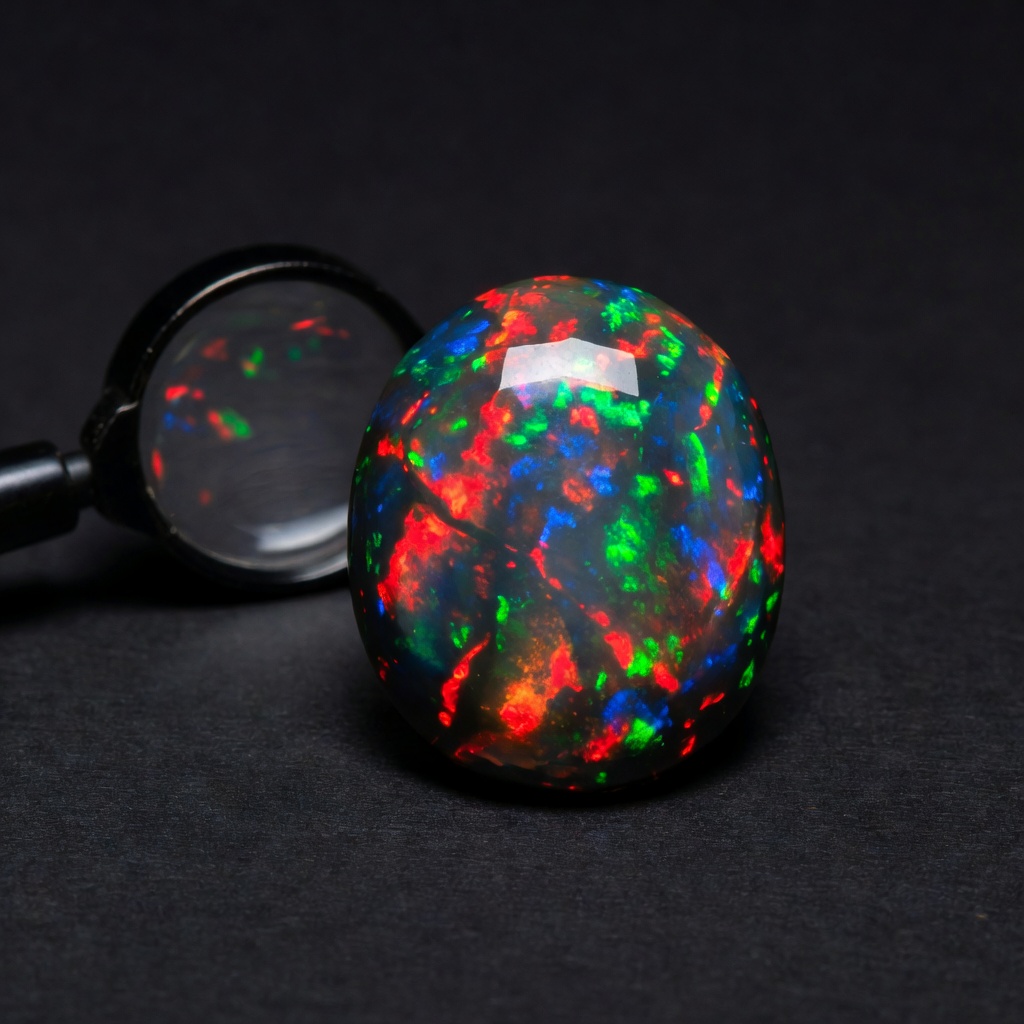
The mesmerizing opal play of color occurs through light diffraction within the silica spheres that make up the stone's structure, creating a phenomenon where colors seem to move and change as the gem is rotated. When evaluating black opals, experts examine brightness under various lighting conditions, from dim indoor settings to bright natural sunlight, as premium stones maintain vivid color flashes even in subdued lighting. The most valuable specimens display "rolling flash" patterns where broad sheets of color sweep across the entire surface, while inferior stones may show only pinpoint flashes or dull, milky appearances.
Pattern recognition stands as a crucial skill for any serious collector, with certain formations commanding significant premiums in the marketplace. The Harlequin pattern, featuring distinct rectangular or diamond-shaped color patches resembling a checkerboard, represents the most valuable and rare formation, with exceptional examples selling for over $50,000 per carat at international auctions. Other highly prized patterns include Chinese Writing (fine linear strokes resembling calligraphy), Ribbon (parallel bands of color), and Straw (interlocking linear formations), each creating unique visual signatures that collectors specifically seek.
Color dominance follows a strict hierarchy in black opal value factors, with red commanding the highest prices due to its rarity and dramatic contrast against dark body tones. Orange ranks second in value, followed by green and finally blue, though multicolored stones displaying the full spectrum simultaneously often exceed single-color specimens in desirability. When examining potential purchases, rotate the stone under a light source to verify that quality colors appear from multiple viewing angles; inferior opals may show bright colors only from specific directions, indicating thin or uneven color bars that could affect long-term value and durability.
Solid Opals vs. Doublets and Triplets: Know the Difference
Understanding the distinction between solid opals and assembled stones represents a fundamental aspect of this Black Opal Buying Guide, as these categories differ dramatically in value, durability, and investment potential. Solid black opals consist entirely of natural opal material, either as pure precious opal or as opal naturally attached to ironstone or dark potch, representing the most valuable and stable form for serious collectors. These one-piece stones command the highest prices per carat and offer the best long-term appreciation potential, as they contain no artificial components or adhesives that could deteriorate over time.
Doublets provide an affordable entry point into black opal ownership, constructed from a thin slice of precious opal backed with black potch, ironstone, or industrial black glass to simulate the appearance of solid black opal. While doublets can display beautiful colors at a fraction of the cost, they require careful handling as the adhesive layers can delaminate when exposed to water, soaps, or extreme temperature changes. When examining a potential purchase, check the side profile for visible glue lines or abrupt color changes that indicate assembled construction rather than natural solid formation.
Triplets represent the most economical option but require the most caution, consisting of three distinct layers: a thin opal slice sandwiched between a dark backing and a clear quartz or glass cap. These stones often appear glassy or unusually domed, with the quartz cap creating a magnifying effect that can make small color patches appear larger than they actually are. For daily wear jewelry, solid vs doublet opal comparisons heavily favor solid stones, as doublets and triplets risk damage from household chemicals, swimming pool chlorine, and even prolonged exposure to perspiration, making them unsuitable for rings or bracelets worn during physical activities.
The Four Cs of Black Opal Quality Assessment
While diamonds utilize a standardized grading system, assessing black opal value factors requires understanding four similar yet distinct criteria that determine market price and collectibility. Color evaluation encompasses both the darkness of the body tone (seeking N1 or N2 ratings for investment grade) and the intensity, distribution, and variety of the fire colors displayed. The most valuable black opals exhibit bright, saturated reds and oranges against deep black backgrounds, with colors appearing consistently across the entire face rather than concentrated in small patches or "windows" of clear potch.
Clarity in black opals differs significantly from diamond grading, as these stones naturally contain inclusions, sand spots, and colorless areas called "potch lines" that rarely detract from value unless they interrupt the play-of-color. However, buyers must scrutinize for "crazing," which appears as hairline cracks resembling spider webs across the surface, indicating unstable opal that may continue cracking over time. Professional dealers should disclose any treatments or stabilizations using resins to hide crazing, as these significantly impact the stone's classification as natural vs synthetic opal treatments and its long-term durability.
Cut quality dramatically affects both aesthetics and practicality, with calibrated shapes (ovals, rounds, teardrops) typically commanding higher prices than freeform stones due to their versatility in jewelry settings. The dome height requires particular attention for ring stones, as insufficient curvature can result in "flat" appearances with limited color visibility, while excessive domes may prove impractical for everyday wear. Carat weight influences pricing exponentially rather than linearly in the black opal investment market, meaning a five-carat stone of equal quality per carat may cost significantly more than five individual one-carat stones, reflecting the extreme rarity of larger gem-quality specimens from Lightning Ridge mines.
How to Identify Treatments and Synthetic Opals
Navigating the distinction between natural vs synthetic opal requires vigilance and preferably laboratory certification when making significant acquisitions for your collection. Common treatments include smoking (burying opal in sand or heating with smoke to darken white potch backgrounds), sugar-acid treatments (soaking in sugar solution then sulfuric acid to carbonize the background), and polymer impregnation (injecting resins to stabilize cracked material). These treatments aim to simulate the appearance of premium Lightning Ridge black opal but result in stones that may fade, crack, or discolor over time, particularly when exposed to heat or sunlight.
Synthetic opal identification focuses on recognizing tell-tale structural patterns visible under 10x magnification, particularly the "columnar structure" appearing as snake-like or cellular formations throughout Gilson and Kyocera laboratory-grown specimens. Unlike natural opals that display irregular, chaotic color patterns with random inclusions, synthetics often show too-perfect color arrangements with distinct geometric ordering. Additionally, synthetic stones typically feel warmer to the touch than natural opals due to their resin content, and they may display unnaturally vivid colors that remain consistent from all angles rather than showing the "rolling flash" characteristic of natural material.
When pursuing black opal investment pieces, always request certification from reputable laboratories such as GIA (Gemological Institute of America), AGL (American Gemological Laboratories), or respected Australian institutions like the Gemmological Association of Australia. These reports verify origin (confirming Australian black opal from Lightning Ridge versus Ethiopian or other sources), disclose any treatments, and confirm natural formation. For stones valued over $5,000, the cost of certification (typically $100-$300) provides essential insurance against misrepresentation and establishes provenance crucial for future resale or estate valuation.
Black Opal Pricing Guide and Market Value
The Australian black opal market spans an enormous price spectrum, from commercial-grade stones suitable for fashion jewelry at $50-$200 per carat, to extraordinary museum-quality specimens commanding $15,000 or more per carat at international auction houses. Entry-level collectors might consider stones with N3-N4 body tones showing predominantly blue and green fire, priced between $200-$1,000 per carat depending on brightness and pattern. Investment-grade material featuring N1-N2 body tones with bright red fire and rare patterns like Harlequin or Chinese Writing typically starts at $2,000 per carat and escalates rapidly based on size and visual impact.
Historical data suggests that high-quality black opals from Lightning Ridge have appreciated approximately 10-15% annually over the past two decades, outperforming many traditional investment vehicles during periods of economic volatility. However, potential investors should understand that liquidity differs significantly from gold or diamonds, requiring specialized dealers or auction houses to realize full value rather than immediate cash conversion. The most successful black opal investment strategies focus on acquiring stones exceeding five carats with exceptional brightness, as these larger specimens become exponentially rarer and attract serious collectors willing to pay premiums for significant center stones.
Several factors create premium pricing tiers in the current market, including "red on black" color combinations, large carat weights, exceptional pattern formations, and documented provenance from famous Lightning Ridge mines like the Three Mile or Coocoran fields. As of 2024, market trends indicate increasing demand from Asian collectors, particularly in China and Japan, coupled with tightening supply as Australian mining operations face stricter environmental regulations and depleting alluvial deposits. These economic factors suggest continued price appreciation for certified, untreated natural black opals, though buyers should avoid speculative purchasing and focus instead on acquiring beautiful stones they would enjoy owning regardless of market fluctuations.
Where to Buy Black Opal: Dealers, Auctions, and Online
Sourcing authentic Lightning Ridge black opal requires careful vetting of sellers, as the gemstone industry unfortunately contains unscrupulous vendors misrepresenting treated stones, synthetics, or Ethiopian material as premium Australian goods. Reputable sources include established Lightning Ridge miners who sell rough or cut stones directly, authorized dealers with long-standing relationships with specific mining families, and members of industry associations like the Australian Opal Centre or the Opal Association. When visiting the Ridge itself, seek recommendations from the local miners' association rather than tourist shops that often sell assembled stones or lower-grade Ethiopian opals mislabeled as Australian.
Online marketplaces present both opportunities and hazards for modern collectors, with red flags including prices that seem too good to be true, stock photos rather than images of the specific stone for sale, and sellers unwilling to provide detailed videos showing the opal's play-of-color from multiple angles. Reputable online dealers should offer generous return periods (minimum 7-10 days), provide GIA or Australian laboratory certificates for stones over $1,000, and disclose the exact mine location when known. Avoid purchasing from generic jewelry sites or auction platforms where individual sellers lack verification, as these venues frequently host misrepresented doublets, triplets, or synthetic stones marketed as natural solid black opal.
For serious black opal investment acquisitions, established auction houses like Christie's, Sotheby's, and specialty opal auctions through Bonhams or Leonard Joel offer curated selections of museum-quality specimens with complete provenance documentation. These venues provide buyer protection, expert authentication, and access to estate collections containing stones mined decades ago when Lightning Ridge produced more abundant high-quality material. Before bidding, establish relationships with the house's jewelry specialists, request condition reports examining for crazing or treatments, and understand buyer's premiums (typically 20-25%) when calculating your maximum bid. Essential questions for any seller include: What is the exact body tone rating? Has the stone been treated or stabilized? What is the return policy if the certification reveals undisclosed treatments?
Caring for Your Black Opal Investment
Proper maintenance ensures your Australian black opal retains its beauty and value for generations, requiring specific protocols distinct from harder gemstones like diamonds or sapphires. Storage considerations include maintaining moderate humidity levels, as opals contain 3-21% water content and can crack if stored in overly dry environments or exposed to sudden temperature changes. Store pieces individually in soft cloth pouches rather than plastic bags that can trap moisture, and avoid leaving opals near heating vents, sunny windowsills, or car dashboards where thermal shock could cause crazing or fracturing.
Cleaning black opals requires gentle methods using only soft, damp cloths to remove oils and fingerprints, strictly avoiding ultrasonic cleaners, steam cleaners, or chemical jewelry dips that can damage the stone's structure or any adhesive layers in doublets. Never expose your opal to harsh household chemicals including bleach, ammonia, or chlorine, and remove rings before swimming, cleaning, or applying lotions and perfumes. For set jewelry, inspect prongs or bezels quarterly to ensure the stone remains secure, as opals are softer (5.5-6.5 Mohs) than many jewelry metals and can loosen in settings subjected to daily wear.
Setting choices significantly impact the longevity of black opal jewelry, with protective bezel settings offering superior security compared to exposed claw settings that leave edges vulnerable to chipping. For investment pieces or heirloom jewelry intended for daily wear, consider low-profile designs that minimize impact exposure while maximizing light entry to display the opal's fire. Obtain professional appraisals every 2-3 years from gemologists experienced with colored stones, updating insurance coverage to reflect current market values, particularly given the appreciation rates of high-quality Lightning Ridge material. These appraisals should include detailed descriptions of body tone, brightness, pattern types, and measurements, providing essential documentation for claims or future sales.
Frequently Asked Questions
How much should I expect to pay for a quality black opal?
Commercial-quality black opals typically range from $200-$1,000 per carat, while gem-grade specimens with bright red fire can command $2,000-$15,000+ per carat. Exceptional museum-quality stones with rare Harlequin patterns have sold for over $50,000 per carat at auction.
What's the difference between black opal and boulder opal?
Black opal features precious opal within dark potch (common opal) or on dark ironstone, displaying bright colors against a dark background. Boulder opal forms naturally attached to ironstone matrix, often showing bright colors in thin seams against the brown host rock. Black opals typically command higher prices due to their rarity and uniform dark body tone.
How can I tell if a black opal is real or synthetic?
Natural black opals show irregular, non-uniform color patterns and display a 'rolling flash' effect when moved. Synthetics often exhibit a distinct columnar or snake-like pattern visible under magnification. Always request certification from GIA, AGL, or reputable Australian laboratories, and examine the stone under 10x magnification for natural inclusions.
Is black opal a good investment?
High-quality black opals from Lightning Ridge have historically appreciated 10-15% annually, outperforming many traditional investments. However, liquidity can be challenging compared to gold or diamonds. Focus on stones over 5 carats with bright red or multicolor patterns, N1-N2 body tone, and certification for the strongest investment potential.
Why is Lightning Ridge considered the best source for black opal?
Lightning Ridge in New South Wales, Australia produces opals with the darkest body tones (N1-N2), brightest fire, and most stable structure due to unique geological conditions. The region's opals formed in Cretaceous-age sandstone rather than volcanic rock, creating the prized black potch background that makes colors 'pop' with exceptional brilliance.
Can black opals be worn every day?
Solid black opals rate 5.5-6.5 on the Mohs hardness scale and can be worn daily with proper settings, though they require more care than diamonds or sapphires. Avoid doublets and triplets for daily wear as they can delaminate with water exposure. Remove opal jewelry before swimming, cleaning with chemicals, or engaging in high-impact activities.
What is the most valuable color pattern in black opal?
The Harlequin pattern, featuring distinct rectangular or diamond-shaped color patches resembling a checkerboard, commands the highest prices. Other valuable patterns include Chinese Writing (fine linear strokes), Ribbon (parallel color bands), and Straw (interlocking lines). Red-dominant patterns with these formations in N1 body tone represent the pinnacle of opal value.
Do black opals fade or lose their color over time?
Natural, untreated black opals maintain their color permanently. However, treated stones (smoked or sugar-treated) may fade when exposed to strong sunlight or heat over time. Triplets with glue layers can yellow with age. Proper storage away from direct sunlight and extreme heat preserves the stone's beauty indefinitely, with many antique opals retaining brilliance after 100+ years.