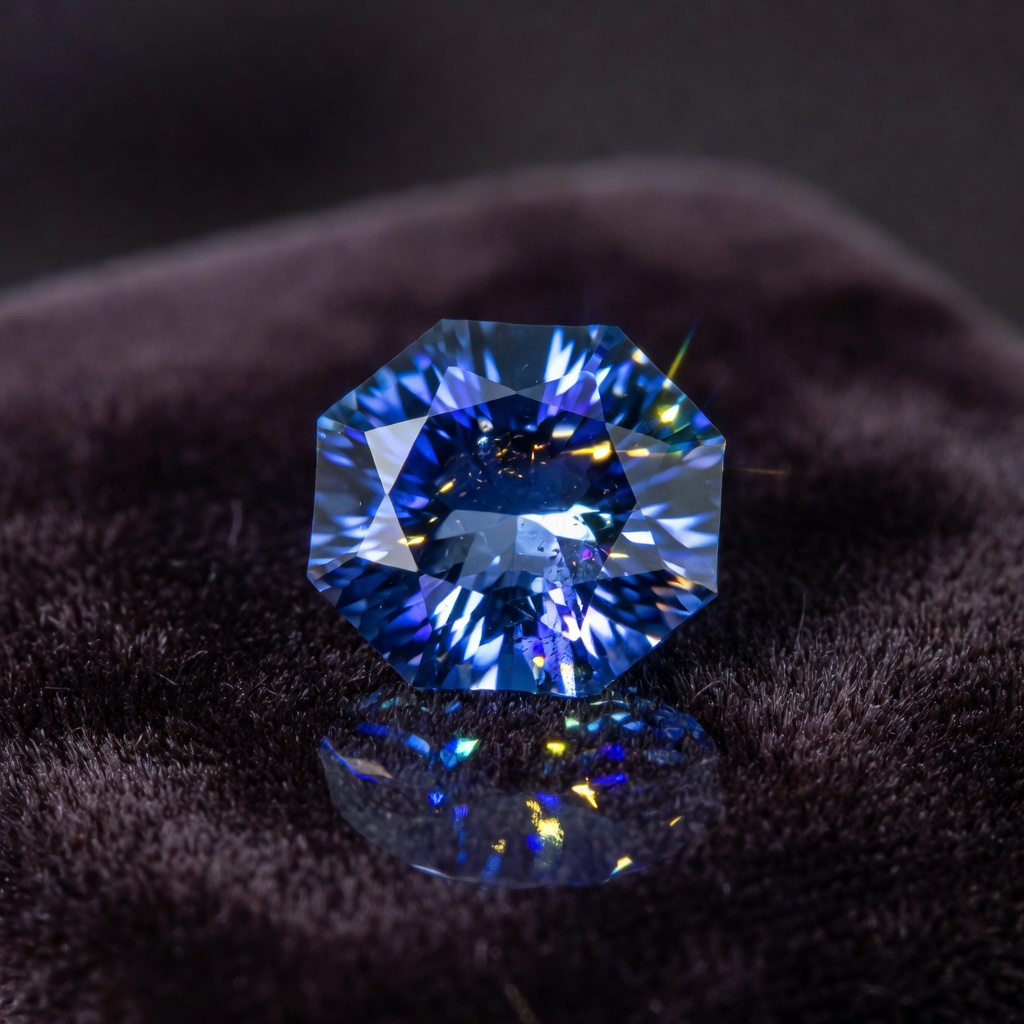
Introduction to Benitoite: California's Rare Blue Treasure
Benitoite stands as one of the most extraordinary mineral discoveries of the twentieth century, captivating gemologists and collectors with its intense sapphire-blue brilliance and remarkable optical properties. This rare blue barium titanium silicate mineral, with the chemical formula BaTiSi₃O₉, represents a unique combination of elements that rarely crystallizes together under natural conditions. First discovered in 1907 by James Couch, a prospector working in the remote mountains of San Benito County, California, benitoite initially confused geologists who mistook it for sapphire due to its similar coloration and luster.
The significance of this exceptional mineral extends beyond its geological rarity, as benitoite was designated as the official California state gem in 1985, recognizing both its beauty and its exclusive association with the Golden State. Unlike many gemstones that occur across multiple continents, gem-quality benitoite has been found in only one commercially viable location worldwide, making it thousands of times rarer than diamond. For mineral enthusiasts seeking comprehensive Benitoite Properties and Information, understanding this gemstone's unique origins provides essential context for appreciating its exceptional status in the world of precious stones.
Physical and Chemical Properties
At the molecular level, benitoite represents a fascinating chemical composition that distinguishes it from all other gemstones in the mineral kingdom. Classified as a blue barium titanium silicate, this mineral crystallizes in the hexagonal crystal system, forming distinctive six-sided prisms and pyramidal terminations that immediately catch the eye of experienced mineral collectors. The specific arrangement of barium, titanium, and silicon atoms creates a crystal lattice that contributes to the stone's exceptional brilliance and fire, characteristics that elevate it among the most visually striking gems available to collectors.
When evaluating benitoite gemstone characteristics, hardness and density play crucial roles in determining suitable applications for jewelry and display. Benitoite registers between 6 and 6.5 on the Mohs hardness scale, positioning it between orthoclase feldspar and quartz in terms of scratch resistance, which requires careful consideration when setting the stone in jewelry pieces. The mineral exhibits a specific gravity of approximately 3.65, meaning it feels noticeably heavier than similar-sized pieces of quartz or glass when held in the hand, providing a tangible clue for preliminary identification in the field.
The optical density of benitoite contributes significantly to its mesmerizing appearance, with refractive indices ranging from 1.757 to 1.804, values that exceed those of sapphire and approach the refractive properties of zircon. This high refractive index causes light to bend dramatically as it enters the crystal, creating the intense sparkle and brilliance that make benitoite so desirable among gemstone connoisseurs. Gem cutters must account for these optical properties when faceting rough material, as the angles of the pavilion and crown require precise calculation to maximize light return and minimize windowing effects.
Optical Characteristics and Color Variations
The visual allure of benitoite centers on its distinctive sapphire-blue coloration, which results from trace amounts of iron and titanium incorporated into the crystal structure during formation millions of years ago. Unlike many blue gemstones that owe their color to a single chromophore, benitoite's hue emerges from a complex interaction between these trace elements and the unique chemical environment of its host rock. The most valuable specimens display a vivid, saturated blue reminiscent of fine Ceylon sapphire, though connoisseurs often note a slightly more violet undertone that distinguishes benitoite from its corundum counterparts.
One of the most fascinating benitoite gemstone characteristics involves its strong pleochroism, an optical phenomenon where the crystal displays different colors when viewed from different crystallographic directions. When examined under polarized light or simply rotated in natural daylight, high-quality benitoite may shift between deep blue, colorless, and violet hues, creating a dynamic visual experience that changes with the viewing angle. This property requires skilled cutting orientation to ensure the table of the gemstone presents the most desirable blue color while maintaining optimal brilliance.
Perhaps the most remarkable optical feature distinguishing benitoite for rare blue crystal identification purposes is its dispersion rating of 0.046, which actually exceeds diamond's dispersion of 0.044. This measurement quantifies the gem's ability to separate white light into spectral colors, creating the "fire" or rainbow flashes that dance across the surface of well-cut stones. When properly faceted, benitoite produces vivid flashes of red, green, and violet fire that can surpass even the most brilliant diamond, making it a spectacular choice for jewelry pieces designed to maximize light performance.
Fluorescence and Identification Features
For gemologists and mineral collectors engaged in rare blue crystal identification, benitoite presents several definitive diagnostic features that separate it from look-alike stones such as sapphire, spinel, and blue tourmaline. The most dramatic identification characteristic appears under short-wave ultraviolet light, where benitoite exhibits an intense bright blue-white fluorescence that seems to glow from within the crystal structure. This reaction occurs due to trace impurities and structural defects within the crystal lattice, creating a luminescent effect that remains visible even in daylight conditions when viewed under UV lamps.
The crystal habit of benitoite provides additional clues for proper identification, as natural specimens typically form hexagonal dipyramids or tabular crystals with distinctive flat terminations. These crystals often exhibit striations parallel to the hexagonal prism faces and may show complex growth patterns indicating multiple crystallization events within the natrolite veins. When examining rough material, collectors should look for the association with white natrolite matrix and black neptunite crystals, which commonly occur alongside benitoite in its natural setting.
Distinguishing benitoite from sapphire requires careful observation of optical properties, as both stones share similar color ranges but differ significantly in crystal structure and light behavior. While sapphire crystallizes in the trigonal system and typically shows no fluorescence under UV light, benitoite's hexagonal system and strong fluorescent response provide immediate differentiation. Additionally, benitoite's higher dispersion creates noticeably more colorful fire than sapphire, and its specific gravity tests will reveal a lighter stone than corundum, which typically measures around 4.0 compared to benitoite's 3.65.
Geological Formation and Occurrence
The formation of benitoite represents a rare confluence of geological conditions that occurred during the Cretaceous period, approximately 120 to 130 million years ago, when hydrothermal fluids rich in barium and titanium infiltrated specific rock formations in what is now Central California. These mineral-rich solutions permeated fractures within serpentinite rocks, altered remnants of oceanic crust that had been subducted and metamorphosed deep within the earth's mantle. As the fluids cooled and reacted with the surrounding rock chemistry, they precipitated natrolite veins containing the unique combination of elements necessary for benitoite crystallization.
The specific San Benito County minerals associated with benitoite deposits include natrolite, a white zeolite mineral that forms the primary host matrix, along with black neptunite crystals, joaquinite, and various amphibole minerals that indicate the reducing chemical environment required for benitoite formation. The Dallas Gem Mine locality represents a unique geochemical pocket where the ratio of barium to titanium, the availability of silica, and the specific temperature and pressure conditions aligned perfectly to create these rare crystals. Geologists have attempted to locate similar formations globally, but the specific combination of serpentinite host rock, natrolite veining, and hydrothermal chemistry has not been replicated elsewhere in gem-producing quantities.
Age dating of associated minerals confirms that benitoite formed during the mid-Cretaceous when the western edge of North America experienced significant tectonic activity, including the subduction of the Farallon Plate beneath the continental margin. This geological setting provided the necessary heat and pressure to drive hydrothermal circulation while the specific chemistry of the local ultramafic rocks supplied the essential elements. Understanding this formation context helps explain why benitoite remains confined to such a restricted geographic area and why attempts to locate additional deposits have proven largely unsuccessful despite extensive exploration.
Mining Locations and Global Distribution
The Dallas Gem Mine, also known historically as the Benitoite Gem Mine, remains the sole source of facet-grade benitoite worldwide, located in the remote Diablo Range of San Benito County minerals territory. This single deposit has produced all significant gem-quality material since its discovery over a century ago, with mining operations continuing intermittently as new pockets of crystals are discovered within the natrolite veins. The mine operates as a fee-collection site where mineral enthusiasts can pay to search for specimens, though the scarcity of high-quality rough makes significant discoveries increasingly rare as surface and near-surface material becomes depleted.
While microscopic benitoite crystals have been reported from other localities including the Kamioka Mine in Japan, the Magnet Cove area in Arkansas, and scattered occurrences in Australia and Romania, these findings produce only mineral specimens unsuitable for cutting into gemstones. The Japanese material typically occurs as tiny crystals embedded in matrix rock, while the Arkansas occurrences consist of minute grains within carbonatite deposits, neither possessing the size or clarity necessary for jewelry applications. This extreme restriction of gem-quality material to a single California location reinforces benitoite's status as one of the rarest gemstones on earth.
The designation of benitoite as the California state gem in 1985 cemented its cultural and economic importance to the region, drawing attention to the unique geological heritage of San Benito County. Mining operations at the Dallas Gem Mine have transitioned from commercial production to limited specimen recovery and educational tourism, with most significant gem-quality stones now residing in private collections or museums. This scarcity ensures that each new discovery of facet-grade material generates significant excitement within the gemological community and commands premium prices commensurate with its rarity.
Quality Grading and Gemstone Selection
Evaluating benitoite gemstone characteristics for quality requires understanding the specific standards that apply to this unique material, which differ somewhat from those used for more common gemstones like sapphire or diamond. Clarity standards for benitoite acknowledge that most specimens contain some inclusions, typically consisting of natrolite fibers, tiny black neptunite crystals, or two-phase fluid inclusions that testify to the stone's natural formation within hydrothermal veins. Eye-clean stones command significant premiums, though collectors often accept minor inclusions that do not detract from the face-up appearance, particularly in stones exceeding one carat where such clarity becomes exceptionally rare.
The art of cutting benitoite demands specialized knowledge to maximize both color and brilliance while minimizing the visibility of inclusions. Due to the stone's strong pleochroism, cutters must orient the table perpendicular to the c-axis to achieve the most desirable blue color, often sacrificing weight retention to optimize face-up appearance. Brilliant cuts such as rounds, ovals, and cushions typically perform best for benitoite, as these styles maximize the stone's exceptional dispersion while minimizing windowing effects that might reveal inclusions or reduce perceived color saturation.
Size represents perhaps the most critical factor in benitoite valuation, with stones exceeding one carat in weight qualifying as museum-grade specimens due to the extreme rarity of large crystals. Most faceted benitoites available on the market range between 0.3 and 0.8 carats, with prices increasing exponentially rather than linearly as size increases. A two-carat fine benitoite essentially represents a unique treasure, as fewer than two dozen such stones are known to exist in private hands or public collections worldwide, making size the primary determinant of investment value alongside color quality.
Durability and Jewelry Care Guidelines
Understanding benitoite hardness and durability proves essential for anyone considering this gemstone for jewelry applications or long-term collection storage. With a Mohs hardness of 6 to 6.5, benitoite ranks softer than many popular jewelry stones including sapphire (9), ruby (9), and spinel (8), requiring thoughtful consideration regarding setting styles and wearing conditions. While sufficiently hard to resist scratching from everyday dust and debris, which typically contain quartz particles rating 7 on the scale, benitoite can sustain damage from harder gemstones or rough treatment during physical activities.
When selecting mountings for benitoite jewelry, protective settings such as bezels or halo designs provide superior security compared to exposed prong settings, particularly for rings intended for daily wear. Pendants and earrings represent ideal applications for benitoite, as these pieces experience less direct impact than rings and better showcase the stone's brilliance under varying lighting conditions. For those choosing benitoite engagement rings or daily-wear pieces, selecting designs that elevate the stone slightly while providing protective shoulders helps prevent chipping or abrasion during regular activities.
Proper cleaning and maintenance extends the life and beauty of benitoite jewelry significantly, requiring gentle methods that avoid thermal shock or mechanical abrasion. Clean your benitoite pieces using warm water mixed with mild dish soap and a soft-bristled brush, gently removing accumulated oils and dirt from the pavilion facets where buildup commonly occurs. Avoid ultrasonic cleaners and steam cleaning devices, as the vibrations and heat can potentially loosen the stone in its setting or cause thermal shock to any included crystals within the gem. Store benitoite jewelry separately from harder stones like diamonds, sapphires, or moissanite in soft cloth pouches or lined jewelry boxes to prevent surface scratching when pieces contact each other during storage.
Market Value and Investment Considerations
The market for fine benitoite operates within a specialized niche of the gemstone trade, with pricing structures reflecting the extreme scarcity of high-quality material and the strong demand from knowledgeable collectors. Current market values range from approximately $500 per carat for small, lightly included stones with moderate color saturation to over $10,000 per carat for exceptional specimens exceeding one carat with vivid blue color and high clarity. These figures place benitoite in the same investment category as fine alexandrite or paraiba tourmaline, though the California stone's unique status as an American gemstone adds premium value for domestic collectors.
Several factors influence the valuation of specific benitoite specimens, with color saturation representing the primary consideration after size. Stones displaying the coveted "cornflower blue" or intense sapphire-blue command the highest prices, while those with grayish or greenish modifiers trade at significant discounts. Clarity impacts value substantially, with eye-clean stones receiving premiums of 200-300% over included material of similar size, though the rarity of large crystals means that collectors often accept minor inclusions in stones over one carat. The cut quality also affects pricing, as poorly proportioned stones that window or leak light sell for considerably less than precision-cut examples that maximize brilliance and fire.
For rare blue crystal identification and investment purposes, benitoite offers an interesting comparison to blue sapphire, the gemstone it most closely resembles visually. While fine Kashmir or Burmese sapphires may command higher absolute prices, benitoite's extreme rarity and single-source origin provide different investment dynamics, with values showing steady appreciation as mining yields continue to decline. Unlike sapphire, which benefits from multiple global sources and treated material flooding the market, benitoite remains strictly natural and unenhanced, with no heat treatment or irradiation improving its color, ensuring that every investment-grade stone represents completely natural material.
Conclusion: The Enduring Appeal of Benitoite
Comprehensive Benitoite Properties and Information reveals a gemstone that transcends typical mineralogical interest to represent a true geological miracle of nature. The combination of its status as blue barium titanium silicate, its exclusive association with San Benito County minerals, and its designation as the California state gem creates a unique narrative that appeals to both scientific minds and aesthetic sensibilities. From its exceptional dispersion that rivals diamond to its distinctive fluorescence and pleochroism, benitoite offers visual characteristics found in no other gemstone, ensuring its permanent place in the pantheon of precious minerals.
For mineral collectors and gem enthusiasts, benitoite represents the ultimate acquisition goal, combining beauty with extreme scarcity in a way that few other natural materials can match. As mining operations at the Dallas Gem Mine continue to yield diminishing quantities of facet-grade material, existing specimens become increasingly valuable both monetarily and scientifically. The future availability of this remarkable gemstone remains uncertain, with conservation efforts focusing on preserving significant crystals for mineralogical study while allowing limited recovery for the gem trade. Whether appreciated for its optical fireworks, its unique geological story, or its investment potential, benitoite stands as California's eternal blue treasure, a crystalline testament to the rare and wondrous processes that create beauty deep within the earth.
Frequently Asked Questions
What is benitoite and why is it considered so rare?
Benitoite is a rare blue barium titanium silicate mineral discovered in 1907. It's exceptionally rare because gem-quality specimens are found almost exclusively at one location—the Dallas Gem Mine in San Benito County, California—making it thousands of times rarer than diamond.
How can I identify genuine benitoite from other blue gemstones?
Authentic benitoite exhibits strong blue-white fluorescence under short-wave UV light, displays hexagonal crystal structure, shows strong pleochroism (color changes with viewing angle), and possesses higher dispersion (fire) than diamond. Professional gemological testing is recommended for confirmation.
What is the hardness of benitoite and is it suitable for engagement rings?
Benitoite rates 6-6.5 on the Mohs hardness scale, making it softer than sapphire (9) but harder than opal (5.5). While beautiful, it's best suited for protective settings like pendants or earrings rather than daily-wear rings, as it can scratch with rough treatment.
How much does benitoite cost per carat?
Benitoite pricing varies dramatically by quality and size. Small stones under 0.5 carats may cost $500-$1,500 per carat, while high-quality gems over 1 carat can command $6,000-$10,000+ per carat. Stones exceeding 2 carats are museum-grade and essentially priceless.
Does benitoite receive any treatments to enhance its color?
Unlike many gemstones, benitoite is rarely treated because heating and irradiation do not improve its natural blue color. Most benitoite on the market is completely natural and untreated, which adds to its value and desirability among collectors.
What causes benitoite's distinctive blue color?
Benitoite's intense sapphire-blue color results from trace amounts of iron and titanium within its crystal structure. The specific combination and concentration of these trace elements during formation determine the depth and saturation of the blue hue.
Can benitoite be found anywhere else besides California?
While tiny benitoite crystals have been discovered in Japan, Arkansas, and Australia, gem-quality material suitable for cutting exists only in San Benito County, California. The Dallas Gem Mine remains the sole source of facet-grade benitoite worldwide.
How should I clean and care for benitoite jewelry?
Clean benitoite using warm water, mild dish soap, and a soft brush. Avoid ultrasonic cleaners and steam cleaning. Store separately from harder gemstones like diamonds or sapphires to prevent scratching, and remove before activities involving impact or harsh chemicals.