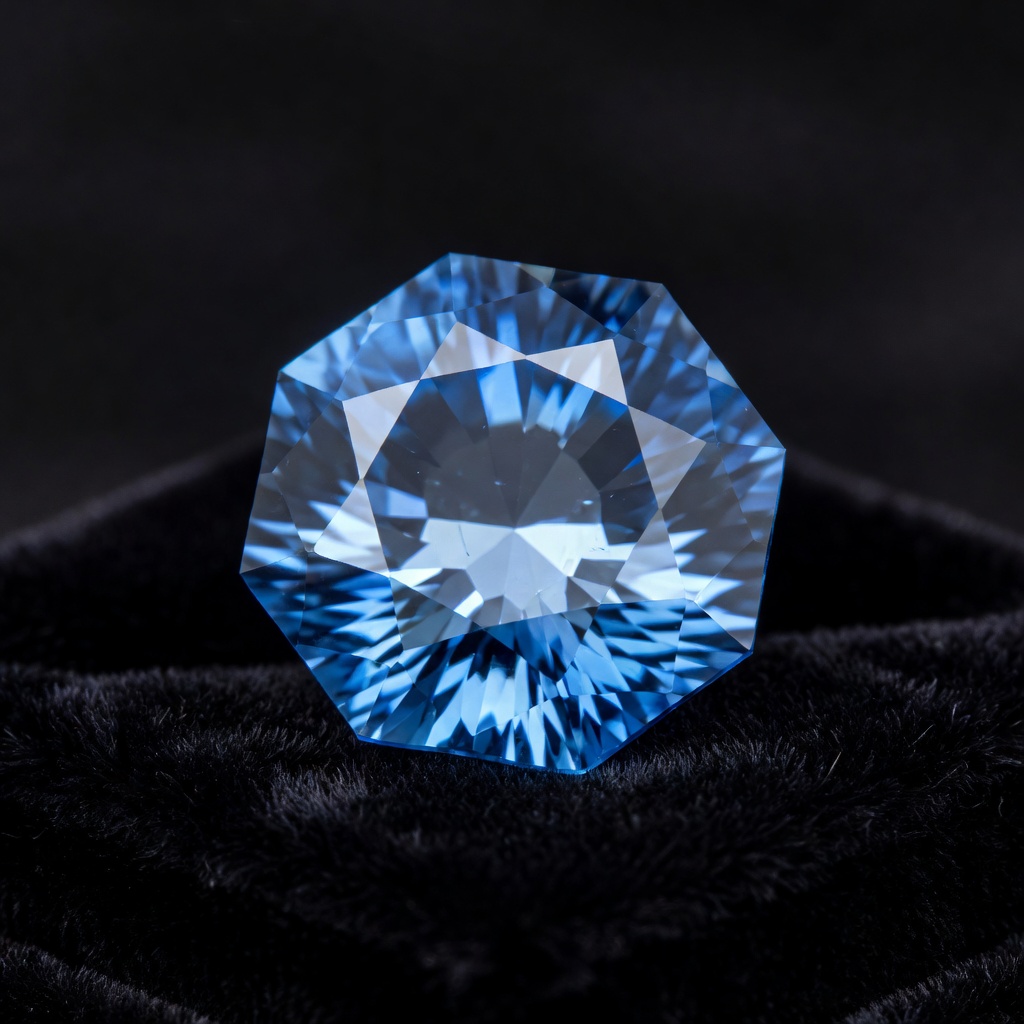
What Makes Benitoite Valuable: Rarity Beyond Diamonds
Benitoite represents one of the most extraordinary geological anomalies in the gemstone world, with a scarcity that makes even the finest diamonds seem abundant by comparison. This remarkable blue gemstone is approximately 1,000 times rarer than diamond, with gem-quality material originating from a single commercial mine located in San Benito County, California. Since its discovery in 1907 by prospector James Couch, the Dallas Gem Mine (also known as the Benitoite Gem Mine) has remained the only source of facet-grade crystals substantial enough for jewelry use, creating a supply constraint that fundamentally drives the Benitoite Price Guide valuation models used by collectors worldwide.
The designation of benitoite as the official California state gemstone in 1985 significantly elevated its cultural and monetary value, transforming it from a mineralogical curiosity into a coveted symbol of American geological heritage. This legislative recognition coincided with increased international attention, causing the California state gem price to appreciate steadily as institutional collectors and museums competed for exemplary specimens. Unlike other state gemstones that might be found across multiple localities, benitoite's exclusive California provenance creates an irreplaceable connection to its origin, adding a premium that generic gemstones cannot command regardless of their visual appeal.
Beyond its extreme scarcity, benitoite possesses unique optical properties that distinguish it from every other blue gemstone on the market. Most notably, benitoite exhibits a dispersion rating of 0.046, which actually exceeds diamond's 0.044, resulting in spectacular fire and brilliance when properly faceted. This extraordinary light performance, combined with its characteristic sapphire-blue to colorless hues, creates a visual impact that justifies the rare blue gemstone cost associated with fine specimens, particularly those displaying the vivid cornflower blue that collectors prize most highly.
The geological limitations of the San Benito County deposit further compound benitoite's rarity, as the specific combination of high-pressure, low-temperature metamorphism and unique chemical conditions required for its formation has never been replicated elsewhere in commercially viable quantities. Mineralogists have identified microscopic benitoite crystals in Arkansas and Japan, but these occurrences produce specimens measured in millimeters rather than carats, rendering them scientifically interesting but commercially insignificant. With no significant new discoveries in over a century and the original mine exhausted of accessible material, the finite supply ensures that existing specimens will only become more precious with time.
Understanding the 4 Cs of Benitoite Pricing
Evaluating benitoite quality factors requires specialized knowledge distinct from traditional diamond grading, though the familiar framework of color, clarity, carat, and cut provides a useful starting point for understanding valuation hierarchies. Unlike diamonds where colorless grades command premium prices, benitoite operates on an inverse color scale where intensity and saturation determine value, with vivid blue specimens achieving prices ten to twenty times higher than their pale or colorless counterparts. Professional graders assess benitoite color using controlled lighting conditions, examining the stone's body color against neutral backgrounds to distinguish between the coveted "sapphire blue" that characterizes fine material and the grayish or violet undertones that detract from market value.
Clarity standards for benitoite prove particularly stringent due to the mineral's formation environment, which typically produces included crystals with fractures and veils visible to the naked eye. Eye-clean stones grading VVS (Very Very Slightly Included) to VS (Very Slightly Included) represent fewer than five percent of recovered material, creating exponential value increases as clarity improves. A practical example illustrates this disparity: a 0.75-carat benitoite with visible inclusions might retail for $800 per carat, while an identical weight stone of VVS clarity with matching color could command $4,000 per carat or more. Collectors should examine stones under 10x magnification using darkfield illumination to identify healing fractures or "fingerprint" inclusions common to this species, as these characteristics significantly impact both aesthetics and durability.
Carat weight premiums in benitoite pricing follow an aggressive exponential curve that makes large stones exponentially more valuable than their smaller counterparts. Gem-quality benitoite crystals rarely exceed one carat in finished size, with stones over two carats considered major collector's items and specimens over five carats approaching museum quality. When evaluating benitoite value per carat, buyers should anticipate that a 2-carat fine blue stone might cost $8,000 per carat, while the same material in a 0.5-carat size could be available for $2,500 per carat. This dramatic price escalation reflects the mathematical reality that cutting a 5-carat rough crystal typically yields less than 1 carat of facetable material, with the remainder lost to cleavage planes and internal flaws during the cutting process.
Cut quality represents perhaps the most technically demanding aspect of benitoite color grading and value optimization, as improper faceting can destroy the very optical properties that make the stone desirable. Master cutters must orient benitoite crystals carefully to maximize both the blue body color and the high dispersion that creates its distinctive fire, often employing step-cut crowns combined with brilliant-cut pavilions to achieve optimal light return. Shallow stones may appear windowed and lifeless, while overly deep cuts waste expensive rough material and darken the appearance. Investment-grade benitoite should display symmetrical facet arrangements with crisp meets, table percentages between 50-60%, and depth proportions that enhance rather than mask the gem's natural brilliance.
Current Benitoite Price Per Carat Breakdown (2024)
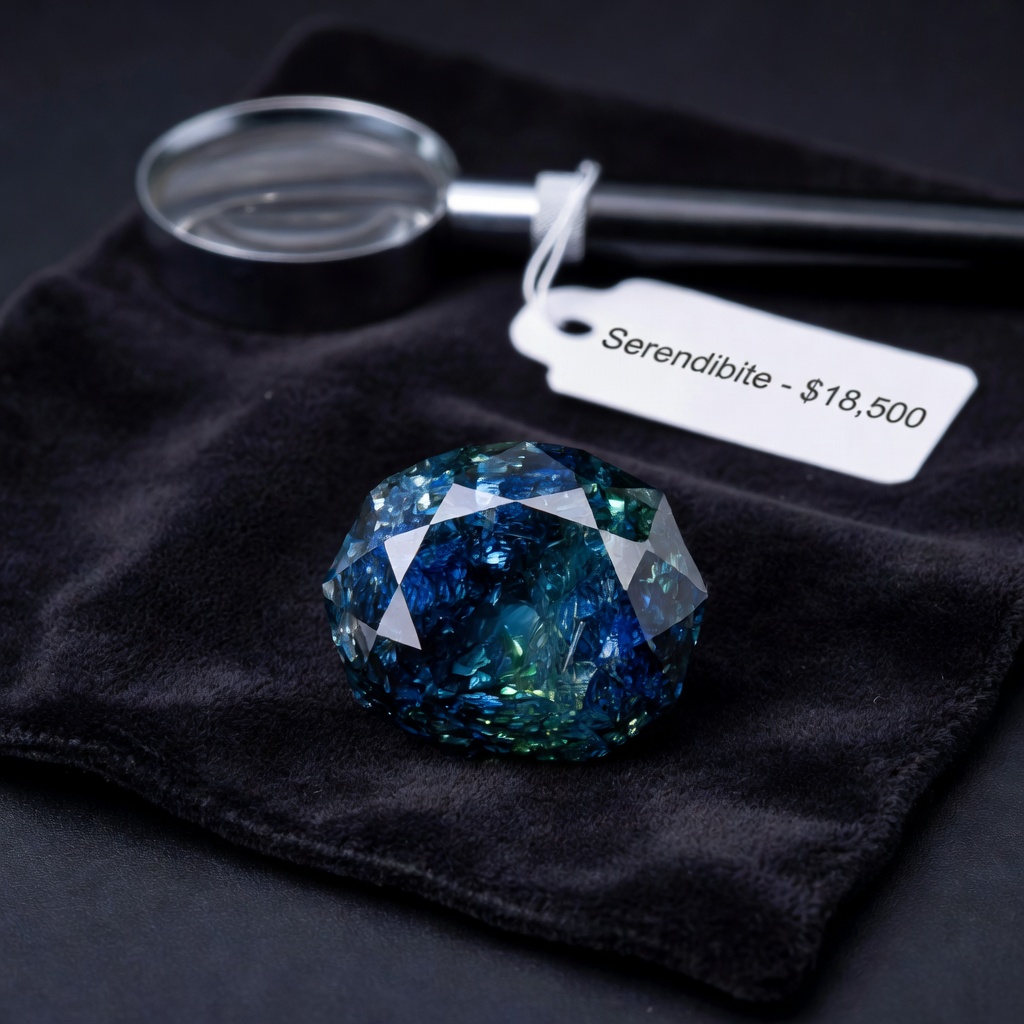
The benitoite cost 2024 market reflects sustained demand from serious collectors and institutional buyers, with pricing tiers clearly delineated by quality characteristics and specimen type. Commercial grade material, typically consisting of small stones under 0.5 carats with pale coloration and visible inclusions, currently trades between $500 and $1,500 per carat, making it accessible to entry-level collectors seeking to own this rare species without significant capital outlay. These specimens, while genuine benitoite, often require specific lighting conditions to display their blue coloration and may show significant extinction (dark areas) when viewed face-up, limiting their jewelry applications to protective settings where durability concerns are mitigated.
Fine jewelry quality benitoite representing the sweet spot for serious collectors and high-end jewelry designers commands substantially higher prices, ranging from $2,000 to $5,000 per carat for stones exceeding one carat with VS clarity and consistent medium-to-dark blue coloration. At this price point, buyers should expect eye-clean appearance, good brilliance, and cutting that maximizes the stone's dispersion without sacrificing color saturation. Recent sales data from Heritage Auctions indicate that a 1.25-carat round brilliant benitoite with excellent color and clarity realized $4,200 per carat in early 2024, establishing a benchmark for comparable material entering the market.
Collector grade specimens featuring exceptional cornflower blue color, flawless or near-flawless clarity, and sizes exceeding 1.5 carats represent the upper echelon of available material, with prices ranging from $5,000 to $15,000 per carat depending on specific characteristics and provenance. These stones typically originate from legacy collections or old mine material and rarely appear on the open market, with transactions often occurring privately between established dealers and institutional buyers. Museum specimens comprising large crystals over 3 inches, exceptional color zoning, or historical significance can exceed $20,000 per carat or command flat fees in the hundreds of thousands of dollars, particularly when accompanied by documentation connecting them to early mining operations or famous mineralogists.
Raw mineral specimens present a distinct pricing category separate from cut gemstones, with valuation based on crystal size, matrix association, and aesthetic presentation rather than carat weight alone. A thumbnail-sized benitoite crystal cluster on natrolite matrix from the Dallas Gem Mine might retail for $3,000 to $8,000 depending on crystal sharpness and blue color intensity, while cabinet specimens exceeding 5 inches with multiple well-formed crystals can command $50,000 or more. Savvy collectors often purchase high-quality rough material when available, as the uncut crystals preserve both the mineral's natural habit and investment potential, whereas cutting decisions represent an irreversible commitment that may or may not enhance value depending on the cutter's skill and the rough's internal characteristics.
Geographic Origins and Their Impact on Value
Provenance plays a decisive role in benitoite mining locations valuation, with material from the type locality in San Benito County, California commanding significant premiums over specimens from secondary occurrences. Authentic California benitoite price structures typically reflect a 40-60% premium compared to stones of equivalent quality from other localities, driven by the historical significance of the Dallas Gem Mine and the superior color characteristics generally associated with California material. When purchasing investment-grade specimens, collectors should insist on detailed provenance documentation specifying the exact mine location, collection date when known, and chain of custody from the original miner or claim holder to the current seller.
Japanese benitoite discoveries in the Ibaragi Prefecture have produced crystals sufficient for scientific study but rarely large enough for commercial gemstone production, with most specimens measuring under 5 millimeters. These Japanese crystals typically display slightly different color characteristics, often showing lighter blue tones or distinctive zoning patterns that distinguish them from California material, and consequently trade at discounts of 50-70% compared to equivalent San Benito County specimens. While scientifically significant as the only other locality producing euhedral crystals, the Japanese material remains primarily of interest to systematic mineral collectors rather than gemstone investors seeking appreciation potential.
Arkansas occurrences in the Magnet Cove area have yielded microscopic benitoite crystals visible only under magnification, embedded in complex matrix material that requires specialized preparation to expose. These specimens, while geologically fascinating as indicators of rare earth element enrichment, hold no commercial value as gemstones and trade strictly as scientific curiosities in the $50 to $200 range for prepared microscope slides. The distinction between these Arkansas micro-crystals and facetable California material represents a crucial knowledge gap that unscrupulous sellers occasionally exploit, emphasizing the importance of origin verification through reputable laboratories.
Origin documentation and provenance certificates have become increasingly standardized within the high-end mineral market, with leading dealers providing detailed locality information, historical context, and sometimes photographic documentation of the specimen in situ or during extraction. For stones exceeding $5,000 in value, collectors should expect accompanying literature references, previous ownership history (if notable), and confirmation that the material was legally collected in compliance with California mining regulations and environmental protection standards. This documentation not only protects the buyer's investment but also enhances resale value, as future purchasers place significant premiums on well-documented specimens with unambiguous California provenance.
Investment Potential and Market Appreciation Trends
The benitoite investment landscape has demonstrated remarkable resilience and growth, with historical price appreciation of approximately 300% over the past decade for fine specimens, significantly outpacing traditional investment vehicles and many other colored gemstones. This appreciation trajectory reflects the fundamental economic principle of supply inelasticity confronting growing demand, as the finite quantity of existing material becomes increasingly concentrated in long-term private collections and institutional holdings. Financial advisors specializing in tangible assets note that benitoite offers portfolio diversification benefits similar to fine art or rare wines, with the added advantage of geological scarcity that precludes the production of new supply regardless of market price signals.
Supply constraints have intensified dramatically since 2006, when the Dallas Gem Mine closed to public collecting and commercial mining operations effectively ceased, transitioning the market from a limited-production scenario to a zero-new-supply environment. While small amounts of material occasionally surface from private claim holders or old stockpiles, the overwhelming majority of transactions now represent redistribution of existing collections rather than new production. This structural change has created a seller's market where quality specimens command immediate attention from multiple qualified buyers, often resulting in competitive bidding situations at specialized auctions and mineral shows.
Notable sales at Heritage Auctions and Christie's natural history events have established public price records that validate private market valuations and attract mainstream investment attention. A particularly significant sale occurred in 2019 when a 2.08-carat flawless benitoite ring sold for $28,000 (approximately $13,461 per carat), setting a benchmark for exceptional jewelry-grade material. Similarly, mineral specimen auctions have seen matrix specimens with exceptional crystal development exceed $100,000, demonstrating that both cut stones and crystallized examples hold substantial investment potential for well-informed collectors.
Liquidity considerations represent a critical factor for potential investors, as the gemstone market value for benitoite realizes only through specialized channels rather than commodity exchanges or pawn shops. Successful liquidation requires relationships with high-end mineral dealers, auction houses with dedicated natural history departments, or participation in invitation-only collector networks such as those attending the Tucson Gem and Mineral Show's private events. Unlike gold or diamonds, benitoite cannot be converted to cash quickly without significant discounts, suggesting that investment allocations should represent long-term holdings of five to twenty years rather than speculative short-term positions. Investors should also budget for professional appraisals and insurance costs, typically requiring documentation updates every three to five years to maintain accurate coverage as market values appreciate.
Authentication and Certification Standards
Verifying authentic benitoite requires a combination of gemological testing, spectroscopic analysis, and documentation review, as the stone's rarity and high value have incentivized sophisticated simulant production and occasional misrepresentation in the marketplace. For purchases exceeding $1,000, Gemological Institute of America (GIA) certification should be considered mandatory, with the report specifically confirming natural origin, identifying any treatments, and documenting key diagnostic properties including refractive indices (1.757-1.804), birefringence (0.047), and specific gravity (3.65). Reputable laboratories will also note pleochroism colors, typically blue and colorless, which help distinguish benitoite from look-alike materials such as blue sapphire or spinel.
UV fluorescence testing provides a quick field method for preliminary authentication, as genuine benitoite displays strong blue to white fluorescence under short-wave ultraviolet light (254 nm), a characteristic shared by few other blue gemstones. This fluorescence results from trace amounts of europium and other rare earth elements incorporated during crystal formation, creating a diagnostic reaction that synthetic sapphires and natural spinels cannot replicate. However, collectors should note that some benitoite specimens show weak or variable fluorescence depending on their specific chemical composition, so negative UV results do not necessarily indicate simulants, though strong fluorescence provides reasonable confidence of authenticity.
Common simulants encountered in the market include blue synthetic sapphire, cobalt spinel, and even glass, with distinguishing characteristics visible under magnification or through refractive index testing. Synthetic sapphires typically show curved growth lines or gas bubbles under magnification, while spinel possesses an isotropic crystal structure lacking benitoite's double refraction. Advanced testing using Raman spectroscopy or energy-dispersive X-ray fluorescence (EDXRF) can definitively identify benitoite through its unique chemical signature, including the presence of barium and titanium in specific ratios, with these services available through major gemological laboratories or university mineralogy departments.
Inclusion patterns visible under 10x to 30x magnification provide additional diagnostic "fingerprints" that experienced gemologists use to confirm natural origin and distinguish between mining localities. Authentic benitoite frequently contains "horsetail" inclusions of byssolite (a fibrous amphibole), negative crystals, or two-phase inclusions consisting of liquid and gas bubbles trapped during crystal growth. These characteristics differ significantly from the flux inclusions seen in synthetic corundum or the angular growth structures of flame-fusion synthetics. When purchasing uncertified material, buyers should insist on a return period sufficient to allow independent verification by a qualified gemologist familiar with rare collector gemstones.
Where to Purchase Benitoite: Trusted Sources
Acquiring genuine material requires careful vendor selection, as the decision to buy benitoite gemstone specimens involves significant financial outlay and substantial risk of encountering simulants or misrepresented material in general marketplaces. Established mineral dealers such as The Arkenstone (Rob Lavinsky's operation), specialized high-end galleries in Tucson, Arizona, and dealers with decades-long reputations in the rare gem community represent the safest acquisition channels for investment-grade material. These specialists typically offer lifetime authenticity guarantees, detailed provenance documentation, and post-purchase support including setting recommendations and eventual resale assistance, justifying the premium prices charged compared to anonymous online sellers.
Auction houses including Heritage Auctions, Bonhams Natural History sales, and Christie's periodic gemstone events provide regulated marketplaces where competitive bidding establishes fair market values while offering buyer protections including condition reports and return privileges for significant misrepresentations. These venues prove particularly suitable for acquiring historic specimens with documented pedigrees or unusual sizes that rarely appear in retail inventory. Prospective bidders should register early, request detailed condition reports and high-resolution photography, and establish maximum bid limits based on current market data to avoid emotional overbidding during competitive auctions.
The Tucson Gem and Mineral Show, held annually in February, serves as the primary global marketplace for high-end benitoite, with specialized shows like the Westward Look Mineral Show and the Pueblo Gem and Mineral Show hosting the world's most significant dealers under one roof for two weeks. Serious collectors should plan to attend with specific acquisition goals, certified funds, and gemological testing equipment or consultants, as the best material often moves quickly between established dealers before reaching public display cases. Private viewings by appointment with major dealers often provide access to inventory withheld from general show floors, including legacy collections being liquidated by estate representatives.
Online marketplaces including eBay, Etsy, and mineral auction websites require extreme caution and expert verification capabilities, as these platforms host numerous listings of synthetic sapphire mislabeled as benitoite, Arkansas micro-crystals misrepresented as facetable rough, and outright fraudulent material. While legitimate sellers occasionally offer benitoite through these channels, the lack of buyer protections and anonymity of sellers creates unacceptable risk for significant purchases. If considering online acquisition, restrict transactions to sellers with hundreds of positive feedbacks specifically for high-end minerals, require independent escrow services for payments exceeding $1,000, and budget for immediate professional authentication upon receipt to ensure compliance with return windows if material proves misrepresented.
Jewelry Applications vs. Loose Specimens
When considering benitoite jewelry price valuations versus loose specimen investments, collectors must weigh aesthetic preferences against appreciation potential and practical wearability concerns. Custom setting costs for benitoite typically exceed those for harder gemstones due to the material's moderate hardness of 6-6.5 on the Mohs scale and perfect cleavage in one direction, requiring protective mounting styles that minimize exposure to physical impact. Bezel settings, halo designs with protective diamond borders, or pendant arrangements that reduce contact with hard surfaces represent optimal choices, with custom fabrication by jewelers experienced in fragile gemstones adding $500 to $2,500 to project costs depending on metal selection and design complexity.
Insurance valuations for benitoite jewelry require specialized appraisals from gemologists familiar with the current loose benitoite stones market, with coverage typically recommended at 150-200% of purchase price to account for replacement difficulties and market appreciation. Standard homeowners policies rarely cover high-value gemstones adequately, necessitating specific riders or dedicated jewelry insurance through carriers like Chubb or Jewelers Mutual that understand the unique replacement challenges of rare species. Appraisals should be updated every three years to maintain appropriate coverage limits, with documentation including high-resolution photography, GIA reports, and detailed descriptions of setting craftsmanship to facilitate accurate replacement in case of loss.
Wearability concerns significantly impact jewelry design decisions, as benitoite's hardness rating makes it susceptible to scratching from everyday contact with quartz dust (hardness 7) common in household environments, while its cleavage plane creates fracture risk from sharp impacts. Industry experts generally recommend reserving benitoite jewelry for occasional wear at special events rather than daily use, particularly for ring applications where contact with hard surfaces is inevitable. Earring and pendant designs experience less physical stress and may be suitable for more frequent wear, though owners should remove benitoite jewelry before activities involving physical labor, chemical exposure, or temperature extremes that could thermal-shock the stone.
From an investment perspective, loose benitoite stones typically appreciate faster than mounted jewelry due to the irreversible nature of setting decisions and the limited resale market for custom jewelry designs. While a beautifully set benitoite ring provides personal enjoyment and display opportunities, the specific taste of the original owner may not align with future buyers, potentially requiring remounting costs that erode investment returns. Conversely, loose stones certified by major laboratories maintain liquid markets among collectors and can be traded internationally without the complications of jewelry export regulations or style depreciation. Investors prioritizing capital appreciation should acquire loose stones stored in archival conditions, while those seeking to enjoy their investment visually might accept modest liquidity discounts for the pleasure of wearable art.
Future Market Outlook: Will Prices Continue Rising?
The benitoite market forecast suggests continued price appreciation driven by geological realities, demographic shifts in collecting communities, and the fundamental economics of irreplaceable scarcity. Mine depletion status remains absolute, with no significant new production since the early 2000s and geological surveys indicating minimal probability of discovering additional commercial-grade deposits within the Dallas Gem Mine's known geological structure or analogous formations elsewhere in California. Unlike diamond markets where new mines periodically enter production or existing operations expand capacity, benitoite supply is mathematically constrained to existing material, creating a deflationary supply curve that historically correlates with sustained value appreciation for collector specimens.
Generational transfer dynamics currently influence market liquidity as baby boomer collectors, who dominated benitoite acquisition during the 1980s and 1990s, begin liquidating collections or transferring them to heirs. This demographic shift creates periodic supply fluctuations, with estate sales occasionally flooding specific quality tiers while simultaneously introducing exceptional legacy specimens previously unavailable for decades. Savvy collectors monitor estate auction schedules and probate sales in California specifically, as these events sometimes offer acquisition opportunities at slight discounts to retail pricing before dealers acquire and mark up inventory.
Collector demographic shifts reveal growing interest from Asian markets, particularly China and Japan, where appreciation for rare American gemstones has increased substantially with rising affluence among mineral collectors. This expanded demand base competes for the same finite supply previously dominated by North American and European collectors, exerting upward pressure on prices for museum-quality specimens. Cultural appreciation for blue gemstones in Asian markets, combined with benitoite's status as a legitimate American rarity rather than a treated or enhanced material, positions the stone favorably for continued international demand growth.
Geological probability assessments by the United States Geological Survey and academic mineralogists suggest that discovering significant new benitoite deposits in California remains unlikely, given the specific combination of blueschist metamorphism, barium enrichment, and titanium availability required for formation. While microscopic crystals might eventually be identified in other high-pressure metamorphic terranes globally, the likelihood of finding another deposit yielding facetable crystals appears remote based on current geological understanding. This scientific consensus supports long-term rare gemstone investment theses, suggesting that benitoite will maintain or increase its value proposition relative to more abundant colored gemstones, making it a suitable legacy asset for intergenerational wealth transfer provided proper storage, documentation, and insurance maintenance protocols are observed.
Frequently Asked Questions
How much is benitoite worth per carat?
Benitoite ranges from $500 to $1,500 per carat for commercial grade stones, while fine quality specimens (1+ carats with vivid blue color) command $2,000 to $5,000 per carat. Exceptional collector-grade stones can exceed $15,000 per carat.
Why is benitoite more expensive than diamond?
Benitoite is approximately 1,000 times rarer than diamond, with only one commercial mine ever producing gem-quality material. Combined with its status as California's state gem and its spectacular optical dispersion higher than diamond, scarcity drives premium pricing.
Is benitoite a good investment for collectors?
Benitoite has shown strong appreciation (300% over the past decade) due to finite supply and mine closure. However, it's a speculative investment requiring specialized knowledge, proper certification, and access to niche resale markets through high-end dealers or auctions.
Where can I buy certified benitoite safely?
Purchase from established mineral dealers like The Arkenstone, reputable auction houses (Heritage Auctions), or at the Tucson Gem and Mineral Show. Always require GIA certification for stones over $1,000 and verify UV fluorescence characteristics.
What is the most valuable color of benitoite?
Vivid cornflower to sapphire-blue benitoite commands the highest prices. Colorless or pale blue specimens are significantly less valuable. The intense blue color combined with high transparency creates the premium 'fine' grade commanding $5,000+ per carat.
How can I tell if a benitoite is real or fake?
Authentic benitoite displays strong blue to white fluorescence under short-wave UV light, has a refractive index of 1.757-1.804, and shows distinctive dispersion (fire). Lab certification is essential as simulants like blue spinel or synthetic sapphire are common in the market.
Does benitoite increase in value over time?
Historically, fine benitoite has appreciated consistently due to supply constraints—the Dallas Gem Mine is closed to public collecting and production has ceased. As existing material moves into private collections, market availability decreases, supporting long-term value growth.
What is the largest benitoite gemstone ever found?
The largest faceted benitoite weighs approximately 15.42 carats, though most gem-quality stones are under 2 carats. Raw crystals up to 3 inches have been found, but these are extremely rare museum specimens worth hundreds of thousands of dollars.