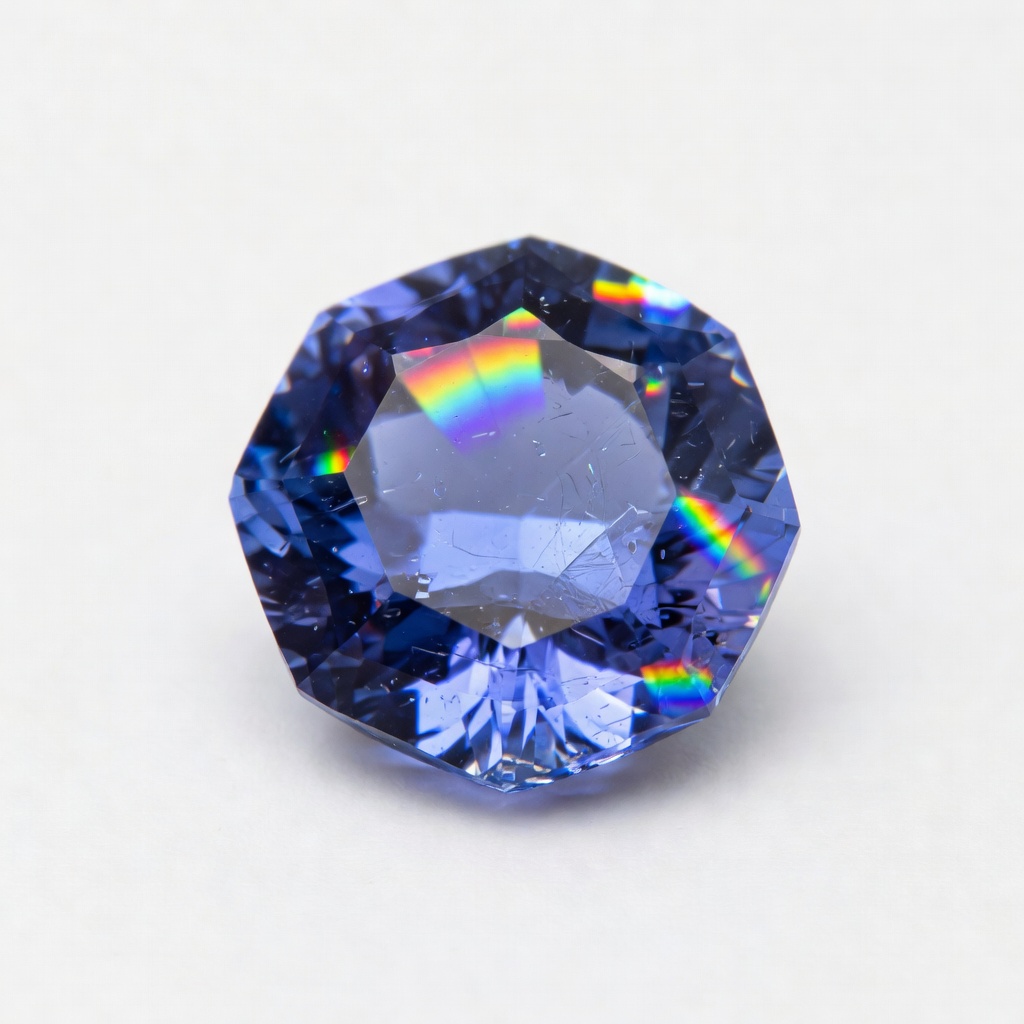
Understanding the Rarity of Benitoite
Benitoite stands as one of the most extraordinary discoveries in American mineralogy, designated as the official California state gemstone in 1985. This remarkable rare blue gemstone was first discovered in 1907 by prospector James Couch in the remote mountains of San Benito County, California, initially mistaken for sapphire due to its striking blue coloration. The mineral's unique chemical composition—a barium titanium silicate—creates a crystal structure so specific that gem-quality specimens remain exponentially rarer than diamonds, with fewer than a few thousand high-quality carats having been extracted from the single viable deposit worldwide.
When developing your Benitoite Buying Guide strategy, understanding this extreme scarcity is essential for making informed acquisition decisions. Unlike diamonds, which occur in multiple continents and various geological formations, or sapphires found across Southeast Asia and East Africa, benitoite exists commercially only within a four-acre section of the Dallas Gem Mine. This geographical limitation means that for every one hundred carats of fine sapphires or diamonds traded annually, perhaps one carat of comparable benitoite enters the market, creating a supply constraint that drives both pricing and investment potential for serious collectors.
Quality Factors: The Four Cs of Benitoite Evaluation
Evaluating benitoite requires specialized knowledge beyond standard gemstone grading, as this rare blue gemstone exhibits unique optical properties that influence value determination. Unlike more common gems where standardized grading systems dominate, benitoite assessment demands attention to specific characteristics that separate museum-quality specimens from commercial-grade material. Understanding these nuances ensures collectors pay appropriate premiums for truly exceptional stones while avoiding overpriced inferior specimens.
Color Intensity and Hue Distribution
The most valuable benitoite displays a vivid, saturated sapphire-blue to violet-blue color that appears electric under natural daylight, often described as having an internal "glow" unmatched by other blue gemstones. Premium specimens show strong pleochroism, appearing deep blue when viewed from one angle and colorless or pale blue from perpendicular directions, a phenomenon that master cutters leverage to maximize face-up color. Stones with gray secondary tones or greenish modifiers trade at significant discounts, while colorless benitoite—though scientifically interesting—typically commands prices 80-90% lower than fine blue material, making color the primary value determinant in any Benitoite Buying Guide.
Clarity Standards and Inclusion Tolerance
Due to benitoite's extreme rarity, collectors often accept inclusions that would disqualify other gemstones, provided these characteristics don't significantly impact brilliance or durability. Eye-clean stones above one carat represent less than five percent of production, creating a market where slightly included specimens remain highly desirable if the inclusions don't break the surface or create structural weaknesses. Common internal features include "silk" rutile inclusions, two-phase liquid inclusions, and characteristic angular growth patterns that actually help gemologists confirm natural origin when examined under magnification.
Cut Optimization and Performance
Master lapidaries face unique challenges when cutting benitoite, as the mineral's hexagonal crystal structure and pronounced cleavage require orientation that maximizes both color saturation and dispersion while minimizing breakage risk. The ideal cut leverages benitoite's extraordinary dispersion rating of 0.046—higher than diamond's 0.044—to create spectacular fire visible even under subdued lighting conditions. Round brilliant and modified emerald cuts prove most popular for investment-grade stones, though custom fantasy cuts can enhance the uniqueness of specific rough crystals while potentially sacrificing some liquidity in the secondary market.
Price Analysis: Understanding Benitoite Market Value
Navigating benitoite pricing requires understanding a market structure fundamentally different from mainstream gemstone trading, where standardized Rapaport lists or wholesale guides provide baseline references. Benitoite price per carat varies dramatically based on size thresholds that create exponential rather than linear pricing curves, with stones exceeding two carats commanding premiums that can exceed ten times the per-carat price of one-carat specimens. Current market data indicates commercial-grade material (light blue, slightly included) ranges from $1,500 to $3,000 per carat, while fine quality stones (deep blue, eye-clean) typically trade between $6,000 and $10,000 per carat, with exceptional museum pieces exceeding $50,000 per carat at specialized auctions.
The gemstone investment potential of benitoite becomes particularly evident when examining historical appreciation trends over the past two decades. Since 2000, documented auction results and private sales indicate consistent annual appreciation rates of 10-15% for fine specimens, outpacing many traditional investment vehicles and even exceeding the appreciation curves of Kashmir sapphires during comparable periods. This performance stems from absolute supply constraints—the original Dallas Gem Mine ceased commercial production in the early 2000s, meaning virtually all high-quality material available today derives from existing collector inventories or limited small-scale collecting operations.
Size Premiums and Market Dynamics
Size dramatically impacts benitoite valuation due to the geological constraints of the host rock, where crystals rarely exceed one centimeter in width without severe fracturing. Stones surpassing three carats in cut form represent perhaps two dozen known specimens worldwide, creating a supply bottleneck that drives prices upward geometrically rather than arithmetically. For investors building rare gemstone portfolios, acquiring smaller, finer stones (0.5-1.0 carats) often provides better liquidity than holding single large specimens, though the ultimate trophy pieces invariably exceed five carats and trade through private networks rather than public auction houses.
Authenticity Verification: Avoiding Counterfeits and Synthetics
Benitoite authenticity represents a critical concern for serious collectors given the stone's high value and the existence of convincing simulants that can deceive inexperienced buyers. The unique optical signature of genuine benitoite provides the first line of defense against counterfeits, specifically its remarkable dispersion that creates rainbow flashes exceeding even diamond's fire when properly cut. This characteristic, combined with strong blue fluorescence under short-wave ultraviolet light, creates a diagnostic signature that inexpensive cobalt spinel or synthetic sapphire simulants cannot replicate despite superficial color similarities.
Common fraudulent practices include selling heat-treated blue zircon as benitoite—a deception easily detected by zircon's higher specific gravity and different crystal system—or offering cobalt-doped synthetic spinel that mimics benitoite's color but lacks its distinctive dispersion and pleochroism. When conducting Benitoite vs sapphire comparisons for authentication purposes, note that sapphire exhibits double refraction visible through dichroscope examination, whereas benitoite shows uniaxial optic character with distinctly different pleochroic colors (blue versus colorless) that separate it from corundum varieties.
Required Documentation and Laboratory Certification
Never purchase high-value benitoite without accompanying documentation from internationally recognized laboratories such as the Gemological Institute of America (GIA), American Gemological Laboratories (AGL), or GemResearch Swisslab (GRS). These reports should specifically confirm natural origin, absence of treatment (benitoite is rarely treated, making enhancement disclosure critical), and detailed measurements of optical properties including refractive indices (1.757-1.804) and birefringence. For stones exceeding $10,000 in value, consider supplementary spectroscopic analysis that can identify geographical origin markers specific to the San Benito County deposit, providing additional provenance verification for estate pieces or vintage acquisitions.
Benitoite vs Other Blue Gemstones: Making Comparisons
When evaluating rare blue gemstones for collection or investment, understanding the distinct characteristics that separate benitoite from its more common cousins proves essential for allocation decisions. Visual distinctions between benitoite and sapphire become apparent under natural lighting, where fine benitoite exhibits a "sleepy" luminosity caused by its high dispersion combined with typical microscopic inclusions, whereas sapphire presents a harder, more metallic luster with less internal fire. Durability considerations significantly favor sapphire for jewelry applications, as corundum's Mohs hardness of 9 resists scratching far better than benitoite's 6.0-6.5 rating, making sapphire preferable for engagement rings or daily-wear bracelets while benitoite suits protected settings in pendants or earrings.
Investment potential comparisons between benitoite and alternative blue gems like tanzanite or aquamarine reveal different risk-reward profiles suited to varying collector objectives. While tanzanite offers greater availability and established retail markets, its single-source vulnerability (Meralani Hills, Tanzania) combined with treatment requirements (virtually all tanzanite is heat-treated) contrasts with benitoite's completely natural state and finite supply. Aquamarine, though beautiful and durable, lacks the scarcity metrics that drive benitoite appreciation, with new discoveries regularly occurring in Pakistan, Brazil, and Madagascar, whereas benitoite's geological constraints ensure no new significant deposits will likely emerge.
Sourcing Strategies: Where to Purchase Genuine Benitoite
Developing reliable sourcing channels constitutes perhaps the most challenging aspect of creating a comprehensive Benitoite Buying Guide, as the stone's scarcity limits availability to specialized dealers rather than mainstream jewelry retailers. Reputable sources include established rare gem specialists such as Pala International, The Gem Trader, or direct relationships with mineral museums liquidating duplicate specimens, though expect to provide references or establish buyer credentials before gaining access to finest material. Online marketplaces present significant risks despite occasional legitimate offerings, requiring buyers to verify seller histories, insist on escrow services for high-value transactions, and never rely solely on photographs that cannot capture dispersion or true color saturation.
Brick-and-mortar establishments specializing in rare minerals and gemstones offer advantages for hands-on evaluation, particularly the ability to examine dispersion and fluorescence under controlled lighting conditions impossible to assess through digital images. When purchasing from physical galleries, request examination of the stone under various light sources including LED, incandescent, and natural daylight to verify color stability, as some treated simulants show color shifts under different spectra. Provenance documentation proving extraction from the original Dallas Gem Mine or descent from famous historical collections adds significant premiums—sometimes 20-30% above market—but provides assurance of authenticity and potential historical value that undocumented stones cannot match.
Investment Potential: Building a Rare Gemstone Portfolio
Incorporating the California state gemstone into a diversified alternative investment portfolio requires understanding the unique liquidity constraints and appreciation drivers specific to ultra-rare minerals. Unlike gold or publicly traded equities, benitoite does not offer immediate liquidation capabilities, with typical selling periods ranging from three months to two years depending on market conditions and the specific quality tier of the specimen. However, this illiquidity premium correlates with superior long-term appreciation, as documented sales from 2000-2020 show consistent outperformance against both inflation and traditional stock market indices, with particularly strong results for stones accompanied by historical documentation or exceptional size characteristics.
Proper storage and insurance protocols prove essential for maintaining gemstone investment value, requiring specialized jewelers' block policies that specifically schedule rare gemstones rather than generic homeowners' coverage that typically caps mysterious disappearance or theft at $1,000-$2,500. Store benitoite in individual acid-free paper envelopes within fireproof safes maintaining stable humidity levels, as the stone's composition remains chemically stable but settings (particularly silver or low-karat gold) may tarnish or degrade, potentially damaging the gem through chemical migration. Annual appraisals by certified gemologists familiar with rare stone markets update insurance valuations and provide documentation trails essential for eventual resale or estate planning purposes.
Care and Maintenance: Preserving Your Investment
Maintaining the brilliance of these rare blue gemstones requires specific protocols acknowledging benitoite's moderate hardness and distinct cleavage directions that make it vulnerable to chipping or scratching from improper handling. Clean benitoite using only warm water with mild dish soap and a soft natural-bristle brush, avoiding ultrasonic cleaners that can exploit internal fractures or thermal shock that might cleave the stone along its basal plane. Steam cleaning presents particular risks due to benitoite's heat sensitivity and potential for liquid inclusions to expand and fracture the host crystal, making gentle manual cleaning the only recommended maintenance method for mounted or loose stones.
Storage solutions must prevent contact with harder gemstones—diamonds, sapphires, rubies, and even quartz (7 on the Mohs scale) can scratch benitoite's surface, permanently dulling its luster and reducing value. Employ individual compartmentalized boxes lined with soft fabric, or for high-value specimens, custom-fitted display cases with glass covers that protect against dust while allowing appreciation of the stone's dispersion characteristics. Professional maintenance should occur annually for mounted stones, examining prongs and bezels for wear that might allow the gem to loosen or fall out, particularly important for benitoite given that replacement stones of comparable quality may prove impossible to source at any price.
Ethical and Legal Considerations in Benitoite Trading
Trading the California state gemstone involves navigating complex regulatory frameworks governing both the original mining location and interstate commerce in rare minerals. The Dallas Gem Mine currently operates under strict environmental restrictions limiting commercial extraction, with the majority of recent production coming from small-scale collecting operations permitted under Bureau of Land Management guidelines that prohibit mechanized equipment and limit annual extraction quantities. Exporting benitoite internationally requires CITES documentation confirming the material predates current restrictions or derives from legally permitted collecting, as recent regulatory changes have increased scrutiny on rare mineral exports from California's public lands.
Ethical sourcing verification extends beyond legal compliance to encompass proper chain-of-custody documentation that prevents "laundering" of stolen specimens or material extracted from closed collecting areas. Reputable dealers provide detailed provenance records tracing stones back to specific collecting trips or historic finds, while auction houses increasingly require disclosure of any restoration or repair to rough crystals before cutting. For collectors concerned with environmental impact, purchasing vintage or estate benitoite pieces offers an ethical alternative to supporting new mining activities, though such specimens command premiums of 15-25% over newly cut material due to their historical significance and irreplaceable nature.
Final Checklist: Making Your Benitoite Purchase
Before finalizing any significant benitoite acquisition, conduct a systematic evaluation using criteria specific to this ultra-rare material rather than standard gemstone purchasing protocols. Verify that the stone displays strong blue-to-colorless pleochroism visible with the naked eye when rotated, confirming natural crystal structure rather than synthetic growth patterns. Examine the girdle and culet under 10x magnification for polishing marks or rounded facet junctions that might indicate temporary treatment or filling of fractures, practices occasionally attempted on lower-grade material to simulate higher clarity grades.
Negotiation strategies for benitoite differ from diamond or sapphire purchasing due to the absence of wholesale pricing guides or Rapaport sheets that typically anchor bargaining positions. Instead, research recent auction results from Bonhams, Christie's, or Heritage Auctions to establish comparable value ranges, while recognizing that private sales often occur at 10-20% discounts from auction estimates due to the absence of buyer's premiums. For long-term value retention, prioritize stones with "character"—unusual crystal formations, exceptional dispersion, or historical significance—over generic commercial cuts, as the collector market increasingly favors unique specimens over standardized calibrated stones that could derive from any source.
Frequently Asked Questions About Benitoite
What makes benitoite so expensive compared to other blue gemstones?
Benitoite commands premium prices due to its extreme rarity—it's found in only one commercial mine in San Benito County, California. High-quality specimens over 1 carat are exceptionally scarce, with prices ranging from $3,000 to $10,000+ per carat for fine material, significantly exceeding many sapphires due to limited supply.
How can I tell if my benitoite is real or a synthetic imitation?
Authentic benitoite exhibits a distinctive dispersion of 0.046, higher than diamond (0.044), creating exceptional fire. Genuine stones show strong blue and colorless pleochroism. Always request certification from reputable labs like GIA or AGL, and examine the stone under magnification for characteristic inclusions and hexagonal crystal structure.
What is the most valuable color for benitoite?
The most valuable benitoite displays a vivid, saturated sapphire-blue to violet-blue hue with strong fluorescence under short-wave UV light. Stones with intense color saturation, free from gray or green secondary tones, command the highest premiums. Colorless and light blue specimens are significantly less valuable.
Is benitoite durable enough for everyday jewelry wear?
With a hardness of 6.0-6.5 on the Mohs scale, benitoite is softer than sapphire (9) and requires protective settings for rings. It's best suited for pendants, earrings, or occasional wear pieces. The stone has good toughness but can chip if struck, making bezel settings recommended for active wear.
Where is benitoite mined and why is it so rare?
Commercial quantities of gem-quality benitoite exist only at the Dallas Gem Mine in San Benito County, California. The geological conditions required to form benitoite are extremely specific, involving rare barium-titanium minerals under unique temperature and pressure conditions that rarely occur naturally elsewhere.
What certifications should I look for when buying benitoite?
Insist on certificates from recognized laboratories such as GIA (Gemological Institute of America), AGL (American Gemological Laboratories), or GRS (GemResearch Swisslab). The certificate should confirm natural origin, note any treatments (typically none), and provide detailed color and clarity grades specific to the stone.
How does benitoite compare to sapphire as an investment?
While sapphire offers greater liquidity and market recognition, benitoite provides stronger scarcity-driven appreciation potential. Benitoite has shown consistent price increases of 10-15% annually due to mine depletion, whereas sapphire prices fluctuate more with market trends. Benitoite suits collectors seeking extreme rarity over mainstream appeal.
Can I visit the benitoite mine in California?
The Benitoite Gem Mine occasionally offers limited public access through scheduled digging events and private tours, though commercial mining operations have significantly declined. Collecting your own specimen requires permits and fees, but surface finds are extremely rare. Most high-quality stones available today come from existing collections rather than new mining.