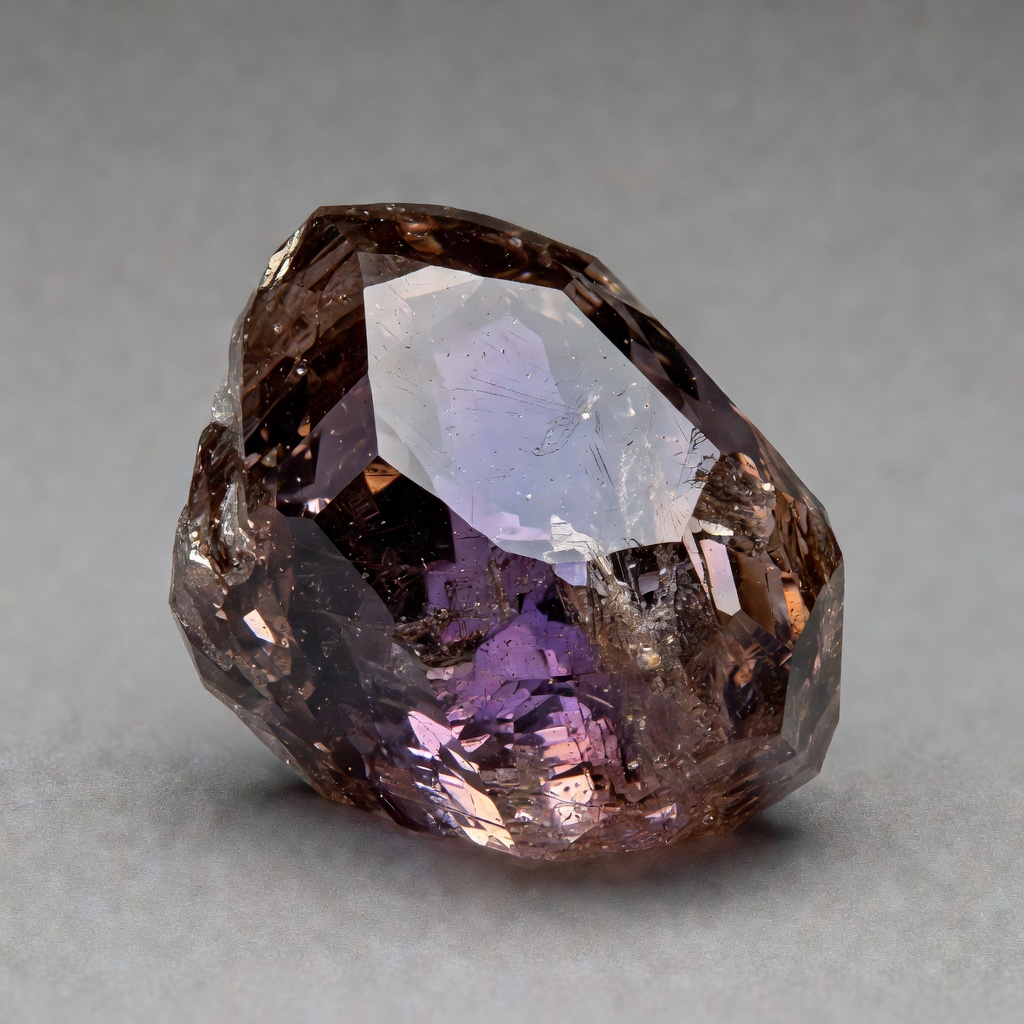
Introduction to Axinite: A Collector's Hidden Treasure
Axinite represents one of the mineral kingdom's most intriguing yet underappreciated treasures, belonging to a complex group of calcium aluminum borosilicate minerals that form under specific geological conditions requiring the rare convergence of boron-rich pegmatites and contact metamorphic zones. Unlike more commonly encountered gemstones such as quartz or garnet, axinite demands sophisticated geological circumstances involving the interaction of limestone with boron-bearing granitic intrusions, resulting in its characteristic triclinic crystal system and distinctive bladed or wedge-shaped formations. These stringent formation requirements contribute significantly to the gemstone's rarity, as viable deposits occur only in isolated localities worldwide where precise mineralogical conditions have been met.
Historically, axinite has occupied a specialized niche within mineral collections since its formal recognition in the late 18th century, with early specimens from Bourg d'Oisans in France establishing the standard for quality that modern collectors still pursue today. The stone's name derives from the Greek word "axine," meaning axe, referencing its sharp, wedge-shaped crystal terminations that distinguish it visually from other brown gemstones. While axinite never achieved the mainstream popularity of diamond or ruby in commercial jewelry markets, this relative obscurity has paradoxically enhanced its desirability among serious mineralogists and sophisticated collectors who value geological rarity over mass-market appeal.
What truly distinguishes axinite from superficially similar brown gemstones like tourmaline or andalusite lies in its remarkable pleochroic properties, which cause the stone to display different colors when viewed from various crystallographic directions. This optical phenomenon transforms axinite from a static mineral specimen into a dynamic object that shifts between honey-brown, clove, violet, and blue hues depending on the viewing angle and lighting conditions. For collectors seeking axinite gemstone properties that offer both scientific interest and aesthetic beauty, this pleochroism provides endless fascination, as each specimen literally changes character as it moves through different environments.
Understanding Axinite Varieties and Color Classifications
The axinite group encompasses four distinct mineral species, each defined by its dominant cation composition and exhibiting subtle but significant variations in color, density, and optical characteristics. Ferro-axinite, containing iron as its primary metallic constituent, represents the most common variety and typically displays the warm honey-brown to clove tones most associated with the gemstone. Magnesio-axinite, where magnesium replaces iron in the crystal lattice, tends toward lighter straw-yellow to colorless appearances and occurs less frequently in gem-quality sizes, making fine specimens particularly prized among variety specialists.
Mangan-axinite incorporates manganese into its chemical structure, often resulting in more intensely colored specimens ranging from rich chocolate brown to distinctive violet hues that command premium prices in collector markets. The rarest member, tinzenite, contains both manganese and iron while crystallizing in the monoclinic system rather than the typical triclinic structure of other axinites, producing yellow to greenish-yellow crystals that are seldom encountered even in comprehensive mineral collections. Understanding these axinite color varieties proves essential for collectors building systematic suites, as each species requires different geological conditions and presents unique acquisition challenges.
The color spectrum of axinite extends from completely colorless crystals through pale yellow, honey-brown, reddish-brown, violet, and rarely, intense blue specimens that rival fine sapphire in saturation. Pleochroism significantly complicates color assessment, as a single gem-quality crystal might appear deep brown when viewed along one axis, shift to violet-blue along another, and display golden-yellow along the third. This characteristic necessitates careful orientation during cutting to maximize the most attractive color face-up while minimizing the visibility of less desirable secondary hues. Collectors should examine potential acquisitions under multiple light sources—incandescent, fluorescent, and natural daylight—to fully appreciate the color-shifting behavior that defines fine axinite color varieties.
Quality Assessment: The Four Cs of Axinite Evaluation
Evaluating axinite requires adapting traditional diamond grading standards to accommodate the unique characteristics of this borosilicate mineral, particularly regarding color intensity and the management of natural inclusions. Unlike diamonds where colorlessness represents the ideal, axinite achieves maximum value through intense saturation, with deep honey-brown specimens showing strong pleochroic shifts commanding the highest premiums. Tone grading should favor medium-dark to dark stones, as lighter specimens often appear washed out and fail to display the dramatic color changes that define the species' visual appeal, though exceptionally rare colorless or pale blue specimens may warrant consideration for specialized collection themes.
Clarity assessment in axinite demands realistic expectations regarding natural characteristics, as completely inclusion-free crystals exceeding one carat are extraordinarily rare due to the mineral's formation in complex geological environments prone to stress fractures. Acceptable inclusions include fine needle-like crystals of rutile or hematite, healing fractures, and growth zoning that actually authenticate natural origin, while excessive cloudiness, surface-reaching fractures, or clusters of dark mineral inclusions significantly diminish value. Gem cutters often orient stones to position inclusions where they minimally impact face-up appearance, and collectors should prioritize transparency in the crown area over perfect clarity throughout the entire crystal.
Cut quality profoundly influences both the aesthetic impact and structural integrity of axinite, with step cuts, emerald cuts, and custom fantasy cuts proving most effective at showcasing pleochroism while providing protection against cleavage failure. Brilliant cuts may maximize light return but often obscure the subtle color shifts that make axinite distinctive, whereas step cuts with their long rectangular facets emphasize the dichroic or trichroic nature of the material. Carat weight availability presents significant limitations, as clean crystals suitable for faceting rarely exceed five carats, and specimens over ten carats represent exceptional museum-quality finds. Understanding axinite price per carat requires recognizing this size limitation, as prices escalate exponentially rather than linearly once stones surpass three carats, with fine specimens over five carats potentially commanding ten to twenty times the per-carat rate of smaller commercial-grade material.
Authenticity Verification and Treatment Detection
Establishing the authenticity of axinite specimens requires familiarity with the mineral's distinctive physical properties, beginning with its hardness of 6.5 to 7 on the Mohs scale, which places it between feldspar and quartz in terms of scratch resistance. Specific gravity testing provides crucial diagnostic information, with natural axinite ranging from 3.26 to 3.36 depending on chemical variety—significantly heavier than look-alike materials such smoky quartz (2.65) or citrine (2.66). The mineral exhibits perfect cleavage in one direction and good cleavage in another, creating potential fracture planes that cutters must navigate carefully and that serve as identifying characteristics under magnification.
Common treatments in the axinite market include fracture filling with oils or resins to improve apparent clarity, heat treatment to intensify brown or violet colors, and surface coating to simulate rarer blue or green varieties. Genuine axinite identification requires scrutiny under magnification for flash effects along filled fractures, unnaturally uniform color distribution suggesting heat treatment, or surface scratching indicating coated materials. Advanced testing through infrared spectroscopy or Raman analysis can detect polymer fillers, while immersion in methylene iodide or other heavy liquids may reveal hidden fractures through differential refraction indices.
Synthetic axinite remains virtually nonexistent due to the complex chemistry and crystallization conditions required, but simulants including glass, synthetic spinel, and dyed quartz frequently appear in unscrupulous marketplaces. Distinguishing natural material requires examining crystal structure under polariscopes, where axinite's triclinic nature produces distinctive optical signatures, and assessing refractive indices, which range from 1.656 to 1.704 with a characteristic birefringence of 0.010 to 0.012. Professional certification from laboratories such as GIA (Gemological Institute of America), AGS (American Gem Society), or specialized mineralogical institutions provides essential documentation for significant acquisitions, verifying not only natural origin but also geographic provenance and treatment status.
Geographic Origins: How Source Affects Value
The provenance of an axinite specimen significantly influences both its scientific value and market price, with certain axinite mining locations achieving legendary status among collectors due to exceptional crystal size, color quality, or historical significance. The Bourg d'Oisans region in the French Alps represents the classic locality, producing the finest ferro-axinite crystals known for their deep clove-brown color, exceptional transparency, and large crystal sizes, with specimens from depleted 19th-century mines now commanding substantial premiums due to their irreplaceable historical value. French axinite typically displays richer saturation and more pronounced pleochroism than material from other localities, making these specimens the benchmark against which all others are measured.
In North America, the New Street Quarry in Bergen County, New Jersey, produced exceptional mangan-axinite during the mid-20th century, characterized by distinctive violet to brown pleochroism and sharp, lustrous crystals that remain highly sought after. California's San Diego County pegmatites, particularly the Little Three Mine and Himalaya Mine, yielded gem-quality axinite associated with tourmaline and spodumene, often displaying unique blue to violet coloration rarely seen in European material. More recent discoveries in Merelani, Tanzania, have introduced intense blue and violet axinite to the market, though these specimens typically occur in smaller sizes and require careful evaluation for treatment, as the locality has also produced heated material.
Mexico's Baja California region contributes significant quantities of commercial-grade brown axinite, often occurring in large crystals suitable for mineral specimens rather than faceted gems, while Pakistan's northern areas have produced limited quantities of colorless to pale yellow magnesio-axinite. Ethical sourcing considerations increasingly influence collector decisions, with responsible dealers providing documentation verifying conflict-free extraction and fair compensation for artisanal miners. The depletion of classic European and eastern American localities has shifted market dynamics, making high-quality specimens from exhausted mines appreciate faster than material from currently active operations, though ongoing production in Tanzania and Mexico ensures continued availability of collector-grade material for axinite mining locations enthusiasts.
Market Pricing and Investment Considerations
Understanding current market valuations requires recognizing the broad spectrum of quality tiers within axinite collecting, from commercial cabochon material to exceptional museum-grade crystals. Entry-level faceted stones suitable for jewelry or beginning collections typically range from $20 to $100 per carat, featuring light to medium brown colors with visible inclusions and standard cuts that may not optimally display pleochroism. Mid-tier specimens with good clarity, intense color saturation, and precision cutting command $200 to $500 per carat, representing the sweet spot for collectors seeking both aesthetic appeal and reasonable liquidity should they later choose to sell.
Premium rare axinite specimens—defined as crystals exceeding five carats with exceptional clarity, intense violet or blue coloration, or significant historical provenance—can exceed $1,000 per carat, with exceptional large crystals from depleted localities like Bourg d'Oisans achieving prices comparable to fine sapphire or spinel. Investment potential varies significantly by quality tier, with commercial material showing modest appreciation while truly exceptional specimens have demonstrated consistent value growth of 8-12% annually over the past decade, outpacing inflation and many traditional investment vehicles. However, axinite remains a specialized market with limited liquidity compared to diamond or colored stone markets, requiring longer holding periods and appropriate buyer networks to realize full value.
Building a diverse collection requires strategic budget allocation, with experienced collectors recommending that 60% of investment focus on high-quality single specimens rather than numerous mediocre stones, while reserving 40% for variety collecting across different species and localities. Crystal habit specimens—well-formed natural crystals with terminations—often appreciate faster than cut stones due to their irreplaceable nature and appeal to mineral museums, though they require different storage and display considerations. When evaluating axinite price per carat, consider the total package including origin documentation, cutting quality, and the presence of treatment, as these factors significantly influence future resale value and insurance appraisals.
Navigating Online and Offline Purchase Channels
Acquiring axinite requires careful vetting of suppliers, as the specialized nature of the mineral attracts both highly knowledgeable specialists and unscrupulous dealers capitalizing on collector enthusiasm. Established mineral dealers with physical galleries in Tucson, Denver, or Munich typically offer the highest level of expertise and authentication guarantees, though their overhead costs reflect in pricing. Reputable auction houses including Heritage Auctions, Bonhams, and specialized mineral auction platforms provide opportunities for buy axinite online, often with detailed condition reports and return privileges, though buyers should factor buyer's premiums of 15-25% into their maximum bids.
When considering buy axinite online through dealer websites or platforms like iRocks or The Arkenstone, verify the seller's credentials through mineralogical associations such as the Mineralogical Society of America or regional mineral clubs. Essential questions to pose include specific locality information beyond country level, any known treatments or enhancements, previous ownership history for significant specimens, and the availability of laboratory certification. Request multiple photographs under different lighting conditions to assess pleochroism, and ask for video footage showing the stone's color shift properties, as static images often fail to capture axinite's dynamic optical characteristics.
Red flags indicating potential fraud include prices significantly below market norms for claimed quality, vague locality descriptions such as "Africa" or "Asia" without specific mine information, resistance to providing certification or detailed photographs, and sellers offering "investment grade" material without proven track records. Secure payment methods should prioritize credit cards or escrow services offering buyer protection rather than wire transfers or cryptocurrency for initial transactions, while clear return policies allowing inspection by independent gemologists provide essential safeguards. When purchasing at mineral shows, bring a loupe and flashlight to examine cleavage planes and inclusions personally, and never feel pressured to make immediate decisions on significant acquisitions without due diligence.
Jewelry Applications: Settings and Wearability
Designing jewelry with axinite requires acknowledging the mineral's physical limitations while maximizing its unique optical properties through protective axinite jewelry settings. Due to perfect cleavage in one direction and brittle tenacity, axinite demands settings that protect the girdle and pavilion from impact while securing the stone without excessive pressure that might induce cleavage failure. Bezel settings, half-bezel designs, or protective prong configurations with V-shaped prongs at the corners provide optimal security for faceted stones, while custom-designed frames can accommodate the irregular shapes common to crystal habit specimens.
Jewelry types best suited to axinite emphasize protection and minimize exposure to hard knocks, making pendants and earrings ideal choices where the stones remain relatively protected during wear. Brooches and scarf pins represent traditional applications allowing display of larger crystal specimens without risk of impact damage. Rings prove problematic for daily wear despite their popularity, though occasional-wear cocktail rings with low-profile settings and protective surrounds can work if the wearer understands the limitations and removes the piece during activities involving hand impact. Bracelets and bangles should generally be avoided unless featuring heavily protected axinite in flush-mount settings where the stone sits below the metal surface.
Metal pairing considerations balance aesthetic enhancement with practical protection, with yellow and rose gold complementing the warm honey-brown tones of ferro-axinite while white metals including platinum and white gold emphasize violet and blue color shifts in mangan-axinite. The metal's hardness should not exceed the gemstone's capacity, meaning settings should feature rounded prongs without sharp edges that might concentrate stress. For axinite jewelry settings intended as investment pieces, consider removable settings that allow the stone to be stored separately from the mount, preserving both components and allowing future remounting without risking the original specimen.
Care, Maintenance, and Storage Best Practices
Preserving axinite specimens requires understanding their sensitivity to thermal shock, mechanical stress, and chemical exposure, necessitating protocols distinct from those appropriate for harder gemstones like diamond or sapphire. Cleaning should utilize only warm soapy water—mild dish detergent suffices—with soft brushes such as baby toothbrushes or makeup brushes with natural bristles, followed by thorough rinsing and immediate drying with lint-free cloths. Ultrasonic cleaners pose significant risks due to axinite's cleavage, as the vibrational energy can propagate existing fractures or induce new ones along weak planes, while steam cleaning creates thermal shock that may cause catastrophic failure in stones with hidden fractures.
Storage protocols must prevent contact with harder minerals that could scratch axinite's surface, requiring individual padded compartments, acid-free tissue wrapping, or display cases with separated sections. Temperature stability proves crucial, as rapid transitions from cold storage to warm room temperatures create differential expansion between the stone and any included minerals or fractures, potentially causing cracking. For faceted stones, store with the table facing upward to prevent chipping, while crystal specimens should rest on custom supports that distribute weight evenly and prevent pressure on delicate terminations. Long-term preservation of investment-grade material benefits from controlled humidity environments of 40-60% to prevent oxidation of iron content that might darken some specimens over decades.
Handling precautions include avoiding sudden temperature changes such as wearing axinite jewelry while moving between heated buildings and freezing outdoor environments, removing rings before washing hands with hot water, and protecting specimens from household chemicals including chlorine, ammonia, and acids found in cleaning products. When transporting axinite, use rigid containers with foam padding that prevents movement, and consider carrying insurance riders for high-value specimens. Regular inspection by professional gemologists every few years can identify developing fractures or setting wear before catastrophic loss occurs, ensuring that rare axinite specimens remain pristine for future generations.
Final Purchase Checklist and Collector Recommendations
Before finalizing any significant axinite acquisition, systematic evaluation prevents costly mistakes and ensures alignment with collection goals. Begin with physical inspection under multiple light sources, verifying pleochroism strength and checking for windowing (areas where light passes through without reflection) that indicates poor cutting. Examine the girdle and pavilion with a 10x loupe for fractures, chips, or evidence of filling treatments, and test the stone's heft to confirm the high specific gravity characteristic of genuine material. For mounted stones, request that the jeweler remove the gem from its setting for inspection, as mounts can hide fractures or treatments, though this should be performed only by experienced professionals to avoid damage.
Documentation requirements include laboratory certificates from GIA, AGS, or respected mineralogical laboratories verifying natural origin, species identification (ferro-axinite versus mangan-axinite), and treatment status. Origin reports detailing specific mine locations add provenance value, while independent appraisals provide insurance documentation and establish baseline values for investment tracking. Maintain organized records of purchase receipts, previous ownership history, and any restoration or repair work performed, as complete provenance significantly enhances resale value for Axinite Buying Guide followers building serious collections.
Developing a collection strategy requires deciding between breadth—acquiring examples of all four axinite species from various localities—or depth, focusing on exceptional specimens of a single variety such as French ferro-axinite or Tanzanian blue material. Novice collectors should begin with affordable commercial-grade material to develop identification skills before investing in high-value specimens, while experienced collectors might focus on rare crystal habits or historically significant pieces from classic localities. Consulting professional gemologists or mineralogists before acquisitions exceeding $5,000 provides inexpensive insurance against misidentification or overpayment, and membership in mineralogical societies offers networking opportunities with fellow collectors who may provide access to private sales unavailable through commercial channels.
Frequently Asked Questions
What makes axinite rare and valuable compared to other gemstones?
Axinite is rare due to limited geological formations requiring specific calcium, aluminum, boron, and iron mineral combinations. Its distinctive pleochroism, showing different colors from various angles, combined with scarcity of gem-quality crystals over 5 carats, makes high-grade specimens highly sought after by collectors.
How much should I expect to pay for quality axinite per carat?
Commercial-grade axinite typically ranges from $20-$100 per carat, while fine gem-quality specimens with intense color and clarity can command $200-$500 per carat. Exceptional large crystals or rare color varieties like blue or violet may exceed $1,000 per carat depending on provenance and size.
Is axinite suitable for engagement rings or daily wear jewelry?
Due to its perfect cleavage and brittle tenacity (6.5-7 Mohs hardness), axinite is not recommended for daily wear rings or bracelets. It's better suited for pendants, earrings, or occasional-wear pieces in protective settings that minimize impact exposure.
How can I verify that an axinite gemstone is natural and untreated?
Request certification from reputable laboratories like GIA or AGS. Natural axinite exhibits specific gravity of 3.26-3.36 and distinctive triclinic crystal structure. Be wary of unusually clear specimens at low prices, as natural axinite typically contains characteristic inclusions. A gemologist can test for fracture filling or heat treatments.
What are the most desirable colors for axinite collectors?
While axinite occurs in brown, blue, violet, and colorless varieties, intense violet-blue and deep honey-brown specimens are most prized. The degree of pleochroism—showing color shifts from violet to brown depending on viewing angle—significantly increases desirability among serious collectors.
Where are the best places to purchase authentic axinite gemstones?
Purchase from established mineral dealers, specialized gem shows, or reputable online marketplaces with return policies. French, Californian, and Mexican specimens are highly regarded. Avoid general auction sites without authentication guarantees. Always verify dealer credentials through mineralogical associations.
What is the best cut for maximizing axinite's optical properties?
Step cuts and emerald cuts best showcase axinite's pleochroism while providing structural protection. Orienting the table perpendicular to the cleavage plane minimizes fracture risk. Custom cutting that aligns with the crystal's optical axis enhances the color-shift effect that makes axinite distinctive.
How should I clean and care for axinite jewelry?
Clean axinite using warm soapy water and a soft brush only. Never use ultrasonic cleaners, steam cleaners, or harsh chemicals due to cleavage vulnerability. Store separately in padded containers away from harder gemstones like diamonds or sapphires that could scratch the surface.