
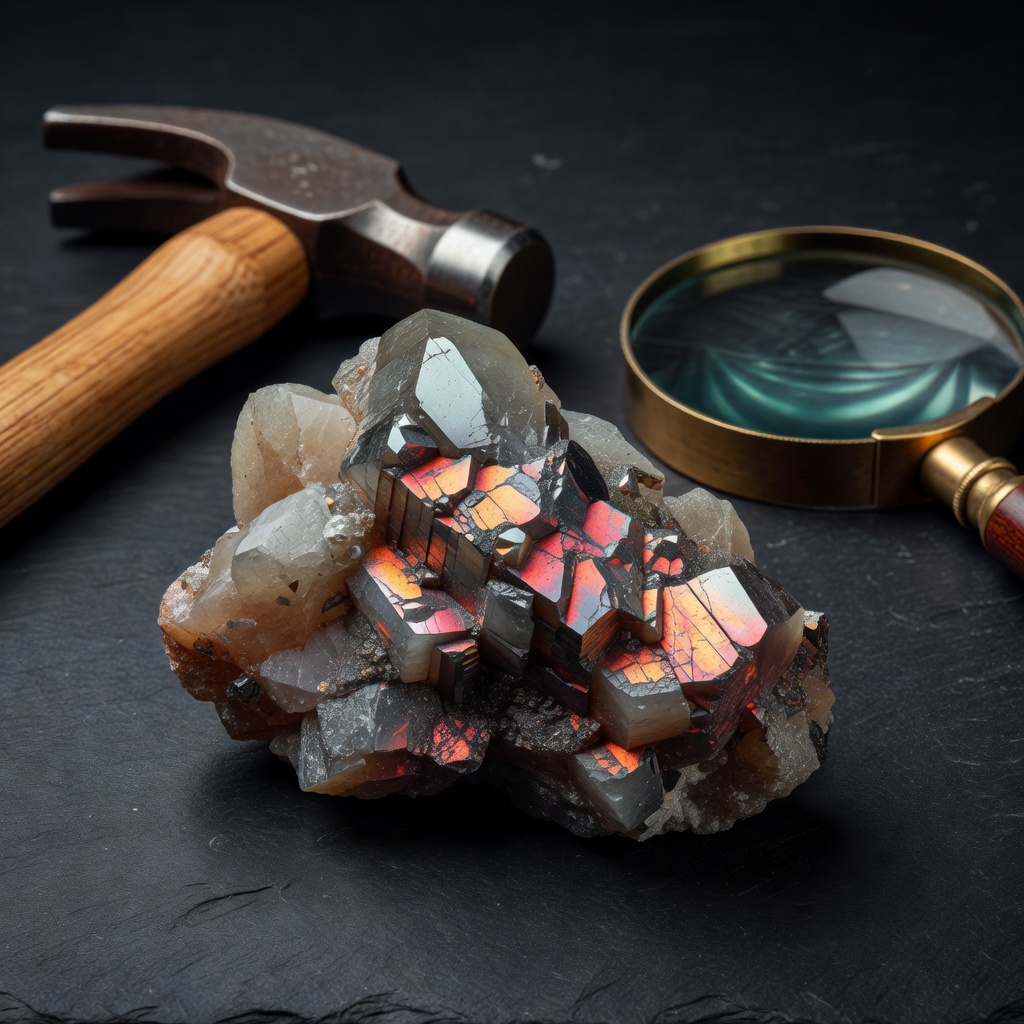
Introduction to Andesine: A Key Plagioclase Feldspar
Andesine stands as a crucial member of the plagioclase feldspar group, representing the intermediate bridge between sodium-rich albite and calcium-rich anorthite in the continuous solid solution series. Mineralogists classify this fascinating silicate mineral as an intermediate plagioclase, specifically occupying the compositional range where the albite (Ab) and anorthite (An) components exist in nearly equal proportions. The mineral derives its name from the majestic Andes Mountains of South America, where early geologists first identified distinctive specimens within volcanic rock formations during the 19th century expeditions. Understanding Andesine Properties and Information provides essential insights for petrologists studying magma crystallization sequences and for gemologists evaluating rare feldspar varieties in the commercial market.
Within the broader context of feldspar mineralogy, andesine plays a pivotal role in decoding the thermal history of igneous rocks, particularly those formed in subduction zone environments. Geology students often encounter andesine as a textbook example of solid solution phenomena, where the gradual substitution of sodium by calcium in the crystal lattice creates a spectrum of physical properties. Field collectors prize well-formed andesine crystals for their distinctive blocky habit and potential for gem-quality transparency, though such specimens require careful handling due to the mineral's characteristic cleavage planes. The mineral's significance extends beyond academic interest, serving as a geological thermometer that reveals the temperature conditions under which intermediate magmas cooled and crystallized deep within the Earth's crust.
Chemical Composition and Mineral Classification
The andesine chemical composition represents a precise equilibrium within the plagioclase ternary system, specifically ranging from Ab₅₀An₅₀ to Ab₇₀An₃₀ in the standard albite-anorthite notation. This translates to a chemical formula bridging NaAlSi₃O₈ (albite) and CaAl₂Si₂O₈ (anorthite), creating a sodium-calcium aluminosilicate framework with silicon and aluminum tetrahedra linked in a three-dimensional network. Trace elements including iron, magnesium, and potassium frequently substitute into the crystal structure, generating the subtle color variations that distinguish gem-quality specimens from their more common gray or white counterparts. Mineralogists utilize electron microprobe analysis to determine the exact An-content, as even minor variations of 5-10% in the anorthite component can shift the classification toward neighboring oligoclase or labradorite.
As an intermediate plagioclase, andesine crystallizes under specific thermodynamic conditions that favor the coexistence of both sodium and calcium in substantial quantities within the melt. The structural arrangement features alternating tetrahedral layers where Al³⁺ substitutes for Si⁴⁺, requiring charge balance through the incorporation of Ca²⁺ and Na⁺ cations in interstitial sites. Geochemists studying andesine chemistry can reconstruct the evolution of magma chambers by analyzing zoning patterns within individual crystals, where oscillatory bands record fluctuations in water pressure, temperature, and bulk composition during crystallization. For industrial applications, the relatively low melting point compared to anorthite-rich feldspars makes andesine particularly valuable as a flux in ceramic production, though the specific composition must be carefully controlled to achieve desired vitrification temperatures.
Physical Properties and Characteristics
Comprehensive Andesine Properties and Information reveals a mineral with distinct physical attributes that facilitate identification in both field and laboratory settings. Andesine registers 6 to 6.5 on the Mohs hardness scale, making it sufficiently durable for certain jewelry applications yet requiring protective settings to prevent damage along its perfect cleavage directions. The mineral exhibits two directions of cleavage intersecting at approximately 86 degrees—a diagnostic feature for feldspar mineral identification that distinguishes it from orthorhombic or isometric mineral groups. Specific gravity measurements typically range between 2.66 and 2.68, with higher values indicating increased calcium content toward the labradorite boundary of the solid solution series.
Visual examination of andesine specimens reveals a spectrum of colors from characteristic white, gray, and pale yellow to the more coveted reddish-brown, green, and honey tones prized by collectors. The luster varies from vitreous on freshly broken surfaces to pearly on cleavage planes, creating distinctive optical effects when specimens are rotated under direct lighting. Practicing geologists should note that weathered andesine often develops a dull, chalky appearance due to sericitization or kaolinization, particularly in exposed outcrops where hydrothermal alteration has occurred. When conducting field tests, practitioners can employ a steel knife blade (hardness ~5.5) to confirm that andesine resists scratching while common calcite (hardness 3) does not, providing a quick diagnostic tool during rapid mineral assessments.
Crystal Structure and Optical Properties
Andesine crystallizes within the triclinic crystal system, characterized by three unequal axes intersecting at angles that deviate significantly from 90 degrees, specifically approximately 94°, 116°, and 86°. This lowest-symmetry crystal system produces the distinctive blocky or tabular crystal habit commonly observed in well-formed specimens, often terminated by pinacoidal faces that create a distinctive chisel-like appearance. The internal structure features the classic feldspar framework of four-membered tetrahedral rings, though the triclinic crystal system symmetry results from the ordering of aluminum and silicon within these tetrahedral sites and the distribution of sodium and calcium in the cavity positions.
Under petrographic examination using crossed polars, andesine displays characteristic polysynthetic twinning—ultrafine alternating lamellae visible as striations that create a distinctive "zebra-striped" extinction pattern when the microscope stage rotates. The refractive index ranges from approximately 1.542 to 1.551 for the alpha ray and 1.550 to 1.559 for the gamma ray, with precise measurements helping gemologists distinguish andesine from similar appearing feldspars like oligoclase or labradorite. Optical orientation studies reveal that andesine typically shows negative biaxial interference figures with a 2V angle ranging between 75° and 85°, providing quantitative data for definitive mineral identification. Advanced techniques such as single-crystal X-ray diffraction can precisely determine the unit cell parameters, which expand predictably as the calcium content increases within the solid solution series.
Geological Occurrence and Formation
The study of andesine occurrence reveals a strong correlation with intermediate igneous rocks, particularly andesite and diorite formations that represent the evolutionary midpoint between mafic and felsic magmatic compositions. Andesine typically crystallizes as a primary phenocryst phase in volcanic arcs associated with subduction zones, where partial melting of the mantle wedge generates magmas with the specific silica saturation and alkali content necessary for intermediate plagioclase formation. Metamorphic petrologists frequently encounter andesine in amphibolite facies rocks and granulites, where it serves as an index mineral indicating moderate to high-grade metamorphic conditions ranging from 500°C to 700°C at intermediate pressures.
Notable localities for high-quality andesine specimens include the Lake County region of Oregon, where red andesine feldspar occurs in association with basaltic lavas and has become commercially significant in the gem trade. Japanese deposits, particularly those in the Koshu and Tohoku regions, yield exceptional crystals embedded in rhyolitic matrix material, providing researchers with ideal specimens for studying magma mixing processes. The type locality in the Andes Mountains continues to produce reference material, while European occurrences in the Italian Alps and German Eifel region demonstrate the mineral's association with both volcanic and plutonic environments. Field collectors should focus their searches on road cuts through intermediate volcanic terranes or contact metamorphic aureoles surrounding granitic intrusions, where andesine frequently occurs as prominent phenocrysts up to several centimeters in length.
Distinguishing Andesine from Similar Feldspars
Accurate feldspar mineral identification requires careful differentiation between andesine and its neighboring plagioclase varieties, particularly labradorite and oligoclase which share similar visual characteristics. While labradorite typically exhibits spectacular labradorescence—a play of colors caused by lamellar twinning—andesine generally displays more subdued optical phenomena with occasional weak schiller effects in certain orientations. The refractive indices provide definitive separation: andesine's indices fall between those of oligoclase (lower) and labradorite (higher), allowing gemologists to utilize refractometer readings for precise classification when visual cues prove ambiguous.
Chemical analysis through electron microprobe remains the gold standard for distinguishing these plagioclase feldspar varieties, directly measuring the CaO and Na₂O content to calculate the anorthite percentage. In the field, practical identification relies on association with specific host rocks—andesine dominates in diorites and andesites, while labradorite characterizes gabbros and basalts, and oligoclase associates more commonly with granites and granodiorites. Experience collectors examine cleavage surface striations under hand lens magnification; andesine typically shows finer, more closely spaced twinning lamellae compared to the coarser striations visible on labradorite cleavage faces. Additionally, specific gravity testing using heavy liquids can quickly separate specimens, as labradorite (2.68-2.72) feels noticeably denser than andesine (2.66-2.68) when handled repeatedly.
Industrial Applications and Uses
Beyond its geological significance, Andesine Properties and Information encompasses substantial industrial utility, particularly within the ceramics and glass manufacturing sectors where andesine serves as an effective flux material. The mineral's intermediate composition provides an optimal balance between the high melting point of anorthite and the lower viscosity of albite-rich melts, making it ideal for producing durable ceramic bodies and high-quality glazes with minimal thermal expansion. Manufacturers specifically select andesine-rich feldspar concentrates for porcelain production, where the controlled release of sodium and calcium during firing promotes vitrification at temperatures between 1100°C and 1200°C while maintaining the whiteness essential for fine china.
Geological thermometry represents another critical application, as andesine crystals preserve chemical zoning patterns that record the temperature evolution of their host magmas through techniques such as the plagioclase-liquid hygrometer-thermometer. Researchers analyzing andesine composition can reconstruct magma chamber pressures and water contents with remarkable precision, providing insights into volcanic eruption forecasting and ore deposit formation. In the realm of materials science, synthetic andesine analogs serve as model systems for studying aluminosilicate phase transitions, while crushed andesine finds use as an inert filler in paints, plastics, and rubber compounds where its hardness and chemical stability prove advantageous.
Andesine in Gemology and Jewelry
The gemological world recognizes andesine primarily through its rare red to reddish-orange varieties, particularly those originating from the Congo region and Oregon's volcanic fields, where copper-bearing solutions alter the base andesine chemical composition to create the prized "red feldspar" or "red andesine" of commerce. These gemstones typically undergo heat treatment to enhance their color saturation, a process that diffuses copper ions into the crystal lattice to intensify the red hues that command premium prices in Asian markets. Lapidaries must exercise extreme caution when cutting andesine due to its perfect cleavage in two directions, requiring orienting the table facet perpendicular to the cleavage planes to minimize the risk of fracturing during setting or wear.
Commercial andesine gemstones typically range from 1 to 10 carats, with larger clean specimens exceeding 20 carats considered museum-quality rarities. The market distinguishes between natural-color copper-bearing andesine—which exhibits pleochroism from reddish-orange to greenish-yellow—and diffused material that may show color concentrations along facet junctions under magnification. Value factors prioritize intense, saturated red colors with high transparency and minimal inclusions, though collectors also seek the rare green andesine varieties from select localities. Jewelry designers should specify protective settings such as bezels or heavy prongs for andesine rings, while pendants and earrings present safer options given the gem's moderate hardness and distinct cleavage vulnerability.
Collection and Preservation Guidelines
Proper stewardship of andesine specimens requires understanding the specific vulnerabilities inherent in Andesine Properties and Information related to preservation and storage. Collectors should maintain specimens in stable environments with relative humidity between 45% and 55% to prevent the hydrolysis that can convert feldspar surfaces to clay minerals over extended periods. Storage containers must include cushioning materials that prevent contact between crystal points and hard surfaces, as the perfect cleavage at 86-degree angles creates natural planes of weakness that can propagate fractures under slight pressure.
Cleaning procedures should avoid harsh acids or ultrasonic cleaners that might exploit cleavage planes or damage associated mineral matrix materials; instead, practitioners recommend distilled water with mild detergent applied using soft brushes for removing surface dust. Scientific specimens require meticulous documentation including GPS coordinates, host rock identification, and associated mineral assemblages to maximize their research value for future petrologic studies. Display considerations for museum-quality pieces should utilize supports that cradle specimens without stressing cleavage directions, while lighting arrangements that highlight the vitreous luster and potential twinning striations enhance the educational value of exhibitions featuring this intermediate plagioclase mineral.
Frequently Asked Questions
What is the chemical composition of Andesine?
Andesine is an intermediate plagioclase feldspar with a chemical composition ranging from 50-70% albite (NaAlSi₃O₈) and 30-50% anorthite (CaAl₂Si₂O₈). This sodium-calcium aluminosilicate structure places it between oligoclase and labradorite in the plagioclase solid solution series.
How can I identify Andesine in the field?
Andesine can be identified by its triclinic crystal system, Mohs hardness of 6-6.5, perfect cleavage at 86-degree angles, and specific gravity of 2.66-2.68. It typically shows white to gray colors with a vitreous luster, though reddish varieties exist. Petrographic examination reveals characteristic polysynthetic twinning.
What is the difference between Andesine and Labradorite?
While both are plagioclase feldspars, andesine contains 50-70% albite and 30-50% anorthite, whereas labradorite contains 50-30% albite and 50-70% anorthite. Labradorite typically exhibits strong labradorescence (schiller effect), while andesine shows more subtle optical phenomena and generally lighter coloration.
Where is Andesine commonly found?
Andesine commonly occurs in intermediate igneous rocks such as andesite, diorite, and syenite. Notable deposits exist in Oregon (USA), Japan, the Andes Mountains (South America), and various locations in Europe. It forms in both volcanic and plutonic environments associated with subduction zones.
Is Andesine used in jewelry?
Yes, transparent andesine with attractive colors—particularly the rare red variety from Oregon and the Congo—can be faceted for jewelry. However, its perfect cleavage and hardness of 6-6.5 require protective settings. Most andesine used in jewelry undergoes heat treatment to enhance color.
What crystal system does Andesine belong to?
Andesine crystallizes in the triclinic crystal system, the lowest symmetry crystal system. It typically forms blocky or tabular crystals with pinacoidal terminations, often showing polysynthetic twinning lamellae that create striations on crystal faces visible to the naked eye or under magnification.
What are the industrial uses of Andesine?
Beyond gemology, andesine serves important industrial functions in ceramics and glass manufacturing as a flux material. In geological research, it functions as a geothermometer, helping scientists determine the temperature at which host rocks crystallized. It's also used in enamel production and as a mineral specimen for educational purposes.
How does Andesine weather in natural environments?
Andesine weathers relatively slowly compared to calcite but faster than quartz. In moist environments, it undergoes hydrolysis, breaking down into clay minerals (kaolinite) and releasing sodium and calcium ions. This weathering process contributes to soil formation and can alter the appearance of exposed rock faces containing andesine.


