Understanding Ammolite's Unique Value Proposition
Ammolite stands apart in the gemstone world due to its extraordinary provenance from the Bearpaw Formation in Southern Alberta, Canada, representing the fossilized shells of ammonites that lived during the Late Cretaceous period approximately 70 million years ago. Unlike diamonds, rubies, or sapphires that form through geological processes and can be discovered in multiple global locations, gem-quality ammolite exists exclusively within a thin, concentrated layer of the Bearpaw Formation, creating a supply constraint that fundamentally drives Ammolite gemstone value. The mining operations at the Korite and Aurora Ammolite mines face increasingly challenging conditions as they extract deeper into the formation, with geological surveys indicating that accessible high-grade material may become economically unviable within the next decade, adding urgency to acquisition decisions for collectors and investors alike.
The dual nature of ammolite as both a scientifically significant fossil and a precious gemstone creates a bifurcated demand stream that sustains premium pricing across market cycles. Paleontological collectors seek specimens with visible suture patterns and intact chamber structures, while jewelry designers and fashion consumers prioritize intense iridescence and color play, creating competition for the finest material. Legal mining restrictions and exclusive partnerships with the Kainai First Nation (Blood Tribe) further constrain supply, as mining permits require strict environmental oversight and benefit-sharing agreements that limit annual production volumes. These regulatory frameworks, while ensuring sustainable extraction and indigenous economic participation, contribute to the Rare ammolite grading premiums that distinguish investment-grade specimens from commercial material.
The Four Cs of Ammolite Pricing
Evaluating ammolite requires a modified version of the traditional diamond grading system, adapted to account for the organic nature of this fossilized gemstone. Color hierarchy plays a dominant role in valuation, with red and gold representing the pinnacle of desirability due to their scarcity and visual impact, while green and blue occur more frequently but still command respectable premiums when displaying exceptional brightness. The Ammolite cost per carat escalates dramatically when stones exhibit multiple color shifts, particularly the coveted four-color combinations that demonstrate the full spectrum from crimson to sapphire blue within a single specimen.
Clarity standards for ammolite differ significantly from crystalline gemstones, as the material naturally exhibits fracture patterns, surface imperfections, and matrix inclusions that testify to its fossilized origins. However, extensive cracking or spiderweb fracture networks diminish both durability and value, as these weaknesses may lead to structural failure during setting or wear. Carat weight impact follows an exponential rather than linear progression, with stones exceeding five carats commanding disproportionate premiums due to the rarity of extracting large, intact specimens from the brittle shale matrix. Cut quality considerations balance aesthetic preferences against practical constraints, with freeform natural shapes preserving maximum material weight while calibrated cuts sacrifice carat weight to accommodate standardized jewelry settings, often reducing the final yield by 40-60% from the rough.
Understanding Color Saturation and Brightness
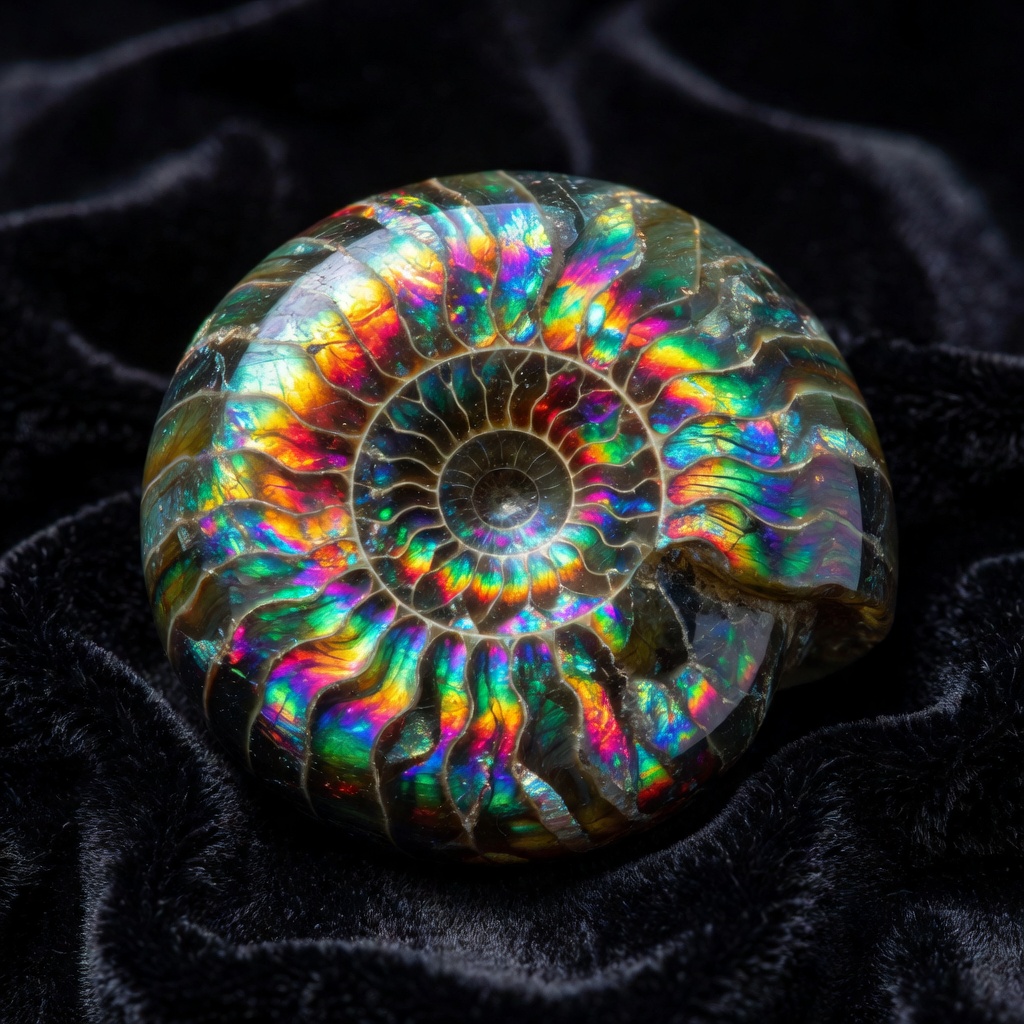
The most valuable ammolite displays vivid, saturated hues that shift and shimmer with movement, a phenomenon caused by the interference of light through microscopic platelets of aragonite within the fossil shell structure. Dark or muddy colors significantly reduce value regardless of the hue present, while stones exhibiting metallic-like flashes or neon brightness achieve the highest Canadian ammolite prices in the current market. Professional grading laboratories assess color using standardized lighting conditions, as ammolite's appearance varies dramatically under incandescent, fluorescent, and natural daylight sources.
2024 Price Ranges by Quality Grade
Current market conditions reflect a stratified pricing structure that rewards exceptional specimens while maintaining accessible entry points for new collectors. Commercial grade material, characterized by single-color dominance (typically green), visible matrix backing, and moderate brightness levels, trades between $5 and $30 per carat, making it suitable for silver jewelry and casual accessories. Fine grade stones representing the sweet spot for serious jewelry applications display three distinct colors (often red, green, and gold), minimal matrix exposure, and strong brightness ratings, commanding Ammolite cost per carat figures between $50 and $150 depending on size and color distribution.
Collector and museum grade specimens transcend standard jewelry pricing metrics, with exceptional four-color stones featuring chromatic shift phenomena or ultra-rare purple and ultraviolet fluorescence achieving $200 to $1,000+ per carat at auction. These investment-grade pieces require careful documentation of provenance and typically undergo professional stabilization treatments to ensure longevity. The marketplace distinguishes sharply between solid ammolite, which consists entirely of the fossilized nacreous layer backed by its original shale matrix, and assembled stones such as doublets and triplets. Doublets, comprising a thin ammolite layer bonded to a dark backing material, offer affordable alternatives at 50-70% below solid stone pricing but lack the long-term appreciation potential and durability that define high-end collections.
Regional Price Variations and Market Access
Purchasing directly from mining operations in Lethbridge, Alberta, often yields 20-30% savings compared to retail jewelry stores in tourist destinations like Banff or Jasper, where markup frequently exceeds 300%. International buyers should factor currency exchange rates and import duties into their Canadian ammolite prices calculations, as significant premiums exist in Asian markets where demand has surged 40% over the past five years.
Color Spectrum Analysis and Premium Tiers
The valuation of ammolite centers heavily on chromatic complexity, with the "four-color rule" serving as the industry benchmark for investment quality. Stones simultaneously displaying red, emerald green, gold, and royal blue represent less than 5% of annual production and command immediate attention from serious collectors. This rarity factor directly influences Ammolite gemstone value, as each additional color visible under standard viewing conditions can increase per-carat pricing by 50-100%.
Brightness assessment follows a 1A to 3A scale, with 3A stones exhibiting mirror-like reflectivity and electric color saturation that justifies significant premiums over duller specimens. Rare color phenomena including violet, ultraviolet-responsive fluorescence, and chromatic shift (where colors change completely when rotated 90 degrees) create additional premium tiers that can multiply base values by factors of three to five. Directional color viewing angles present both challenges and opportunities for valuation, as stones that display full color across 180-degree rotation offer greater versatility for jewelry design than those requiring specific orientation to reveal their beauty, affecting both immediate pricing and long-term liquidity.
The Red Premium Phenomenon
Red ammolite consistently achieves the highest prices per carat due to the structural fragility of the red aragonite layer within the fossil shell, which often fractures during extraction or proves too thin for viable gem use. When cutters successfully preserve substantial red coloration without compromising structural integrity, these specimens command two to three times the price of equivalent-quality green or blue stones, establishing red as the benchmark color for portfolio diversification.
Size, Shape, and Matrix Considerations
The dimensional characteristics of ammolite significantly influence both aesthetic presentation and financial valuation, creating distinct market segments for different applications. Small accent stones weighing under one carat serve the commercial jewelry industry for cluster rings and accent pieces, offering accessible price points but limited appreciation potential. Statement pieces exceeding ten carats represent extreme rarities, with pricing often following non-linear scales where a 15-carat specimen might command five times the per-carat rate of a three-carat stone due to the statistical improbability of finding large, unfractured material.
Matrix patterns contribute substantial character to specimens, with "dragon skin" textures, "cobra skin" mosaics, and "stained glass" fracture patterns attracting niche collectors who value organic artistry over pure color intensity. These patterns factor into Ammolite buying guide recommendations for artistic jewelry settings where the matrix becomes a design feature rather than a flaw. Standard calibrated sizes (5x7mm, 6x8mm, 8x10mm oval or cushion cuts) facilitate mass production and typically trade at slight discounts compared to custom freeform shapes that maximize material retention. Thickness requirements vary by application, with solid stones requiring minimum 0.5mm of ammolite layer for durability, while assembled alternatives can utilize thinner material through protective capping.
Freeform vs. Geometric Cuts
Freeform cuts that follow the natural contour of the fossil shell often provide superior value for pendants and brooches, as they preserve the maximum amount of iridescent material while eliminating weight loss from grinding geometric facets. However, calibrated shapes remain essential for production jewelry and typically command consistent wholesale pricing that facilitates inventory planning for retail buyers.
Treatments, Enhancements, and Authenticity
Standard industry practice accepts epoxy stabilization as a necessary treatment for nearly all ammolite, as the porous fossil material requires hardening to prevent crumbling and moisture absorption that could cause delamination or color degradation. This legitimate process differs fundamentally from dye treatments, where artificial colorants mask poor-quality material or simulate rare hues, significantly diminishing Ammolite buying guide valuations and potentially causing allergic reactions in wearers. Discerning buyers must distinguish between stabilized natural material and enhanced stones through magnification examination and professional certification.
Composite doublets present particular challenges for authentication, as unscrupulous dealers may bond thin ammolite layers to glass, quartz, or synthetic spinel substrates while representing them as solid stones. These assemblies often reveal themselves through color uniformity, lack of natural fracture patterns, or visible separation lines at the girdle under 10x magnification. Certification importance cannot be overstated for significant purchases, with the American Gem Society (AGS), Gemological Institute of America (GIA), and Canadian Ammonite Association providing standardized grading reports that verify authenticity, disclose treatments, and assess quality parameters. UV light testing offers an additional verification method, as genuine ammolite exhibits characteristic fluorescence patterns distinct from coated glass imitations or synthetic analogs.
Professional Verification Techniques
Reputable gemologists examine ammolite under various lighting angles to confirm directional color change, a hallmark of genuine material that synthetics struggle to replicate perfectly. Advanced testing includes Raman spectroscopy to identify the aragonite composition and detect polymer stabilizers, providing definitive documentation for high-value specimens exceeding $5,000 in replacement value.
Investment Potential and Market Trends
Historical performance data supports Ammolite investment value with documented annual appreciation rates of 5-10% over the past decade, outperforming many traditional commodities while maintaining lower volatility than speculative cryptocurrencies or junior mining stocks. The investment thesis rests primarily on supply scarcity, with current mining operations extracting material at depths and costs that suggest economic exhaustion within five to ten years, after which secondary market trading will determine pricing based on finite available inventory.
Collector market growth in Asia, particularly China and Japan where ammonite fossils carry cultural significance, has driven 60% of premium-grade production overseas, tightening availability in North American markets and supporting price floors. However, investors must consider liquidity factors, as ammolite lacks the instantaneous resale markets of diamonds or gold, typically requiring specialized auction houses, gem shows, or dealer consignment to realize gains. Resale considerations favor high-grade solids over doublets, certified specimens over undocumented stones, and rare color combinations over common green singles, with portfolio diversification across size ranges recommended to balance immediate liquidity needs against long-term appreciation potential.
Risk Assessment and Portfolio Allocation
Financial advisors typically recommend limiting ammolite to 5-10% of a diversified tangible asset portfolio, treating it as a "passion investment" comparable to fine art or vintage wines rather than a primary wealth preservation vehicle. The material's vulnerability to scratching and chemical exposure necessitates insurance coverage that accounts for replacement value rather than purchase price, particularly important given the upward trajectory of Canadian ammolite prices.
Where to Buy: Retail vs. Wholesale Pricing
Sourcing ammolite directly from the mining companies operating near Lethbridge, Alberta, or through authorized First Nations dealers provides the most transparent pricing structure with documented provenance and minimal intermediary markup. These primary market channels offer rough material for custom cutting, calibrated goods for manufacturing, and finished jewelry pieces at prices typically 30-50% below resort retail locations. Online marketplace price comparisons reveal significant variations, with platforms like Etsy and eBay hosting both legitimate dealers and questionable sellers offering dyed fakes or low-grade doublets misrepresented as solids.
Professional buyers seeking volume discounts should attend the Tucson Gem and Mineral Show in February or the Calgary Gem and Mineral Show, where wholesale lots of calibrated stones become available at per-carat rates unobtainable through retail channels. These venues also provide opportunities to examine matrix patterns and color quality firsthand, eliminating the uncertainties of photography-based purchasing. Red flags for novice buyers include pricing significantly below market rates (suggesting synthetic spinel imitations or dyed abalone shell), sellers unable to provide Canadian origin documentation, and stones exhibiting perfect color uniformity without natural variations. Establishing relationships with members of the Canadian Ammonite Association ensures access to ethically sourced material with proper cultural provenance.
Evaluating Online Dealers
When purchasing through digital platforms, prioritize vendors offering high-resolution video showing color rotation under multiple light sources, detailed photographs of the matrix backing, and unconditional return policies allowing inspection by independent gemologists. Avoid listings using stock photos or failing to specify whether stones are solid, doublet, or triplet construction, as these omissions often mask quality deficiencies that impact long-term value.
Insurance, Appraisals, and Care Considerations
Protecting Ammolite investment value requires comprehensive documentation and specialized insurance coverage that recognizes the replacement cost differential between wholesale acquisition and retail replacement. Appraisals should distinguish between the price paid and the current replacement value, which may have appreciated significantly since acquisition, particularly for material purchased five or more years ago. Documentation requirements for high-value specimens over $5,000 include professional grading reports, photographic evidence, provenance records, and treatment disclosures that facilitate accurate valuation and claims processing.
Proper storage prevents the dehydration that causes color fading and structural brittleness in aragonite, with specimens stored in sealed containers with silica gel packets or maintained in humidified display cases away from direct sunlight and heat sources. Setting choices significantly impact long-term preservation, with bezel settings offering superior edge protection compared to prong settings that leave vulnerable corners exposed to impact. Chemical exposure to acids, hairsprays, perfumes, and household cleaners can etch the surface or degrade stabilization resins, necessitating removal before chemical contact and cleaning with only mild soap and water using soft brushes.
Maintenance Protocols for Long-term Preservation
Annual professional inspections can identify early signs of delamination in doublets, loose settings, or surface damage requiring repolishing, with these preventive measures preserving both beauty and value. For investment-grade pieces rarely worn, storage in archival-quality microfiber envelopes within climate-controlled safes provides optimal protection against environmental degradation while maintaining accessibility for portfolio liquidation when market conditions favor selling.
Frequently Asked Questions
How much does ammolite cost per carat in 2024?
Ammolite prices range from $5-$30 per carat for commercial grade stones to $200-$1,000+ for museum-quality specimens. Most jewelry-grade ammolite with good color brightness falls between $50-$150 per carat, with red-containing stones commanding the highest premiums.
Why is red ammolite more expensive than other colors?
Red ammolite is rarest because the red color layer is typically the thinnest in the fossil structure, making it fragile and difficult to extract intact. Combined with high demand for the vibrant crimson hue, this scarcity drives prices 2-3x higher than green or blue specimens.
Is ammolite a good investment compared to other gemstones?
Ammolite shows strong investment potential with 5-10% annual appreciation due to finite supply from single-source mining in Alberta. However, it's less liquid than diamonds or rubies. Investment-grade stones should be high-quality solids (not doublets) with certification and rare color combinations.
What's the difference between solid ammolite and doublets?
Solid ammolite is the natural fossil material backed by its original shale matrix, most valuable and durable. Doublets consist of a thin ammolite layer bonded to a dark backing (often shale or glass) to enhance color, offering affordable alternatives at 50-70% less cost but lower long-term value.
Where can I buy authentic ammolite at fair market prices?
Purchase from authorized dealers in Lethbridge, Alberta near the mining source, reputable gem shows like Tucson, or established online retailers with Canadian Ammonite Association membership. Avoid tourist traps in Banff or Jasper where markup exceeds 300%.
How do I know if ammolite is real or fake?
Real ammolite shows directional color change when rotated and has natural fracture patterns under magnification. Fakes often show uniform color or bubble patterns. Request certification from AGS or GIA, and use UV light—genuine ammolite fluoresces differently than coated glass imitations.
Does ammolite increase in value over time?
Yes, ammolite has historically appreciated 5-10% annually due to increasing scarcity. With mining permits limited and geological reserves depleting, experts predict continued price increases. High-grade specimens with red colors and large carat weights show the strongest value retention.
What size ammolite offers the best value for jewelry buyers?
Stones between 2-5 carats offer optimal value, providing visible color impact without the exponential price jumps of larger specimens. For pendants, 5-8 carat freeform shapes often provide better per-carat pricing than small calibrated stones under 1 carat.