What Makes Ammolite Special: Understanding This Rare Canadian Treasure
Ammolite represents one of the most fascinating geological marvels in the gemstone world, originating from the fossilized shells of ammonites that thrived during the Late Cretaceous period approximately 70 to 75 million years ago. These ancient marine mollusks, specifically Placenticeras meeki and Placenticeras intercalare, underwent a unique mineralization process within the Bearpaw Formation that transformed their aragonite shell structures into brilliant, iridescent gemstones. Unlike most gemstones that form through volcanic or metamorphic processes, ammolite is truly organic in origin, making it one of the few biogenic gemstones alongside pearls and amber. This comprehensive Ammolite Buying Guide will help you navigate the complexities of purchasing these extraordinary specimens while avoiding common pitfalls.
The rarity factor cannot be overstated when considering Canadian ammolite investments. Commercial deposits exist exclusively within a small region of Southern Alberta, Canada, spanning roughly the area of a standard city, making ammolite significantly rarer than diamonds, rubies, or sapphires by geological standards. Mining operations must extract these delicate specimens from dark marine shales at depths ranging from 15 to 30 meters below the surface, requiring careful manual extraction to preserve the fragile iridescent layers. With only one viable mining operation currently producing commercial quantities, supply constraints continue to drive both collector interest and investment value upward.
The optical phenomenon displayed by high-quality ammolite rivals that of Australian black opals yet offers distinct characteristics that seasoned collectors immediately recognize. While opals display play-of-color through silica sphere diffraction, ammolite achieves its brilliance through thin-film interference within stacked layers of aragonite platelets approximately 0.5 microns thick. This structural difference produces a unique "chromatic shift" where colors appear to rotate and intensify as the stone moves under light sources, creating a three-dimensional appearance that seems almost liquid in motion. Cultural significance further enhances demand, particularly within Feng Shui practices where ammolite is revered as the "Seven Color Prosperity Stone" believed to channel cosmic energy and bring good fortune to owners.
Understanding Ammolite Grading Systems
Navigating the world of Korite ammolite grading requires familiarity with standardized classification systems that separate museum-quality specimens from commercial-grade material. Korite International, the primary mining and distribution company controlling the majority of Bearpaw Formation production, established the industry-standard grading scale that categorizes ammolite into three primary tiers: AAA (Gem Grade), AA (Extra Grade), and A (Standard Grade). Understanding these distinctions proves essential for any serious collector or investor, as price differentials between grades can range from hundreds to thousands of dollars per carat depending on color rarity and pattern complexity.
The AAA Gem Grade classification demands exceptional brightness levels where the stone displays brilliant, saturated colors under normal indoor lighting conditions without requiring direct sunlight or intense spotlights. These specimens must exhibit a minimum of three distinct colors with strong chromatic rotation across 360 degrees of viewing angles, accompanied by minimal matrix or host rock visible on the surface. AA Extra Grade stones offer excellent color display but may show slightly diminished brightness or limited color rotation, often presenting strong dual-color combinations rather than the full spectrum seen in top-tier material. Standard Grade A ammolite provides accessible entry points for new collectors, displaying visible iridescence but often requiring specific lighting angles to reveal full color potential.
Brightness scale evaluation serves as a critical component of Ammolite quality grades, with master graders assessing specimens under standardized lighting conditions to determine their luminosity ratings. Stones are classified as Brilliant, Bright, or Dim based on their ability to reflect light and display saturated hues across the visible spectrum. Surface coverage percentage requirements further differentiate grades, with AAA specimens needing 100% coverage of gem-quality material across the entire face of the stone, while AA grade allows for minor imperfections or matrix inclusions not exceeding 15% of the surface area. Commercial grade material often sold in tourist markets typically lacks formal grading entirely, displaying patches of color on significant matrix backgrounds that severely limit both aesthetic appeal and investment potential.
Color Spectrum and Valuation Factors
The Ammolite color grades hierarchy follows a specific rarity pyramid that directly correlates with market pricing and collector desirability. Red and purple hues occupy the pinnacle of value, appearing in less than 5% of mined material due to the specific trace mineral compositions and thickness of aragonite layers required to produce these wavelengths. These crimson and violet specimens command premium prices often exceeding $5,000 per carat for top-quality pieces, particularly when displaying the rare "blood red" or deep amethyst purple tones that remain stable under various lighting conditions. Orange and gold represent the secondary tier of value, offering warm, fiery appearances that transition beautifully between yellow and copper tones depending on viewing angles.
Green and blue ammolite, while undeniably beautiful, constitute the most common color presentations and therefore establish the baseline for Ammolite gemstone value calculations. However, even within these more prevalent colors, intensity variations create significant price differentials; vivid emerald greens or electric blues far exceed the value of muted, grayish tones that dominate lower-grade commercial material. The phenomenon of chromatic shift proves particularly important when evaluating multi-color specimens, as stones displaying three or more distinct colors that rotate through the full spectrum as the gem moves command substantial premiums over static single-color presentations. A exceptional specimen showing red, gold, and green shifts simultaneously can achieve prices five to ten times higher than comparable single-color stones of the same grade.
Lighting conditions significantly affect perceived color quality, necessitating examination under multiple light sources before finalizing purchase decisions. Incandescent lighting tends to emphasize red and orange tones while potentially subduing greens and blues, whereas natural daylight provides the most accurate representation of a stone's full chromatic range. Smart buyers request videos or view stones under LED daylight-equivalent lighting to assess true color potential, as some sellers utilize specialized spotlights that artificially enhance color saturation beyond what the stone displays under normal wear conditions. When investing in high-value pieces, insist on viewing the ammolite under standardized grading lights or natural northern daylight to ensure the color intensity justifies the asking price.
Pattern Types and Aesthetic Appeal
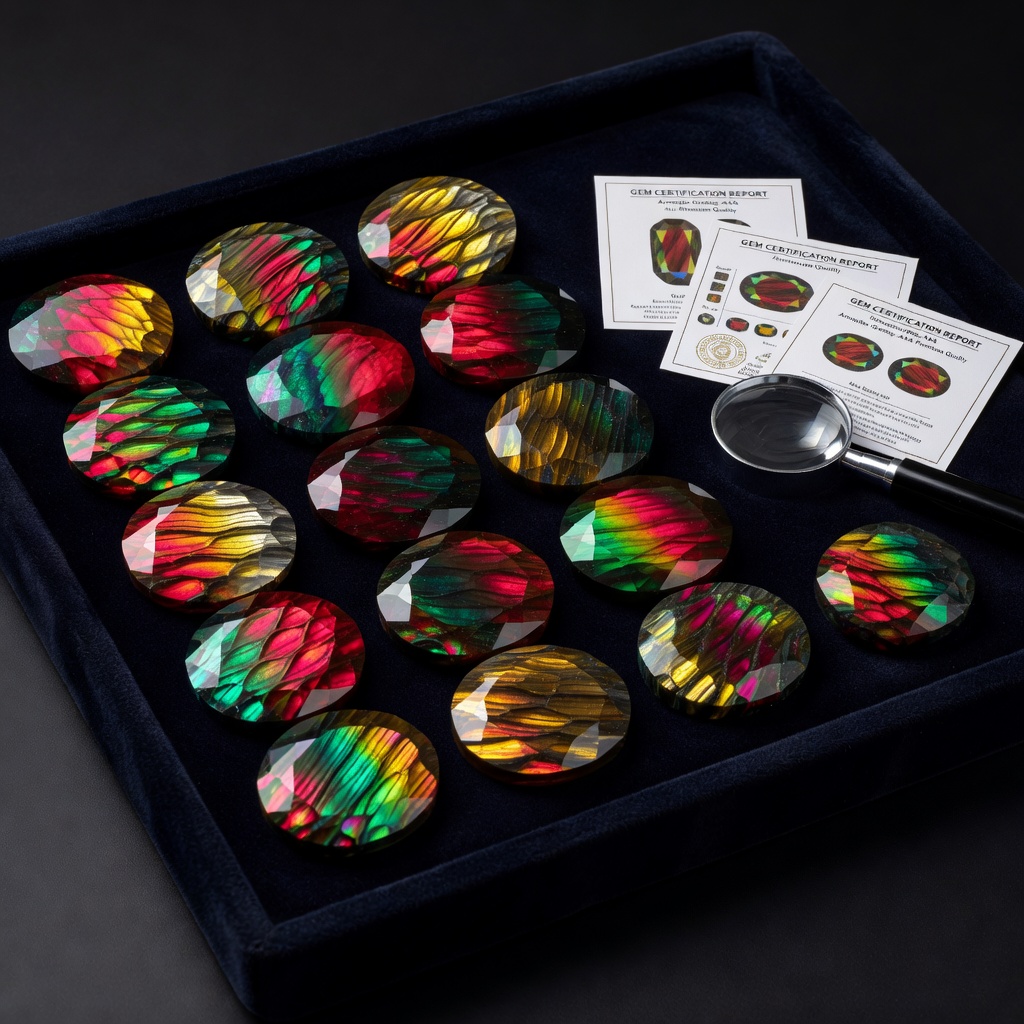
Beyond color considerations, Ammolite patterns dramatically influence both visual impact and market valuation, with certain formations achieving legendary status among connoisseurs. The "Dragon Skin" pattern represents the most coveted and rare configuration, characterized by closely spaced, irregular mosaic tiles resembling reptilian scales that create a three-dimensional, rippling effect across the stone surface. These specimens require specific geological conditions during fossilization where the aragonite layers fractured into small polygonal sections while maintaining structural integrity, resulting in a tapestry-like appearance that shifts colors independently across each "scale." Dragon Skin ammolite consistently achieves auction prices 40-60% above standard pattern material due to its exotic appearance and extreme scarcity.
Stained Glass patterns feature sharp, angular divisions between distinct color zones, creating the appearance of leaded cathedral windows with clear boundaries between hues. These formations occur when mineral impurities or structural stress created fracture lines during the fossilization process, separating different color-producing layers into geometric sections. Ribbon patterns display flowing, parallel bands of color that streak across the stone surface like northern lights, offering elegant, linear aesthetics particularly suited for elongated jewelry designs such as pendants and barrettes. Blended patterns merge multiple pattern types or show gradual color transitions without sharp boundaries, while Sunrise patterns concentrate intense color in the center that fades toward the edges like a dawn horizon.
Pattern density significantly affects overall stone value, with tightly packed, high-coverage patterns commanding premiums over sparse or patchy distributions. When evaluating Rare ammolite colors within patterned stones, consider how the pattern interacts with the color presentation; Dragon Skin patterns in red or purple ammolite represent the absolute pinnacle of the market, sometimes achieving prices exceeding $10,000 per carat for exceptional specimens. Conversely, loose, widely spaced patterns on predominantly matrix backgrounds characterize commercial-grade material suitable for casual jewelry but offering limited investment potential. Serious collectors should prioritize stones where the pattern enhances rather than obscures the chromatic display, ensuring the visual complexity adds to rather than detracts from the gem's inherent beauty.
Solid vs Doublet vs Triplet Construction
Understanding the distinctions between Solid ammolite, doublets, and triplets proves crucial for making informed purchasing decisions aligned with your intended use and budget constraints. Solid ammolite consists entirely of natural gem material cut from the fossilized ammonite shell without any artificial backing or protective capping, representing the purest form of the gemstone and commanding the highest prices per carat. However, solid specimens present significant durability challenges due to ammolite's relative softness of 3.5-4.5 on the Mohs hardness scale and its tendency to delaminate or crack when exposed to pressure changes or impact. These pieces require protective bezel settings and are generally recommended for pendants, earrings, or occasional-wear rings rather than daily-wear jewelry subjected to constant abrasion.
Doublet construction addresses durability concerns while maintaining reasonable affordability by bonding a thin layer of natural ammolite (typically 0.5-1.0 mm thick) to a synthetic backing material, usually black onyx, shale, or industrial-grade obsidian. This backing serves multiple purposes: it provides structural support that prevents the fragile ammolite layer from cracking, enhances color intensity by creating a dark background that makes the iridescence "pop," and allows cutters to utilize thinner gem layers that would otherwise be too fragile to set. When evaluating doublets, examine the bond line between the ammolite and backing under magnification to ensure no gaps, bubbles, or delamination exists, as proper adhesion is essential for long-term stability. High-quality doublets offer excellent value for jewelry applications, providing the visual impact of solid stones at 30-50% of the cost.
Triplets add a third component to the construction: a clear, durable cap of quartz, sapphire, or spinel bonded over the ammolite layer to provide maximum protection against scratching and environmental damage. This construction creates a sandwich structure with the ammolite layer protected between the dark backing and the transparent cap, making triplets ideal for rings and bracelets subjected to daily wear. The cap material significantly affects both durability and optical properties; synthetic sapphire caps offer superior scratch resistance (9 Mohs) but may slightly dull the color intensity compared to quartz caps (7 Mohs) that provide better light transmission. When purchasing Ammolite types for different applications, consider that solids offer the best investment potential, doublets provide balanced value for most jewelry, and triplets deliver maximum practicality for high-contact wearables despite offering less intrinsic gem value.
Authentication and Certification Requirements
Securing Certified ammolite documentation represents a non-negotiable step in the purchasing process, protecting buyers from treated imitations, synthetic alternatives, and misrepresented origins. Genuine Canadian ammolite should accompany certificates of authenticity verifying extraction from the Bearpaw Formation, often including specific details about the mining claim or geological layer from which the specimen originated. Reputable dealers provide documentation from recognized gemological laboratories such as the GIA (Gemological Institute of America), AGL (American Gemological Laboratories), or specialized Canadian institutions that have verified the material's natural origin and disclosed any treatments or enhancements. These certificates should explicitly state "Natural Ammolite" and specify whether the stone is solid, doublet, or triplet construction to ensure transparency in the transaction.
Identifying treated, dyed, or synthetic imitations requires careful examination and knowledge of common enhancement techniques that plague the market. Some unscrupulous sellers offer "ammolite" that is actually treated mother-of-pearl or abalone shell, materials that mimic iridescence but lack the specific structural characteristics and color stability of genuine ammolite. Dyed specimens often show unnaturally uniform color saturation or colors that appear to sit on the surface rather than within the crystalline structure, while synthetic opals or "slocum stone" glass imitations may display "chicken wire" or cellular patterns absent in natural ammolite. Laboratory testing methods including Raman spectroscopy can definitively identify the aragonite composition unique to ammolite, while magnification reveals the natural fracture patterns and organic inclusions characteristic of fossilized material.
Red flags indicating potentially Authentic ammolite fraud include prices significantly below market rates—such as "AAA grade" stones priced under $100 per carat—and vague sourcing information that avoids mentioning Canadian origins specifically. Be extremely cautious of sellers who describe their merchandise as "ammolite-like," "ammolite-type," or "Canadian ammolite-style" without clear documentation, as these phrases often signal imitation materials. When purchasing high-value specimens, insist on independent laboratory verification rather than relying solely on dealer-provided certificates, and verify that the certificate number matches the stone through laser inscription or photographic documentation. Reputable sellers welcome such verification requests and typically offer inspection periods allowing buyers to have stones independently appraised before finalizing transactions.
Jewelry Setting and Design Considerations
Proper Ammolite jewelry buying decisions must prioritize protective engineering that accounts for the gemstone's unique physical properties and vulnerabilities. Bezel settings, where metal completely encircles the stone's perimeter, provide optimal protection for ammolite by shielding the edges from impact while securing the gem against loss. Unlike prong settings that expose delicate girdle areas to potential chipping, full bezel designs distribute pressure evenly around the stone's circumference and prevent the delamination issues that can affect doublet or triplet constructions. Partial bezels or heavy basket settings offer acceptable alternatives that maximize light entry while maintaining structural protection, particularly important for larger cabochon stones exceeding 15 carats where weight distribution becomes critical.
Metal selection significantly impacts both the aesthetic presentation and long-term durability of ammolite jewelry, with 14k and 18k gold offering superior protection compared to sterling silver for pieces intended for regular wear. Gold's malleability allows jewelers to create seamless bezels that conform perfectly to ammolite's often irregular surfaces, while its resistance to corrosion ensures the setting maintains integrity over decades. Sterling silver, while more affordable, requires rhodium plating to prevent tarnish that can discolor the stone's backing and demands more frequent maintenance to ensure prongs or bezels remain tight. For investment pieces or heirlooms, platinum provides the ultimate protection with its superior strength and hypoallergenic properties, though its higher cost and density requirements limit its use in larger statement pieces.
Wearability concerns should guide design choices, with rings presenting the highest risk for damage due to constant impact against hard surfaces during daily activities. When selecting Protective settings for ammolite rings, consider high-mounted bezel designs that elevate the stone above the finger line, reducing contact during hand movements, or opt for protective "halo" designs where smaller accent stones surround the ammolite, absorbing incidental impacts. Pendants and earrings generally offer safer environments for ammolite, experiencing less mechanical stress while allowing stones to display their full chromatic range through unrestricted movement. For all jewelry types, ensure the setting includes proper moisture barriers and sealants, particularly for doublets and triplets, preventing water infiltration that could compromise adhesive bonds or cause backing materials to separate from the gem layers.
Price Expectations and Investment Potential
Understanding realistic Ammolite gemstone value ranges prevents both overpayment and unrealistic bargain hunting, with prices varying dramatically based on grade, color, pattern, and construction type. Entry-level commercial grade ammolite suitable for casual fashion jewelry typically ranges from $50 to $200 per carat, featuring single or dual colors with moderate brightness and significant matrix visible. Mid-grade AA specimens with good brightness, two to three colors, and minimal matrix command between $300 and $800 per carat, representing the sweet spot for serious collectors seeking aesthetic beauty without premium pricing. Top-tier AAA grade ammolite displaying rare red or purple colors, Dragon Skin patterns, and brilliant chromatic shift can exceed $2,000 to $5,000 per carat, with exceptional museum-quality pieces occasionally achieving higher prices at specialty auctions.
Factors affecting resale value and liquidity include documentation quality, uniqueness of the specimen, and market timing within the relatively niche ammolite collecting community. Unlike diamonds or gold, Ammolite investment pieces require specialized buyers familiar with the gemstone's grading nuances, potentially requiring longer holding periods to realize optimal returns. Solid stones generally appreciate more consistently than doublets or triplets, as the latter depend partially on the durability of synthetic components that may require restoration over decades. Investment-grade specimens should feature rare colors (red, purple, or intense multi-color combinations), AAA grading, distinctive patterns, and impeccable provenance documentation including mining location details when available.
Market trends indicate strong appreciation potential driven by finite supply constraints, with the Bearpaw Formation representing a non-renewable resource expected to deplete within coming decades at current extraction rates. Comparing investment potential to opals and tanzanite—gems with similar rarity profiles—ammolite shows favorable characteristics including consistent 10-15% annual price increases over the past decade for top-quality material and growing recognition among Asian markets where Feng Shui significance drives additional demand. However, investors should approach ammolite as a long-term tangible asset rather than a liquid trading commodity, suitable for portfolio diversification rather than quick profit realization. Focus acquisitions on stones between 5 and 20 carats, as this range offers the best balance of visual impact and market liquidity, while extremely large specimens (50+ carats) may prove difficult to resell without substantial discounts due to limited buyer pools.
Proper Care and Maintenance Protocols
Implementing rigorous Ammolite care protocols ensures your investment maintains its brilliance and structural integrity across generations, as this delicate gemstone requires handling distinct from harder stones like diamonds or sapphires. Cleaning restrictions are absolute: never expose ammolite to ultrasonic cleaners, steam cleaning systems, or chemical jewelry dips, as these methods can cause delamination of the aragonite layers, separation of doublet/triplet components, or removal of protective coatings. Instead, clean ammolite using only a soft, damp microfiber cloth lightly moistened with lukewarm water and mild dish soap if necessary, gently wiping the surface without applying pressure or scrubbing motions. For solid stones with textured surfaces, use a soft camel hair brush to dislodge debris from crevices, followed by immediate drying with a lint-free cloth to prevent water spotting.
Chemical avoidance extends beyond cleaning products to include everyday substances that many wearers overlook until damage occurs. Perfumes, hairsprays, cosmetics, and lotions should be applied before putting on ammolite jewelry, as these products often contain alcohols, acids, or solvents that can etch the stone surface or degrade adhesive bonds in composite constructions. Household cleaners, chlorine from swimming pools, and even prolonged exposure to perspiration can compromise ammolite's integrity, necessitating removal of rings and bracelets before cleaning, swimming, or engaging in strenuous physical activities. Store pieces separately in soft fabric pouches or lined jewelry boxes away from harder gemstones that might scratch the relatively soft surface, maintaining humidity levels between 40-60% to prevent the organic material from drying out and becoming brittle.
Professional inspection schedules should occur annually for frequently worn pieces, particularly rings where settings may loosen over time due to the metal's response to temperature changes and physical impact. During these inspections, jewelers should check for moisture infiltration in doublets and triplets, re-sealing edges if necessary using specialized gem sealants that prevent water entry while allowing the stone to "breathe." For solid ammolite, jewelers can assess surface condition and recommend polishing only if surface scratches significantly detract from brilliance, as excessive polishing removes iridescent layers and reduces value. Maintain detailed records of all professional maintenance, including before-and-after photographs, to document care history that enhances resale value and ensures warranty compliance for high-end purchases.
Where to Purchase Ammolite Safely
Identifying reputable sources to Buy ammolite requires due diligence that prioritizes authentication over convenience, ensuring your acquisition represents genuine Canadian material rather than imitation or inferior grades misrepresented as premium specimens. Authorized Canadian dealers and licensed Korite retailers represent the safest purchasing channels, as these vendors maintain direct relationships with mining operations and adhere to strict quality control standards that prohibit treated or enhanced material from entering their inventory. Korite International specifically licenses select retailers worldwide who have demonstrated gemological expertise and ethical business practices, providing buyers with recourse should disputes arise regarding authenticity or grading accuracy. When visiting Calgary, Alberta, or surrounding regions, consider touring the Korite mine or visiting their flagship showrooms where you can view rough material and understand the extraction process before making purchasing decisions.
Gem show purchasing strategies require heightened vigilance, as the bustling environment of events like the Tucson Gem and Mineral Show or Edmonton Rock and Gem Show can pressure buyers into hasty decisions without proper verification. When buying at shows, bring a 10x loupe and LED penlight to examine stones for delamination, artificial coloring, or composite construction issues, and request written guarantees of authenticity with specific return periods allowing for independent laboratory verification. Reputable ammolite dealers at shows will welcome such scrutiny and provide detailed origin information, while evasive sellers or those offering "wholesale" prices far below market rates likely peddle imitations or treated material. Establish relationships with dealers who specialize specifically in Canadian gemstones rather than generalist vendors carrying hundreds of gem varieties, as specialists possess the expertise to accurately grade and price ammolite according to current market standards.
Online marketplace transactions demand additional safeguards, including verification of seller ratings across multiple platforms, examination of high-resolution photographs showing stones under various lighting conditions, and insistence on third-party escrow services for transactions exceeding $1,000. Red flags in online listings include stock photos rather than images of the specific stone being sold, vague descriptions avoiding mention of "Canadian origin," and prices that seem disproportionately low for the claimed grade. Before finalizing any purchase, prepare specific questions regarding treatment history, exact dimensions and carat weight, and the availability of return policies allowing inspection by an independent gemologist. Trustworthy sellers provide detailed provenance information, respond promptly to technical inquiries about the Bearpaw Formation source, and offer certificates from recognized laboratories rather than self-generated "guarantees" that lack independent verification.
Frequently Asked Questions
What exactly is ammolite and why is it considered valuable?
Ammolite is a rare, iridescent gemstone formed from the fossilized shells of ammonites that lived during the Late Cretaceous period. Found almost exclusively in Southern Alberta, Canada, it's valued for its brilliant chromatic colors and extreme rarity—rarer than diamond by some estimates. The gemstone displays a unique optical phenomenon similar to opals but with distinct color shifts that make each piece one-of-a-kind.
How can I tell if an ammolite gemstone is authentic and not imitation?
Authentic ammolite should come with certification verifying Canadian origin from the Bearpaw Formation. Look for natural surface irregularities under magnification, as synthetic versions often appear too perfect. Genuine ammolite shows color shifts when rotated under light. Purchase only from dealers who provide laboratory certificates and offer return policies. Be wary of pieces priced significantly below market value or sold without documentation.
Which colors of ammolite are most valuable and rare?
Red and purple ammolite commands the highest prices due to their extreme rarity, followed by vibrant orange and gold. Green and blue are more commonly found but still valuable when intense and bright. The most prized specimens display three or more colors with strong chromatic shift across the entire stone surface. Purple ammolite specifically can command 3-5 times the price of standard green specimens.
Should I buy solid ammolite, doublets, or triplets?
Solid ammolite offers the most value for collectors but requires protective settings due to its relative softness (3.5-4.5 Mohs). Doublets feature a thin layer of natural ammolite backed by shale or synthetic material, offering better durability at lower cost. Triplets add a clear quartz or sapphire cap for maximum protection, ideal for rings and daily wear jewelry. Choose based on your budget, intended use, and whether you prioritize investment value or wearability.
What price range should I expect for quality ammolite jewelry?
Entry-level commercial grade ammolite starts around $50-$200 per carat, while mid-grade AA specimens range from $300-$800 per carat. Top-grade AAA ammolite with rare red colors can exceed $2,000-$5,000 per carat. Complete jewelry pieces vary widely: simple silver pendants start around $150, while high-end gold rings with premium stones can cost $3,000-$10,000+. Always verify that prices align with the provided grading certification.
Is ammolite a good investment compared to other gemstones?
Ammolite shows strong investment potential due to its limited supply—the Bearpaw Formation represents the only viable commercial deposit, and supply is finite. Prices have steadily increased 10-15% annually over the past decade. However, it's less liquid than diamonds or gold, requiring specialized buyers. Investment-grade pieces should be solid (not doublets), AAA quality, featuring rare colors with excellent pattern and brightness, accompanied by proper certification.
How do I properly care for and clean ammolite jewelry?
Clean ammolite only with a soft, damp cloth and mild soap if necessary—never use ultrasonic cleaners, steamers, or chemical jewelry dips. Avoid exposing ammolite to prolonged water immersion, perfumes, hairsprays, and household chemicals. Store pieces separately in soft pouches away from harder gemstones that might scratch them. Have professional jewelers check settings annually, especially for rings, as the material is sensitive to impact and pressure changes.
Where is the safest place to purchase genuine ammolite?
Purchase from authorized Canadian dealers, established gemological laboratories, or reputable jewelry stores specializing in colored gemstones. Korite International (the primary mining company) licenses specific retailers worldwide. Avoid tourist trap shops offering 'too good to be true' prices. When buying online, verify seller ratings, demand origin certificates, and ensure secure return policies. Gem and mineral shows can offer good selections but require knowledge to verify authenticity on-site.